
Arenal Volcano Tours from La Fortuna
64 experiences at the foot of a cone that stopped erupting in October 2010, and is hidden by cloud on most afternoons.
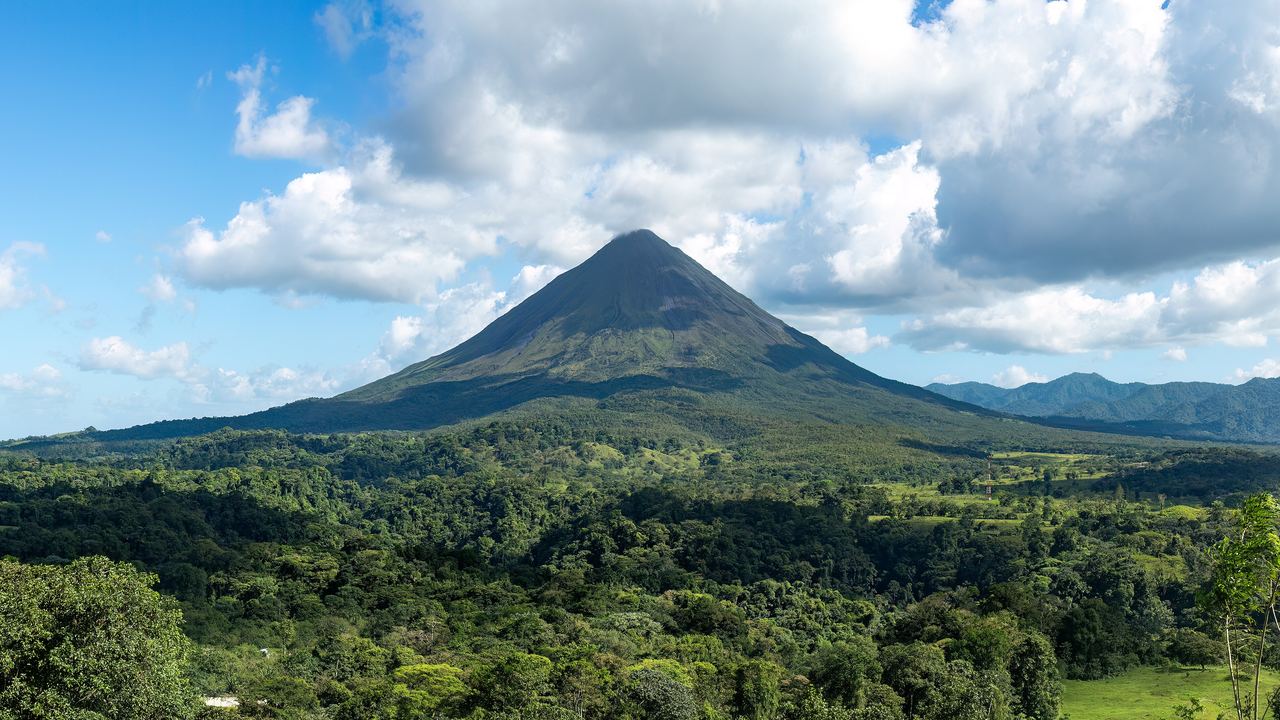
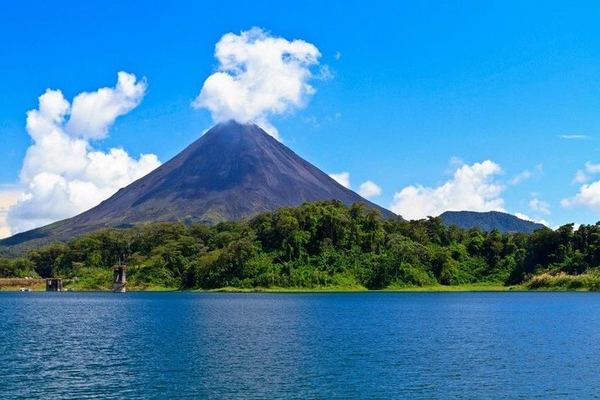
Arenal stopped erupting in October 2010 and has been resting ever since. That is the first thing to know, because almost every photograph that sold you this trip is older than that: the black cone at night with a red seam running down it belongs to the 1990s. What stands above La Fortuna today is a green mountain, usually with its top in cloud, and the industry that grew up around forty-two years of eruptions is still here, still excellent, and now selling the forest instead of the fire.
This page is about the volcano and the town: what happened here, what you can actually see, how the six kinds of day differ and what a sensible three days looks like. The detail of each activity, including what to wear on a zipline and how many steps there are down to the waterfall, sits in the six pages below.
Choose a destination in Arenal Volcano
-
Hot Springs
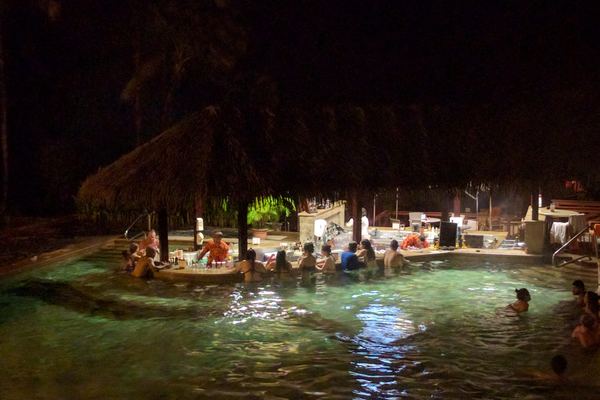
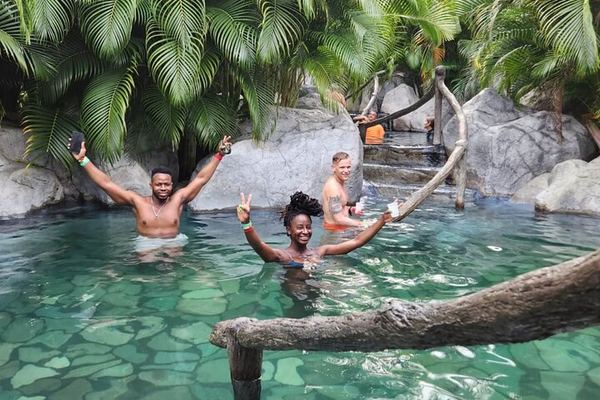
Hot springs heated by Arenal: Tabacón, Baldí, Ecotermales and Los Lagos, plus the free hot river under the bridge that nobody sells you.
9 experiences -
Hanging Bridges
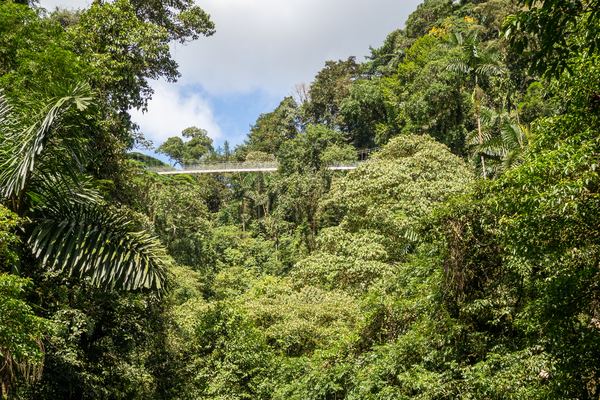
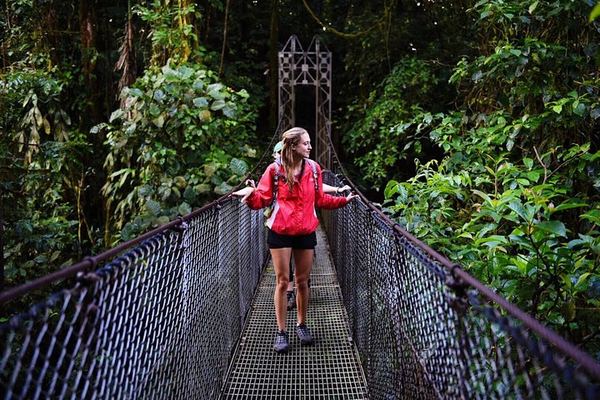
The Mistico and Sky Adventures hanging bridges on Arenal's flank: a 3.2 km circuit, sixteen bridges, and a trail that is easy but not flat.
12 experiences -
Volcano Activities
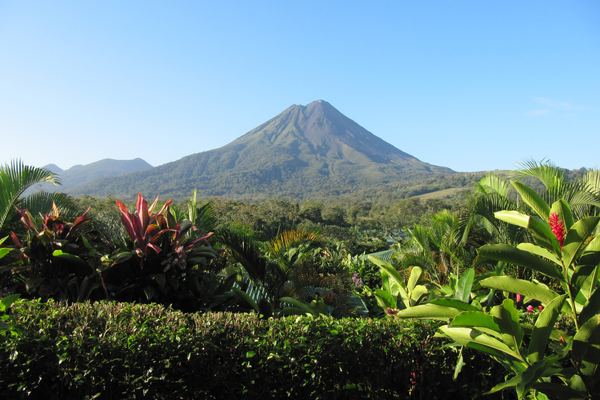
Walking the 1968 lava flows, night walks after frogs and snakes, ATV runs on the farms below Arenal, and the sunset boat on the lake.
12 experiences -
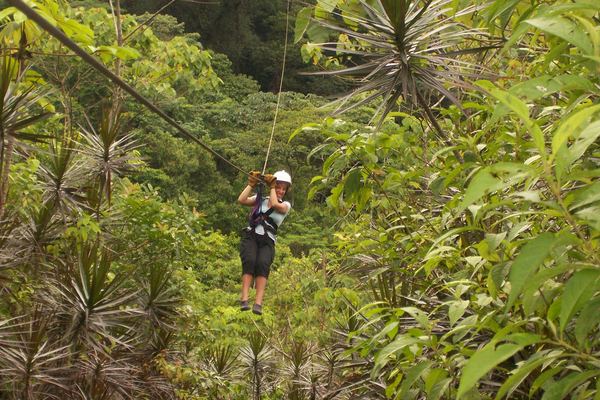
Zipline & Canopy
Zipline courses and aerial trams around Arenal: 7, 9 and 12-cable circuits, the one that crosses the La Fortuna waterfall canyon, and what the weight limits…
12 experiences -
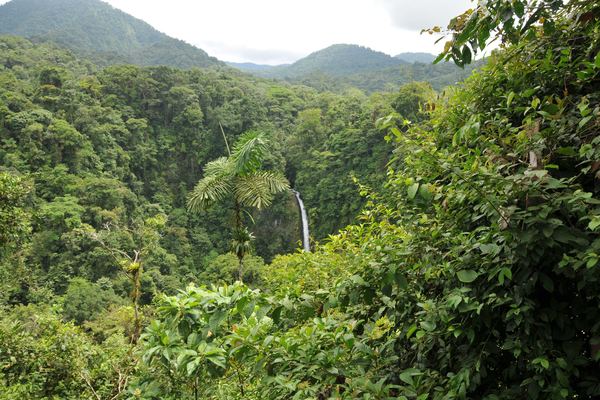
Waterfalls
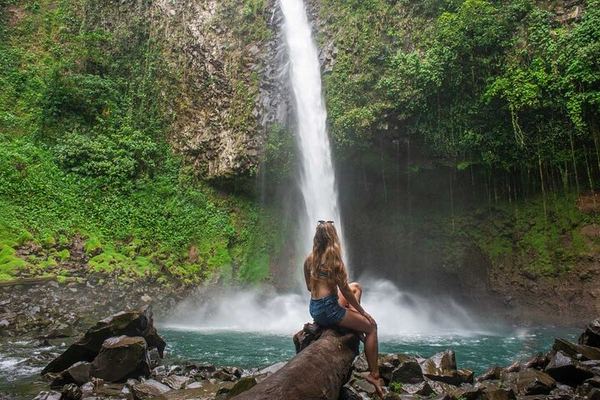
The La Fortuna waterfall, 70 metres down a volcanic canyon with about 500 steps, plus the canyoning trips that abseil down waterfalls instead of walking to…
7 experiences -
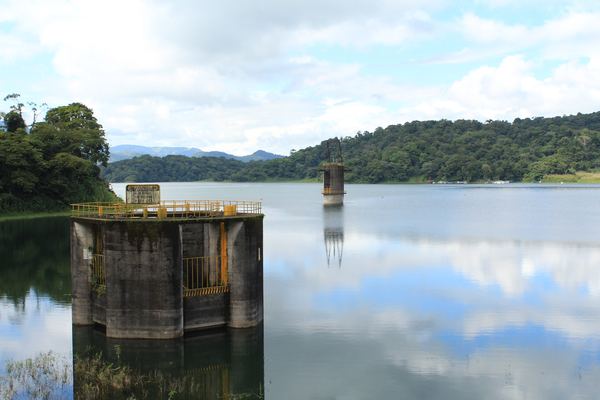
Rafting & Tubing
Rafting and tubing on the rivers running off the Arenal massif: the Balsa, the Sarapiquí and the Peñas Blancas safari float.
12 experiences


Volcano Travel Experiences in Arenal Volcano
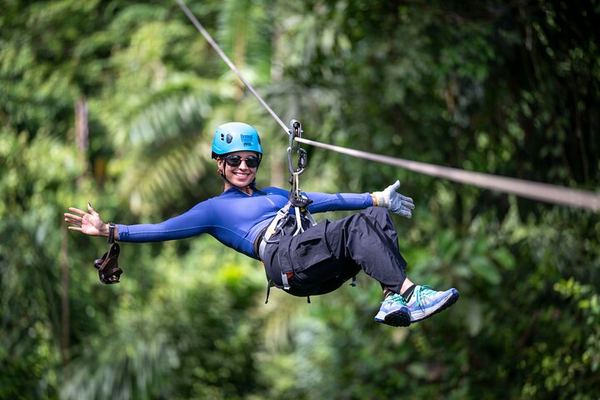
7-Cable Zipline Over the La Fortuna Waterfall, Small Group
The only zipline course that crosses directly above the La Fortuna waterfall, flown in a small group over half a day. Seven cables, canyons and forest.
Afternoon Arenal Volcano Hike and the El Choyín Hot Springs River
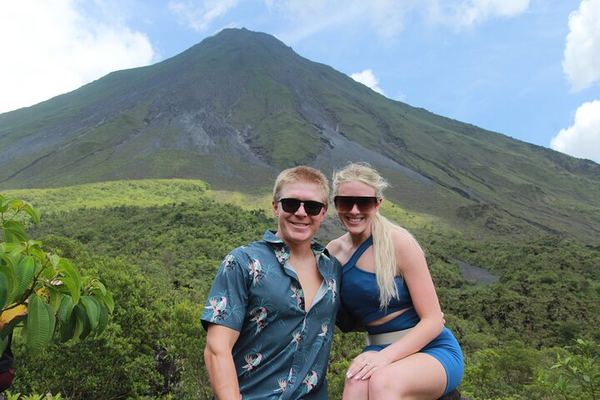
The west-side trails walked in the afternoon, then a natural hot springs river rather than a resort pool. Meeting at the Sloth Park reception, free parking.
Airtime Zipline: 9 Cables, a Practice Line and No Extreme Heights
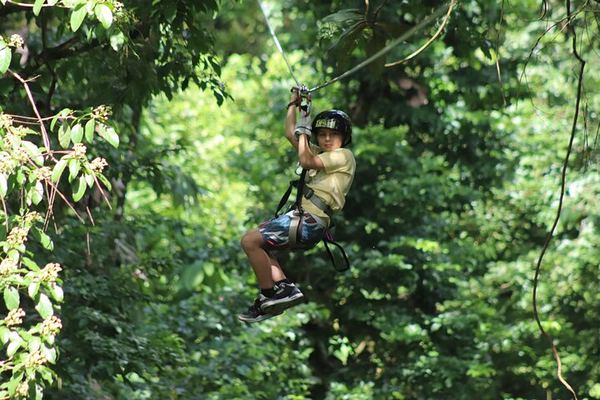
A practice cable before the long ones and a 38-metre ceiling, so the course works for children from 4 up. Cables from 80 to 550 metres, ICT permits held.
ANURA Night Walk: 9 Lagoons, Alligators and Groups of Eight
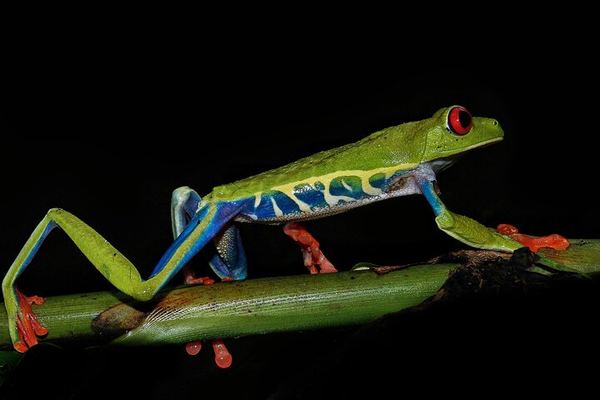
Nine lagoons and a lake on restored trail, with alligators in the wet areas and a cap of eight people per guide. Two hours of walking after dark.
Arenal 10-Hour Combo: a 6-Hour Jungle Hike, Volcanic Mud Ponds and Hot Springs
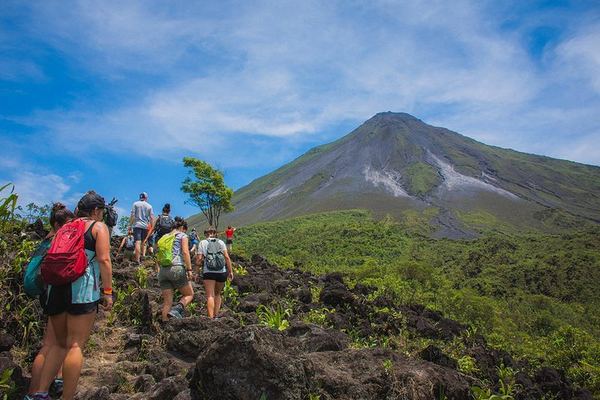
Six hours of the hardest walking around La Fortuna, volcanic mud ponds to get into, and a thermomineral river at the end. Very good fitness required.
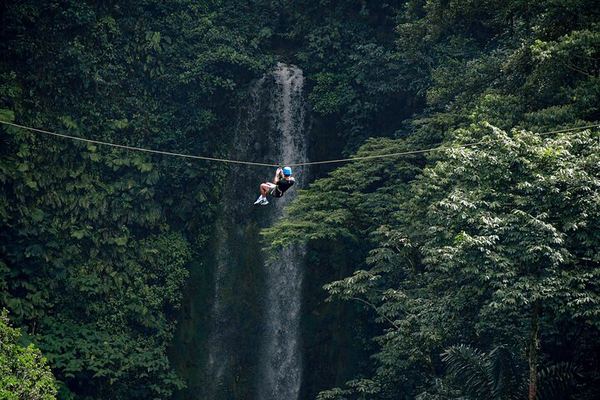
Arenal 12-Cable Zipline Course, Waterfall Crossing Included
The full twelve-cable course, half a day long, including the one line that crosses above the La Fortuna waterfall. Free parking if you drive yourself.
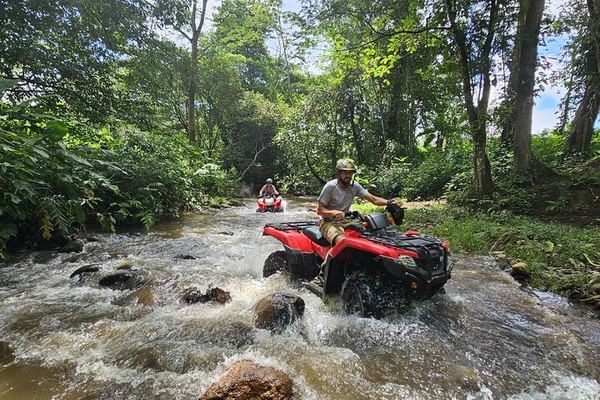
Arenal ATV and Zipline: 28 km on a Private Farm, Then 8 Cables
Twenty-eight kilometres of private farm on a quad, a driving test before you set off, then eight cables reaching 600 metres long and 90 metres up.
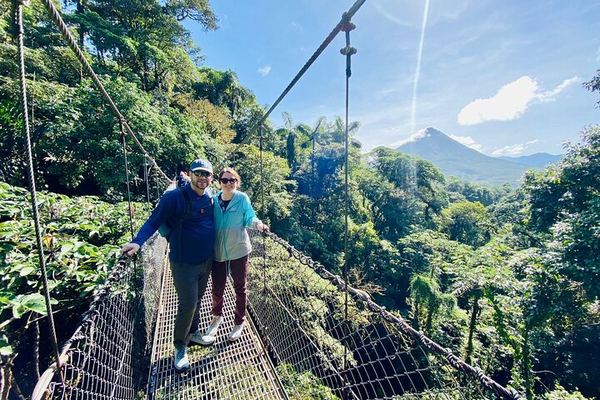
Arenal Bridges and La Fortuna Waterfall with Lunch at the Rodríguez Family Home
Lunch is at the Rodríguez family's table rather than a tourist dining room, and the certified local guides shape the day around what you ask to see.
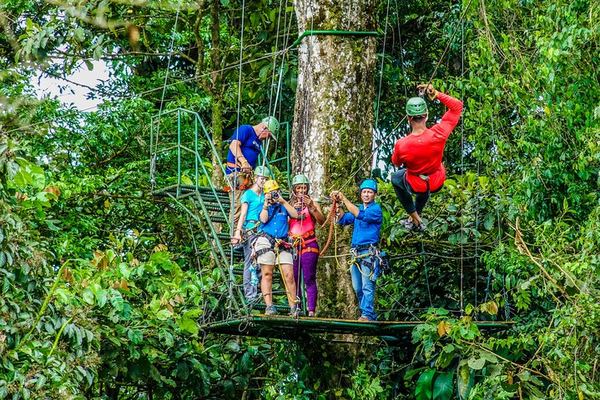
Arenal Canopy and Horseback Riding: Trails on Horseback, Cables Through the Trees
The trails on horseback first, at ground level and at the pace a horse sets, then the zip lines running through the canopy over the same stretch of forest.
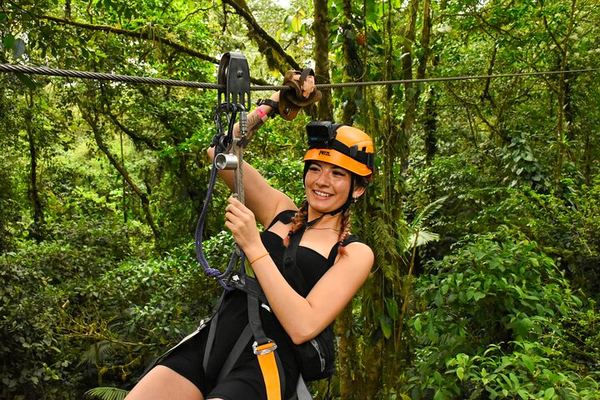
Arenal Canopy and Tarzan Swing: Two Guides on Every Cable
Two guides work every cable, one clipping you on and one braking you in at the platform, and each platform looks over a different stretch of canopy.
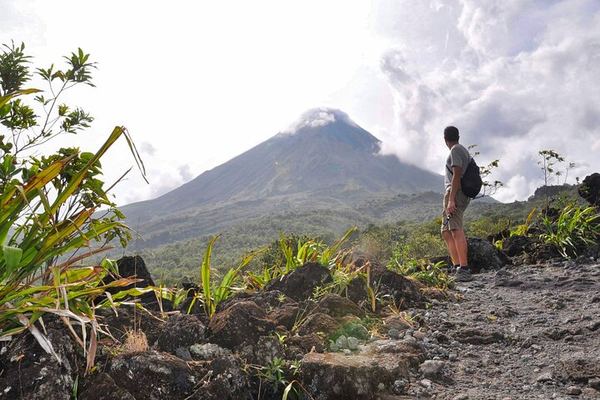
Arenal Day: 80-Metre Bridges at Mistico, El Silencio Lava Fields and 6 Thermal Pools
Six bridges at Mistico, some of them spanning 80 metres, an hour and a half on the 1968 lava fields, and six thermal pools at different temperatures.
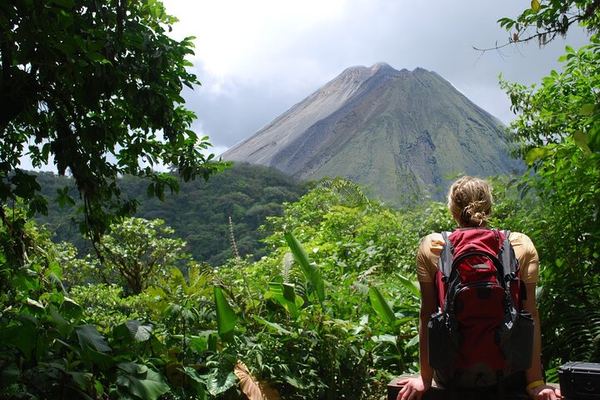
Arenal Four Attractions in a Day: 16 Bridges, Waterfall, Lava Block, Hot Springs
Sixteen bridges reaching 60 metres up, a petrified lava block 45 minutes into the reserve, and both lunch and dinner in the price. The day starts at 7:30.
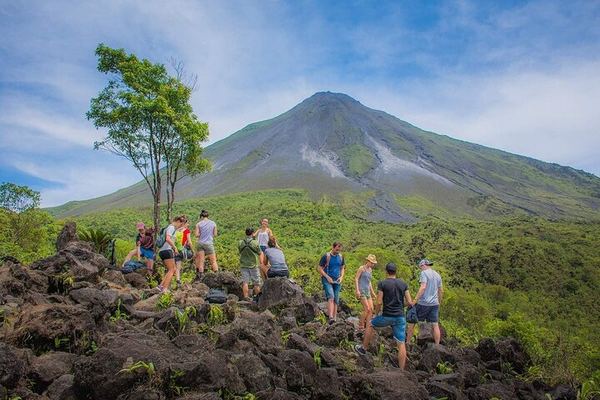
Arenal Four-Stop Day with Set Times: Waterfall, Volcano, Mistico and El Choyín
Every stop has a stated length: two hours at the waterfall with 40 to swim, 2.5 at Mistico, 40 minutes at El Choyín. Transport, entries and lunch included.
Arenal from Guanacaste: Café Macadamia, Místico and Titoku
Breakfast at Café Macadamia looking over Lake Arenal, the Místico hanging bridges after it, and the afternoon in the mineral water at Titoku hot springs.
Arenal Full-Day Combo: 9 Hanging Bridges, Peñas Blancas Viewpoint and the Maleku Palenque
Nine bridges at canopy height, the 1968 lava fields at El Silencio and 45 minutes at the waterfall pool, with lunch at the Maleku village ecological park.
Arenal Full Day: Mistico, the '68 Lava Field, the Waterfall Canyon and Optional Springs
The hot springs are a choice at the end rather than a fixture, and the guide pours the cocktails. Twenty minutes of jungle stairs down to the waterfall pool.
Arenal Full Day with Red Lava: the 70 m Waterfall, El Silencio Viewpoint and Termalitas
Red Lava's full day covers every entrance fee, a hot lunch, two breaks and a cocktail, and it climbs to El Silencio, the highest viewpoint around Arenal.
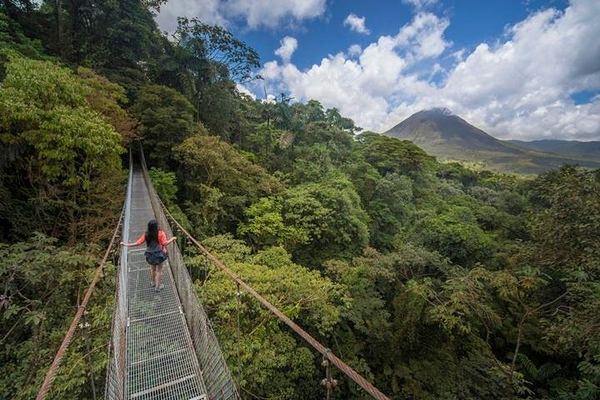
Arenal Hanging Bridges: 15 Bridges on a 3.1 km Circuit through 243 Hectares
Fifteen bridges, some fixed and some over the canopy, on a 3.1 km loop through 243 protected hectares. Ecoterra must be contacted 24 hours ahead.
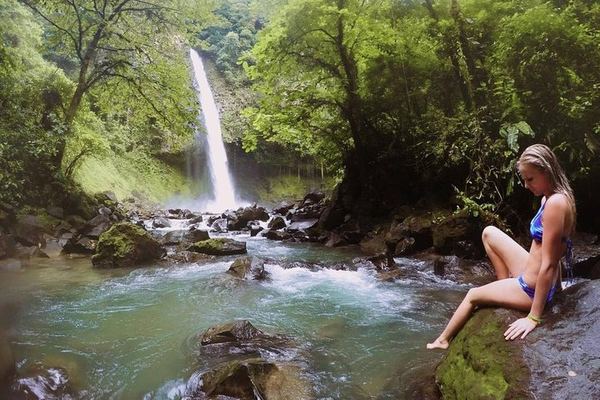
Arenal Highlights, 7:30 to 5:30: Mistico, the Waterfall and Mirador El Silencio
Three attractions on fixed slots between 7:30 and 5:30, with every entrance fee, a bilingual naturalist guide, water, cookies and lunch in the price.
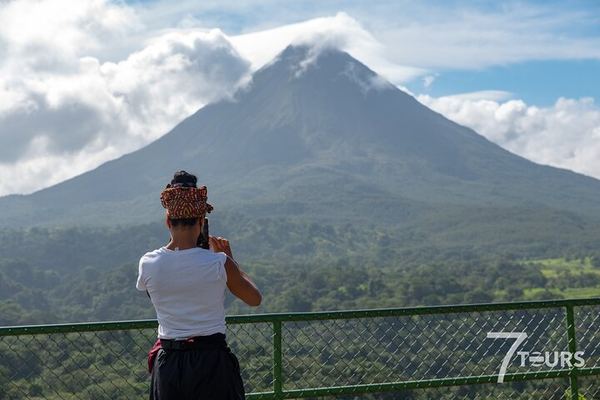
Arenal in One Day: Mistico Bridges, Waterfall, 1968 Trails and Baldi with Dinner
Fourteen hours from 7:30 am, four attractions on a fixed timetable, and both lunch and dinner in the price. The Baldi hot springs run from 5:30 to 8.
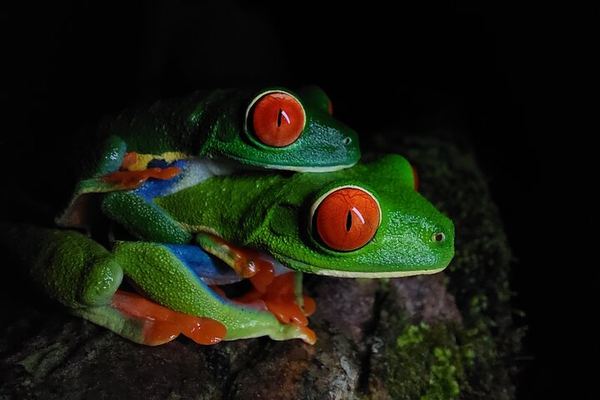
Arenal Night Hike: One Hour in Daylight, One in the Dark
The walk is timed to cross the twilight: sloths and toucans while the light holds, then frogs and snakes once it goes. An hour either side of dusk.
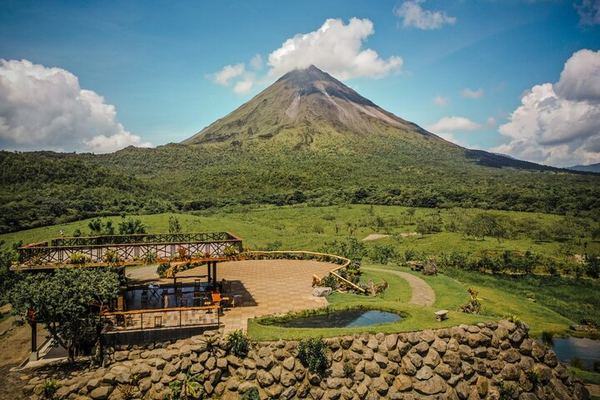
Arenal Northwest Hike over the 1968 Lava Flows, with Optional Hot Springs
The technical route: the northwest sector, the 1968 flows underfoot and guides who work through volcanology rather than scenery. Hot springs optional.
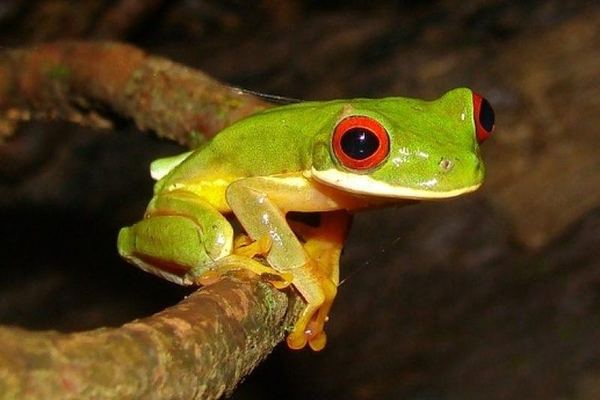
Arenal Oasis Night Walk: 28 Frog Species in a Family-Run Sanctuary
The only wild frog sanctuary around Arenal, with at least 28 species in spring-fed ponds kept by the Rojas Bonilla family. Flat trails, 5:00 pm pick-up.
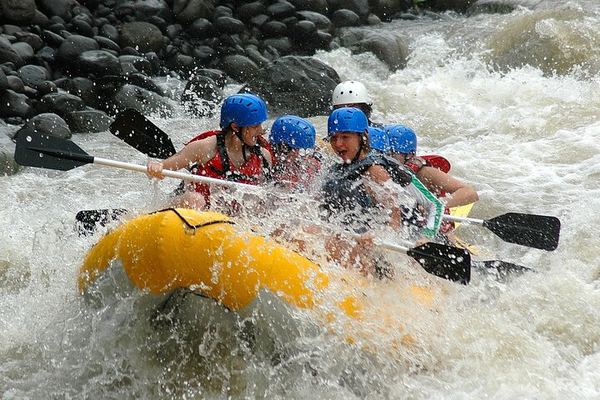
Arenal Rafting and ATV Combo: Water in the Morning, Wheels After
A raft for the river and a quad for the hills, with different gear for each half and no experience needed on either. Office above the Lava Rocks Restaurant.
Ratings collected by Viator and Tripadvisor

The volcano stopped in 2010, and the town did not
Until the morning of 29 July 1968, Arenal was not treated as a volcano at all. It was a green, wooded hill that local people called Cerro Arenal, quiet for roughly four centuries, with farms on its flank. At about half past seven that morning the western side blew out. Blocks were thrown as far as twelve kilometres, pyroclastic flows came down the slope at over a hundred kilometres an hour, and the villages of Tabacón, Pueblo Nuevo and San Luis stopped existing. Around 87 people died.
What followed was forty-two years of continuous activity: a new crater, nightly rockfalls, lava tongues, and a town called La Fortuna that discovered it had a floor show. The show ended in October 2010. Since then the volcano has degassed quietly and done nothing else, and the crater rim has grown a hat of vegetation.
Even its height is unsettled. You will see 1,633 metres, 1,657 and 1,670 quoted by sources that all sound authoritative, because the summit was rebuilt repeatedly during the eruption and different surveys caught it at different moments. No measurement taken before 2010 is describing the same mountain you are looking at.
How a hill became a volcano and then a town
Five dates that explain why La Fortuna looks the way it does.
The origins
29 July 1968
The flank blows out
After about four hundred years of quiet, a lateral blast destroys three villages and kills roughly 87 people. Blocks travel up to 12 km and pyroclastic flows exceed 100 km/h. Around 15 square kilometres are buried.
The growth
1970s
The lake is enlarged and the villages move
A hydroelectric dam raises Lake Arenal to several times its old size. Two villages are relocated and the lake becomes the western horizon of every photograph of the cone.
2000
The climbing ban stops being advisory
A pyroclastic flow reaches walkers who had gone up the flank, and kills. Access to the cone is closed and has stayed closed. Operators offering a summit hike here are selling something that does not lawfully exist.
Today
October 2010
The eruption ends
Forty-two years of continuous activity stop. The volcano enters a resting phase and remains there, monitored, degassing, and green.
Today
Sixty-four ways to spend a day
The tourism built for a live volcano now sells rainforest: bridges, ropes, rivers, hot water and night walks, with the cone as the view from the hotel.
The clouds are the real risk, not the volcano
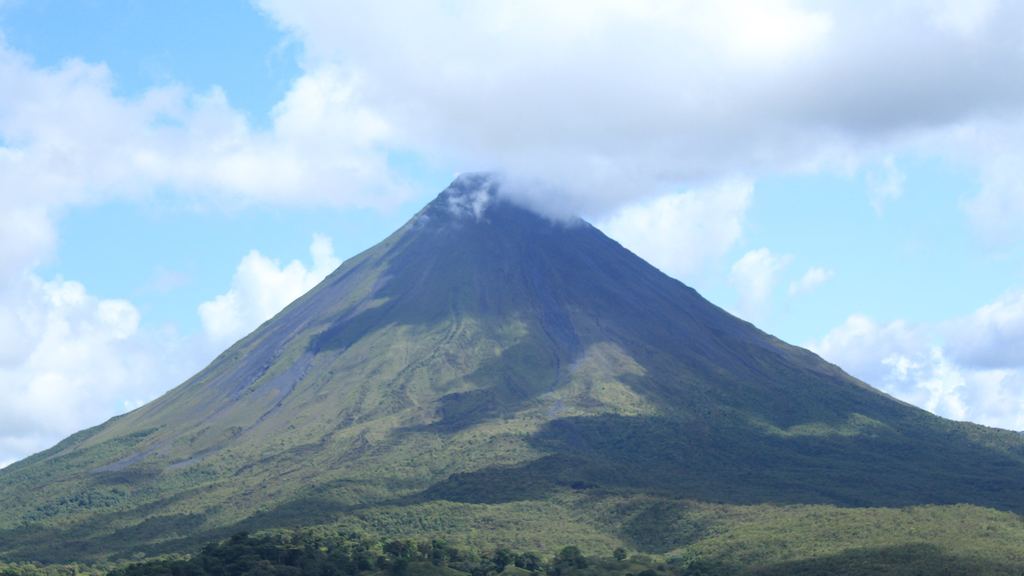
La Fortuna sits on the Caribbean slope of the continental divide, at the wet end of a wet country. The cone makes its own weather: warm air rises off the forest, hits the cold summit and condenses, and the top of the mountain disappears. It happens on most days, and it happens earliest in the afternoon.
If seeing the cone matters to you, look at it before nine in the morning. That is the whole technique. Guides know it, which is why the good full-day tours start at 07:30 rather than at a civilised hour, and why the sunrise photographs you see were taken by people who were awake at five. Booking a three-night stay rather than a two-night one roughly doubles the number of mornings you get, which is a more reliable strategy than any of the tours.
Nothing an operator can do changes this, and the honest ones say so in their own product text: several Arenal listings on this site carry the phrase "if weather permits" or "on a clear day" about the volcano view itself. Treat those three words as the terms of sale.
Three different tickets, all sold as "Arenal Volcano"
This is the single most useful thing on the page. There are three separate places at the foot of Arenal that sell a walk with the volcano's name on it, run by three different organisations, at three different prices, and a tour description will often name none of them. They are not interchangeable, and one of them is a state national park while the others are private land.
The national park is the cheapest and the most regulated. Its trails are short: Heliconias at 600 metres, the vehicle trail at 1.3 km, Las Coladas at 2 km running out across the lava field left in 1968, and El Ceibo at 3 km, which ends at a ceiba tree several hundred years old that the eruption missed. None of them goes up. Climbing the cone is prohibited, and it is prohibited because people who tried it died. Any itinerary that promises the summit is describing a place you cannot legally go.
| Sold as | Who runs it | Entry | Hours | What you actually walk |
|---|---|---|---|---|
| Arenal Volcano National Park | The state park service | about 17 USD | Volcán sector 08:00-16:00, Península 08:00-17:00 | Four short trails in 12,016 hectares, including 2 km across the 1968 lava |
| Arenal 1968 | A private reserve on the flow | about 25 USD | 08:00-17:00 | Trails on the same lava field, a small lake, and the most open view of the cone |
| Arenal Observatory Lodge | A hotel that sells day access | Day pass, varies | Daytime | Grounds, a hanging bridge and a waterfall, on the closest ground to the cone you can stay on |
| The summit | Nobody | Not available | Never | Prohibited since 2000. If it is in your itinerary, ask what they mean |
The six kinds of day, and how they differ
Sixty-four listings sound like a lot of choice and are really six choices repeated. The table below is the fastest way to see which one answers your question, and each row has its own page underneath this one with the operational detail.
One structural thing worth knowing before you read it: roughly half of everything sold here is a combination of three or four of these in a single day, which is why prices that look wildly different are often the same activity with more bolted on. The most-reviewed product in the whole area is one of them, a waterfall, volcano walk and hot springs day at 93 EUR, rated 4.8 across 2,562 reviews.
| What you book | Listings | Price | What decides which one |
|---|---|---|---|
| Hanging bridges | 12 | 59 to 220 EUR | Which park, Mistico or Sky Adventures, and how many other stops are bolted on |
| Hot springs | 9 | 47 to 192 EUR | How many pools, and whether dinner is inside the ticket |
| Volcano activities | 12 | 44 to 278 EUR | Walking the 1968 lava by day, or looking for frogs after dark |
| Zipline and canopy | 12 | 34 to 155 EUR | Number of cables, and whether one of them crosses the waterfall canyon |
| Rafting and tubing | 12 | 26 to 175 EUR | Which river and which class: Balsa for families, Sarapiquí for the rest |
| Waterfalls | 7 | 18 to 150 EUR | Whether you want the ticket, the horse, or the rope |

A three-day stay that works
The geography of La Fortuna does most of the planning for you. Everything sits within about half an hour of the town: the national park entrance is 25 to 30 minutes west, the waterfall is 5.5 kilometres south, the bridges are past the dam on the way to the lake, and the hot springs line the same road as Tabacón. Nothing needs a full day of driving.
What that allows is the pattern the good operators already use. Something active in the morning, while the cone is still visible and the rain has not started. Lunch. Something wet in the afternoon, because it is going to rain anyway. Hot water at the end, when it is dark and the temperature drops. The full-day combinations sold here follow exactly that order, and it is the reason they work rather than a coincidence.
Two things to leave out of a short stay. The Río Celeste, the turquoise river in Tenorio Volcano National Park, is a genuinely good day but it is about two hours away in each direction and belongs to a different area. And the single day trip from San José that includes Arenal: three hours each way for a few hours here is a poor exchange when a bed in La Fortuna costs less than the transport.
| 1 | 2 | 3 | 4 | 5 | 6 | 7 | 8 | 9 | 10 | 11 | 12 |
Ask one question before you pay: does this tour go into the national park, into Arenal 1968, or onto hotel grounds? Three different tickets are sold under the same four words, and only one of them is a national park.
What it costs, and when a combination stops being a bargain
The cheap end of Arenal is genuinely cheap. The La Fortuna waterfall ticket on its own is about 18 EUR, a kayak on the lake 26, a discounted canopy course 34, a night walk 44. The expensive end is 278 EUR for a private side-by-side buggy day. Between those two the market clusters hard between 80 and 145 EUR, and almost everything in that band is two or three activities with transport and lunch.
The arithmetic that nobody does for you: a self-driven day of waterfall, national park and an afternoon in the hot springs costs roughly 18 plus 17 plus whatever the springs charge. The equivalent guided combination is 88 to 105 EUR. The difference buys transport, a naturalist who finds the wildlife you would drive straight past, and the entrance fees pre-booked, which since August 2023 is not a trivial service in Costa Rica. Whether that is worth sixty euros depends entirely on whether you have a car.
Where the combinations stop making sense is at four attractions. The 241 EUR four-in-one day runs from 07:30 to about 21:30 and includes lunch and dinner. It is not bad value for what it contains. It is a fourteen-hour day in a wet climate, and the last stop, in the dark, is the one people remember least.
Questions people actually ask
Can you see lava at Arenal in 2026?
No. Arenal last erupted in October 2010 and has been dormant for sixteen years. There is no glowing lava, no night-time red seam and no active vent to watch, and there has not been for longer than some visitors have been travelling. Travel articles still in circulation say you should go round to the other side of the volcano for a glimpse, which was good advice in 2009 and is simply wrong now. What you can walk on is the lava that cooled after 1968.
Can you climb Arenal Volcano?
No, and this is not a soft rule. Access to the cone has been closed since a pyroclastic flow killed walkers on the flank in 2000, and the national park trails all stay on the lower ground. The highest thing you will do here is a lookout on the old lava field. If a listing offers you the summit, it is either careless wording or an operator who should not have your money.
How much does the national park cost?
15 USD plus 13% tax for a non-resident adult, so about 17 USD, and it must be booked online in advance since Costa Rica stopped selling park tickets at the gate in August 2023. The Volcán sector is open 08:00 to 16:00 and the Península sector 08:00 to 17:00. A guided tour that includes the entrance has already handled the booking, the passport numbers and the timing.
Will I actually see the volcano?
Some mornings, yes; most afternoons, no. The cone generates its own cloud and is hidden more often than it is clear, which is the commonest disappointment in this destination. Early morning is much better than late, the dry months are better than the wet ones, and staying three nights instead of two is the only real insurance. Several operators write "if weather permits" into their own descriptions of the view.
How many days do I need in La Fortuna?
Three nights. Two works if you are efficient, but it gives you only one full day and one morning of volcano-viewing luck. Everything worth doing sits within half an hour of the town, so three nights lets you take one activity a day at a reasonable pace rather than buying a fourteen-hour combination out of necessity. One day trip from San José is not enough for anything.
Is Arenal better than Poás or Rincón de la Vieja?
It depends what you want to look at. Arenal has by far the most to do and the most complete tourist infrastructure in the country, but the volcano itself is scenery. Poás and Irazú give you an actual crater to look into, in half a day from San José. Rincón de la Vieja gives you geothermal ground, mud pots and fumaroles, which is the closest thing to a live volcano at walking distance. Arenal is the best base; it is not the best crater.
What should I bring?
Shoes with grip that you do not mind soaking, because the trails are volcanic gravel and wet clay and both are slippery. A rain jacket rather than an umbrella, since the rain arrives sideways. Insect repellent for the night walks, a swimsuit under your clothes because most days end in water, and cash in colones for parking at the national park. Nothing here needs technical gear.
Data verified on. Prices, listing counts and ratings read from the Arenal products on this site. Park fees, sector hours and trail lengths from SINAC; eruption dates from the published volcanological record.