

Mount Rinjani Treks: the Summit, the Rim and the Lake
3,726 m, a park that shuts for three months every year, and a catalogue in which several products sold as summit treks never reach the summit.
Twenty-three Rinjani products are sold here and the single attribute that decides which one you want, whether you reach the summit and in how many days, is the attribute the market gets wrong most often. One listing in this catalogue is titled a summit trek and describes, in its own first sentence, a crater rim walk for beginners. That is not an outlier. It is the normal condition of Rinjani listings, and sorting it out is most of what this page is for.
What follows compares the routes against each other and sets out the rules that govern getting on the mountain at all: the closed season, the permit, the quota, the insurance that became compulsory in March 2026, and the booking system that will not work on an iPhone. The day-by-day detail of each trek, the kit, the porter weights and what you eat, sits on the two pages below.
Choose a destination in Mount Rinjani
-
Senaru Crater Rim (2D1N)
The 2D1N Senaru crater rim trek on Rinjani: the two days hour by hour, what the porters carry, what you carry, and the permit most listings leave out.
9 experiences -
Summit Trek (3D2N)
The 3D2N Rinjani summit trek from Sembalun: the three days with altitudes and hours, the sand on the summit push, porter costs, and which listings are…
11 experiences


Volcano Travel Experiences in Mount Rinjani
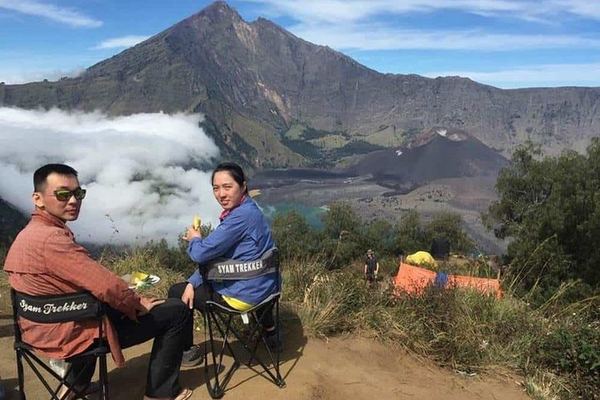
Private Rinjani to Senaru Rim with Syam Trekker: Park Fee In, 7 cm Mattress
Guide and porter to your party alone, the national park fee already in the price, all meals, and a 7 cm mattress instead of the group tour's 5 cm one.
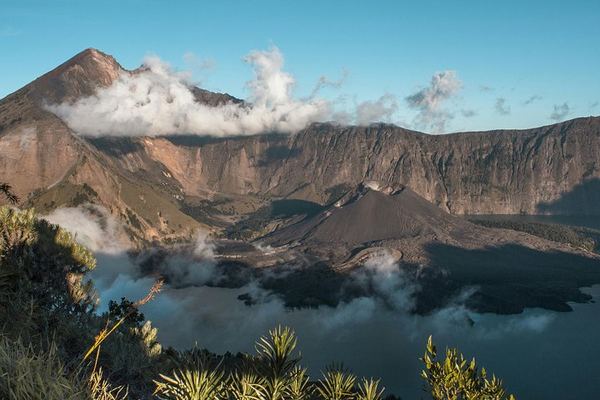
Rinjani 2D1N to the Rim: Segara Anak Lake and the Cone Inside It
Forest, then steep grassland, then the rim at 2,641 metres, with Lake Segara Anak and Gunung Baru below it. Built for short trips and for families with kids.
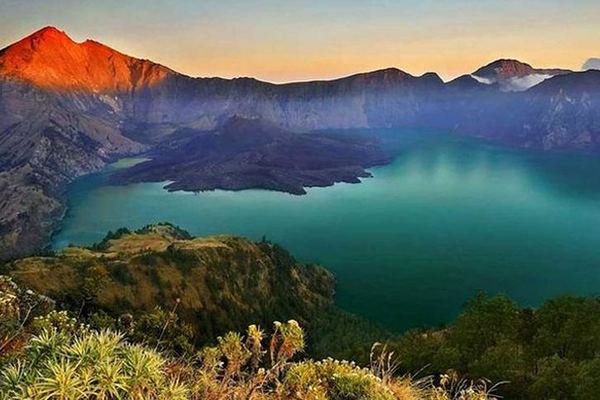
Rinjani 3 Days: Both Crater Rims, the Summit and Segara Anak Lake
The two-day packages make you choose between the summit and the lake. Three days holds the summit, both crater rims and Segara Anak lake in one walk.
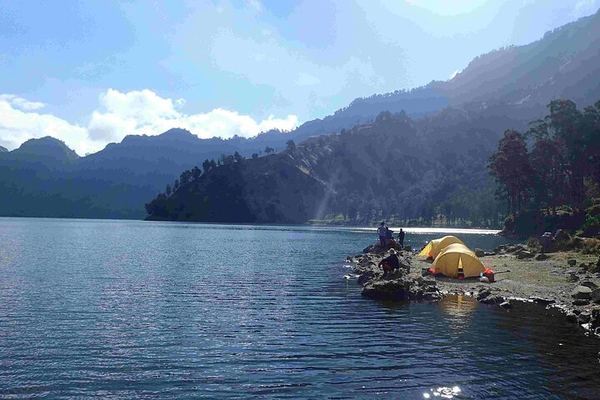
Rinjani 3 Days in Reverse: Up the Cool Senaru Forest, Out Through Sembalun Savanna
Run in the opposite direction to most three-day packages: the shaded forest climb first, then the lake and hot springs, and the summit only after them.
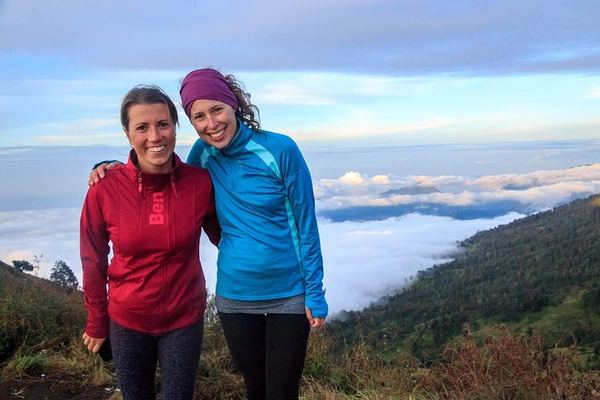
Rinjani 3 Days, Sembalun to Senaru: Summit, Lake and a Second Rim in One Day
The shortest package that still reaches every point, at the price of a middle day holding the summit, the descent to the lake and a second climb to Senaru.
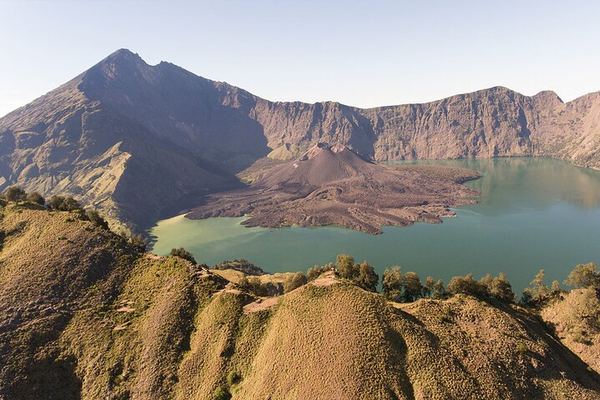
Rinjani 3 Days: Sunrise Over the Wallace Line, Edelweiss on the Ridge Down
Your medical card and trekking pass QR code are handed over at Sembalun, and the descent from the summit follows a ridge of edelweiss back down to camp.
Rinjani 3 Days Through the Grasslands: Summit, Lake and Hot Springs
The first day crosses open grassland rather than forest, and the Sembalun rim camp faces the crater lake, the summit and northern Lombok at sunset.
Rinjani 3-Day Summit and Lake, with the Torean Route as a Way Out
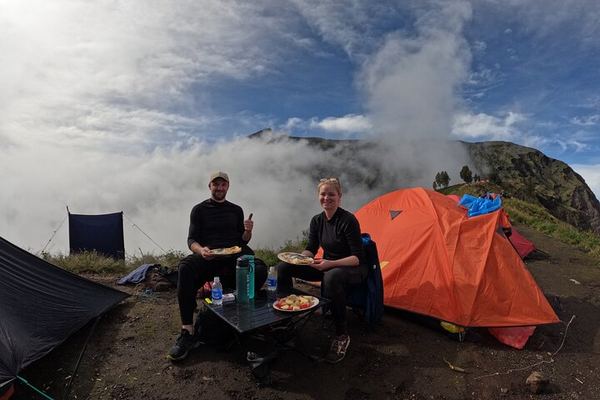
If the second night on the Senaru rim falls through, this operator camps at the lake and walks out through Torean instead, keeping the trek at three days.
Rinjani 3 Days with Cakrawala: 2 a.m. Summit Start, Black Monkeys on the Way Down
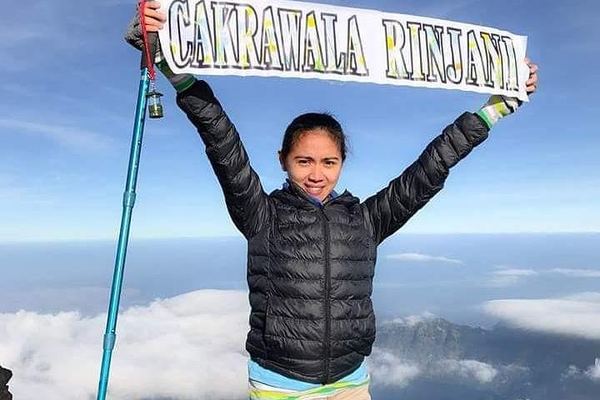
Cakrawala states the requirement outright: eight hours of uphill and downhill walking a day, three days running, with the summit push leaving camp at 2 a.m.
Rinjani 3 Days with Jou Trekking: Two Breakfasts on Summit Morning
Jou Trekking wakes you for a light breakfast at 3 a.m. and a three-hour summit climb, with the proper breakfast waiting back at the rim camp afterwards.
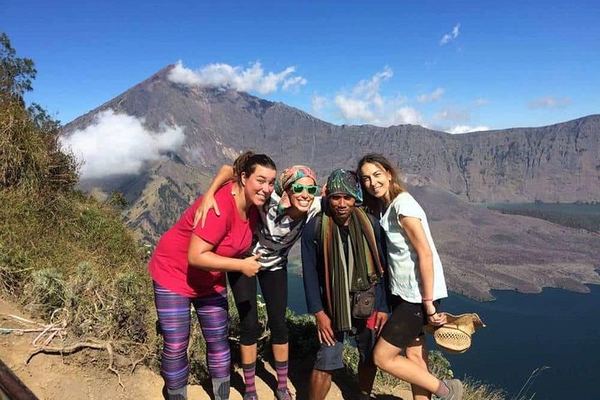
Rinjani Crater Rim with Syam Trekker: Six Max, Toilet Tent, Boat to the Gilis
Groups of six, a toilet tent and 5 cm mattresses in the kit, and a private boat to the Gilis at the end. One of the few here that refunds a cancellation.
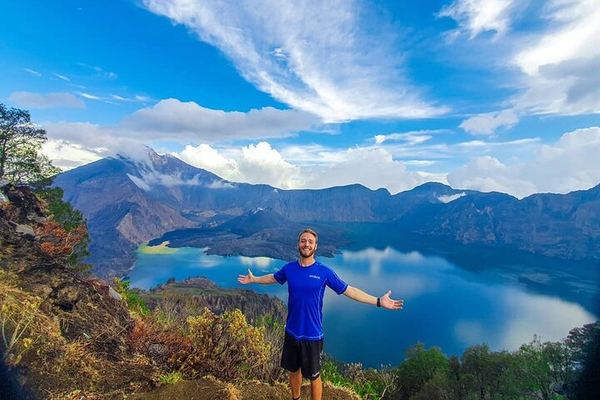
Rinjani for Beginners: Senaru Rim, with Tiu Kelep Falls on the Side
The only Rinjani package this operator recommends to first-timers, with hotel pick-up at 07:00 and two waterfalls nearby worth adding the day you arrive.
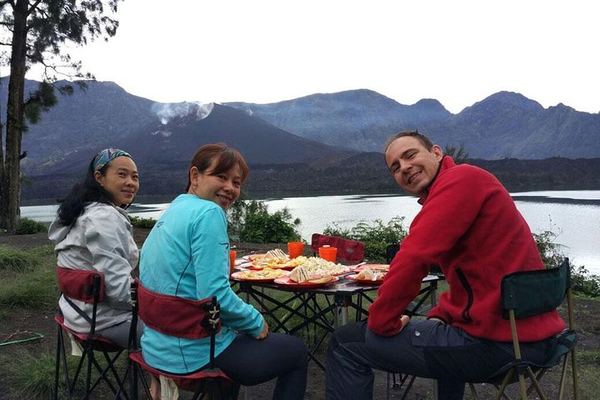
Rinjani in Four Days: a Night Beside the Crater Lake and Hours to Do Nothing
The extra day buys a night camped on the shore of Segara Anak and a morning with nothing scheduled in it, rather than the same route walked faster.
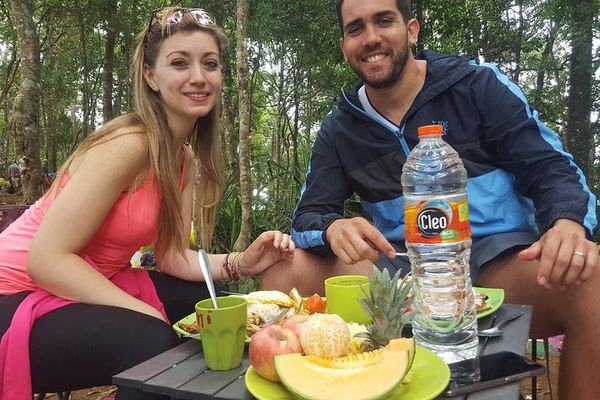
Rinjani Senaru Rim: a Hotel Night Before the Climb, Drop-Off Anywhere on Lombok
You sleep at Senaru the night before rather than driving up on the morning of, and get dropped wherever you are headed on Lombok when you come down.
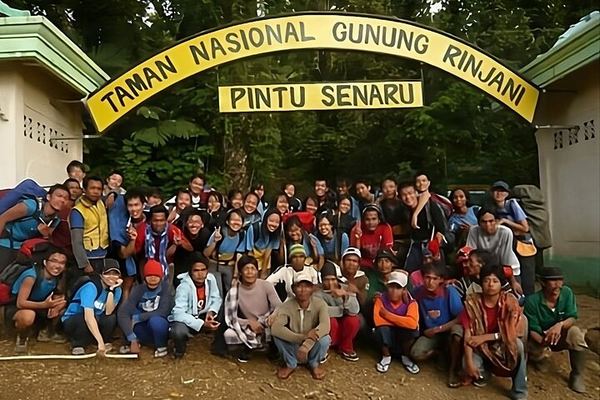
Rinjani Senaru Rim: Coffee Plantations, Mondokan Lokak, Pelawangan 1
Half an hour of coffee plantations before the forest gate, lunch at Mondokan Lokak, camp at Pelawangan 1. A private car onward when you come back down.
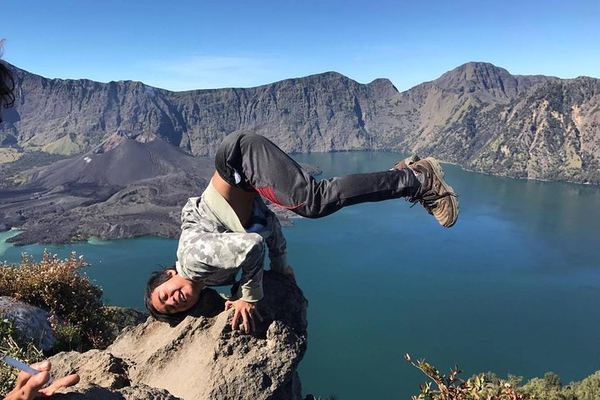
Rinjani Senaru Rim in the Shade: 8 Hours Up Through Rainforest, 5 Back
Most of the climb runs under rainforest canopy rather than open sun, and the waterfall stop the day before means reaching Senaru an hour before sunset.
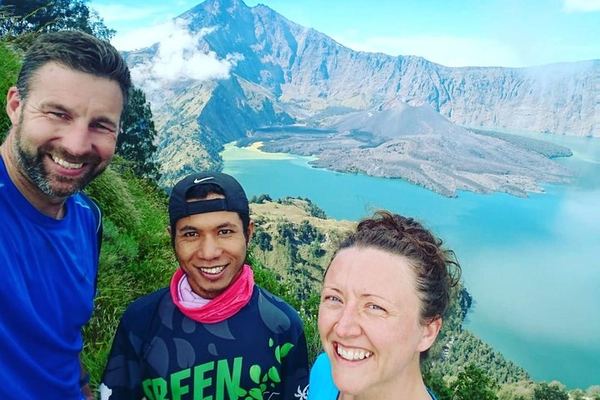
Rinjani Senaru Rim in Two Days: Plant a Tree on the Mountain, Children from 7
Green Rinjani has you plant a tree on the mountain during the walk, and takes children from seven years old on a seven-hour first day and six-hour second.
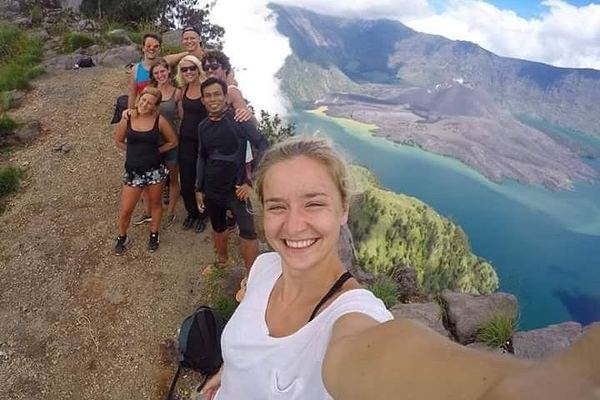
Rinjani's Second Summit: the Senaru Rim Trek This Operator Gives Families
The only Rinjani package this operator puts in front of first-time trekkers and families with children, camping on the Senaru rim for sunset and sunrise.
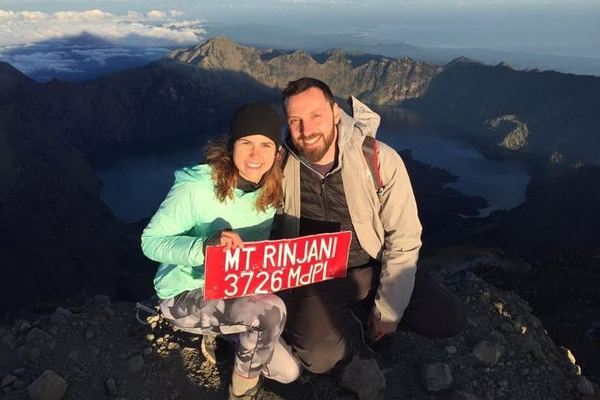
Rinjani Summit 2 Days with Em Adventure, a Sembalun Outfit: Groups of Six
A Sembalun-based outfit running the summit in two days with a maximum of six travellers per group, starting from your hotel and the park office registration.
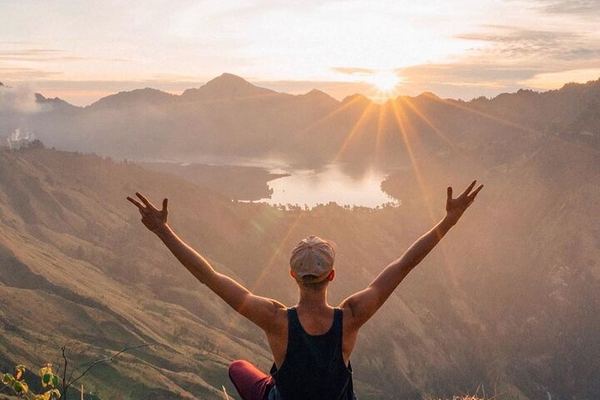
Rinjani Summit from Sembalun in Two Days: 1,156 m to 3,726 m and Back
The Sembalun route in its shortest form: camp on the rim at 2,639 m, summit early the next morning, then descend the full 2,570 metres to the village.
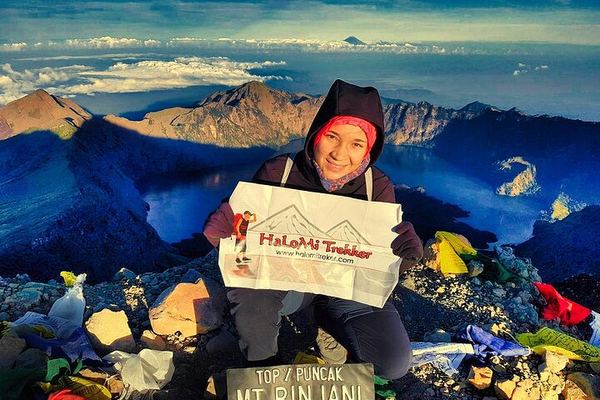
Rinjani Summit in 20 to 21 Hours of Walking: HaLoMi's 2D1N, Night Before Included
HaLoMi publishes the walking time rather than hiding it, and throws in the transfer the day before, so the two-day package actually runs three days.
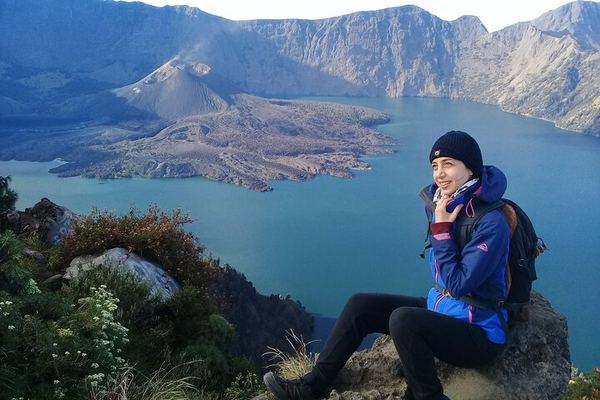
Rinjani to the Senaru Crater Rim: Camp at 2,641 m Above Baru Jari
The crater rim without the summit climb: 2,000 metres of jungle in a day, then camp above the lake with Baru Jari smoking inside it. All sales are final.
Senaru Crater Rim 2D1N: Park Permit Invoiced Separately After Booking
The national park permit is not in the price: it arrives as a separate PayPal invoice after booking. Two thousand metres of climb on day one, rainforest first.
Ratings collected by Viator and Tripadvisor
Which routes reach the summit, and which do not
Read this table before you read a single product page. Every row is a real shape of trip sold on this site, and the second column is the one the titles keep getting wrong.
| Sold as | Do you reach the summit at 3,726 m? | Nights out | Price here |
|---|---|---|---|
| Senaru Crater Rim, 2 days 1 night | No. You stop on the rim at 2,641 m and look down at the lake and across at the summit | 1, on the rim | 134 to 246 EUR |
| Summit, 3 days 2 nights, Sembalun to Senaru | Yes, before dawn on day two, then down to the lake and the hot springs | 2, rim and lakeside | 194 to 344 EUR |
| Summit, 2 days 1 night | Yes, if it is genuine. One operator states 20 to 21 hours of walking across the two days | 1, on the Sembalun rim | 150 to 264 EUR |
| Summit and lake, 4 days 3 nights | Yes, with a spare day at the lake and the hot springs | 3 | 414 EUR |
| Second Summit, 2 days 1 night | No. The operator's own description is the Senaru crater rim, for beginners | 1 | 150 EUR |
That last row is worth naming plainly, because it is the whole problem in one product. It is filed under summit treks, its title contains the word summit, and its own description begins by explaining that it is a two day one night package to the Senaru crater rim, suitable for beginners. Both statements come from the same operator on the same page. The same confusion runs through the wider market, where you can find a one-day Rinjani trek advertising a duration of thirty-six hours.
Do not buy on the title. Open the description and look for two words: Sembalun, which is where summit routes start, and the number 3,726. If neither appears, you are buying a crater rim walk, which is a fine thing to buy and a poor thing to discover on the mountain.
The mountain that is mostly a hole
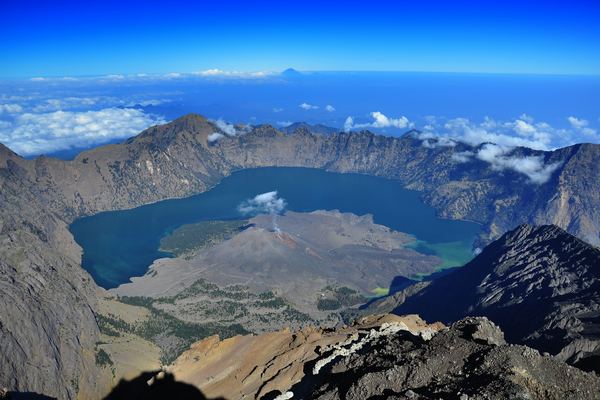
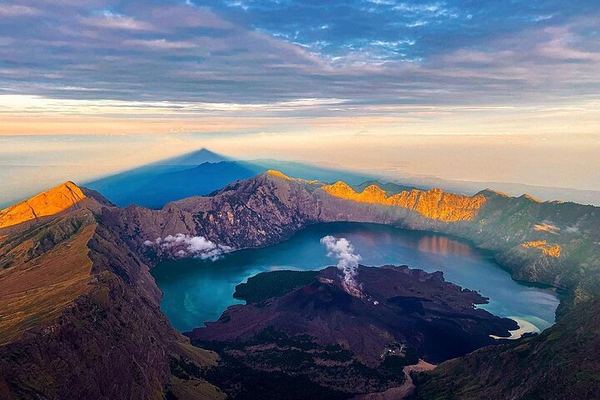
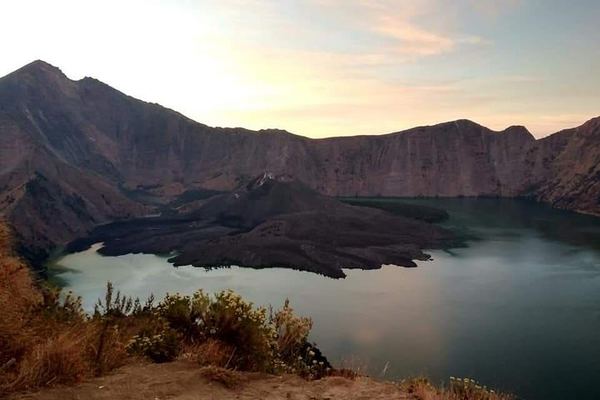
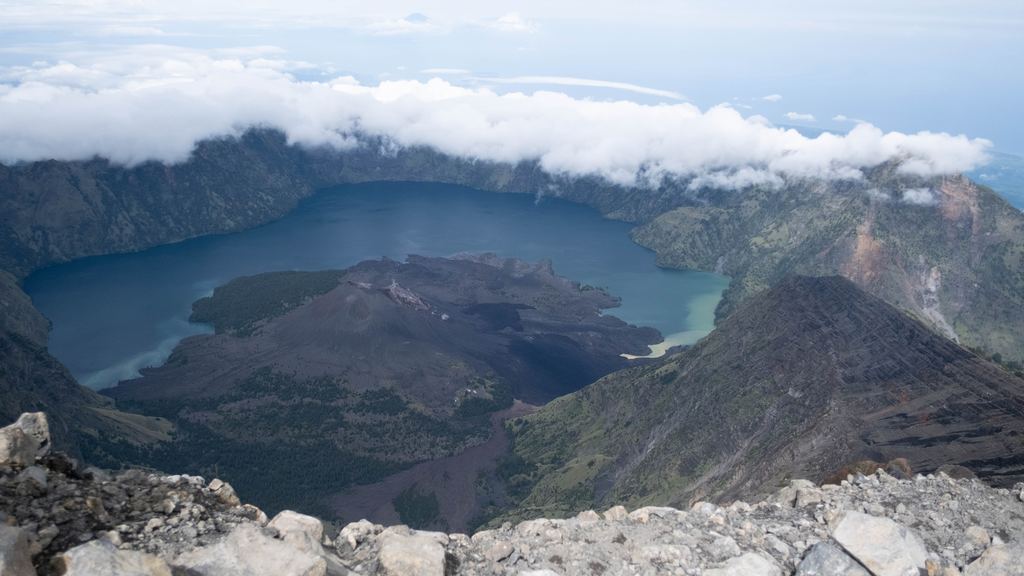
Rinjani's summit is the highest surviving piece of a much larger volcano that destroyed itself. The caldera is roughly six kilometres by eight and a half, and its floor holds Segara Anak, a crescent lake at about 2,000 metres and some 200 metres deep, with a young cone called Barujari growing out of it. One operator on this site describes it in its own itinerary as the smoke coming out of the hole of the new volcano by the lake, which is a better description than most guidebooks manage.
The collapse that made the caldera is dated to 1257 and was one of the largest eruptions of the last ten thousand years, big enough to leave a sulphate signal in ice cores in both hemispheres and to show up in medieval chronicles as a year without a proper summer. The mountain that blew up is called Samalas. What you walk on is its wreckage, and the reason the rim is such a good vantage point is that you are standing on the edge of the hole where a bigger mountain used to be.

Why the rim is the destination for most people
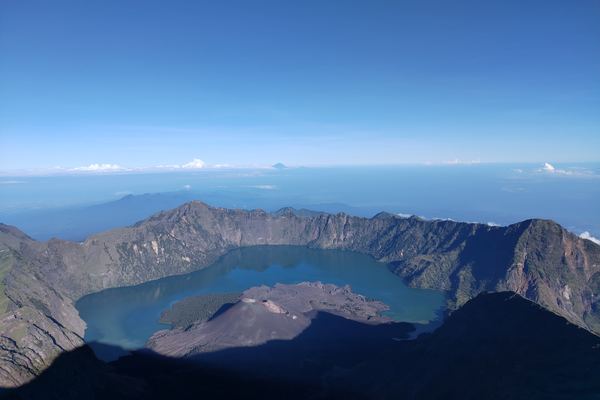
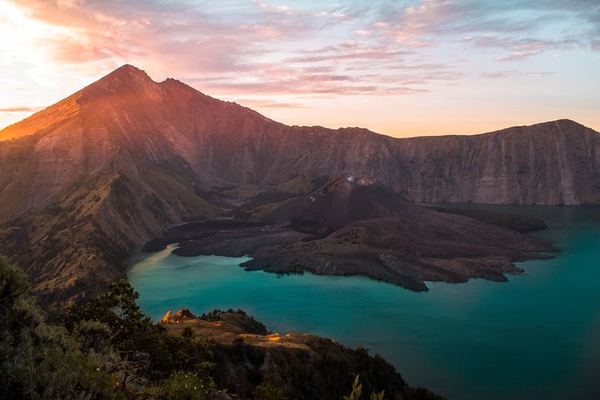
From the crater rim the whole caldera opens at once: the lake below, Barujari steaming in the middle of it, and the summit cone across on the far side. It is the view that appears on every Rinjani product page, including the ones that never go higher than this.
That is the honest case for the two-day trek. The photograph you have seen is taken from the rim, not from the summit, and from the summit at dawn you mostly see cloud, three islands and your own shadow. The two-day walk buys the view. The three-day walk buys the view, the lake, the hot springs and the top, at roughly double the effort.
Three months a year the mountain is shut
This is the rule that catches people who book from abroad. Every trekking route in the park closes from 1 January to 31 March, for the height of the rainy season and for the recovery of the trails. It is not conditional on the weather in a given week and it is not negotiable by an operator. The 2026 season reopened on 1 April, with bookings taken from 6 March.
The dates are announced by the park authority and repeat annually, so a trek sold to you for February is either a booking that will be moved or a booking that should not have been taken. If you are planning a Lombok trip around Rinjani, the planning starts with those three months and works outwards.
What the mountain has done, and what it changed
The events that shaped the caldera and the rules for walking into it.
The origins
1257
Samalas collapses
One of the largest eruptions of the Holocene destroys the older volcano and leaves the caldera that now holds Segara Anak. The sulphate reaches ice cores in both hemispheres.
The growth
2015-16
Barujari erupts and the park closes
The cone inside the lake produces ash columns that shut the trekking routes and disrupt flights on Lombok and Bali. The lake trek is the first thing to close in these episodes.
2018
The Lombok earthquakes strand hundreds on the mountain
Landslides cut the trails with several hundred trekkers above them, and the park closes for an extended period while the routes are rebuilt.
Today
2026
Insurance becomes compulsory
From 6 March, every trekker pays 290,000 rupiah for cover that includes helicopter evacuation. The season opens on 1 April with the volcano at alert Level II.
| 1 | 2 | 3 | 4 | 5 | 6 | 7 | 8 | 9 | 10 | 11 | 12 |
Permits, quotas and the app that only runs on Android
Entry is booked through eRinjani, the park's own system, and this is where independent trekkers hit a wall that nobody writes about. The official app is published for Android only. If you carry an iPhone, you are booking through an operator whether or not you wanted a guided trek. That single fact explains a good deal of why almost everything on this mountain is sold as a package.
The permit price is genuinely unclear and it would be dishonest to pick a number. Sources put it between 200,000 and 250,000 rupiah per person per day; one operator on this site states 250,000 per person per day in its own list of exclusions, and invoices it separately after booking. Treat 250,000 a day as the planning figure and expect the actual charge to be confirmed by whoever registers you.
On top of that sits the insurance, compulsory since 6 March 2026 at 290,000 rupiah per person per trek, covering helicopter evacuation. It is a live cost, it is not in most advertised prices, and almost nothing published in English mentions it.
Daily entry is capped. The figure in circulation is 240 foreign and 160 domestic visitors a day across the whole park, which comes from a single source and should be treated as an order of magnitude rather than a guarantee. In the peak months it binds; in April and November it does not.
Four numbers decide the budget before any tour price: the permit at roughly 250,000 rupiah a day, insurance at 290,000, the tips, and an extra porter at 25 US dollars a day if you cannot carry your own pack.
Guides, porters and a public blacklist
You do not walk Rinjani alone. Guides and porters are required, and the porter system is the reason a three-day trek is physically possible for ordinary walkers: the tents, the cooking gear, the food and the water go up on shoulder poles carried by men from Sembalun and Senaru, and you carry a day pack. Every operator on this site includes guides and porters in the base price. What none of them include is a porter for your personal luggage, which runs to about 25 US dollars a day as an extra.
The park runs a public blacklist of climbers sanctioned for leaving waste, damaging vegetation or ignoring safety instructions, with bans that typically run five years from the date of the offence. It is published with names. Whatever you think of that as policy, it tells you the register this park operates in: it counts who is on the mountain, it publishes the count, and it names the people it has thrown off.
Which trek is yours
The two-day Senaru crater rim walk is for people who want the caldera view and a night in a tent above it, and who have a week in Lombok rather than a month of training. It climbs about 2,000 metres on the first day, which is a serious day out, and then comes back down the same way. Nine listings, 134 to 246 EUR.
The three-day summit crossing is a different order of commitment: up from Sembalun to a camp on the rim, out of the tent at two in the morning for the summit, down to the lake and the hot springs, and out through Senaru on the third day. Eleven listings, 150 to 344 EUR. It reaches 3,726 metres and the last stretch is on volcanic sand that gives back about a third of every step.
The two-day summit variant exists and one operator is admirably blunt about it: twenty to twenty-one hours of walking. It is the version most likely to end at the rim rather than the top, because a summit push after one short night is where fitness assumptions get tested. If the summit is the point, take the three days.
Questions people actually ask
When is Mount Rinjani closed?
Every route closes from 1 January to 31 March each year, for the rainy season and for trail repair. The 2026 season reopened on 1 April, with bookings taken from 6 March. Beyond that, the park closes at short notice for volcanic activity, fires and earthquakes, and it has done all three within the last decade.
Do I actually reach the summit on a two-day trek?
Only if the product says Sembalun and 3,726 metres. The standard two-day trek goes to the Senaru crater rim at 2,641 metres, where you look down at the lake and across at the summit without climbing it. A two-day summit variant does exist, and one operator states it involves 20 to 21 hours of walking. One listing sold under the summit heading describes itself as a beginners' crater rim trek in its own text.
How much is the permit?
Between 200,000 and 250,000 rupiah per person per day depending on the source, and the discrepancy is real rather than something we can resolve for you. One operator here states 250,000 per person per day and invoices it separately after booking. Budget at the higher figure. Since 6 March 2026 there is also compulsory insurance at 290,000 rupiah per person per trek, covering helicopter evacuation, which almost no listing mentions.
Can I book the park myself without a tour?
In principle yes, through the eRinjani system. In practice the official app is published for Android only, so iPhone users end up booking through an operator regardless. Guides and porters are required in any case, so the independent route saves less than it appears to.
How hard is it?
Harder than most people expect and not technical. The two-day rim trek climbs about 2,000 metres on its first day. The three-day summit route camps at 2,639 metres, starts the summit push at two in the morning and finishes on loose volcanic sand where you slide back with each step. Operators list it as unsuitable for people with spinal injuries, cardiovascular problems or in pregnancy, and they list it that way for good reason.
Is the volcano safe at the moment?
Badan Geologi had Rinjani at alert Level II of four when this page was checked on 12 August 2026, which is an advisory level rather than a restriction on the park. The Barujari cone inside the lake is the part that erupts, and when it does the lake camp is the first thing to be closed. The hazards that actually affect trekkers are more ordinary: the rim path drops away steeply on both sides, and the park has tightened its safety regime accordingly, including the compulsory evacuation insurance.
Do I need a porter for my own bag?
Not included, and worth budgeting. The porters in your package carry the camp, the food and the water; your own pack is yours. An extra porter runs to about 25 US dollars a day. If you are carrying a full pack up 2,000 metres on day one having never done it before, the 25 dollars is the best money you will spend on this mountain.
Can you swim in the crater lake?
Yes, and in the hot springs beside it, which is one of the arguments for the three-day route over the two-day one. The lake sits at about 2,000 metres and is cold; the springs alongside are not. Only the routes that descend into the caldera reach them, so the Senaru rim treks do not.
Data verified on. Alert level from Badan Geologi (PVMBG). Closure dates, quotas, insurance and the climber count from the Rinjani national park authority. Routes, prices and durations from the products on this site.