

There is a hope, rarely said out loud, that the volcano might do something while you are there. It is understandable. It is also, in almost every practical sense, the wrong thing to hope for.
An eruption does not open the volcano. It closes it. Exclusion zones widen, summit routes shut, guides are obliged to bring clients down, and cable cars stop. If there is ash in the air, aircraft stop too, and the thing you now have is not a spectacle but a logistics problem with your name on it.
This page is about that problem, because it is one of the few genuinely useful things to know in advance and almost nobody writes it down.
Why activity closes access rather than opening it
The authorities managing volcanoes are not in the business of showing you an eruption. They are in the business of not having visitors killed by one, and the tools they use all work in the same direction.
When a monitoring agency raises an alert level, a chain follows. Exclusion radii expand, often asymmetrically, because the hazard runs downhill in particular directions. Municipal or park authorities close routes inside those zones. Licensed guides, on several mountains, are legally required to suspend activity immediately and evacuate clients without waiting for a formal order.
So the tour you booked does not become more exciting. It becomes cancelled, and the operator is frequently the last person with any discretion in the matter.
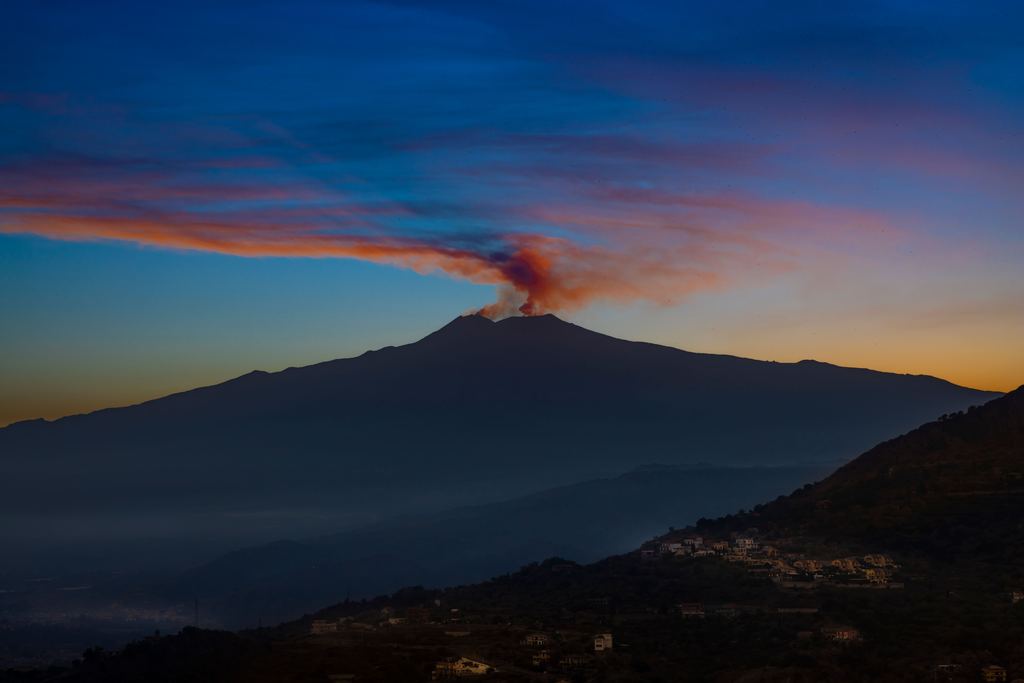
There is one exception worth understanding. On volcanoes with persistent, routine activity, the rules are built around that activity rather than triggered by it. Stromboli's ordinances assume explosions every few minutes; that is the baseline, not the emergency. The emergency is when the routine changes.
The question everyone gets laughed at for asking
Do volcanoes erupt seasonally? No, but the question is fair
Ask on a forum whether a volcano erupts more in a particular month and you will be told, correctly and unhelpfully, that volcanoes do not know what a calendar is.
That is true and it is not what the person was asking. What they meant was: what is the realistic chance this disrupts my trip? And that has an answer, just not a seasonal one.
The honest version is that eruption timing is not predictable on the scale of a holiday, but disruption frequency is a property of the volcano. Some produce frequent short episodes with local effects. Some go decades between events and then close airspace across a continent. Etna disrupts Catania's airport periodically, which is a known operational reality that airlines and insurers price in; Eyjafjallajokull in 2010 cancelled something in the order of a hundred thousand flights across Europe, and that was a once-in-a-generation event.
What you can do about it is not choose a month. It is build a trip that survives the disruption: spare days, refundable where it is cheap to be, and no tight connections on the way home.
Ash and aircraft
Volcanic ash is not smoke. It is finely fragmented rock and glass, and the reason it grounds aircraft is specific: it melts in a jet engine's combustion chamber and then resolidifies on the cooler turbine components. It also abrades windscreens and blocks sensors.
That is why the aviation colour code exists as a separate system from ground alert levels, and why the two can point in opposite directions. A modest ash plume that matters enormously to a jet may be entirely irrelevant to somebody standing five kilometres away.
Practically, this means flights and tours can be disrupted independently. Your tour can run while your flight is cancelled, and your flight can be fine while the mountain is shut.
The mistake that costs people their rights
If you take one thing from this page, take this one.
Do not cancel your own flight. When ash disruption starts and the news is full of closures, the instinct is to get ahead of it and rebook yourself. That instinct is expensive, because passenger rights and most insurance policies are triggered by the airline cancelling, not by you deciding it will.
Cancel voluntarily and you are typically a passenger who chose not to travel, which is a different and much weaker category. Wait for the airline to cancel and, in Europe at least, a body of passenger rights law applies: rerouting, and a duty of care while you wait.
One specific provision is worth knowing because it is regularly overlooked. Under European passenger rights rules, if you are rerouted to a different airport from the one you booked, the carrier bears the cost of getting you to the original destination airport. Travellers diverted to a distant airport routinely pay for that transfer themselves without realising they should not have to.
Credit card travel insurance behaves similarly: it usually responds once the airline has cancelled, and not before.
Where you stand on the tour, the accommodation and the flight
| What you booked | If activity closes it | What to do in advance |
|---|---|---|
| A guided volcano tour | Usually refunded or rescheduled: the operator cannot deliver it | Ask about their policy before booking. It is the one thing only they know |
| A national park ticket | Varies widely. Some parks refund, some do not | Buy close to the date rather than months ahead where you can |
| A flight, cancelled by the airline | Rerouting and duty of care apply in Europe. Compensation usually does not, because ash is outside the airline's control | Nothing. Wait for them to cancel |
| A flight you cancelled yourself | Typically nothing, from anyone | Do not do this |
| Accommodation you cannot reach | Depends entirely on the host's policy. Platforms are inconsistent | Prefer free cancellation for the nights around your arrival |
| The trip as a whole | Depends on your policy wording, and many exclude volcanic activity | Read the exclusions before you buy, not after |
Insurance: read the exclusions
Travel insurance for a volcano trip has two problems that ordinary trips do not.
The first is that some policies exclude volcanic activity by name, which is a reasonable commercial decision and an unpleasant surprise if you discover it while stranded. The second is that many policies limit or exclude trekking above a stated altitude, and several of the destinations in this catalogue are above 3,000 metres, with a couple above 4,000.
The questions worth asking before you buy: does this cover disruption caused by volcanic activity, does it cover trekking to the altitude I am actually going to, does it cover a guided ascent with a licensed guide, and does it cover mountain rescue.
If the answer to the last one is no, be aware that in several countries rescue is chargeable.
If it happens while you are there
A short and unglamorous list.
Follow the local authority, not the news. International coverage of eruptions is calibrated for drama. The monitoring agency and the civil protection authority are calibrated for accuracy, and they are the ones setting the exclusion zones.
Stay out of closed areas, including ones that look fine. Gas pools in hollows on still days and the ground can be unstable in ways that are not visible. People have died standing somewhere that looked safe and was permitted; that is what an exclusion zone is for.
Talk to your operator early. They will know before the internet does, and their rebooking capacity fills fastest.
Do not chase it. Every eruption produces a flow of people trying to get closer, and it is the single most common way visitors get hurt at volcanoes that are otherwise well managed.
And if your plans are ruined, remember that the lava field left behind is going to be there for a very long time. Some of the best walking in Iceland is on ground that ruined somebody's holiday four years ago.
Quick answers
Will I get compensation if ash cancels my flight?
In Europe, rerouting and duty of care generally apply, but cash compensation usually does not, because volcanic ash is treated as an extraordinary circumstance outside the airline's control. That distinction catches people out: your right to be got home is strong, your right to be paid for the inconvenience is weak.
Should I avoid destinations with active volcanoes?
No, and if you did you would be avoiding Iceland, Sicily, Hawai'i, Japan, Indonesia and most of Central America. Disruption is uncommon, monitoring is good, and the vast majority of trips happen without incident. What is worth doing is building a little slack into the itinerary rather than choosing a different continent.
Can I still travel if the alert level rises?
Almost always yes. A raised alert level typically closes a summit or a zone, not a region or a country. The town you are staying in, the coastline, the lava caves and everything outside the exclusion zone usually carry on normally.
Is there any way to get closer during an eruption?
Sometimes, legitimately, and it depends entirely on where the vent is. Iceland's 2021 eruption was in an uninhabited valley and the authorities built managed access to it, with hundreds of thousands of visitors. The eruptions that followed were beside a town and nobody was admitted. The variable is geography, not persistence.
Check the volcano before you build the plan
Every destination has a monitoring agency that publishes its real status. Here is who to ask, and how to read what they say.
Data verified on. General information, not legal advice. Passenger rights and insurance terms vary by jurisdiction and by policy: read your own before you rely on any of this. Editorial Policy