

Volcano Tours in the Philippines
Around two dozen active volcanoes, one within reach of Manila, and even that one you cannot set foot on. Taal's island has been closed since January 2020.
The Philippines has around two dozen volcanoes classed as active, three of which were erupting during 2026, and a visitor market that reaches exactly one of them. That one is Taal, 65 km south of Manila, which is 311 m high, has erupted 39 times since 1572, and is the only volcano in this catalogue where the mountain itself is legally off limits. Every listing here works around that fact, and the honest ones say so.
This page covers the country: which Philippine volcanoes exist, why none of the famous ones is bookable from Manila, and what the ban on Volcano Island means in practice for the six things that are. The detail of the Taal day itself, the ridge viewpoints, the boat and the drive, is on the Taal Volcano page below.
Choose a destination in the Philippines

Volcano Travel Experiences in the Philippines
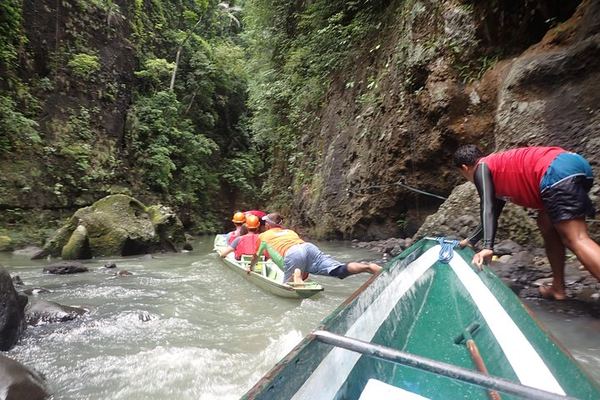
Shooting the Rapids at Pagsanjan and Taal's 38 Recorded Eruptions
Two licensed boatmen row the canoe upstream to the falls, and the way back down is the rapids. Taal has 38 eruptions on record, the last in January 2022.
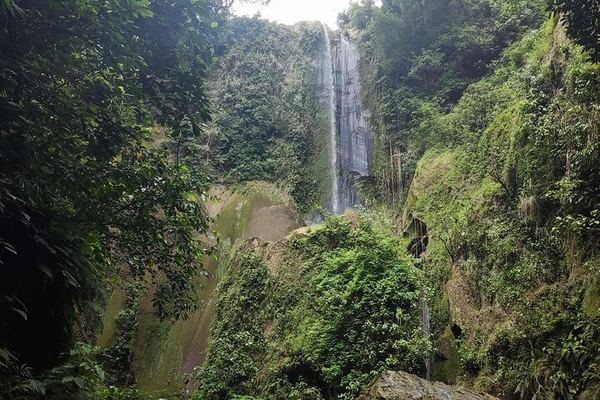
Taal and a Waterfall Behind It: a Rainforest Trail and a Cave Church
The boat round the island comes with a 20 to 30 minute rainforest trail to a waterfall, plus a Catholic church built into a cave that locals keep to themselves.
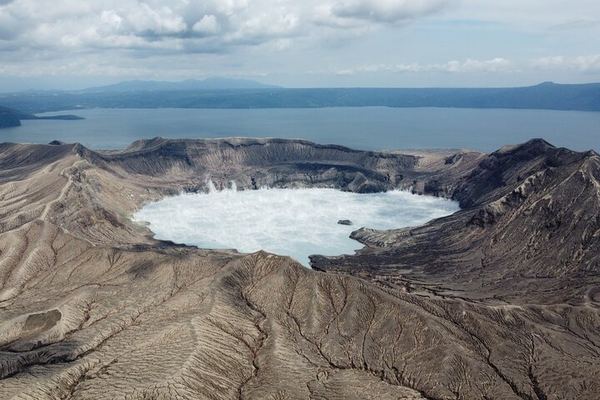
Taal by Bangka: the Volcano from the Water and the Market at Talisay
Free hotel pick-up across seven Manila districts, a market stop at Talisay, and the crossing to the volcano island on a local outrigger boat.
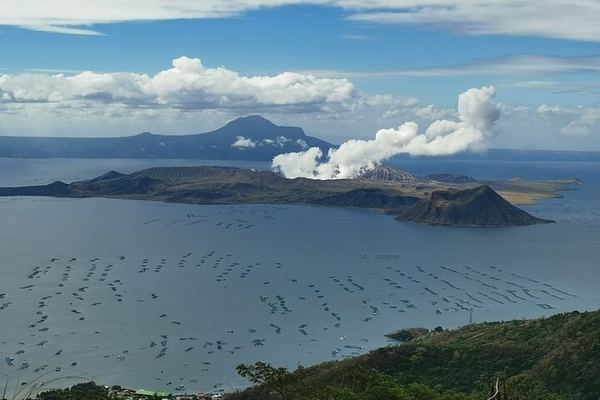
Taal by Boat (No Crater Trek), a Farm Resort Pool and a Picnic Lunch
No crater trek here, because the alert is still up: the boat stays in front of the volcano, and the afternoon is a countryside pool and a homemade picnic.
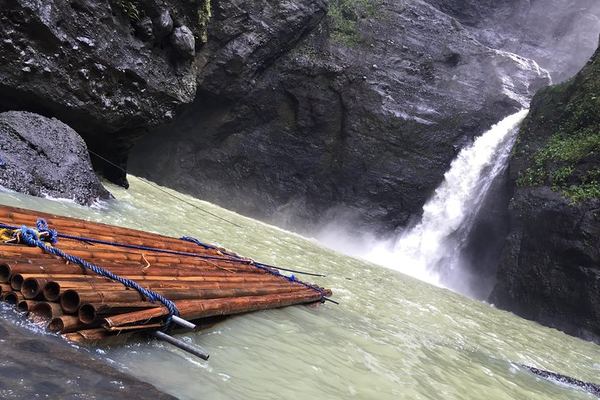
Taal from 665 Metres and the Canoe Up to Pagsanjan Falls
Two local paddlers work the canoe up the rapids to the falls, where you swim into the cave behind the water. Tipping them is expected, not optional.
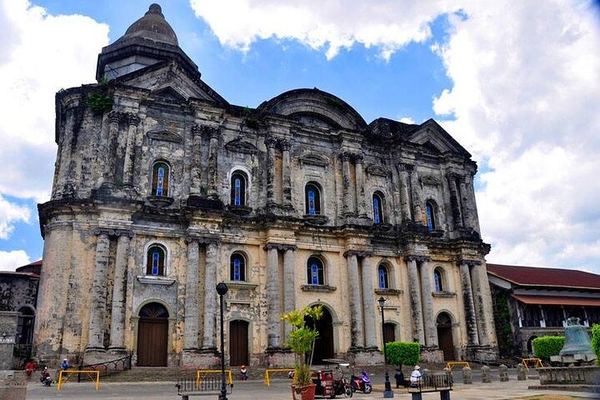
Taal Town on Foot: Spanish Colonial Streets and the Piña Embroidery Market
The colonial town is walked rather than driven, 20 to 30 minutes per stop, and the market sells the piña and jusi embroidery Taal is known for.
Ratings collected by Viator and Tripadvisor
A country full of volcanoes, with one on sale
The Philippines sits where the Philippine Sea plate and the Eurasian plate collide, with subduction zones on both flanks of the archipelago, which is why the volcanoes run down it in two lines rather than one. Several of them are among the most recognisable on earth. Mayon, in Albay, has the most symmetrical cone of any volcano anywhere and was erupting through 2026. Kanlaon, on Negros, has been in eruption since October 2024. Pinatubo, on Luzon, produced the second largest eruption of the twentieth century in 1991 and now holds a turquoise crater lake.
None of them is in this catalogue, and the reasons split cleanly in two. Mayon and Kanlaon are erupting, which means exclusion zones and closed trails rather than tours. Pinatubo is quiet and genuinely reachable from Manila with a 4x4 and a trek, and it simply has no products here. Taal carries the entire Philippine market on this site, six listings out of six, and it does so because it is the only volcano close enough to Manila to work as a day trip that is not currently throwing rocks.
| Volcano | Where | Status | Sold here |
|---|---|---|---|
| Taal | Batangas, 65 km south of Manila | Minor eruptions through 2026; island closed | 6 listings, from the ridge and the water |
| Mayon | Albay, southern Luzon | Erupting in 2026 | None; needs a flight and has an exclusion zone |
| Kanlaon | Negros | Erupting since October 2024 | None |
| Pinatubo | Zambales, Luzon | Quiet since 2021 | None here, though it is a viable Manila day trip |
| Bulusan | Sorsogon | Last erupted 2025 | None |
Why you cannot walk up Taal any more
For about twenty years the standard Philippine volcano day was a boat from Talisay across the lake, then a walk or a pony ride up to the main crater rim. It was cheap, it was in every guidebook, and it stopped on 12 January 2020, when Taal put an eruption column roughly 14 km into the air, dropped ash on Manila, killed 39 people and forced the evacuation of around 376,000.
What followed was not a temporary closure. The Philippine institute of volcanology declared the whole of Volcano Island a permanent danger zone: settlement is prohibited, and access to the main crater and to the ground along the Daang Kastila fissure remains prohibited. The word that matters there is permanent. The ban does not lift when the alert level drops, because it is not tied to the alert level, and anybody offering you a crater trek at low alert is describing a product that no longer legally exists.
The volcano has also not been quiet since. Minor phreatomagmatic eruptions have continued through 2026, several of them in July alone, one of which on 21 July sent ash and steam jets around 2.8 kilometres above the crater rim. These are small events on a five-point scale and they do not close Tagaytay, but they are the reason the island stays shut.
Disregard any reviews mentioning crater trekking, these tours were discontinued following the 2020 eruption.
That line is worth holding up as a standard. It appears in one operator's own listing text, where it costs them nothing but candour, and it is the single most useful sentence written about this destination anywhere. Anyone selling Taal who does not say something equivalent is relying on you not to notice.
What the six listings are, and what they cost
All six leave from Manila with hotel pickup, run six to ten hours, and cost between 99 and 190 EUR, which is expensive for a Southeast Asian day trip and reflects the fact that you are buying a private or small-group vehicle and a driver for most of a day. Ratings run 4.7 to 4.9, but on very thin evidence: review counts range from 25 to 131, against the thousands that back an Etna or a Cotopaxi listing. This is a small market recovering from an eruption, and the sample sizes say so.
| What you book | Listings | Price | Rating | Reviews |
|---|---|---|---|---|
| Ridge viewpoint and a boat on the lake | 3 | 99 to 123 EUR | 4.7 to 4.9 | 25 to 131 |
| Taal with the Spanish colonial town of Taal | 1 | 159 EUR | 4.8 | 30 |
| Taal with Pagsanjan Falls | 2 | 110 to 190 EUR | 4.7 to 4.9 | 38 to 74 |
The combination products deserve a note. Pagsanjan Falls is on the far side of Laguna province and pairing it with Taal in one day means a great deal of driving through the worst traffic in the region. The heritage town of Taal, which shares the volcano's name and sits south of the lake, is a genuinely good half day of seventeenth to early twentieth century Spanish colonial architecture, and it is the more coherent pairing of the two.
The traffic is the itinerary
Tagaytay, the ridge town that all six listings use, is about 60 km from central Manila. That translates to an hour and a half to two hours in normal conditions and considerably more when it is not normal, which in Metro Manila is most of the time. The single biggest variable in whether a Taal day is enjoyable is not the volcano or the weather, it is what time the vehicle leaves your hotel.
Every listing here includes pickup, and the ones that specify their zones cover Makati, Taguig, Ermita, Malate, Las Piñas, Muntinlupa and Pasay, with surcharges outside them. If you are staying north of the river, check before you book. An early departure is worth more than an extra inclusion.
When to come
The Philippines runs a dry season and a wet one rather than four, and the difference is not subtle. December to May is the dry stretch, with the clearest air over the lake and the calmest water. June to November is the southwest monsoon and the typhoon season, when the ridge view disappears into cloud for days at a time and the boats stop when the lake gets up. Tagaytay sits at 665 m and is noticeably cooler than Manila all year, which is why the city built its weekend houses there.
| Month | 1 | 2 | 3 | 4 | 5 | 6 | 7 | 8 | 9 | 10 | 11 | 12 |
|---|---|---|---|---|---|---|---|---|---|---|---|---|
| Tagaytay ridge viewpointsClearest air December to May; the monsoon puts cloud in the caldera for days at a time | 1 | 2 | 3 | 4 | 5 | 6 | 7 | 8 | 9 | 10 | 11 | 12 |
| Boat trips on Taal LakeSmall outrigger boats stop when the lake gets rough, which is most of the monsoon and typhoon season | 1 | 2 | 3 | 4 | 5 | 6 | 7 | 8 | 9 | 10 | 11 | 12 |
Months as numbers. Based on the Philippine dry and monsoon seasons and on operator schedules; the ban on landing at the volcano applies all year.
Questions people actually ask
Can you still trek to the Taal crater?
No. The Philippine institute of volcanology has declared the whole of Volcano Island a permanent danger zone, and access to the main crater and the Daang Kastila fissure is prohibited. The restriction is not tied to the alert level and does not lift when activity falls. Old reviews and blog posts describing the pony ride to the rim are from before January 2020.
So what do the boat tours actually do?
They cross from the Talisay side and circle the volcano island close in, so you see the flanks, the vegetation coming back after the eruption and the fishing communities on the lake shore, without landing. Three of the six listings include one. The other three stay on the Tagaytay ridge, which is where the classic photograph is taken from anyway.
Is it safe to go?
The viewpoints at Tagaytay are 12 km from the crater and on the outer rim of the caldera, and they stay open through the minor activity that has been going on all year. The closed area is the island. What you should do before booking is check the current alert level and any advisory with the Philippine institute directly, because activity has been continuing and conditions can change in a week.
Why is Taal called dangerous if it is only 311 m high?
Because size and hazard are unrelated here. Taal is a caldera roughly 25 km across, filled by a lake, with an island in it that has its own crater lake, and it has erupted 39 times since 1572. It sits in a densely populated part of Luzon 65 km from a capital city of more than thirteen million. The January 2020 eruption was not large by global standards and it still displaced hundreds of thousands of people.
How much does a Taal tour cost, and why so much?
99 to 190 EUR, which is high for the region. The price is mostly a vehicle and a driver for eight to ten hours, plus the boat where one is included. Sharing brings it down: several of the listings are priced per booking rather than per person for up to fifteen travellers, so a group of four pays a very different rate per head than a couple.
Can I visit Mayon or Pinatubo instead?
Mayon is erupting and has an exclusion zone around it, and it needs a flight to Legazpi in any case. Pinatubo is quiet, about three hours north of Manila, and the 4x4 and trek to its crater lake is a real and popular day trip. It is not in this catalogue, which is a gap in what we sell rather than a judgement on the volcano.
Best time of year?
December to May. The dry season gives you the clear ridge view and the calm water the boats need. June to November brings the southwest monsoon and the typhoons, and a wet day at Tagaytay means paying for a view of cloud.
Data verified on. Eruption history, danger-zone rules and 2026 activity from Philippine institute of volcanology bulletins and the published record. Prices and itineraries from the products on this site.