
Gran Canaria Volcano Tours: Bandama, Roque Nublo and the Peaks
Four listings, 32 to 84 EUR. Bandama is where the island last erupted, and Roque Nublo has needed a booking since February 2025.
Gran Canaria is the weakest of the four Canary Islands for volcano travel, and it is better to say that at the top of the page than to bury it. Four listings against forty-one on Tenerife. No summit with a permit, no eruption in living memory, nothing steaming. If you are choosing an island specifically to see volcanoes, this is not the one, and the Spain page above will point you at the right one.
That out of the way, here is who this page is for. You are already on Gran Canaria, probably for the beach, probably in the south, and you have a day or a morning to spend on something that is not sand. In that case the middle of this island is one of the more startling drives in Spain, the crater you can walk into costs nothing, and the rock everyone photographs is the inside of an old volcano rather than a scenic boulder. What follows is the practical part, including two access rules that changed recently and one altitude that half the listings get wrong.
Bandama Caldera, Wine Tasting and Vegueta: Private Half-Day Tour from Las Palmas Port
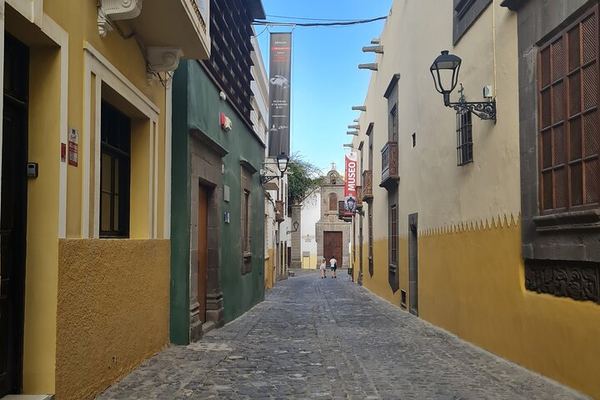
Private shore excursion for up to 8 from Las Palmas port: the Bandama crater, wine and cheese at a traditional winery, then a walk through old Vegueta.
Gran Canaria's High Peaks: Pico de las Nieves, Roque Nublo and Teror
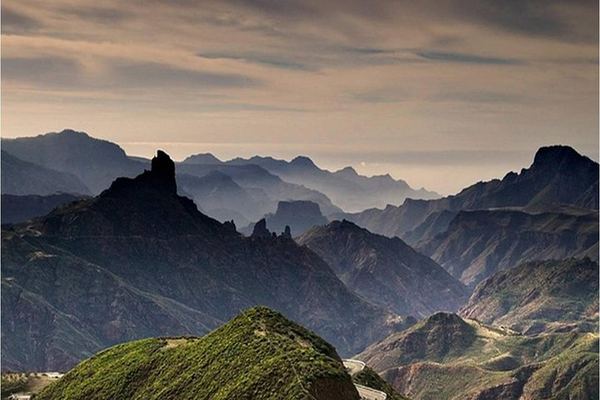
A full day up to Pico de las Nieves and Roque Nublo with a Canarian guide, the Bandama crater on the way and free time in Teror. Not for under-sixes.
Las Palmas, and 15 Minutes at the Caldera de Bandama
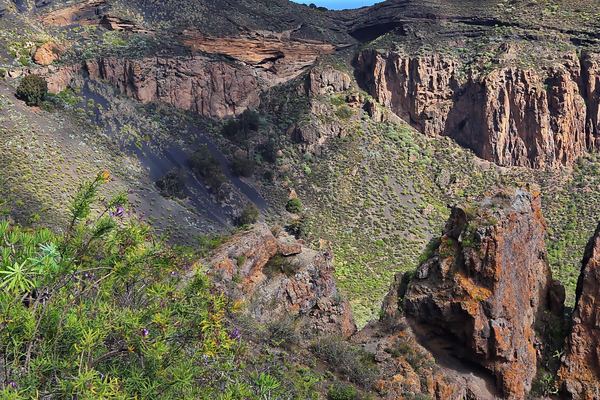
Twenty minutes guided in Vegueta and forty free, fifteen at the Bandama crater, forty-five in the botanical garden. The crater is 1,000 metres across.
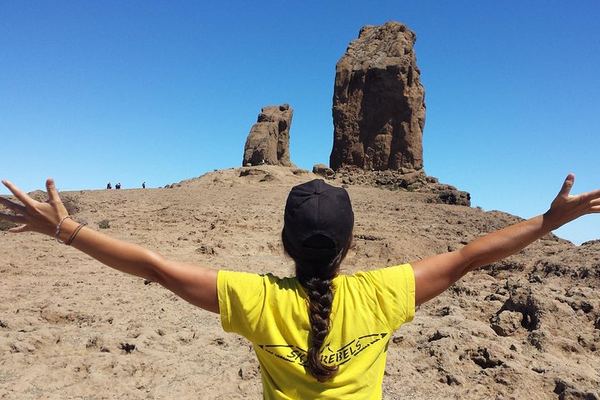
Roque Nublo with an Authorised Guide, Six Passengers Maximum
Roque Nublo cannot be visited alone since 2025, so this walk goes with two authorised Canarian guides and six passengers. 3 km, 300 m up, picnic included.
Ratings collected by Viator, Tripadvisor and Civitatis
Bandama is where the island last erupted, and almost nobody says so
The Caldera de Bandama gets described as a viewpoint, which undersells it badly. It is the most recent eruption on Gran Canaria, dated to somewhere around AD 40, which means the island was volcanically active well inside the human record and stopped only about two thousand years ago. Every listing that sells it as a scenic stop is skipping the only genuinely volcanological fact the island has.
The crater is roughly a kilometre across and two hundred metres deep, with the Pico de Bandama on its rim at 569 metres. It sits twenty minutes from Las Palmas, the gate is open from eight in the morning until five, and it costs nothing and needs no booking, which puts it in a very small category among the things in this catalogue.
The part worth doing is the part the coaches skip. A track goes down inside, and you can be standing on the crater floor in thirty to forty minutes, next to an abandoned farmhouse and a fig tree somebody planted down there. The microclimate is the surprise: no wind reaches the bottom, there is no shade at all, and it holds around twenty-five degrees even in winter. The climb back out is significantly harder than the walk down suggests, on loose ground with the sun overhead, and it is the reason to carry more water than a forty minute descent seems to justify.
Roque Nublo needs a booking now, and the old car park is gone
This changed on 3 February 2025 and most of the internet has not caught up. Access to the Roque Nublo is now capped, and the Degollada de La Goleta car park, where everyone used to leave the car, is permanently closed. Two of the pages that rank highest for this walk still send readers to it.
The replacement is free but it is a system. You book a timed entry and receive a QR code. Sixty people are admitted per hour, and the number allowed on site at once has been cut from around two thousand to three hundred. The booking is compulsory during daylight hours. You park either at Cruz de Los Llanos, where a shuttle runs every thirty minutes between 09:30 and 18:00, or down in Tejeda. Operators are held to it too: a company that uses less than eighty per cent of the places it books is suspended for a month, which is why the guided walk is small and why its cancellation terms are unusually strict.
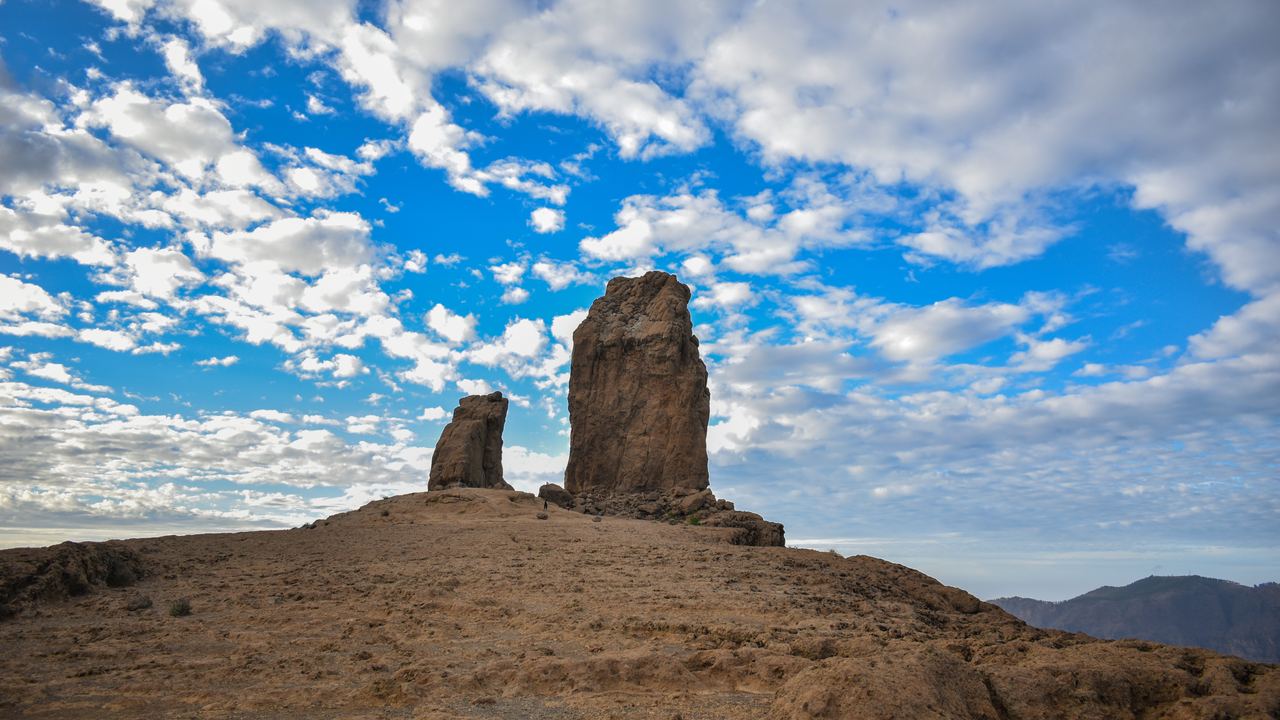
The walk itself is short. About three kilometres, roughly three hundred metres of ascent, easy going, ending on the plateau at about 1,720 metres. The monolith standing on it is eighty metres tall and its top is at 1,813. It is a volcanic neck: the solidified plug inside the conduit of a much older volcano, left standing when several million years of weather removed the softer cone from around it. You are looking at the inside of a volcano rather than the outside of one.
| Caldera de Bandama | Roque Nublo | Pico de las Nieves | |
|---|---|---|---|
| What it is | Crater of the last eruption | Neck of an eroded volcano | High viewpoint on the rim |
| Height | 569 m at the rim | 1,813 m at the top of the rock | 1,949 m |
| Cost | Free | Free, but booked | Free |
| Booking | None | Compulsory in daylight | None |
| Time needed | 20 minutes, or 90 for the floor | About 2 hours plus the shuttle | As long as the cloud allows |
| From Las Palmas | 20 minutes | About an hour | About an hour |
| Closed on fire alert | Yes, above 400 m | Yes | Yes |
The fifty metres the listings get wrong
A small thing, but it is the kind of small thing that tells you how carefully a page was written. Pico de las Nieves is routinely described as the highest point on Gran Canaria, and one of the better-selling tours invites you to look down from two thousand metres. Neither is right.
Pico de las Nieves is 1,949 metres. The island's actual high point is the Morro de la Agujereada at 1,956 metres, about seven metres taller, confirmed by survey in 2018. And nothing on Gran Canaria reaches two thousand metres at all, so the round number in that listing is wrong by roughly fifty. It does not change the view, which is one of the best in the archipelago and takes in Teide across the water on a clear day. It does tell you to read the rest of that listing with your eyes open.
Nothing on this island is two thousand metres high. It is a detail, and details are how you tell a page written from the ground from a page written from other pages.
The four listings
| Listing | Price | Rating |
|---|---|---|
| Las Palmas old town, botanical garden and the Bandama crater | 32 EUR | 3.9 from 47 |
| Full day: Bandama, the central villages, the high peaks and Roque Nublo | 48 EUR | 4.7 from 97 |
| Half day from the cruise port: Bandama, botanics and a wine tasting | 75 EUR | 4.9 from 18 |
| Roque Nublo walk, two local guides, maximum six people | 84 EUR | 5.0 from 105 |
The forty-eight euro full day is the sensible default. It covers both volcanic sites and the villages between them, it runs with official island guides, and at 4.7 across nearly a hundred reviews it is the best-supported product here. The thirty-two euro option is the cheapest and the weakest, at 3.9, and it spends most of its time in Las Palmas rather than in the middle of the island.
The eighty-four euro Roque Nublo walk is the only listing on the island with a perfect score, from over a hundred reviews, and it is worth understanding why it costs what it does. Two guides, six people maximum, a picnic, and a booking system that penalises an operator for holding places it does not fill. It also sells with no refunds at all, which is unusual and is stated plainly, so read the weather rule below before you pay.
The month that closes the mountain
Gran Canaria has no volcanic season, no snow closure and no permit calendar. It has fire. Every summer the Cabildo declares a forest fire alert and closes the trails above four hundred metres, and all three of the places on this page sit above that line. A maximum alert was declared on 3 August 2026, with bans in force from four hundred metres upwards. No English-language page mentions this, and people arrive in August expecting to walk.
The operators know. One of them lists the exact triggers in its own conditions: a yellow alert or higher for temperature, for wind, or for rain or snow, and any forest fire risk alert. In those cases the walk is replaced by an alternative route rather than refunded. That is a fair arrangement, and it is also a warning about which months to choose.
| 1 | 2 | 3 | 4 | 5 | 6 | 7 | 8 | 9 | 10 | 11 | 12 |
Questions people actually ask
Are there active volcanoes on Gran Canaria?
No. The last eruption was at Bandama, around AD 40, and nothing has erupted since. The island is volcanic in origin and geologically quiet now. If you want activity in the Canaries, La Palma erupted in 2021 and Tenerife has the summit; this island has old rock and very good scenery.
Do you need to book Roque Nublo?
Yes, during daylight hours, and it has been compulsory since 3 February 2025. The booking is free and gives you a QR code and a time slot; sixty people are admitted per hour. The Degollada de La Goleta car park is permanently closed, so you park at Cruz de Los Llanos for the shuttle or in Tejeda.
Can you walk into the Bandama crater?
Yes, free and without booking, through a gate open from 08:00 to 17:00. The track to the floor takes thirty to forty minutes down and rather longer back. There is no shade inside, no wind reaches the bottom, and it stays near twenty-five degrees even in winter, so take more water than the distance suggests.
How high is Roque Nublo?
The path ends on the plateau at about 1,720 metres. The monolith itself is eighty metres tall, putting its top at 1,813. It is a volcanic neck, the solidified inside of an old vent left standing after the cone around it eroded away, which is why it looks like a monument rather than a mountain.
Which tour should I book?
The forty-eight euro full day if you want both volcanic sites and the villages in between, which is the best-supported listing here. The eighty-four euro Roque Nublo walk if you want six people, two guides and a proper walk, accepting that it sells with no refunds. Skip the thirty-two euro option unless Las Palmas itself is the draw.
Is August a bad time?
For the high ground, yes. The Cabildo closes trails above four hundred metres when the fire alert is raised, and that covers everything on this page. Operators substitute a lower alternative rather than refund. Spring and October are the reliable windows, and the middle of the island is far cooler than the coast in any month.
Data verified on. Access rules, booking limits and fire-alert closures from the Cabildo de Gran Canaria. Altitudes from the 2018 survey. Prices, group sizes and ratings read from the four products on this site.