
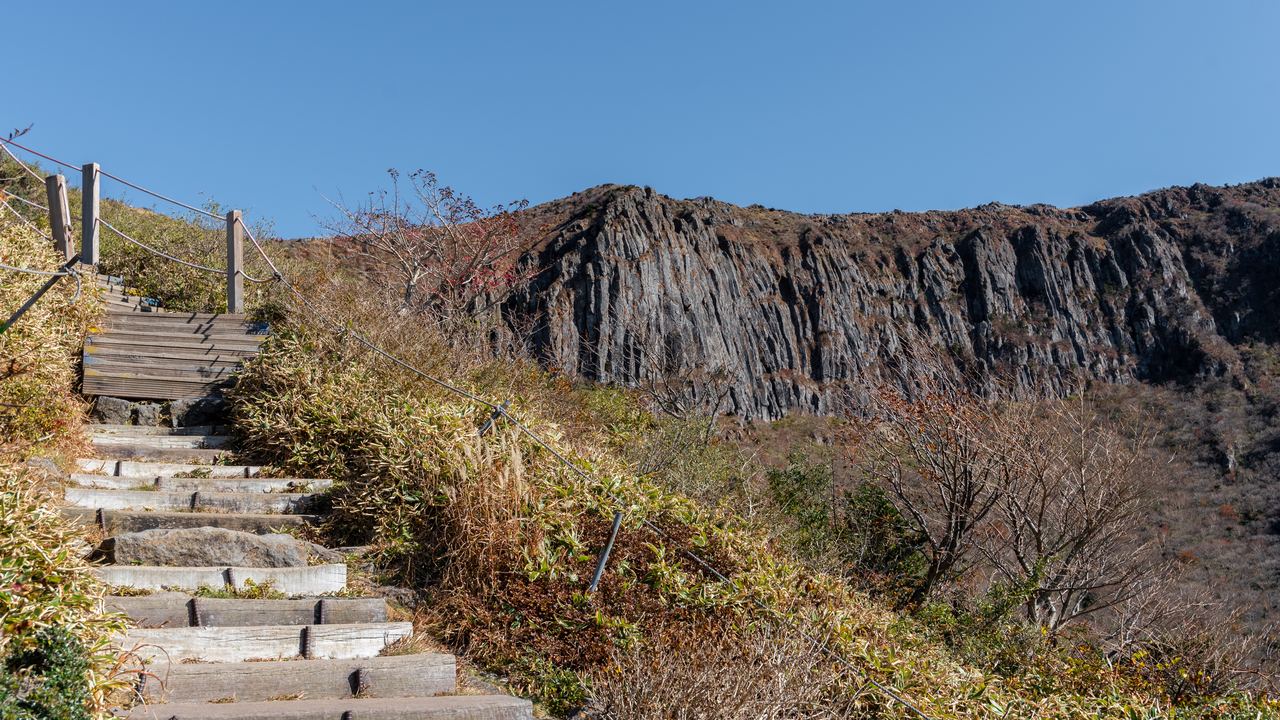
Volcano Tours in South Korea: Jeju Island
The country's volcanic ground is one island 450 km from Seoul, and its highest mountain is on it. All 12 experiences here are Jeju.
South Korea's volcanic country is one island. The mainland has none of it: no cones, no lava fields, no craters worth a detour. Everything is Jeju, 450 kilometres south of Seoul in the Korea Strait, an island built entirely out of eruptions and carrying the highest mountain in the country at 1,947 metres. There is a second volcanic island, Ulleungdo, in the East Sea, and the largest volcano the peninsula has produced is on a border South Koreans cannot cross. So all twelve experiences on this page go to the same place, and unlike most such concentrations, this one is geologically honest.
The thing to settle before booking is the gap between a Jeju day tour and climbing Hallasan. They are different activities with different rules and different failure modes, and several products carry the mountain's name while going nowhere near the top. This page is the country and the choice. The operating detail of the three sites, including the timed gates that stop people at the trailhead and the reservation portal most visitors book on the wrong website, is on the Jeju page below.
Choose a destination in South Korea

Volcano Travel Experiences in South Korea
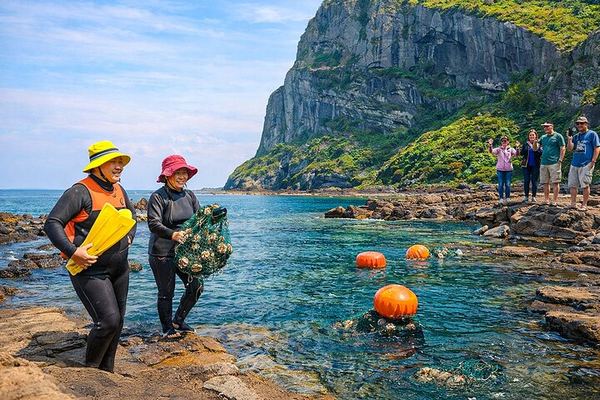
Eastern Jeju: a Live Haenyeo Dive Below Seongsan Ilchulbong and Manjanggul
The haenyeo dive live below Seongsan Ilchulbong, with the museum as the fallback, and the licensed guide works in both English and Chinese.
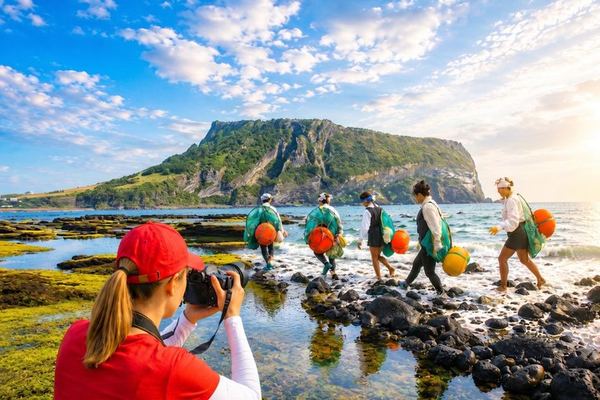
East Jeju: Seongsan in the Sun, Manjanggul's Cold Air to Finish
Manjanggul comes last on purpose, so the cave's cold air lands after the sun on Seongsan, and the haenyeo dive without tanks in between.

Jeju, East or Southwest: Two Routes, One Booking
The east route puts 50 guaranteed minutes on Seongsan and the haenyeo divers at 14:00; the south and west runs to Hallasan and the O'sulloc tea fields.
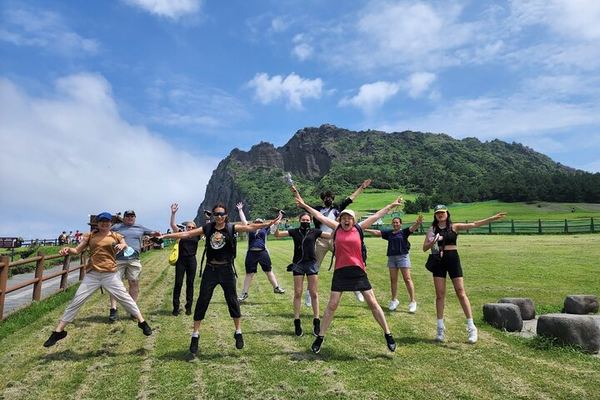
Jeju East UNESCO Day Tour: Manjanggul Cave, Seongsan Peak and the Haenyeo Divers
A 15-person group with an English-only guide, hotel pick-up in Jeju City, and the 2:00 PM haenyeo dive below Seongsan before the climb to the crater rim.
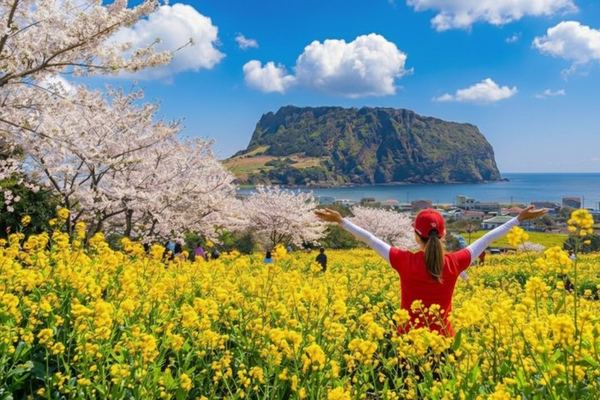
Jeju from Jungmun and Seogwipo: a 10.30 Start and No Shopping Stops
Picked up in Jungmun or Seogwipo rather than Jeju City, starting at 10.30 and back by five, with no shopping stops and no optional extras sold on board.
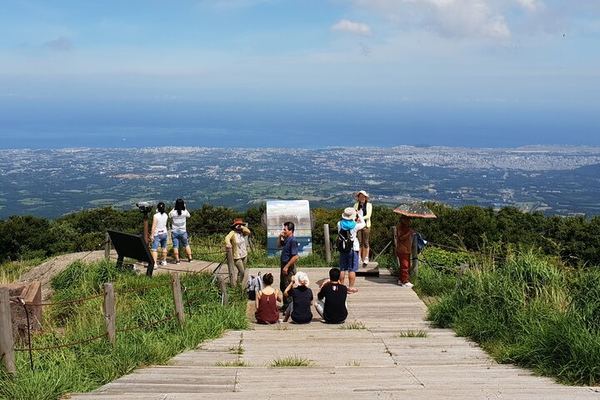
Premium Jeju South: English-Only Groups of 15, Everything Included
Core Travel does not mix English and Chinese-speaking groups the way budget tours do, and entrance fees, lunch and hotel transfers are all in the price.
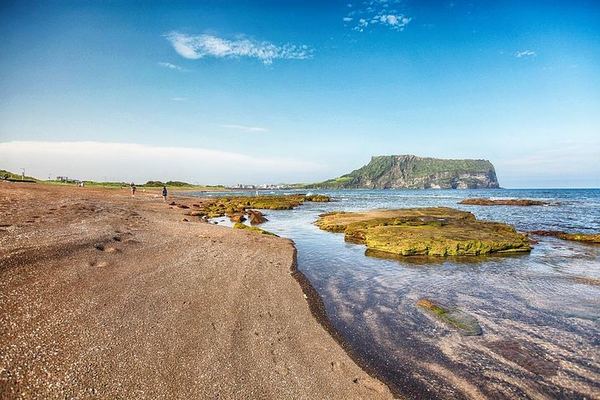
Private Taxi Around Jeju: Your Own Itinerary Inside a 130 km Day
You set the route and can change it until departure, within a 130 km day; beyond that the driver charges 15,000 to 20,000 won per 10 km on the spot.
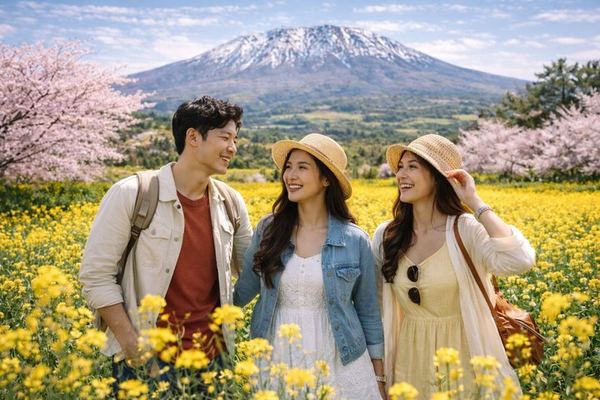
Southern Jeju: a 21-Metre Plunge Pool, a Temple Facing the Sea, Lunch at Songaksan
The first of Cheonjeyeon's three falls lands in a pool 21 metres deep, and lunch is your own at Songaksan with Hallasan on the horizon.
Southern Jeju in a Day: a Waterfall into the Sea, Hexagonal Cliffs and Hallasan
The operator never cancels for low numbers, and the route takes in the waterfall that drops straight into the sea and the hexagonal columns at Jusangjeolli.
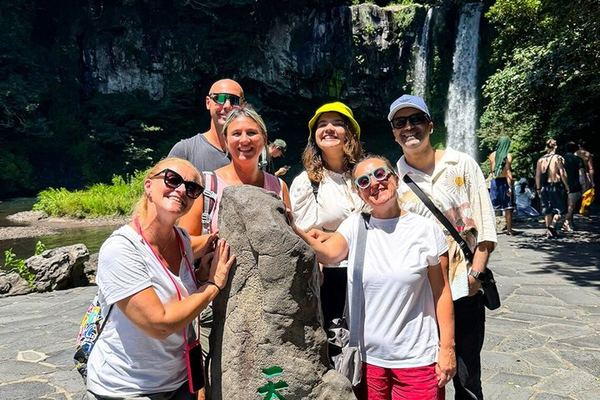
South Jeju with a Choice on Hallasan: Climb the Trail or Stay in the Gallery
The only waterfall in Asia that falls into the sea, and a Hallasan finish where climbing the trail or staying in the nature gallery both count as the tour.
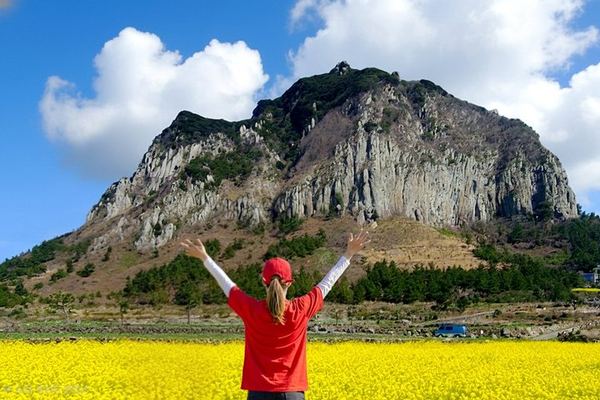
Southwest Jeju with No Shopping Stops: Four Sites and a Weather-Picked First Stop
The operator sells no add-ons and makes no shopping stops, and the first destination is chosen on the morning from three options by weather and traffic.
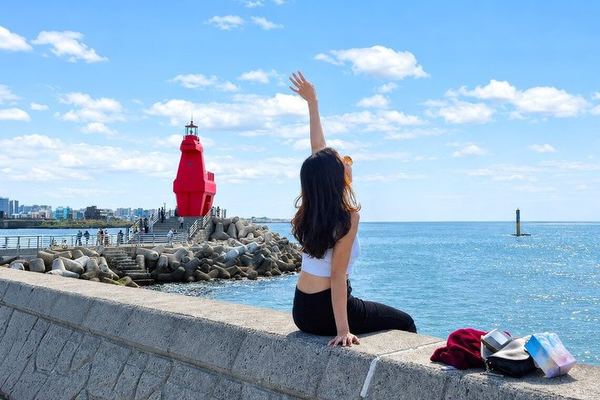
West Jeju: Korea's Highest Convenience Store, Two Horse Lighthouses, a Sunset Street
Korea's highest convenience store sits on the boardwalk at the 1100 Wetland, and the day ends at the two horse lighthouses from Welcome to Samdal-ri.
Ratings collected by Viator and Tripadvisor
Why the volcanoes are all in one place
Korea sits behind the arc rather than on it. The subduction that builds the volcanoes of Japan runs east of the peninsula, and the mainland is old continental crust with no active vents on it. What Korea has instead is intraplate volcanism: a handful of separate centres, well away from each other, with long quiet intervals.
Jeju is the big one, and it is not a mountain with an island around it so much as an island that is a mountain. Hallasan is a shield volcano whose flanks are the whole land surface, and scattered across those flanks are around 360 parasitic cones, called oreum in the local language. Once you know the word you cannot stop seeing them: every rounded hill in a field on Jeju is one.
The other two Korean volcanic places matter for context and carry nothing you can book. Ulleungdo, in the East Sea, is a volcanic island with a caldera at its centre and about 9,000 residents; it is reached by ferry and sells itself on cliffs and squid rather than on geology. And Paektu, the mountain with the crater lake that appears in the national anthem, sits on the border between North Korea and China, which means South Koreans and foreign visitors alike reach it, if at all, from the Chinese side. It is the largest volcanic story the peninsula has and it is entirely outside the market this page describes.
| Place | Height | Last eruption | Getting there | Sold here |
|---|---|---|---|---|
| Hallasan, Jeju | 1,947 m | 1007 CE by historical record | 1 hour by air from Seoul, then 40 min by road | Yes, as a national park visit |
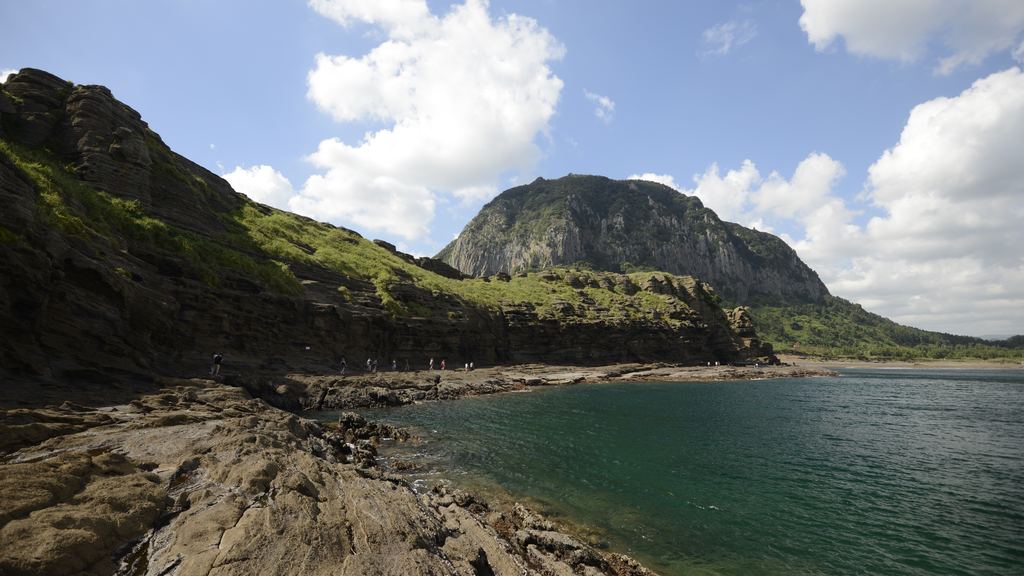
| Seongsan Ilchulbong, Jeju | 182 m | Formed about 6,700 years ago | East coast of Jeju, 1 hour from Jeju City | Yes, on most east-course tours |
| Manjanggul lava tube, Jeju | Underground, 8.9 km long | The flows that built it are prehistoric | North-east Jeju, 40 min from Jeju City | Yes, reopened 30 May 2026 |
| Ulleungdo | 984 m | Holocene | Ferry from the mainland east coast | No |
| Paektu / Changbaishan | 2,744 m | 1903 | On the North Korea and China border | No, and not reachable from South Korea |
Three sites, one UNESCO listing, and they are not the same day
Jeju Volcanic Island and Lava Tubes was inscribed in 2007 and covers three components: Hallasan, Seongsan Ilchulbong and the Geomunoreum lava tube system, of which Manjanggul is the visitable part. The listing is why almost every product on this page has the word UNESCO in its title, and it is also why so many of them look identical from the outside.
They are not identical. Jeju is a large island and the tours split by geography, not by theme. The east course takes Seongsan Ilchulbong and Manjanggul; the south and west course takes Hallasan National Park, the Jusangjeolli columnar cliffs and the waterfalls. No single day covers both properly, which is why the operators sell them as two, and why the honest answer to how long you need on Jeju is two days rather than one.
Prices here are the lowest of any destination we cover, and the reason is domestic scale rather than poor quality. Jeju is Korea's own holiday island with a mature bus and taxi tour industry, so a full day with an English-speaking guide sits at 26 to 48 EUR. Above that you are buying a small group cap, typically fifteen, at around 88 EUR, or a private taxi tour with a driver-guide at 194.
| Type of day | Course | Price | Group |
|---|---|---|---|
| Shared full-day bus tour | East, or south and west | 19 to 48 EUR | Large coach |
| Shared tour with hotel pick-up in the resort areas | South, from Jungmun and Seogwipo | 37 EUR | Large coach |
| Premium small group with English guide | East, or south | 88 EUR | Maximum 15 |
| Private taxi tour, itinerary of your choosing | Anywhere on the island | 194 EUR | Your party only |

The mountain is not in the tour
This is the single most important thing on the page. Several of the twelve products carry Hallasan or Mt Halla in the title. None of them climbs to the summit, and none of them claims to in the small print. What they visit is Hallasan National Park at lower altitude: the 1100 Altitude Wetland with its boardwalk, the forest, the visitor areas. That is a genuinely good stop and it is not the same as standing at Baengnokdam, the crater lake at 1,947 metres.
Reaching the summit is a separate undertaking, done independently, and it is governed by rules that catch people out. Only two of the five trails go to the top, the others stop at Witse Oreum on the western shoulder. There is a compulsory reservation on a provincial portal, not the national parks website most people find first. And there are cut-off times at the trailhead that vary by season and are enforced. The full arrangement, with the hours, is on the Jeju page.
A tour sold as Hallasan and a permit to stand on the summit of Hallasan are two different products, and only one of them can be bought on a booking site.
Getting there and how long to give it
Jeju is reached by air. The Seoul Gimpo to Jeju route is among the busiest air corridors in the world, the flight takes a little over an hour, and there are departures all day; there are also direct services from Busan and from several cities in Japan and China. The ferry exists and takes most of a day, and almost nobody uses it for a short trip.
On the island, the airport is at Jeju City on the north coast. The resort belt is at Jungmun and Seogwipo on the south coast, about forty minutes across the middle by expressway. That geography is what determines which tours will collect you: several of the products here pick up only in Jeju City, and two are built specifically around Jungmun and Seogwipo hotels with a later start, around 10:30, and a finish around 17:00.
Two full days is the right number if the volcanic sites are the point. One day forces a choice between the east coast and the south, and if that is your situation, take the east: Seongsan Ilchulbong and Manjanggul are the two sites you cannot see anywhere else, while the south course is waterfalls, a tea museum and the lower slopes of a mountain you are not climbing.
Seasonality is real here but it does not close anything. Jeju has a proper winter, with snow on Hallasan and a lit trail of visitors going up to photograph it, and a hot wet summer with typhoons in late summer and early autumn. The gates and cut-off times shift by season, which is the one seasonal fact that changes a plan, and it lives on the Jeju page with the hours attached.
Questions people actually ask
Does South Korea have volcanoes?
Yes, but not on the mainland. Jeju Island is the main one, an entire island built by eruptions with Hallasan, the country's highest mountain at 1,947 metres, at its centre. Ulleungdo in the East Sea is a second volcanic island. The peninsula's largest volcano, Paektu, sits on the border with North Korea and China and cannot be reached from the south.
Is Hallasan an active volcano?
It is classed as active in the sense that it is not extinct, but the last eruption recorded in Korean historical sources is 1007 CE. Nothing has happened for a thousand years. There is no lava, no steam and no visible activity of any kind: what you go for is a shield volcano's summit crater lake, Baengnokdam, and the forest and cones on its flanks.
Can you climb Hallasan on a tour?
No. Several products here carry the mountain's name, and what they visit is Hallasan National Park at lower altitude, typically the 1100 Altitude Wetland boardwalk. The summit is an independent day hike on one of two trails, with a compulsory reservation on a provincial portal and enforced cut-off times at the trailhead. It is not something a coach tour can deliver.
How much does a Jeju volcano tour cost?
From 19.31 EUR for a shared full-day bus circuit to 193.98 EUR for a private taxi tour with a driver-guide. The middle of the market is 26 to 48 EUR for a full day with an English-speaking guide, and around 88 EUR for a small group capped at fifteen. These are the lowest prices of any volcanic destination we cover, and the reason is Jeju's mature domestic tour industry rather than a compromise on quality.
East course or south course, if I only have one day?
East. Seongsan Ilchulbong and the Manjanggul lava tube are the two things you cannot see anywhere else, and they are both on the east course. The south and west course is waterfalls, the Jusangjeolli columnar cliffs, a tea museum and the lower slopes of Hallasan: a good day, but not the volcanic one. If you have two days, do both.
How do you get to Jeju?
By air, in a little over an hour from Seoul Gimpo, on one of the busiest air corridors in the world. There are also flights from Busan and from Japanese and Chinese cities, and a ferry that takes most of a day and is rarely worth it. The airport is at Jeju City on the north coast, about forty minutes from the Jungmun and Seogwipo resort area on the south coast.
When is the best time to go?
Spring and autumn, for weather rather than access, since nothing volcanic closes seasonally. Jeju has a real winter with snow on Hallasan, and a hot wet summer with typhoon risk in late summer and early autumn. The one seasonal fact that changes a plan is the trailhead cut-off system on Hallasan, whose hours shift between winter, mid-season and summer.
Data verified on. Prices and counts read from the 12 Jeju products on this site. Heights, formation dates and UNESCO inscription from the published record and the World Heritage listing.