
Vík & Iceland's South Coast Tours
Ten experiences from a town of about 300 people living under a glacier that caps an active volcano. From 46.41 EUR, and six of the ten are the same glacier walk.
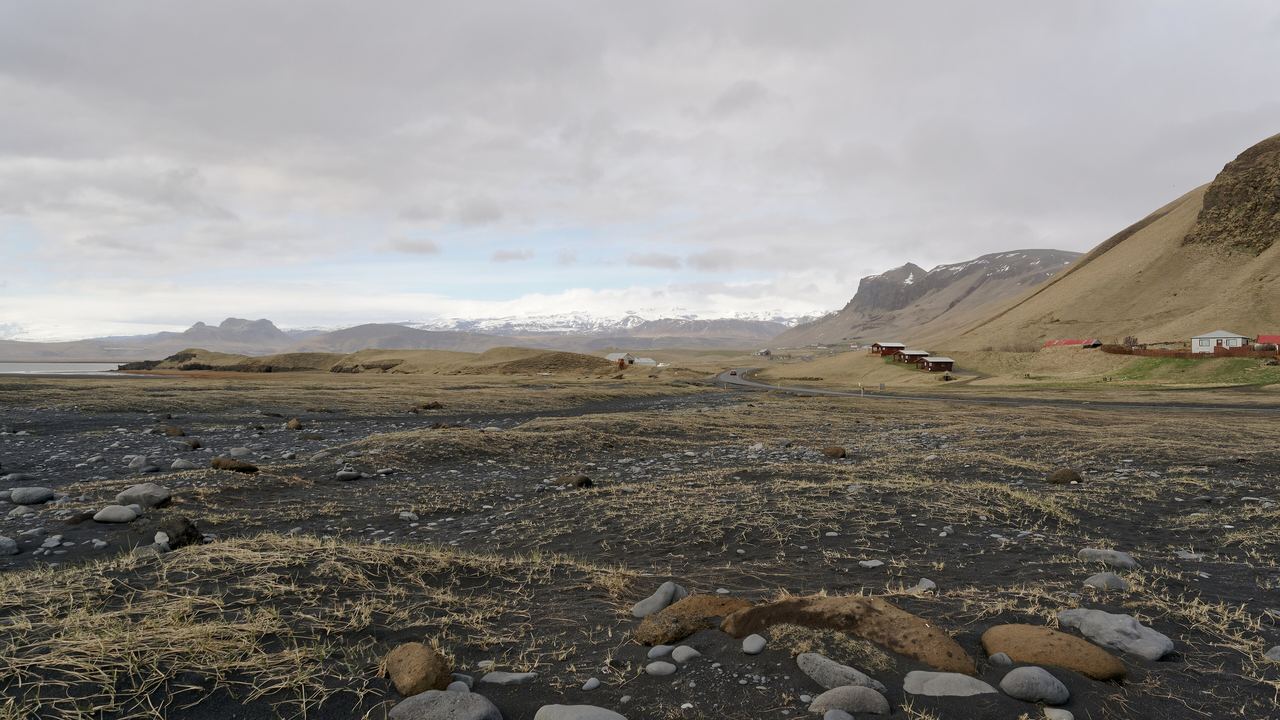
Vík í Mýrdal sits about 180 kilometres east of Reykjavík on Route 1, at the point where the Ring Road runs out of green and into black. The sand here is ground-up basalt, the cliffs are columnar, and the white mass filling the sky to the north is Mýrdalsjökull, which is not a mountain but an ice cap sitting on the Katla caldera. Everything sold from this town is downstream of that arrangement, including the ice cave that has its own page below.
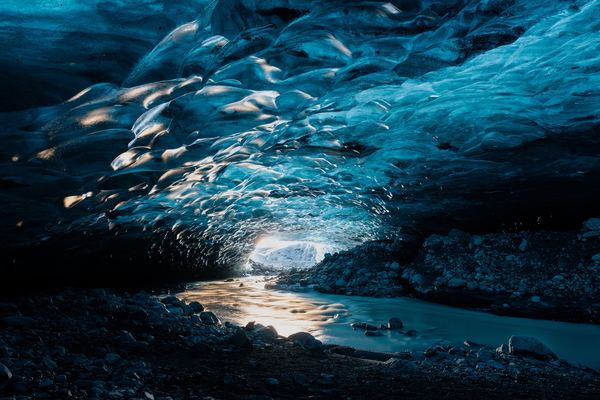
This page covers the coast: the glacier walks, the black beaches, the Lava Show and the two odd ones out. The Katla ice cave, which is the single most distinctive thing anyone sells from here and the only Icelandic ice cave open in August, has its own page. If you are choosing between the two, the short version is that the cave is what you came 180 kilometres for and the glacier walk is what you do with the rest of the day.
Choose a destination in Vík & the South Coast
Volcano Travel Experiences in Vík & the South Coast
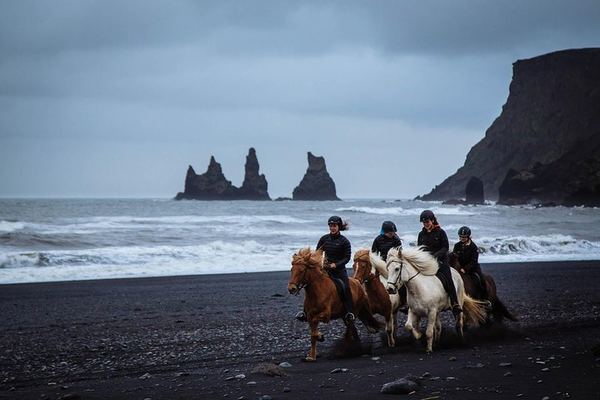
An Hour on the Black Sand at Vík, on an Icelandic Horse
An hour at walking pace on the black sand at Vík, with the tölt for those able. Riders must be at least 10 years old and no heavier than 100 kg (220 lb).
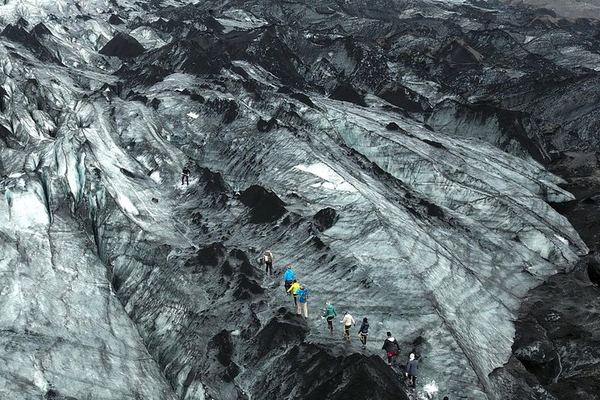
Four Hours on Sólheimajökull, Gear Included, from the Tröll Trailer
Four hours at Sólheimajökull with crampons, helmet and axe provided. The walk in is now 2.3 km each way, so bring hiking boots and arrive 20 minutes early.
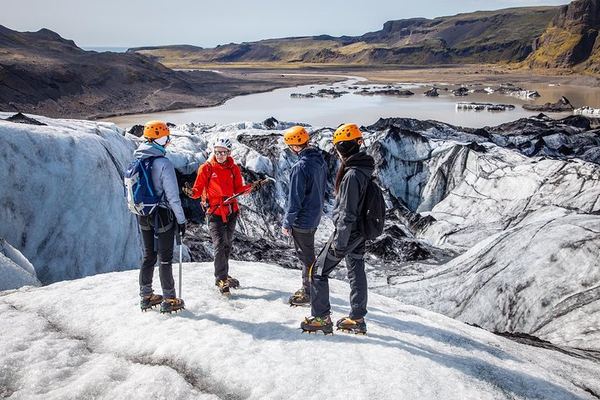
Glacier Discovery on Solheimajokull: Crevasses, Sinkholes and Moulins
Certified guides, small groups, and time spent on the ice rather than beside it: ridges, sinkholes and the moulins meltwater drills into the glacier.
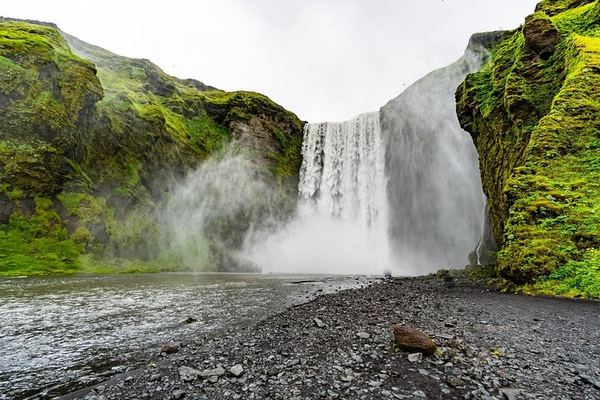
Katla Ice Cave from Reykjavík, with a 40-Minute Off-Road Leg
Seljalandsfoss, Skógafoss and the black sand beach by minibus, then a 40-minute off-road jeep from Vík to the ice cave under Katla. Gear is provided.
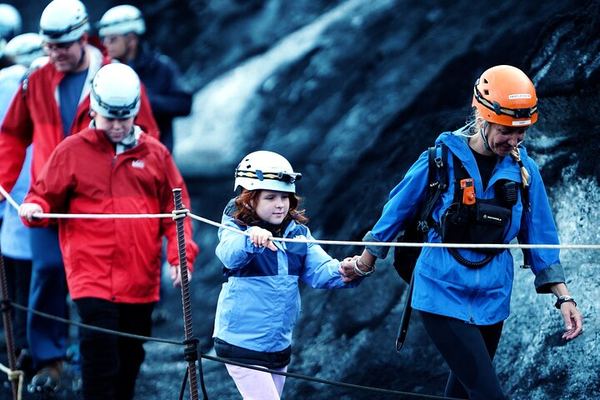
Katla Ice Cave from Vik: the Fastest Ice Cave in Iceland
For trips with no spare day: a short walk to the glacier and 45 to 60 minutes inside the ice. Check-in shares a building with the Black Crust Pizzeria.
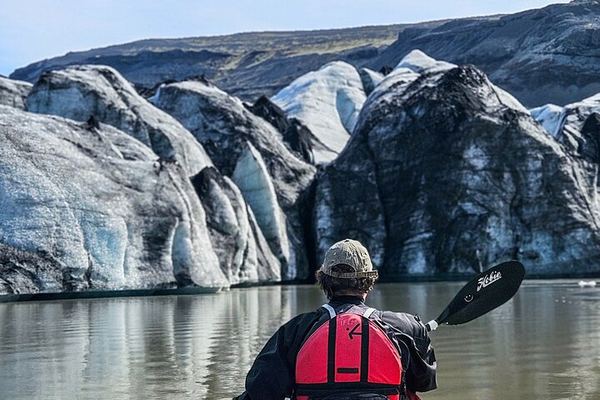
Kayaking Among the Icebergs on the Solheimajokull Lagoon
A quieter glacier lagoon than the ones on every itinerary, paddled between icebergs. Flat water, no experience needed, and the ice is what you hear.
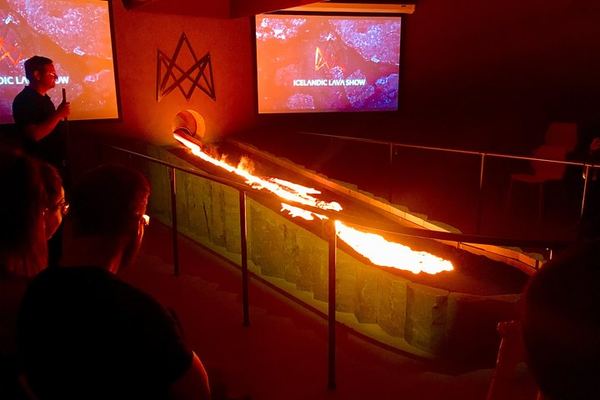
Lava Show Vik: Watch It Flow, Hear It Sizzle, Feel the Heat
The Vik venue of the only live lava show there is: molten rock poured out in front of you, close enough to hear it sizzle and feel the heat it throws.
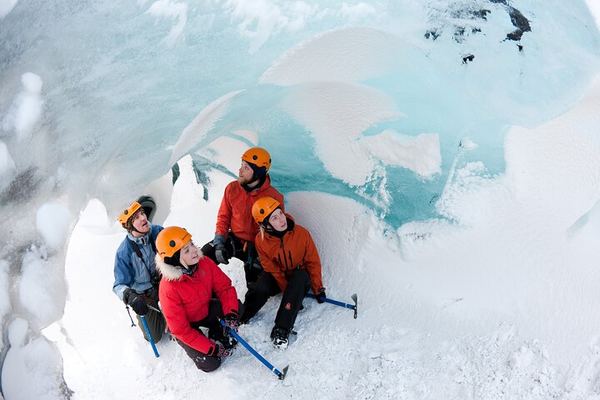
Solheimajokull Beginners' Glacier Hike: Blue Crevasses, Yellow School Bus
No experience needed, all the gear provided, and the blue crevasses only show once you are out on the ice. Look for the yellow school bus in the car park.
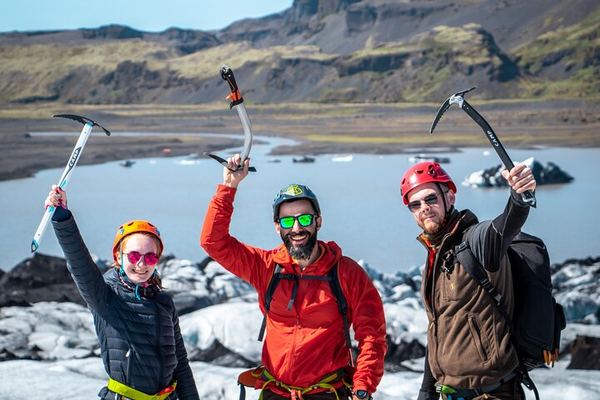
Solheimajokull in a Group of Six: Blue Ice over Black Volcanic Sand
Six people maximum, so the pace is yours. Blue ice and jagged ridges with black volcanic sand lying over them, which is a contrast few glaciers offer.
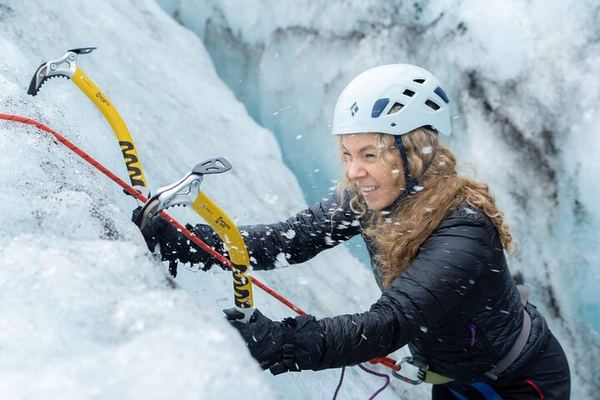
Sólheimajökull with an Ice Wall: Eight per Guide
Eight participants per glacier guide and an optional ice wall for complete beginners, with stops at Skógafoss and Seljalandsfoss on the drive from Reykjavík.
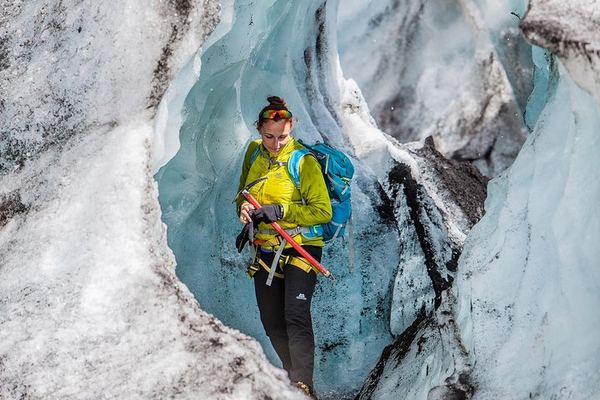
Solheimajokull with Ice Axes and Helmets: Geology, Volcanoes and Climate
Crampons, helmet and ice axe provided, and the guides cover the volcanic ground under the ice as well as what the climate is doing to it. Good health is enough.
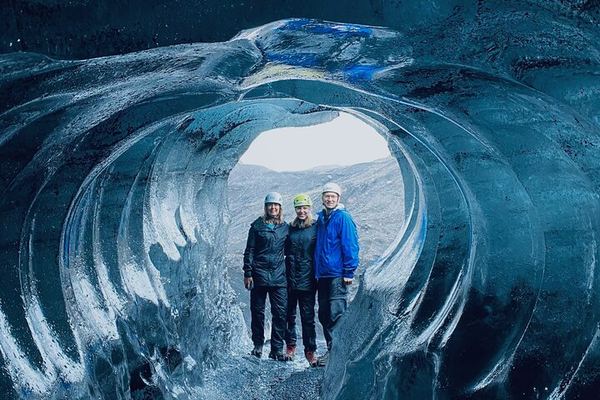
The Dragon Glass Ice Cave Under Katla, by Super Jeep from Vík
The Dragon Glass cave inside Kötlujökull, with black ice beside blue, reached by Super Jeep from Vík. Crampons and a helmet go on before you walk in.
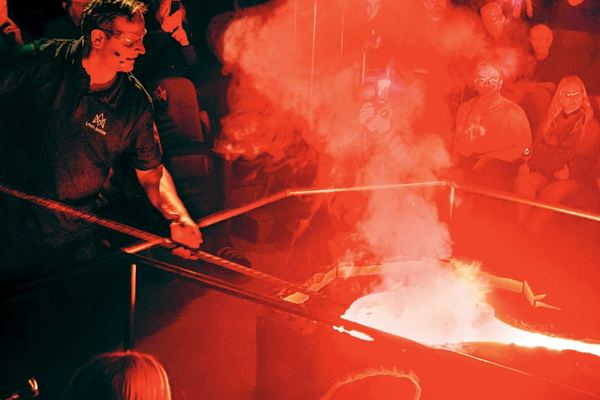
The Lava Show at Vík: 1,100 °C Poured Over Ice
Real lava at 1,100 °C is poured into the room and run over ice, close enough to feel the heat from a seat. This is the Vík show, not the Reykjavík one.
Ratings collected by Viator, Tripadvisor and Tiqets
A town that lives below the thing it is famous for
Roughly three hundred people live in Vík. Above them, under 500 metres of ice, is Katla, a caldera that has historically erupted every forty to eighty years and last did so properly on 12 October 1918. The hazard is not lava reaching the town. It is water: an eruption under an ice cap melts a great deal of it very quickly, and the resulting glacial flood, a jökulhlaup, comes down onto Mýrdalssandur at a discharge measured in hundreds of thousands of cubic metres a second.
Which is why the little white church on the hill above Vík is the assembly point, why the drills are real, and why every operator working on Mýrdalsjökull watches the tremor readings as a matter of routine rather than drama. None of this should keep anyone away. It is simply the reason the guides here take instructions more seriously than the scenery suggests they need to.
Reynisfjara, and why there are warning lights on a beach
Reynisfjara is the black beach immediately west of the town, with the Reynisdrangar stacks offshore and the columnar basalt of Hálsanefshellir at its eastern end. It is on every south coast itinerary and it is the most dangerous piece of ground a visitor to Iceland is likely to stand on.
The problem is the shape of the seabed. The Atlantic arrives here after an uninterrupted run from Greenland and shelves steeply, so the swell does not break progressively up a shallow slope the way most beaches teach you to expect. Instead the sets are irregular and occasionally one runs far higher up the sand than the twenty before it. Icelanders call them sneaker waves, and the water is around 5 °C with a rip that takes people straight out.
At least six visitors have been killed on this beach since 2007, the most recent swept out of the Hálsanefshellir cave in August 2025. No Icelandic eruption in the past hundred years has killed that many people. The response has been unusually serious for a beach: multilingual pictogram signs, a wave-forecasting system tied to coloured warning lights on site, condition-dependent safety zones marked on the sand, and since the 2025 death the cave and the basalt columns close outright under a red warning. In February 2026 a section of those columns collapsed under storm waves, which is its own kind of argument for standing further back.
The rule the guides give is the only one that works: never turn your back on the water, and never stand on wet sand. The waterline you can see is not the waterline the next set will use.

Six of the ten things sold here are the same glacier
Sólheimajökull is an outlet tongue of Mýrdalsjökull, squeezed out between Katla and Eyjafjallajökull, and it is the most accessible walkable glacier in Iceland: a short drive off Route 1, a flat approach from the car park, and ice you can be standing on within thirty minutes of parking. It is also retreating at roughly sixty metres a year, which means the walk from the car park to the ice has got noticeably longer within the memory of the guides leading it.
Six listings on this page take you onto it. They are, with one exception, the same walk with the same crampons and the same helmets, and what you are paying for is the number of people sharing your guide. The table below is worth reading before assuming the cheapest is a compromise.
| Listing | Price | What is different | Rating |
|---|---|---|---|
| Blue ice small group | 79.05 EUR | Beginner route, standard small group | 4.8 (549) |
| Glacier hike small group | 91.70 EUR | Beginner route, certified guides | 4.9 (873) |
| 3-hour small group | 104.00 EUR | Longer time on the ice, all kit included | 4.8 (510) |
| Glacier hike exploration | 157.83 EUR | Moderately challenging route | 4.8 (95) |
| Hike with ice climbing intro | 182.00 EUR | Climb an ice wall, 8 people per guide | 4.8 (178) |
| Small group, six people maximum | 243.36 EUR | Six on the rope, your own pace | 5.0 (34) |
Two things fall out of that table. The 91.70 EUR option carries the highest review count on the glacier and a 4.9, which makes the middle of the ladder the sensible default rather than a compromise. And the 243.36 EUR version is three times the cheapest for a cap of six people, which is worth it on a photography trip and hard to justify otherwise. Crampons, helmet and harness are included on all of them. What is not included is footwear: you need proper boots with a rigid enough sole to take a crampon, and trainers will get you turned away at the car park.
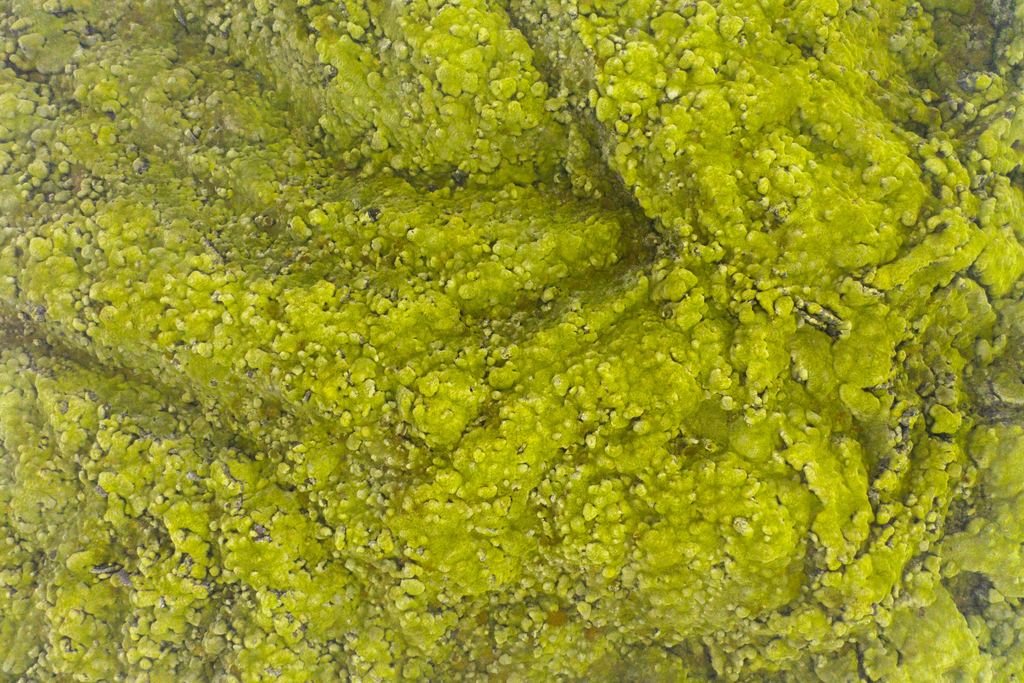
East of town, the road crosses the largest lava flow in recorded history
Drive an hour east of Vík and Route 1 runs for kilometres across a grey-green surface that looks like a frozen sea covered in a duvet. This is Eldhraun, and it is what the Laki eruption left behind.
Between 8 June 1783 and 7 February 1784 a 25-kilometre fissure with at least 130 vents produced around 14 cubic kilometres of basalt lava, the largest such outpouring in recorded history. The lava itself was the smaller problem. Eight million tonnes of fluorine poisoned the grazing, killing roughly 80 per cent of Iceland's sheep and half its cattle and horses, and the famine that followed killed about a fifth of the population. A sulphurous haze crossed Europe that summer and the winter after it was one of the coldest on record.
The moss growing on it now took two centuries to establish and will not survive being walked on. Stopping to photograph it is normal. Stepping onto it is the thing Icelanders ask visitors not to do.
The four that are not a glacier walk
The Lava Show has a second venue here, on Víkurbraut in the middle of town, at 46.41 to 47.08 EUR. Real basalt is melted to about 1,100 °C and poured across the floor a few metres from the front row. It has its own page, but the Vík room is the original and the smaller of the two, and on a day when the wind has closed the beach it is the best hour in the town.
Kayaking on the Sólheimajökull lagoon at 149.90 EUR is the quiet outlier of this page: 5.0 across 443 reviews, which is the strongest rating on the south coast. You paddle among small icebergs on the meltwater lake at the glacier snout, no experience needed, and the appeal is precisely that it is the one thing here without a queue.
Horse riding on the black sand at 110.00 EUR is an hour on Icelandic horses along the beach west of town, sold as beginner-friendly and rated 4.8 across 544 reviews. Worth knowing that this is a different beach from Reynisfjara and a supervised one.
And Dyrhólaey, the arch and promontory just west of Vík, is not sold as a product at all. It is free, it has the best view of the coast in either direction, and part of it closes in spring for the nesting season. Most people drive past it because nobody sold them a ticket.
Weather, seasons and the thing that actually cancels
Nothing on this page has a closed season. The glacier walks run all year, the Lava Show is indoors, and the Katla cave next door is the only Icelandic ice cave that exists in August. What closes things here is weather, and specifically wind.
Route 1 across Mýrdalssandur is exposed, and Icelandic road authorities shut it for storms and blowing sand several times most winters, sometimes at a few hours' notice. If you are day-tripping from Reykjavík between November and March, check the road status the morning you travel rather than the forecast the night before. Summer brings a different problem: between roughly June and August, Vík absorbs the entire south coast coach traffic in a four-hour window either side of lunch, and the glacier car park at Sólheimajökull is the busiest it gets. An early departure is worth more here than anywhere else on the Ring Road.
Questions people actually ask
Is Vík worth staying in, or is it a day trip?
Stay if you can. The day trip from Reykjavík works and plenty of people do it, but it costs you five hours in a minibus and pushes everything into the middle of the day. Staying puts you at Sólheimajökull before the coaches and cuts the Katla ice cave from 265 EUR to 193.98, because you are no longer paying for the transfer.
Is Reynisfjara safe to visit?
Yes, with discipline. Six people have been killed by waves there since 2007, which is more than any Icelandic eruption in the last century, and the site now has warning lights, marked safety zones and closures under red conditions. The rule is simple and non-negotiable: stay off wet sand, never turn your back on the sea, and leave if the lights are red. The beach does not look dangerous, and that is the whole problem.
Which Sólheimajökull hike should I book?
The 91.70 EUR small group for most people: it has the highest review count on the glacier and a 4.9 rating, and the route is the same one the cheaper and dearer versions walk. Pay 182 EUR if you want to try ice climbing, and 243.36 only if a six-person cap genuinely matters to you. All of them include crampons, helmet and harness.
Do I need special boots for the glacier?
Yes. Crampons need a boot with a stiff sole and an ankle, and operators will refuse trainers at the car park rather than argue on the ice. Most companies rent boots for a small fee if you ask when booking, and almost nobody thinks to ask.
Can you see Katla?
Not really, and that is the point. Katla is a caldera buried under Mýrdalsjökull, so what you see from Vík is the ice cap sitting on top of it. The closest you get to the volcano itself is inside the Katla ice cave, where the black bands running through the ice are ash from its past eruptions.
How far is Vík from Reykjavík?
About 180 kilometres on Route 1, two and a half hours in good conditions and longer in winter. It is the standard second night on a Ring Road trip and the furthest point most people reach on a single south coast day tour.
What is there to do in Vík when the weather is bad?
The Lava Show at 46.41 to 47.08 EUR, which is indoors and takes about an hour. The Katla ice cave still runs in most weather because the super jeeps handle the track. The beach and the glacier are the two things that close, and they close for wind rather than rain.
Data verified on. Prices, durations and ratings read from the ten Vík products on this site, 12 August 2026. Reynisfjara fatality record, warning system and Laki eruption figures from the published record.