
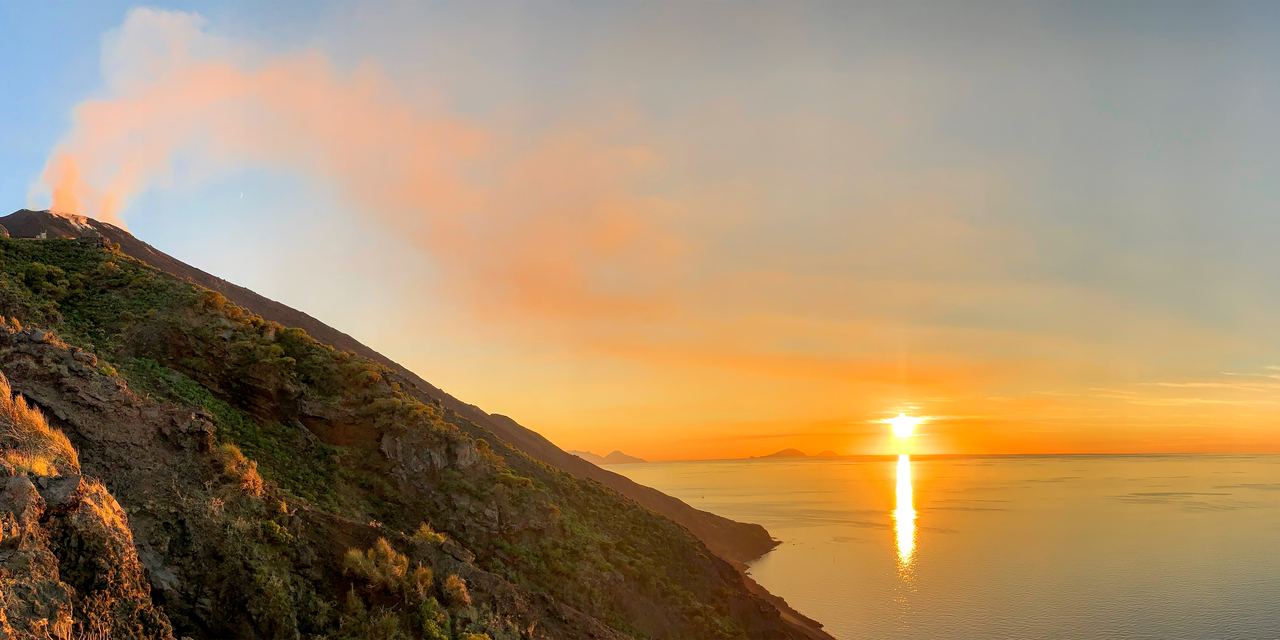
Aeolian Islands Tours: Stromboli, Vulcano and Lipari
Seven islands, two of them with anything to sell. One erupts every ten to twenty minutes and you watch from the water; the other you walk up, but only before half past ten.
Seven islands sit off the north coast of Sicily, all of them volcanoes, and two of them gave science the words it still uses. They have been a UNESCO World Heritage site since 2000 and the citation is about the volcanology rather than the beaches. What almost nobody explains before you book is that the two islands worth travelling for are governed by completely different rules. On Stromboli there is a height above which you may not go and a band below it where a guide is compulsory. On Vulcano there is no ceiling, no guide and no ticket, but the path up the crater is shut through the middle of every summer day, which is exactly when the day boats arrive.
This page is the archipelago: how you reach it, which islands actually have something to sell, what the sea does to the calendar, and how the two main ones differ. The islands themselves have pages of their own. Stromboli is the one you watch after dark from a boat or from the viewpoint over the Sciara del Fuoco; Vulcano and Lipari are the ones you swim around in daylight, where the market is largely private boats and the prices need reading carefully before you compare them with anything.
Choose a destination in Aeolian Islands


Volcano Travel Experiences in Aeolian Islands
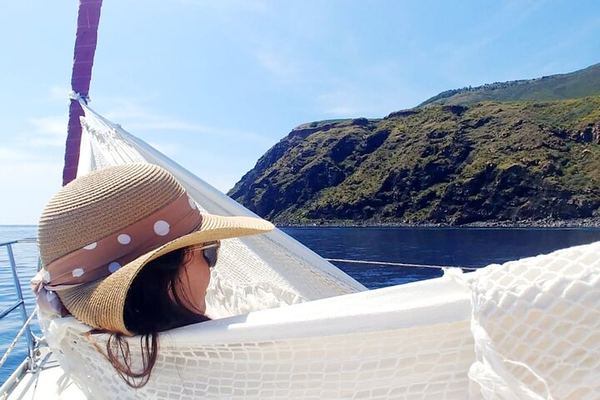
A Week Sailing the Aeolians, Cooking Aboard, Skipper Included
Skipper and assistant included, but the cooking and the galley are yours, and there is a common fund. Saturday to Saturday out of Porto Pignataro, Lipari.
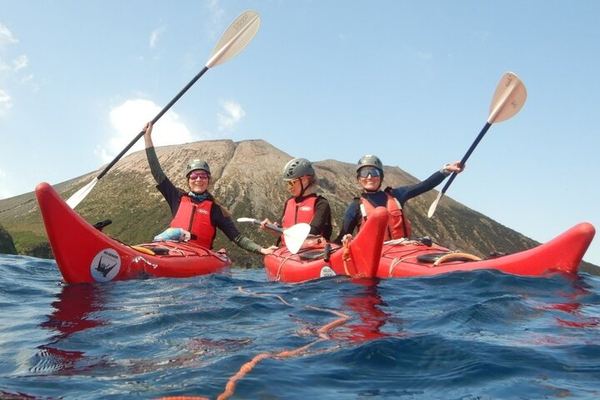
Kayaking into the Lava Tunnels of Vulcano, Three Grades
Paddle and swim into caves and tunnels cut in the lava, and into the thermal water that bubbles up in the bays. Three grades, from complete beginner upwards.
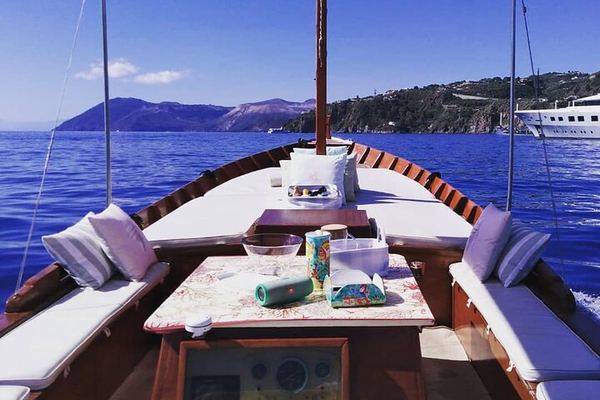
Lipari by Mahogany Boat: the Pumice Quarries and Cala Fico
An 8.5-metre mahogany boat with a shaded table aft, and swims at the old pumice quarries, Praia di Vinci and Cala Fico. Fruit, snacks and cold wine aboard.
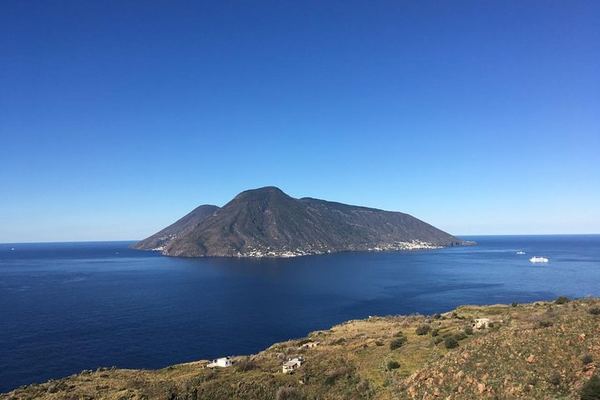
Lipari by Private Boat, with the Pumice Sea and Two Stops on Salina
An exclusive boat for one group of up to 15: seven hours past Lipari's coloured volcanic caves and pumice coast, with stops at Santa Marina Salina and Lingua.
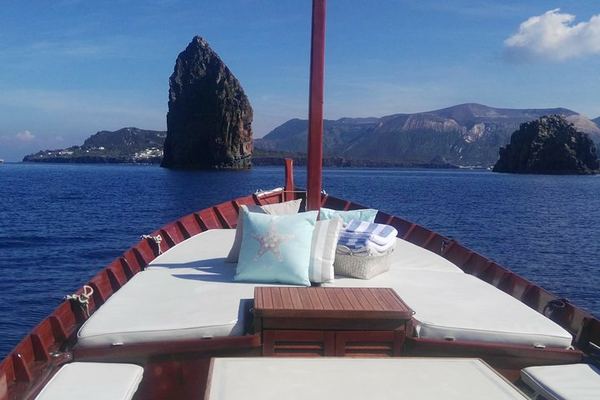
Lipari to Vulcano by Wooden Boat, Right Round with Lunch at Gelso
A private wooden boat for seven hours, right round Vulcano past the Venus Pool and the Horse Cave, with lunch either at Vulcano Porto or down at Gelso.
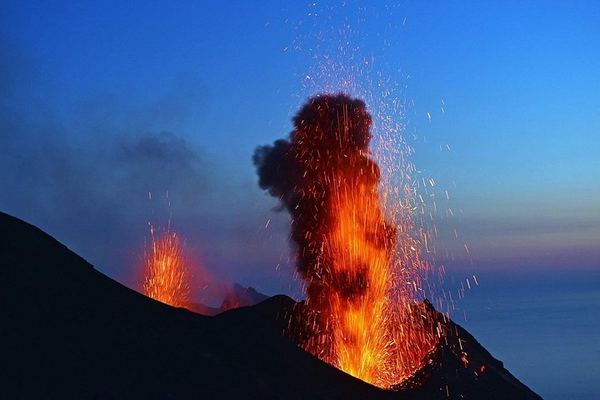
Panarea and Stromboli Boat Trip from Lipari, Sunset at Strombolicchio
Regina Eolie boats from Marina Corta, time ashore at San Pietro on Panarea and at Scari on Stromboli, then sunset off Strombolicchio and the Sciara del Fuoco.
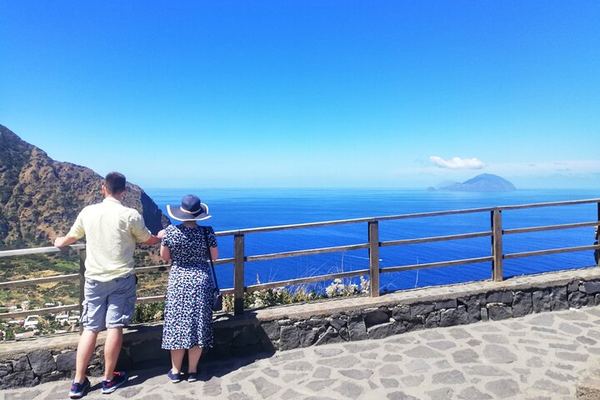
Salina in Half a Day: the Six Villages, Capers and Malvasia
Six villages in half a day, from Santa Marina to Rinella, with a tasting of Salina capers and Malvasia delle Lipari and the reserve on the two mountains.
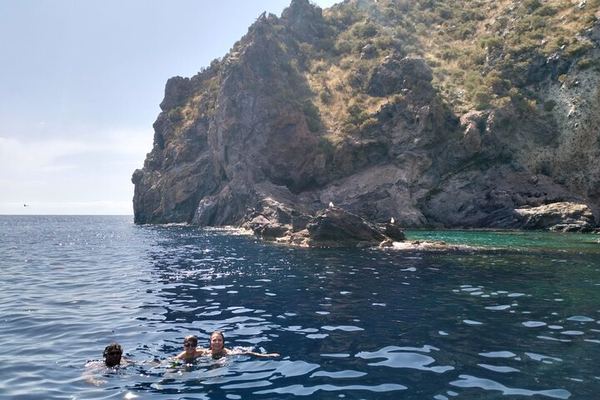
South Lipari by Small Boat, Four People, Six with Children
Four passengers, six with small children, from Marina Corta: Praia di Vinci, the Faraglioni of Lipari and Valle Muria, with snorkelling gear and fruit aboard.
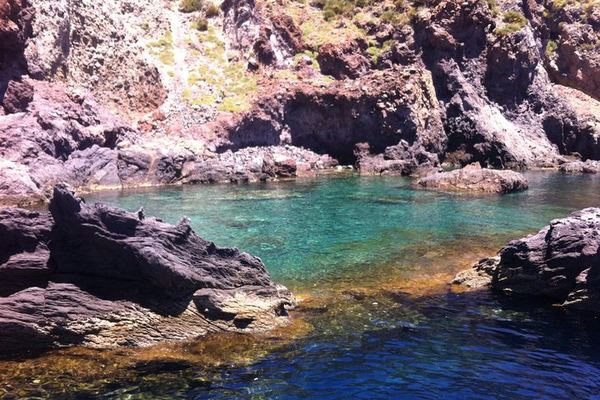
Southwest Lipari and Vulcano by Private Boat with Aeolian Skippers
Aeolian skippers, sea caves and snorkelling round southwest Lipari and Vulcano, sandy beaches on the way and time ashore in the centre of Vulcano. Private.
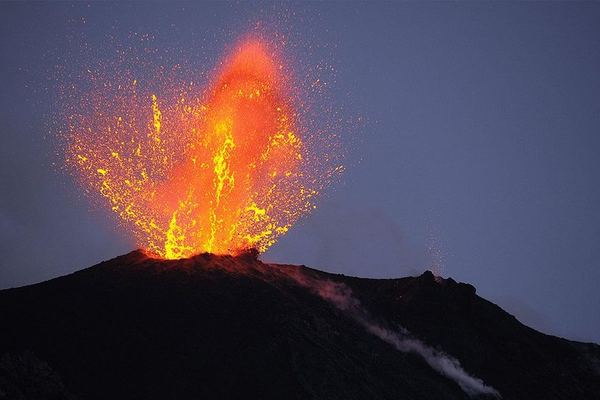
Stromboli at Sunset to 400 m, the Highest a Guide May Take You
The walk stops at 400 metres because that is the highest a volcanology guide may go, and the way down is in the dark with torches. Two hours before sunset.
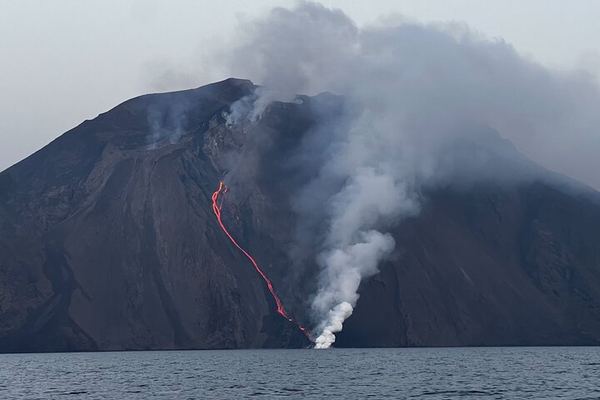
Stromboli by Night: Thirty Minutes Under the Sciara del Fuoco
The time ashore moves with the daylight so the boat is under the Sciara del Fuoco at dusk, and the stop there lasts about half an hour. Tropea by 22:30.
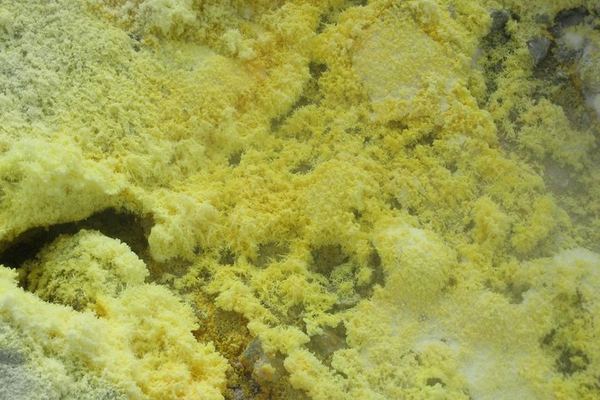
Vulcano and South Lipari by the Seat, with a Beach Lunch Stop
A per-person seat with Aeolian skippers, swimming stops round Vulcano, the caves that are not on the map, and lunch ashore on a beach with local food.
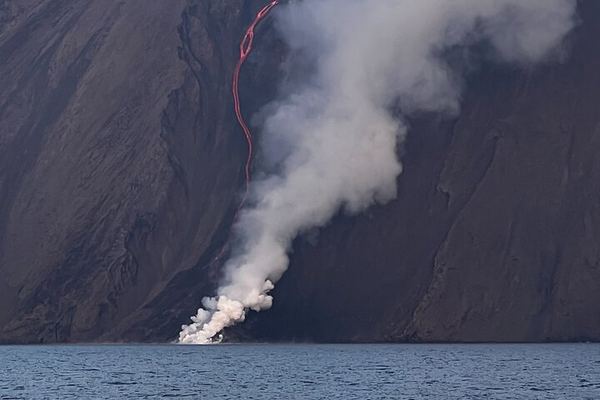
Vulcano, Lipari and Stromboli from Tropea: the Sciara del Fuoco by Day
Savadori's fast boat leaves from Calabria rather than Sicily, and the speed buys longer stops: fumaroles on Vulcano, the Sciara del Fuoco in daylight.
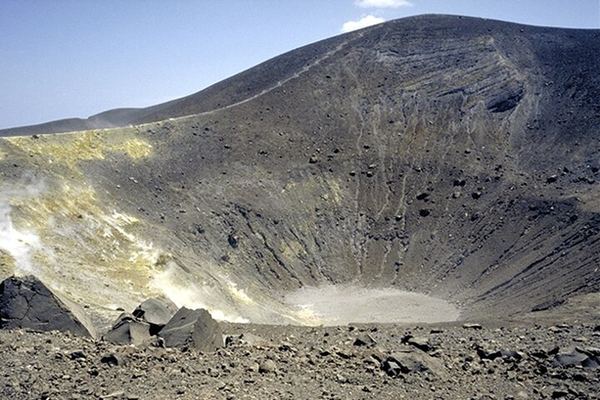
Vulcano, Lipari and Stromboli in One Day by Fast Boat
Stops of 1h15 at Vulcano, 2h20 at Lipari and 1h15 at Stromboli. Commentary is in Italian, and Lipari charges a cash fee to disembark. The boat is a fast one.
Ratings collected by Viator and Tripadvisor
Two islands, two completely different rulebooks
This is the thing nobody disambiguates, and it decides whether your day works. Both islands are active, both are managed, and the management could hardly be less alike.
Stromboli restricts you by height. You may walk freely to about 290 metres, at Punta Labronzo. Between 290 and 400 metres you must be with an authorised guide. Above 400 metres nobody goes at all, and the fines run past 500 EUR. The active craters sit at roughly 700 metres, so they are not reachable on any commercial product, whatever a title says. If you see a listing offering a trek to the craters of Stromboli, it cannot be doing what it says, because the craters are three hundred metres above the legal ceiling.
Vulcano restricts you by clock. There is no height limit, no compulsory guide and no ticket to buy. What there is instead is a municipal ordinance setting the hours of the crater path, and an automatic traffic light at the trailhead that responds to wind direction: red, or switched off entirely, means the path is closed. It closes because of what the fumaroles are venting and where the wind is putting it, which is also why the ordinance prescribes an FFP2 or FFP3 mask.
| Stromboli | Vulcano | |
|---|---|---|
| Height of the cone | 924 m by the operators' figure, 926 in other sources | Crater rim just under 400 m |
| How high you may go | 290 m alone, 400 m with a guide, no higher | To the rim, no ceiling |
| Guide | Compulsory between 290 and 400 m | Not required |
| Ticket | None; you pay the guide | None |
| The real constraint | Altitude, enforced with fines above 500 EUR | Opening hours: 06.30-10.30 and 16.00-19.30, 1 April to 20 October |
| Winter hours | Season runs April to October | 07.30 to 16.30, 21 October to 31 March |
| What is erupting | Explosions every 10 to 20 minutes; alert level yellow | Nothing since 1890, but the fumaroles are the reason for the mask |
| Listings here | 5 | 7 |
The Vulcano timing trap
It is worth stating on its own, because it is the single most useful thing on this page and it is in no English-language listing anywhere. Between 1 April and 20 October the crater path on Vulcano is open from half past six until half past ten in the morning, and again from four in the afternoon until half past seven. It is closed from 10.30 to 16.00, which is precisely the window in which a day visitor off a hydrofoil is on the island.
So the standard Aeolian day trip, over on the morning boat and back on the evening one, lands you at Porto di Levante with the path shut. If the Gran Cratere is why you are going, you either sleep on the island, or you take the first crossing of the day and walk up immediately, or you accept that you are coming for the sea and the fumaroles at the shore instead. Those are all reasonable days. Discovering the choice at the trailhead is not.
How you actually get there
Milazzo, on the north coast of Sicily, is the usual way in and the shortest crossing, with hydrofoils running to Vulcano and Lipari and onward through the chain. In summer there are also services from Messina, Palermo and Naples, which are longer and fewer.
Then there is the route most people do not expect. A good share of the Stromboli evening boats leave from Tropea, in Calabria, on the mainland, not from the islands at all. Three of the five Stromboli listings on this site start there. That is excellent news if you are staying on the Calabrian coast and a three-hour transfer if you are not, and it is the sort of detail that decides which hotel you book rather than which tour.
One cost that catches people out is the Lipari landing fee, five euros a head in cash at the quay before you board, which several operators state plainly in their own descriptions. It is covered on the Italy page above; the practical point is simply that nobody carries cash any more and the machine at the port has a queue.
In winter the sea decides everything. Hydrofoils are cancelled at a few days' notice when the north wind is up, and a cancelled crossing in an archipelago is not a delay, it is a different holiday. Between November and March most of what is on this page does not run.
Which of the seven islands has anything to sell
Lipari is the largest and the one with a town, a museum worth an hour and the pumice quarries on the north-east coast whose white scars are visible from the sea. Quarrying stopped in the 2000s, partly because of the World Heritage listing. The island's last eruption, around the thirteenth century, left the Rocche Rosse obsidian flow, a black glass wall running down to the water, and obsidian from here was traded across the Mediterranean in the Neolithic, which makes Lipari one of the earliest export economies in Europe.
Vulcano is the nearest to Sicily and the one with the smell. Stromboli is the one that performs. Salina is the green one, with the archipelago's fresh water, its Malvasia and its capers, and it holds one listing here, a half-day tour of the villages at 105 EUR. Panarea is small, expensive and appears mostly as a stop on somebody else's boat. Filicudi and Alicudi have nothing on this site at all, which is a fair reflection of how little runs to them: Alicudi has no cars and about a hundred residents, and getting there is the point of going.
The only listing that covers the whole chain is a week on a yacht with a skipper and an assistant at 989 EUR, which is the honest way to see all seven and is a different kind of holiday from everything else here.
The evening boat problem nobody mentions
Stromboli's explosions are visible by day as puffs of grey. They are worth crossing a sea for only after dark, which means the trip has to wait for sunset, and sunset moves by an hour and a half between the solstice and the end of September.
In late June the sun goes down after half past eight and a boat that idles off the Sciara until the show is worth watching gets you back to the quay somewhere near midnight. In late September the same trip starts and finishes an hour and a half earlier. The volcano is doing the same thing in both cases. The difference is entirely in how much of your night it takes, and it is the strongest argument for coming in September rather than July.
When each island works, and why
| Month | 1 | 2 | 3 | 4 | 5 | 6 | 7 | 8 | 9 | 10 | 11 | 12 |
|---|---|---|---|---|---|---|---|---|---|---|---|---|
| StromboliEvening boats need calm sea and a sunset early enough to get home; nothing much runs November to March | 1 | 2 | 3 | 4 | 5 | 6 | 7 | 8 | 9 | 10 | 11 | 12 |
| Vulcano and LipariThe boats sell swimming stops, so warm water matters; the crater path shuts 10.30 to 16.00 from April to October | 1 | 2 | 3 | 4 | 5 | 6 | 7 | 8 | 9 | 10 | 11 | 12 |
| SalinaThe green island: Malvasia and capers are both late-summer crops, and the villages are quiet either side of August | 1 | 2 | 3 | 4 | 5 | 6 | 7 | 8 | 9 | 10 | 11 | 12 |
Months as numbers. Based on operator schedules, the published crater-path hours for Vulcano and sunset times in the archipelago, checked August 2026.
Two volcanoes forty kilometres apart, and neither set of rules tells you anything about the other. On Stromboli the limit is a height. On Vulcano it is a time of day, and a traffic light that answers to the wind.
Questions people actually ask
Which Aeolian island should I go to?
Stromboli if you want to see an eruption, and you will see it from a boat or from the viewpoint at 400 metres rather than from the craters. Vulcano or Lipari if you want to swim, walk a crater rim in the morning and be back for lunch. Salina if you want the quietest of the three with something in the glass. Filicudi and Alicudi if the difficulty of getting there is the attraction.
How do you get to the Aeolian Islands?
Hydrofoil from Milazzo on the north coast of Sicily, which is the shortest and most frequent crossing, with summer services from Messina, Palermo and Naples. A number of the Stromboli evening trips instead leave from Tropea, in Calabria, on the mainland, which is worth checking before you book a hotel in the islands for a boat that never goes near them.
Can you climb Stromboli?
Not to the top. You can walk to about 290 metres on your own and to 400 metres with an authorised guide, and above 400 metres access is prohibited, with fines over 500 EUR. The active craters are at roughly 700 metres. The old summit climb has not been on sale for years, and a listing that offers the craters is describing something it cannot deliver.
Can you walk up the crater on Vulcano?
Yes, and there is no ticket, no guide requirement and no daily limit. The catch is the hours: from 1 April to 20 October the path is open 06.30 to 10.30 and 16.00 to 19.30 only, and closed in between. There is a traffic light at the start; red or unlit means closed, and the ordinance also prescribes an FFP2 or FFP3 mask for the fumarole field.
When is the best time to visit?
May, June, September and early October. The sea is workable, the boats are running and the islands are not full. July and August work but everything is busier and the Stromboli evening trips finish very late because the sun sets so late. From November to March most services stop, and the ones that run are cancelled at short notice when the wind gets up.
How much do Aeolian tours cost?
From 30 EUR for the sunset walk to the Sciara del Fuoco viewpoint on Stromboli, which is the cheapest volcano experience in Italy, to 989 EUR for a week aboard a yacht with a skipper. In between, evening boats to Stromboli run about 65 to 100 EUR, shared day boats around Vulcano and Lipari 90 to 120, and private boats 150 to 590 for the whole vessel rather than per person.
Do I need cash?
Some. The landing fee at Lipari is five euros a head, payable in cash at the port before boarding, and several operators put it in their own descriptions because they are tired of explaining it at the gangway. Beyond that, small bars and the shuttle boats on the smaller islands are more comfortable with notes than most of Italy now is.
Data verified on. Prices and counts from the 14 Aeolian listings on this site. Stromboli access limits and alert level from INGV and Italian civil protection; Vulcano path hours from Lipari ordinance 17/2023.