

Read enough complaints about volcano tours and a pattern appears. Almost none of them are about the volcano.
They are about a van that arrived ninety minutes late, a head torch that did not work, a tour that left before the sunset it was named after, a twelve-hour day of which eight were spent sitting down, and a wool jumper rented at four in the morning for more than it cost new. The mountain nearly always delivered. The logistics did not.
So this is a guide to the logistics, ordered by how much weight each factor carries in what people actually complain about afterwards, rather than by how prominent it is in the listing.
The thirteen, in order
| Rank | What to check | Why it matters more than you think |
|---|---|---|
| 1 | What is included, and what you rent on the mountain | The single biggest differentiator. Good operators include water, food and the kit; others sell you a jacket at the trailhead at four in the morning |
| 2 | The actual departure time | A sunrise trek means a 2 or 3 am start. Some listings bury this. It decides whether the day is possible at all |
| 3 | Pick-up: included, and from where | From your hotel, from a meeting point, or from a town forty minutes away. Frequently the difference between two otherwise identical products |
| 4 | Moving time versus vehicle time | A twelve-hour tour can be four hours of volcano. Recent reviews usually mention it even when the listing does not |
| 5 | How high it actually goes | Summit is an elastic word. On Etna it changes with the day's alert level; on Agung one route stops short of the top |
| 6 | Group size, and private versus shared | Changes the pace, the waiting, and how much of the guide you get |
| 7 | Who the guide is | The best reviews name the guide. A volcanologist on the trip is a genuine upgrade and is usually stated |
| 8 | What happens if the volcano or the weather closes it | Only the operator knows their own policy. Ask before booking, not after |
| 9 | Whether an easier version exists | 4x4, cable car, jeep, porters. Often unadvertised and often the thing that makes the trip possible |
| 10 | Condition of the vehicles and equipment | Old vans and broken head torches are among the most common specific complaints |
| 11 | Local operator or reseller | You are frequently booking a marketplace listing rather than the operator. It affects price and who you reach when something changes |
| 12 | Meals | Mentioned less often than product pages suggest, but it matters on overnight trips |
| 13 | Guide's language | Almost never raised in English-language discussion. Worth checking if you need another language |
The one that catches everybody: an eruption closes the volcano
This is the most persistent misconception in volcano travel and it is worth stating plainly.
When a volcano erupts, the tours stop. They do not get better. Access zones expand, summit routes shut, and in the extreme case the airport closes and you cannot leave. People book hoping for an eruption during their week, which is a bit like hoping for a storm during a sailing holiday.
What you can reasonably hope for is an eruption before your visit, which leaves fresh lava fields, or steady low-level activity of the kind Stromboli produces, which is a routine the authorities have made rules around rather than an emergency.
Two practical consequences. First, ask the operator what happens to your booking if activity closes the route, before you pay. Second, if flights are disrupted by ash, do not cancel your own flight voluntarily: passenger rights and insurance usually depend on the airline making the cancellation, and cancelling yourself can forfeit both.

The question that has no honest listing
Ask what happens when the cloud does not clear
A large proportion of disappointment in this category has nothing to do with the volcano's behaviour and everything to do with cloud.
You leave at two in the morning, you climb for three hours in the dark, you arrive at the viewpoint, and it is grey. This happens routinely at Bromo, at Batur, at Poas, at Haleakala, and in the Azores it is close to the default outside summer.
Almost no operator has a stated policy for it, because there is nothing they can do. Which means the question is not will you refund me, it is how many attempts do I get. The traveller's move is structural: book the volcano early in your trip rather than late, so a scrubbed morning can be repeated. In a week, two attempts at a sunrise beat one attempt plus regret.
The other move is choosing destinations by cloud behaviour rather than by rainfall. A dry month is not the same as a clear morning, and in the Azores and Costa Rica the difference is most of the year.
Reading a listing properly
Four habits that catch most of the problems.
Read the itinerary, not the title. Titles are written to be found. Itineraries are written by someone who has fielded complaints. The interesting information is almost always in the second one, including the words optional, weather permitting and if conditions allow.
Add up the timings. If departure is 07:00 and return is 19:00 and the walking is described as two to three hours, you have found nine hours of something else. That is fine, if you know.
Sort recent reviews by lowest rating. The five-star ones tell you the volcano was impressive, which you knew. The two-star ones tell you the van was late, which you did not.
Look for what is not mentioned. If a tour to a volcano famous for cold does not mention warm clothing, either it provides it or it is expecting you to rent it at dawn. Ask which.
Where marketplaces help and where they do not
We are an affiliate site, so take this with the appropriate scepticism, but the honest version is that both have a real use.
Booking through a large platform buys you a cancellation policy, a payment you can dispute, and reviews in volume, which matters in places where you have no way to check an operator's reputation. It costs a margin, and on a busy mountain you may be buying a seat on the same minibus as everybody else.
Booking direct with a local operator usually costs less and gets you someone who answers the phone when conditions change. Experienced travellers report exactly that as the advantage: the guide who keeps texting you updates about the mountain.
The mistake to avoid is thinking you are doing one when you are doing the other. If the confirmation email arrives from a company you have never heard of, you booked a reseller.
The six specific complaints worth designing around
It left before the thing it was named after
Sunset tours that start back down before sunset are a recurring complaint. Check the stated return time against the actual sunset time for your date.
The equipment did not work
Broken head torch lights on cave visits, unreliable vans. On night trips, carry your own torch regardless of what is promised.
It was mostly the minibus
Most common on long combination tours: two volcanoes plus a waterfall plus a viewpoint, sold as a full day and delivered as a road trip.
The upsell at altitude
Rented jumpers and gloves at the trailhead at 4 am, priced accordingly. Bring your own layers and it evaporates as an issue.
Nobody said it would be this cold
The most preventable complaint in the whole category. Tropical volcanoes are cold at the top before dawn, and the listing rarely says so.
Too many people
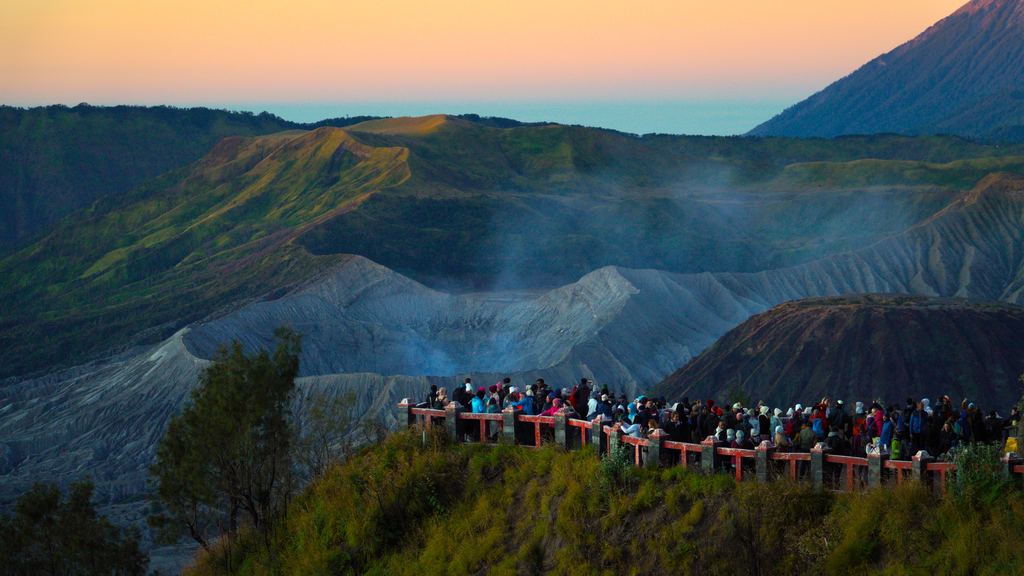
On the famous sunrise viewpoints the crowd is part of the experience now. If that matters, look for the second viewpoint rather than the first.
A short checklist
Before you pay, you should be able to answer these. If the listing does not, ask the operator. Their willingness to answer is itself information.
What time does the vehicle actually leave, and from where?
How many hours are on foot, and how many in transport?
How high does it go, and what changes that on the day?
What is provided, and what will I be offered to rent?
How many people in the group?
What happens if the route closes, or the weather is poor?
Is there a shorter or assisted version of the same trip?
Quick answers
Is it better to book in advance or when I arrive?
In advance for anything with a government permit cap, and for peak season on the popular mountains. On the spot is often cheaper and gives you the enormous advantage of choosing your weather. The compromise most experienced travellers use: book early in your trip rather than early in your planning, so you keep spare days for a second attempt.
Should I book directly with the local operator?
Usually cheaper and more responsive, and the person who answers knows the mountain. The trade-off is fewer consumer protections and less reputational information to work from. On a mountain where you have no way of judging an operator, the platform's review volume is worth the margin.
How much should I tip a volcano guide?
It varies by country and it is asked constantly, which suggests nobody is being told. Norms differ enormously between, say, Guatemala and Japan. Ask the operator directly when you book: it is a normal question and they would rather answer it than have you guess.
The tour says summit. Will I reach the summit?
Not necessarily, and on several mountains it is not the operator being evasive. On Etna the reachable point depends on the day's alert level. On Agung one of the two routes stops on the rim below the true top. On Fuji all four routes end on the crater rim, and the actual highest point needs a further walk around it. Ask what altitude the tour reaches, not whether it reaches the summit.
Is a private tour worth the extra?
On sunrise treks, often yes, because you set the pace and are not waiting for a group of twelve at three in the morning. On landscape tours, rarely, because you are looking at the same thing either way. On anything involving a long drive, it mostly buys you a better vehicle.
Twelve tours of the same sunrise
Mount Batur before dawn is the clearest case of what this page is about: near-identical listings that differ on pick-up, group size and what you are handed at the trailhead.
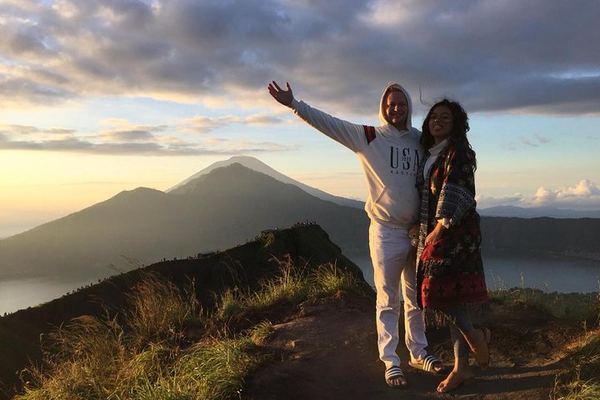
Batur Sunrise Trek, Breakfast at the Summit, Rim Walk on Request
Breakfast at the summit is banana sandwiches, cakes, eggs, fruit and hot drinks, and at 07:00 you choose between going down and walking the crater rim.
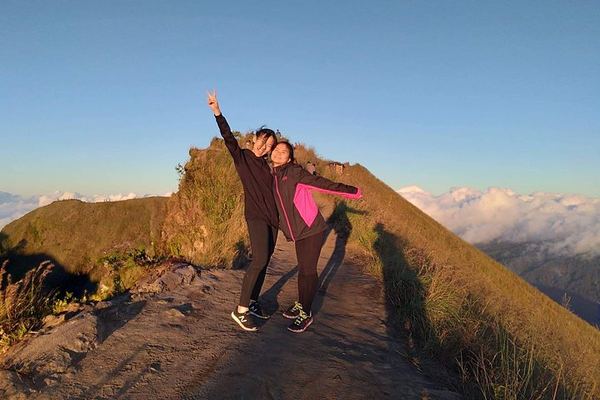
Batur to the 1,717 m Peak from Toya Bungkah, then the Hot Spring
The trek starts at Toya Bungkah, the peak is 1,717 metres, and the morning ends in the Batur natural hot spring before an 11:00 drop-off at your hotel.
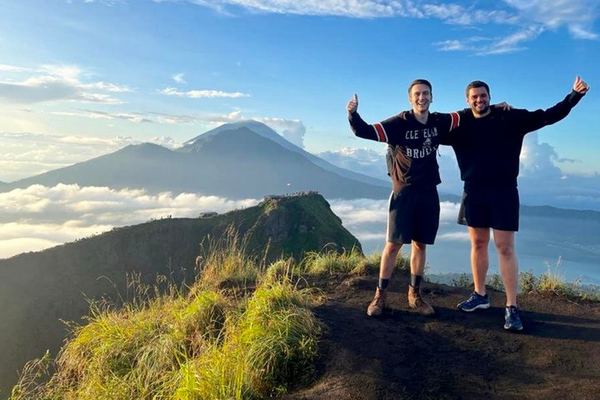
Mount Batur Sunrise: a 3:30 am Start, Torchlit Climb and a Coffee Plantation After
Eight to ten hours starting at 3:30 am, climbed by flashlight after a pick-up in Kuta or Ubud, with a traditional coffee plantation stop on the way back.
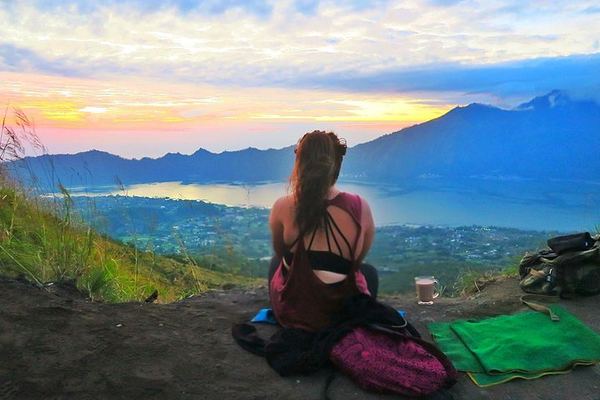
Mount Batur Sunrise from Toya Bungkah: Base Camp at 3 am, Breakfast at the Top
The trail starts at Toya Bungkah on the lake shore, inside a caldera 10 by 13 km wide, and the guide walks it from a 3 am meeting to breakfast on the summit.
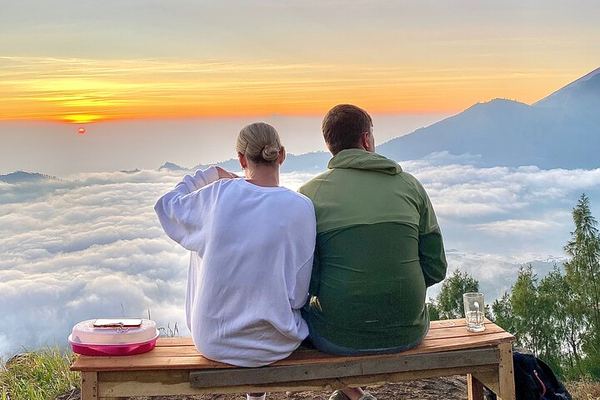
Mount Batur Sunrise Hike with Breakfast and the Hot Springs on Lake Batur
The springs in this package are the ones on the shore of Lake Batur, mineral-rich and warm, reached straight after the pre-dawn climb and breakfast on top.
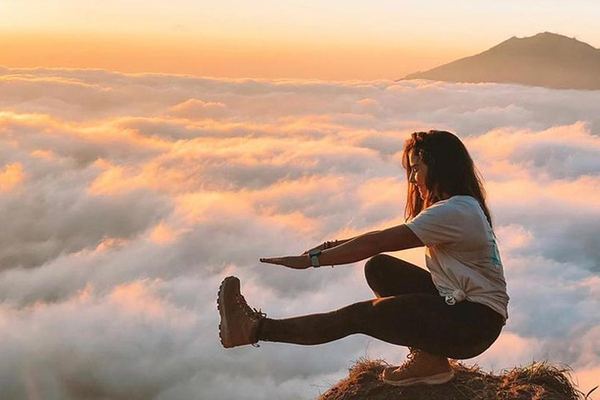
Mount Batur Sunrise on the Quieter Local Trails, with or without Transfer
The climb uses local paths away from the busy route, breakfast at the top is steam-cooked, and both the transfer and the hot springs are booked separately.
Ratings collected by Viator and Tripadvisor
Compare tours on the same volcano
Each destination page lists what is running there, with duration and what is included, so the comparison is on the same page rather than across five tabs.
Data verified on. Built from patterns in traveller forums and negative reviews across the destinations in our catalogue, rather than from operator marketing. Editorial Policy