
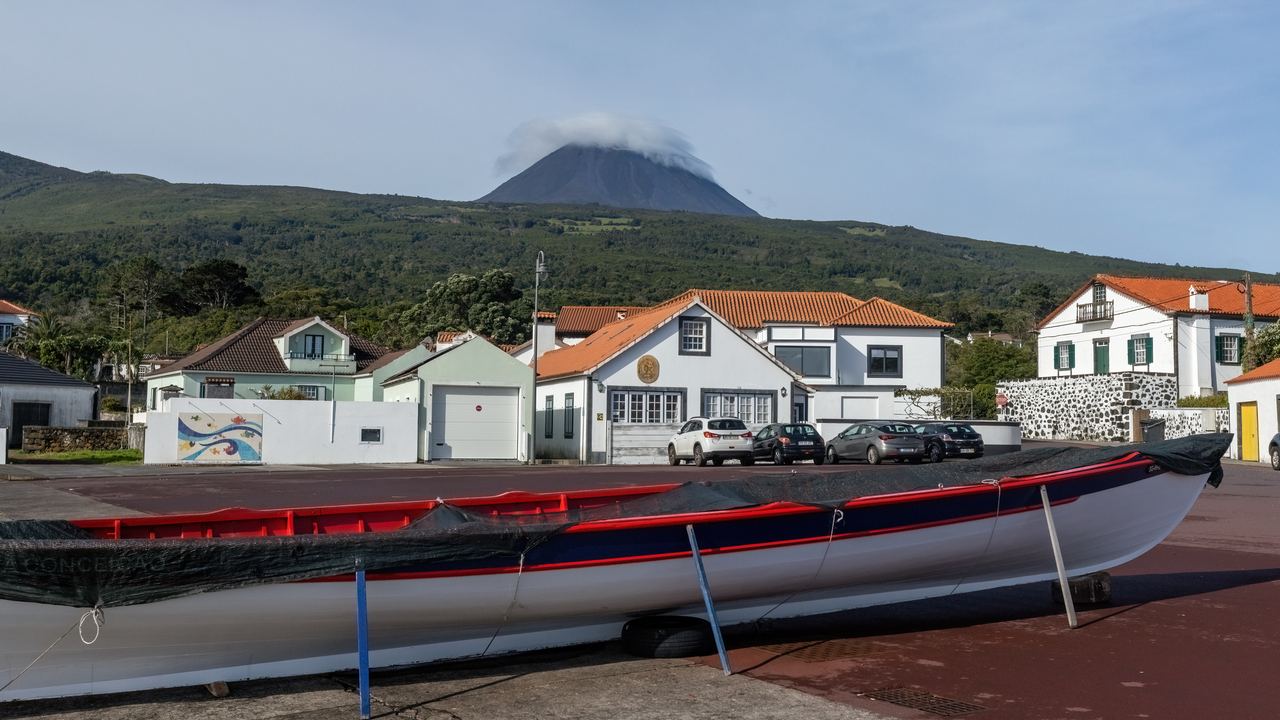
Mount Pico & Faial: Climbs, Craters and Capelinhos
Portugal's highest mountain at 2,351 m, a permit system with a headcount, and the 1957 eruption that emptied a parish.
Pico and Faial are two islands with seven kilometres of water between them, and almost nobody visits one without the other. On the Pico side there is a single mountain, 2,351 metres of it, the highest ground in Portugal and the highest point of the Mid-Atlantic Ridge that anyone can stand on. On the Faial side there is a crater two kilometres across and a headland that did not exist in 1957. The ferry between Horta and Madalena runs all year, and one Faial operator ends its day at 16:30 for the specific purpose of getting guests back onto it.
These two islands are on one page because they are one trip. What follows is the mountain and the rules attached to it, the reason winter closes the climb with a clock rather than with snow, the vineyards that are a UNESCO site, and the thirteen months in 1957 and 1958 that emptied a Faial parish and rewrote a piece of American immigration law. Getting to the archipelago and moving between the island groups is on the Portugal page.
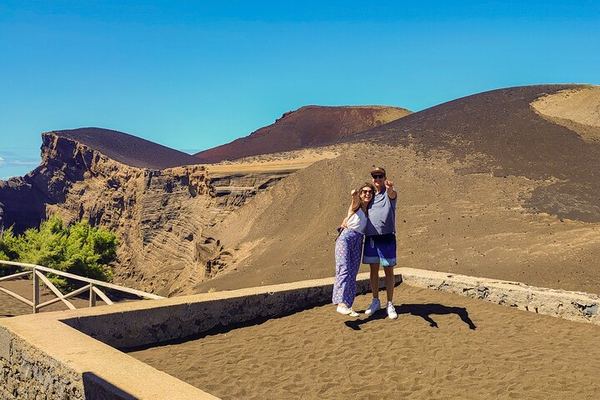
Faial Full Day: the Buried Lighthouse Floor and the Whaling Port
A full day with Ramiro, who lives on Faial: the Capelinhos lighthouse with its first floor still under the ash, lunch off the tourist routes, small group.
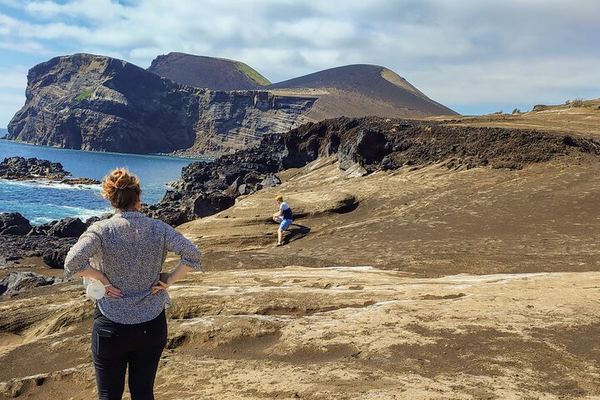
Faial Half Day from the Horta Ferry: Caldeira, Capelinhos, Sea Pools
You are picked up outside the Horta ferry terminal in a grey Opel van, with the caldeira 400 metres deep, Capelinhos, and the sea pools at Porto do Comprido.
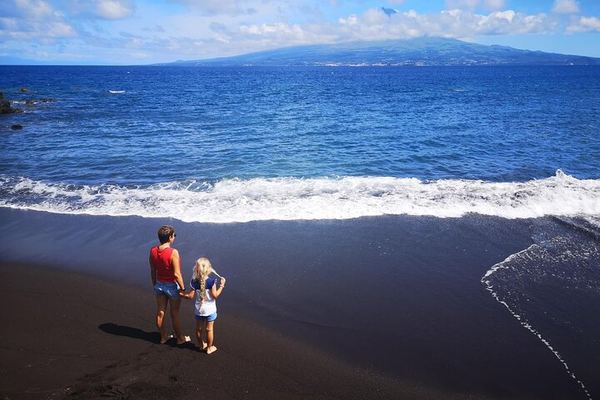
Faial in a Day: Capelinhos, the Caldeira and the Ruined Lighthouse
Seven to eight hours around Faial with a picnic lunch: the Capelinhos volcano, the 2 km caldera, the lighthouse the 1998 earthquake destroyed, black sand.
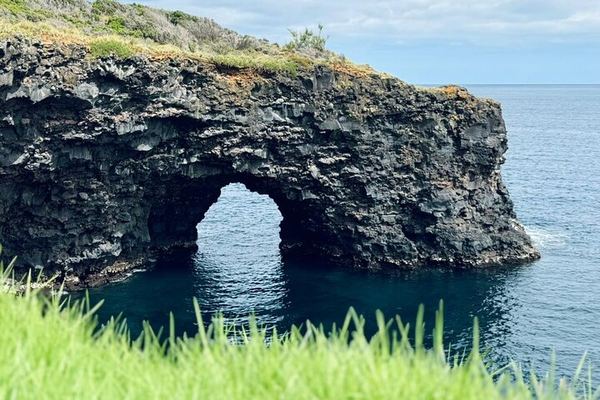
Faial in Four Hours: the Caldeira Rim and the 1957 Capelinhos
Four hours across Faial, from the caldeira 2,000 metres wide to the Capelinhos volcano and the eruption of 1957. Guide, insurance and drinks on board included.
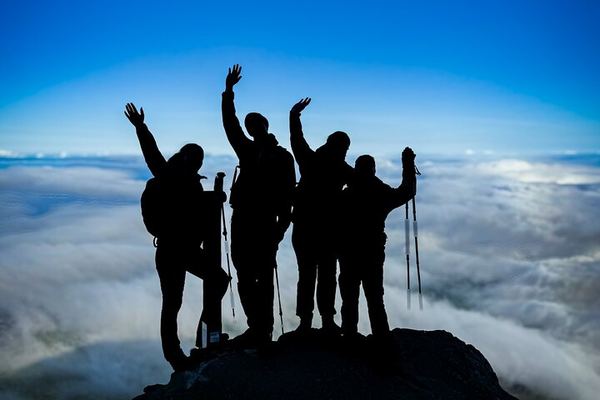
Mount Pico Guided Climb with Certified Azores Mountain Guides
A daytime ascent with AGMA-certified guides who explain the volcano while you climb it: how Pico formed, what the rock does and what grows at each altitude.
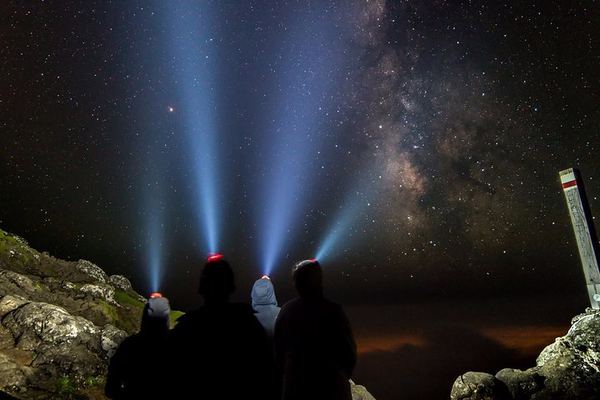
Mount Pico Night Climb with Tripix Azores: Sunrise from Piquinho
Tripix Azores has guided over 10,000 climbers since 2015, and this ascent runs overnight on the official trail to put the group on Piquinho at first light.
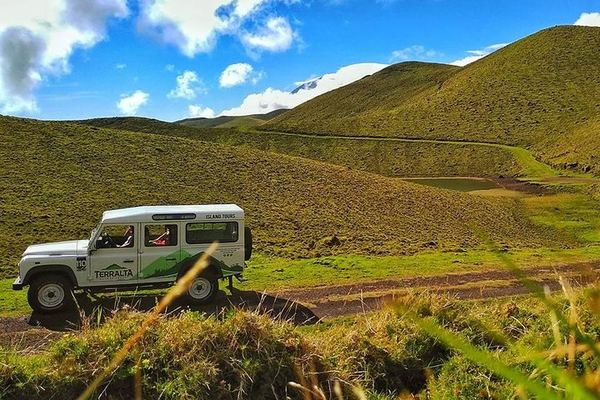
Pico by Jeep: Three Plateau Lagoons and an Earthquake Simulator
Three lagoons in a row on the central plateau, lunch included at a local restaurant, and an earthquake simulator at the Casa dos Vulcões. Minimum two people.
Pico in a Day, Ending Inside a Lava Tube
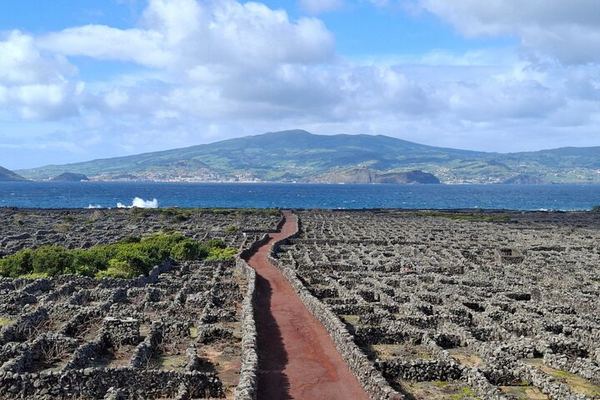
Highlands, laurel forest and a picnic at Prainha, then the UNESCO vineyards and a lava tube to finish. Three volcanic wines if you book the tasting version.
Private Half Day on Faial: Castelo Branco, Varadouro, Capelinhos
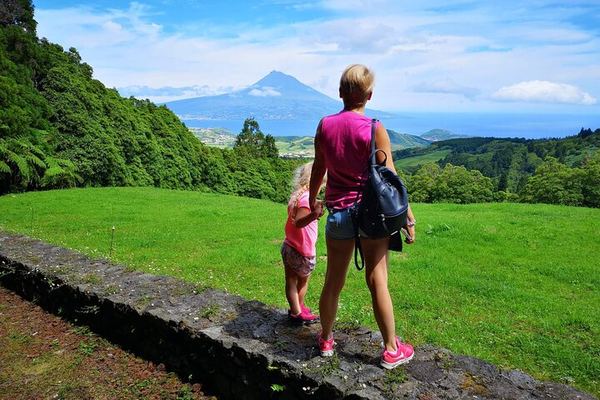
Three to four hours west from Horta to Capelinhos, past the white rock at Castelo Branco and the pools at Varadouro. The last stop depends on the weather.
Up Pico, 2351 m, with Poles Issued at the Mountain House
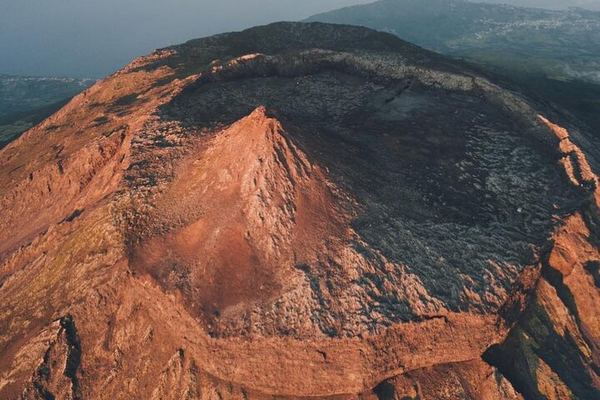
2,351 metres, no mountaineering experience needed but good fitness required. Check-in and briefing at the Mountain House, with hiking poles for everyone.
Whale and Dolphin Watching on Pico with Futurismo
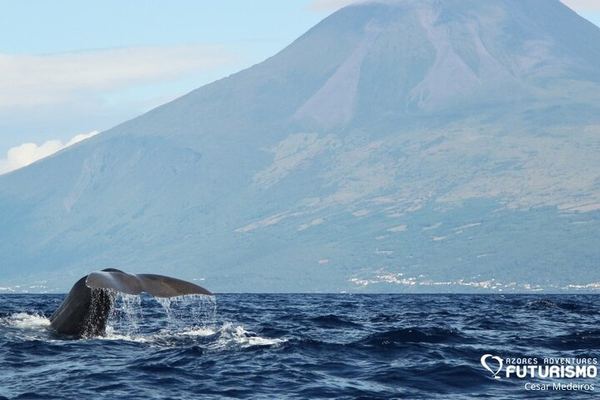
Futurismo Pico Azores Adventures run this one, with a published sighting rate and a trip meant to teach as much as entertain. Whales and dolphins off Pico.
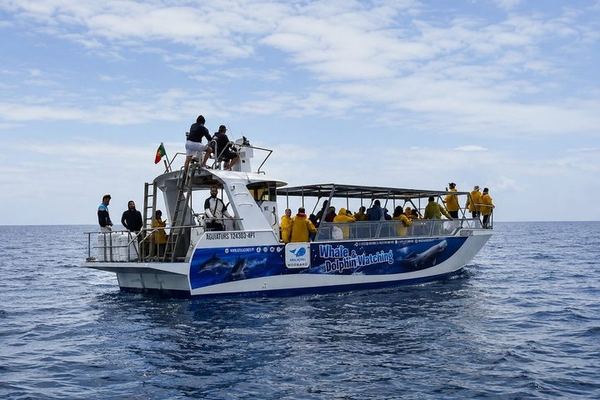
Whale Watching off Lajes do Pico, with a Vigia Ashore
A land-based vigia directs the boat and biologists are on board, in waters where about 27 cetacean species pass. Nothing sighted means the fare is refunded.
Ratings collected by Viator and Tripadvisor
Two islands, seven kilometres apart
Pico is the bigger island and the emptier one: 445 square kilometres, fewer than fourteen thousand people, three small towns and a mountain in the middle of it. Faial is smaller, 173 square kilometres, and has the only real harbour town in the central group. Horta is where transatlantic yachts stop, which is why a village of that size has the marina, the bars and the flights.
Almost every visitor sleeps on one and day-trips to the other. Which way round is a genuine choice, and the products on this page are split roughly evenly between them.
| Pico | Faial | |
|---|---|---|
| Area | 445 km² | 173 km² |
| You go for | The 2,351 m climb, the vineyards, the whales | The Caldeira, Capelinhos, and Horta |
| Highest point | 2,351 m, Mount Pico | 1,043 m, Cabeço Gordo |
| Last eruption | 1720 | 24 October 1958, at Capelinhos |
| Products here | Climb 75 to 95 EUR, island day 120 to 180, whales 66 to 70 | Half day 69 to 75 EUR, full day 105 to 125 |
| Base town | Madalena or Lajes do Pico | Horta |
| Days needed | Two, three if you climb | One, and a long one |
Climbing Pico: the rules are the product
The climb starts at the Casa da Montanha at 1,200 metres, which is a building rather than a car park. You register there, you are counted out, and you are counted back in. That is not a formality: the reserve allows 160 people on the trail at any one moment and 320 in a day, and thirty-two people at most may spend the night in the summit crater. When the count is full you do not go.
The trail is the PR1, 3.8 kilometres one way with 1,150 metres of ascent, marked by 47 numbered posts that exist so that a rescue team can be told where you are. At the top the crater rim is not the summit: Piquinho, the cone inside the crater, rises another seventy metres and the last of it is a scramble on hands as well as feet. Allow six to eight hours in total. The two guided products on this page state seven and ten, the ten-hour one being the night climb that puts you on the summit for sunrise.
A GPS tracker is compulsory and issued at the Mountain House. A guide is not. If you register, carry the tracker and check back in, you may climb Pico on your own, which is a more permissive rule than most European mountains of that size and one that a lot of visitors do not realise they have.
What is not permissive is the kit check. Running shoes will get you turned away at the gate, and the operators know it well enough to write it into their own booking conditions.
| What it costs | What it means | |
|---|---|---|
| To the Furna do Abrigo shelter | 5 EUR | The first section only, well below the crater |
| To the crater rim | 15 EUR | The rim at roughly 2,280 m, not the top |
| To the summit of Piquinho | 25 EUR | The full 2,351 m, including the final 70 m scramble |
| Overnight in the crater | +10 EUR | Maximum 32 people per night |
| Guided day climb | 75 to 89 EUR | 7 hours, poles and insurance included, reserve fee usually included |
| Guided night climb for sunrise | 95 EUR | 10 hours, headtorch included, all sales final on one operator |
| People allowed on the trail | 160 at once, 320 a day | Counted in and out at the Mountain House |
It is mandatory to present yourself with proper mountain boots and equipment suitable for the activity. Failure to meet these requirements may result in exclusion from the climb, including by decision of the Mountain House, without the right to a refund.
Winter closes the mountain with a clock, not with snow
The usual explanation for why nobody climbs Pico between November and March is the weather, and the weather is genuinely worse. But the binding constraint is duller and more absolute than that.
From November to March the Casa da Montanha opens at 08:00 and closes at 18:00. You cannot start before it opens, because registration and the tracker are compulsory, and you have to be counted back in before it shuts. That leaves ten hours of window for a route that takes six to eight, in the months with the least daylight and the highest chance that you will be slower than you planned. The arithmetic closes the mountain on its own, whatever the sky is doing.
This is also why the guided departures thin out in winter rather than stopping outright. The operators have not decided the mountain is unsafe. They have run out of hours.
What Pico sells when you are not climbing it
The vineyards are the other reason to be here, and they are a UNESCO World Heritage site, inscribed in 2004. What is protected is not the vines but the walls. Pico has no soil worth the name, so growers built thousands of small rectangular enclosures out of loose black lava rock, each one a couple of metres across, and planted inside them. The walls hold the heat, break the salt wind off the Atlantic and stop the sea spray. Seen from the road above Criacão Velha the whole coastal strip looks like a stone grid, and it was made by hand, one wall at a time.
The wine that comes out of it is Verdelho, grown in basalt within fifty metres of the sea, and the private island tour at 180 EUR includes a tasting of three of them with a local producer. Add the whaling museums at Lajes, the lava tubes that two of the jeep tours enter, and the fact that whale watching from Pico costs 66 to 70 EUR and one operator claims a 98 per cent sighting rate across roughly twenty-seven species of cetacean.
Faial: a crater, and the eruption that changed American immigration law
The Caldeira do Faial sits in the middle of the island: two kilometres across, seven kilometres around the rim, about 400 metres deep, with Cabeço Gordo at 1,043 metres on its edge. Every Faial tour stops at the rim viewpoint and the walk around the top is open to anybody. Going down inside the crater is a different matter: it requires a certified guide, and there is a daily cap on how many people may descend that nobody publishes.
The western end of the island is younger than most people reading this. On 27 September 1957 the sea began to boil off Ponta dos Capelinhos. The eruption ran for thirteen months, until 24 October 1958, built a cone out of the water, welded it to Faial and added 2.4 square kilometres of new land. It also destroyed around three hundred houses and forced roughly two thousand people out. The parish of Capelo lost half its population.
What happened next is the part that almost nobody selling tours here mentions. On 2 September 1958, with the eruption still running, the United States passed the Azorean Refugee Act, which authorised 1,500 visas for the people it had displaced, carried with the backing of the junior senator from Massachusetts, John F. Kennedy. Azorean emigration to New England was already old by then. Capelinhos gave it a statute, and a very large number of Portuguese-American families can name the year their family left because of it.
The lighthouse is still standing in the ash, thirty-five metres of it, and you can climb it for 10 EUR. The interpretation centre beside it is entirely underground, opened in August 2008, and it is the best museum in the archipelago by a distance.
| 1 | 2 | 3 | 4 | 5 | 6 | 7 | 8 | 9 | 10 | 11 | 12 |
The things that are not in the listing
Five specifics that catch people on these two islands.
The reserve fee is not always in the price. Two of the three Pico climbing products state that the Mount Pico Natural Reserve access fee is included. One does not. On a 25 EUR summit fee that is a third of the difference between them.
Do not dive in the 24 hours before you climb. Both guiding companies here say it in their own conditions. Pico is a 2,351-metre ascent from sea level, the Azores are a diving destination, and the two get booked into the same week more often than you would think.
One of the climbing operators is all-sales-final. The night climb at 95 EUR states that no refund is available for cancellations. Given that the mountain is weather-dependent and the Mountain House can refuse you at the gate for your footwear, read that line before you pay.
Lunch on the Faial day tours is often optional and priced separately. One operator sets it at 12.50 to 13.50 EUR for a buffet, and adds that if the whole group skips it the tour finishes an hour earlier.
The channel ferry is not booked by your tour. Horta to Madalena is public transport, it runs all year, and it is how a Pico-based visitor does Faial in a day. The Faial operators know this well enough to time their finish at 16:30 around it, but the ticket is yours to buy.
Questions people actually ask
Do you need a guide to climb Mount Pico?
No. You need to register at the Casa da Montanha at 1,200 metres, carry the GPS tracker they issue, pay the reserve fee, and check back in when you come down. If you do all that you may climb alone. What you cannot do is start before the building opens or skip the count, and the reserve allows only 160 people on the trail at any moment. The guided products at 75 to 95 EUR add poles, insurance, a pace that suits you and someone watching you for altitude symptoms.
How hard is the climb, and how long does it take?
3.8 kilometres one way, 1,150 metres of ascent, 47 numbered posts, six to eight hours up and down. There is no exposure and no technical climbing until the last stretch, where Piquinho rises seventy metres above the crater rim and the ground becomes a scramble. What makes it hard is loose volcanic rock, no shade, and the fact that the summit is 1,150 metres above where you parked. It is not a walk, and running shoes will get you turned back at the gate.
What does it cost to climb Pico?
The reserve charges 25 EUR to reach the summit, 15 to stop at the crater rim, 5 to reach the first shelter, and 10 more to sleep in the crater. A guided day climb is 75 to 89 EUR and a guided night climb for sunrise is 95, and most of them include the reserve fee. Check which one you are buying: one of the three products here does not include it.
Can you climb Pico in winter?
Rarely, and the reason is administrative. From November to March the Casa da Montanha is open 08:00 to 18:00, registration is compulsory in both directions, and a six to eight hour route does not fit comfortably into a ten-hour window in the shortest days of the year. Guided departures thin out rather than stopping, but if you are planning a trip around the summit, come between April and October.
Is Faial worth a day if I am staying on Pico?
Yes, and the islands are set up for exactly that. The ferry from Madalena to Horta crosses seven kilometres of channel and runs all year, and the Faial operators time their days to end at 16:30 so you can get back. A half day at 69 to 75 EUR covers the Caldeira and Capelinhos; a full day at 105 to 125 adds the coast, Monte da Guia and time in Horta.
What is there to see at Capelinhos?
A grey ash headland that did not exist before 27 September 1957, a lighthouse standing thirty-five metres tall with its lower floor buried, and an interpretation centre built entirely underground so as not to interrupt the view. The eruption ran thirteen months, added 2.4 square kilometres to the island, destroyed about three hundred houses and halved the population of the parish. The lighthouse climb is 10 EUR.
When can you see whales here?
Sperm whales are resident and are seen in most months the boats run. The migratory baleen whales, blue, fin and sei, come through in spring, chiefly April and May. Boats out of Pico cost 66 to 70 EUR for a half day, and one operator states a 98 per cent sighting rate across roughly twenty-seven cetacean species. The old whaling lookouts on the cliffs, the vigias, are still used to spot for the boats.
Data verified on. Prices and inclusions read from the twelve Pico and Faial products here. Trail data, fees and visitor limits as published for the Mount Pico reserve; Capelinhos dates from the record.