

Santorini Volcano Tours: the Caldera, Nea Kameni and the Springs
A basin 12 by 7 km, cliffs over 300 m high, 385 m of water in the middle and two lava islands at the centre. Everything here leaves from the rim.
Santorini is not an island with a volcano on it. Santorini is the rim of a volcano that blew its middle out, and the shape you see from every terrace in Fira and Oia is the inside of the crater. The caldera measures about 12 by 7 km. The cliffs stand more than 300 m above the water on three sides, and the sea inside them reaches 385 m deep, which is why cruise ships anchor offshore instead of docking. At the centre sit two black islands that did not exist when the Romans arrived. Everything sold here as a volcano tour is a way of getting closer to those two, or of looking at the wall they sit inside.
This page is about the volcano and how a day on it is organised: which port a boat leaves from, what the crater landing costs on top of the ticket, why the same-looking trip carries three different prices. The two groups below split by what you actually do. Volcano & Hot Springs means going ashore on Nea Kameni and swimming at Palea Kameni. Caldera Cruises means staying on the boat, with the sunset and a meal as the point. The seven experiences listed on this page do neither: they take the rim itself, by road, on foot, on a quad or in a kayak.
Choose a destination in Santorini


Volcano Travel Experiences in Santorini
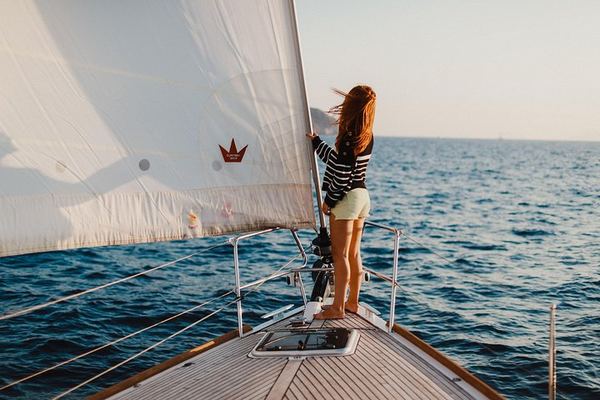
A Private Yacht in the Caldera, or Out to Anafi and Ios
A private yacht out of Vlychada for the caldera and the hot springs, or further: Anafi, Ios 22 miles off, or Folegandros on a full or multi-day charter.
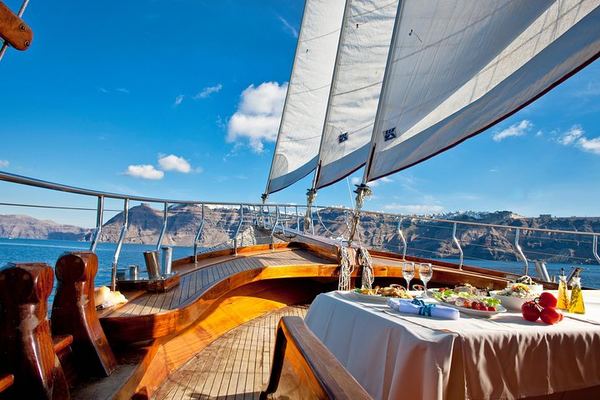
Caldera Sunset Sail: Nea Kameni Ridge, Hot Springs, Dinner Aboard
An hour and a half ashore on Nea Kameni, a 30-metre swim to the hot springs at Palea Kameni, buffet dinner with wine, and the sunset at anchor off Oia.
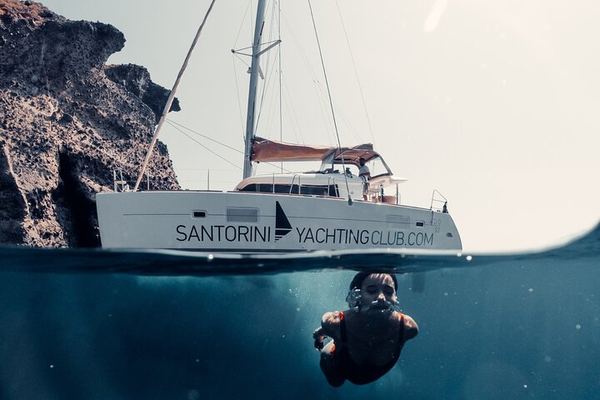
Catamaran from Ammoudi to Vlychada, with the BBQ Cooked Aboard
A catamaran from Ammoudi to Vlychada with three swimming stops, past Indian Rock and the Venetian lighthouse, and a Greek BBQ cooked on deck as you swim.
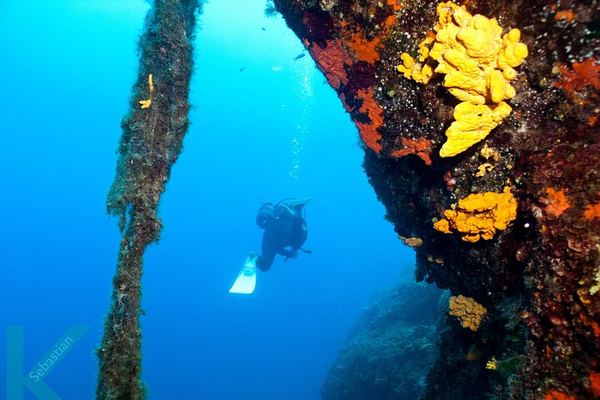
Discover Scuba Diving in the Caldera, from Akrotiri Beach
A first dive inside the caldera, off Caldera beach at Akrotiri, with a bus from Fira at 08:30. First name, height, weight and shoe size are sent ahead.
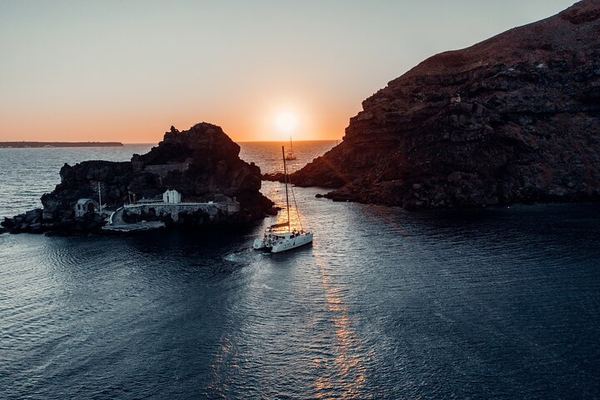
Five Hours to Ammoudi at Sunset, with Ouzo on Board
Five hours from Vlychada marina to Ammoudi bay with a barbecue on deck, local wine and ouzo, and a crossing to Thirasia only when the conditions allow it.
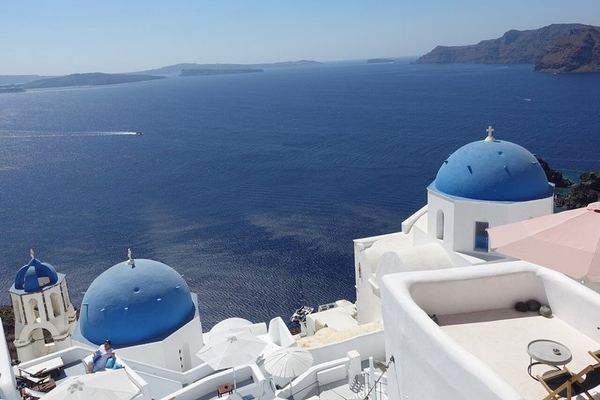
Four Private Hours on Santorini: Oia, Firostefani, the Heart Rock
A private vehicle for four hours with pick-up included: Oia, the Three Bells of Fira, the Akrotiri lighthouse and the heart-shaped rock few people find.
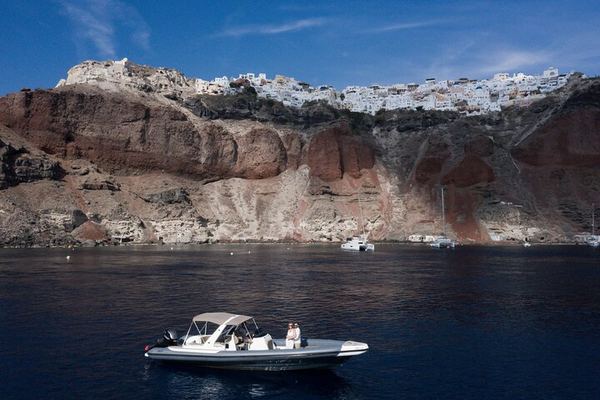
Mouzakia Beach, Reachable Only by Boat, and the Hot Springs
A private boat to Mouzakia, which no road or path reaches, and to the Nea Kameni springs at 30 to 35 degrees. Swimming lasts as long as you want it to.
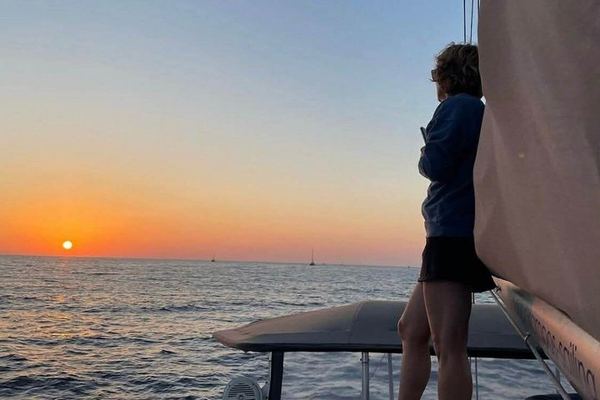
Private Catamaran from Vlychada, Hot Springs and BBQ Aboard
A private catamaran out of Vlychada with hotel pick-up, the Nea Kameni hot springs, and a BBQ at anchor off Mesa Pigadia with unlimited wine and beer.
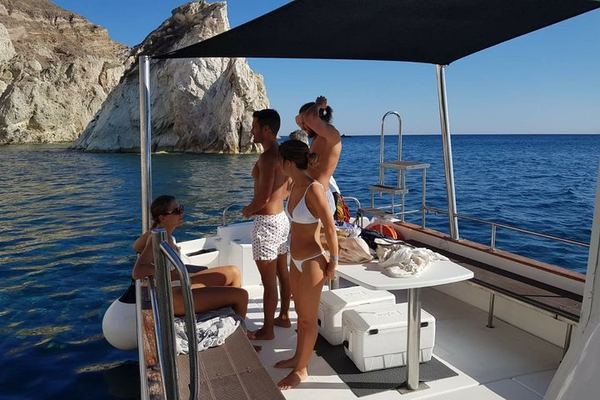
Private Cruise from Ammoudi to the Volcano and Agios Nikolaos Islet
A 10-metre private boat from Ammoudi to the volcano and the hot springs, finishing at the Agios Nikolaos islet, which nothing but a boat reaches easily.
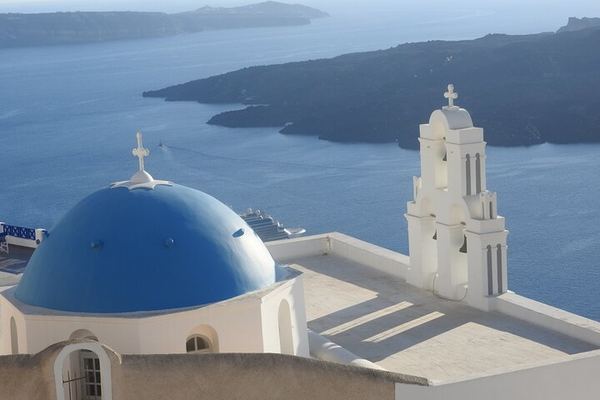
Prophet Elias, Megalochori and the Balcony at Imerovigli
From the monastery on the island's highest point to the balcony at Imerovigli, with free time in Oia. The afternoon departure can catch the sunset there.
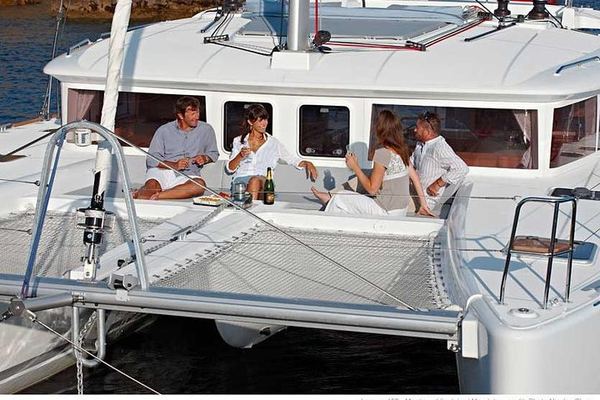
Red Beach or White, Weather Deciding: Caldera Sailing with Lunch
The boat stops at the Red or the White Beach, whichever the weather allows, for 20 to 30 minutes, then the hot springs at Nea Kameni and a Greek meal aboard.
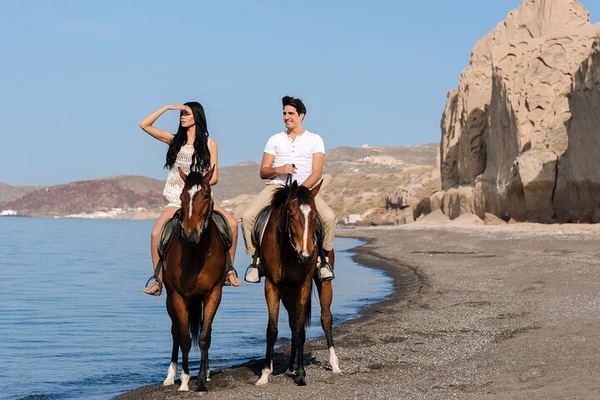
Riding the Minoan Trails to Eros Beach, 45 Minutes on the Sand
Volcanic canyons cut by the Minoan eruption, then about 45 minutes riding the black sand at Eros Beach. Quiet horses, no experience needed, café afterwards.
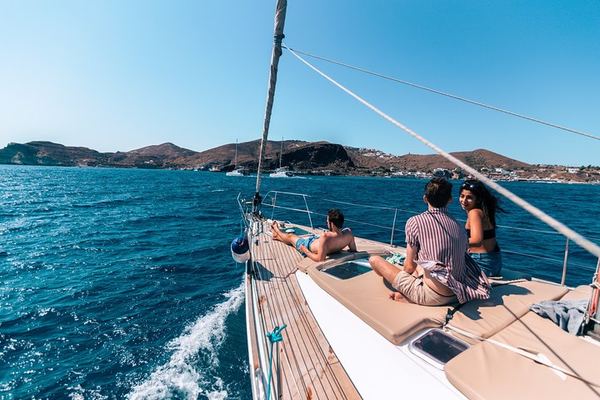
Sailing the Caldera with Captain Yiannis, BBQ and Greek Wine
Captain Yiannis sails out of Vlychada past the Red and White beaches to Palea Kameni, with a BBQ and Greek wine aboard and the 1892 lighthouse on the way.
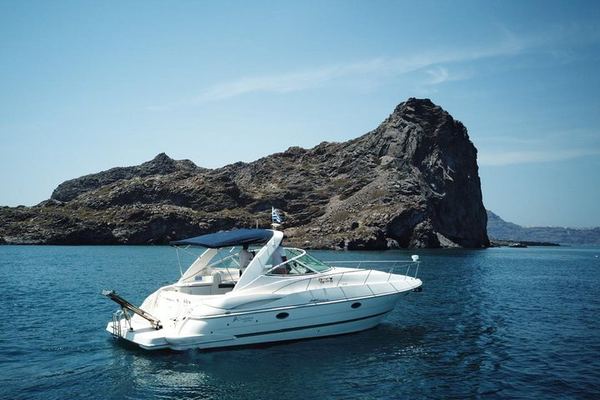
Santorini by Private Boat to Thirassia, Lunch Ready After the Swim
Five hours on a private charter around the caldera: the hot springs at around 100°F, Thirassia for the swim, and a meal made only with local products.
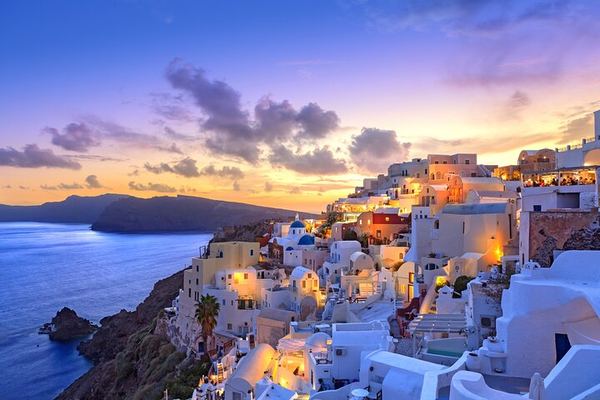
Santorini by Private Car: Oia, the Black Beach and the 1711 Monastery
A private car and guide for the whole island: Oia and Megalochori, the Red and Black beaches with lunch by the sea, and the 1711 monastery at 567 metres.
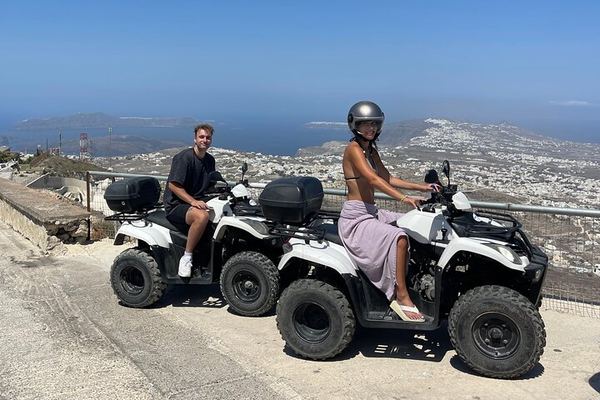
Santorini by Quad: Emporio's Windmills and the Castelli at Pyrgos
Fuel, helmets and a local guide from Moto Thira, on a quad route taking in Oia, Pyrgos, Profitis Ilias, Perissa and the windmills of Emporio. Minimum two.
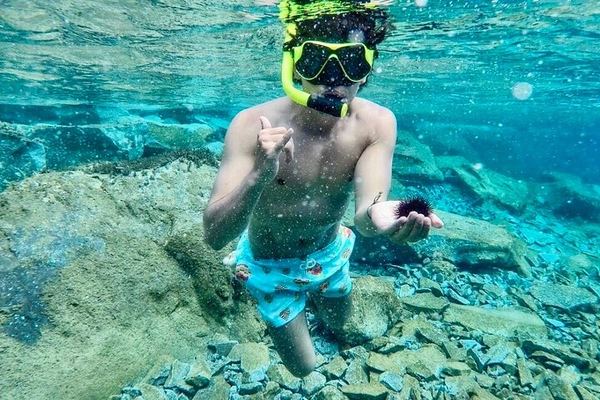
Santorini Caldera by Day on a Kaïki, Vlychada to Ammoudi
The kaïki leaves Vlychada in the morning and finishes at Ammoudi below Oia, taking in Red Beach, White Beach, the volcano and Thirassia for lunch on board.
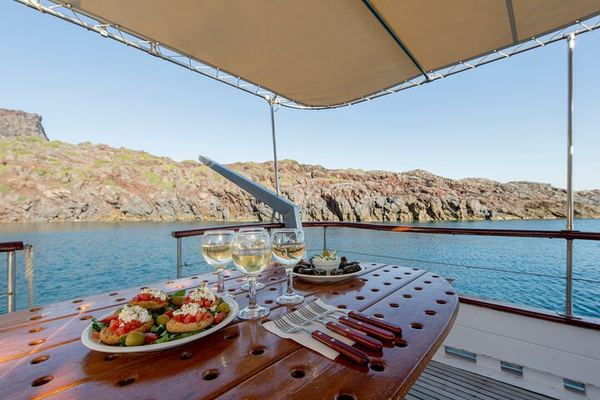
Santorini Caldera Sunset on a Wooden Boat, Ammoudi to Vlychada
A traditional wooden boat from Ammoudi Bay to Vlychada, with the volcanic hot springs, Thirassia for a swim, and the sunset just before the last harbour.
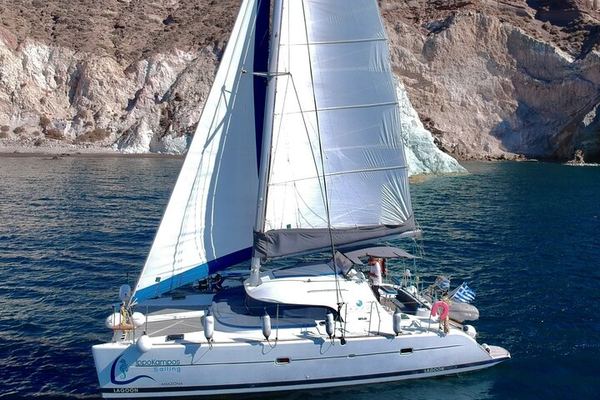
Santorini Catamaran in a Small Group: Snorkel Gear and Dessert
Hotel pick-up, snorkelling gear provided and a BBQ with dessert and local wine at Mesa Pigadia. Morning or sunset, in a small group rather than a charter.
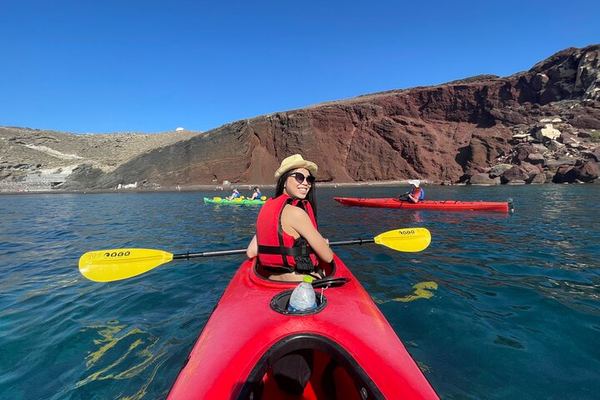
Santorini Sea Kayak from the Cave of Nikolas, Akrotiri
Three hours along the south coast at cliff level, into the sea caves, with snorkelling and a picnic. The base sits beside the Cave of Nikolas at Akrotiri.
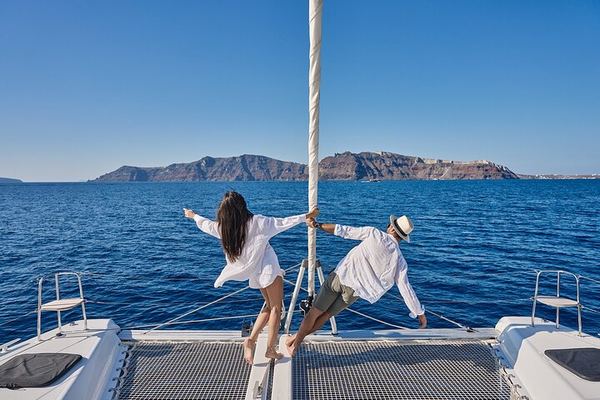
Semi-Private Sailing with Renieris, and the 1600 BC Eruption
A semi-private sailing cruise from Vlychada to the beaches only boats reach, with a Greek BBQ on board and dry white wine from a local winery. Day or sunset.
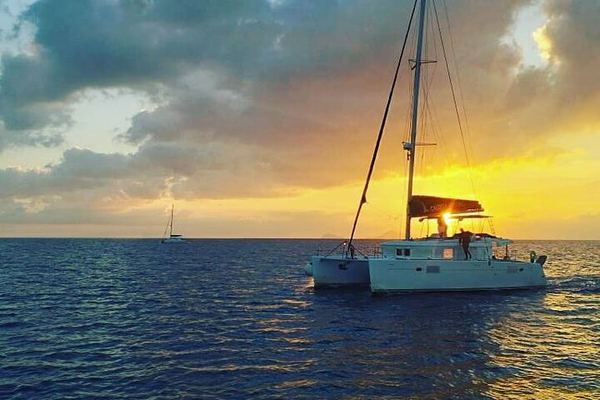
The Caldera Cruise That Runs in Winter, Ending at Sunset
A catamaran that keeps sailing through the winter, with the meal cooked on board off Thirasia, the bay under Oia at Ammoudi, and the sunset on the way back.
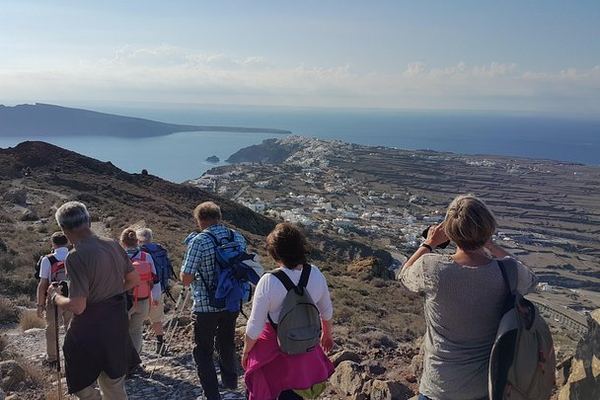
The Caldera Walk from Fira to Oia, Four Hours on Foot
Four hours on foot along the caldera rim through Firostefani and Imerovigli to Oia, past the Venetian ruins at Skaros, with the Atlantis argument on the way.
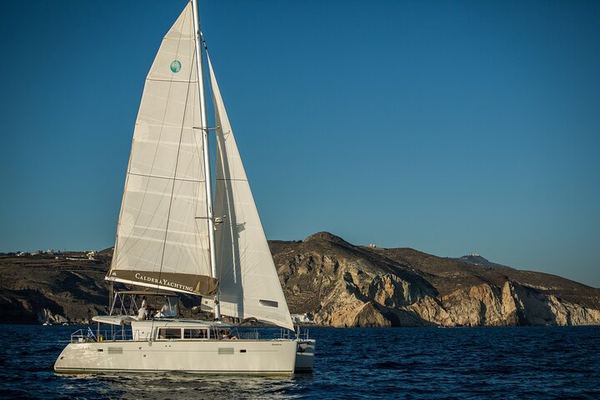
The Day Cruise That Ends at Ammoudi, with an Open Bar
A morning sailing cruise out of Vlychada that finishes at Ammoudi under Oia, with a swim ashore at the Black Mountain, a BBQ cooked on board and an open bar.
Ratings collected by Viator and Tripadvisor
How to read the caldera from the water
From a boat in the middle of the caldera the geology is legible without a guide, which is the best argument for getting on the water at all.
The wall opposite you is layered like a cut cake. The pale band along the top, up to 60 m thick in places, is ash and pumice from the eruption that made the basin; everything below it is older, darker and built up over hundreds of thousands of years. The wall is not continuous. Two gaps break it, one in the north-west between Thera and Thirassia and one in the south-west, and those are where the sea poured in when the roof came down.
Thirassia is the piece that was cut off. It is the same rim, unbuilt: about 300 people, one road, a port at Korfos with a switchback path up the cliff, and no infinity pools. Most caldera cruises stop there for lunch or a swim, and it is the part of the day that looks like the Cyclades before 1980.
The two black islands in the middle are the volcano rebuilding itself. Palea Kameni is the older, assembled between 197 BC and 47 AD and enlarged in 726. Nea Kameni is younger than the Sistine Chapel: it started in 1707 and stopped growing in 1950. What everyone calls the Santorini volcano is not the caldera at all. It is Nea Kameni, and it is 319 years old.

Around 1600 BC
The eruption that made the view
The caldera in front of you is the hole left by a single eruption. It was a VEI 7, among the largest of the Holocene, and seabed mapping puts the volume of magma at 28 to 41 km³. Its ash has been identified in Egypt, in the Black Sea and in Greenland ice.
When it happened has been argued over for forty years and is still not settled. Radiocarbon dating, recalibrated against the IntCal20 curve in 2020, gives roughly 1619 to 1596 BC. Archaeological chronology, built on pottery sequences and datable Egyptian contacts, gives about 1550 to 1480 BC. A century separates the two, and both sides have real arguments. A sulphate spike in Greenland ice at 1644 BC was once treated as the deciding evidence; it has since been traced to Aniakchak, in Alaska.
The Bronze Age town at Akrotiri, on the south of the island, was buried by the ash and preserved by it: frescoes, drains, three-storey houses, pottery still in place. It has no human remains and almost no jewellery, which is the detail that tells you the most. The volcano gave months of warning, and the people took their valuables and left.
Two thousand years of building the middle back
The caldera has not been quiet since. Everything below happened at its centre, and it is what built the two islands the boats visit.
The origins
197 BC
The first island surfaces
A submarine vent breaks the surface in the middle of the caldera. Ancient writers record the appearance of a new island.
46-47 AD
Palea Kameni takes shape
An eruption running from 31 December 46 to 1 February 47 extrudes lava domes and enlarges the older islet.
726 AD
The Byzantine eruption
A violent eruption on 15 July 726 throws pumice across the Aegean and adds substantially to Palea Kameni.
The growth
1570-1573
A third islet appears
Explosive activity builds Mikra Kameni between the two others. Lava will swallow it three and a half centuries later.
1650
Kolumbo kills seventy people
A flank vent 8 km north-east of the island erupts from 27 September to 6 December. Pyroclastic flows cross the sea to Thera and a tsunami damages islands up to 15 km away; about seventy people and many animals die.
1707-1711
Nea Kameni begins
Lava starts surfacing on 23 May 1707 and does not stop until 14 September 1711. This is the island the boats land on.
1866-1870
The Georgios dome
Four years of activity from 26 January 1866 build the largest of Nea Kameni's cones and draw the first volcano tourists into the caldera.
1925-1928
Two islands become one
Activity from 11 August 1925 to 17 March 1928 joins Nea Kameni to Mikra Kameni. From here on there is one island in the middle, not two.
Today
1939-1941
The last long eruption
From 20 August 1939 to 2 July 1941 a series of vents adds the last major volume to the island.
1950
Three weeks, then silence
A small dome extrusion between 10 January and 2 February 1950 is the most recent eruption at Santorini. Nothing has erupted since.
2025
The Amorgos swarm
Earthquakes between late January and late February 2025 empty the island of residents for a month. No eruption follows and the state of emergency is lifted on 3 March.

The two ways to spend a day on the volcano
Almost every boat leaving Santorini does one of two things, and the price gap between them is smaller than the gap in what you get.
The first goes ashore. You land at the jetty on Nea Kameni, walk up to the crater rim, come back down, then anchor off Palea Kameni and swim to the warm water. Seven of these are listed here as their own group, from 85 EUR on a shared catamaran to 820 EUR for a private boat. The volcano park costs 5 EUR on top, in cash, and hardly anyone includes it.
The second does not go ashore, or not as the point of the day. It sails the caldera, stops to swim off Red Beach and White Beach, feeds you on board and arranges itself around the sunset. Twelve of those are listed, from 80 to 1,000 EUR, with the shared ones clustered between 95 and 125 EUR.
The cheapest boat on the island, at 80 EUR, is a sunset cruise that also lands on the volcano. Price and content are only loosely related here. Reading the itinerary is worth more than reading the price.
| Volcano & Hot Springs | Caldera Cruises | |
|---|---|---|
| Products listed | 7 | 12 |
| Price range | 85 to 820 EUR | 80 to 1,000 EUR |
| Typical shared price | 85 EUR | 95 to 125 EUR |
| Lands on Nea Kameni | Most, not all | Some, in spite of the name |
| Swim at the warm springs | Yes, on the boat trips | On several of them |
| Meal on board | On the catamarans | Almost always |
| Built around the sunset | Rarely | Usually |
| Volcano park fee included | No: 5 EUR, cash | No: 5 EUR, cash |
| Ratings on file | 4.5 to 5.0, from 797 reviews | 4.5 to 4.9, from 1,931 reviews |

Before you book
Which port you leave from, and why it changes the day
Santorini has four places a boat can leave from, and they are not interchangeable.
The Old Port at Fira, Mesa Gialos, sits directly under the cliff and takes the classic volcano boats and the cruise tenders. Reaching it means the cable car, the steps or a mule. In summer the cable car queue at tender time runs to half an hour, which is why operators tell you to be there 45 minutes early.
Ammoudi, under Oia, is a row of tavernas and a quay at the bottom of a switchback road. Boats from here start closer to the north of the caldera and to Thirassia, and the sunset is a short sail rather than a crossing.
Vlychada is a marina on the south coast, outside the caldera entirely. Catamarans based here run the south coast first, reach Red Beach and White Beach early and come into the caldera later. Almost all include hotel pickup, because nobody walks to Vlychada.
Athinios is the ferry port and handles no excursions. If your booking says Athinios, that is your ferry, not your tour.
The cable car, the steps and the mules
There are three ways down the 220 m from Fira to the Old Port, and one of them is a bad idea.
The cable car was built between 1980 and 1982, paid for by the Loula and Evangelos Nomikos Foundation and installed by Doppelmayr. Six people to a gondola in two rows of three, 1,200 passengers an hour across both directions, three to five minutes for the ride. A single is 10 EUR, half that for children and for luggage. Part of the revenue goes to the mule drivers, which was the condition on which it was allowed to be built.
The steps are the Karavolades: around 600 of them, zigzagging up the face. Down takes most people twenty to thirty minutes. Up takes an hour or more, in full sun, on a surface the mules also use, which is exactly as unpleasant as it sounds.
The mules are the third option and this site does not recommend them. Greek law caps the load an animal may carry on this route, complaints about the condition of the animals have run for years, and walking down costs nothing.
If your tour gives the Old Port as the meeting point and asks you to arrive 45 minutes early, it is assuming you take the cable car. Budget the 10 EUR and the queue.
What the other seven experiences are for
Not every volcano day happens on a boat. The seven listed on this page work the rim itself.
The cheapest thing on the island is a half-day small-group tour at 65 EUR that takes in Megalochori, Firostefani, the Prophet Elias monastery and Oia. It carries 620 reviews at 4.7, the largest sample of any land tour here and a reasonable signal that it does what it says.
The Fira-to-Oia caldera hike is 100 EUR for four hours in a small group. The path itself is public and free; what you are paying for is the guide, the transfer back and not having to work out the route in the heat. It runs roughly 10 km along the rim with almost no shade.
The sea kayak trip along the south coast, at 113.75 EUR after a 9 percent discount, carries 1,029 reviews at a 5.0 average, the strongest record of any product on this island. It paddles under the volcanic cliffs at Red and White beaches and includes a picnic stop.
Above that the tours go private: 140 EUR for four hours around the blue domes, 153 EUR on a quad, 215 EUR for a full day, 330 EUR for three wineries and a caldera sunset. The wine tour is the one that surprises people. Assyrtiko is trained into low baskets on the ground because of the wind, and it grows in pumice from the eruption described further up this page.
Seasonality is set out on the Greece page, where the island is compared with the rest of the volcanic arc. The short version for Santorini: the fleet is at full size from May to October, July and August are hotter and busier rather than better, and a handful of all-inclusive cruises keep running through the winter.
Questions people actually ask
Is Santorini itself the volcano?
Yes. The island is the rim of the caldera, which collapsed and flooded during the Bronze Age eruption. The two black islands at the centre, Palea Kameni and Nea Kameni, are the volcano rebuilding itself, and Nea Kameni is what the boats mean when they say "the volcano".
When did Santorini last erupt?
Between 10 January and 2 February 1950, a small lava dome extrusion on Nea Kameni. Before that: 1939 to 1941, 1925 to 1928, and 1866 to 1870. Nothing has erupted at Santorini in the seventy-six years since.
How deep is the Santorini caldera?
385 m at its deepest, inside cliffs that stand more than 300 m above the water on three sides. That drop is why cruise ships anchor in the middle and tender passengers ashore rather than tying up at a quay.
Which port do the volcano tours leave from?
Three of them. The Old Port under Fira, reached by cable car, on foot down about 600 steps, or by mule. Ammoudi, below Oia, at the bottom of a switchback road. Vlychada marina on the south coast, which almost always comes with hotel pickup. Athinios is the ferry port and runs no excursions at all.
How much is the Santorini cable car?
10 EUR one way, 5 EUR for children and for luggage. Six passengers per cabin, 1,200 an hour in both directions together, three to five minutes each way. It is not included in tour prices, and several products list it explicitly as an exclusion.
Do I need a boat to see the volcano?
To land on Nea Kameni or swim at the springs, yes: there is no scheduled public service to either island. To see the caldera, no. The rim path between Fira and Oia is free, open and gives you the whole basin from above.
What is the difference between Nea Kameni and Palea Kameni?
Palea Kameni is the older island, built between 197 BC and 47 AD and enlarged by the eruption of 726. The warm springs are on its western side, in the bay of Agios Nikolaos. Nea Kameni is the younger, begun in 1707 and last active in 1950; it has the crater and the walking path. Boats normally take in both on the same trip.
Data verified on. Caldera dimensions and eruption dates from the published volcanological record; prices, ports, fees and cable car fares read from the operators' listings on the date shown.