
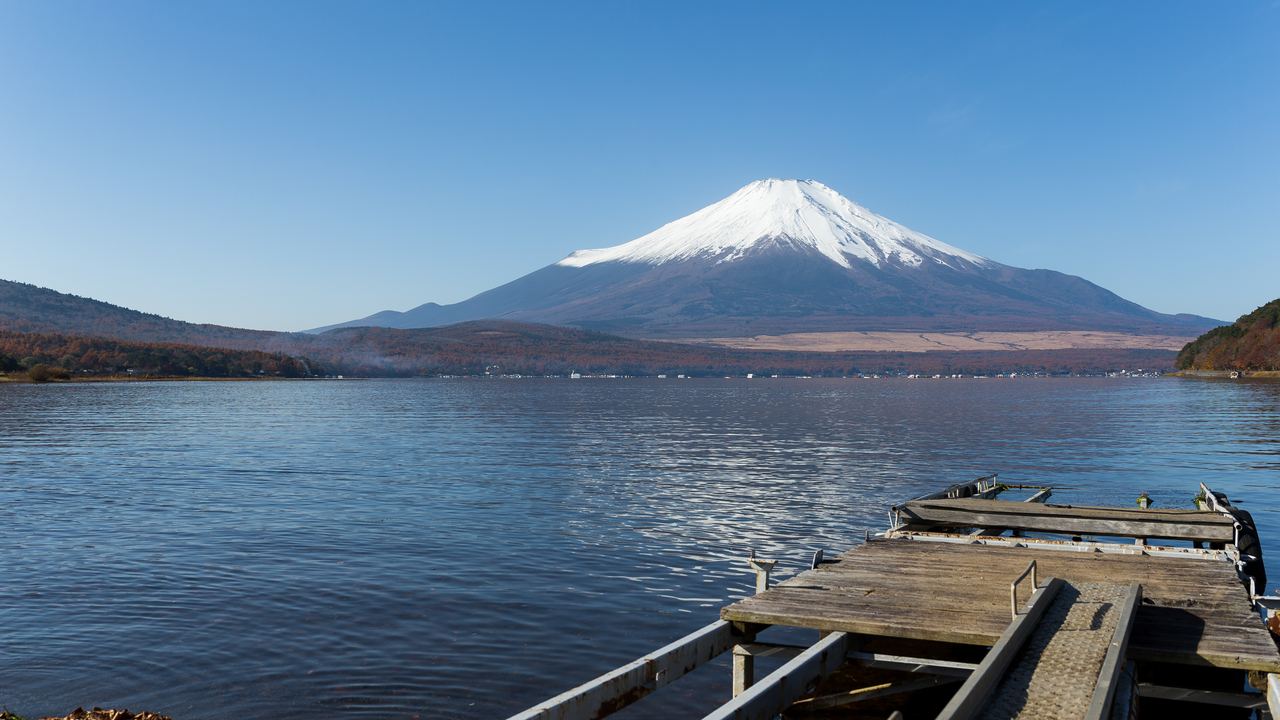
Volcano Tours in Japan
111 active volcanoes, and a market that sells exactly one. Fuji has not erupted since 1708, and the coaches leaving Tokyo every morning never go near the top.
Japan has 111 active volcanoes. The national meteorological agency counts them under a definition it adopted in 2003: anything that has erupted in roughly the last ten thousand years, or that is venting gas today. That is close to a tenth of the world total, on a country the size of Germany. The travel market ignores almost all of them. Every one of the twelve volcano experiences sold in Japan on this site is about Mount Fuji, and not one of them climbs it.
This page is about the country rather than the mountain. It sets Fuji against the volcanoes Japan does not sell to foreign visitors, explains why the catalogue collapsed onto one of them, and lays out the two calendars that decide when to come. They do not overlap, and that is the single most useful thing to know before booking anything here. The mountain itself, its four trails and its day trips are on the Mount Fuji page below.
Choose a destination in Japan

Volcano Travel Experiences in Japan
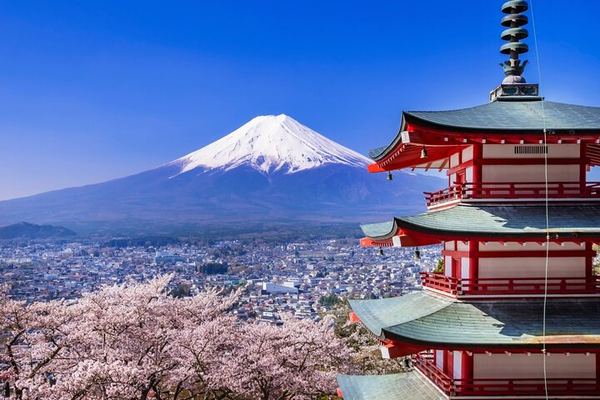
Eight Fuji Viewpoints in a Day: Chureito's 400 Steps and the Lawson Everyone Photographs
Chureito Pagoda at the top of 400 steps, the shrine that held a ceremony after the 807 eruption, and the blue convenience store everyone photographs.
Fuji or Hakone by Private Car: a Menu of Stops, You Choose
A licensed guide and driver for the day and two lists to choose from, one round Lake Kawaguchiko and one round Hakone. The 5th Station toll is paid on site.
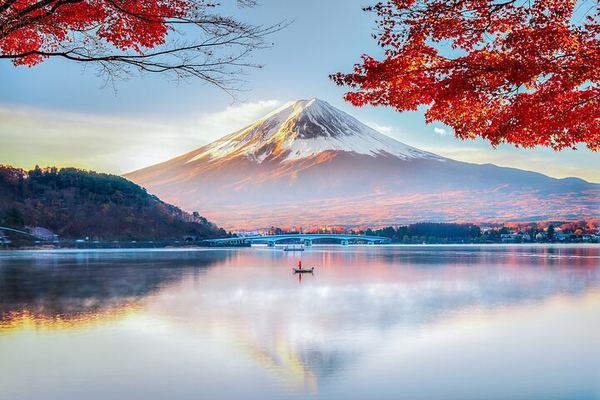
Fuji, the Kamakura Buddha You Can Step Inside, and Lake Ashi: Basic or Full
The full option adds the 13.35-metre bronze Buddha you can walk inside and the Lake Ashi cruise; the basic one is the Fuji lakes without meals.
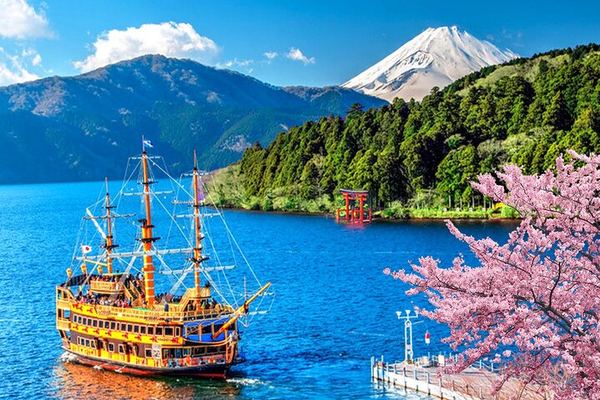
Hakone and Fuji: Black Eggs at Owakudani, a Ropeway and a 757 AD Shrine
The pirate ship costs about USD 12 extra and is skippable by bus, and the ropeway crosses the steaming valley where the black eggs are boiled.
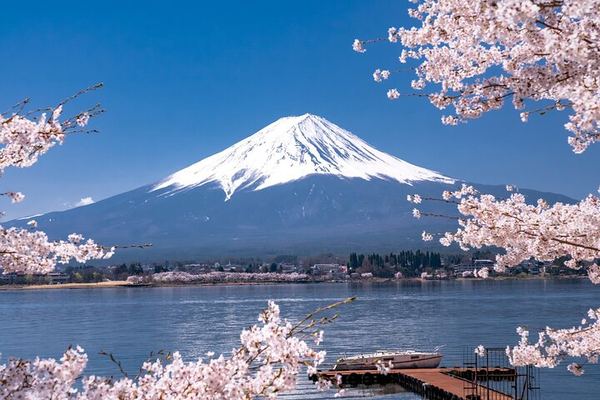
Kawaguchiko with Live Translation in 75 Languages (Bring Earphones)
Live voice and text translation covers up to 75 languages alongside the English guide, so bring earphones. The cruise rounds the only island in the lakes.
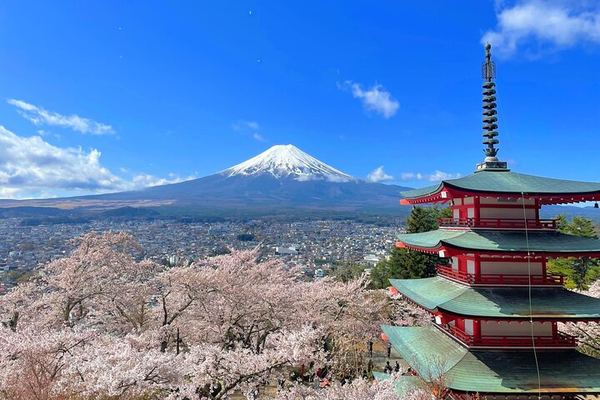
Making Hōtō Noodles Under Mount Fuji, and Eating What You Made
You make the Yamanashi noodles by hand and eat them for lunch, with the Kawaguchiko cruise before and the pagoda at Arakurayama after.
Mount Fuji Day Trip from Tokyo: Chureito Pagoda, Oshino Hakkai and Lake Kawaguchi
English-guided run of seven Fuji viewpoints, from the 398 steps at Chureito Pagoda to the spring ponds of Oshino Hakkai. Leaves from Shinjuku or Tokyo Station.
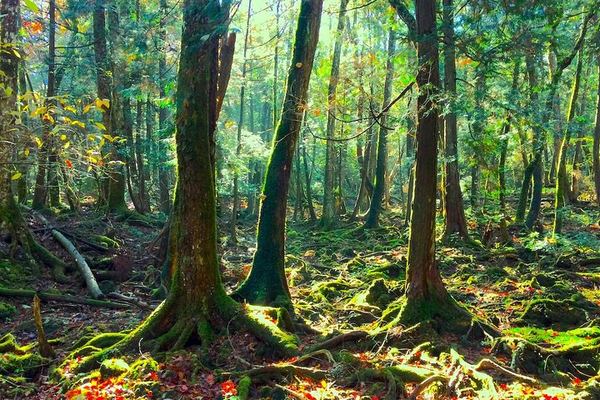
Mt. Fuji Ice Cave in Aokigahara: No Lights, No Handrails
The cave needs a special permission to enter, and inside there are no handrails and no lights: one headlamp each, three hours, twelve people at the most.
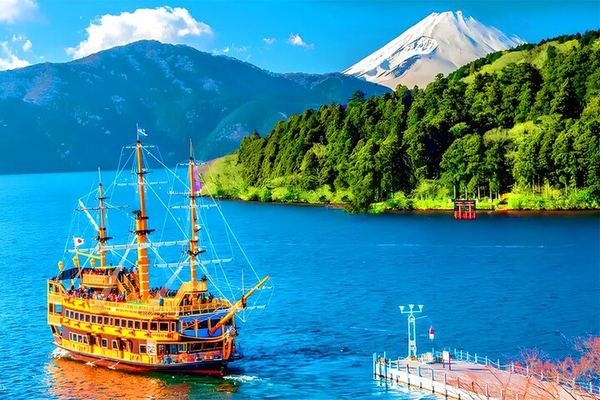
Owakudani Black Eggs, the Pirate Ship and the Fuji Peace Park
Owakudani's black eggs are boiled in the geothermal water and said to add seven years to your life. The lake crossing is on a pirate ship. Depart 8:00 sharp.
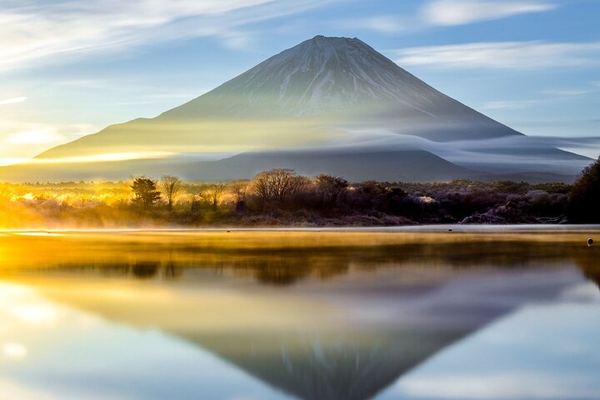
Private Fuji and Hakone by Car: Two Itineraries, and the Clock Starts When You Do
Two itineraries to pick from, with the return starting in the seventh hour and overtime charged past the eighth. The 5th Station is never guaranteed.
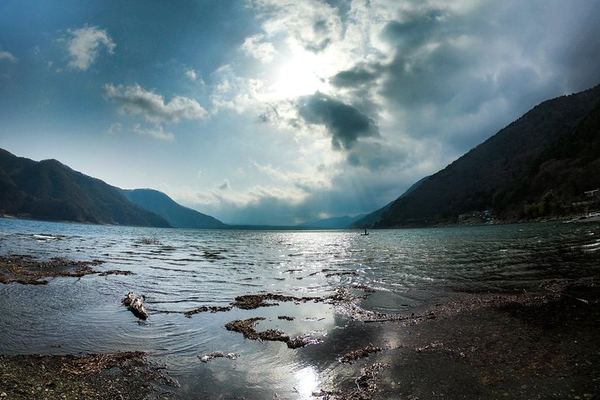
Private Fuji Walks with a Local English-Speaking Guide: the 864 AD Lava Forest
A resident English-speaking guide walks you into the Sea of Trees, grown on lava from the 864 AD eruption, and finishes at sunset over one of the lakes.
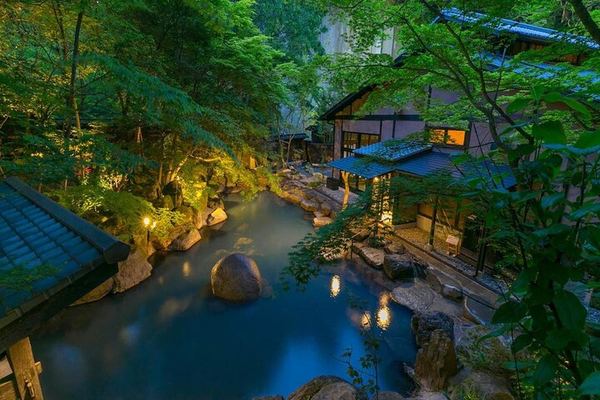
Private Hakone Day: Tattoo-Friendly Onsen, a 400-Year-Old Teahouse, Picasso Outdoors
Every hot spring on this route admits tattoos, and the day also holds a 400-year-old teahouse on the Tōkaidō and a thousand sculptures in a garden.
Ratings collected by Viator and Tripadvisor
One mountain, and a hundred and ten others
Sakurajima sits across a bay from Kagoshima and drops ash on the city often enough that the local forecast reports which way it is blowing. Aso, in the middle of Kyushu, holds a caldera roughly 25 km across with towns and a railway line inside it, and closes the path to its Nakadake crater whenever the sulphur dioxide reading climbs. Ontakesan erupted on a Saturday lunchtime in September 2014 with almost no warning, while walkers were standing on the summit ridge. None of the three reaches the international booking platforms, and none of them is sold here.
What is sold is Fuji, and Fuji is the one that has done nothing for three centuries. Its last eruption began in December 1707 and ran into January 1708, dropped ash on Edo a hundred kilometres away, and left the Hōei crater open on the south-eastern flank. Nothing since. It is dormant rather than extinct, and Japanese hazard planning treats it that way, with its own monitoring network and its own evacuation plan. The mountain is also a UNESCO site, listed on 22 June 2013 as a cultural landmark rather than a natural one, which tells you what the country thinks it is for.
| Volcano | Where | Most recent eruption | Sold here |
|---|---|---|---|
| Mount Fuji | Between Tokyo and Nagoya | 1707-1708 | 12 listings |
| Sakurajima | Kagoshima, Kyushu | Continuing | None |
| Asosan | Kumamoto, Kyushu | 2021 | None |
| Ontakesan | Nagano and Gifu | 2014 | None |
| Owakudani, in Hakone | About 90 minutes from Tokyo | Steaming; the valley was closed for a period in 2015 | Only as a ropeway stop inside a Fuji day trip |
Why the catalogue stopped at Fuji
The reason is not volcanological, it is a train timetable. Fuji is about a hundred kilometres from Tokyo and a coach reaches the Fuji Subaru Line 5th Station, at 2,300 m, in two and a half hours. Sakurajima needs a flight to Kagoshima, nearly a thousand kilometres south. Aso needs a flight to Kumamoto. A volcano that cannot be reached and returned from in a day, from the city where the visitor is already sleeping, does not get sold to that visitor however good it is.
So the catalogue has an odd shape. Seven of the twelve listings are shared coach day trips out of Tokyo, between 47 and 91 EUR. Four are private cars with a driver and a licensed guide, between 282 and 646 EUR, which is a big premium for the same lakes. One is a three-hour walk into a lava cave, at 45 EUR the cheapest thing on the page and the only one that is about volcanic rock rather than the view of it.
| What you book | Listings | Price | Rating |
|---|---|---|---|
| Shared coach day trip from Tokyo | 7 | 47 to 91 EUR | 4.6 to 4.9 |
| Lava cave walk from Fujikawaguchiko | 1 | 45 EUR | 4.9 |
| Private car, driver and licensed guide | 4 | 282 to 646 EUR | 4.9 to 5.0 |
| A climb to the summit | 0 |
That last row is the important one. Someone searching for a Mount Fuji tour is, nine times out of ten, not looking to climb Mount Fuji, and the market has arranged itself accordingly. Guided ascents exist, but they are a specialist Japanese-language business that barely touches the international platforms, and a coach day trip and a summit push are not versions of the same product.
The two calendars, and why they do not overlap
Japan runs two Fuji seasons and they are almost exactly opposed. The climbing season is 1 July to 10 September, nine and a half weeks, fixed each year by the two prefectures that own the trails. Outside those dates the huts are shut, the first-aid posts unstaffed, the buses to the trailheads stop and both prefectures advise against going up at all.
The viewing season is winter. Fuji is completely clear on roughly 134 days a year, about 37 per cent, and those days are not spread evenly through the calendar. January runs at close to 98 per cent of days with at least a partial view. June drops to 24 per cent and July to 35. Time of day matters almost as much as the month: a full view is about 1.6 times more likely at eight in the morning than at four in the afternoon. The months when the mountain is easiest to see are the months when you cannot climb it, and the months when the trails are open are the cloudiest of the year.
If the photograph matters more than the mountaineering, come between November and March and take the earliest departure on the sheet. Nobody selling a July day trip will tell you that June and July are the two worst months for seeing the thing you are paying to see.
| Month | 1 | 2 | 3 | 4 | 5 | 6 | 7 | 8 | 9 | 10 | 11 | 12 |
|---|---|---|---|---|---|---|---|---|---|---|---|---|
| Climbing to the summitTrails, huts and first-aid posts open 1 July to 10 September; unsupported outside those dates | 1 | 2 | 3 | 4 | 5 | 6 | 7 | 8 | 9 | 10 | 11 | 12 |
| Seeing Fuji from the lakesClear on about 37% of days a year, and far more of them in winter: January near 98%, June 24% | 1 | 2 | 3 | 4 | 5 | 6 | 7 | 8 | 9 | 10 | 11 | 12 |
| Day trips from TokyoRun all year, but June and July are the cloudiest months on the mountain | 1 | 2 | 3 | 4 | 5 | 6 | 7 | 8 | 9 | 10 | 11 | 12 |
Months as numbers. Season dates from the Yamanashi and Shizuoka prefectural pages for 2026; visibility figures from published observation records for the Fuji Five Lakes area.
The 2026 climbing rules, and the part everyone gets wrong
Climbing Fuji now has a price and a procedure, and the procedure is not the same on both sides of the mountain. This is where most published advice, including a good deal of it written this year, goes astray: it describes one prefecture's rules and calls them Japan's.
Both charge 4,000 yen per person. After that they diverge completely. Yamanashi, which owns the Yoshida trail, makes online booking optional, sets no course and no test, hands booked climbers a wooden tag, and caps the trail at 4,000 people a day. Shizuoka, which owns Fujinomiya, Gotemba and Subashiri, makes booking through its app compulsory, requires an e-learning course with a test before you set out, issues a wristband, and sets no daily cap at all.
| Yamanashi (Yoshida) | Shizuoka (Fujinomiya, Gotemba, Subashiri) | |
|---|---|---|
| Fee | 4,000 yen per person | 4,000 yen per person |
| Booking | Optional, online | Compulsory, through the prefecture's app |
| Course and test | None | E-learning course with a test, before you go |
| What you are given | A wooden tag | A wristband |
| Daily cap | 4,000 climbers | None |
| Night gate | Shut 14:00 to 03:00 unless you hold a hut booking | Same hours; entry needs a hut booking |
| 2026 dates | 1 July to 10 September | Subashiri from 1 July; Fujinomiya and Gotemba from 10 July; all close 10 September |
The cap is the rule the internet writes about most and the one that has never yet mattered. Yamanashi's own published answer to the question of how often the 4,000 limit is reached is that it happened on zero days in 2024 and zero days in 2025. A great deal of advice about booking months ahead is describing a queue that has not formed.
Three costs sit outside every price you will compare. Private cars are banned on the Fuji Subaru Line from 3 July to 10 September, which is the strongest practical argument for taking a coach in precisely the weeks when people most want to drive themselves, and no seller uses it. Mountain toilets take 100 to 300 yen in coins, and there is no cash machine at the 5th station. Tents are illegal on the mountain, so a hut bed is the only way to break the climb, booked separately and early.
Hiking boots, rain gear (jacket and pants), and cold-weather clothing are essential. We may check your equipment before you enter the mountain area.
Questions people actually ask
Can you climb Mount Fuji on a tour booked from abroad?
Not on any of the twelve listings sold here, and rarely on the international platforms generally. What is sold as a Mount Fuji tour is a day trip to the fifth station, the Five Lakes, Hakone or the lava caves. Guided ascents are a separate Japanese-language market with its own operators, and they run only between 1 July and 10 September.
Do I need the 4,000 yen permit for a day trip?
No. The fee and the gate apply to climbers going above the fifth station. A coach trip to the Fuji Subaru Line 5th Station at 2,300 m, to Kawaguchiko or to Hakone does not touch the climbing trails and needs nothing beyond the tour ticket.
Why is Sakurajima or Aso never on sale?
Distance. Both are on Kyushu, close to a thousand kilometres from Tokyo, and need a domestic flight. The visitor market for volcanoes in Japan is built almost entirely from Tokyo day trips, and only Fuji is close enough to work that way. It is a logistics answer rather than a judgement about the volcanoes, and Sakurajima is by a distance the more active of the two.
When is the best time to come?
It depends which thing you want. To climb, you have no choice: 1 July to 10 September. To see the mountain, come in winter. January has a partial view on close to 98 per cent of days and June on 24 per cent, and mornings beat afternoons by a factor of about 1.6. If you want both, September is the least bad compromise, with the trails still open and the summer haze starting to lift.
How much does a Mount Fuji tour cost?
Between 45 and 91 EUR for everything shared: a coach day trip from Tokyo, the lake cruise, the Hakone ropeway, the lava caves. Above that you are buying a car to yourself, 282 to 646 EUR for a private driver and licensed guide. The gap buys flexibility and a smaller group rather than a different mountain.
Is Mount Fuji likely to erupt?
Nobody can put a date on it, and the honest position is the official one: the mountain is dormant, not extinct, and it is monitored continuously because of that. The 1707 eruption is well inside the range that volcanologists consider recent for a volcano of this type. It has an evacuation plan, a hazard map and a seismic network, which is a reasonable summary of how seriously Japan takes the question.
Is a private tour worth six times the price of a coach?
Only in two situations. If you are four or more people the per-head gap narrows a long way, and if you want to chase clear weather it buys the ability to change the route in the morning when the cloud sits on the mountain. For two people doing the standard circuit of Kawaguchiko, Oishi Park and the fifth station, the coach goes to the same places.
Data verified on. Season dates, fees and trail rules from the Yamanashi and Shizuoka prefectural climbing pages for 2026. Prices and listing counts from the Japanese products on this site.