
Volcano Tours in Colombia
Colombia has some of the most serious volcanoes in the Americas, and none of them is bookable here. All 7 listings are a 15 m mud cone near Cartagena.
Colombia has some of the most consequential volcanoes in the Americas. The eruption of Nevado del Ruiz on 13 November 1985 killed around 25,000 people at Armero and remains the deadliest volcanic disaster of the twentieth century outside Indonesia; the mountain is erupting again now and has been in a state of unrest since 2014. None of that is on this page. All seven Colombian listings we carry are a fifteen-metre mud cone on the Caribbean coast, an hour and a half from Cartagena, and honesty about that gap is more useful than dressing it up.
The two halves of Colombian volcanism have nothing to do with each other. The Andean chain running down the west of the country is a full subduction arc with snow-capped stratovolcanoes, national parks, monitoring observatories and a body count. The Caribbean coast has mud volcanoes, which are not magmatic at all. What is sold internationally is the second one, because it is ninety minutes from a cruise port. This page covers both, and the detail of the mud bath itself, including the tipping system that nobody totals up, is on the El Totumo page below.
Choose a destination in Colombia

Volcano Travel Experiences in Colombia
El Totumo and San Basilio de Palenque, First Free Town in the Americas
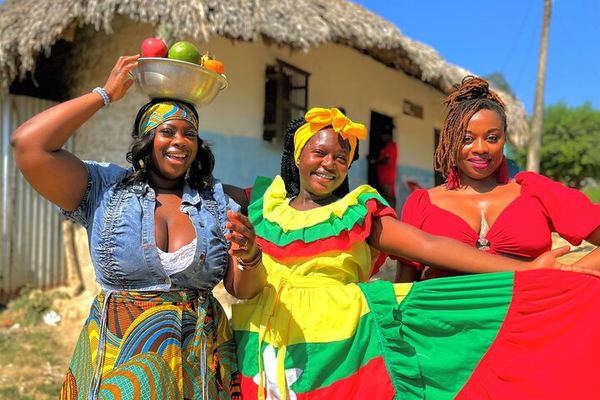
The mud bath is an hour, and the rest of the day is San Basilio de Palenque, the first free African town in the Americas, guided by someone born there.
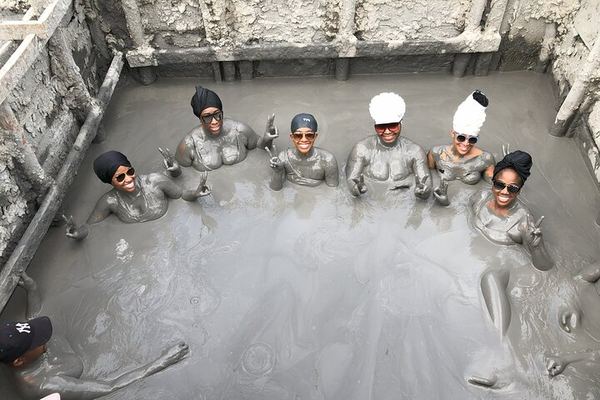
El Totumo Before the Buses Arrive, with a Colombian Food Tasting
The pick-up is early, ahead of the buses that reach the crater mid-morning, and the day ends with a tasting of traditional Colombian food. Private guide.
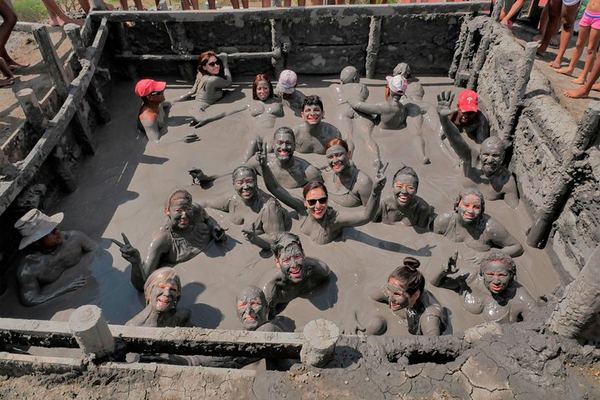
El Totumo Half Day with a Carimañola, an Empanada or an Arepa de Huevo
The snack at the end is a choice of arepa de huevo, empanada or carimañola with a soda, and the operator states plainly that this is not a luxury trip.
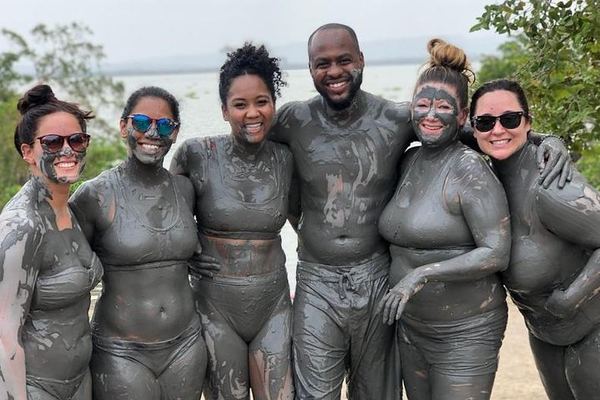
El Totumo Mud Bath with an In-Mud Massage and a Rinse in the Lake
A massage inside the mud is included here, the rinse afterwards is in the lake next door, and the full day version carries on to lunch at La Boquilla.
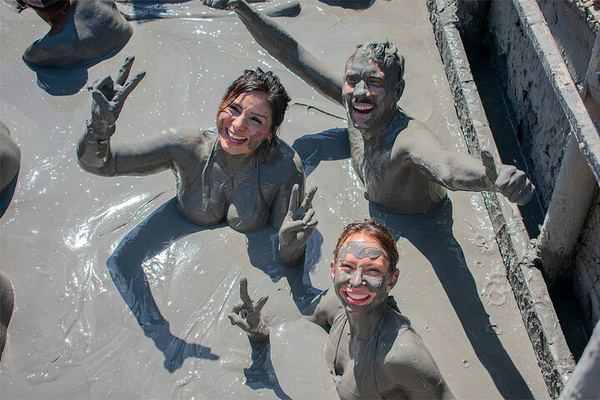
El Totumo Mud Volcano Full Day, Run by the Santa Catalina Community
The El Totumo operation is run by the community of Santa Catalina, and the full day option adds a beach club at La Boquilla once the mud bath is over.
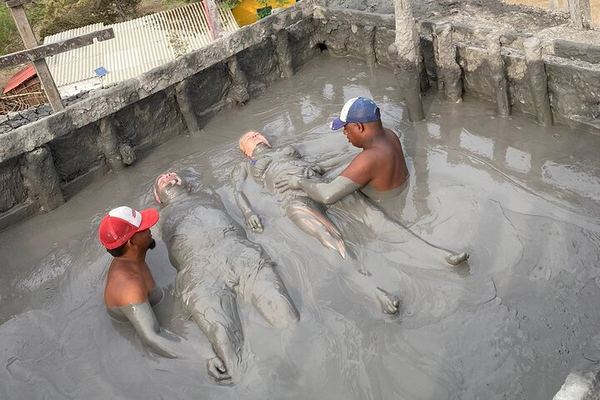
El Totumo Off-Peak with Private Transport and an English-Speaking Guide
Everything Cartagena books the quiet slots at the crater instead of the peak ones, with private transport and an English-speaking guide for the mud bath.
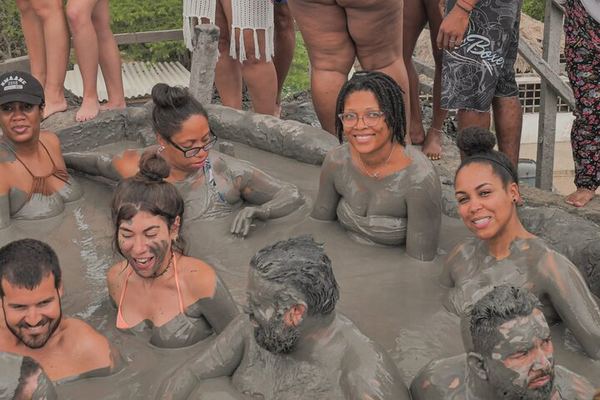
El Totumo with a Ciénaga Rinse and Lunch at a Beach Club Pool
The rinse is in the ciénaga next to the volcano, and lunch comes with the pool and beach of an eco hotel. Six pick-up points across Cartagena, from 8:00.
Ratings collected by Viator and Tripadvisor
The volcanoes we do not sell
Colombia sits where the Nazca plate goes under South America, and the result runs the length of the country's western cordilleras. These are large, glaciated, closely monitored mountains with a documented capacity to kill, and there is no listing on this site for any of them. Naming them is the least we can do.
Nevado del Ruiz, 5,389 metres. On the afternoon of 13 November 1985 a modest eruption, rated only 3 on the explosivity index, melted part of the summit ice cap. The meltwater picked up loose material and became lahars that travelled down the river valleys and reached the town of Armero, 48 kilometres away, hours later in the dark. Of Armero's 28,700 inhabitants, roughly a quarter survived. The total death toll is put at about 25,000. It is the reference case in every volcanology course for a small eruption producing a catastrophic outcome, and for warnings that were issued and not acted on. The volcano has been in a continuing eruptive episode since November 2014 and currently sits on a yellow alert.
Galeras, 4,276 metres, stands nine kilometres from Pasto, a city of some 450,000 people, which makes it one of the most awkwardly sited active volcanoes anywhere. On 14 January 1993 it erupted without warning while a scientific team was working inside the crater during an international workshop, killing six scientists and three tourists. Its most recent eruptive activity ran from 2012 to 2014.
Purace, Nevado del Huila, Nevado del Tolima and Cerro Machin complete the short list of the ones that matter. Los Nevados National Natural Park, around Ruiz and Tolima, is walkable and has a local guiding industry. None of it reaches the international booking platforms in any volume, which is why it is absent here rather than because it is not worth doing.
| Volcano | Height | Status | Nearest city | Sold here |
|---|---|---|---|---|
| Nevado del Ruiz | 5,389 m | Erupting; unrest since November 2014, yellow alert | Manizales | No |
| Nevado del Huila | 5,364 m | Active | Popayan | No |
| Galeras | 4,276 m | Active; last eruptive episode 2012 to 2014 | Pasto, 9 km away | No |
| Purace | 4,650 m | Active | Popayan | No |
| Nevado del Tolima | 5,215 m | Active | Ibague | No |
| El Totumo | about 15 m | Mud volcano; not magmatic | Cartagena, 52 km away | Yes, all 7 listings |
Why the market is where it is
There is no mystery about the distribution. Cartagena receives cruise ships and a large short-stay leisure market, El Totumo is ninety minutes away by road, and the product needs no fitness, no altitude and no equipment. Los Nevados is a day's travel from Bogota or Medellin, sits between 4,000 and 5,000 metres, requires acclimatisation and a licensed local guide, and sells mostly in Spanish through operators in Manizales and Salento.
Neither is better than the other, but they are not interchangeable. If what you want is a Colombian volcano in the sense the word usually means, you are going to the coffee region and you are booking locally. If you are in Cartagena for four days and want a morning that is unlike any other morning, El Totumo is genuinely that, and this site can help you buy it.
A 15-metre mud cone with a wooden staircase and a country with a 5,389-metre glaciated stratovolcano in continuous unrest are both correctly described as volcano tourism in Colombia. Only one of them is on a booking platform.
What the seven listings cost, and what changes between them
The spread is five to one for a visit to the same cone. Nothing about the mud changes; what changes is the hour you arrive, the size of the group, and whether the day is padded with something else worth doing.
The cheapest half-day at 39.68 EUR is a shared minibus at the standard hour, which means the busiest hour. Around 48 to 53 EUR you get lunch or a slightly better vehicle. At 87 EUR one operator sells the whole proposition on timing, scheduling arrivals away from the peak, and says so plainly: it exists because the ordinary version is crowded. At 126 EUR it is private transport with a guide. And at 198.39 EUR the mud is not really the point: that product pairs it with San Basilio de Palenque, the first free African town in the Americas, which is a serious cultural visit and the reason for the price.
None of these figures includes the tips, and at El Totumo the tips are not optional in practice. The full accounting is on the El Totumo page, because it is the single most useful thing anyone can tell you about this excursion and nobody does.
| Type of trip | Price | Length | What you are paying for |
|---|---|---|---|
| Shared half day | 39.68 EUR | about 4 hours | The base product, at the busiest time |
| Shared, with lunch or a longer day | 48 to 53 EUR | 5 to 8 hours | Three listings sit here; one has 1,657 reviews at 4.6 |
| Crowd-free timing, small group | 87.29 EUR | about 5 hours | Arrival scheduled away from the coach hour |
| Private transport and guide | 126.09 EUR | about 5 hours | Hotel or apartment pick-up, your own pace |
| Combined with San Basilio de Palenque | 198.39 EUR | full day | The Palenque half is the reason for the price |
Season, and why there is no table for it
El Totumo works every month. The Colombian Caribbean is hot all year, around 31 to 33 degrees by day with little variation, and the mud cone does not care about rain. There is a wetter period from roughly August to November when the unpaved sections of the approach are less pleasant and the lagoon where you rinse is muddier, and there is a drier, breezier stretch from December to March that most people find more comfortable, but nothing closes and nothing is cancelled. A month-by-month table here would be inventing a decision that does not exist.
The Andean volcanoes are a different matter entirely, with a dry-season window and a real weather risk at altitude, and if we ever carry them the seasonality will be worth publishing. Today we do not, and saying so is more useful than filling the space.
Questions people actually ask
Does Colombia have real volcanoes?
Yes, and serious ones. The Andean cordilleras carry Nevado del Ruiz at 5,389 m, Nevado del Huila at 5,364, Nevado del Tolima at 5,215, Purace at 4,650 and Galeras at 4,276, among others. Several are in continuous unrest and monitored closely. What this site carries is none of them: all 7 Colombian listings here are the El Totumo mud volcano near Cartagena, which is not a magmatic volcano at all.
Can you visit Nevado del Ruiz?
Los Nevados National Natural Park, which surrounds Ruiz and Tolima, is open to visitors with a licensed local guide, and access to specific sectors changes with the alert level, which has been yellow with an ongoing eruptive episode since 2014. It is reached from Manizales or Salento in the coffee region, roughly 700 km from Cartagena, and is booked locally rather than through international platforms. We do not list it, so please treat the park authority and Colombian monitoring service as the source for what is open on your dates.
What happened at Armero in 1985?
On 13 November 1985 a comparatively small eruption of Nevado del Ruiz melted part of its summit ice cap. The meltwater became lahars that ran down the river valleys and reached Armero, 48 km away, in the dark hours later. Of the town's 28,700 inhabitants about a quarter survived, and the total toll is put at around 25,000. It is the standard case study in how a modest eruption can produce a catastrophic outcome when warnings are not acted on.
Is El Totumo actually a volcano?
It is a mud volcano, which is a real landform driven by gas and pressurised sediment rather than by magma. There is no lava, no heat and no eruption in the sense you are picturing: it is a cone about 15 metres high with a mud pool at the top that you climb into. It is also, in practice, a managed bathing attraction with staff, a staircase and a tipping system rather than a protected natural site.
How much does a Colombian volcano tour cost?
From 39.68 EUR for a shared half day to 198.39 EUR for the version combined with San Basilio de Palenque. Most of the market sits between 48 and 53 EUR. The El Totumo page sets out the tips, which are effectively compulsory and are not in any of those prices, and which several travellers end up paying four or five times over.
Why does this site not list the Andean volcanoes?
Because the operators there sell locally, mostly in Spanish, and do not appear on the international platforms we source from in any volume. That is a gap in distribution rather than a judgement about the destination. Listing something we cannot verify or book would be worse than saying it is missing.
When is the best time to visit?
Any month, for El Totumo. The Colombian Caribbean sits around 31 to 33 degrees all year. December to March is drier and breezier and August to November wetter, which affects the comfort of the approach road and the lagoon rather than whether the trip runs. Nothing closes seasonally.
Data verified on. Prices and counts read from the 7 Colombian products on this site. Volcano heights, the 1985 Armero disaster and current alert status from the published volcanological record.