
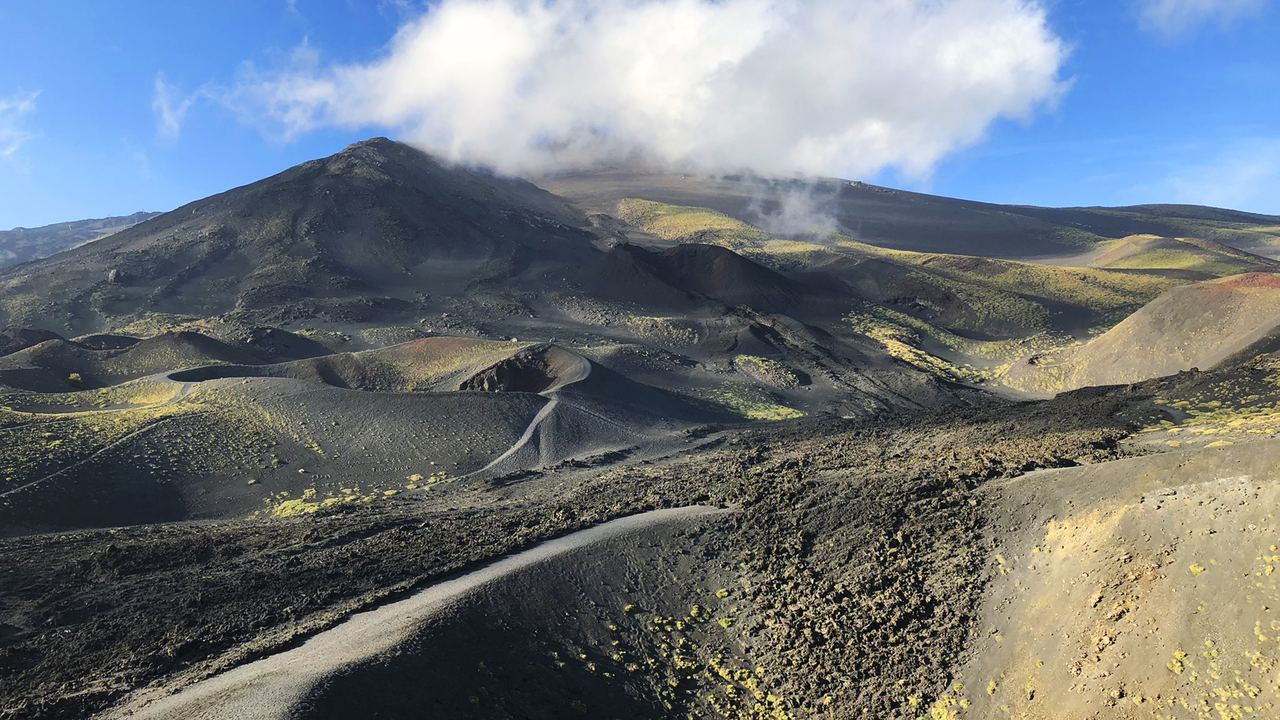
Most people arrive at a volcano with one mental image, and it is wrong. The cone with a hole in the top, drawn by every child, describes maybe a third of the volcanoes you might visit and none of the most interesting ones.
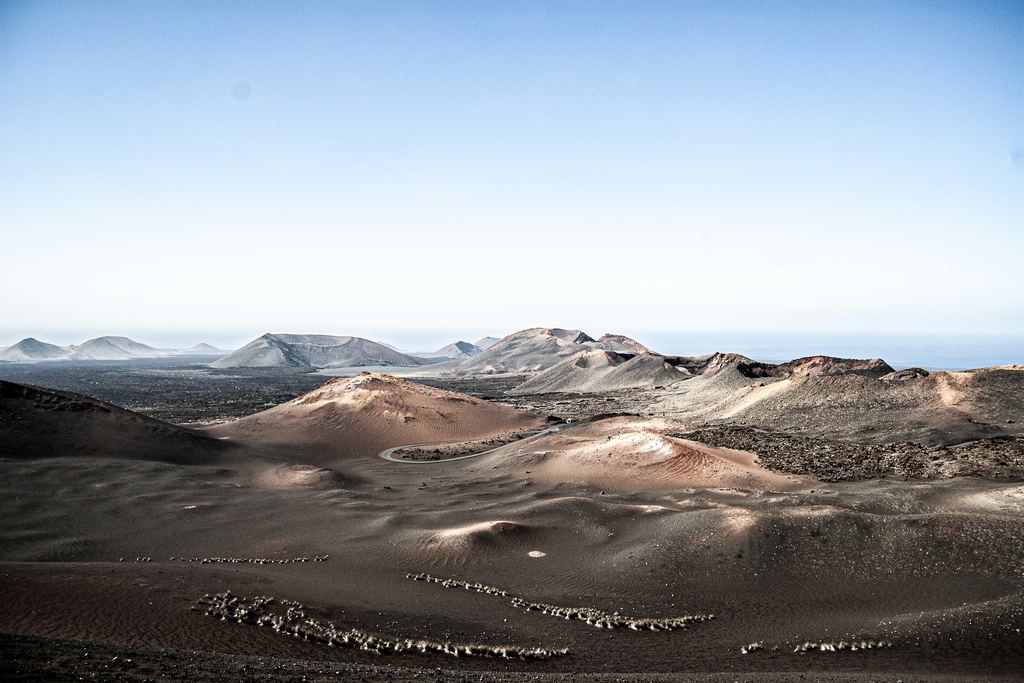
Santorini is a volcano and it is a bay. Lanzarote is a volcano and it is flat. Yellowstone is a volcano and you cannot see it because you are standing inside it. Bali's Batur is a cone inside a caldera inside another caldera. The landscape you have travelled to look at is telling you something quite specific about what happened here, and about how long ago, and it is not difficult to read once you know what the words mean.
That is what this section is for. Not geology for its own sake, but the amount of it that changes what you see.
The one idea that explains most of it
Everything about a volcano's shape, its behaviour, and how dangerous it is comes down to one property of the magma underneath: how runny it is.
Runny magma, low in silica, flows easily. Gas escapes from it without difficulty, so pressure does not build. It produces broad, gently sloping mountains, long lava flows, and eruptions you can sometimes stand and watch. Hawai'i and Iceland are built of this.
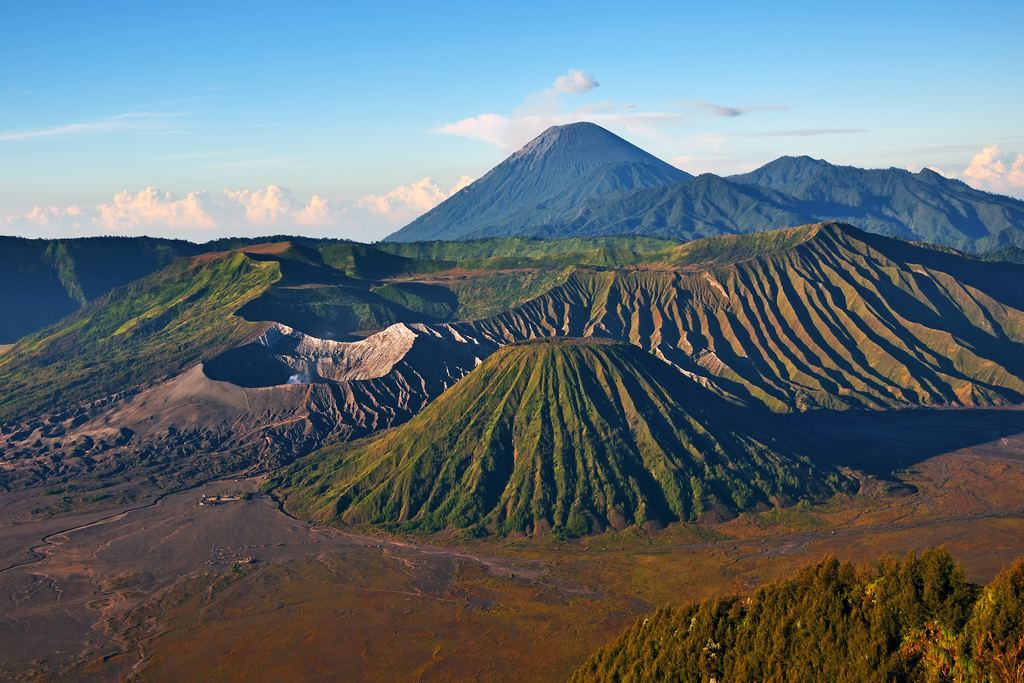
Sticky magma, high in silica, does not flow. Gas cannot escape, so it accumulates until the rock containing it fails, and then everything comes out at once. It produces steep cones, explosive eruptions, and pyroclastic flows. Vesuvius is this. So is Fuego, so is Merapi, so was Krakatoa.
Almost every other distinction follows from that one. The shape of the mountain, the colour of the rock underfoot, whether the eruption is a spectacle or a catastrophe, and whether there is any prospect of you seeing lava, are all downstream of viscosity.
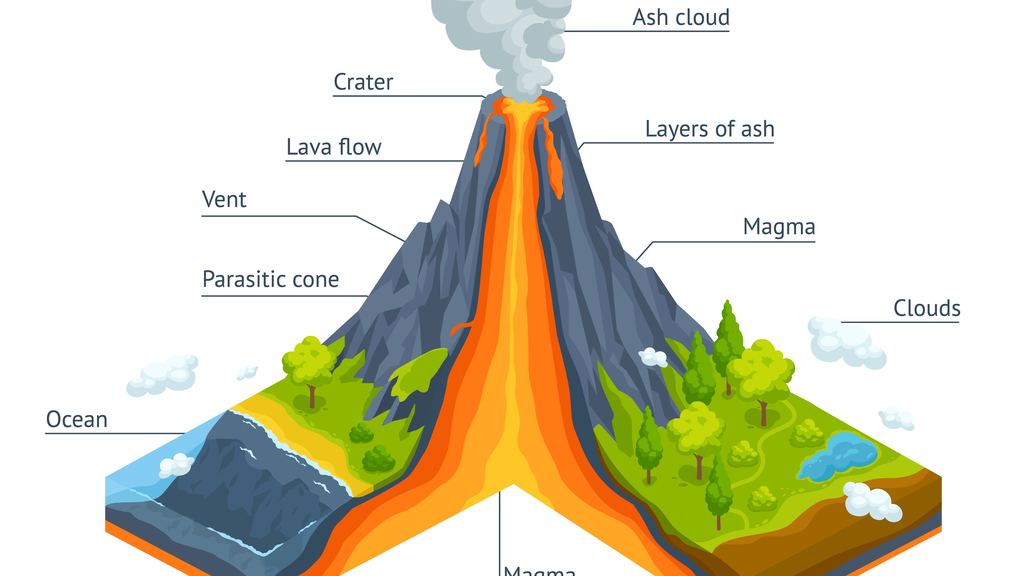
Why volcanoes are where they are
Volcanoes are not scattered randomly. They sit in three kinds of place, and knowing which one you are in explains what you are going to see.
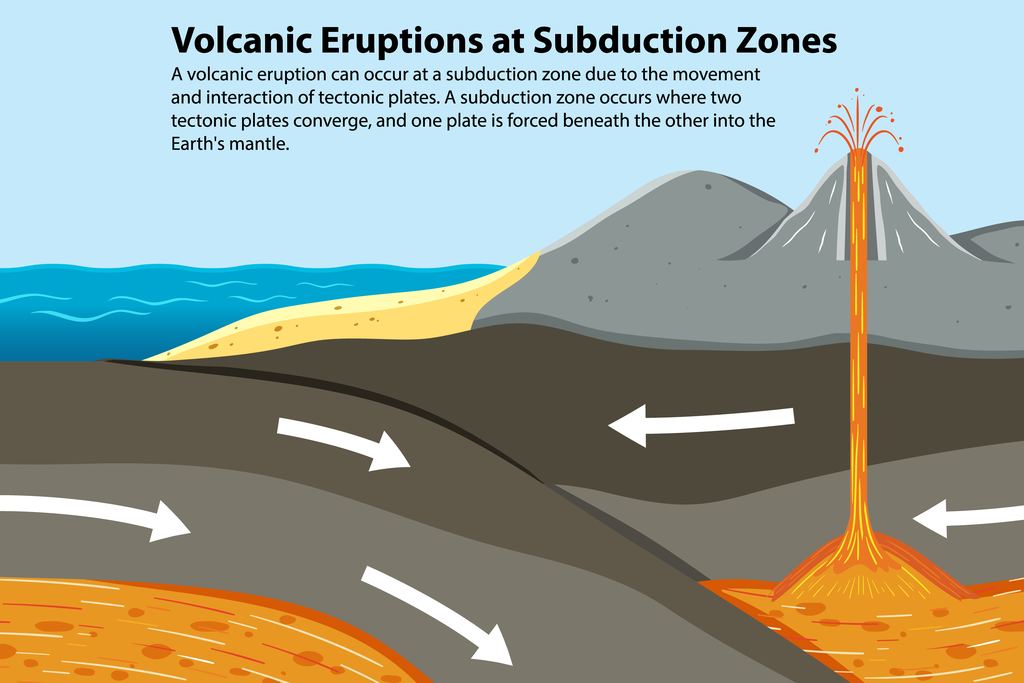
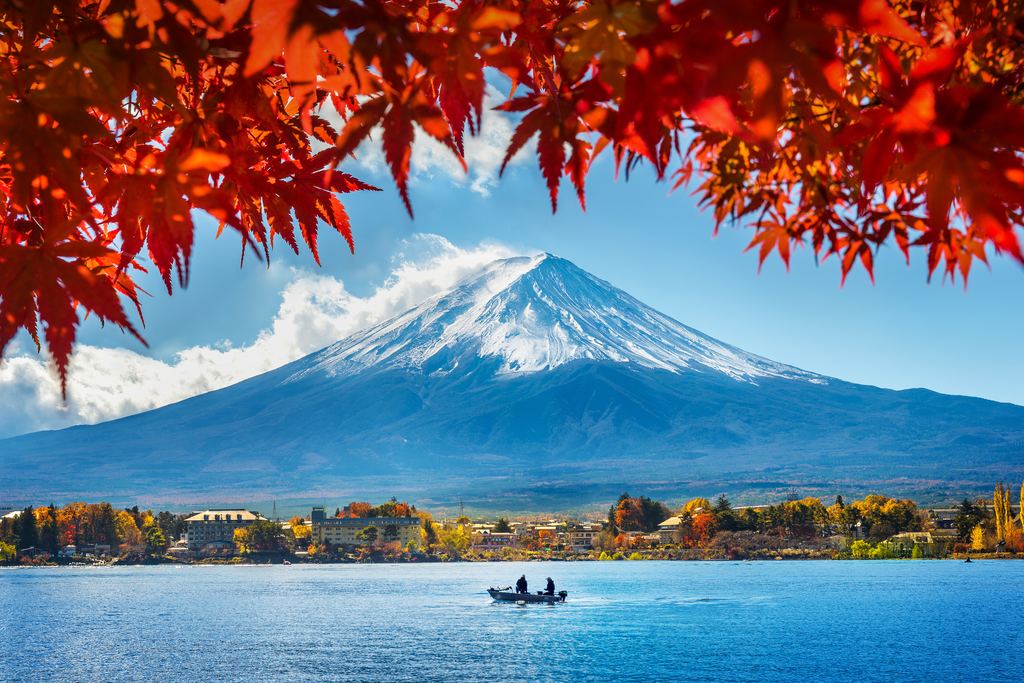
Where plates collide. One slab of ocean floor is forced beneath another plate, carries water down with it, and that water lowers the melting point of the rock above. The melt rises. Because it passes through continental crust it picks up silica on the way, which makes it sticky. This is the Ring of Fire, and it is why the Pacific rim volcanoes are the steep, explosive, dangerous ones: Fuji, Merapi, Fuego, Rainier, Taal.
Where plates pull apart. The crust thins, pressure drops, and the mantle beneath melts simply because it is no longer being squeezed. The magma is basaltic and runny. Iceland sits on this, which is why it produces fissures and lava fields rather than cones, and why its eruptions are usually watchable rather than lethal.
Over hotspots. A plume of unusually hot mantle rises in one fixed place while the plate slides over it, punching a chain of volcanoes across the ocean floor like a sewing machine. Hawai'i is the textbook case, and the chain of islands is a record of the plate's movement over millions of years.
The awkward exceptions
Not everything fits the three categories
The Mediterranean volcanoes are a genuine mess, and geologists have argued about them for decades. Etna sits near a subduction zone but produces basalt like a hotspot volcano, and there is no settled explanation.
The Canaries are usually called a hotspot but behave unlike Hawai'i, staying active for far longer at each island. The Azores sit on a triple junction where three plates meet, which is why they have volcanism, earthquakes and hot springs all at once.
Mud volcanoes are not volcanoes at all in the magmatic sense: they are driven by gas and pressurised sediment, and the mud is cold. Gobustan in Azerbaijan has hundreds of them, and El Totumo in Colombia is one you climb into.
None of this ruins the framework. It just means that when a guide tells you a confident single-sentence explanation of why the mountain you are standing on exists, there is a decent chance the literature is less certain than they are.
What the ground is telling you
The most useful skill on a volcano is reading the surface, because it dates the landscape without anyone having to tell you.
Black, sharp, unvegetated rock is young: years to a few centuries. Nothing has had time to grow and nothing has weathered.
Black rock with lichen is older: centuries. Lichen is the first colonist and it is slow.
Reddish or brown ground has been oxidising, which takes time and water. Iron in the rock is rusting.
Deep, dark, absurdly fertile soil is old volcanic rock fully weathered, which is why volcanic regions grow such good wine and coffee, and why people keep living underneath the things.
Yellow crusts and a smell of eggs mean sulphur deposition and active gas, whatever the rest of the landscape is doing.
Steam with no smell is usually just groundwater meeting hot rock, which can persist for a very long time after an eruption ends.
Active, dormant, extinct: a distinction that barely holds
These three words are used constantly and they are much softer than they sound.
Active generally means it has erupted in the Holocene, the last eleven and a half thousand years. That is a low bar, and it includes plenty of volcanoes that have done nothing in living memory.
Dormant has no agreed definition at all. It usually means active but currently quiet, which describes almost everything.
Extinct means we do not expect it to erupt again, and it is the word most likely to embarrass whoever used it. Volcanoes have been reclassified after eruptions that were not supposed to happen, sometimes after gaps of thousands of years.
The useful reframing for a traveller: the question is not whether a volcano is active but when it last did something, and what it did. A volcano quiet for four hundred years with a history of catastrophic eruptions deserves more respect than one erupting gently every week.
Quick answers
How many volcanoes are there in the world?
Around 1,350 to 1,500 are catalogued as having erupted in the Holocene, depending on which register you use and how sub-features are counted. Roughly forty to fifty are in an ongoing eruptive state at any moment, and about twenty are doing something on any given day. The great majority are submarine and nobody sees them at all.
What is the difference between magma and lava?
Position. Molten rock underground is magma; the moment it reaches the surface it is lava. Same material, different address, and the change of name marks the point at which it starts losing its gas.
Is a supervolcano different from a volcano?
Only in scale, and the term describes an eruption rather than a mountain. It refers to eruptions at the top of the explosivity scale, which produce calderas rather than cones. Campi Flegrei near Naples and Yellowstone are the best-known examples, and in both cases you can stand in the middle without realising you are in a volcano at all.
Why are volcanic soils so fertile?
Volcanic rock is rich in minerals that plants need, and when it weathers it releases them in a form roots can use, while the resulting soil holds water well. It takes centuries to millennia to develop, which is the reason people farm on the flanks of dangerous mountains and always have.
The whole thing on one line
Everything above reduces to a single chain: how much silica is in the magma decides how runny it is, which decides the shape of the mountain, which decides how it erupts, which decides whether you will ever be allowed near it.
| Magma | How it behaves | What it builds | How it erupts | Where to see it |
|---|---|---|---|---|
| Basalt, low silica | Runny. Gas escapes easily, so pressure does not build | Broad shields, lava fields, fissures | Effusive: flows and fountains | Hawai'i, Iceland, Etna's flanks |
| Andesite, intermediate | Sticky. Gas is trapped until the rock fails | Steep symmetrical cones | Explosive, with pyroclastic flows | Fuji, Cotopaxi, Merapi, Agung |
| Rhyolite, high silica | Barely flows at all | Domes, and calderas when it fails | Violently explosive, or dome growth | Santiaguito, Santorini, Yellowstone |
Which is why the two questions a traveller actually cares about have the same answer. Where can I get close to lava? Wherever the magma is basaltic. Where is the mountain most beautiful and least approachable? Wherever it is not.
The rest of this section
Ten pages, from the geology to the wine.

The shapes a volcano takes
A cone, a shield, a caldera, a dome, a fissure. Six forms, one cause, and the shape predicts the behaviour.
The Ring of Fire
Two thirds of the world's volcanoes on one horseshoe. The interesting part is which famous ones are not on it.
The VEI scale
Eruptions graded 0 to 8, and the three things the scale deliberately ignores, including how many people died.

A volcano glossary
Sixty-six terms with what each one changes for you, and the five that cause real trouble when misused.
Questions and answers
The things people actually ask before booking, including the ones that get mocked on forums.

Eruptions that changed the world
Eleven eruptions whose consequences arrived somewhere else entirely.

Curiosities, and nine myths
Rock that floats, sand that is green, and a curse invented in 1946 by a park ranger.
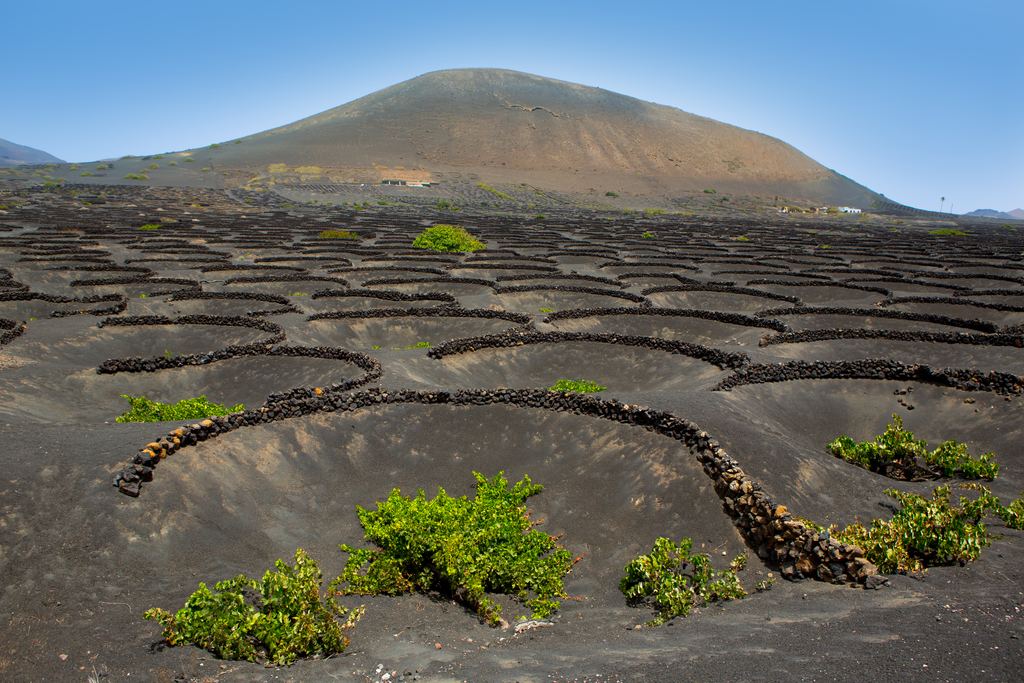
Why volcanic soil makes wine
A louse ate Europe's vines and could not cross volcanic sand. Which is why some of the oldest vines alive grow on volcanoes.

Geysers and hot springs
The volcano you cannot see, and three cultures that worked out you could put dinner in it.
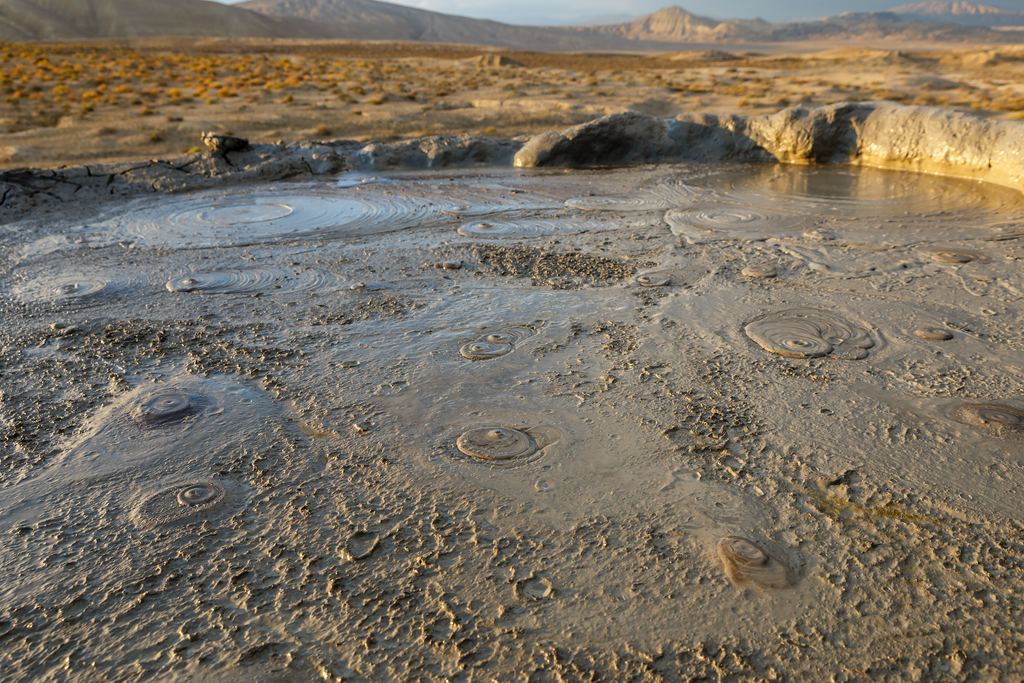
Mud volcanoes are not volcanoes
They build cones, they erupt, they occasionally catch fire, and there is no magma anywhere near them.
Data verified on. Written for travellers rather than students. Where the science is genuinely unsettled, such as the origin of Etna, we say so rather than picking a side. Editorial Policy