
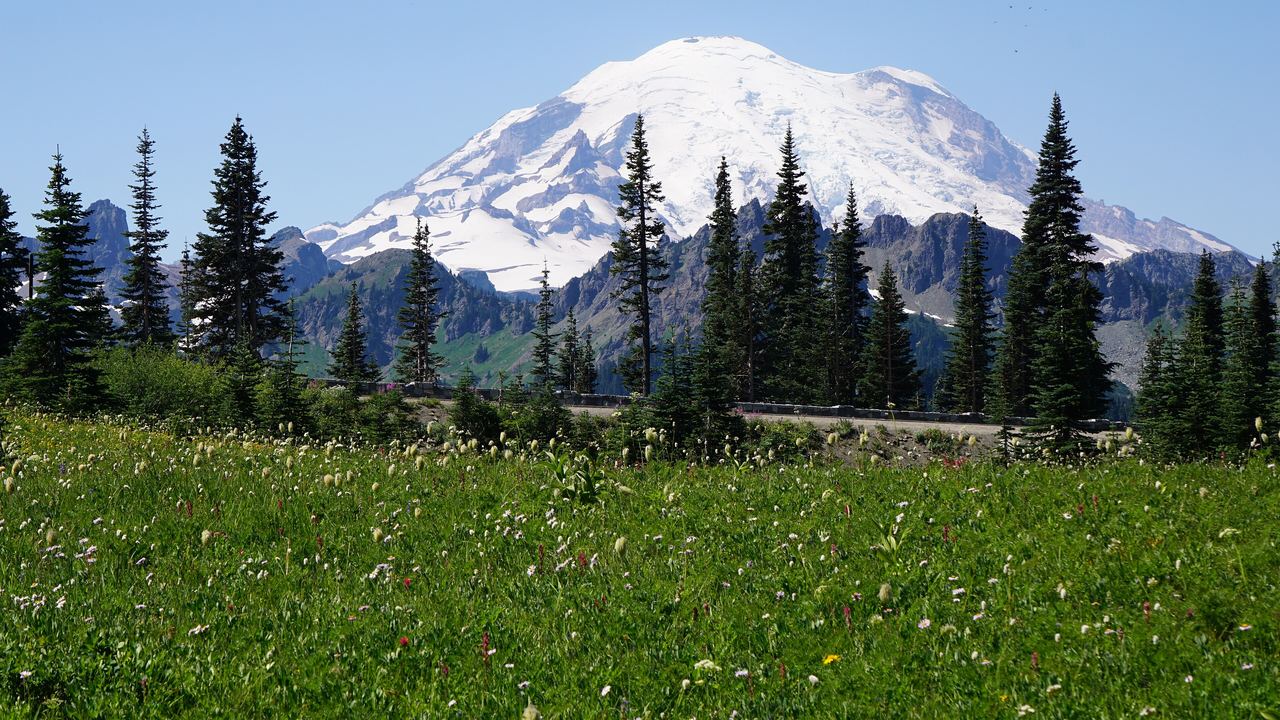
Volcano Tours in the United States
The USGS counts 161 potentially active volcanoes in the country. Three of them carry all 65 experiences sold here.
The USGS counts 161 potentially active volcanoes in the United States. The commercial market sells three. Alaska holds the largest share of the total and produces almost no visitor product at all, because a volcano reachable only by chartered floatplane does not become a day trip. What is actually bought and sold sits in two states: the island of Hawaiʻi, where Kīlauea has been erupting in fits and starts since December 2024, and Washington, where a glaciated cone that last erupted around a thousand years ago is ranked by the USGS among the most dangerous volcanoes in the country. Maui adds a third, and it is not really about the volcano at all.
This page is the only one on the site that can put the three side by side, so that is what it does. Below you will find what each destination is physically like, what the day costs, which months work, and the entry rules, which differ more than anyone expects between two parks in the same state. The operational detail for each one lives on its own page. What matters here is the choice, because these three trips answer completely different questions and the wrong one is an expensive way to be disappointed.
Choose a destination in the United States
-
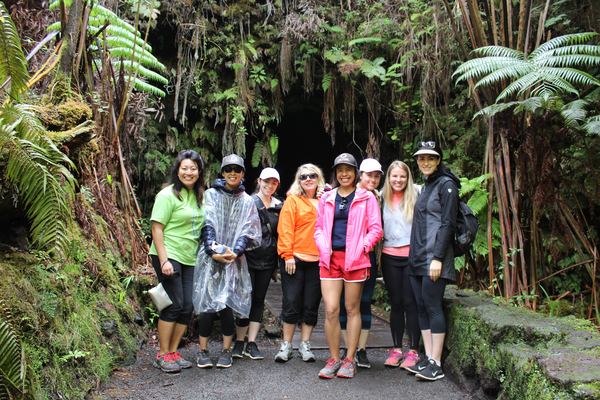
Hawai'i Volcanoes National Park
Tours of Hawaiʻi Volcanoes National Park on the Big Island: the Kīlauea caldera, the Nāhuku lava tube, Kīlauea Iki and the Chain of Craters Road to the sea.
41 experiences in 5 destinations -
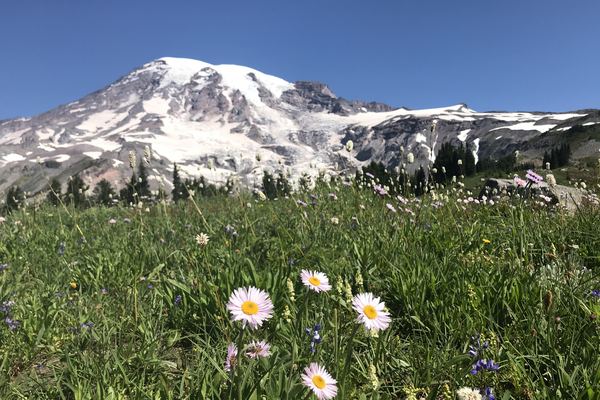
Mount Rainier
Mount Rainier and Mount St. Helens tours from Seattle and Portland: 28 glaciers, the lahar hazard, Paradise and Sunrise, and the 1980 crater.
12 experiences -
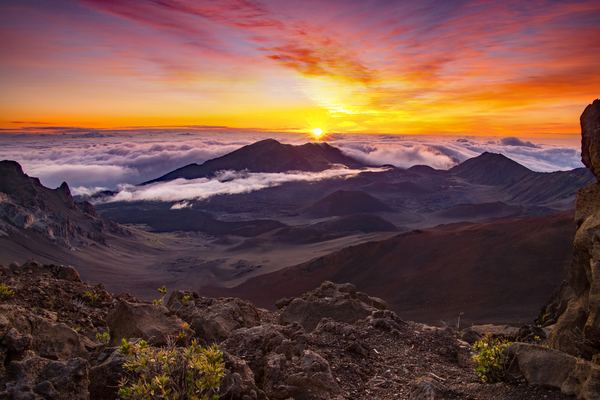
Haleakalā Volcano
Haleakalā tours on Maui: sunrise above the cloud at 3,055 m and the reservation it needs, the sunset and astronomy alternative, and the downhill bike ride.
12 experiences

Volcano Travel Experiences in the United States
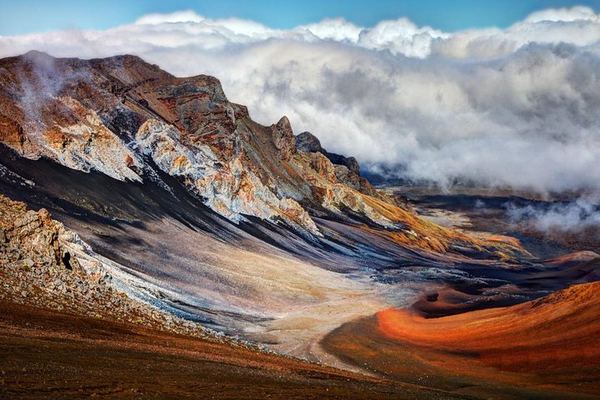
29 Switchbacks Down Haleakala: a Guided Ride from 6,500 Feet to Sea Level
A guided descent rather than a self-paced one, with the 29 switchbacks below the park gate and a check-in at 7.30am that has you back before midday.
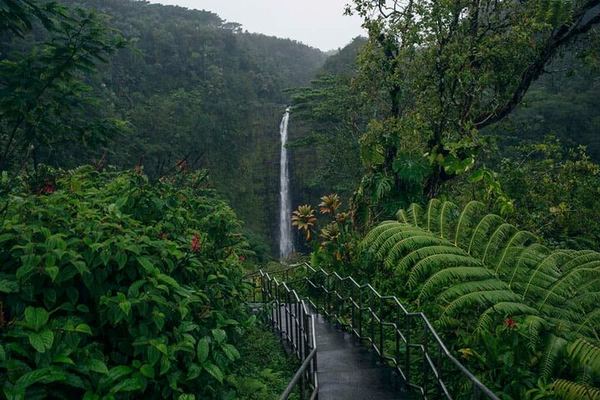
Akaka Falls at 442 Feet, plus Hilo and a Self-Guided Volcanoes Explorer
Three packages in one: the 442-foot waterfall, seven stops around Hilo including the Kamehameha statue, and a self-guided run through the national park.
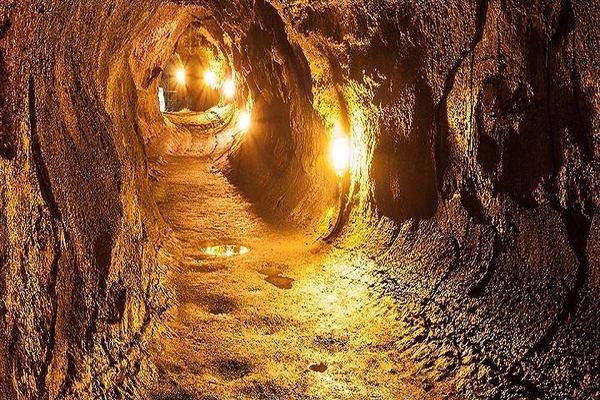
All Five Big Island Volcanoes in One Day from Oahu
The route passes every one of the island's five volcanoes, with Kilauea's steam vents, the Thurston lava tube and the Kona coffee belt on the same day.
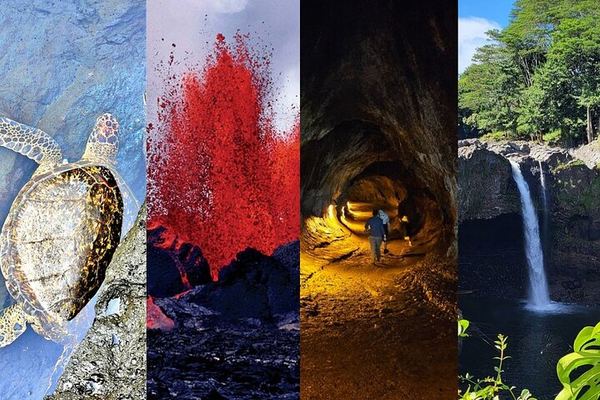
Big Island Day Tour with Native Hawaiian Guides: the Quarter-Acre Banyan
Native Hawaiian guides, an hour at the Hilo farmers market, and the banyan beside Rainbow Falls that covers a quarter of an acre and gets climbed and swung from.
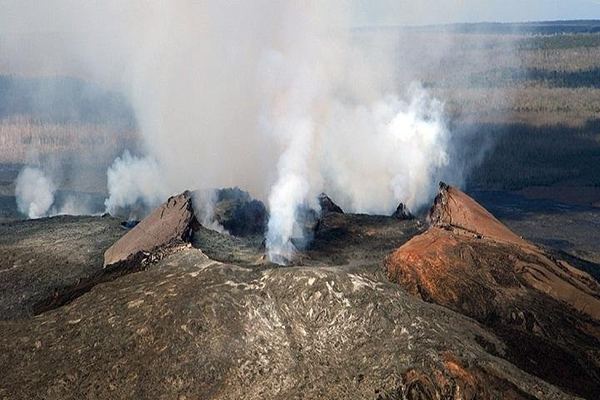
Big Island in a Day from Oahu: Inter-Island Flights and Kilauea Included
Round-trip inter-island flights are in the price, and the day runs from Halemaʻumaʻu's glow to the southernmost bakery in the United States.
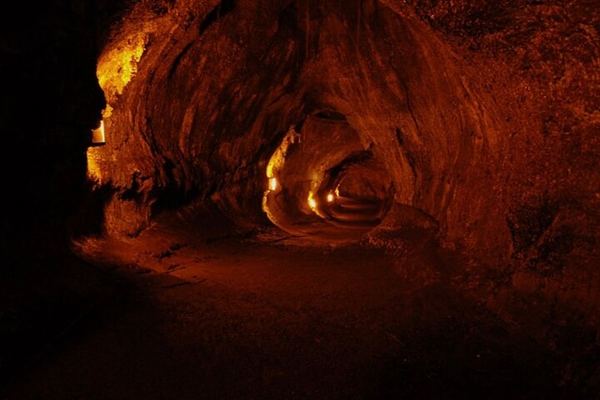
Big Island in Half a Day: Rainbow Falls, a 600-Foot Lava Tube, Punalu'u
Rainbow Falls, the Kilauea caldera, a 600-foot lava tube and Punalu'u black sand beach, with lunch included. Hilo-area pick-up and 15 steps underground.
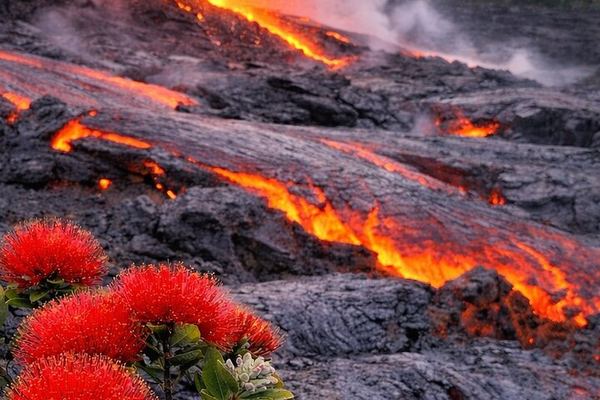
Big Island Scenic Day: a Waterfall Coming Out of a Lava Tube
Kawainui Falls comes straight out of a giant lava tube, a stop no other Hilo day tour makes. Groups of thirteen, cold drinks included, lunch, and ages 5 and up.
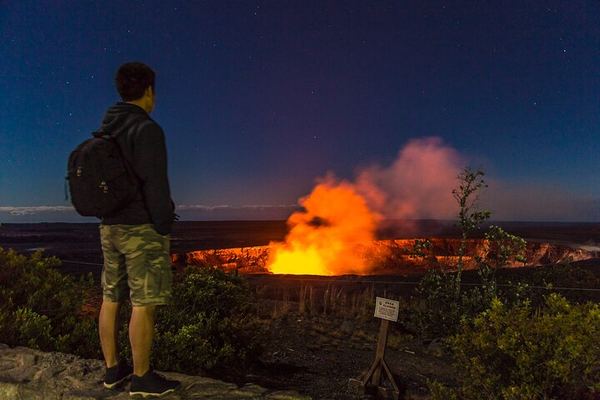
Big Island Twilight: Kona Coffee, Black Sand, the Thurston Tube and Stars
Lunch and dinner are both included, from a picnic above Kealakekua Bay to a dark stop on Saddle Road, with malasadas and green sea turtles along the way.
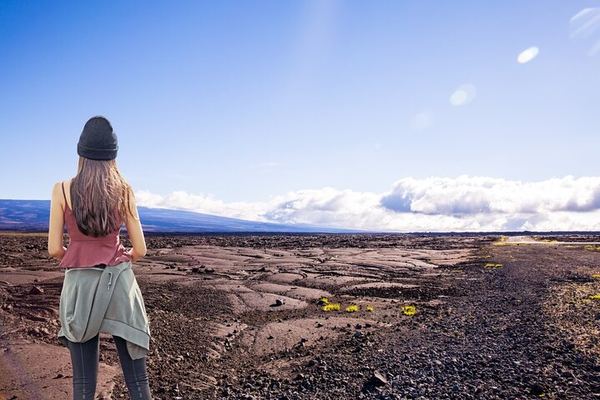
Big Island Volcano Day Trip from Honolulu: Flights, Waikiki Pick-Up and Kilauea
The interisland flight from Honolulu and the Waikiki hotel transfer are both in the booking, with a guided run through Kilauea, Chain of Craters Road and Hilo.
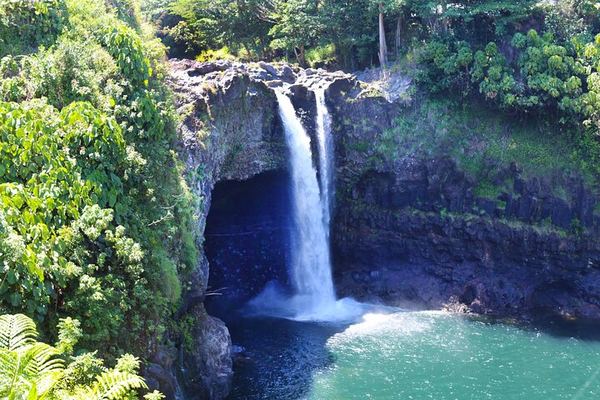
Circle the Big Island: a Living History Coffee Farm and Akaka's Paved Loop
Costumed interpreters work the coffee farm at Captain Cook, and the trail to the 442-foot Akaka Falls is paved. Sprinter van, owner-guide, water and snacks in.
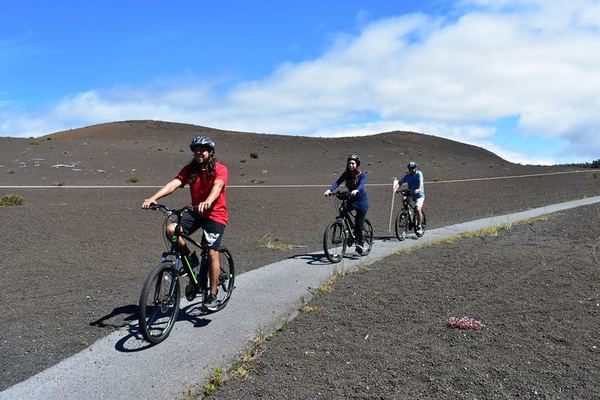
E-Bike Hawaii Volcanoes: Keanakakoi, Reachable Only on Two Wheels or on Foot
Guided tours are barred from the park's bike trails, so the e-bike reaches Keanakakoi Overlook and the crater rim. Lunch at Volcano House, GPS audio throughout.
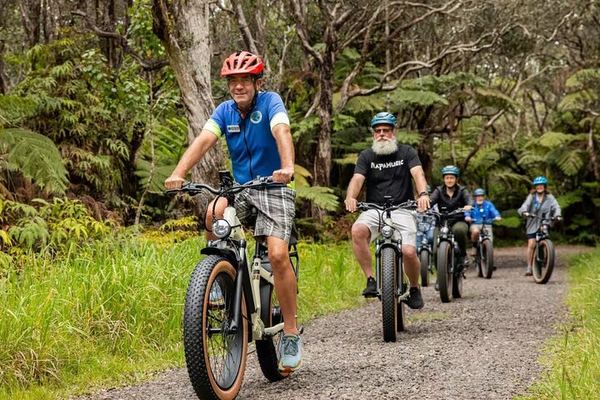
Fat Tire E-Bike in Volcanoes National Park: Rain or Shine, Riders Only
Pedal assist, a throttle and torque sensors, on the same paved roads as the cars. It runs in the rain without refunds, and it assumes you can already ride.
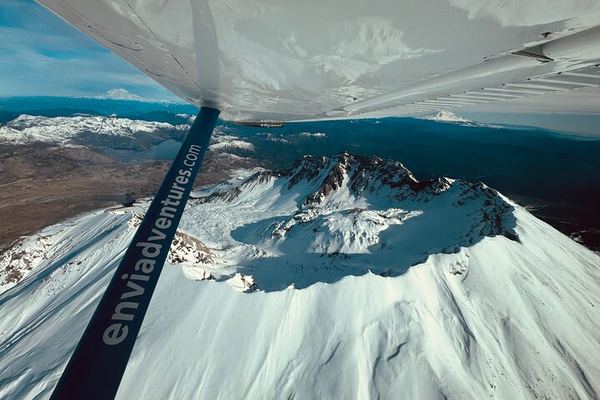
Flying the St Helens Crater: Five Seats, 600 Pounds, and the Pilot Decides
Five seats, a 600-pound limit for the group, and a 20-minute check-in that cancels the flight if you miss it. The route circles the crater itself.
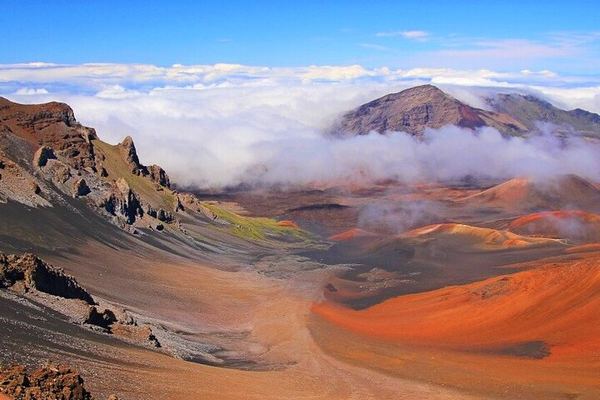
Guided Haleakala Sunrise Descent: 15 Miles from the Park Gate to Makawao
A guide rides the 15 miles with you instead of handing over a map, from the park boundary at 6,500 feet down to Makawao. Riders must be 15 or older.
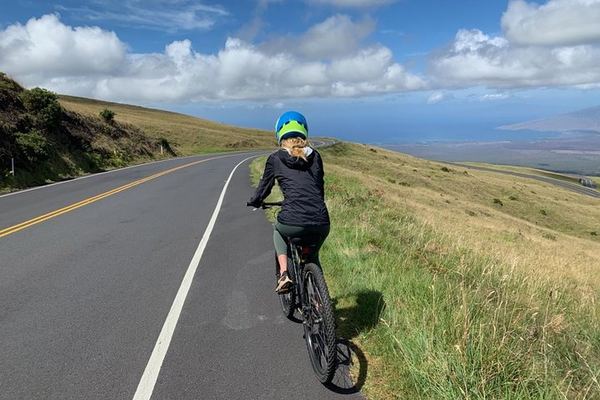
Haleakala Downhill by Bike, Self-Guided from 6,500 Feet with Certified Instructors
The only Maui bike operator run by USA Cycling coaches and BICP instructors, with the descent at your own pace so Makawao and Paia are stops, not blurs.
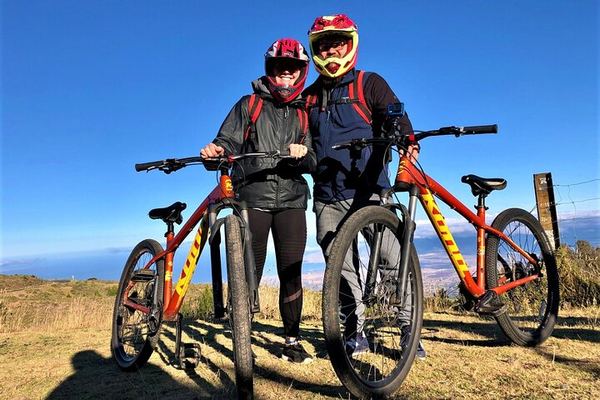
Haleakala Express: 15 Miles Down to Haiku, No Stops Built In
The straight descent with nothing scheduled along the way, on KONA bikes with Helly Hansen rain gear, and riders must be 15 or over with recent experience.
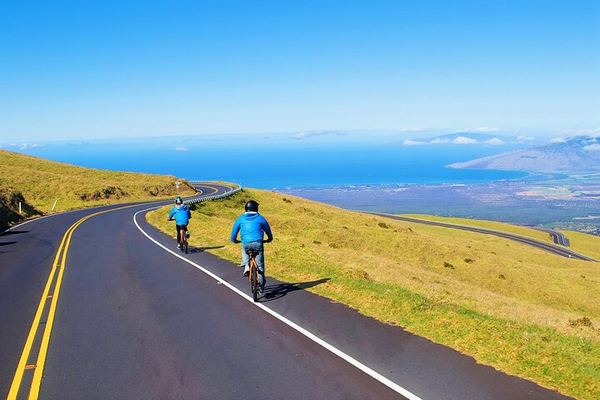
Haleakala Summit and 15 Miles Down: Park Entry Included, Riders from 12
Park admission and a summit visit come before the ride, with a breakfast stop and Makawao on the way down, and riders here can be as young as twelve.
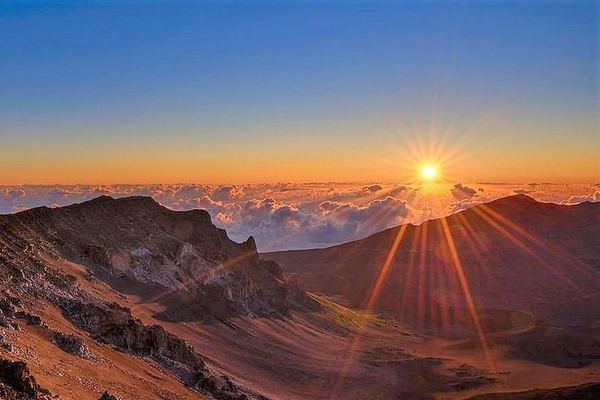
Haleakala Sunrise by Vehicle: Lavender Farms, Hitching Rails and No Bicycle
The sister company of a bike outfit runs this one entirely in a vehicle, with lavender and protea farms at Kula and the old hitching rails at Makawao.
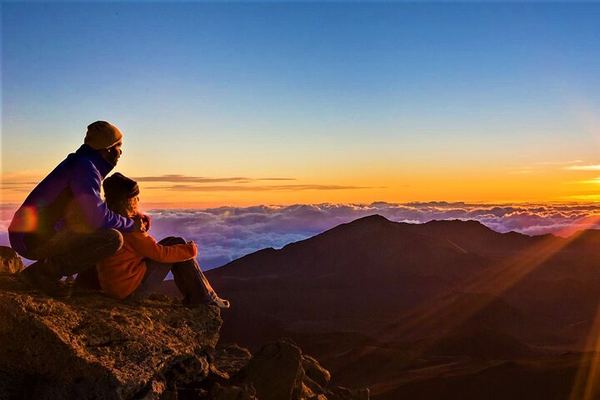
Haleakala Sunrise Ride: 20 Miles Down and the Switchbacks Twice
This ride takes the switchbacks twice and covers 20 miles after sunrise at the summit, with park entry, Kona bikes and rain gear included.
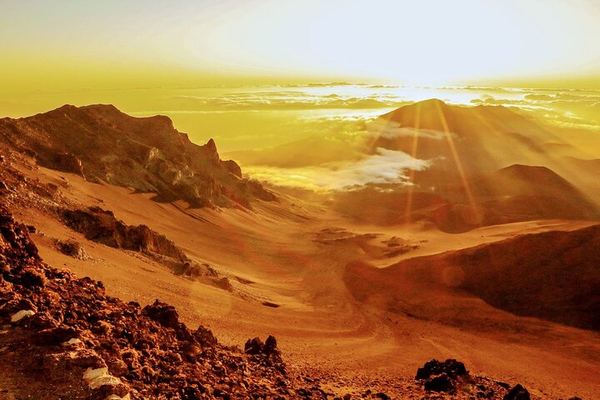
Haleakala Sunrise with Hotel Pick-Up and a Breakfast You Choose From Three
Guides position you for the sunrise, then the ranch lands, then a sit-down breakfast at the Maui Tropical Plantation with three plates to choose from.
Hilo Half-Day: Kilauea Lodge Lunch, Punalu'u and 15 Steps in the Lava Tube
Lunch at the Kilauea Lodge is included, and the day ends on the black sand at Punalu'u. Hilo-area pick-up only; about 15 steps inside the lava tube.
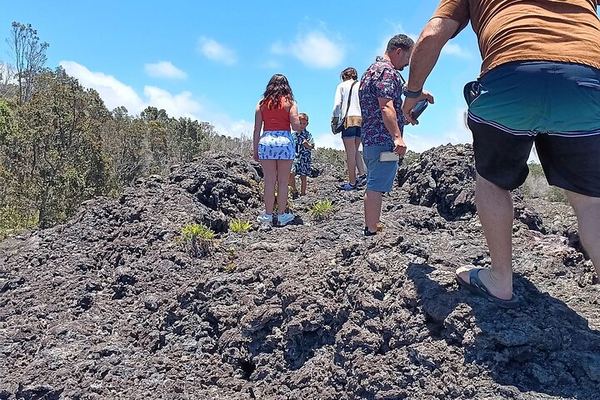
Hilo Shore Excursion by an Independent Guide: Peacock Lava and Fruit from the Farm
An independent guide, not the cruise line's, who feeds prawns off a wooden bridge, brings fruit from their own farm, and photographs you inside a lava fissure.
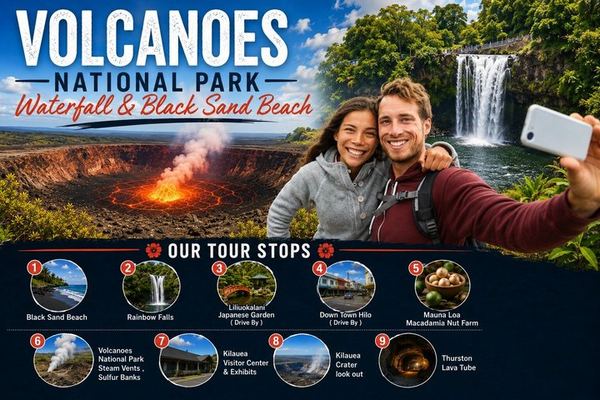
Hilo Shore Excursion: Kilauea Caldera, Thurston Lava Tube and Black Sand Beach
A permit-holding operator that collects passengers inside the Hilo cruise terminal and times the day to the ship. Easy grade, 14 seats, Park Pass accepted.
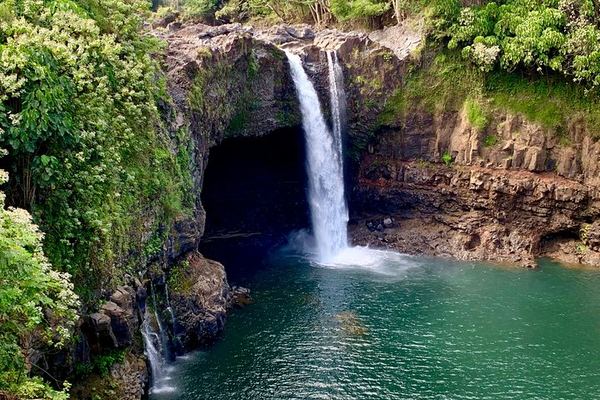
Hilo Shore Excursion: Kilauea's Caldera, a Lava Tube and the Gardens
Timed to a ship's day in port: the Kilauea caldera and its steam vents, a 500-year-old lava tube, then Rainbow Falls and the gardens on Hilo Bay, in a small group.
Ratings collected by Viator and Tripadvisor
Three destinations that share a country and nothing else
Hawaiʻi and Washington are 4,000 kilometres apart and geologically unrelated. The Hawaiian islands sit over a hot spot in the middle of the Pacific plate, which is why they form a chain and why the youngest island is the one still building. Mount Rainier belongs to the Cascade arc, a line of stratovolcanoes fed by a subducting plate off the coast of Oregon and Washington. The rock is different, the eruptions behave differently, and so does the day out.
The practical consequence is that you cannot combine them. Nobody sells a United States volcano itinerary, and nobody should. Pick the destination first and the tour second.
| Hawaiʻi Island | Maui | Washington State | |
|---|---|---|---|
| Listings here | 41 | 12 | 12 |
| The volcano | Kīlauea, erupting in episodes since December 2024 | Haleakalā, last erupted roughly five centuries ago | Mount Rainier, last erupted about 1,000 years ago |
| The number that matters | 4,207 m on Mauna Kea | 3,055 m at the summit | 4,392 m, highest in the Cascades |
| What you are buying | An active caldera, lava tubes and a road to 4,200 m | A sunrise above the cloud, booked months ahead | A glaciated cone, and the crater a 1980 eruption left |
| You start from | Hilo, Kona or Waikoloa | Kahului and the west Maui resorts | Seattle or Portland |
| Usual price | 123 to 335 EUR | 123 to 325 EUR | 130 to 410 EUR |
| Open | 24 hours, 365 days | All year; sunrise needs a permit | All year, but most of it closes with snow |
The Cascade arc has a dozen volcanoes and sells two
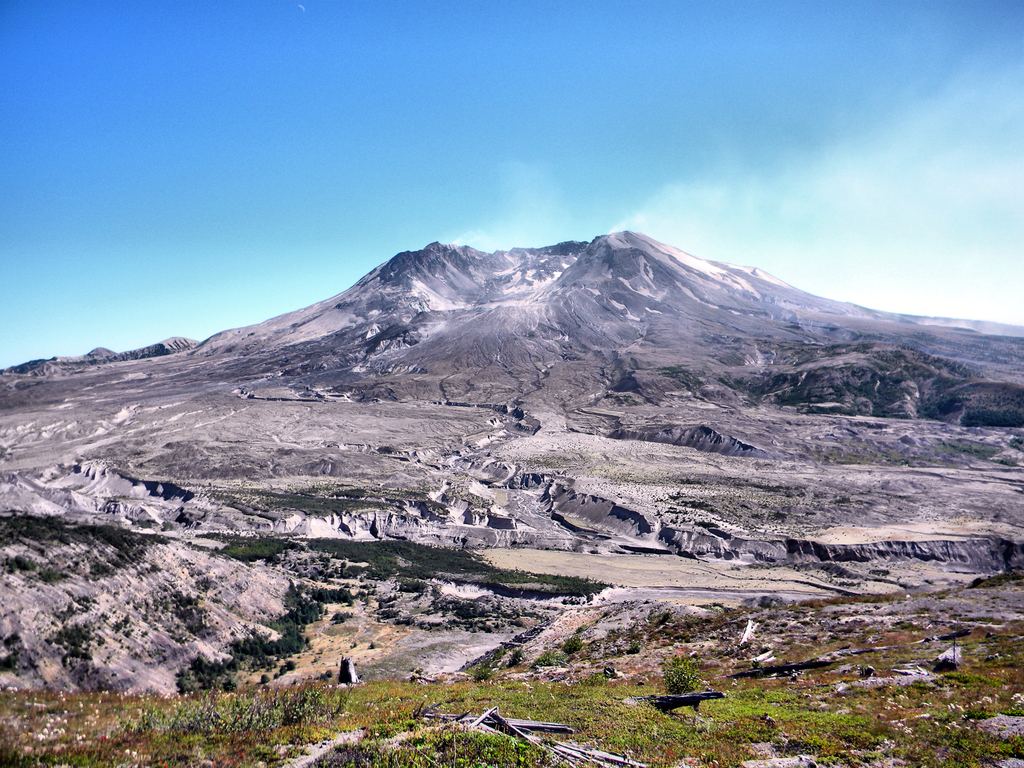
Washington and Oregon are lined with them: Rainier, St. Helens, Adams, Hood, Baker, Glacier Peak. Two are on sale. Mount Rainier gets eight of the twelve listings here because it is 90 minutes from Seattle and has a national park around it, and Mount St. Helens gets four because in 1980 it did something nobody who saw it has stopped talking about.
On 18 May 1980 the north flank of St. Helens gave way in a debris avalanche that removed the upper 400 metres of the mountain and opened the crater you can see in this photograph. A lidar survey in 2009 put what is left at 2,539 metres. Its alert level has been green since then, and the interesting part for a visitor is not the volcano but the ground below it, where a forest was flattened and is now growing back on a timetable ecologists have been recording for forty-five years.
The Hawaiian hot spot is a different machine
Kīlauea does not explode. Its basalt is fluid, it runs rather than shatters, and the result is that people can stand on a marked overlook a couple of kilometres from an active vent and watch, which is not a sentence anyone would write about the Cascades. That is the whole reason 41 of the 65 American listings on this site are on a single island.
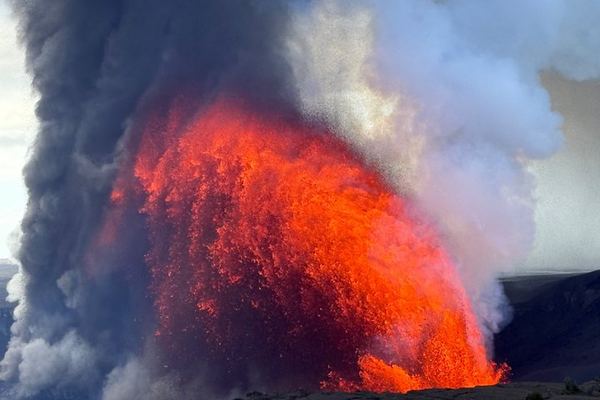
The catch is that fluid does not mean constant. Since 23 December 2024 the summit has been running an episodic lava fountaining eruption inside the Halemaʻumaʻu crater: an episode starts, fountains for a matter of hours, then stops, and the gap before the next one has run from about ten days to more than three weeks. The park is explicit that lava is not guaranteed on any given day and that weather alone can hide it. Any operator promising you lava on a specific date is promising something they do not control.
The National Park Service puts it plainly on its own eruption viewing page: changes in the eruptive activity and weather conditions such as fog or rain sometimes prevent any eruption viewing.
What the money buys
American volcano days are expensive by the standards of this site: the cheapest thing here costs more than a guided walk on Etna and roughly four times a sunset walk on Stromboli. Distance explains most of it. These are 7 to 12 hour days with a vehicle, a driver and a lot of road, and on the Big Island a single tour can cover 300 kilometres.
The two numbers worth looking at twice are at the extremes. A self-guided downhill bike ride on Maui starts at 123 EUR and is the cheapest experience in the country. A day trip to Kīlauea from a hotel in Waikīkī costs 516 EUR and includes two flights, because the volcano is on a different island.
| Type of day | Where | Price | How long |
|---|---|---|---|
| Guided day in Hawaiʻi Volcanoes National Park | Hilo or Kona | 123 to 218 EUR | 6 to 12 hours |
| Volcano plus waterfalls and a black sand beach | Big Island circuit | 158 to 272 EUR | 8 to 12 hours |
| Mauna Kea summit at sunset, then stargazing | Big Island | 225 to 291 EUR | about 7 hours |
| Shore excursion from the Hilo cruise pier | Hilo | 141 to 167 EUR | 5 to 7 hours |
| Haleakalā sunrise by vehicle | Maui | 224 to 253 EUR | 7 to 10 hours |
| Haleakalā downhill by bicycle | Maui | 123 to 280 EUR | 4 to 8 hours |
| Mount Rainier or Mount St. Helens from the city | Seattle or Portland | 130 to 303 EUR | 9 to 11 hours |
| Kīlauea as a day trip from Oahu | Honolulu | 516 to 520 EUR | 12 hours |
| Helicopter over the volcano | Big Island or Maui | 324 to 334 EUR | 45 to 60 minutes |

The tallest mountain on Earth is on the tour list
Mauna Kea stands 4,207 metres above the sea. Measured from its base on the ocean floor, which is the honest way to measure a volcano that built itself out of the seabed, it is over ten kilometres tall, more than Everest. It last erupted around 4,500 years ago and the USGS rates its threat as moderate, so nothing is happening on it. People go for the altitude and the sky.
They go with a driver, and there is a reason. Seven commercial operators are authorised to run summit tours, most rental agreements forbid taking the car above the visitor station, and the mountain's own guidance advises against the summit for anyone under 13, for pregnant travellers and for people with heart or lung conditions. Snow, fog and winds over 190 km/h are possible on any month of the year, and the access road closes when they arrive.
The volcanoes nobody sells, and why
Two absences say more about the American market than the three destinations do.
Alaska. The Aleutian arc is the busiest volcanic chain in the country and it has essentially no tourist product. There is no road, no scheduled boat, and the weather closes the sky for days. A volcano that costs a charter flight to reach cannot be sold at 200 EUR to somebody with one free day, so it is not sold at all. If you want an Alaskan volcano you are organising an expedition, not booking a tour.
Yellowstone. It is a caldera, it sits on one of the largest volcanic systems on the continent, and its geysers are its plumbing. It also receives millions of visitors a year, almost none of whom searched for a volcano. Yellowstone is sold as wildlife, geysers and scenery, and the word volcano appears in the interpretation rather than in the marketing. That is a decision about what people want, not about geology.
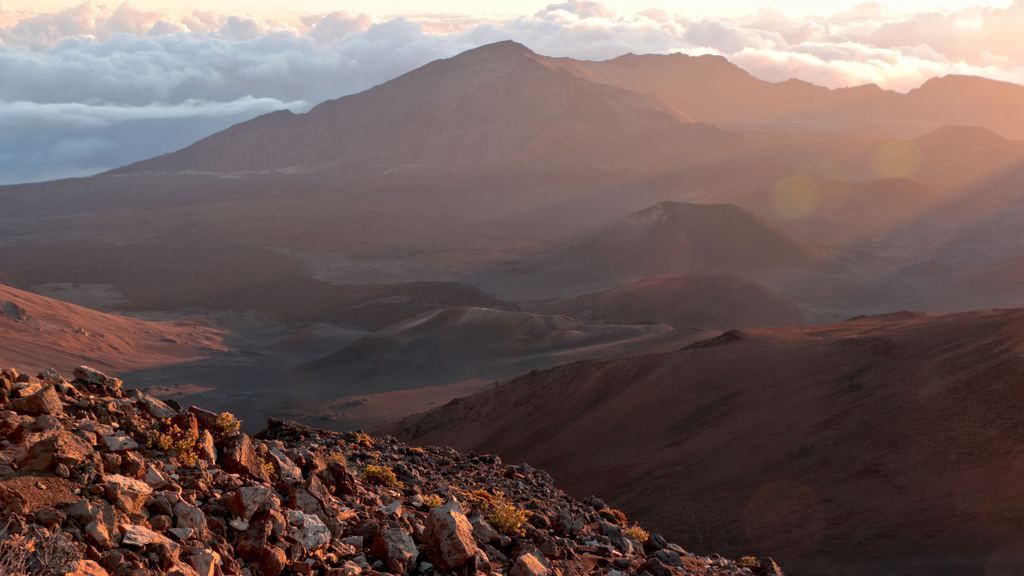
The same logic quietly explains the third destination on this page. Haleakalā is dormant. Nobody buys a Haleakalā trip to see a volcano; they buy it to be above the clouds at dawn, and the volcano is the thing that put them up there.
Mount Rainier is the most dangerous volcano in the contiguous United States, and not because of lava. The hazard the USGS ranks highest is a lahar: 28 glaciers of ice, melted fast, running down valleys that now contain towns.
Fees, permits and the rules that differ between parks
All three destinations sit inside national parks and all three charge, but the details differ in ways that cost people money.
Entry is 30 USD per vehicle everywhere, and the validity is not the same. At Hawaiʻi Volcanoes the pass is good for seven days. At Haleakalā the identical price buys three. On foot or by bicycle it is 15 USD per person, and a Hawaiʻi Tri-Park Annual Pass covering both islands is 55 USD, which pays for itself on the second visit.
Hawaiʻi Volcanoes National Park does not accept cash. Card only, at the gate.
The Haleakalā sunrise needs a separate reservation. One dollar, bought on recreation.gov, valid for entry between 03:00 and 07:00 only. They are released 60 days ahead at 07:00 Hawaii time and a further tranche 48 hours before. One per visitor per three-day period, and it is not refundable, including when the weather ruins it. Commercial operators run under a park authorisation instead, which is the practical reason most people book a tour rather than drive.
Mount Rainier has no timed-entry booking in 2026. The pilot reservation system used in previous summers was not renewed, so you can arrive when you like. What you cannot do is assume the road is open, and a note further down covers that.
One thing that does not apply here: the 100 USD non-resident surcharge introduced on 1 January 2026 covers eleven named parks, and none of these three is on the list.
When to go, and what is shut
Hawaiʻi has no season in the sense Washington does. Hawaiʻi Volcanoes National Park is open 24 hours a day, seven days a week, including holidays; what varies is the eruption. Haleakalā's summit road is open all year and the constraint is the reservation queue, not the calendar.
Mount Rainier is the opposite. The park is technically open all year, but in winter vehicle access is limited to the Nisqually entrance, tyre chains must be carried on park roads from 1 November to 1 May, the Longmire gate opens at 09:00 and closes uphill traffic at 16:00, and the Sunrise area on the north-east side generally operates only from July to mid-September. Winter tours from Seattle spend their time at Longmire with snowshoes instead, which is a good day but not the one in the photographs.
| Month | 1 | 2 | 3 | 4 | 5 | 6 | 7 | 8 | 9 | 10 | 11 | 12 |
|---|---|---|---|---|---|---|---|---|---|---|---|---|
| Hawaiʻi Volcanoes National ParkOpen 24 hours every day of the year; no month is closed and the eruption is what changes | 1 | 2 | 3 | 4 | 5 | 6 | 7 | 8 | 9 | 10 | 11 | 12 |
| Haleakalā, MauiSummit road open all year; the limit is the sunrise reservation, released 60 days ahead | 1 | 2 | 3 | 4 | 5 | 6 | 7 | 8 | 9 | 10 | 11 | 12 |
| Mount Rainier, WashingtonSunrise opens around July and shuts by mid-September; chains required on park roads 1 November to 1 May | 1 | 2 | 3 | 4 | 5 | 6 | 7 | 8 | 9 | 10 | 11 | 12 |
Months shown as numbers. Based on National Park Service opening rules and operator schedules, checked August 2026.
Four closures worth checking before you pay
American parks close things for years at a time, and the listings do not always keep up.
Johnston Ridge Observatory, Mount St. Helens. The viewpoint that looks straight into the crater has been cut off since a landslide took out State Route 504 near mile 49 on 14 May 2023. Replacement bridge works began on 27 April 2026. Several Portland and Seattle tours still show Johnston Ridge in their photographs while their written itinerary stops at Coldwater Lake and the Hummocks Trail. Read the itinerary, not the gallery.
Sunrise, Mount Rainier. Closed at the time of writing because of the Grand Park 2 Fire, on top of its normal short season. The park publishes a live road status page and it is the only reliable source.
Carbon River and Mowich Lake, Mount Rainier. A bridge failure closed vehicle access on 22 April 2025 with no alternative route, and the park does not expect to restore it before 2031.
The Kīlauea Visitor Center. Shut since 18 February 2025 for a rebuild running to the end of 2026. A temporary welcome centre operates 09:00 to 16:45. The old Jaggar Museum, which many older guidebooks still send you to, was damaged in 2018 and will not be rebuilt.
Questions people actually ask
Which American volcano can you actually see erupting?
Only Kīlauea, and only sometimes. Since 23 December 2024 it has been producing episodes of lava fountaining inside Halemaʻumaʻu crater at the summit, each lasting hours rather than days, separated by pauses that have run from roughly ten days to over three weeks. The park keeps safe overlooks open on the caldera rim and states clearly that lava may not be visible on any given day. Haleakalā and Mount Rainier are both quiet, and Mount St. Helens has been at green alert for years.
Big Island or Maui?
The Big Island if you want the volcano itself. It has the active caldera, the lava tubes, the road down to the sea across old flows, and 41 of the 65 American listings on this site. Maui if what you actually want is to be standing above a sea of cloud at dawn and then ride a bicycle down 1,500 metres of switchbacks. Both are worth doing; they are simply not the same purchase, and people who book Haleakalā expecting molten rock come back disappointed.
Do I need to book anything in advance?
For Haleakalā at sunrise, yes, and it is the one genuine bottleneck in the country: a one dollar reservation on recreation.gov for entry between 03:00 and 07:00, released 60 days out and again 48 hours out, non-refundable. For Hawaiʻi Volcanoes, no: you pay 30 USD at the gate, by card, and the park never closes. For Mount Rainier, no reservation is required in 2026. Booking a commercial tour removes the Haleakalā problem, because operators run on a park authorisation of their own.
Is Mount Rainier dangerous to visit?
Visiting is not the risk. The USGS ranks Rainier as one of the highest-threat volcanoes in the country because of lahars, volcanic mudflows generated when 28 glaciers of ice melt quickly, and past ones have reached the Puget Sound lowlands where Orting, Tacoma and other towns now stand. There is a lahar detection network in those valleys for that reason. On a day trip the real hazards are ordinary mountain ones: weather that turns, roads that close, and snow on the ground into July.
Why are there no Alaska volcano tours?
Because there is nothing to sell. The Aleutian volcanoes have no road access, no scheduled transport and weather that grounds aircraft for days, so reaching one is a chartered expedition rather than an excursion. That is a market fact rather than a geological one: Alaska has far more active volcanoes than Hawaiʻi and Washington combined, and essentially no visitors going to see them.
How much does a US volcano tour cost?
Between 123 and about 335 EUR for almost everything worth doing. Guided days in Hawaiʻi Volcanoes National Park run 123 to 218, Big Island circuits with waterfalls and a black sand beach 158 to 272, Mauna Kea at sunset 225 to 291, Haleakalā sunrise 224 to 253 and Mount Rainier from Seattle 130 to 303. Above that you are paying for a flight or for privacy: 516 EUR for the day trip from Oahu, 324 for a helicopter, and up to 2,010 for a private guide with a vehicle to yourself.
Can you visit Kīlauea from Honolulu in a day?
Yes, and it is the least efficient way to see a volcano in this catalogue. The three products doing it take twelve hours door to door, include a return inter-island flight to the Big Island, and spend a large part of the day in airports and on a coach. They cost around 520 EUR. If you have two nights to spare, flying to Hilo and staying near the park costs less and gives you the summit after dark, which is when the caldera is worth seeing.
Data verified on. Prices and listing counts read from the US products on this site. Fees, closures and hazard rankings from the National Park Service and the USGS.