
Volcano Tours in Greece: Santorini, Nisyros and the Aegean Arc
Nine volcanic centres run from Corinth to Bodrum. Three have been active in the last hundred years. Only one of them sells tours.
Greece has nine volcanic centres. It has one volcano you can book. The South Aegean Volcanic Arc runs about 450 km from the Isthmus of Corinth to the Bodrum peninsula in Turkey, and strung along it are Sousaki, Aegina, Methana, Milos, Santorini, Kolumbo, Kos, Nisyros and Yali. Three of them have erupted or shown unrest in the past hundred years: Santorini, Kolumbo and Nisyros. The rest is geology you can walk on rather than a volcano that does anything. That distinction decides where you should go, because the tour market followed the caldera with the cruise terminal, not the one with the fumaroles.
This page compares the Greek volcanoes with each other. What a day on Santorini actually involves, which port you leave from, what the crater walk costs and why the warm water disappoints some people, belongs on the Santorini pages below and is written there. What follows is the part nobody publishes: which of these nine places is worth a ferry, which one you can only reach in July and August, and which one is a mining island with a very good coastline rather than a volcano.
Choose a destination in Greece

Volcano Travel Experiences in Greece
A Private Yacht in the Caldera, or Out to Anafi and Ios
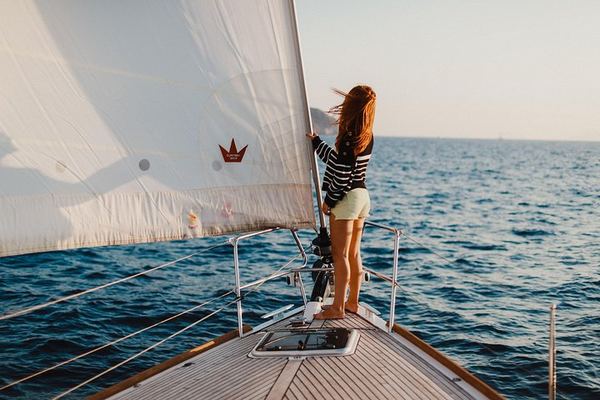
A private yacht out of Vlychada for the caldera and the hot springs, or further: Anafi, Ios 22 miles off, or Folegandros on a full or multi-day charter.
Caldera Sunset Sail: Nea Kameni Ridge, Hot Springs, Dinner Aboard
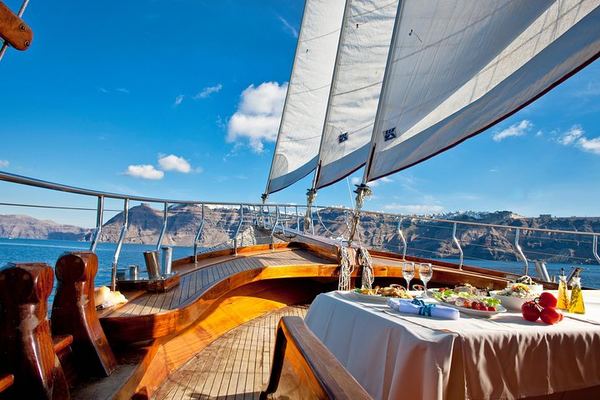
An hour and a half ashore on Nea Kameni, a 30-metre swim to the hot springs at Palea Kameni, buffet dinner with wine, and the sunset at anchor off Oia.
Catamaran from Ammoudi to Vlychada, with the BBQ Cooked Aboard
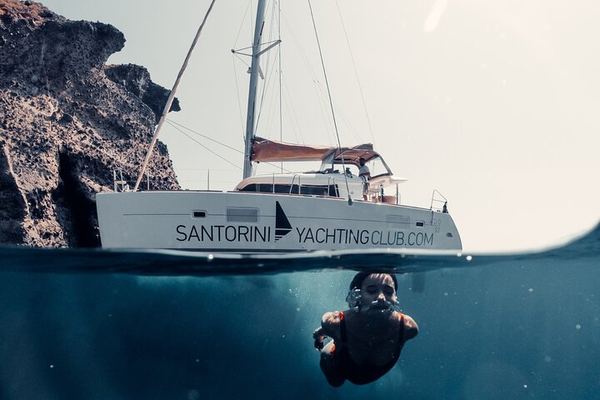
A catamaran from Ammoudi to Vlychada with three swimming stops, past Indian Rock and the Venetian lighthouse, and a Greek BBQ cooked on deck as you swim.
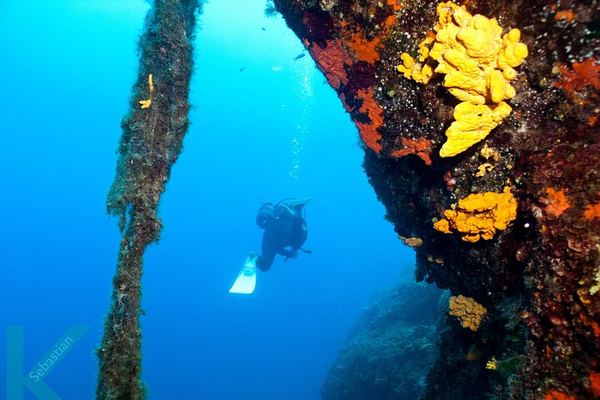
Discover Scuba Diving in the Caldera, from Akrotiri Beach
A first dive inside the caldera, off Caldera beach at Akrotiri, with a bus from Fira at 08:30. First name, height, weight and shoe size are sent ahead.
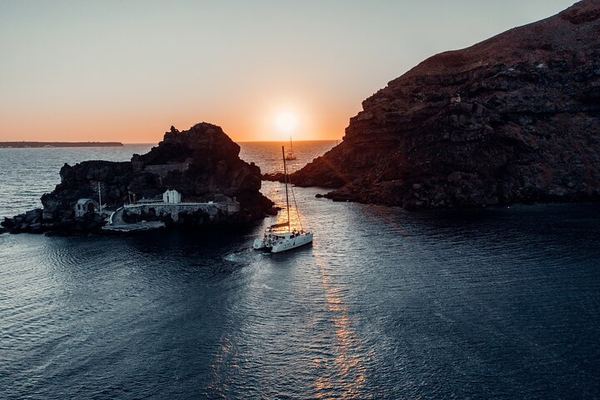
Five Hours to Ammoudi at Sunset, with Ouzo on Board
Five hours from Vlychada marina to Ammoudi bay with a barbecue on deck, local wine and ouzo, and a crossing to Thirasia only when the conditions allow it.
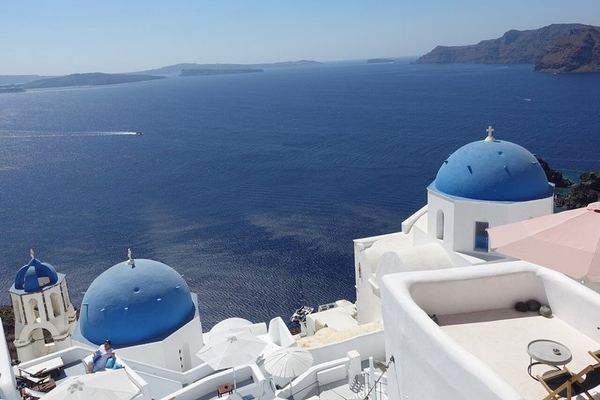
Four Private Hours on Santorini: Oia, Firostefani, the Heart Rock
A private vehicle for four hours with pick-up included: Oia, the Three Bells of Fira, the Akrotiri lighthouse and the heart-shaped rock few people find.
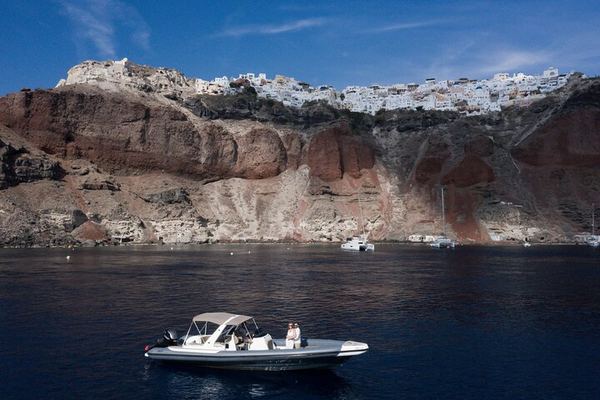
Mouzakia Beach, Reachable Only by Boat, and the Hot Springs
A private boat to Mouzakia, which no road or path reaches, and to the Nea Kameni springs at 30 to 35 degrees. Swimming lasts as long as you want it to.
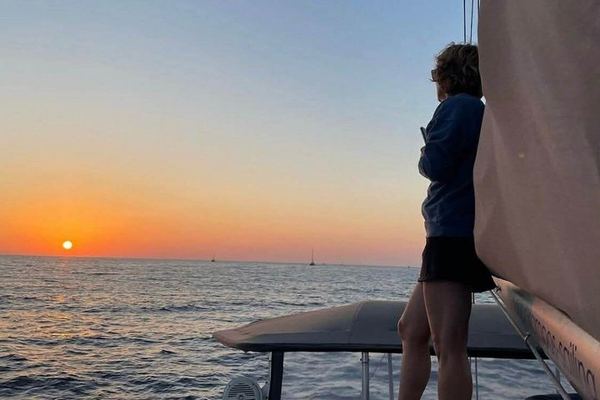
Private Catamaran from Vlychada, Hot Springs and BBQ Aboard
A private catamaran out of Vlychada with hotel pick-up, the Nea Kameni hot springs, and a BBQ at anchor off Mesa Pigadia with unlimited wine and beer.
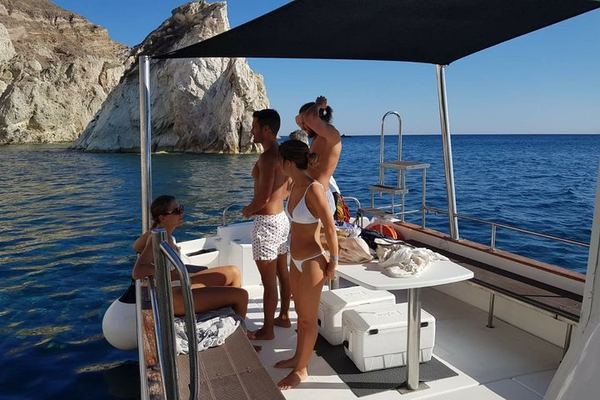
Private Cruise from Ammoudi to the Volcano and Agios Nikolaos Islet
A 10-metre private boat from Ammoudi to the volcano and the hot springs, finishing at the Agios Nikolaos islet, which nothing but a boat reaches easily.
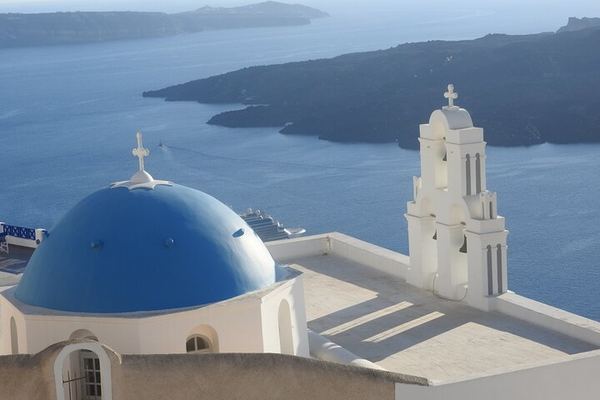
Prophet Elias, Megalochori and the Balcony at Imerovigli
From the monastery on the island's highest point to the balcony at Imerovigli, with free time in Oia. The afternoon departure can catch the sunset there.
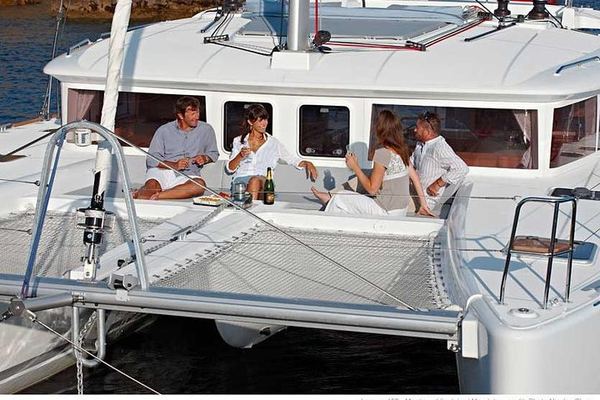
Red Beach or White, Weather Deciding: Caldera Sailing with Lunch
The boat stops at the Red or the White Beach, whichever the weather allows, for 20 to 30 minutes, then the hot springs at Nea Kameni and a Greek meal aboard.
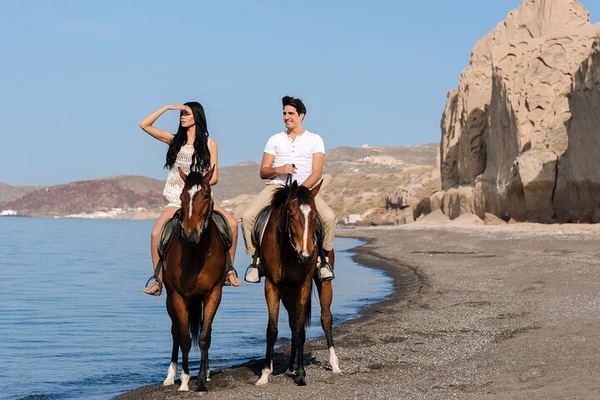
Riding the Minoan Trails to Eros Beach, 45 Minutes on the Sand
Volcanic canyons cut by the Minoan eruption, then about 45 minutes riding the black sand at Eros Beach. Quiet horses, no experience needed, café afterwards.
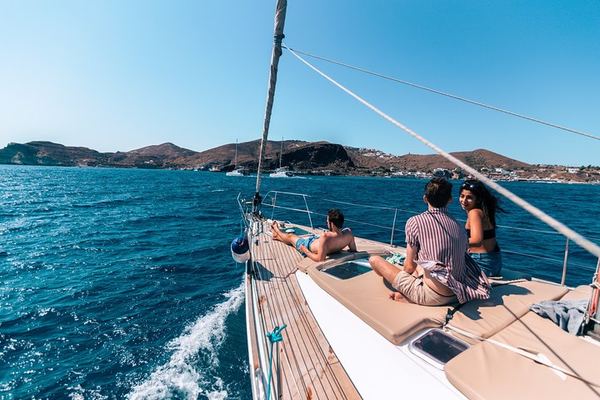
Sailing the Caldera with Captain Yiannis, BBQ and Greek Wine
Captain Yiannis sails out of Vlychada past the Red and White beaches to Palea Kameni, with a BBQ and Greek wine aboard and the 1892 lighthouse on the way.
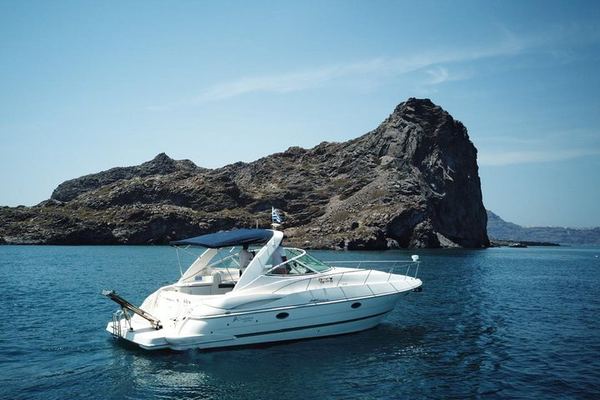
Santorini by Private Boat to Thirassia, Lunch Ready After the Swim
Five hours on a private charter around the caldera: the hot springs at around 100°F, Thirassia for the swim, and a meal made only with local products.
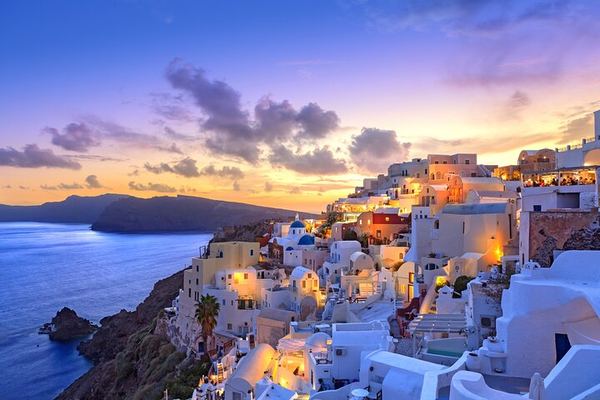
Santorini by Private Car: Oia, the Black Beach and the 1711 Monastery
A private car and guide for the whole island: Oia and Megalochori, the Red and Black beaches with lunch by the sea, and the 1711 monastery at 567 metres.
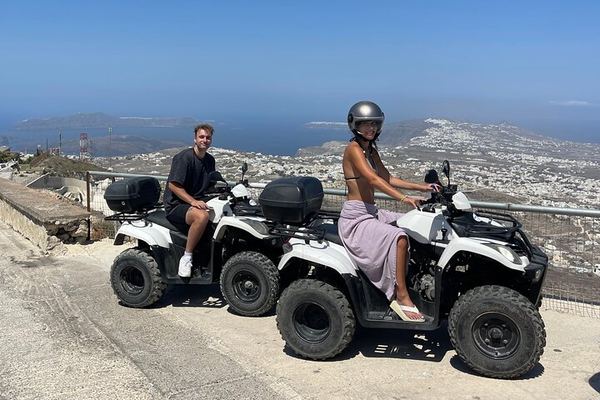
Santorini by Quad: Emporio's Windmills and the Castelli at Pyrgos
Fuel, helmets and a local guide from Moto Thira, on a quad route taking in Oia, Pyrgos, Profitis Ilias, Perissa and the windmills of Emporio. Minimum two.
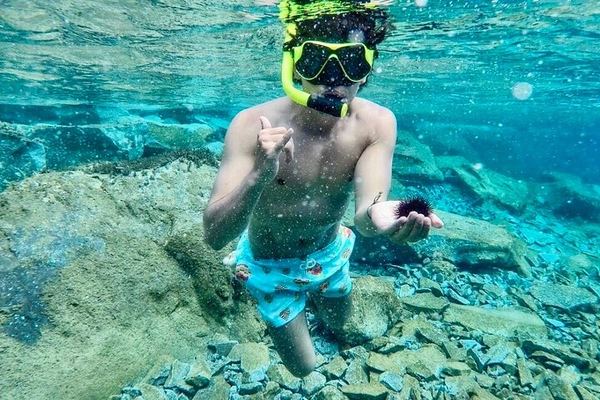
Santorini Caldera by Day on a Kaïki, Vlychada to Ammoudi
The kaïki leaves Vlychada in the morning and finishes at Ammoudi below Oia, taking in Red Beach, White Beach, the volcano and Thirassia for lunch on board.
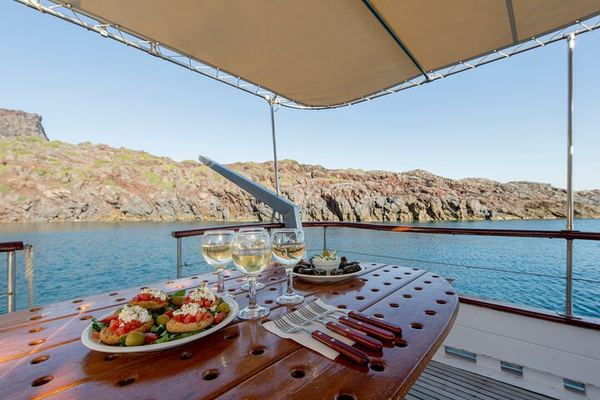
Santorini Caldera Sunset on a Wooden Boat, Ammoudi to Vlychada
A traditional wooden boat from Ammoudi Bay to Vlychada, with the volcanic hot springs, Thirassia for a swim, and the sunset just before the last harbour.
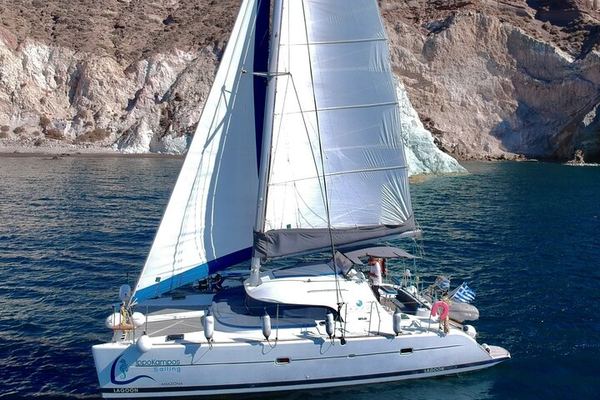
Santorini Catamaran in a Small Group: Snorkel Gear and Dessert
Hotel pick-up, snorkelling gear provided and a BBQ with dessert and local wine at Mesa Pigadia. Morning or sunset, in a small group rather than a charter.
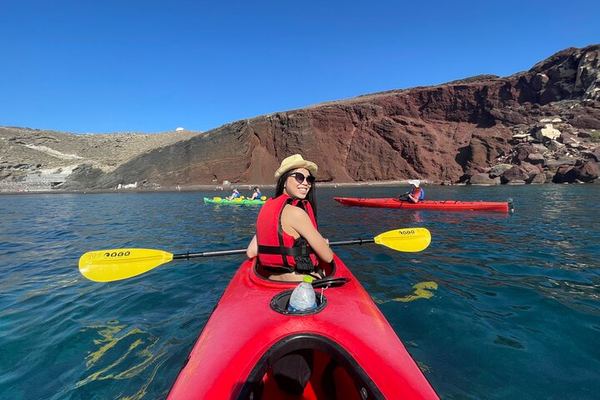
Santorini Sea Kayak from the Cave of Nikolas, Akrotiri
Three hours along the south coast at cliff level, into the sea caves, with snorkelling and a picnic. The base sits beside the Cave of Nikolas at Akrotiri.
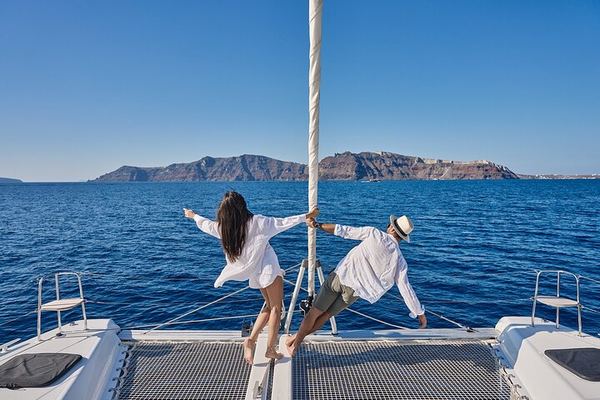
Semi-Private Sailing with Renieris, and the 1600 BC Eruption
A semi-private sailing cruise from Vlychada to the beaches only boats reach, with a Greek BBQ on board and dry white wine from a local winery. Day or sunset.
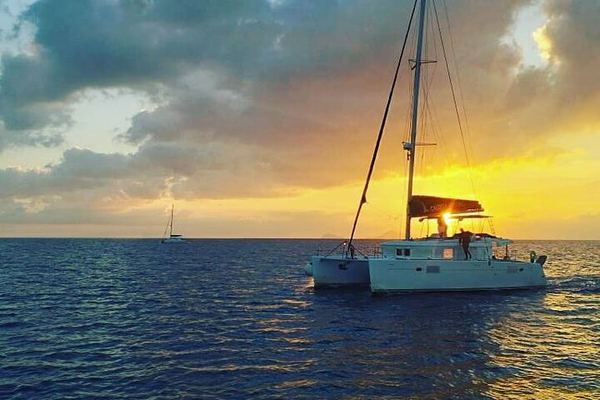
The Caldera Cruise That Runs in Winter, Ending at Sunset
A catamaran that keeps sailing through the winter, with the meal cooked on board off Thirasia, the bay under Oia at Ammoudi, and the sunset on the way back.
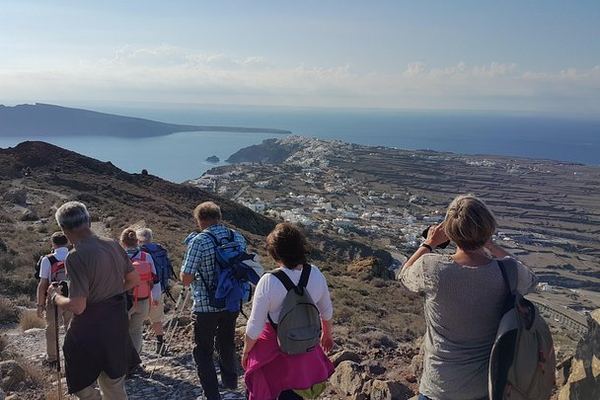
The Caldera Walk from Fira to Oia, Four Hours on Foot
Four hours on foot along the caldera rim through Firostefani and Imerovigli to Oia, past the Venetian ruins at Skaros, with the Atlantis argument on the way.
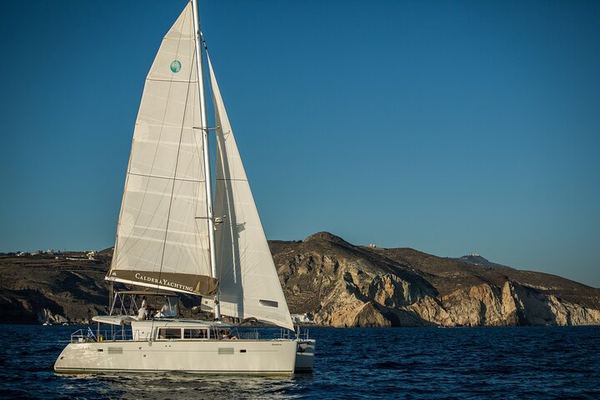
The Day Cruise That Ends at Ammoudi, with an Open Bar
A morning sailing cruise out of Vlychada that finishes at Ammoudi under Oia, with a swim ashore at the Black Mountain, a BBQ cooked on board and an open bar.
Ratings collected by Viator and Tripadvisor
The arc that runs from Corinth to Bodrum
The African plate slides under the Aegean, and where it melts, volcanoes surface. The result is a band roughly 450 km long and 20 to 40 km wide that has been erupting for millions of years. It is also unevenly alive.
Sousaki, beside the Corinth Canal, is altered ground and gas seeps with no historical eruption at all. Aegina and Poros are Pliocene and Pleistocene, which for a visitor means dead in every sense that matters. Methana last erupted in the 3rd century BC, an event Ovid, Strabo and Pausanias each wrote up; its thirty-odd vents are now olive terraces above a spa town of 1,352 people.
Then the arc gets serious. Milos, Santorini, Kolumbo and Nisyros make up the eastern half, and that is where the recent history sits. Santorini erupted in 1950. Nisyros blew steam in 1888. Kolumbo, which is entirely underwater, killed about seventy people on Thera in 1650 and has hydrothermal vents on its floor measured at 224 °C. Of those four, only Santorini has a port, a runway and an industry.
| Centre | Where | Last known activity | What there is to visit | Tours |
|---|---|---|---|---|
| Sousaki | Isthmus of Corinth | No historical eruption | Gas seeps and bleached ground, roadside | 0 |
| Aegina | Saronic Gulf | Pleistocene | Nothing volcanic to speak of | 0 |
| Methana | Peloponnese peninsula | 3rd century BC | Over 30 domes, the lava flow at Kameni Chora, sulphur springs | 0 |
| Milos | Western Cyclades | c. 140 AD steam blast | Sarakiniko, Kleftiko, the Paliorema sulphur works | 0 |
| Santorini | Central Cyclades | February 1950 | Nea Kameni crater, Palea Kameni springs, the caldera wall | 26 |
| Kolumbo | 8 km NE of Santorini | 1650 | Nothing: the rim is about 10 m under the sea | 0 |
| Kos | Dodecanese | Pleistocene | Thermal water at Therma; the centre itself is offshore | 0 |
| Nisyros | Dodecanese | 1888 | The Stefanos crater floor, fumaroles, a 3-4 km caldera | 0 |
| Yali | Between Kos and Nisyros | Holocene | A working pumice quarry, privately held | 0 |
Why Santorini is the only one with a tour market
All 26 volcano experiences in this catalogue leave from Santorini. That is not because Santorini is the most interesting volcano in Greece. It is because Santorini is the one a cruise ship can reach, the one with an airport served directly from most of Europe, and the one whose caldera happens to be photogenic from a hotel terrace.
The numbers behind that are blunt. Santorini takes around two million visitors a year onto an island of roughly 15,000 residents, and cruise arrivals alone hit 18,000 people in a single day before Greece capped cruise passengers at 8,000 per day. An operator can fill a catamaran twice daily from June to September without advertising. Nisyros has 1,048 residents and a summer day-boat from Kardamena on Kos. Its crater is better than anything on Nea Kameni, and there is no product to sell you because there is no volume to sell it to.
So the recommendation splits honestly. If you want a volcano tour that exists, book Santorini. If you want to stand on a crater floor with sulphur crystals crunching underfoot and nobody else in the frame, take the ferry to Nisyros and arrange the day on arrival. Those are two different holidays, and treating them as one is how people end up disappointed at the hot springs.
Santorini sells the volcano. Nisyros is the volcano.

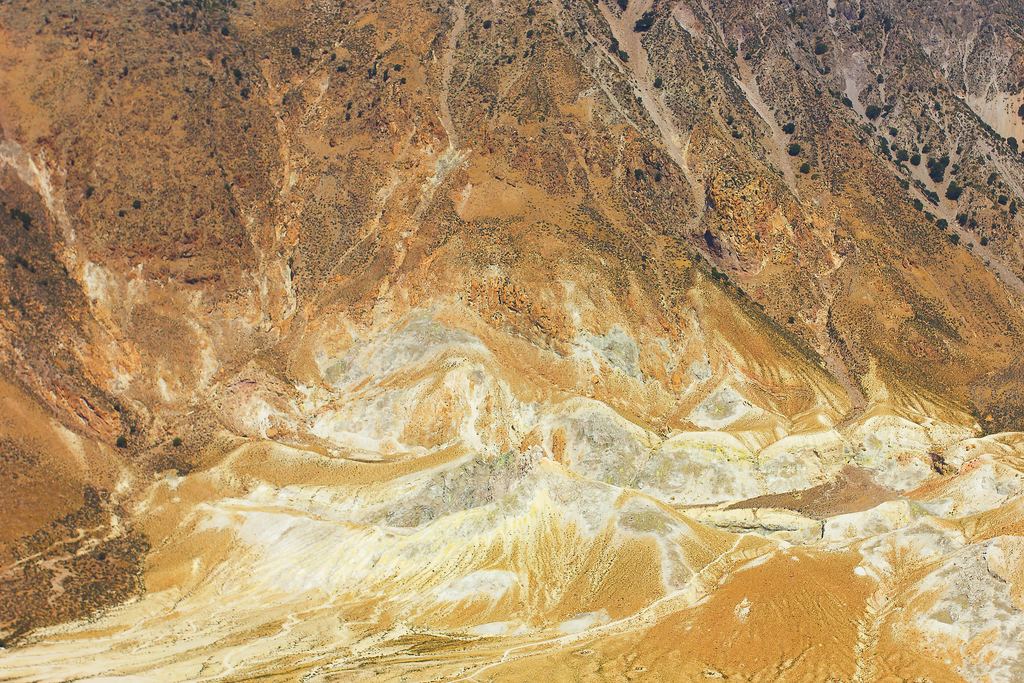
Dodecanese
Nisyros: the crater you walk into, not around
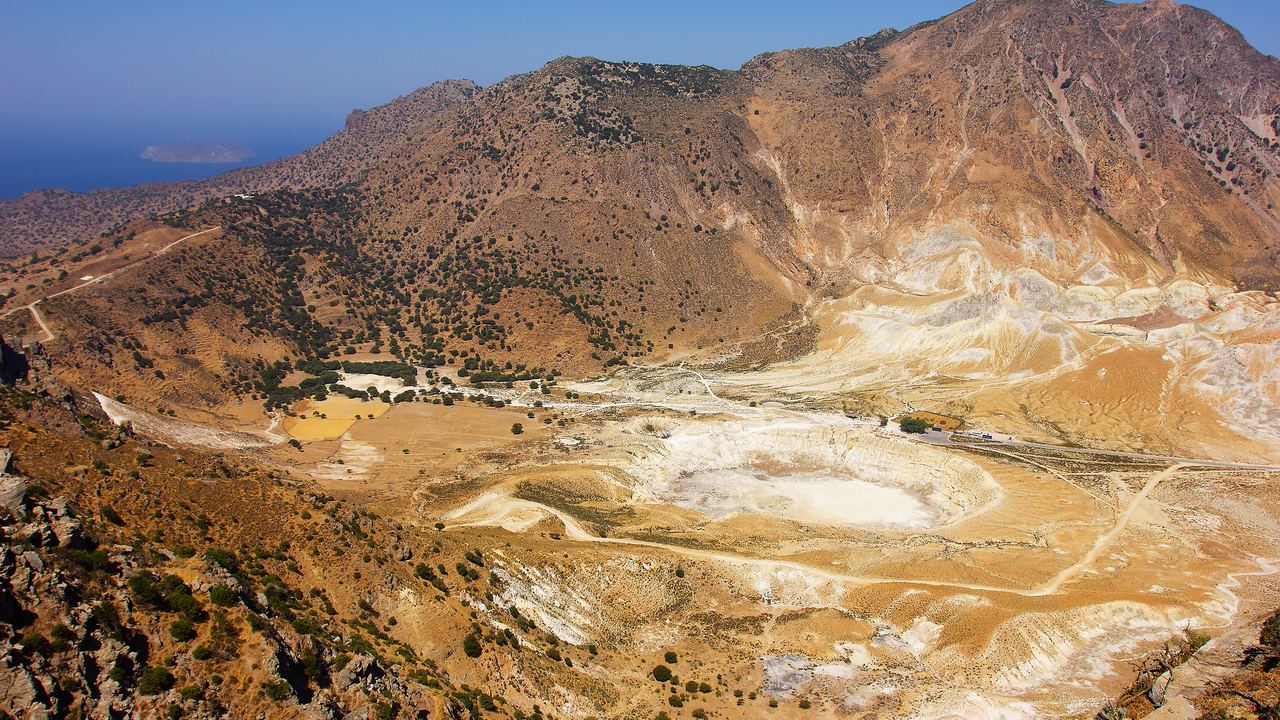
Nisyros reaches 698 m and holds a caldera three to four kilometres across with several craters on its floor. The largest, Stefanos, is the one you walk down into. The ground is warm, it hisses, and the yellow in the photographs is sulphur crystallising at the vents rather than a colour filter.
Its last eruption was a steam explosion in 1888, after ash in 1871 and 1873. Measured strictly by when something last happened, that makes Nisyros the most recently active Greek volcano above water after Santorini.
Arriving takes planning. Ferries run from Piraeus, Rhodes and Kos, and in summer several sailings a day leave Kardamena on Kos, which is how most visitors come. Out of season you are on the scheduled island ferry and probably staying the night. A bus runs from Mandraki up to the caldera, and there are taxis. No operator in this catalogue sells a Nisyros product, which is a gap in the market rather than a problem with the place.
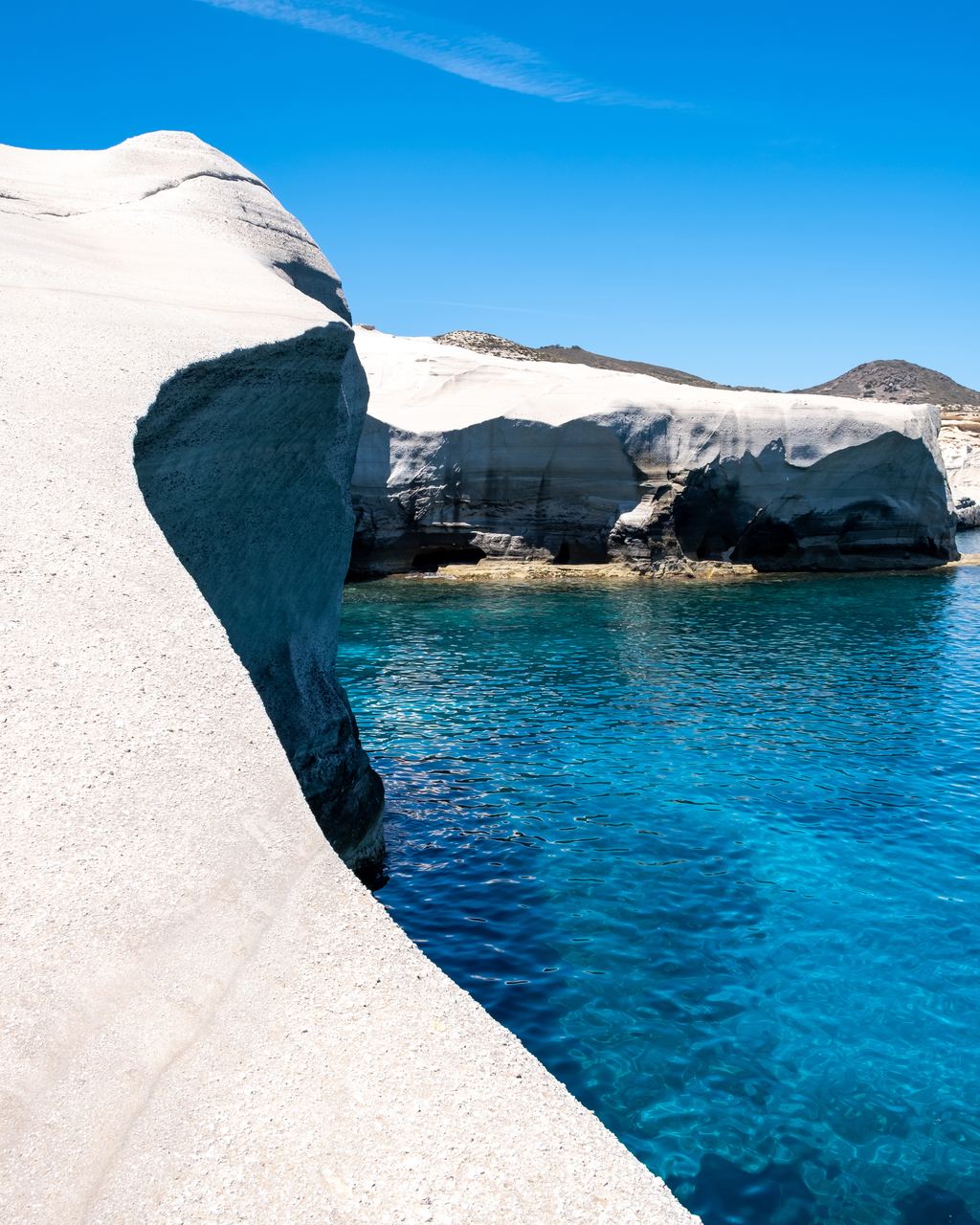
Western Cyclades
Milos: a mining island with volcanic scenery
Milos is where the Greek volcanic story turns commercial instead of eruptive. The island's last magma reached the surface roughly 90,000 years ago, and the youngest recorded event is a steam blast dated to about 140 AD. Nothing is going to erupt while you are there.
What it has instead is fifteen thousand years of extraction. Obsidian from Milos was traded across the Aegean before farming reached it. Pliny the Elder called the island the most abundant source of sulphur in the ancient world. Bentonite, perlite, pozzolana and kaolin still come out of open pits today, and the abandoned sulphur works at Paliorema are reached by boat or a rough track.
The scenery people come for is volcanic in origin without being volcanic in behaviour: the white ash forms at Sarakiniko, the sea caves at Kleftiko, the collapsed tunnels at Papafragas. There is an airport and a ferry port at Adamantas. Milos makes a very good week. It does not make a volcano day, and an operator marketing it as one is selling you a coastline.
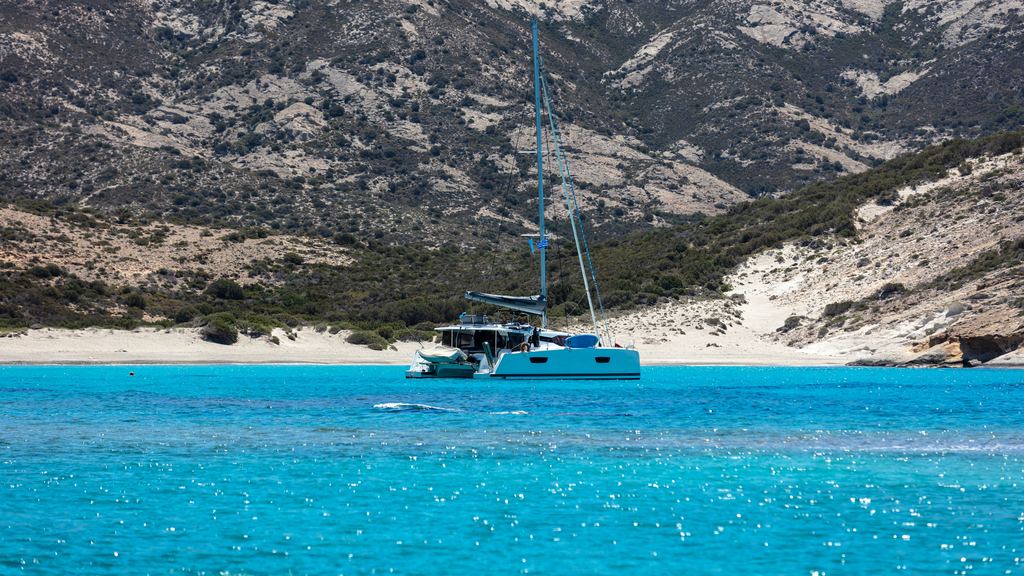
Methana, Kos and the ones that only look the part
Methana is the western outlier that still shows its shape. A peninsula off the Peloponnese joined to the mainland by a narrow isthmus, it carries more than thirty eruption centres and rises to 740 m at Helona. The last eruption came in the 3rd century BC and was recorded at the time. You can walk up to the lava flow above Kameni Chora in an afternoon, and there are sulphurous springs at the water's edge. No ticket office, no guide, no queue.
Kos sits on the arc but its volcanic centre lies offshore; what the island offers is thermal water at Therma. Yali, between Kos and Nisyros, is a working pumice quarry in private hands and not open to visitors. Aegina, Poros and Sousaki are geology rather than destinations.
One filter saves a wasted day, and Methana passes it by about 2,300 years while Aegina fails it by two million.
If a place has no eruption date inside recorded history, it will not feel like a volcano when you get there.
The 2025 earthquake swarm, and what it left behind
In late January 2025 the sea between Santorini and Amorgos began to shake. The swarm intensified after 1 February; more than 200 undersea tremors were recorded over that first weekend alone, and the largest event, magnitude 5.3, came on 10 February. Greece declared a state of emergency for Santorini on 6 February 2025 and lifted it on 3 March. Around 6,000 residents left by ferry from 2 February, and up to 2,700 more flew out on 3 and 4 February.
Two things are worth carrying away from it. Seismologists treated the sequence as tectonic rather than volcanic while it was under way, and later analysis pointed to a volcanic dyke roughly 30 km long being emplaced in the crust, with a deep magma intrusion involved. The same work found that the magma systems of Santorini and Kolumbo are connected, which changes monitoring priorities rather than travel plans.
Activity fell away through mid-February and the crisis was over by the end of the month. The 2026 season has run normally. If you are reading old coverage and wondering whether the island is closed, it is not, and has not been since 3 March 2025.
The confusion is understandable, because two very different events share the same name.
The eruption everyone quotes happened around 1600 BC. The evacuation everyone remembers happened in February 2025.
When each of them works
July and August are hot, full and expensive everywhere on the arc. The months either side are the ones to plan around, and they are not the same months at each place.
| Month | 1 | 2 | 3 | 4 | 5 | 6 | 7 | 8 | 9 | 10 | 11 | 12 |
|---|---|---|---|---|---|---|---|---|---|---|---|---|
| SantoriniThe caldera fleet runs at full size May to October; in winter one or two all-inclusive cruises operate and the crater landing depends on the sea | 1 | 2 | 3 | 4 | 5 | 6 | 7 | 8 | 9 | 10 | 11 | 12 |
| NisyrosDay boats from Kardamena on Kos run in summer only; outside that it is the scheduled ferry and an overnight stay | 1 | 2 | 3 | 4 | 5 | 6 | 7 | 8 | 9 | 10 | 11 | 12 |
| MilosBoat trips to Kleftiko need calm water and are cancelled when the north wind blows; the island empties from November | 1 | 2 | 3 | 4 | 5 | 6 | 7 | 8 | 9 | 10 | 11 | 12 |
| MethanaReachable by road all year; the walk to the lava flow is unpleasant above 30 °C and there is no shade on it | 1 | 2 | 3 | 4 | 5 | 6 | 7 | 8 | 9 | 10 | 11 | 12 |
Months reflect sea conditions, boat schedules and heat rather than air temperature alone. Checked on 12 August 2026.
Getting between them
The nine centres do not form a route. They sit on one arc but in three separate ferry systems, and moving between them costs days.
Santorini and Milos are both Cyclades, and in summer a fast ferry links them in roughly two hours. Outside summer you may find yourself routed via Piraeus, which turns two hours into a day. Both islands have airports with direct European flights in season.
Nisyros and Yali are Dodecanese. From Santorini that means Piraeus, or a flight through Athens to Kos and then the Kardamena boat. Budget a full day each way and do not plan it as a side trip.
Methana is not an island trip at all. It is a two-hour drive from Athens, or a ferry from Piraeus to Poros and a short hop across. It is the only volcanic centre on the arc you can visit and still sleep in Athens the same night.
The workable shape of a first trip is Santorini for the caldera and the boats, then either Milos for a week of coastline or Nisyros for the crater. Attempting all three inside ten days means spending four of them on ferries.
Questions people actually ask
Which volcano in Greece is still active?
Three centres have erupted or shown unrest in the past hundred years: Santorini, Kolumbo and Nisyros. Santorini's last eruption ended on 2 February 1950. Nisyros last produced a steam explosion in 1888. Kolumbo, which is entirely submarine, last erupted in 1650 and its crater rim sits about 10 m below the surface.
Can you visit a volcano in Greece other than Santorini?
Yes, but you will be organising it yourself. Nisyros and Methana are both open, free to walk on and have no gate or ticket office. Neither has a bookable guided product in this catalogue, and neither works as a day trip from Santorini.
Is Santorini safe after the 2025 earthquakes?
The state of emergency ran from 6 February to 3 March 2025 and has not been reinstated. The swarm was assessed as largely tectonic, with a volcanic dyke about 30 km long involved, and activity declined through mid-February 2025. The island has operated normally since.
How much does a volcano tour in Greece cost?
Everything in this catalogue departs from Santorini. The range runs from 65 EUR for a half-day small-group island tour to 1,000 EUR for a private sailing charter. The commonest shape, a shared caldera cruise with a meal on board, sits between 95 and 125 EUR. The volcano park entrance on Nea Kameni is 5 EUR and is normally charged separately, in cash.
When was the Minoan eruption of Thera?
The eruption that produced the modern caldera was a VEI 7 event that ejected an estimated 28 to 41 km³ of magma. Its date is genuinely unsettled. Archaeological chronology, built on pottery and Egyptian synchronisms, puts it between about 1550 and 1480 BC. Radiocarbon puts it around 1619 to 1596 BC. A sulphate spike in the ice cores at 1644 BC was once attributed to Thera and has since been traced to Aniakchak in Alaska instead.
Which Greek island has the best crater to walk on?
Nisyros, by a distance. The floor of the Stefanos crater is walkable, warm underfoot and encrusted with sulphur. Nea Kameni on Santorini is far more accessible and considerably less impressive.
Is there lava to see in Greece?
No. Nothing in Greece has erupted lava since 1950, and that was a small dome extrusion on Nea Kameni lasting three weeks. Anyone selling you flowing lava in Greece is showing you a photograph of somewhere else.
Data verified on. Eruption dates and volcanic figures from the published volcanological record; prices, product counts, departure ports and entrance fees read from the operators' own listings on the date shown.