

Mount Etna Tours from Catania and Taormina
96 ways up Europe's highest active volcano. The one number that decides which you want is the altitude the itinerary actually reaches.
Etna is a working volcano with a road network on it. That combination is unusual: you can be drinking coffee in Catania at eight and standing on volcanic gravel at 2,900 metres by eleven, on a mountain that produced more than fifty eruptive episodes in a single year as recently as 2021. The convenience is why 96 experiences are sold here, and it is also why so many people book the wrong one.
The mountain has two developed sides that behave like separate destinations, eight distinct kinds of trip sold on it, and a summit whose height changes every few years because the volcano keeps rebuilding it. What follows is the part that decides your day: which side, how high, and what the ticket does not cover.
Choose a destination in Mount Etna
-
From Taormina
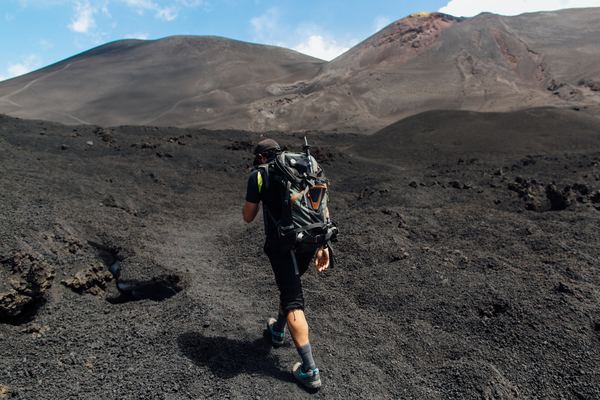
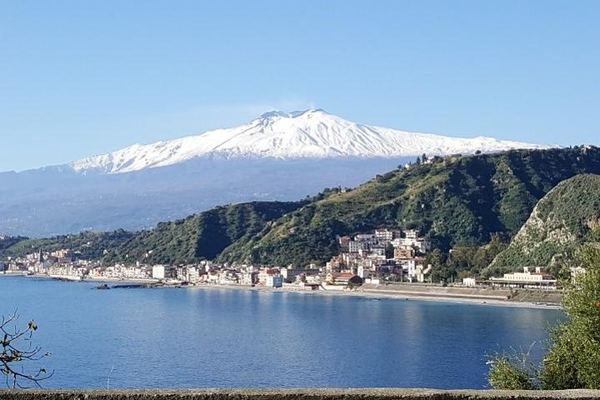
Etna tours from Taormina: which listings actually collect you on the Ionian coast, how long the transfer really takes, and why the same trip costs more here…
12 experiences -
Wine & Food
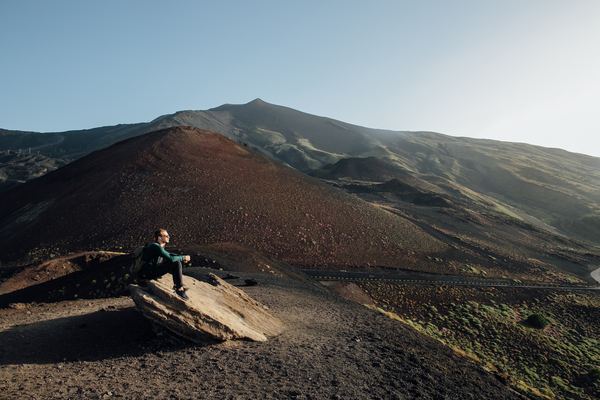
Etna wine tours compared: which listings actually visit wineries, how many, what the volcanic soil and the ungrafted vines mean, and when the harvest happens.
12 experiences -
Sunrise Tours
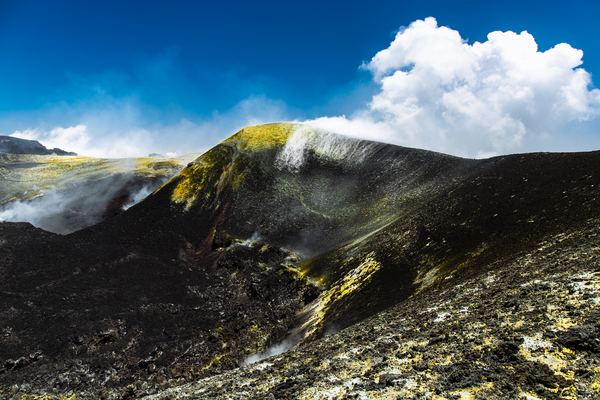
Etna sunrise and morning tours: which one genuinely starts before dawn, what time you have to leave the coast, and why the mountain is clearer early.
11 experiences -
Sunset Tours
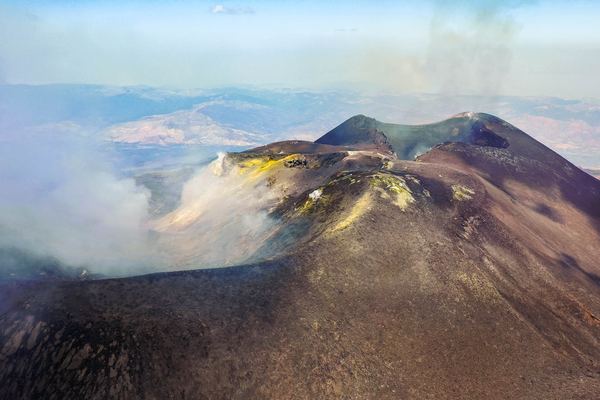
Etna sunset tours compared: where each one stops, what food is included, what time they really leave in June and in December, and whether you will see a glow.
11 experiences -
Alcantara Gorges
Alcantara gorges tours: why every listing pairs them with Etna, what the basalt columns are, how cold the water really is, and which entrance your ticket pays…
11 experiences -
Jeep & 4x4 Tours
Etna by 4x4: what the vehicle does, how high it goes, why the park tracks need one, and the difference between a jeep you ride in and a quad you drive.
6 experiences -
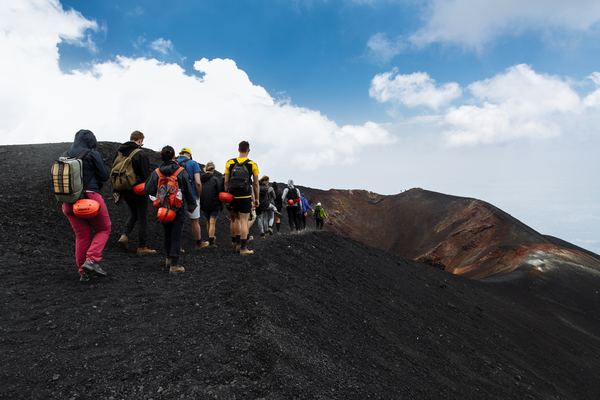
Summit Craters
Etna summit crater tours compared listing by listing: the altitude each one states, the flank it uses, the price, and what the fare leaves out.
12 experiences -
Hiking & Trekking
Guided walks on Mount Etna that stay below the summit: the Valle del Bove rim, old flank craters, lava tubes, with real durations, group sizes and prices.
9 experiences


Volcano Travel Experiences in Mount Etna
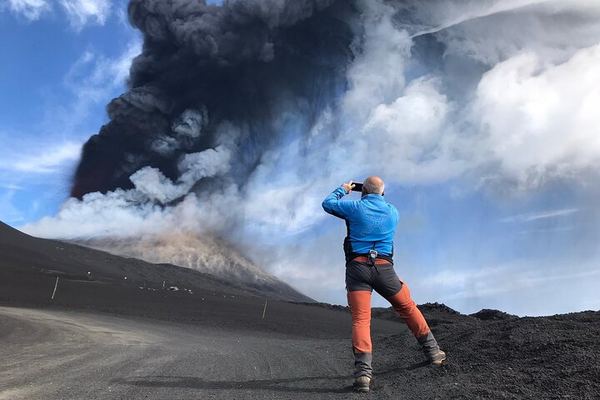
Etna 3,000 m with Alpine Guides: Barbagallo, Torre del Filosofo, 3 Hours on Foot
The cable car and jeep ticket is paid in cash on site, not included. Four hours of walking to Barbagallo, the 2002 vent and Torre del Filosofo.
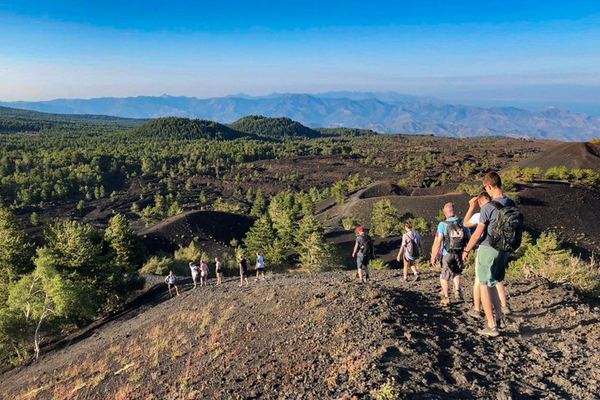
Etna and Alcantara: Birch Woods, a Lava Tunnel and the Basalt Columns
A certified environmental guide, 3 km through birch woods to the Sartorius craters, and the canyon entered barefoot from the municipal stairs. Max eight people.
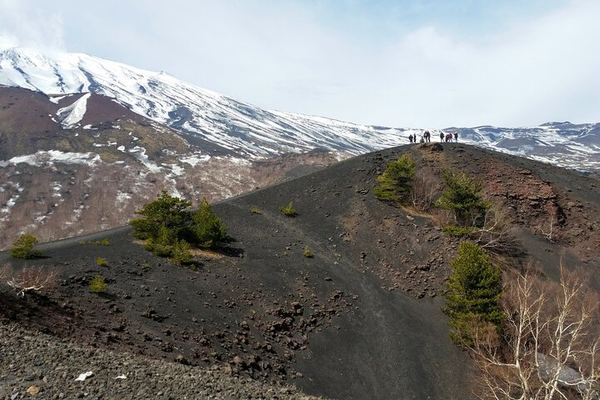
Etna and Alcantara by 4x4: One of 190 Lava Caves, and the Riverbed at 25 m
The jeep gets left at the top and the walk goes down to the riverbed itself, under 25 metres of basalt. Honey and Fuoco dell'Etna at Piano Provenzana first.
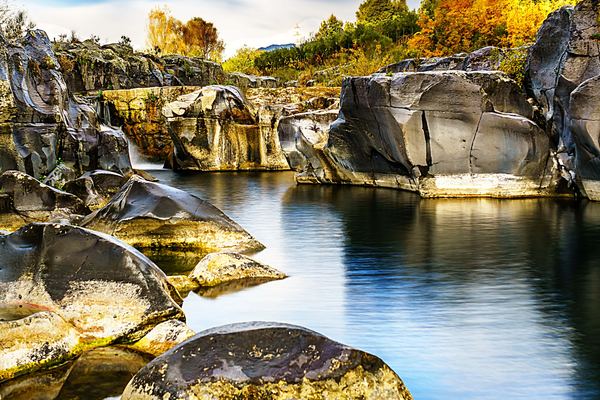
Etna and Alcantara by 4x4, with a Tasting of Wines and Honeys
A 4x4 out of Piazza dei Martiri at 8:30 and back by 4:30, with extinct craters on foot and a tasting of local wines, honeys and liquors between the two parks.
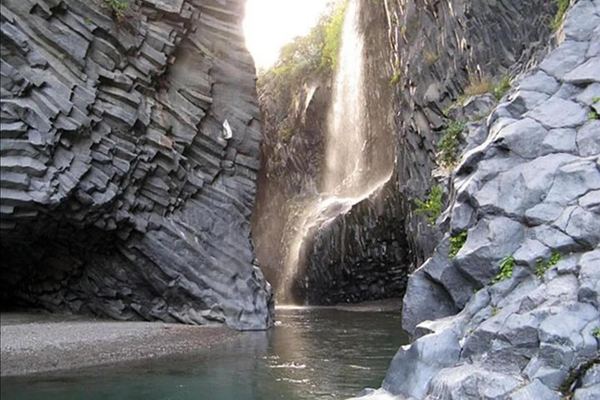
Etna and Alcantara Full Day: Houses Ringed by Lava, Sea to Summit
Old flows, thick woods and houses with lava standing all around them, then the gorge the river quenched. Lunch at a mountain hut between the two halves.
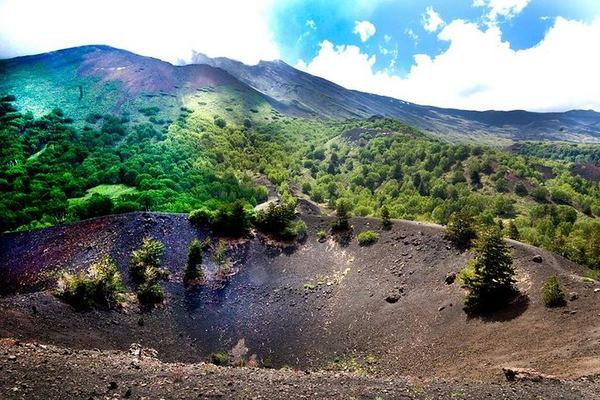
Etna and Alcantara: Lunch at a Linguaglossa Chalet, Gluten-Free on Request
The north-east side to 2,000 metres past the Sartorius craters, then a rustic lunch at Linguaglossa, with vegetarian and coeliac dishes arranged on request.
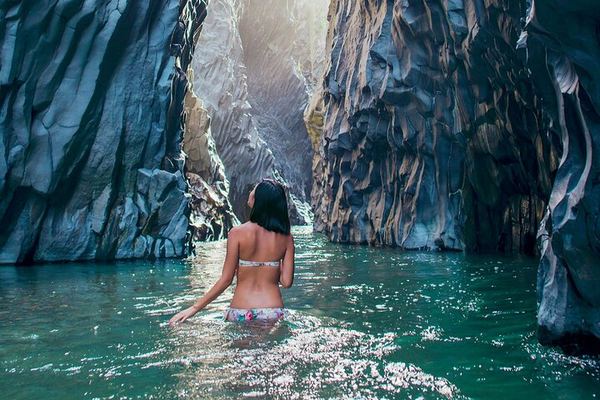
Etna and Alcantara: the Grotta dei Ladroni and the Larderia Canyon Walls
An eight-seat SUV, a 3 km walk along the Sartorius bottoniera, then a canyon 25 metres deep and 2 metres wide. Botanical Park entry and a first course included.
Etna and Taormina: Free Walking Tour of the Town, Greek Theatre Extra
The Taormina half is a free walking tour, though the Greek Theatre ticket and the pizza at the foot of the volcano are both paid separately.
Etna and Taormina from Messina: Neptune's Fountain, Gate 5 Cruise Pick-Up
Three Messina landmarks before the 90 km drive to Etna, then Corso Umberto in Taormina. Cruise passengers are met inside the port at Gate 5, under a lion flag.
Etna and Taormina from the Port: Four Honeys, the Greek Theatre
Quayside pick-up, the 2001 and 2003 craters at 2,000 metres, and a family farm pouring orange, lemon, eucalyptus and strawberry honey before Taormina.
Etna and Taormina in a Day: 2.5 Hours on the Volcano, 1.5 in Town
Nine hours with the timings stated: 2.5 on the lava, 30 minutes in a cave, an hour tasting, 1.5 free in Taormina. Free pick-up within 3 km of Catania.
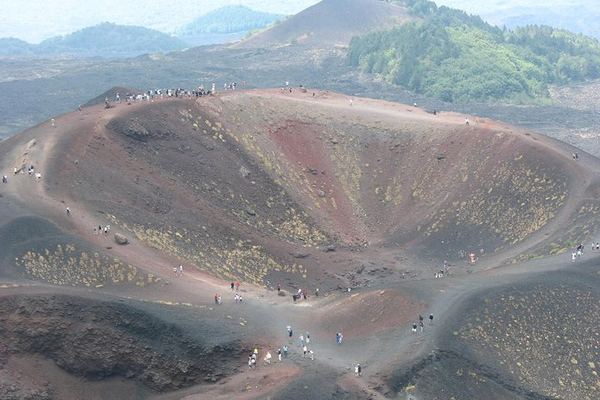
Etna and Taormina in a Day: Silvestri Craters at 2,100 m, then Free Time
A mountain guide takes the walk to 2,100 metres, then Taormina is yours to explore. The cable car to 2,500 metres is optional and charged separately.
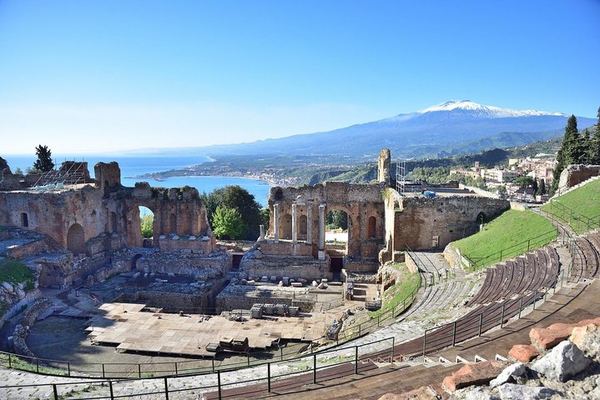
Etna and Taormina with Lunch in a Winery: Two Etna DOC Wines
Lunch is in a wine cellar with two Etna DOC wines, and the cave is named: Grotta dei Ladroni or Cassone, weather permitting. Taormina in the afternoon.
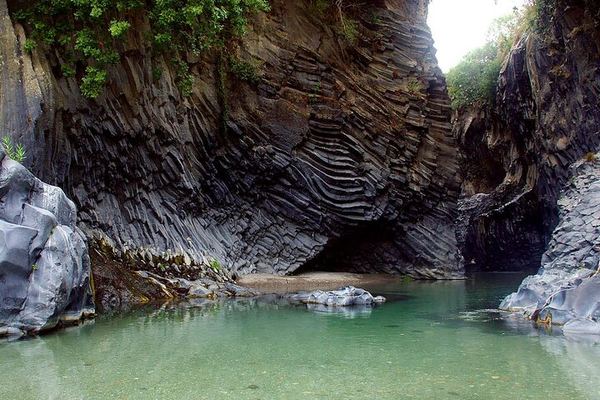
Etna and the Alcantara from Catania: the Gorges and the Gurne Pools
The afternoon reaches the Gurne at Francavilla di Sicilia, river pools most Alcantara tours skip, before the basalt canyon. Organic farm tasting on the way.
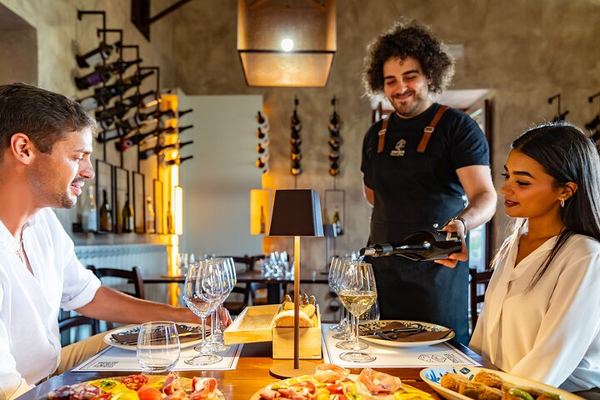
Etna and Wine Tasting from Catania: Silvestri Craters and the Enoteca dell'Etna
Etna Tribe runs the day: paths inside the Parco dell'Etna, the old Silvestri craters, a lava cave with helmets, then the tasting at the Enoteca dell'Etna.
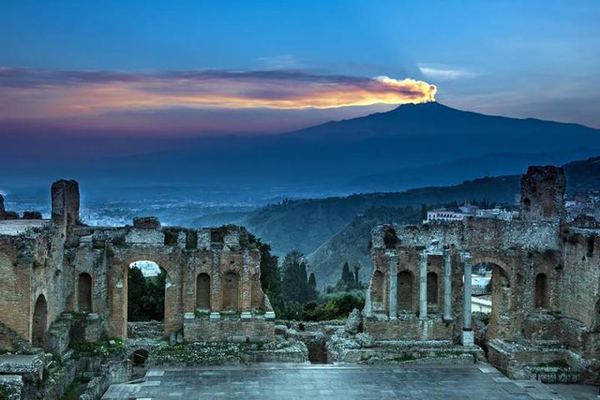
Etna at 2,000 m and Taormina Free Time, with Isola Bella Viewpoint
The Silvestri craters with a tasting, a stop above the Isola Bella reserve, and Taormina left free unless you add a certified guide at booking.
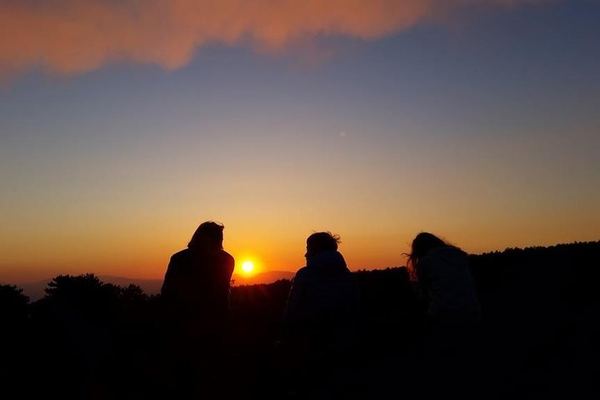
Etna at Sunset from Catania: Valle del Bove, a Lava Cave and 2,000 m
Collected from Catania hotels and B&Bs only, with a Gravina car park for everyone else. Cave with helmets, gentle walking at 2,000 m, sunset to finish.
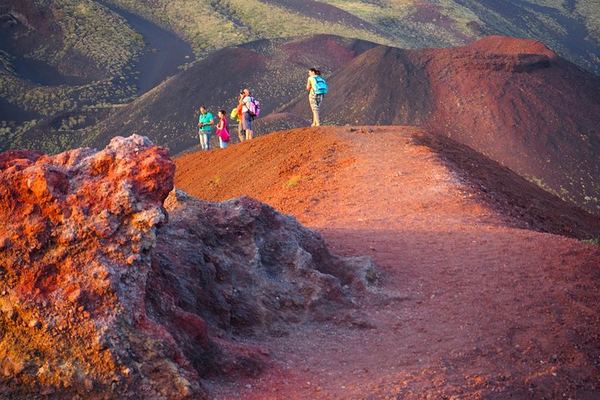
Etna at Sunset from MontataGrande: Passito Aperitif and Gear to Borrow
Boots and jackets to rent at the meeting point, an aperitif of biscuits and raisin wine at sunset, and a cave entered with caving helmets on the way up.
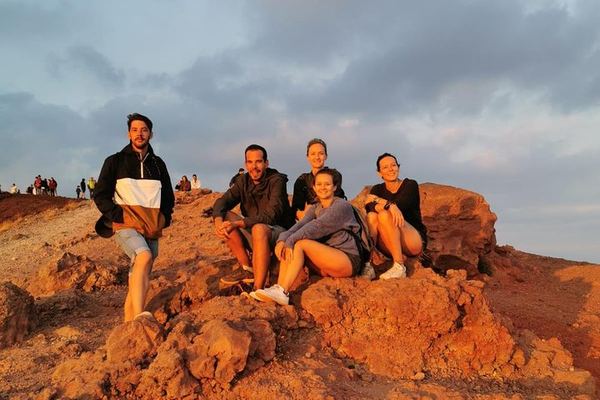
Etna at Sunset from Taormina: Etna Tribe, Old Craters and a Lava Cave
Collected in Taormina or Giardini Naxos rather than Catania, with old craters, a lava cave entered with lamps, and a farm tasting before the light goes.
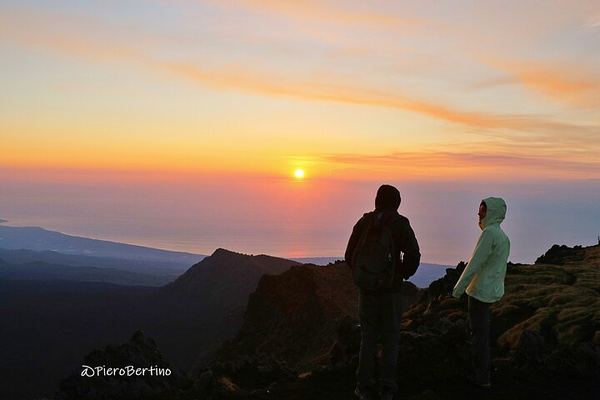
Etna at Sunset: the 10,000-Year-Old Caldera and Houses Ringed by Lava
The Valle del Bove caldera is 10,000 years old, and the tasting at the certified farm in Zafferana costs nothing. A spring and summer departure.
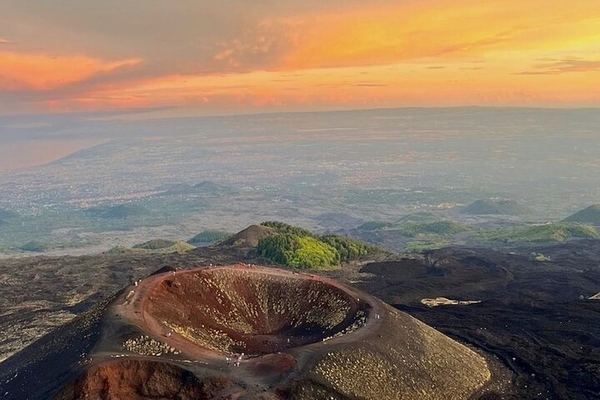
Etna at Sunset: the 1991-93 Flow at Zafferana and a Local Tasting
The afternoon slot, with the flow that stopped at the gates of Zafferana, the Valle del Bove and a tasting of honey, oil and wine from the same slopes.
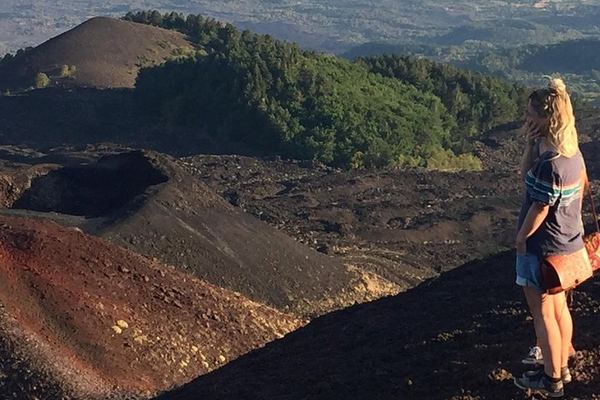
Etna at Sunset with Etnavic: Silvestri Craters in the Last Light
The afternoon version of the same route, with the crater circuit at 2,000 metres timed for sunset. From November to April the departure moves to 12:00.
Etna by 4x4 on Paved Roads, with a Tasting at the Valle del Bove
The route stays on paved roads, because vehicles are barred from the unpaved tracks, and the Valle del Bove stop includes a tasting of Sicilian food at a shop.
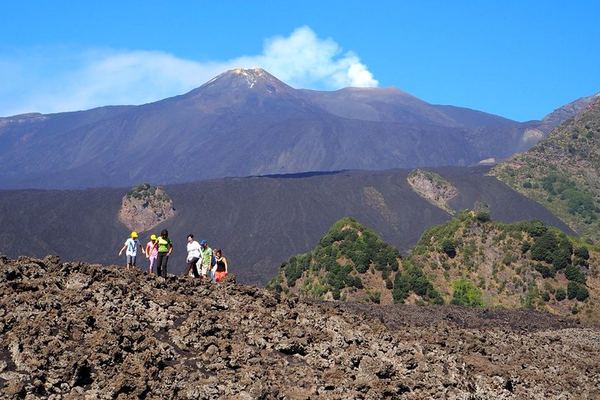
Etna by 4x4 or Minivan to 2,000 m, with a Bronte Pistachio Tasting
The tasting names what it pours: Zafferana honey, Bronte pistachio, oil and liqueurs. Before that, a lava tube is entered with a caving helmet and lights.
Ratings collected by Viator, Tripadvisor and Civitatis
The two sides of the mountain
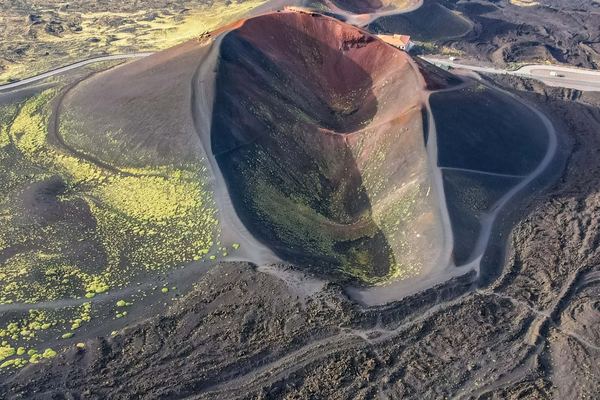
Almost every listing you will read describes Etna as a single place. It is not. The south side, reached from Nicolosi and the Rifugio Sapienza car park at about 1,900 metres, has the cable car, the coach parties, the souvenir stalls and the two dark cones of the Silvestri craters that everybody photographs. The north side, from Piano Provenzana at about 1,800 metres, has none of that. It has a rougher track, smaller groups, and the 2002 lava field that ran straight through the ski station and took the buildings with it.
Neither is better. The south is easier to reach and gets you higher with less effort because the machinery does the climbing. The north is quieter and feels more like a mountain. What matters is that operators rarely say which side you are buying, and the meeting points are ninety minutes apart by road.
| South side | North side | |
|---|---|---|
| You meet at | Rifugio Sapienza, about 1,900 m | Piano Provenzana, about 1,800 m |
| Nearest city | Catania, about 1 hour | Linguaglossa, from Taormina about 1 hour |
| Mechanical help | Cable car to about 2,500 m, then 4x4 | 4x4 only, to about 2,825 m |
| Crowds | High, coach parties included | Low, groups are smaller |
| What you see | Silvestri craters, Valle del Bove rim | The 2002 lava field and the destroyed ski station |
| Cheapest listing here | 48 EUR | 36 EUR |

How high you actually get
This is the single most useful thing to check before booking, and it is buried in the itinerary rather than the title. Listings sold under the same words land in very different places. Reading the descriptions of the twelve summit products on this site, the stated end points run from 2,850 metres to 3,380 metres, and one operator is explicit that the last stretch is for experienced walkers only, with a 500 metre climb on volcanic scoria from where the vehicle stops.
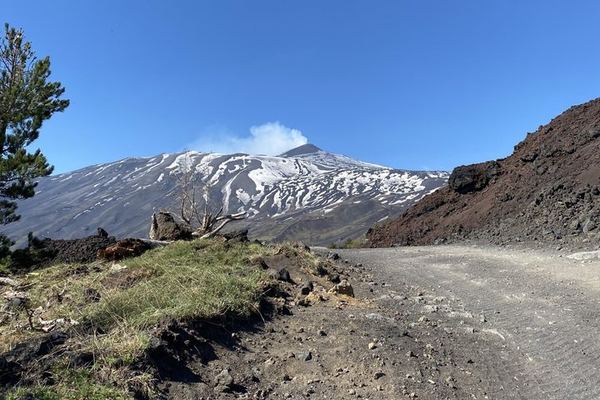
The gap between 2,900 and 3,300 metres is roughly two hours of walking on ground that behaves like coarse sand on a slope. It is not technical and it does not need equipment beyond boots, but it is tiring, and the wind up there is a different animal from the wind in the car park. If the listing gives you a number, believe the number. If it gives you a word, ask for the number.
The eight ways Etna is sold
Under this page sit eight groups of trip, and the differences between them are real rather than marketing. The table is the shortest way to see which one answers your question.
| What you book | Listings | What actually decides it |
|---|---|---|
| Summit craters | 12 | The altitude in the itinerary, and whether the cable car fare is included |
| Hiking and trekking | 9 | Which flank, and how many hours on foot |
| Jeep and 4x4 | 6 | How much of the climbing the vehicle does for you |
| Sunrise | 11 | A start in the dark, and the shadow the mountain throws west at dawn |
| Sunset | 11 | The light on the craters, plus any glow after dark if the volcano is active |
| From Taormina | 12 | Pickup along the Ionian coast rather than from Catania |
| Wine and food | 12 | Vineyards on volcanic soil, with little or no altitude |
| Alcantara gorges | 11 | A river cut through an old Etna lava flow, usually bundled with the volcano |

A mountain that keeps rewriting its own height
Etna's official altitude is a moving figure. The summit is whichever cone is currently winning, and after the paroxysms of 2021 the south east crater overtook the older summit and became the high point of the mountain. Around 3,357 metres is the number in general use; it has been both higher and lower this century. The four summit craters at the top are separate vents, and which of them is degassing, glowing or throwing material changes from season to season.
Four hundred years of Etna rearranging Sicily
The eruptions that changed the map, and the ones that changed the tourism.
The origins
1669
Lava reaches Catania
The largest historical eruption sends flows down the southern flank and into the edge of the city, changing the coastline south of the port.
1892
The Silvestri craters are born
A flank eruption builds the two cones next to what is now the Rifugio Sapienza car park. They are the craters most visitors actually walk on.
The growth
1928
Mascali is erased
A fast flow destroys an entire town on the eastern flank in a matter of days. It remains the only Etnean village lost in the twentieth century.
1983
The first attempts to divert a flow
Explosives and earth barriers are used to steer lava away from the southern infrastructure, a technique still argued about.
2002-03
Piano Provenzana is destroyed
The northern eruption wipes out the ski station, the cable car and the pine forest, and leaves the black field that guided walks on this flank now cross.
Today
2013
UNESCO World Heritage
Etna is listed for its eruptive record, which has been documented continuously for about 2,700 years, longer than any other volcano.
2021
Fifty paroxysms in a few months
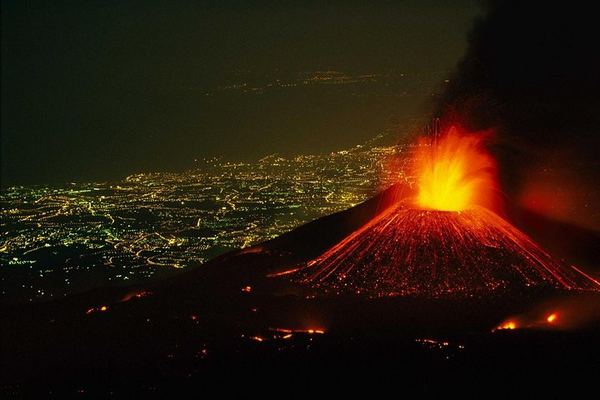
A rapid sequence of lava fountains rebuilds the south east crater and makes it the highest point on the mountain.
When to come, and what the snow closes
Etna is open all year, the summit is not, and those two facts get conflated constantly. From roughly December to April the high ground carries snow, the 4x4 track above the cable car closes on and off, and the summit trips either stop or turn into something shorter without saying so. Below 2,000 metres nothing stops: the lava caves, the vineyards, the Alcantara gorges and the Silvestri craters work in January as well as in July.
July and August have the opposite problem. The mountain is open and the crowds are at their worst, the coach traffic on the Sapienza road is heavy from mid morning, and the heat at the bottom is Sicilian heat. This is the argument for a sunrise departure, which is otherwise an odd thing to ask of a holiday.
| 1 | 2 | 3 | 4 | 5 | 6 | 7 | 8 | 9 | 10 | 11 | 12 |
The costs that are not in the price
Three of them, and together they can add more than half again to what you thought you were paying.
The cable car and the 4x4. On the south side these are separate tickets from the guiding, and at least one operator on this site states in its own description that 45 EUR per person is due in cash at the meeting point. Two listings forty euros apart are often the same day with the fare inside one of them.
The guide above 2,500 metres. Compulsory inside the summit zone that begins at that height, and priced accordingly. Groups are capped at ten walkers per guide, so the cost cannot be spread any thinner, which is why the cheap end of the catalogue stops below that line.
Boots. Several operators hire out boots and jackets at the meeting point because people keep arriving in trainers. Volcanic scoria gets into low shoes within about four steps and stays there.
Ask one question before you pay: what altitude does this tour actually reach, and is the cable car included? The answer sorts the catalogue faster than any filter on it.
Questions people actually ask
Can you see lava on Etna?
Sometimes, and nobody can promise it for a given date. The summit craters degas most of the time and erupt in episodes that last days or weeks. When a paroxysm is running, the fountains are visible from Catania. When it is not, you are walking on lava that cooled anywhere between last year and three centuries ago, which is still worth the trip but is not the same photograph. Ask the operator what the mountain has been doing that week.
How high do Etna tours go?
Between about 1,900 and 3,380 metres depending on what you book. Products sold as summit tours on this site state end points from 2,850 to 3,380 metres. The cable car on the south side reaches about 2,500, 4x4 vehicles continue to roughly 2,850 to 2,900, and the last stretch to the crater rim is on foot, about two hours up loose ground.
Do you need a guide?
Above 2,500 metres, yes. The Belpasso ordinance of 10 August 2026 turned everything above that height into a summit zone, and the permanently hazardous area inside it can only be entered with a licensed volcanological or alpine guide, in groups of no more than ten. A certified helmet is required at the high altitudes, nobody may go within 300 metres of the base of the south east cone, and the bans take effect the moment INGV declares a change of phase, with no notice and no new ordinance: the text is explicit that not knowing the alert level is not an excuse. Below 2,500 metres you can walk the Silvestri craters, the marked paths and the lava fields on your own.
North side or south side?
South if you want the least effort and the most infrastructure: it is closer to Catania, it has the cable car, and it gets you high quickly. North if you want fewer people and a mountain that feels like one, and if you do not mind a rougher road and a 4x4 instead of a cable car. The north also has the 2002 lava field, which is the most legible piece of recent destruction on the whole volcano.
Is Etna suitable for children?
The lower part, yes, and there are listings built specifically around families. The summit, not really: it is several hours of walking at altitude on unstable ground, often cold and windy even in August. The Silvestri craters, the lava caves and the cable car ride are the usual compromise, and they work well for most ages.
What should I wear?
Boots that cover the ankle, because volcanic gravel fills anything lower. A windproof jacket regardless of the forecast at sea level: the temperature drops roughly six degrees per thousand metres and the summit is often twenty degrees colder than Catania. Sunglasses, because black ground plus Sicilian sun is a lot of glare, and a buff or scarf if there is ash blowing about.
Is it dangerous to go up Etna?
The volcano is monitored continuously and access limits change with its behaviour, sometimes at a few hours' notice. What hurts visitors is more mundane: ankles on loose scoria, cold at altitude, and sun. The one thing worth taking seriously is a tour that promises access to areas the authorities have restricted. If the mountain is closed above a certain height that week, no operator can lawfully take you there, and one offering to is telling you something about themselves.
Data verified on. Prices, altitudes and inclusions read from the Etna products on this site. Eruption dates from the published volcanological record; access rules from the Belpasso ordinance of 10 August 2026.