
The Ring of Fire is a horseshoe roughly forty thousand kilometres long that traces the rim of the Pacific Ocean, from New Zealand up through Indonesia, the Philippines, Japan and Kamchatka, across to Alaska, then down the western Americas to the southern tip of Chile. It holds somewhere between 750 and 915 active or dormant volcanoes, and around 90 per cent of the world's earthquakes.
You will very often read that it contains three quarters of the world's volcanoes. That figure is too high: measured against the standard global catalogue it is closer to two thirds, which is still a remarkable concentration and has the advantage of being right. The earthquake number is the genuinely striking one and it is the one that gets quoted least.
Either way, the more useful fact is the corollary: a lot of the most famous volcanic destinations are not on it at all, and the ones that are not behave differently in ways that decide what your trip is like.
Why the ring exists
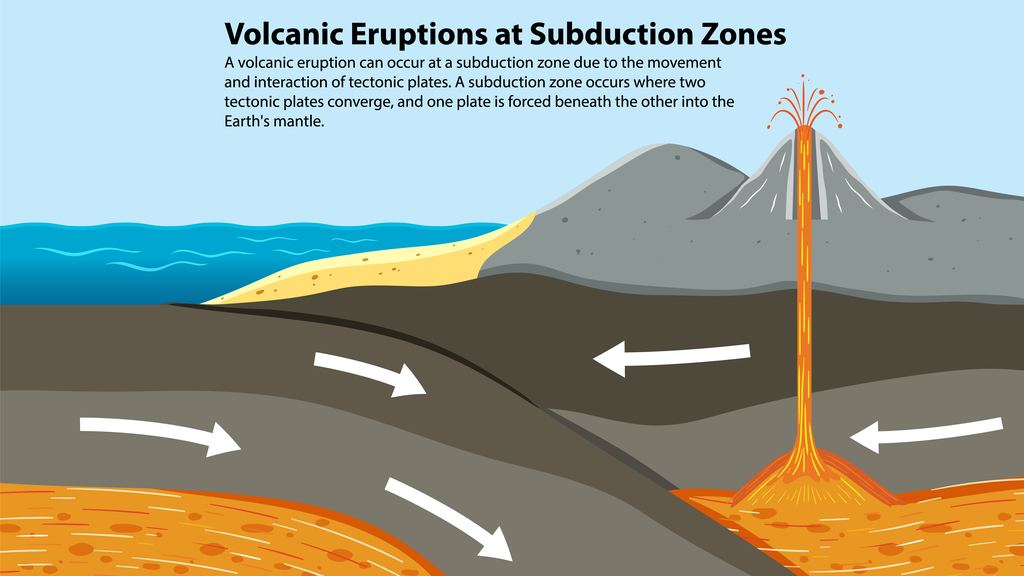
The Pacific plate, and several smaller ones, are being consumed. Around most of the ocean's rim, oceanic crust is being forced beneath the plates surrounding it, descending into the mantle in what is called a subduction zone.
The descending slab is cold, wet oceanic crust, and the water is the key ingredient. As the slab goes down and heats up, it releases water into the mantle wedge above it. Adding water to hot rock lowers its melting point, so rock that would otherwise stay solid begins to melt. That melt is buoyant and rises.
On the way up it passes through continental crust and picks up silica, which makes it stickier, and it holds a lot of dissolved gas. Sticky magma with a lot of gas in it is the recipe for an explosive volcano, which is why the Ring of Fire is lined with steep cones that erupt violently and infrequently rather than gently and often.
Which of our destinations are on it
Working anticlockwise from the southwest.
New Zealand. Ruapehu, Tongariro and Ngauruhoe sit on the Taupo Volcanic Zone, and Rotorua's geothermal field is the surface expression of the same system. Whakaari sits offshore on the same line.
Indonesia. The most volcanically active country on earth, with well over a hundred active volcanoes strung along the arc where the Indo-Australian plate goes under Sunda. Bromo, Ijen, Merapi, Semeru, Rinjani, Agung and Batur are all on it.
The Philippines. Taal, Mayon, Pinatubo.
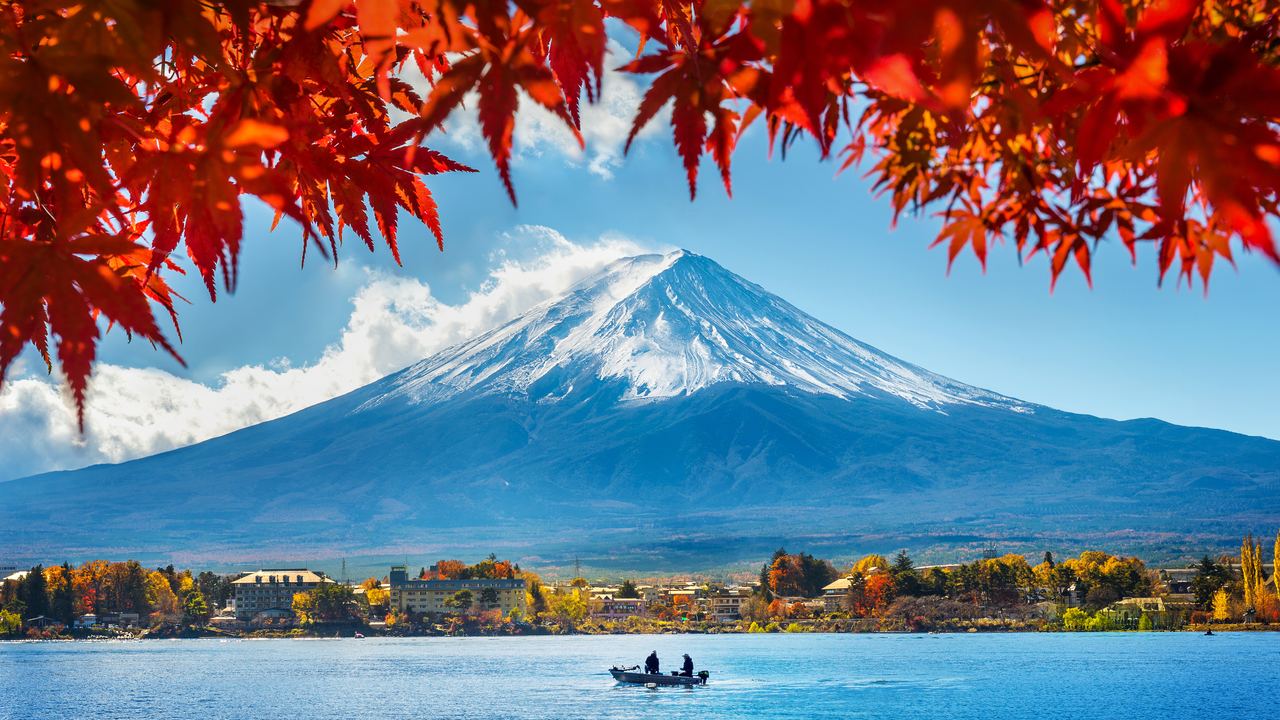
Japan. Fuji, Sakurajima, Aso and around a hundred others, on the collision of four plates.
The United States. The Cascades, which is Rainier, St. Helens, Hood and Shasta, above the small Juan de Fuca plate.
Central America. Guatemala's chain including Fuego, Acatenango and Pacaya; El Salvador's Santa Ana; Costa Rica's Arenal, Poas, Irazu and Rincon de la Vieja; Nicaragua's Masaya.
South America. The Andean chain, which includes Cotopaxi, and Chile's Villarrica and Osorno.
And the ones that are not
This is the more interesting list, because it contains most of the places where people go specifically to see lava.
| Where | What is actually happening | What that means for a visitor |
|---|---|---|
| Iceland | The Mid-Atlantic Ridge, above sea level. Two plates pulling apart | Fissure eruptions and lava fields rather than cones. Usually approachable |
| Hawai'i | A mantle hotspot, with the plate sliding over it | Shield volcanoes, runny lava, the most watchable eruptions on earth |
| The Canary Islands | A hotspot, though a slower and stranger one than Hawai'i | Long-lived islands, basaltic lava, and Teide |
| The Azores | A triple junction where three plates meet | Volcanism, earthquakes and hot springs all in one archipelago |
| Etna and the Aeolians | The Mediterranean, where Africa meets Europe. Genuinely disputed | Etna produces basalt like a hotspot volcano while sitting near a subduction zone |
| Vesuvius and Campi Flegrei | The same complicated Mediterranean setting | Explosive, like a subduction volcano, in a place that is not quite one |
| Santorini | The Hellenic arc, where Africa goes under the Aegean | A subduction volcano outside the Pacific: explosive, caldera-forming |
| Gobustan, Azerbaijan | Not volcanic at all. Sedimentary gas pressure | Mud volcanoes, in a country with no magmatic volcanism |
The rule this gives you
Here is the practical version, and it is one of the more useful generalisations in this whole subject.
If you want to see lava, look outside the Ring of Fire. Iceland and Hawai'i, both driven by mantle melting rather than subduction, produce runny basaltic lava in eruptions that authorities have repeatedly been able to let people approach. The Icelandic eruption of 2021 was visited by hundreds of thousands of people on foot.
If you want to climb a beautiful cone, look inside it. Fuji, Cotopaxi, Agung, Rainier and Villarrica are on the ring, and they are on it because sticky magma builds steep symmetrical mountains. They are the postcards.
The exceptions prove useful. Stromboli, in the Mediterranean, is the most reliable lava viewing in Europe and is not on the ring. Yasur in Vanuatu is on the ring and lets you stand on the crater rim, which is unusual for a subduction volcano and is why it is famous.
And a caveat on the framing itself: the Ring of Fire is a description, not an explanation. There is no single geological entity called the Ring of Fire. It is the name we give to the fact that the Pacific is ringed by subduction zones, and the individual arcs have nothing to do with each other. An eruption in Chile tells you nothing about Japan, whatever the news coverage implies.
Quick answers
Is Iceland part of the Ring of Fire?
No, and it is the most common misconception on this subject. Iceland sits on the Mid-Atlantic Ridge, where plates pull apart, which is the opposite process. That is why Icelandic eruptions produce fissures and lava fields rather than the steep explosive cones of the Pacific rim.
Are earthquakes and volcanoes connected?
Both are produced by plate boundaries, which is why they occur in the same places. A specific earthquake does not usually cause a specific eruption, although the reverse is common: magma moving underground generates swarms of small earthquakes, and that is one of the main things monitoring networks listen for.
Which country has the most volcanoes?
Indonesia by most counts, with well over a hundred that have erupted in historical time, followed by Japan and the United States. All three are on the Ring of Fire, which is exactly what you would expect.
Why are the Pacific volcanoes so much more explosive?
Because of what the descending plate carries down with it. Ocean crust is wet, and the water it releases into the mantle above lowers the melting point of rock that would otherwise stay solid. The melt then climbs through continental crust and picks up silica, which makes it viscous, and it holds its dissolved gas until the rock containing it fails.
Iceland and Hawai'i melt for completely different reasons, produce basalt, and let their gas go continuously. Same word, opposite behaviour, and it is the single most useful thing on this page.
Does the ring have a boundary you could draw on a map?
Not a precise one. It is a belt up to about 500 kilometres wide following the trenches, and the edges are a matter of convention rather than geology. Some counts include the Aleutians and the Antarctic Peninsula, others stop short. That is part of why the share of the world's volcanoes attributed to it varies so much between sources.
The numbers, and what they do not mean
The Ring of Fire attracts round figures, and most of them are quoted more confidently than they deserve. Here is what holds up.
About 40,000 kilometres of horseshoe, up to 500 kilometres wide in places. Between 750 and 915 active or dormant volcanoes, depending on what the counter treats as a separate volcano. And around 90 per cent of the world's earthquakes, which is the most striking figure on the list and the one that gets quoted least.
The famous claim, that it holds three quarters of the world's volcanoes, does not survive a check against the standard global catalogue. Two thirds is closer, and the reason the higher figure spread is probably arithmetic done on a different denominator: count only subaerial volcanoes with historical eruptions and the share rises, count the seafloor and it collapses, because the great majority of the planet's volcanoes are submarine and nobody has ever seen them.
Three things the ring is not, and each one is a mistake we have seen in print.
It is not a single geological object. There is no structure called the Ring of Fire. There are a dozen or so separate subduction systems that happen to encircle one ocean, and they are mechanically independent of each other. The Cascades and the Tonga arc have no more to do with one another than two unrelated mountain ranges.
It is not a schedule. After any cluster of eruptions somebody will suggest the ring is waking up. Somewhere on it is always erupting, because it holds several hundred volcanoes, and grouping a few of them in one news cycle creates a pattern that is not in the data.
It is not a ranking of danger. The most lethal volcanic events of the last three centuries include Tambora and Krakatoa, which are on it, and Laki, which is not. What decides a catastrophe is the magma chemistry and the number of people living underneath, and neither of those is a property of the Pacific.
The two sides of the rule, in one trip each
Japan for the cone, Iceland for the lava. They are the clearest illustration of what subduction and rifting actually produce.

Data verified on. Plate tectonic settings are well established. The origin of Etna's volcanism is genuinely disputed and we have not taken a side. Editorial Policy