
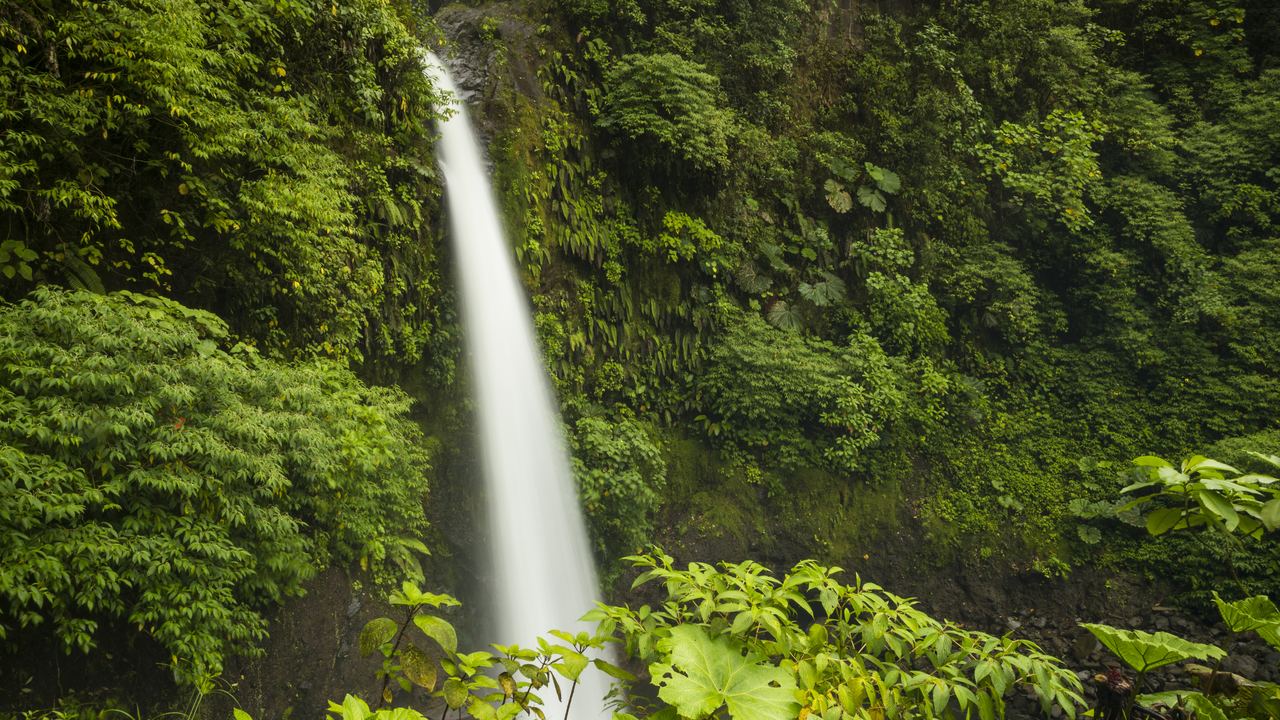
Rincón de la Vieja and the Guanacaste Volcanoes
Boiling mud, a turquoise river and a working power station, in the driest corner of Costa Rica. Twenty trips, from 44 EUR.
The volcanoes of Guanacaste do not look like volcanoes. There is no bare cone standing over a town and no crater you can look into. What there is instead is a line of forested mountains along the northwest of the country with the heat coming out sideways: mud that boils in the middle of a forest trail, steam leaving the ground through cracks, a river that turns turquoise where two streams meet, and a power station running on the water underneath all of it. This is the part of Costa Rica where the volcano is a system rather than a mountain.
The three pages below take each area on its own terms, because they are genuinely different products: a national park with geothermal ground, a river with an optical trick in it, and a stretch of private land beside an industrial site. What this page is for is the thing that has to be decided first, which is where you are sleeping. In this region that choice quietly rules out about half of what is on offer.
Choose a destination in Rincón de la Vieja
-
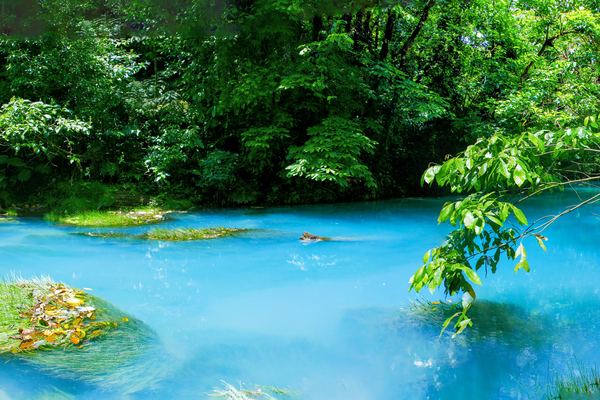
Tenorio & Río Celeste
Río Celeste in Tenorio Volcano National Park: why the water is turquoise, when it is not, the 250 steps down to the waterfall, and what the twelve tours…
12 experiences -
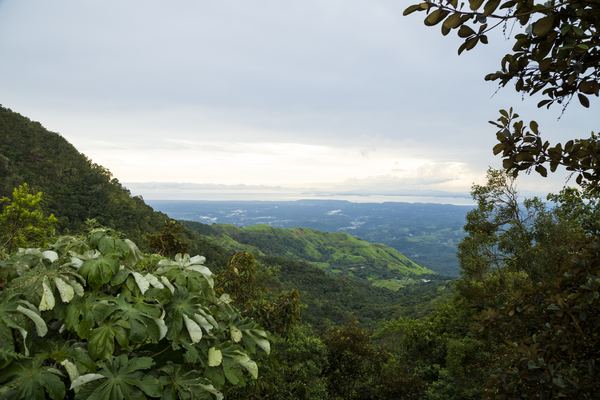
Rincón de la Vieja National Park
Rincón de la Vieja National Park: the Las Pailas loop past boiling mud and fumaroles.
5 experiences -
Miravalles
Miravalles in Guanacaste: mud pots you can bathe in, hot springs, and the geothermal field on its flank.
3 experiences


Volcano Travel Experiences in Rincón de la Vieja
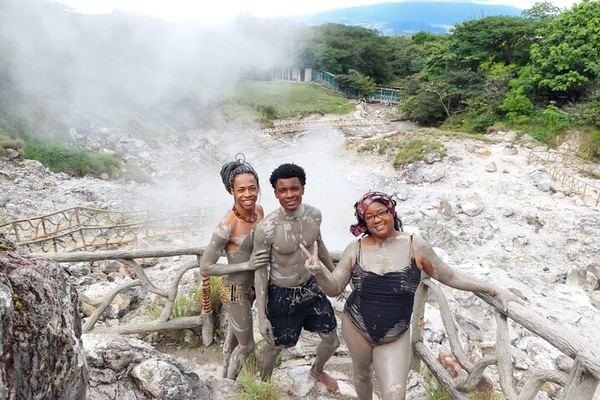
Las Hornillas: a Walk-Through Crater, and a Sauna on a Boiling Pool
The crater at Las Hornillas is one you walk through, the sauna is built over a boiling mineral pool, and the volcanic mud comes out of the same crater.
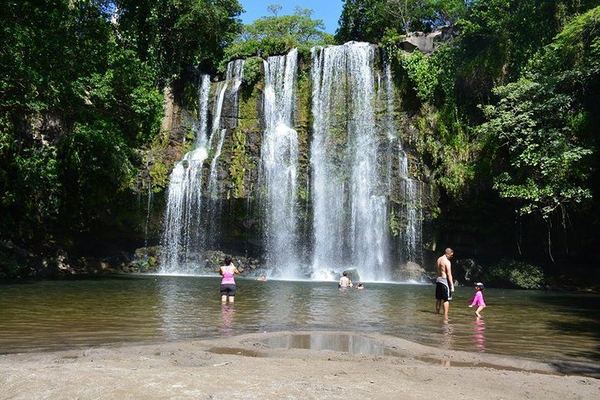
Miravalles: the Only Walkable Crater, and Mud Graded by Colour
The mud is colour-coded by depth, brown at two metres, grey at one, yellow off the surface, and you pick the one you want to bathe in. Cash for the waterfall.
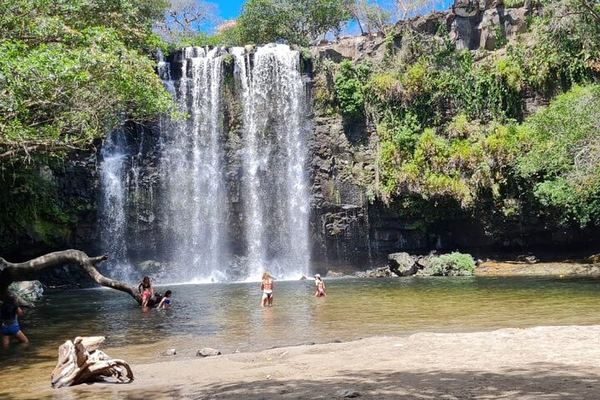
Miravalles with the Hot Springs Before the Hike, Not After
The crater, the thermal pools and the mud bath all happen before lunch, and the guided hike over the hanging bridges and three waterfalls comes afterwards.
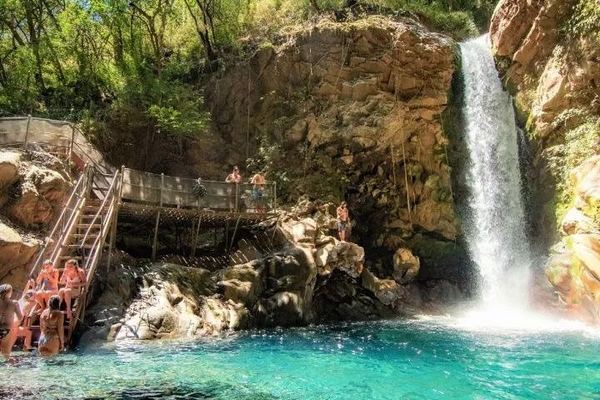
Oropéndola Bridges and the Río Negro Hot Springs, Flat Trails
Both stops are a flat ten minutes from their car parks, with hanging bridges over the waterfall and the hot pools at different temperatures at Río Negro.

Private 4-in-1: Sloth Reserve, Rio Celeste Swimming Hole and Llanos del Cortés
A private guide in a protected reserve, the swimming hole on the Rio Celeste, and the sand beach under Llanos del Cortés. The itinerary can be adjusted.
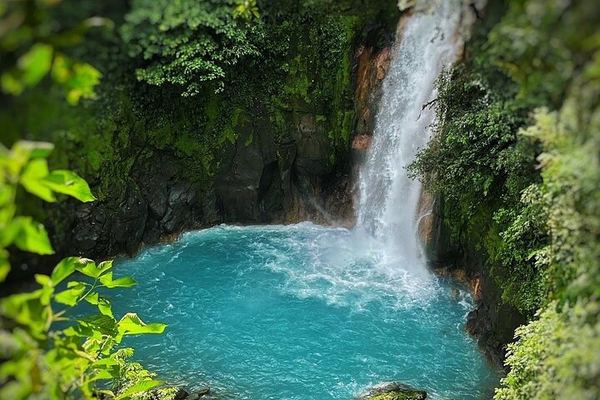
Private Rio Celeste and Sloth Sanctuary Tour with Lunch at Doña Carmen's
A private guide, a guaranteed sloth sighting at the sanctuary, and lunch at El Sabor de Doña Carmen, where a butterfly sanctuary fills the wait for the food.
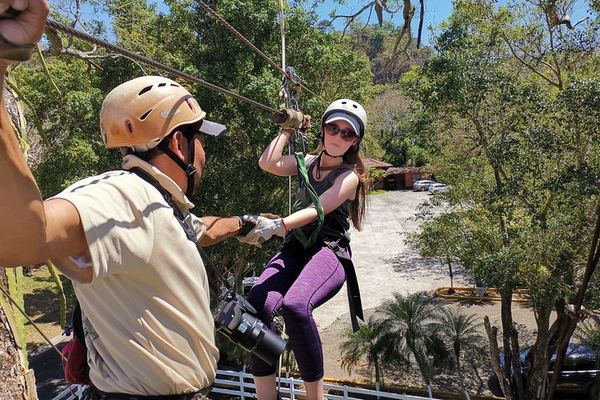
Rincón de la Vieja: 11 Cables, Horses and the Borinquen Steam Sauna
Eleven cables through humid forest, a horseback ride after them, and then the volcanic hot spring, mud baths and steam sauna at Borinquen. Lunch included.
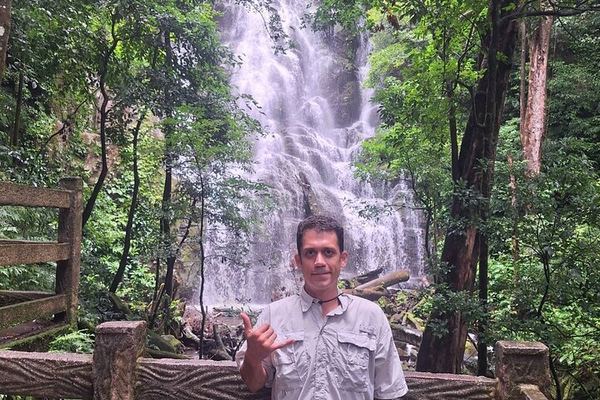
Rincón de la Vieja in a Day: Nine Ziplines, an Ox-Drawn Trapiche and Volcanic Mud
Lunch is a casado at a family-run soda in Curubandé, and the afternoon is Poza Los Coyotes: cliff jumping, river tubing, or a swim in crystal-blue water.
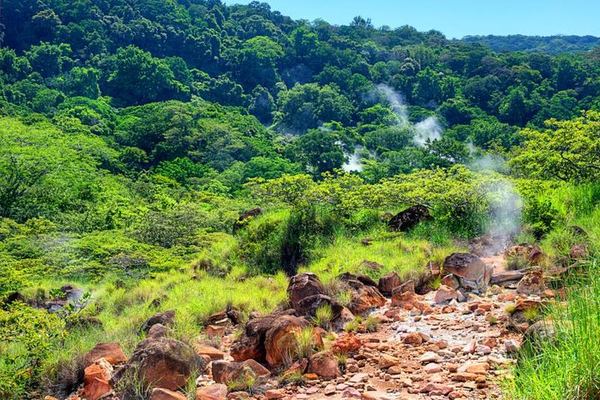
Rincón de la Vieja: Las Pailas, Oropéndola and Ten Hot Pools
The Río Negro springs have ten pools heated by the volcano, and the Las Pailas circuit runs 3.5 km past fumaroles and a mini crater. Some pick-ups cost extra.
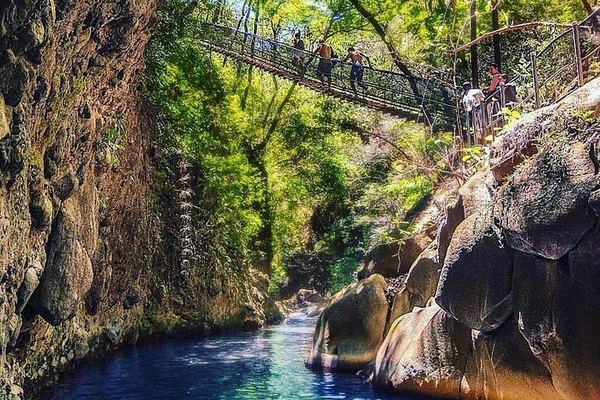
Rincón de la Vieja: the Las Pailas Loop and Oropéndola Waterfall
The Las Pailas loop runs 3.5 km past fumaroles, mini-geysers and boiling mud, and the swim afterwards is under a 25-metre waterfall in the Río Blanco canyon.
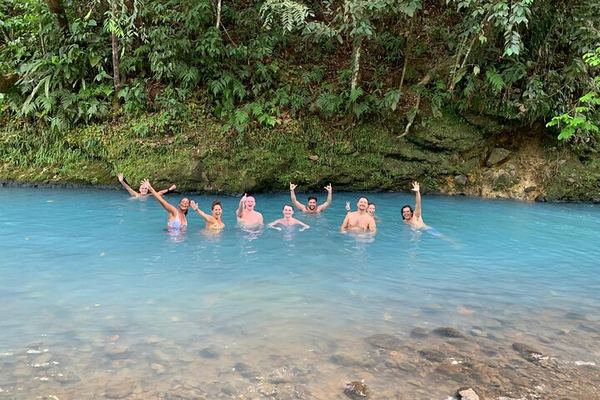
Rio Celeste and Tenorio Hike: Bride's Veil Falls, Hot Springs and Mud Pools
The walk reaches the Bride's Veil falls and the exact confluence of the Buena Vista and Roble, then adds mineral hot springs and volcanic mud pools.
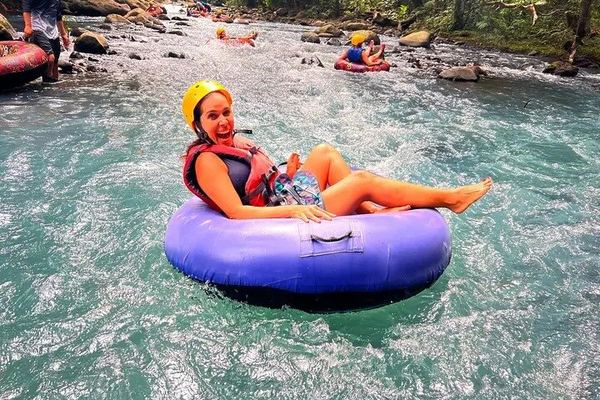
Rio Celeste Combo: 90 Minutes of Tubing, the Blue Waterfall and the Tree of Peace
Ninety minutes of tubing with swim stops and fresh fruit, the 400-year-old Tree of Peace, and a drive back routed for sloths and monkeys rather than speed.
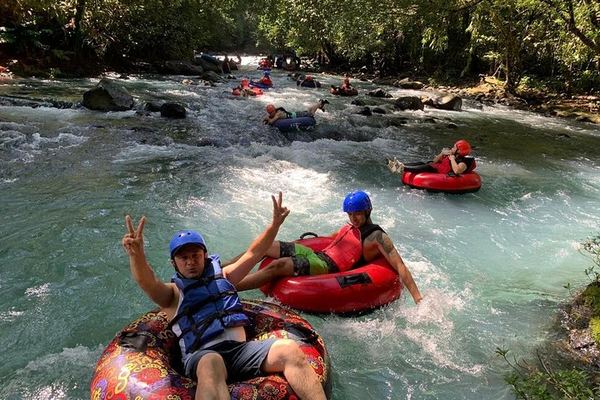
Rio Celeste Float: Tubing Between the Rapids and the Still Water
A float descent that alternates fast water with backwaters where the current drops off, under vegetation that closes over the Rio Celeste in places.
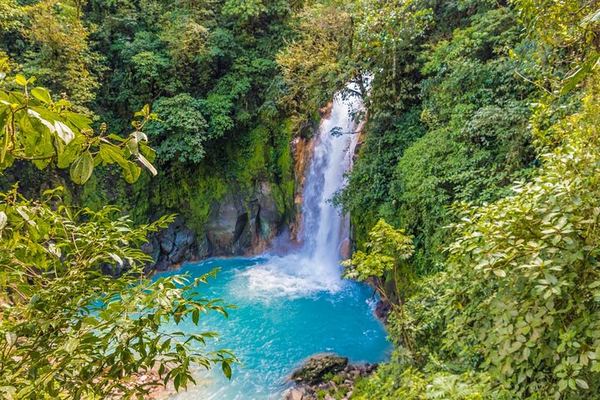
Rio Celeste Full-Day Hike from La Fortuna: Waterfall, Lookout and the Colour Change
A 4-hour walk in Tenorio Volcano National Park to the waterfall, the lookout and the junction where two mineral rivers turn the water blue. Lunch afterwards.
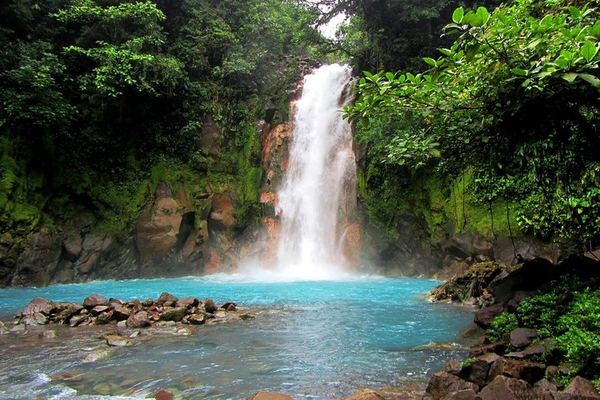
Rio Celeste Hike with Swimming and Lunch at Don Alexis Farm
The park section covers Los Teñideros, Los Borbollones and the waterfall; the swimming and the Costa Rican lunch happen afterwards, at Don Alexis Farm.
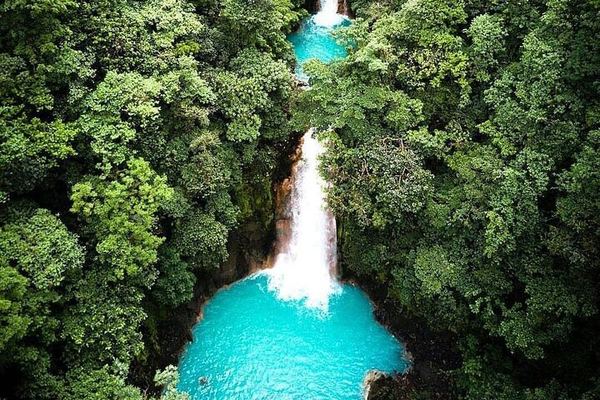
Rio Celeste, Llanos de Cortes and Jungle Life Sloth Sanctuary from Guanacaste
Two waterfalls in one day out of the Guanacaste beaches, plus rescued sloths at Jungle Life. Pick-ups from 6:00 am and a three-hour drive to Tenorio.
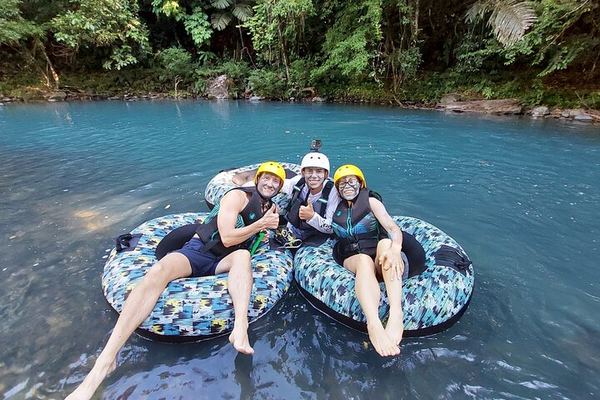
Rio Celeste Tubing with a Certified Naturalist Guide and GoPro Photos
A certified bilingual naturalist stays with the group for the whole descent, and the GoPro photos are taken for you. Five departures a day from the operator's base.
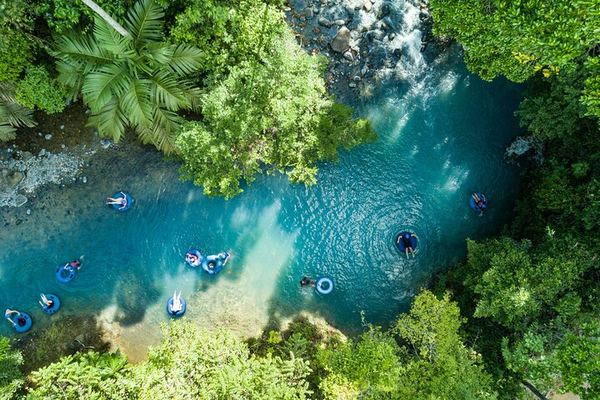
Rio Celeste Tubing with Rio Celeste Nature from the Katira Base
Run by Rio Celeste Nature from its riverside base at Katira, the one of its two offices that takes the adventure activities rather than the naturalist walks.
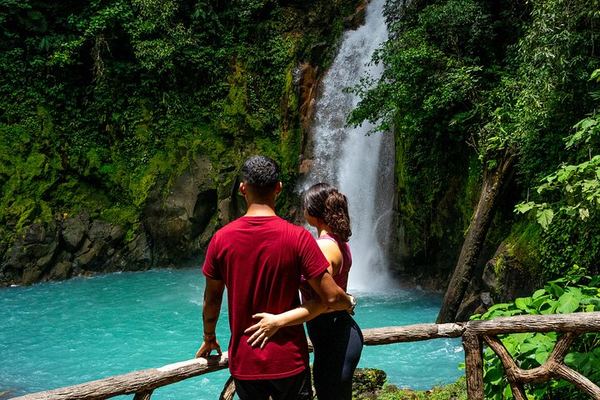
Rio Celeste Waterfall with Slothland Bijagua: Sloth Reserve, Coffee, Chocolate and Lunch
A private sloth reserve at Bijagua where the animals move loose, an interactive coffee and chocolate tour, and a typical lunch already covered by the price.
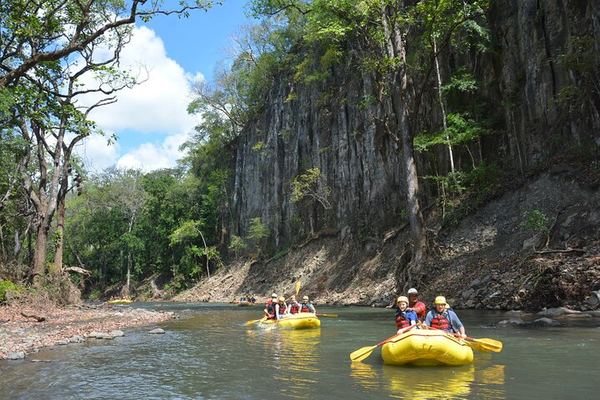
Tenorio River Rafting, Class III-IV, with RCR-Rafting from Cañas
RCR-Rafting has run the Tenorio since 2004, the first rafting company in Guanacaste. Class III and IV water through tropical dry forest, north of Cañas.
Ratings collected by Viator and Tripadvisor
One region, two doors
Guanacaste has an international airport at Liberia and a coastline of beach resorts below it, and that is the door most visitors come through. Almost everything at Rincón de la Vieja and Miravalles is sold from that side: pickups from Liberia, Playa Hermosa, Playa Flamingo and Tamarindo, an hour or so inland, back for the afternoon.
The Río Celeste behaves differently, and the departure lists give it away. Seven of the twelve trips to it leave from La Fortuna, on the Arenal side of the mountains, rather than from anywhere in Guanacaste. One more leaves from Monteverde. Tenorio sits on the divide between the two regions, and the practical consequence is that a traveller based on the Pacific beaches has a longer day to reach it than a traveller based at Arenal, while a traveller at Arenal cannot reasonably reach Rincón de la Vieja at all.
If you are planning a route rather than a day out, that is the shape of it: Liberia and the beaches for Rincón and Miravalles, La Fortuna for Río Celeste, and Tenorio as the hinge between them.
| Rincón de la Vieja | Tenorio and Río Celeste | Miravalles | |
|---|---|---|---|
| Listings here | 5 | 12 | 3 |
| Price range | 110 to 258 EUR | 44 to 309 EUR | 157 to 168 EUR |
| What you go for | Boiling mud pots, fumaroles, a waterfall to swim in | A river that turns turquoise, and a 30 m waterfall | Mud baths, hot springs, hanging bridges |
| Height | 1,895 m at the active cone | 1,916 m | 2,028 m |
| Protected as | National park | National park | Protected zone, visits are on private land |
| Park entry | 15 USD plus tax | 12 USD plus tax | None, private admissions instead |
| Usually leaves from | Liberia and the Pacific beaches | La Fortuna, and the beaches | Liberia, Playa Flamingo |
| Effort | 3.5 km loop, easy to moderate | 6 to 7 km with 250 steps, moderate | Light, most of the day is water |
The dry northwest is a different country
People arrive in Guanacaste expecting the Costa Rica of the photographs, which is to say permanent green, and in February they find brown hills and bare trees. Nothing has gone wrong. The northwest lies in a rain shadow and carries tropical dry forest rather than rainforest, and the trees there drop their leaves through the dry months exactly as trees in a temperate autumn do, to survive four months without water.
This makes the seasons here sharper than anywhere else in the country, and it cuts both ways. From December to April you get reliable sun, easy roads, and a landscape that looks parched. From May to November the forest turns and the waterfalls run, and the last stretch of unpaved road to a park entrance becomes a genuine question for a small hire car.
The one place where this matters more than comfort is the Río Celeste, because rain changes what you are there to see rather than how pleasant it is to see it. That is set out on its own page, and it is the single most important thing to understand before booking that trip.
| Month | 1 | 2 | 3 | 4 | 5 | 6 | 7 | 8 | 9 | 10 | 11 | 12 |
|---|---|---|---|---|---|---|---|---|---|---|---|---|
| Rincón de la ViejaDry months give firm trails and the easiest access road; the forest is bare and brown | 1 | 2 | 3 | 4 | 5 | 6 | 7 | 8 | 9 | 10 | 11 | 12 |
| Tenorio and Río CelesteHeavy rain turns the river brown and the colour disappears; the trail is mud either way | 1 | 2 | 3 | 4 | 5 | 6 | 7 | 8 | 9 | 10 | 11 | 12 |
| MiravallesWorks all year because the attractions are hot water; the road is easier in the dry months | 1 | 2 | 3 | 4 | 5 | 6 | 7 | 8 | 9 | 10 | 11 | 12 |
Months shown as numbers. Based on the Guanacaste dry season, operator schedules and reported river conditions, checked 12 August 2026.
An erupting volcano with an open national park
This surprises people, so it is worth stating plainly at the regional level. Rincón de la Vieja has been in an eruptive phase through the summer of 2026: 38 phreatic eruptions from 2 July onwards, three of them producing lahars down the north flank, the most energetic on 20 July. On 24 July the alert level was raised to 3 on a scale of 4.
The park did not close. It was still selling tickets on 12 August 2026, and the trails that carry the visitors, the Las Pailas loop with the mud pots and the two waterfall routes, remained open. What is closed, and has been for years, is the trail to the crater itself.
The logic is geographical rather than optimistic. The activity is at the summit and the lahars run down the far side, while the visitor sector sits low on the southern flank. It is a good illustration of how volcano access works in this country: the question is never whether the volcano is active, it is which specific trail is open this week. Detail, including the closures that are not announced in advance, is on the park's own page.
What a day here costs
The spread across this region is the widest of anywhere in Costa Rica, and almost none of it is park fees. Tenorio charges 12 US dollars for a non-resident adult and Rincón charges 15, both with 13 per cent tax on top. Miravalles charges nothing because it is not a national park; the money there goes to whichever private hot spring or adventure centre you have booked.
Against that, the trips run from 44 to 309 EUR. The gap is not the ticket. It is transport from a beach resort, a guide, lunch, and the private attractions that get bolted on: a zip line circuit, a sloth sanctuary, a hot spring, a second waterfall. The cheapest thing in the region is river tubing on the Río Celeste at 44 EUR; the most expensive is a private day combining a wildlife reserve with the river at 309.
The useful way to read a price here is to work out how much of it is the volcano. On a 110 EUR day at Rincón, roughly 17 dollars is the park and the rest is a vehicle, a guide and a private waterfall. That is a fair transaction and it is worth knowing you are making it, particularly if you have a hire car and a free morning.
In this corner of the country the volcano does not appear as a mountain. It appears as mud that boils on a footpath, as a river that changes colour, and as a turbine hall producing power on the far side of the ridge.
Questions people actually ask
Which of the three is worth the day, if I only get one?
Rincón de la Vieja, if the volcano itself is the point. The Las Pailas loop is 3.5 kilometres of easy walking past mud pots, fumaroles and small geysers, and it is the most concentrated geothermal ground you can walk on in Costa Rica. Río Celeste is the better photograph and the more demanding walk, and it is a river rather than a volcano. Miravalles is the one to choose if you want the day to be about hot water rather than hiking.
Is Rincón de la Vieja open with the volcano erupting?
It was on 12 August 2026, and it stayed open through the eruptive sequence that began on 2 July. The activity is at the summit and the visitor sectors are low on the opposite flank. The crater trail has been closed for years and remains so. Trails do close at short notice when conditions change, so the sensible move is to check the reservation system on the morning rather than to assume either way.
Can I reach the Río Celeste from the beaches?
You can, but you are doing it the long way. Seven of the twelve trips to Río Celeste leave from La Fortuna on the Arenal side, and the ones that leave from Tamarindo or Playa Hermosa are longer days for the same walk. If Río Celeste is a priority, it fits far better into an Arenal stay than into a Guanacaste beach holiday.
When should I come?
December to April for reliable weather, dry trails and easy roads, at the cost of a brown and leafless dry forest. May to November for green, running waterfalls and fewer people, at the cost of afternoon rain and unpaved access roads that get interesting. The one real exception is the Río Celeste, where heavy rain washes the turquoise colour out of the river entirely.
Do I need a guide, or can I drive myself?
All three areas can be done independently, and a hire car saves a great deal of money. What you take on is booking the park entry in advance, since Costa Rica stopped selling park tickets at the gate in August 2023, and the last few kilometres to Rincón de la Vieja on unpaved road. A guide earns their fee on the wildlife, which you will otherwise walk straight past.
What is the cheapest thing to do here?
Tubing on the Río Celeste at 44 EUR, which is a float rather than a hike and does not enter the national park. After that, the park entries themselves: 12 US dollars plus tax at Tenorio, 15 plus tax at Rincón. Everything above that is transport, guiding and private attractions.
Is Miravalles a national park?
No, and this is the most common misunderstanding in the region. Miravalles is a protected zone, it is not in the national park reservation system, and every visit there happens on private land: hot springs, mud baths, hanging bridges, waterfalls, all with their own admissions. The volcano's most significant role in Costa Rican life is not tourism at all, it is the geothermal field on its flank.
Data verified on. Prices and departure points from the twenty Guanacaste products on this site. Park fees, opening status and alert level checked on the SINAC reservation system and observatory bulletins.