
Westman Islands Tours: Heimaey & Eldfell
Three experiences on the island where a volcano opened 200 metres from the houses in 1973. A 40-minute ferry from Landeyjahöfn, and from 90 EUR once you are there.
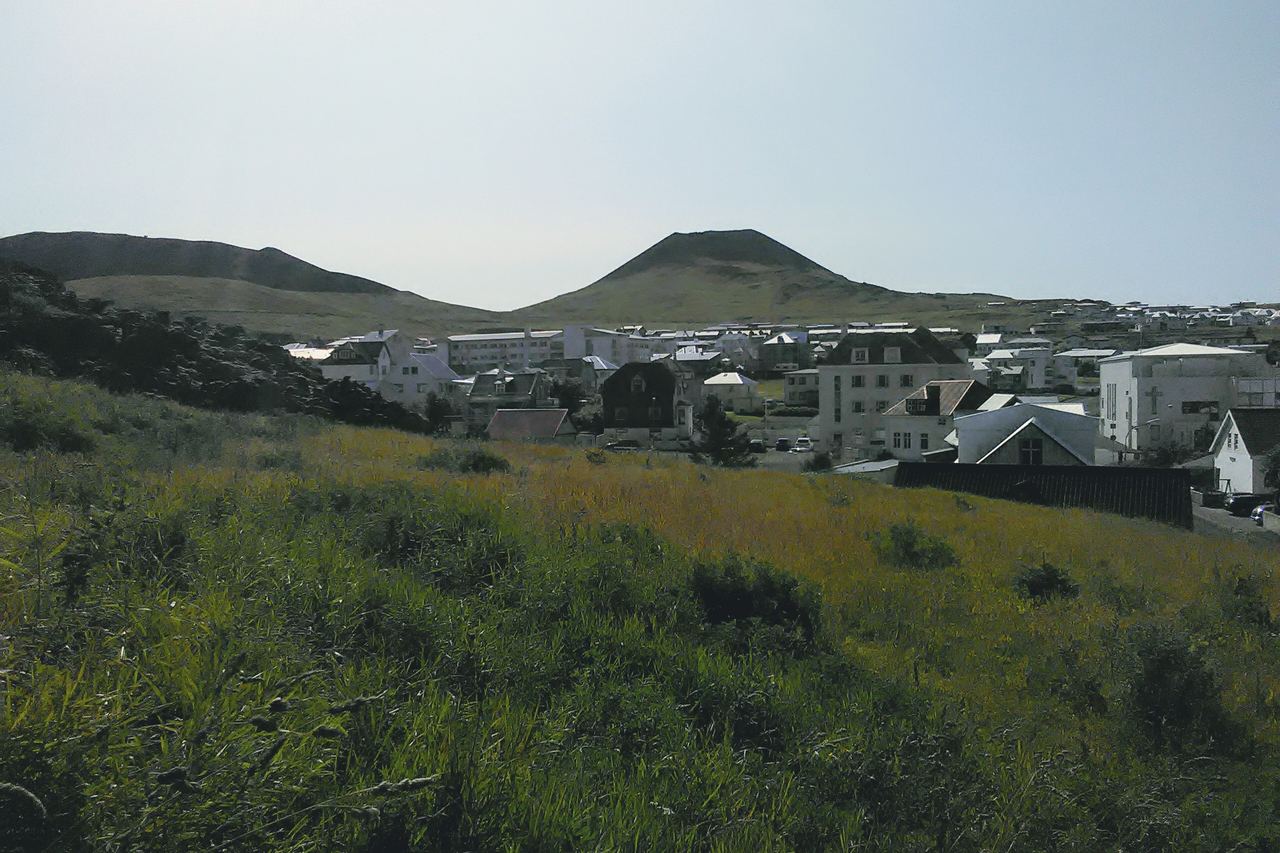
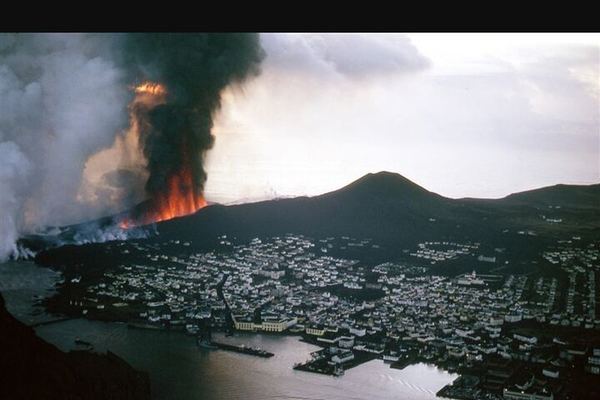
Heimaey is the only inhabited island of the Vestmannaeyjar group, thirteen kilometres off the south coast, with about 4,400 people living around a harbour that is the reason the town exists. On 23 January 1973 a fissure opened along the eastern edge of that town and built a cone called Eldfell where there had been a field, and the five months that followed are the best-documented thing that has ever happened to an Icelandic community. What is unusual is how ordinary the place feels now. The lava is still there, black and unmistakable at the end of the streets, and people park against it.
Three listings is not many, and it tells you something true about the place: almost nothing here is packaged, because almost everything is walkable. The cone, the lava field, the buried streets and the museum are all within twenty minutes of the harbour on foot and none of them charges an admission a tour company can resell. What the three products buy you is the sea, the cliffs, the puffins and somebody who knows which house was whose. This page covers how to get there and what is worth your hours once you have.
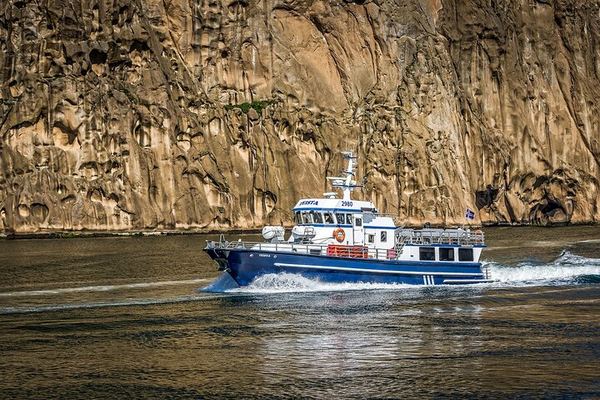
Around Heimaey by Boat: Elephant Rock, Puffins and a Sea Cave
A sail around Heimaey and into a sea cave, past the new lava the eruption left, with puffins over the water and the Elephant Rock most visitors come for.
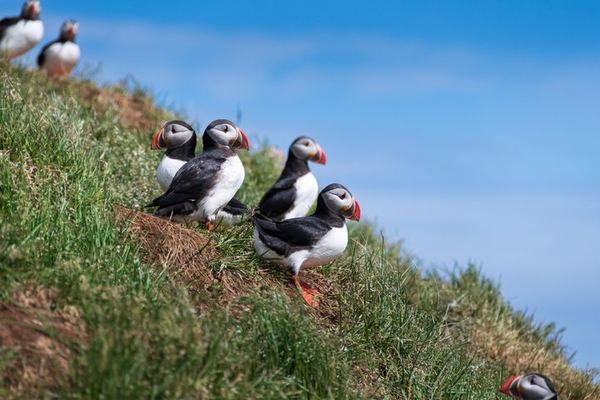
Heimaey in 2.5 Hours: Eldfell, the Stórhöfði Puffins and Elephant Rock
Two and a half hours cut to cruise timings: Stórhöfði, where a fifth of the world's Atlantic puffins nest, the 1973 lava field, and a black stave church.
Westman Islands Volcano Tour on Seated Electric Scooters
Seated electric scooters, a Kaabo Wolf Warrior 11 each, through the volcano area of the Westman Islands, with a lesson and safety gear before setting off.
Ratings collected by Viator and Tripadvisor
Getting there is the actual decision
The ferry runs from Landeyjahöfn, a purpose-built harbour on the south coast opened in 2010 specifically to shorten this crossing, and it takes about forty minutes over thirteen kilometres. Landeyjahöfn is roughly two hours from Reykjavík and forty minutes west of Vík, so the island fits naturally into a south coast trip and awkwardly into anything else.
The complication is that Landeyjahöfn silts up and gets closed by swell. When that happens the ferry sails instead from Þórlákshöfn, much further west, and the crossing goes from forty minutes to nearly three hours. Check which harbour your sailing is actually leaving from on the morning you travel, because the ticket does not always tell you and the two ports are 130 kilometres apart. This happens most often between October and April.
The alternative is the air. Vestmannaeyjar Airport handles charter and medical flights year-round and has scheduled winter services to Reykjavík. The flight is about twenty-five minutes and is the reliable option in the season when the ferry is not, which is exactly the season fewest people go.
Taking a car across is possible and mostly pointless. The island is ten kilometres end to end, the town is walkable, and vehicle space on the ferry books out well before foot passenger space does.

Eldheimar, a museum built around a buried house
Thirty-odd years after the eruption, the town began digging houses back out of the tephra on the eastern side, in a project the islanders call Pompeii of the North with an entirely straight face. Eldheimar is the museum that was built over one of them. The house stands where it stood, crushed and half full of ash, and the building has been put around it rather than the other way round.
It is the best hour on the island and it does something few volcano museums manage: it keeps the story at the scale of one family. The upper floor covers Surtsey, the island that rose out of the sea a few kilometres southwest of here in 1963 and is now a closed scientific reserve. None of the three tour listings on this page includes admission, and none of them needs to. You walk there.
What the three listings actually are
| What it is | Price | How long | Rating | Worth knowing |
|---|---|---|---|---|
| Boat tour of the cliffs and caves | 95.00 EUR | About 1.5 hours | 4.9 (65) | The only way to see the island from the water and the sea caves |
| Electric scooter tour of the island | 90.00 EUR | About 2 hours | 4.9 (16) | Seated e-scooters; covers ground a walk cannot in the time |
| Volcano and puffin colony tour | 108.45 EUR | 2.5 hours | 4.6 (36) | Written as a cruise shore excursion, so it is timed to a ship's call |
The boat tour is the one thing on this list that you genuinely cannot replicate on foot. Heimaey's coast is a ring of sheer basalt full of sea caves, the cliffs hold the seabird colonies, and the formation everyone photographs, a headland that looks convincingly like an elephant putting its trunk in the water, only reads as an elephant from the sea. Skippers usually cut the engine inside one of the caves and someone plays something, which sounds like a gimmick and is not.
The 108.45 EUR tour is described as a shore excursion, which matters: it is designed to fit the window a cruise ship is alongside. If you have arrived by ferry and have a full day, you are paying for a compressed version of what you could do at your own pace.
Surtsey, which you are not allowed to visit
On 14 November 1963 the crew of a trawler southwest of here saw smoke on the water. What they were watching was a submarine eruption breaking the surface, and over the following three and a half years it built an island. Surtsey stopped erupting on 5 June 1967 at about 2.7 square kilometres. Wave erosion has since taken it down to roughly 1.4, and it is expected to keep shrinking.
It has been protected since it appeared, and UNESCO listed it as a World Heritage Site in 2008 for exactly that reason: it is the only place on earth where scientists have watched an ecosystem colonise sterile ground from the first day, with a complete record. Landing is restricted to a small number of researchers, who check their own clothing and equipment for seeds before going ashore. One tomato plant famously grew there in 1969 from a source nobody wants to discuss, and was removed.
You can see it from a boat or a light aircraft and that is all. No listing on this site goes there, and any that claimed to would be selling something that does not exist.
The cone, the cliffs and the birds
Eldfell itself takes about thirty minutes to walk up from the town on a marked path across red scoria, and the ground near the top is still warm enough in places that people bury bread in it, which is a party trick and also true. From the rim you look down on the flow that took the eastern streets and across to the harbour mouth the seawater pumping saved. It is free, it is unguided, and it is the single best half hour on the island.
The cliffs are the other draw. Heimaey holds one of the largest Atlantic puffin colonies anywhere, with numbers into the hundreds of thousands and one listing here claiming over 1.1 million birds nesting in summer. They are on the cliffs from roughly May, they are gone by mid-August, and outside that window the boat tour is a geology trip rather than a wildlife one. In late August the island runs a tradition worth knowing about: fledglings disoriented by the town lights come down in the streets, and children collect them in cardboard boxes overnight and release them at the sea the next morning.
Every islander old enough to remember 1973 can tell you which boat they left on. The fleet was in harbour that night only because the weather had been too bad to fish, which is the reason 5,300 people were on the mainland before dawn.
When to go, and how long you need
June to August, and it is not close. The puffins are only there in that window, the Landeyjahöfn crossing is at its most reliable, and the sailings are frequent enough to make a day trip work without anxiety. May and September are workable at the edges. Between October and April the island is a genuine place with a fishing fleet and a swimming pool rather than a destination, the ferry may be running from the wrong harbour, and two of the three listings here effectively stop.
A full day is right. Take the morning ferry, walk Eldfell, spend an hour in Eldheimar, take the boat around the cliffs in the afternoon and catch the evening sailing back. That is roughly 95 EUR of booked activity and a day that most people remember longer than the Golden Circle.
Questions people actually ask
How do you get to the Westman Islands?
By ferry from Landeyjahöfn on the south coast, about forty minutes over thirteen kilometres, roughly two hours from Reykjavík by road. When swell or silt closes that harbour the ferry sails from Þórlákshöfn instead and the crossing takes nearly three hours, so check the departure port the morning you travel. There are also flights to Vestmannaeyjar Airport, about twenty-five minutes, scheduled in winter and charter in summer.
Can you visit Surtsey?
No. Surtsey has been a protected scientific reserve since it formed between 1963 and 1967 and became a UNESCO World Heritage Site in 2008. Only a small number of researchers are permitted to land, and they check their clothing for seeds before doing so. You can see it from a boat or a small plane. Nobody sells a landing, and anyone who offers one is not selling Surtsey.
Is the 1973 lava still visible?
Very. It ends the eastern streets of the town in a black wall, the cone of Eldfell stands about 200 metres above it, and the ground near the summit is still warm in places. Around 400 homes were lost in 1973; some were buried under tephra and have since been excavated, and one of them is now the centre of the Eldheimar museum.
When are the puffins there?
From about May to the middle of August. Heimaey holds one of the largest Atlantic puffin colonies in the world, with one listing here putting it above 1.1 million birds in season. Outside that window the cliffs are empty and the boat tour becomes a geology and sea-cave trip, which is still good but is a different thing from what the photographs promise.
Is one day enough?
Yes, if you take the first ferry. Eldfell is a thirty-minute climb, Eldheimar is an hour, the boat tour is ninety minutes, and everything is walkable from the harbour. Staying a night is pleasant and not necessary unless you want the island after the day visitors have gone, which is genuinely the best version of it.
Why are there only three tours?
Because almost nothing here needs one. The cone, the lava, the excavated streets and the cliffs are all free and reachable on foot, so there is little for an operator to package. The three listings sell what you cannot do yourself: the sea caves, the far end of the island, and a guide who knows which house belonged to whom.
Should I bring a car on the ferry?
Probably not. The island is about ten kilometres long, the town is compact, and vehicle spaces sell out long before foot passenger spaces. If you want to cover more ground than a walk allows, the 90 EUR scooter tour does it in two hours for less than the return car fare.
Data verified on. Prices and ratings read from the three Westman Islands products on this site, 12 August 2026. Ferry, Eldfell and Surtsey detail from the published record for Vestmannaeyjar.