
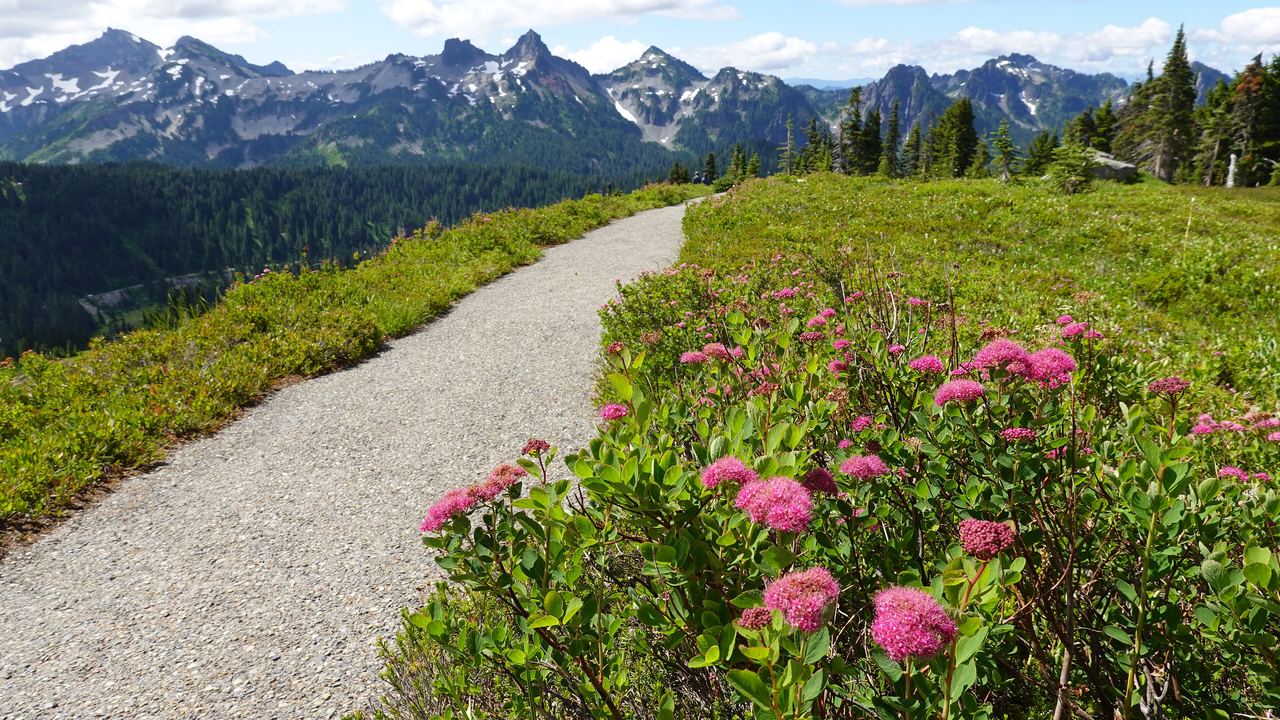
Mount Rainier and Mount St. Helens Tours
4,392 m, 28 glaciers and the highest volcanic threat ranking in the contiguous United States. Four of these twelve tours go somewhere else.
Mount Rainier is a volcano that behaves like a mountain range. It carries 28 glaciers, stands 4,392 metres above a sea-level city ninety minutes away, and has not erupted for about a thousand years. The USGS still ranks it as one of the highest-threat volcanoes in the country, and not because of lava. The hazard is the ice: melt it quickly and it comes down the valleys as a mudflow, and those valleys now contain towns. That combination, a benign day out on a mountain with a hazard map underneath it, is what makes this a different kind of volcano trip.
Before anything else, check which mountain and which city your listing names. Four of these twelve are Mount St. Helens, which is 80 kilometres south, in a different management agency, with a different story and a different season. They are excellent days. They are not Mount Rainier, and the titles do not always make that obvious at a glance.
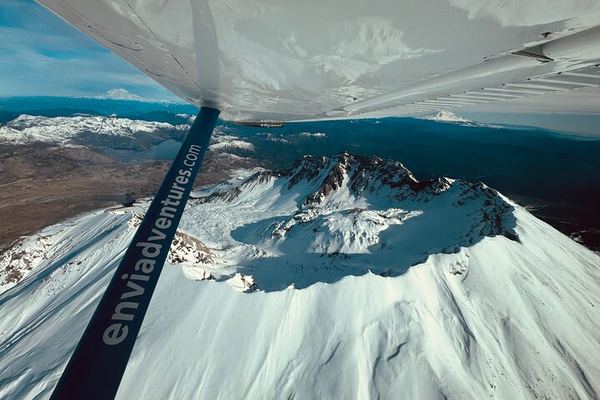
Flying the St Helens Crater: Five Seats, 600 Pounds, and the Pilot Decides
Five seats, a 600-pound limit for the group, and a 20-minute check-in that cancels the flight if you miss it. The route circles the crater itself.
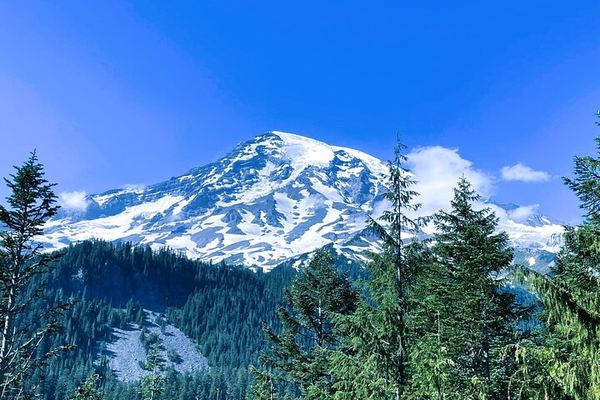
Mount Rainier at Your Own Pace: Named Trails at Paradise and Elbe's Railcar Diner
Free time at Paradise means you can actually walk the Skyline or Nisqually Vista trail, and the road up stops at Elbe, where the diner is a railway carriage.
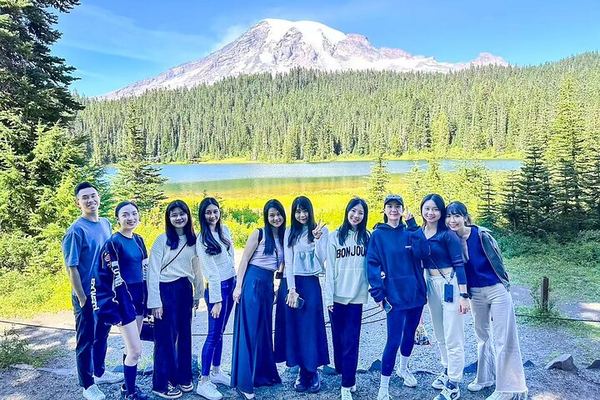
Mount Rainier from Seattle: a Summer Route and a Winter One
Two itineraries, one for May to October with Narada Falls and Paradise, one for the snow months with a longer Longmire stop and the Wonderland Trail.
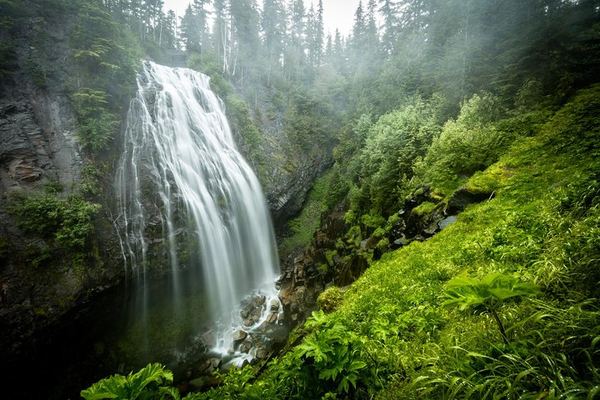
Mount Rainier Highlights: Snowshoes and Sledding Included in the Cold Months
Snowshoeing and sledding are included in winter and spring at no extra cost, and the operator says outright it stays in the park longer than others.
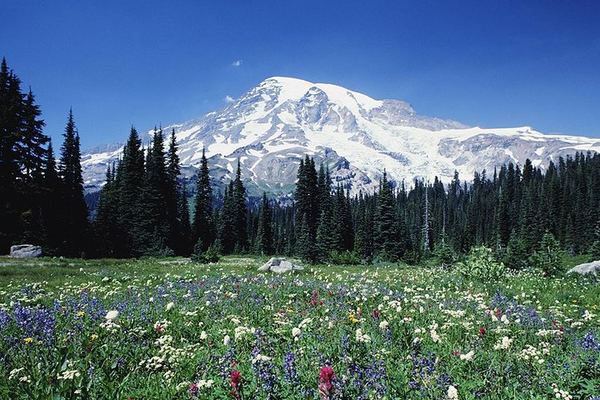
Mount Rainier with No Minimum Group Size: the Tour Runs Whatever the Numbers
The departure is not cancelled for low numbers, the snowshoes are free in winter, and walking is optional throughout for people who would rather not.
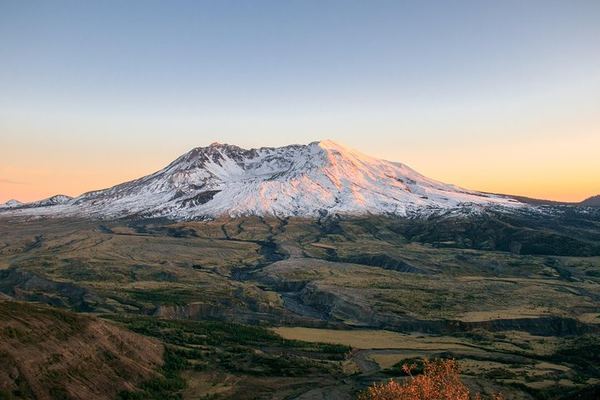
Mount St Helens from Portland: the Wetlands the Eruption Created
The wetland at Silver Lake exists because of the eruption, and this naturalist-led day covers it, the hummocks, and lunch, snacks and drinks throughout.
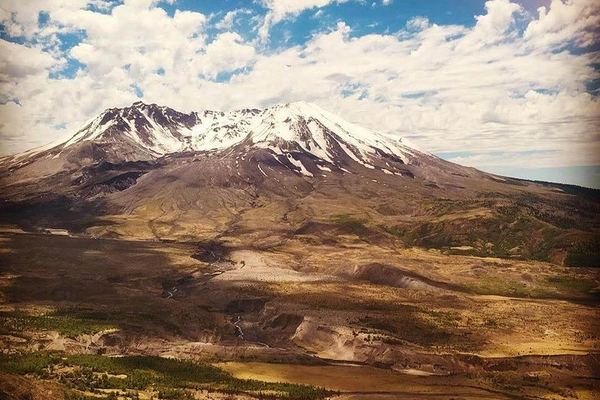
Mount St Helens with the Hummocks: Pieces of the Mountain That Travelled Miles
Lunch is local, organic and family style, and the walk among the hummocks shows where the eruption dumped pieces of the mountain miles from where it stood.
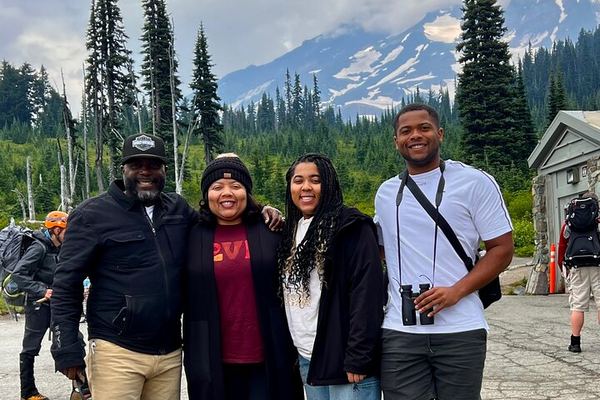
Private Chauffeur to Mount Rainier and Seattle: Your Own Vehicle, Your Own Pace
Family run Seattle chauffeur service: one vehicle for your group, flexible pickup from the cruise piers, hotels or the airport, and the road up to Mount Rainier.
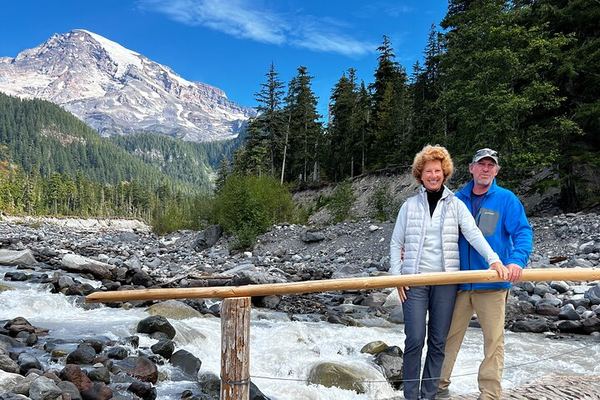
Private Mount Rainier Day Trip from Seattle, Itinerary Set with Your Guide
Your party alone in a Chevrolet Suburban with a local guide and stops you plan together, park fee included. In winter the day centers on Longmire and snowshoes.
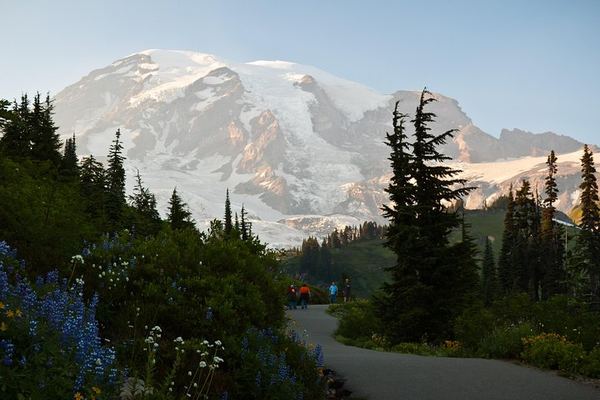
The Only Rainier Tour Allowed More Than a Mile from the Road: Ten People Max
Evergreen Escapes holds the permit to walk groups further than a mile from the park road, which the Park Service does not grant to other companies.
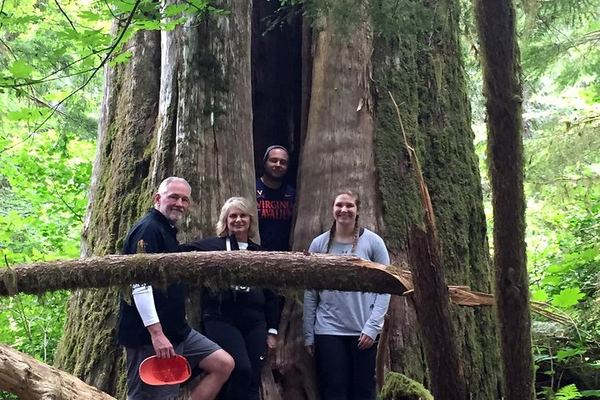
Twelve Hours at Mount St Helens: Ape Cave, 357 Steps and Four Stratovolcanoes
Ape Cave at a constant 5.5°C, the 357 steps above Spirit Lake, and the ridge where David Johnston made his last radio call on the morning of 18 May 1980.
Walking Mount Rainier: a Mile to a Picnic by the Glaciers, and Down to Narada's Base
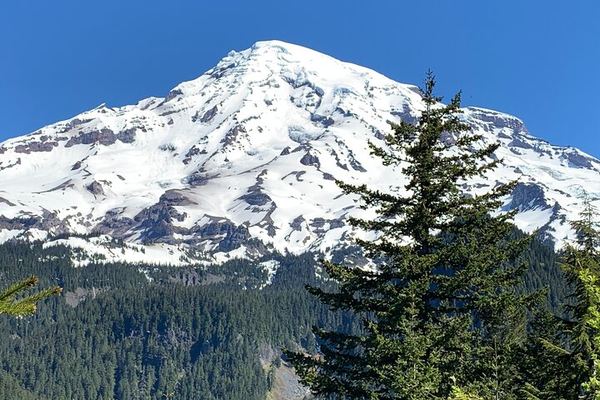
A mile on foot from Paradise to a picnic beside the glaciers, and the only walk here that goes down to the base of the 168-foot Narada Falls.
Ratings collected by Viator and Tripadvisor
Two mountains, two cities, one page
Eight products go to Mount Rainier and all eight leave Seattle. Four go to Mount St. Helens: three from Portland and one from Seattle. Both are Cascade volcanoes and there the similarity ends.
Rainier is a national park run by the Park Service, an enormous glaciated cone with meadows, old-growth forest and waterfalls around its base, and a summit that spends a great deal of the year inside cloud. St. Helens is a national volcanic monument run by the Forest Service, half the height, and the reason to go is the hole in it. One is a mountain day. The other is a lesson in what a volcano can do in nine hours.
| Tour | From | Price | Rating |
|---|---|---|---|
| Rainier one-day small group, in depth | Seattle | 130 EUR | 4.8 (976) |
| Rainier national park highlights | Seattle | 139 EUR | 4.8 (3,512) |
| Rainier day tour | Seattle | 139 EUR | 4.9 (2,050) |
| Guided hike: old forest, falls and glacier views | Seattle | 158 EUR | 4.8 (632) |
| Rainier customised tour | Seattle | 220 EUR | 4.7 (149) |
| Mount St. Helens all-inclusive small group | Portland | 249 EUR | 4.8 (26) |
| Mount St. Helens adventure tour | Portland | 281 EUR | 4.7 (42) |
| Mount St. Helens monument, all-inclusive | Seattle | 303 EUR | 4.9 (134) |
| Best of Rainier, all-inclusive small group | Seattle | 303 EUR | 4.9 (850) |
| Mount St. Helens air tour | Portland | 313 EUR | 4.9 (45) |
| Rainier private tour by SUV | Seattle | 408 EUR | 5.0 (27) |
| Rainier private chauffeur, full day | Seattle | 864 EUR | 4.8 (35) |
The mountain is not always there
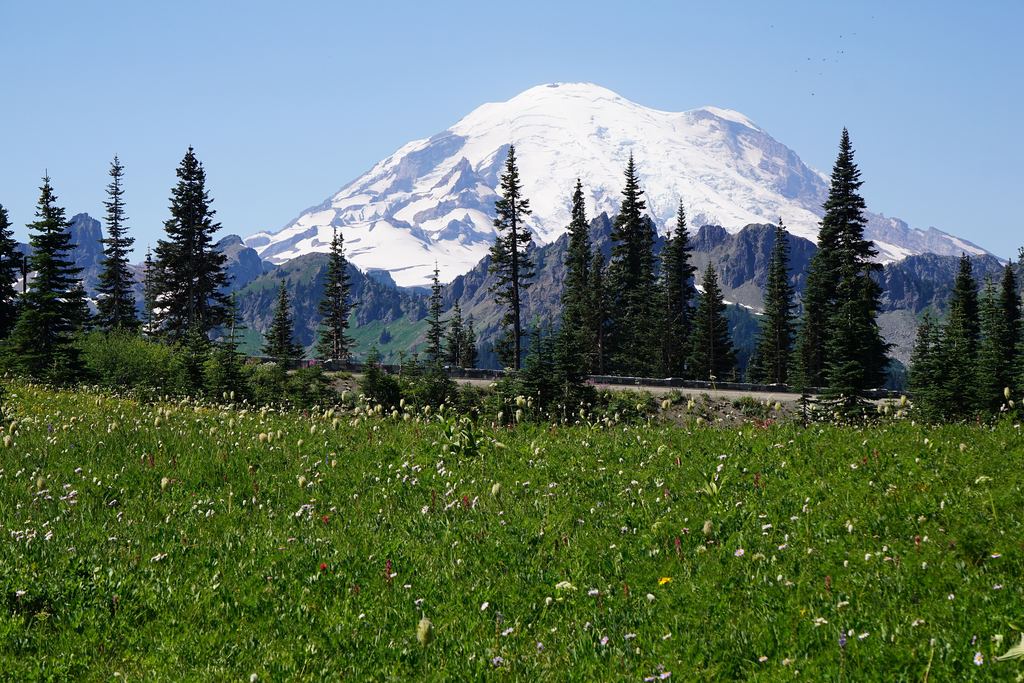
Locals say the mountain is out when it is visible, which tells you how often it is not. Rainier makes its own weather: a 4,392 metre obstacle in the path of Pacific air produces cloud on the mountain when the lowlands are clear, and a good number of day trips from Seattle spend nine hours in a national park without ever seeing the summit.
The park runs live webcams for exactly this reason, and they are the only honest forecast. Check them the morning you go, not the week you book. Nobody refunds a cloudy day and no operator can move the weather, so the practical advice is to keep the trip flexible if your stay allows it, and to understand that the forests, the waterfalls and the meadows are the reliable part of the day. The cone above them is the bonus.
Paradise, Sunrise, and what closes when
Almost every Rainier tour aims at one of two places. Paradise, on the south side, has the Henry M. Jackson Visitor Center, the wildflower meadows and Narada Falls on the way up. Sunrise, on the north-east side, is the highest point reachable by car in the park and gets closer to the glaciers.
Their seasons are not the same and neither is long. Operators treat Narada Falls and Paradise as a stop from around mid-April to mid-October. Sunrise generally opens in July and shuts by mid-September, and one Seattle operator describes it as a rare substitution for Paradise rather than a normal stop. Reflection Lakes, the postcard view, is attempted in July and August and is not guaranteed even then.
Winter is a genuinely different park. Vehicle access is limited to the Nisqually entrance, tyre chains must be carried on park roads from 1 November to 1 May, the Longmire gate opens at 09:00 and stops uphill traffic at 16:00, and one operator states in its own conditions that from mid-November through spring Paradise is only accessible based on the road conditions on the day. Winter tours spend their time at Longmire with snowshoes instead, which several include free. That is a good day out. It is not the day in the photographs.
There is one piece of good news: the timed-entry vehicle reservation piloted in earlier summers was not renewed for 2026. You can arrive when you like.
| Month | 1 | 2 | 3 | 4 | 5 | 6 | 7 | 8 | 9 | 10 | 11 | 12 |
|---|---|---|---|---|---|---|---|---|---|---|---|---|
| Mount Rainier, Paradise and SunriseSunrise opens around July and shuts by mid-September; chains must be carried on park roads 1 November to 1 May | 1 | 2 | 3 | 4 | 5 | 6 | 7 | 8 | 9 | 10 | 11 | 12 |
| Mount St. Helens, west sideThe reachable section of State Route 504 is low-lying, so these tours run a longer season than Rainier's high ground | 1 | 2 | 3 | 4 | 5 | 6 | 7 | 8 | 9 | 10 | 11 | 12 |
Months shown as numbers. Based on National Park Service opening rules and the operators' own stated seasons, checked August 2026.
A century of park, and a decade of closures
The reason to read this list before booking is that some of the entries in it are still being sold as if they had not happened.
What erupted, and what shut
The events that decide what a tour can reach today.
The origins
1899
Mount Rainier becomes a national park
The fifth national park in the United States, created around a volcano that had already been recognised as the dominant landmark of the region.
The growth
1980
The north side of Mount St. Helens fails
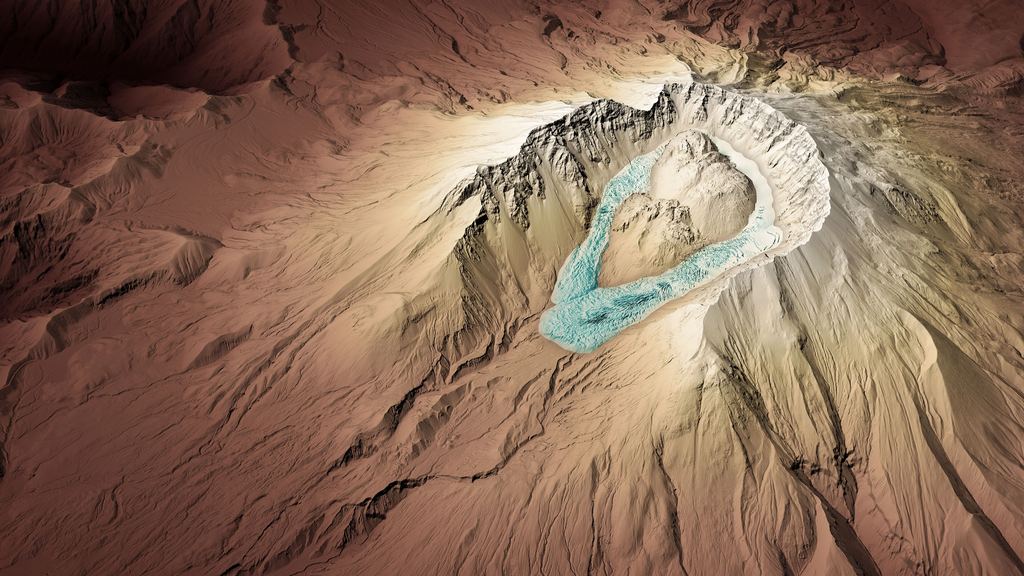
On 18 May a debris avalanche removes the upper 400 metres of the mountain and opens the horseshoe crater. A lidar survey in 2009 put what remains at 2,539 metres.
2004-08
St. Helens rebuilds a dome
Four years of quieter dome-building activity inside the crater. The volcano has been at green alert since, with no eruption expected.
Today
2021
The Grove of the Patriarchs is cut off
November flooding destroys the suspension bridge to the old-growth grove at Mount Rainier. Construction on a replacement is scheduled to begin in summer 2027.
2023
Johnston Ridge is severed
On 14 May a landslide takes out State Route 504 near mile 49, cutting road access to the observatory that looks straight into the St. Helens crater. Bridge works began on 27 April 2026.
2025
Carbon River closes indefinitely
A bridge failure on 22 April ends vehicle access to the Carbon River and Mowich Lake entrances with no alternative route. The park does not expect to restore it before 2031.
2026
Fire closes Sunrise
The Grand Park 2 Fire shuts the Sunrise Road and the White River campground on top of their normal short season, while the summer timed-entry reservation is not renewed.
Read the itinerary, not the photographs
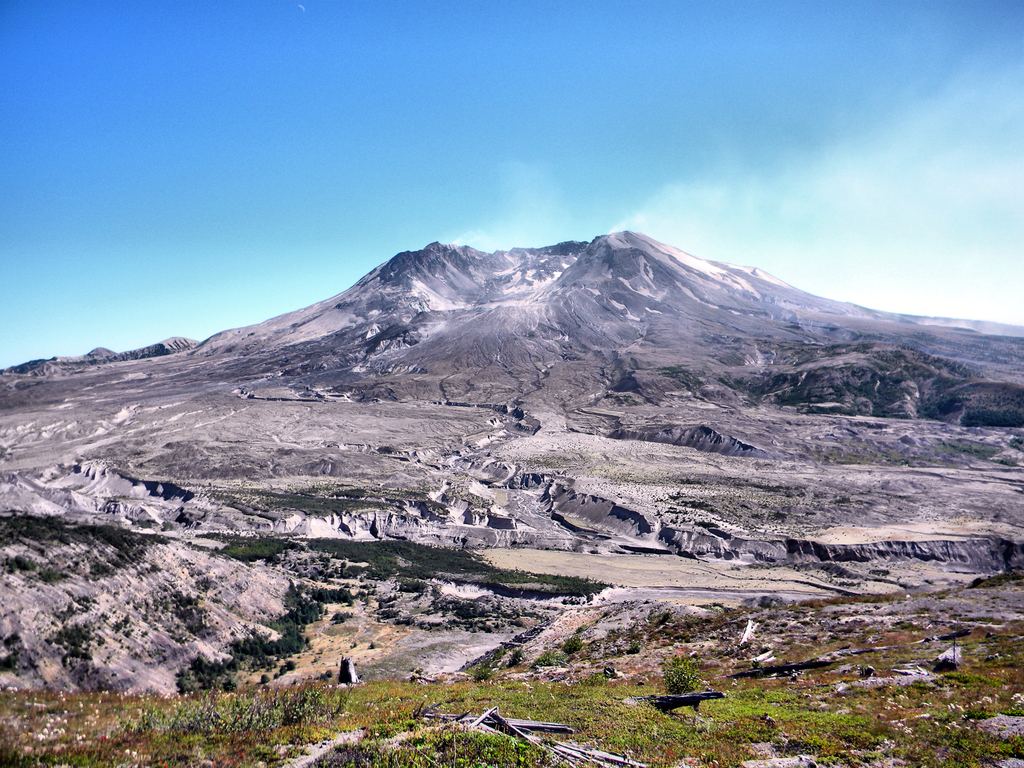
Johnston Ridge Observatory is the viewpoint every St. Helens photograph is taken from, five miles from the crater with the blast zone laid out below it. It has been unreachable by road since May 2023, and replacement bridge works only started in April 2026.
Several tours on this page still carry Johnston Ridge in their image galleries while their written itineraries stop at Coldwater Lake and the Hummocks Trail around milepost 45. Those are worthwhile stops, the Hummocks being fragments of the mountain that were carried miles down the valley by the avalanche. But they are not the observatory. If a St. Helens tour matters to you, ask the operator exactly how far up State Route 504 the vehicle goes, and treat the gallery as decoration.
The lahar, which is the actual hazard
Rainier has not erupted for roughly a thousand years and the USGS still ranks its threat as Very High. The reason is arithmetic rather than drama. The volcano carries 28 glaciers. An eruption, or simply a large enough collapse of weakened rock, melts a great deal of that ice quickly, and the result is a lahar: a mudflow with the consistency of wet concrete moving down a valley at speed.
Past lahars from Rainier have reached the Puget Sound lowlands, which is where Orting, Puyallup, Sumner and the outskirts of Tacoma now sit. There is a lahar detection network in those valleys and there are evacuation routes signposted on ordinary suburban streets, which is a thing worth noticing on the drive in. Schools in the valley practise the evacuation.
None of this is a reason not to go. It has no bearing on a day trip: the ground you walk on at Paradise is not the ground at risk, and the monitoring is among the densest on any volcano in the world. It is a reason to understand that the pretty mountain in the postcard is classified alongside Kīlauea and Mount St. Helens rather than alongside a scenic peak.
The interesting thing about Mount Rainier is not that it might erupt. It is that a thousand years of quiet has let a city grow into the valleys its last mudflows filled.
What the day is actually like
Nine hours scheduled, and one Seattle operator asks you to allow up to eleven for pick-up and drop-off. Roughly three of those are driving. The rest is a sequence of short walks: an old-growth loop, a waterfall, a meadow, a visitor centre, and lunch bought at a cafe or a grocery stop, because on most of these lunch is not included.
Group sizes vary more than the prices suggest. The 130 to 139 EUR products are mini-coaches carrying up to fifteen. The all-inclusive small-group days at 303 EUR carry ten, include a picnic lunch and build the itinerary around what the park is doing that day. The two private options, 408 EUR by SUV and 864 EUR with a chauffeur, are priced for the vehicle in at least one case, which changes the arithmetic for a family.
Practical notes the listings bury. Park entry is 30 USD per vehicle and is included in most of these. One operator does not accept children under five and another says the day is not recommended for travellers with poor cardiovascular health. Temperatures at Paradise can swing from cold rain to hot sun inside a single afternoon, which every operator warns about and every visitor underestimates. There is no restroom on board most of the coaches. And there is ongoing construction in the park that can add delays without notice.
Questions people actually ask
Will I actually see Mount Rainier?
Not always. The mountain makes its own cloud and is hidden a significant part of the year, including days when Seattle is clear. The park runs live webcams so you can check visibility before setting out, and that is the only useful forecast. The forests, waterfalls and meadows are worth the day regardless, but if the summit view is the entire point, keep the booking flexible and go on the best morning you get.
Which of these tours is not Mount Rainier?
Four of the twelve go to Mount St. Helens instead: three depart Portland and one departs Seattle, at 249 to 313 EUR. They are good days and they answer a different question, which is what an eruption does to a landscape rather than what a glaciated volcano looks like. Check the departure city and the mountain name before you compare prices, because the two sets are not substitutes.
Do I need a reservation to enter Mount Rainier?
No. The timed-entry vehicle reservation piloted in earlier summers was not renewed for 2026, so you can arrive when you like. Entry is 30 USD per vehicle and is included in the price of most of these tours. What you do need to check is whether the road you want is open, which changes with snow, fire and bridge works rather than with a booking system.
When is the best time to go?
July to September for the high ground. Sunrise generally opens in July and closes by mid-September, and the wildflower meadows at Paradise are at their best in late July and August. June and October work with reduced access. From November to May the park is winter: chains must be carried, only the Nisqually entrance is open to vehicles, and tours become snowshoe days at Longmire.
Can I visit Johnston Ridge Observatory?
Not by road at present. A landslide cut State Route 504 near mile 49 on 14 May 2023 and replacement bridge works only began in April 2026. Tours now reach Coldwater Lake and the Hummocks Trail around milepost 45. Some listings still show Johnston Ridge in their photographs, so read the written itinerary and ask how far up the highway the vehicle actually goes.
Is Mount Rainier going to erupt?
Not on a schedule anyone can give you. It last erupted about a thousand years ago and there is no current unrest. It is ranked Very High threat because of what an eruption would do rather than how likely one is this decade: 28 glaciers of ice, melted quickly, becoming mudflows in valleys that now hold towns. It is one of the most closely monitored volcanoes in the world, and a day trip carries no volcanic risk at all.
How long is the day from Seattle?
Nine hours scheduled and up to eleven door to door, of which roughly three are on the road. The park entrance is about two hours from central Seattle and Paradise is another hour beyond it. The Portland departures for Mount St. Helens run about nine hours on similar arithmetic. None of these is a half day, and none of them leaves you much of an evening.
Which tour should I book?
For most people the 130 to 139 EUR small-group Rainier days from Seattle, which carry the largest review counts on this page, over 3,500 on one of them. For a slower day with a naturalist, a picnic and a route decided by that morning's conditions, the 303 EUR all-inclusive small group. If you have already seen Rainier, or if what interests you is the eruption rather than the mountain, take one of the St. Helens days and put the crater in front of you instead.
Data verified on. Prices, ratings and conditions read from the twelve products on this site. Roads, closures and seasons from the National Park Service; hazard ranking and 1980 figures from the USGS.