
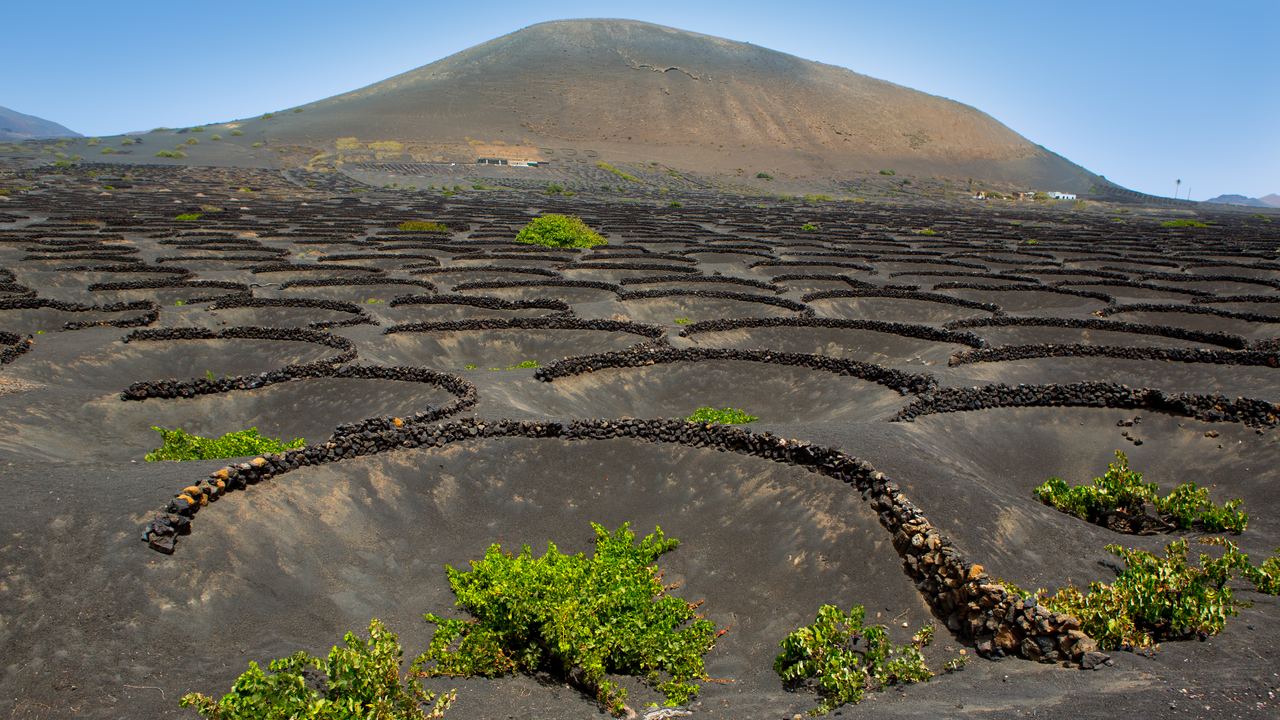
Nobody would choose to farm on a volcano. The ground is steep, the soil is thin where it is not absent, water drains away instantly, and there is the obvious problem of the volcano.
And yet some of the most interesting wine in Europe comes from exactly these places, made from vines that are among the oldest still producing anywhere, in vineyards that look nothing like vineyards. There are three reasons, and only one of them is about soil chemistry.
Reason one: the soil is genuinely different
Volcanic soils are rich in potassium, magnesium, phosphorus and trace minerals, released as the rock weathers, and they tend to be free-draining while still holding moisture at depth. For a vine, that combination is close to ideal: enough nutrition, no waterlogging, and a reason to send roots down a long way in search of water.
Whether you can taste the rock is a genuinely contested question. Winemakers on Etna, Santorini and the Canaries will tell you about salinity, smoke and a flinty edge, and the wines really do share a family resemblance across regions thousands of kilometres apart. Whether that comes from minerals in the soil, or from the altitude, the temperature swing and the grape varieties that survived in these places, is argued about at length and not settled.
The honest position: the wines are distinctive, the soil is unusual, and the causal chain between the two is less direct than the marketing suggests.
Reason two: a louse that could not cross sand
This is the part of the story that is properly extraordinary.
In the second half of the nineteenth century, phylloxera, a root-feeding aphid accidentally imported from North America, destroyed the great majority of European vineyards. The eventual solution was to graft European vines onto resistant American rootstock, which is why almost every vine in Europe today is grafted, and why the pre-phylloxera era is spoken of the way people speak of a lost civilisation.
The louse cannot move through loose sand. It needs to travel through soil to reach roots, and in fine volcanic sand and ash it fails.
So a handful of places escaped: Santorini, whose vineyards sit on volcanic pumice; Lanzarote, planted in ash; parts of the Canaries; pockets of Etna and the Azores. The vines in those places were never destroyed and never grafted. Some Santorini rootstocks are estimated at several centuries old, kept going by cutting the vine back and letting a new shoot grow from the ancient root.
The wine you are drinking on Santorini may come from a plant that was alive before phylloxera existed as a European problem.
The strangest vineyard on earth
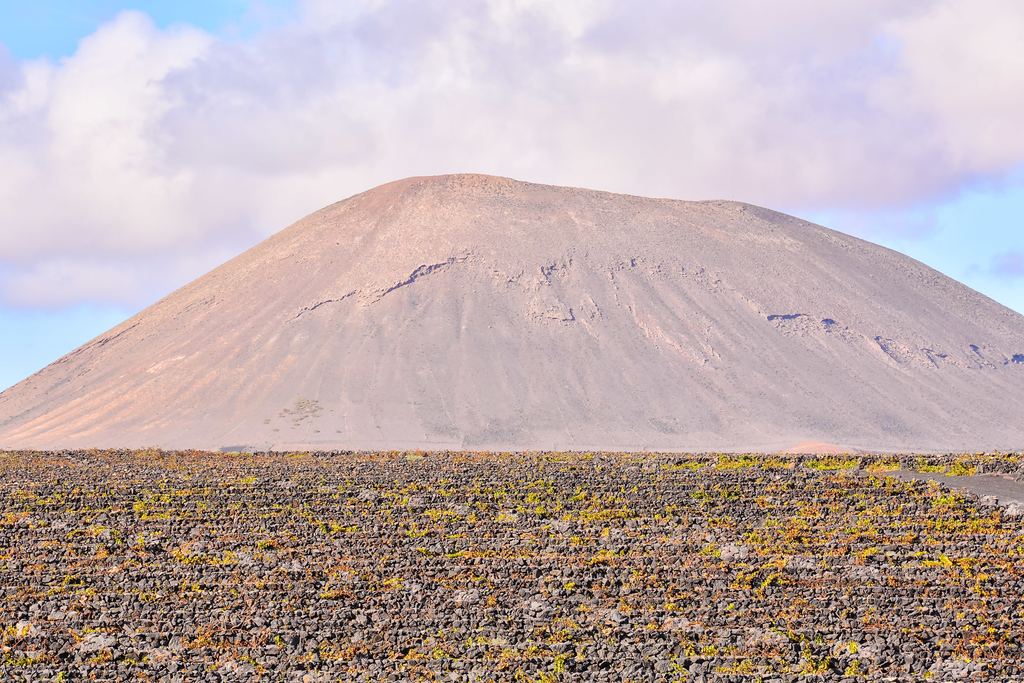
La Geria: a landscape of craters, dug by hand
Lanzarote's wine country does not look like agriculture. It looks like a lunar impact field, and it is entirely artificial.
After the eruptions of the 1730s buried much of the island under a layer of black lapilli, farmers worked out something remarkable. The porous ash, they found, condenses moisture from the night air and passes it to the soil beneath, on an island that receives almost no rain at all. So they dug down through the ash to reach the old soil, planted a single vine in each pit, and built a low crescent wall of lava blocks around it to shelter it from the trade wind.
The result is thousands of individual hollows, each with one vine at the bottom, stretching across the valley. It is a functioning water-harvesting system with no moving parts, invented by people with no other option, and it is why an island with around a hundred millimetres of annual rainfall grows Malvasia.
It also means the yields are tiny and everything is done by hand. Which is the other reason volcanic wine is expensive.
Reason three: the vines had to be trained strangely, and that changed the wine
Each of these places invented its own answer to the same set of problems: wind, sun, and no water.
Santorini weaves the vine into a basket, called a kouloura, lying on the ground with the grapes growing on the inside. It shelters the fruit from the meltemi wind, which would otherwise sandblast it, and shades it from the sun. From a distance the vineyards look like fields of woven baskets, and from a car they look like nothing at all.
The Azores built currais: a grid of dry-stone walls made from lava blocks, each enclosing a small plot, protecting the vines from the Atlantic wind and salt. The landscape on Pico is a UNESCO World Heritage Site for precisely this reason, and it is best understood from above, where the pattern is unmistakable.
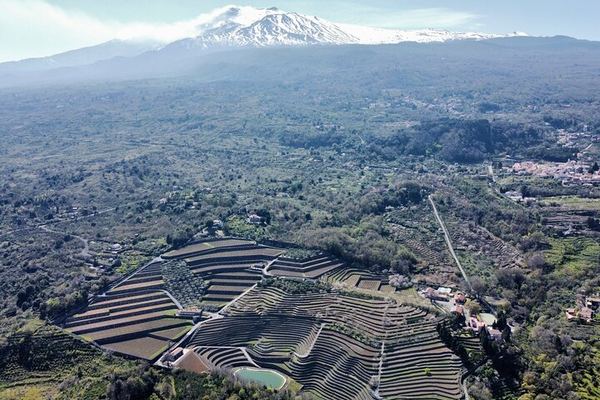
Etna went up instead of hiding. Vineyards run from around 400 metres to over 1,000, which at that latitude means warm days and genuinely cold nights, and slopes divided into contrade whose soils differ from one lava flow to the next. That combination has led to the comparison with Burgundy, which is doing some work but is not absurd: the wines from adjacent plots are noticeably different, and the reason is which century's eruption is underneath them.
Vesuvius makes Lacryma Christi on the slopes above Pompeii, from vines growing in the deposits of eruptions that killed the people who farmed here before.
What to actually drink
| Where | The wine | What makes it distinctive |
|---|---|---|
| Mount Etna, Sicily | Etna Rosso from Nerello Mascalese; Etna Bianco from Carricante | High-altitude vineyards on lava flows of different ages. Pale, structured reds that surprise people expecting Sicilian weight |
| Santorini, Greece | Assyrtiko, and the sweet Vinsanto | Ungrafted ancient vines on pumice, trained into ground-level baskets. High acidity and a saline edge |
| Lanzarote, Canaries | Malvasia Volcanica | Grown in hand-dug pits in black ash that harvests dew. Around 100 mm of rain a year |
| Pico, Azores | Verdelho and local blends | Dry-stone walled plots on bare lava beside the Atlantic. A UNESCO landscape |
| Vesuvius, Campania | Lacryma Christi, red and white | Slopes above Pompeii, on the deposits of the eruptions that buried it |
| Tenerife | Listan Negro and Listan Blanco | Some of the highest vineyards in Europe, and ungrafted vines that phylloxera never reached |
Visiting them
Wine is the most reliable volcanic experience there is. It does not depend on the weather, the alert level, or whether anything is erupting, and it happens at a comfortable altitude with somewhere to sit down.
It also solves a practical problem: on Etna and Vesuvius the summit is best in the morning, which leaves an afternoon. A vineyard on the lower slopes is fifteen minutes away and looks up at the mountain you were standing on. Combination tours exist for exactly that reason and they are one of the few combination products we would actively recommend.
Two things worth knowing. Harvest is late here, sometimes into October at altitude on Etna, so the vineyards are working later in the year than you might expect. And the small producers are genuinely small: several of these regions are made up of growers with a few hectares, which is why booking ahead matters more than it would in Tuscany.
Quick answers
Can you really taste volcanic soil in wine?
The wines share a recognisable character across regions that have nothing else in common, which is suggestive. Whether it comes from minerals themselves, or from the altitude, temperature swing, grape varieties and low yields that go with volcanic terrain, is not settled. Winemakers are confident. The science is more cautious.
Why are volcanic wines expensive?
Yields are very low, almost everything is done by hand because machinery cannot work on the terrain, and the regions are small. A Lanzarote vineyard produces one vine per hand-dug pit. That is not a scale on which cheap wine gets made.
Are the vines really centuries old?
The rootstocks, in places. On Santorini and parts of the Canaries the vines were never destroyed by phylloxera and were never grafted, and the traditional practice of cutting back and regrowing from the same root means some root systems are estimated at several hundred years. The visible plant is young; what it is growing from is not.
Is it safe to farm on an active volcano?
People have done it for thousands of years and continue to, because the soil is worth it. Etna's vineyards have occasionally been reached by lava flows, and the response has generally been to wait, and then plant on the new rock once it has weathered. On the timescale of a family, that is a rational bet.
The mountain in the morning, the wine in the afternoon
Etna's vineyards run from 400 to over 1,000 metres on the flanks of the volcano, and most tours combine the two.

Etna wine tours
Vineyards on the lava flows, usually combined with the mountain in the morning.
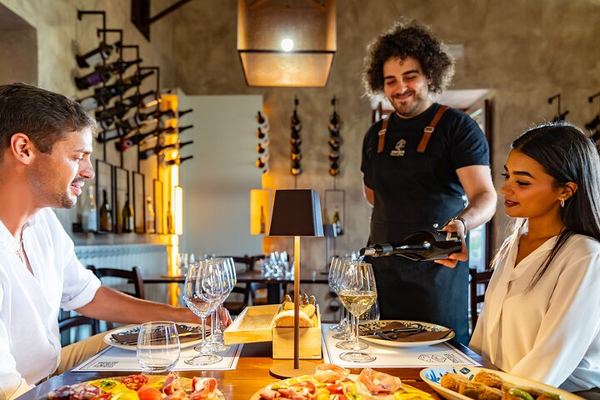
Etna and Wine Tasting from Catania: Silvestri Craters and the Enoteca dell'Etna
Etna Tribe runs the day: paths inside the Parco dell'Etna, the old Silvestri craters, a lava cave with helmets, then the tasting at the Enoteca dell'Etna.
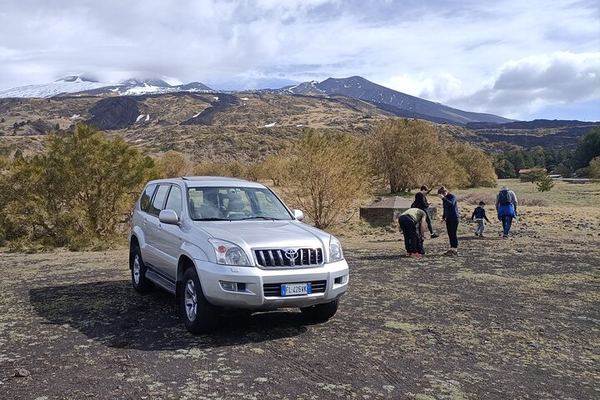
Etna by Jeep from Catania: Lunch Included, Vegan Menu on Request
The guide rides in the Jeep with you from the 8am pick-up to the 14:30 return. Vegan and vegetarian menus at booking; boots and jackets for hire on site.
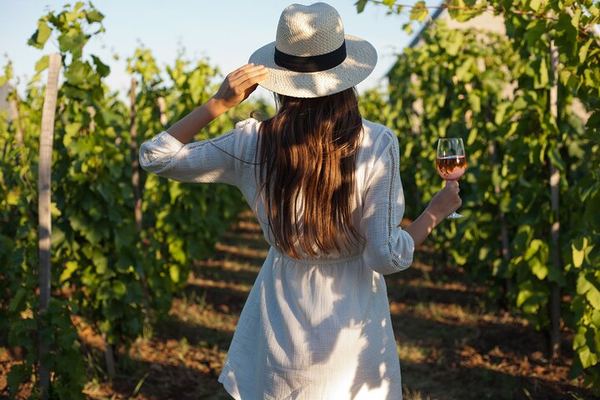
Etna from Taormina: the Five 1865 Sartorius Craters and Gambino Winery
Pick-up in Taormina, not Catania, then the five craters the 1865 eruption opened along one fracture, and two hours at Gambino winery for lunch and wine.
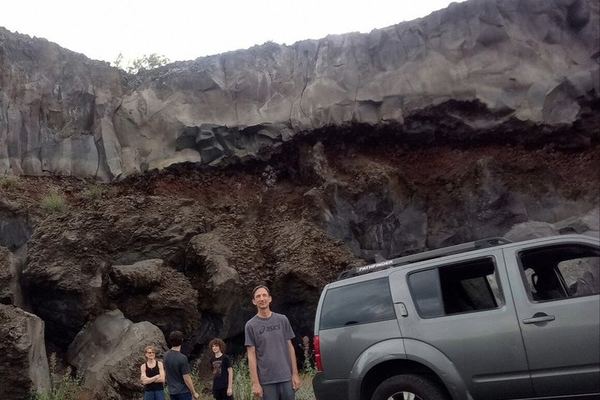
Etna Jeep Off-Road: Hornitos, the 1766 Carcarazzi Cave and Lunch at 2,000 m
Hornitos and lava tunnels on foot, a vertical cave inside the 1766 Calcarazzi vents, then Etna DOC white, rosé and red, and lunch in a hut at 2,000 metres.
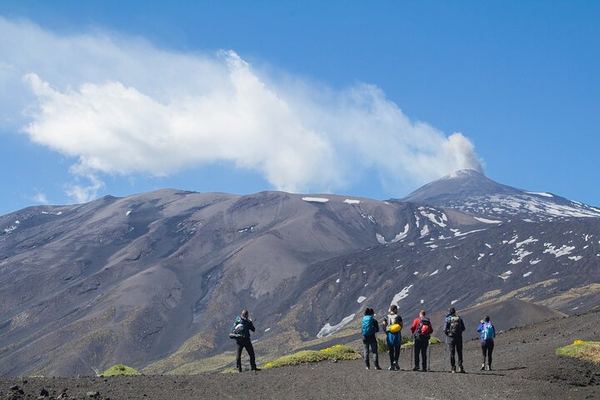
Etna Morning Tour from Catania: the 1892 Silvestri Craters and Lunch
Two hours at 2,000 metres across flows from 2001 and 2002, plus a lava cave with helmet and torch. Sicilian tasting and light lunch before the drive back.
Etna Private Tour with Wine, Honey and the 1992 Lava Flow
A Mercedes V-Class and an English-speaking driver to Rifugio Sapienza at 2,000 m, the Silvestri craters, honey by the 1992 lava flow, and a winery lunch.
Ratings collected by Viator and Tripadvisor
Data verified on. The phylloxera history and the cultivation methods are well documented. The question of mineral flavour transfer is genuinely open, and we have not resolved it here. Editorial Policy