
The most reliable way to have a volcano day go wrong is to arrive without something you did not know you needed. Not equipment. Paperwork.
What makes this harder than it should be is that the rules almost never live where you would look for them. They are not on the tourist board site. They are in a mayoral ordinance, a national park's access regulations, a civil protection procedure, or in one memorable case in the internal policy of a village guides' association that has controlled the paths since long before anyone was booking online.
Here is what we have been able to establish, and where our own certainty runs out.
Four different kinds of authority
Before the table, the distinction that makes sense of it. When someone says a guide is mandatory, it can mean four quite different things.
National or park regulation. Written down, enforceable, usually with a stated penalty. Chile's national forestry service requires a guide on Villarrica unless you can document mountaineering credentials with a recognised association.
Civil protection, tied to an alert level. This is the Italian model, and it is the most misunderstood. The requirement moves with the volcano's status, and it can change during the day you are on the mountain.
Municipal ordinance. A mayor, acting as the local civil protection authority, sets access limits for a specific mountain. Stromboli works this way, with a fine for visitors and suspension from the professional register for any guide who ignores it.
Local monopoly. No law at all. On Mount Batur in Bali, the guides' association based in the lakeside villages controls the trails and enforces its own requirement. It is real, in the sense that you will not get up the mountain without complying, and it is not legislation.
The table
| Destination | Guide required? | Who sets the rule | Permit or booking |
|---|---|---|---|
| Mount Etna, Italy | In the designated zone, yes | Municipal ordinance following civil protection alert level | No named permit. Cable car and 4x4 are concession services |
| Stromboli, Italy | Yes above the free-walking limit | Ordinance of the Mayor of Lipari, with a fine attached | No permit, but the height limit is fixed by ordinance |
| Vesuvius, Italy | Accompanied access on the cone | Parco Nazionale del Vesuvio | Ticket, online only, timed |
| Mount Teide, Spain | No | Teide National Park | Permit for the final 172 m, timed slots, 50 people at a time |
| Mount Fuji, Japan | No | Yamanashi and Shizuoka prefectures, separately | Fee and registration, plus a daily cap on one route |
| Tongariro Crossing, NZ | No | Department of Conservation | Free booking advised; transport must be arranged |
| Mount Tarawera, NZ | Yes | Private Maori land, concession operator only | Included in the tour |
| Villarrica, Chile | Yes, unless credentialled | CONAF, the national forestry corporation | State booking system, with a 13-item kit list |
| Cotopaxi summit, Ecuador | In practice yes | Park administration | Refuge booking |
| Acatenango, Guatemala | Effectively yes | Local guide service at the trailhead | Entry fees on both sides of the mountain |
| Mount Rinjani, Indonesia | In practice yes | National park | Online booking through the park system, by gate |
| Mount Bromo, Indonesia | No | National park | Ticket must be bought online in advance |
| Mount Batur, Bali | Yes in practice | The local guides' association, not any law | Local entry fee plus the island tourist levy |
| Haleakala, Hawai'i | No | National Park Service | Sunrise entry reservation, opens 60 days ahead |
| Mauna Kea, Hawai'i | No | University of Hawai'i at Hilo | No permit. 4WD required above the visitor centre |
| Mount St. Helens, USA | No | US Forest Service | Climbing permit required year round, monthly release |
| Mount Rainier summit, USA | No | National Park Service | Climbing permit required above the high camps |
| Montanha do Pico, Azores | No | Parque Natural do Pico | Registration at the mountain house |
Five rules that are not what people think
Etna is not about altitude. Read almost any operator and you will be told a guide is required above 2,900 metres. We could not find that figure in any regulation. What the ordinance actually does is define a summit zone, above 2,500 metres, and a separate yellow zone drawn by the volcano observatory, which extends further on the Valle del Bove side. In the ordinary alert state, walking in the summit zone is free while the yellow zone requires a guide and a helmet. Raise the alert one step and everything above stops entirely, with guides obliged to bring clients down without waiting for a new order. It is a zone-and-status rule, not a contour line.
Stromboli's summit is not on the menu. The pictures everyone has seen, taken from the top looking down the Sciara del Fuoco, are from before the 2019 paroxysms. The ordinance in force allows guided ascent to a few hundred metres and free walking rather lower, with a fine for going higher. The volcano is still magnificent from a boat.
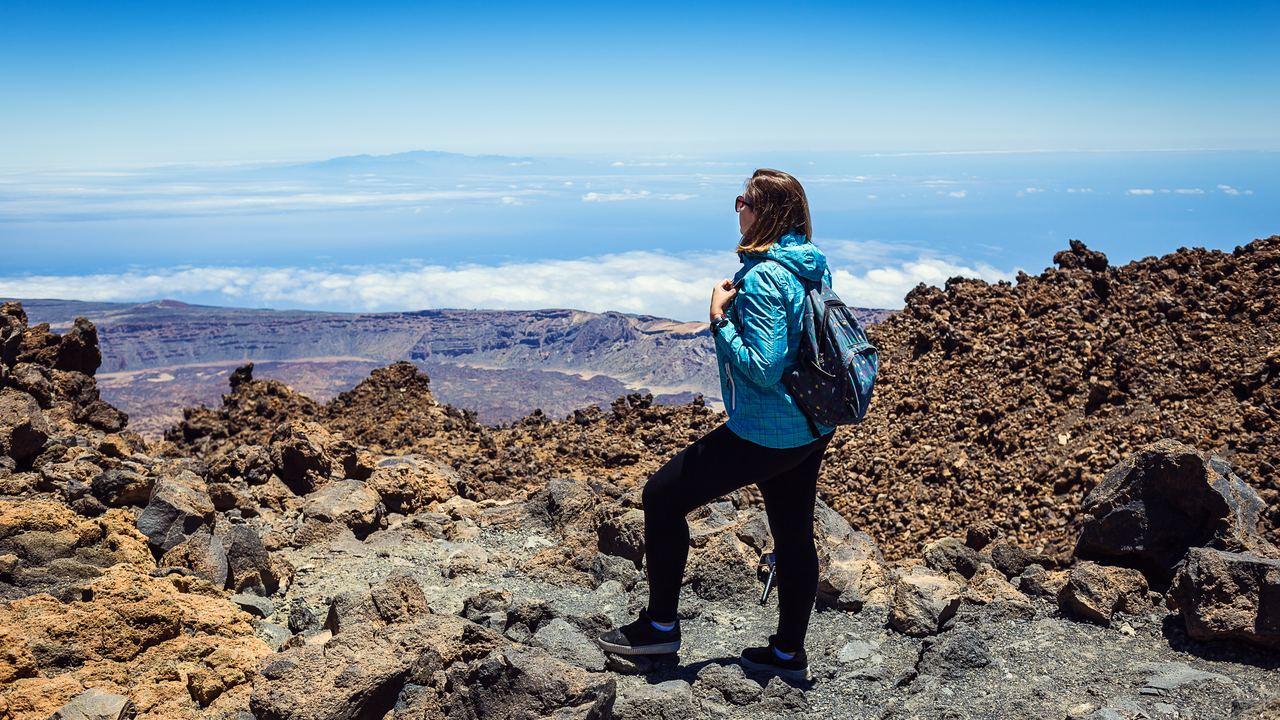
Teide's hardest part is the paperwork. The path from the cable car station to the actual summit is 172 metres of ascent and about forty-five minutes. It needs a permit, in a two-hour slot, with a cap of fifty people on the path and ten in the crater section. There is one way around it: guests who sleep at the mountain refuge and set off before the morning cut-off do not need it.
Fuji is two different mountains administratively. The routes are split between two prefectures which have adopted different systems. One caps daily numbers and shuts the gate overnight unless you have a hut booking; the other has no cap but requires you to complete a safety course before you are issued a code. Same mountain, same season, different rules depending on which side you start.
Villarrica asks who you are. It is the only itinerary we looked at where going without a guide requires you to submit mountaineering credentials to the park authority in advance. Not payment. Proof.

The one that catches everyone
Permits with a queue open long before you are thinking about it
Three of these are released on a schedule, and the schedule is the whole problem.
Haleakala's sunrise reservation opens sixty days ahead, with a smaller batch released 48 hours before. Summer mornings go quickly. There is no weather refund, so you can hold a reservation and see cloud.
Mount St. Helens climbing permits are released monthly, on the first day of the preceding month, in the morning Pacific time. Summer weekends disappear in minutes.
Vesuvius and Bromo both require the ticket to be bought online before arrival, and neither sells at the gate. That is a smaller obstacle and a very common one to trip over, because turning up at a national park expecting a ticket office is a reasonable thing to assume.
If your trip depends on one of these, book the permit before the flight. It is the wrong order for everything else in travel and the right order here.
What a guide is actually for
It is worth separating the legal question from the useful one, because they come apart.
On several of these mountains, no guide is required and one is still the difference between a good day and a bad one. Ijen at two in the morning, in sulphurous gas, on a path you have never seen, is a place where local knowledge earns its money even though nothing obliges you to buy it.
Conversely there are places where a guide is mandatory and adds nothing to your experience but is doing something important anyway, which is holding a radio. On Stromboli, the ordinance requires guides to maintain radio contact with a monitored listening point in the village for the whole excursion. That is not about interpretation. It is about somebody knowing where twenty-five people are if the mountain changes its mind.
Where our certainty ends
Some of these rules we read in the original document. Others we could not confirm from an official source, and rather than tidy that away, here is the list.
We could not find a published regulation behind the guide requirement on Acatenango, Cotopaxi or Rinjani, although the requirement is consistently applied in all three. We could not access the official conduct rules for Montanha do Pico, so the widely reported GPS tracker requirement is unconfirmed here. Departure times at Santa Ana in El Salvador are published by the tourism institute as an image rather than as text, and the timings that circulate come from secondary sources.
Ordinances change. Stromboli's limits have moved several times since 2019. Etna's are issued by individual municipalities, so the applicable one depends on which side you approach from. Whatever you read here, the version that matters is the one in force on your date.
Quick answers
Can I climb Etna without a guide?
In the normal alert state you can walk in the summit zone unguided, on marked routes, in daylight, with no bivouac. The separately drawn yellow zone requires a licensed alpine or volcanological guide and a helmet. If the alert rises a step, activity in both zones stops. Because it depends on the day's status and on which municipality's ordinance applies, check locally rather than relying on any figure you read in advance.
Is the Teide permit free?
It has historically been issued free of charge, but the booking system changed in 2025 and the official trail page now refers to public tariffs. We have not been able to resolve that contradiction from the source documents, so treat the cost as unconfirmed and the requirement as certain.
What happens if I go up without a permit?
It varies from being turned back to a fine. Stromboli's ordinance sets a financial penalty for visitors and professional suspension for guides. On permitted trails in the United States, rangers do check. The more serious consequence is usually insurance: a policy is unlikely to help you if you were somewhere you were not allowed to be.
Do I need a guide on Mount Fuji?
No. Fuji has no guide requirement on any of its four routes. What it has is a registration and fee system that differs between the two prefectures, a daily cap on one route, and an overnight gate closure unless you hold a mountain hut booking. The huts are also, in practice, the safety system.
Which of these should I book first?
Haleakala's sunrise slot and a Mount St. Helens climbing permit, because both are capped and released on a fixed schedule. Everything else on this page can be arranged closer to the date.
Tours that include the paperwork
On the regulated mountains, a guided tour is often simply the way the permit gets handled for you. Etna's summit crater area is the clearest case: the guide is the access.

Data verified on. Rules read from park regulations, municipal ordinances and national booking systems. Ordinances change: verify the version in force for your dates. Editorial Policy