

Most eruptions are local events. A mountain does something dramatic, a few valleys are affected, and the world carries on.
A small number are not local at all. They put enough material into the upper atmosphere to change the weather on the other side of the planet, and the historical record of those is legible in places you would not think to look: in famine registers, in tree rings, in the price of grain, and in the paintings of the decade that followed.
What follows is not a list of the biggest eruptions. It is a list of the ones whose consequences arrived somewhere else. Several of them have acquired stories that are better than the evidence, and where that is the case we have said so.
Eleven that mattered
Ordered by date. The column that matters is not the size of the eruption but the distance at which it was felt.
The origins
about 1600 BC
Thera, Santorini
One of the largest eruptions of the last ten thousand years removed the centre of a Greek island and left the caldera that tourists now photograph from Oia. Its relationship to the decline of Minoan Crete is argued about to this day, and the dating has moved by a century or more as the evidence has improved. What is not in doubt is that the bay is the crater.
AD 79
Vesuvius buries Pompeii
Not a lava flow but a column of ash and pumice that collapsed into pyroclastic surges. The detail that stays with you is that the surge which killed the most people at Pompeii left a deposit only about three centimetres thick. Being buried was not what did it. We also have an eyewitness account, from Pliny the Younger, who watched from across the bay and whose name is now attached to the eruption style.
1257
Samalas, Lombok
For centuries there was a mystery: ice cores recorded a colossal sulphur spike in the thirteenth century, followed by crop failure and a mass grave in London, but nobody knew which volcano. In 2013 it was identified as Samalas, on Lombok, in the complex that includes Mount Rinjani. Trekkers on Rinjani today are walking around the caldera it left.
The growth
1783
Laki, Iceland
A fissure over twenty kilometres long erupted for eight months and produced the largest lava flow of the last thousand years, second in the historical record only to Iceland's own Eldgja in the tenth century. The fluorine-laden haze killed most of the country's livestock, and the famine that followed caused around 8,000 excess deaths, roughly one Icelander in six. The haze reached Europe, where the summer was remembered for a sun that stayed dull and red.
1815
Tambora, Indonesia
The largest eruption in recorded history. The following year, 1816, is known in Europe and North America as the year without a summer: snow in June in New England, failed harvests, food riots. It is routinely credited with the wet Lake Geneva summer during which Mary Shelley began Frankenstein, but that link has been challenged in print and is thinner than the retellings suggest. The claim that better survives scrutiny is stranger: the collapse in oat harvests, and therefore in horses, is a plausible spur to the invention of the first bicycle in 1817.
1883
Krakatoa
The explosion was heard nearly five thousand kilometres away, which makes it the loudest sound in the documented record. The precise decibel figures that circulate are later reconstructions, since the unit itself was not defined until 1929. And the eruption is not what killed people: around 94 per cent of the roughly 36,000 dead were killed by the tsunamis. For years afterwards sunsets were unusually vivid worldwide, and a fire brigade in New York turned out to a sky people took for a distant blaze.
1902
Mont Pelee, Martinique
A pyroclastic flow reached the town of Saint-Pierre in minutes and killed nearly all of its roughly 28,000 inhabitants. It is the deadliest eruption of the twentieth century, and it is the event that established pyroclastic density currents as the thing that actually kills people. The famous survivor, a prisoner in a thick-walled cell, is real; the third survivor who circulates online contradicts herself on the time of day and can be set aside.
Today
1980
Mount St. Helens
The north flank of the mountain collapsed in the largest landslide in recorded history, uncorking the pressurised system beneath it into a sideways blast. Fifty-seven people died and the summit lost four hundred metres. It rewrote what volcanologists expected a stratovolcano to be capable of, and it is climbable today.
1991
Pinatubo, Philippines
The second largest eruption of the twentieth century, and the one that proved the science. Sulphate aerosols in the stratosphere cooled global average temperatures by around half a degree for two years. Evacuations based on monitoring saved tens of thousands of lives, which is the reason volcano observatories exist.
2010
Eyjafjallajokull, Iceland
A modest eruption by any historical standard, under a glacier, which produced fine ash and put it straight into the North Atlantic flight corridors. Roughly a hundred thousand flights were cancelled across Europe over several days. It is the clearest demonstration that a volcano's global impact depends less on its size than on where the ash goes.
2022
Hunga Tonga
An underwater eruption that sent a plume into the mesosphere, higher than any previously measured, and generated a pressure wave that circled the planet several times and was recorded by barometers everywhere. It also injected an extraordinary quantity of water vapour into the stratosphere, whose climate effects are still being worked out.
Why an Indonesian volcano ruins a European harvest
The mechanism is worth understanding, because it explains why size alone does not predict global consequences.
Ash falls out of the atmosphere within days. It is a local and regional problem, and an aviation problem, but it does not linger. What lingers is sulphur dioxide injected into the stratosphere, above the weather, where nothing rains it out. There it converts into sulphate aerosols, fine droplets that reflect sunlight back into space.
The result is a thin global veil that cools the surface for a year or two. Half a degree does not sound like much until you consider that harvests are decided at the margins: a shortened growing season, a late frost, a wet summer. That is the chain from Tambora in 1815 to bread riots in France in 1817.
The condition is height, not volume. An eruption has to punch through the tropopause, which is around eleven kilometres at the poles and seventeen at the equator, to have this effect. Plenty of large eruptions do not, and they stay local.

The one that is still pending
Two thirds of a million people live in the red zone
Vesuvius last erupted in 1944, in the middle of the Italian campaign, when falling lapilli described as the size of a football tore through the fabric and plexiglass of American bombers parked at Pompeii airfield and destroyed most of a squadron. The aircrew got away with cuts and a sprained wrist. The 23 people who died were civilians, killed by roofs collapsing under the weight of ash.
Since then it has been quiet, and the quiet is what worries volcanologists rather than reassuring them.
The Italian civil protection red zone around the volcano covers 25 municipalities and something over 670,000 residents, which makes it the largest population under evacuation planning for any volcano in the world. Count everyone living on the flanks and the figure approaches three quarters of a million.
Standing on the crater rim, none of this is obvious. The view is the Bay of Naples, the walk is a straightforward two hours, and the volcano behaves like an attraction. It is worth remembering on the way up that Pompeii is fifteen minutes away by road, and that the people who lived there had no reason to think of Vesuvius as a volcano at all: it had been quiet long enough that nobody had attached the word to it.
What the historical record is good for
Two things, and they pull in opposite directions.
The first is reassurance. Eruptions on this list happen a handful of times per century, and the ones with global reach are rarer still. The chance of one occurring during your trip is negligible, and the chance of you being harmed by it is smaller.
The second is perspective. Every one of these volcanoes had a period of quiet before it did something enormous, and in most cases the quiet was long enough that the local population had stopped thinking of the mountain as dangerous. Pompeii is the extreme case: there was no living memory of an eruption, and no Latin word yet for what a volcano did.
The people who study these mountains are not worried about the ones erupting now. They are worried about the ones that have not erupted in a very long time and have a lot of people living on them.

Quick answers
What was the biggest eruption in history?
In recorded history, Tambora in 1815. Going further back, Thera around 1600 BC and Samalas in 1257 were comparable or larger. On geological timescales all of these are dwarfed by caldera-forming eruptions at places like Yellowstone and Campi Flegrei, none of which happened while anyone was writing things down.
Did a volcano really cause the year without a summer?
Yes, and it is one of the better-documented volcanic climate effects. Tambora erupted in April 1815; 1816 brought snow in June in New England, failed harvests across Europe and widespread food shortages. The cooling was around half a degree globally, which was more than enough at the margins of the growing season.
Was the Krakatoa explosion really the loudest sound ever?
The loudest in the documentary record, heard by people nearly five thousand kilometres away, with a pressure wave that circled the globe several times. The specific decibel figures that circulate are later arithmetic rather than measurements: the unit did not exist until 1929.
Could Vesuvius erupt again?
Yes, and it is expected to. It is an active volcano with a well-documented history of large eruptions, and it is monitored accordingly. What is not predictable is when, or how large. The visit itself is a managed and ordinary activity: the civil protection planning exists for the population living on the volcano, not for the two hours you spend on the cone.
Why do the death tolls keep getting revised?
Because most of them were never counted, they were estimated, and the estimates rest on records kept for other purposes: parish registers, harvest returns, tax rolls. When a historian re-reads those sources the number moves. Laki and the English mortality of 1783 are the clearest case, and the honest position is that the figure is contested rather than settled.
Vesuvius and Pompeii
The crater and the city it buried, fifteen minutes apart.
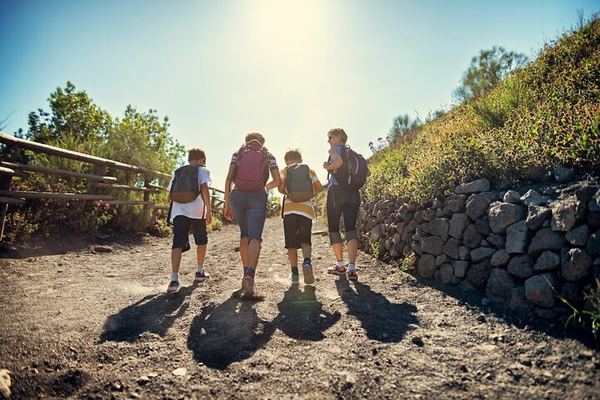
Pompeii and Vesuvius from Naples: Choose the Crater Trail or the Valley of Hell
On Vesuvius you pick the trail: the summit crater, or the 1944 lava flows and their small cave. Pompeii comes first, with an archaeologist and a wine lunch.
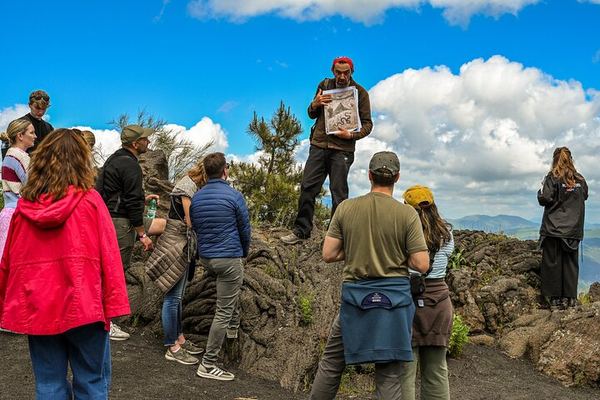
Pompeii and Vesuvius from Naples with an Archaeologist, a Mountain Guide and Lunch
An archaeologist leads the two hours inside Pompeii and a mountain guide takes the crater, with skip-the-line entry at both gates and lunch in between.
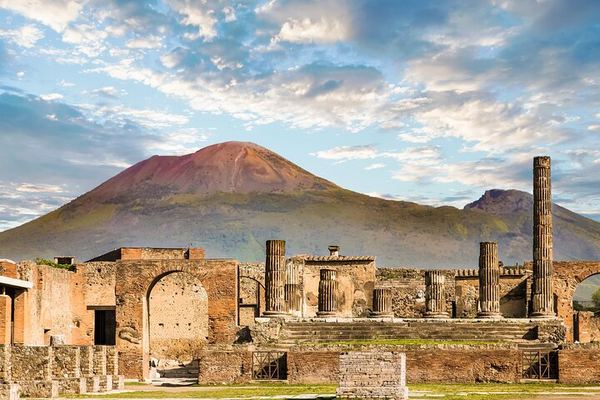
Pompeii from Rome with City Wonders: Vesuvius Crater or a Geologist's Walk
City Wonders runs it from Piazza del Popolo, and Vesuvius splits two ways: a hike to the crater rim, or a naturalistic walk with a professional geologist.
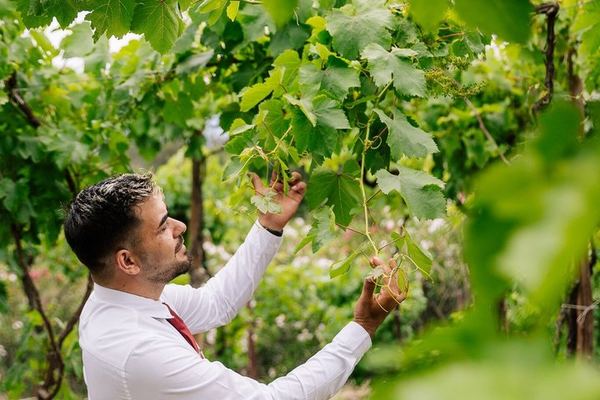
Pompeii Guided Tour & Horse Riding on Vesuvius with Lunch
Skip-the-line Pompeii with an archaeologist, lunch and Vesuvian wine at a ranch, then a guided ride at 500 metres. The horses go at a walk, not a gallop.
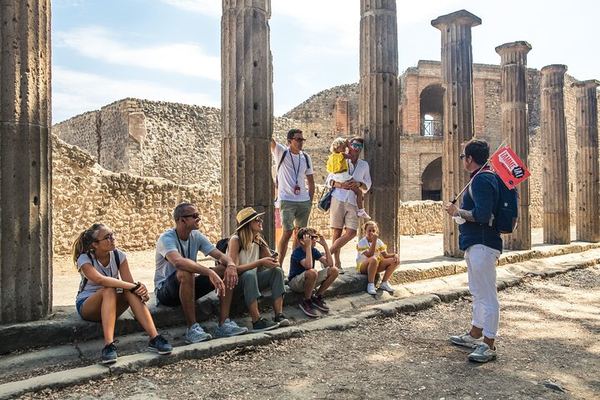
Pompeii in Two and a Half Hours, then Vesuvius at 1,280 m
An early departure to beat the queues, two and a half guided hours inside Pompeii, and the last 200 metres of Vesuvius on foot to the crater rim at 1,280 m.
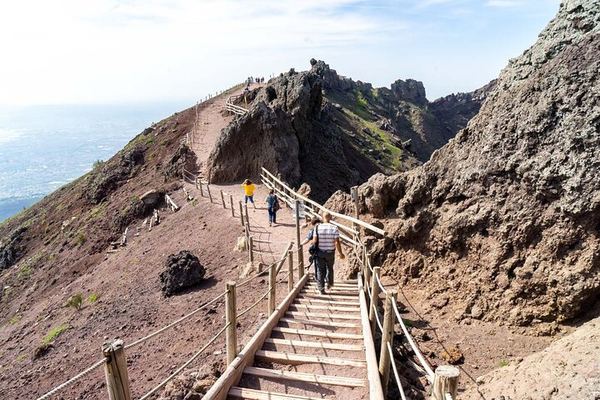
Pompeii Tickets, Lunch, and a Mountain Guide at the Crater
Entrance tickets and a light lunch are in the price, and a mountain guide meets the group at the crater rim of Vesuvius, 1,280 metres up. Sorrento or Naples.
Ratings collected by Viator and Tripadvisor
Stand on the one that buried Pompeii
The walk up the Gran Cono is 175 metres of ascent on a made path, and Pompeii is fifteen minutes away at the bottom.
Data verified on. Historical eruption accounts and their documented consequences. Where dating or attribution is debated, such as Thera, we say so rather than picking a figure. Editorial Policy