
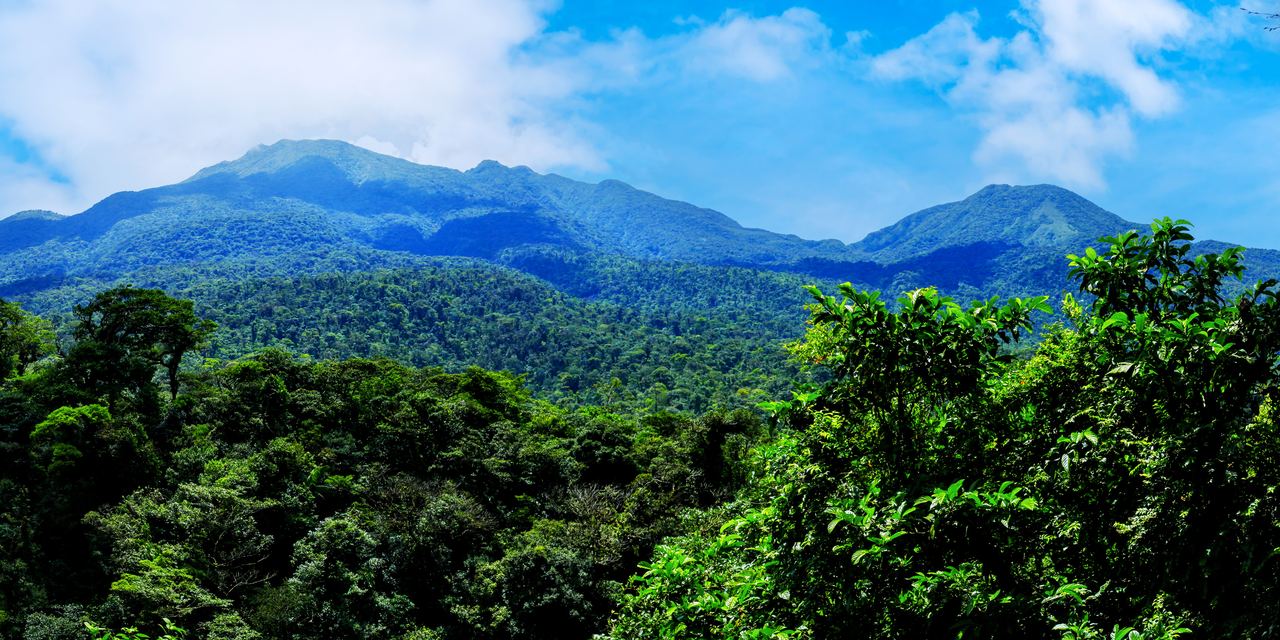
Río Celeste and Tenorio Volcano: the Turquoise River
The colour is an optical effect rather than a chemical reaction, and heavy rain washes it out completely. Twelve trips, from 44 EUR.
Fill a bottle from the Río Celeste and the water in it is clear. That single fact undoes most of what is written about this river, including the descriptions attached to the tours that take you there. The turquoise is not dissolved in the water and it is not a dye. It is happening on the riverbed, and it only works when you are looking at a certain depth of it from above, which is why the most photographed river in Costa Rica cannot be taken home in a glass.
This page covers the three things that decide whether the trip is worth your day: what actually causes the colour, the weather that removes it, and what the twelve listings here are really selling, which ranges from a four-hour hike to a float on an inner tube for 44 EUR.
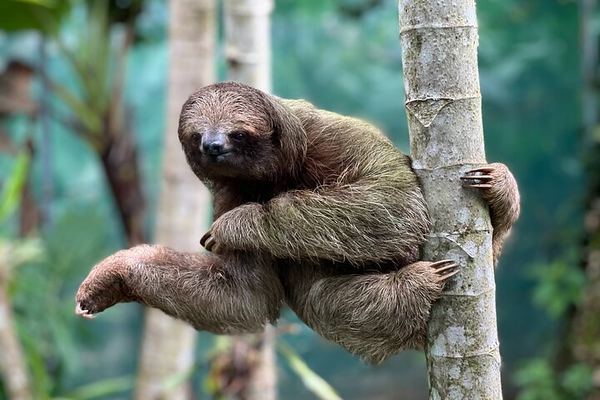
Private 4-in-1: Sloth Reserve, Rio Celeste Swimming Hole and Llanos del Cortés
A private guide in a protected reserve, the swimming hole on the Rio Celeste, and the sand beach under Llanos del Cortés. The itinerary can be adjusted.
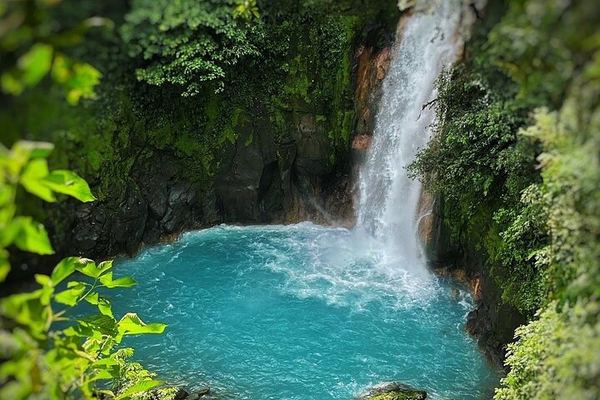
Private Rio Celeste and Sloth Sanctuary Tour with Lunch at Doña Carmen's
A private guide, a guaranteed sloth sighting at the sanctuary, and lunch at El Sabor de Doña Carmen, where a butterfly sanctuary fills the wait for the food.
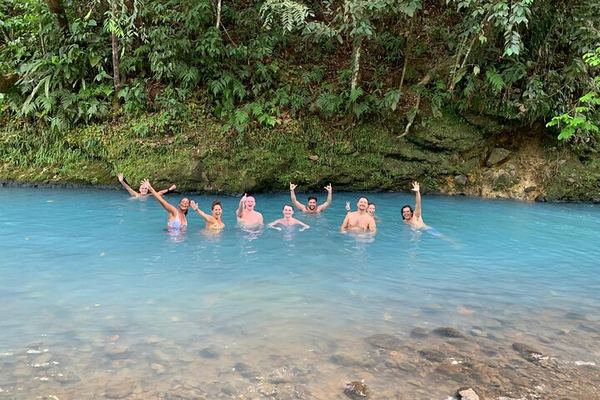
Rio Celeste and Tenorio Hike: Bride's Veil Falls, Hot Springs and Mud Pools
The walk reaches the Bride's Veil falls and the exact confluence of the Buena Vista and Roble, then adds mineral hot springs and volcanic mud pools.
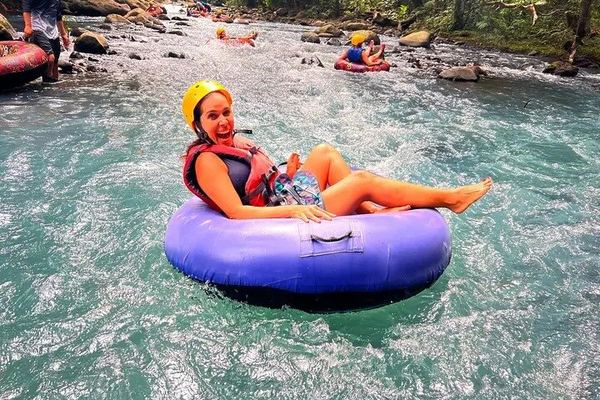
Rio Celeste Combo: 90 Minutes of Tubing, the Blue Waterfall and the Tree of Peace
Ninety minutes of tubing with swim stops and fresh fruit, the 400-year-old Tree of Peace, and a drive back routed for sloths and monkeys rather than speed.
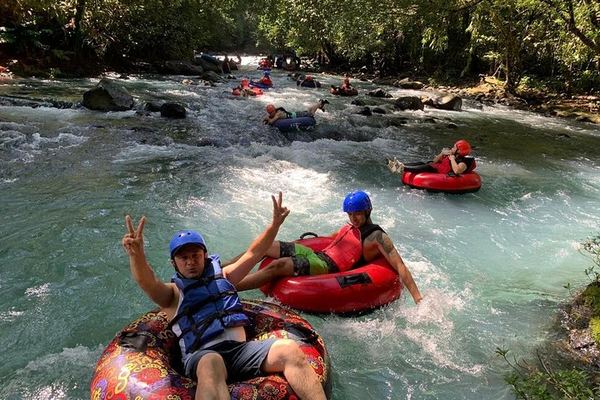
Rio Celeste Float: Tubing Between the Rapids and the Still Water
A float descent that alternates fast water with backwaters where the current drops off, under vegetation that closes over the Rio Celeste in places.
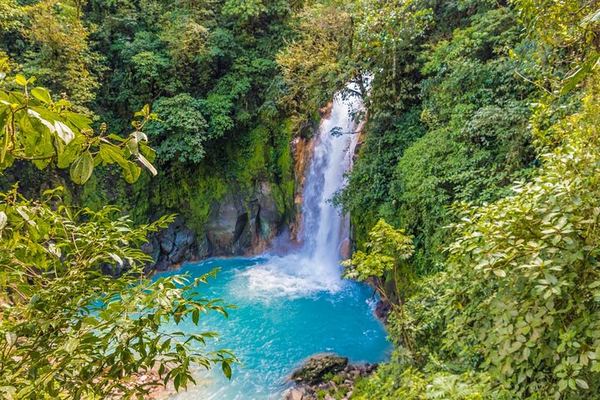
Rio Celeste Full-Day Hike from La Fortuna: Waterfall, Lookout and the Colour Change
A 4-hour walk in Tenorio Volcano National Park to the waterfall, the lookout and the junction where two mineral rivers turn the water blue. Lunch afterwards.
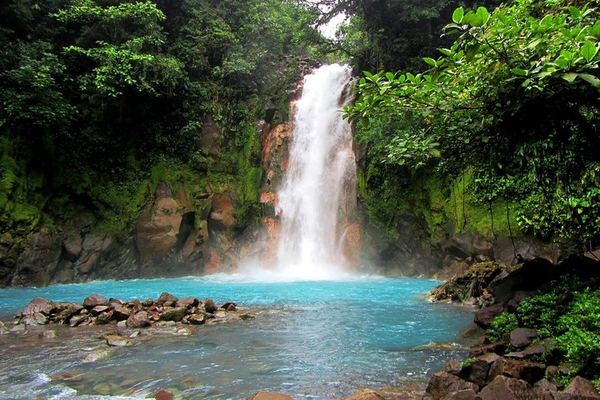
Rio Celeste Hike with Swimming and Lunch at Don Alexis Farm
The park section covers Los Teñideros, Los Borbollones and the waterfall; the swimming and the Costa Rican lunch happen afterwards, at Don Alexis Farm.
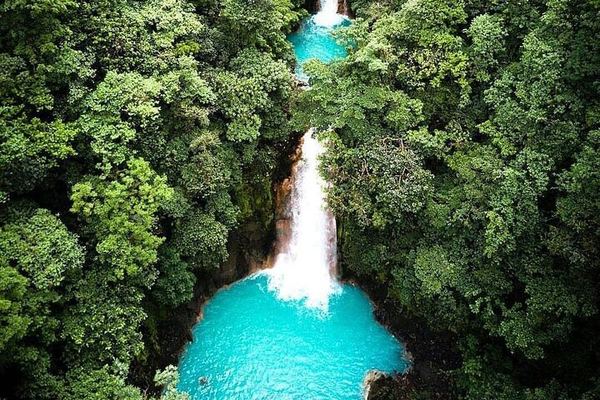
Rio Celeste, Llanos de Cortes and Jungle Life Sloth Sanctuary from Guanacaste
Two waterfalls in one day out of the Guanacaste beaches, plus rescued sloths at Jungle Life. Pick-ups from 6:00 am and a three-hour drive to Tenorio.
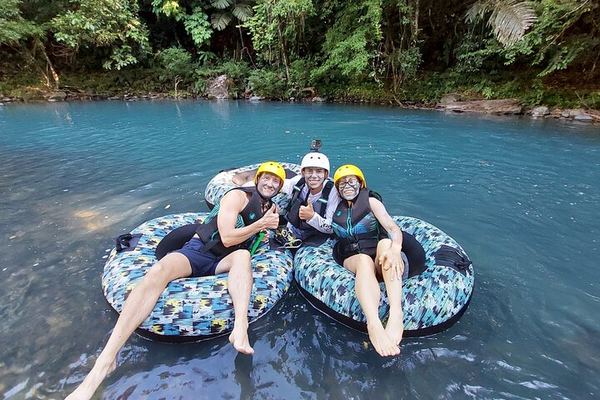
Rio Celeste Tubing with a Certified Naturalist Guide and GoPro Photos
A certified bilingual naturalist stays with the group for the whole descent, and the GoPro photos are taken for you. Five departures a day from the operator's base.
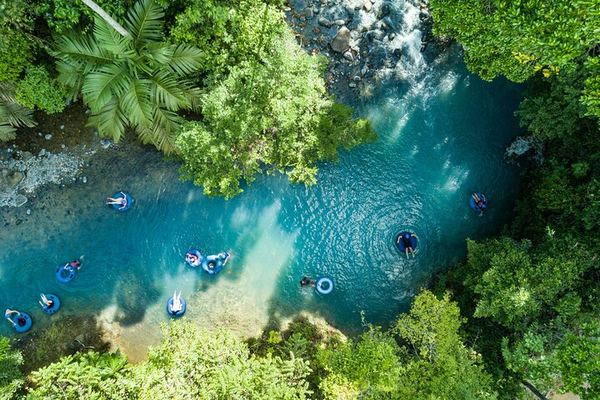
Rio Celeste Tubing with Rio Celeste Nature from the Katira Base
Run by Rio Celeste Nature from its riverside base at Katira, the one of its two offices that takes the adventure activities rather than the naturalist walks.
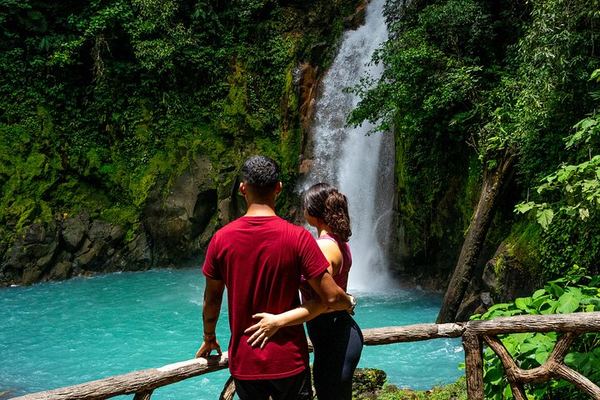
Rio Celeste Waterfall with Slothland Bijagua: Sloth Reserve, Coffee, Chocolate and Lunch
A private sloth reserve at Bijagua where the animals move loose, an interactive coffee and chocolate tour, and a typical lunch already covered by the price.
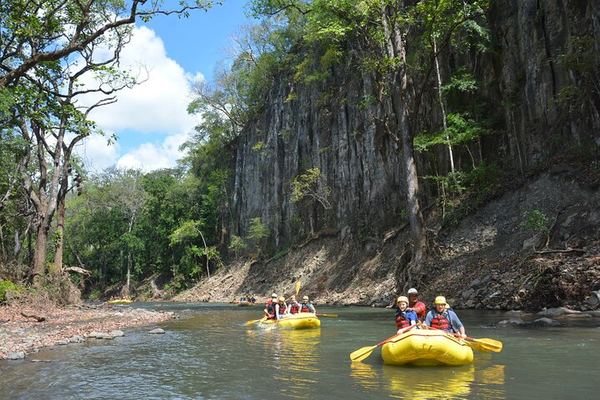
Tenorio River Rafting, Class III-IV, with RCR-Rafting from Cañas
RCR-Rafting has run the Tenorio since 2004, the first rafting company in Guanacaste. Class III and IV water through tropical dry forest, north of Cañas.
Ratings collected by Viator and Tripadvisor
Why the river is blue, and why the tour descriptions get it wrong
Read the listings for this river and you will be told, repeatedly, that the colour comes from a chemical reaction between two streams carrying different volcanic minerals. Three separate operators on this site say some version of it. It is a good story and it is not what happens.
The rocks and sediment of the riverbed below the confluence carry a whitish coating built from aluminium, silicon and oxygen. The particles in that coating are roughly 566 nanometres across, and particles of that size scatter light selectively: the wavelengths we read as blue are sent back towards the eye while the rest of the spectrum passes through and is absorbed. What you are looking at is a screen on the bottom of the river, lit from above. Nothing in the water itself is coloured, which is why a bottle of it is clear and why the river looks grey on an overcast day and electric under direct sun.
The confluence still matters, just not as a reaction. At the teñidero, where the Buena Vista river meets the acidic Quebrada Agria, the change in acidity causes the suspended particles to clump together into that particular size range. Above the meeting point both streams run clear. Below it the bed is coated and the river turns. Standing at the teñidero and watching the change happen over a couple of metres is the most convincing thing in the park, and it is a physics demonstration rather than a chemistry one.
Two clear streams meet and the river below them turns turquoise. Nothing has been added and nothing has reacted: the particles have simply reached the size at which they start returning blue light.
The days the colour is not there
This is the most common disappointment at Río Celeste and almost nobody selling the trip mentions it. After heavy rain the river carries sediment, the water becomes turbid, and the mechanism stops working: light no longer reaches the coated bed and comes back cleanly, so the turquoise goes grey-brown. It can take a day or two to clear.
The practical consequence is uncomfortable but simple. If it has rained hard in the last twenty-four to forty-eight hours, consider moving the trip. You will still get a good forest walk and a 30-metre waterfall, and you will not get the thing in the photographs. Costa Rican operators generally will not refund for this, because the park is open and the tour ran, and they are not wrong.
The dry months from January to April give the best odds, and even then a heavy afternoon downpour can affect the following morning. The green season is not hopeless, since the rain often falls in short afternoon bursts and the river recovers, but it is a gamble in a way that the dry season is not. Nothing about this is predictable more than a couple of days out, which makes Río Celeste one of the few excursions genuinely worth booking late.
The walk: 250 steps and a lot of mud
People book this expecting a viewpoint and find a hike. The full route out and back is somewhere between 6 and 7 kilometres depending on which source you trust, and it takes most groups three to four hours with stops. One operator on this site describes it plainly as a four-hour medium-tough hike, asks for a moderate level of fitness, and advises against it for anyone with poor cardiovascular health. That is an honest description and it is not the impression the photographs give.
The section everyone remembers is the staircase to the waterfall: 250 steps down, and the same 250 back up, in humidity, usually at the start of the walk when you are freshest and definitely not at the end. The waterfall itself drops around 30 metres into a pool that is the deepest blue in the park.
The rest of the trail is generally muddy. This is rainforest on the flank of a volcano in one of the wetter parts of the country, and the mud is present in the dry season too. Waterproof footwear with grip is the difference between an enjoyable morning and a careful one; several operators rent rubber boots at the entrance because so many people arrive in trainers.
| Detail | |
|---|---|
| Round trip | About 6 to 7 km, sources disagree |
| Time on the trail | 3 to 4 hours with stops |
| The staircase | 250 steps down to the waterfall, 250 back |
| Waterfall | About 30 m |
| Other stops | The blue lagoon, the teñidero confluence, the borbollones hot spring, a viewpoint |
| Surface | Muddy in most months, including the dry season |
| Entry hours | 08:00 to 14:00; everyone out of the park by 16:00 |
| Entry fee | 12 USD adult, 5 USD child, plus 13% tax |
The twelve trips, and the three that are not walks at all
The listings here split into three groups that have very little to do with each other, and the price gap between them is the largest of any destination in Guanacaste.
| What you book | Listings | Price | What it involves |
|---|---|---|---|
| Tubing on the Río Celeste | 3 | 44 to 61 EUR | A float downstream outside the national park; no hike, no waterfall |
| The waterfall hike | 5 | 78 to 105 EUR | The 6 to 7 km trail, the steps, the teñidero |
| Hike plus a sloth sanctuary or a second waterfall | 3 | 107 to 309 EUR | A full day, usually from Tamarindo or Playa Hermosa |
| Rafting the Tenorio river | 1 | 115 EUR | Class III and IV water, a different river, from Monteverde |
The tubing deserves a warning, because it is the cheapest thing in the whole region at 44 EUR and it is not what most people think they are buying. It is a float on the river downstream, outside the national park, and it does not include the waterfall, the staircase or the teñidero. It is a good couple of hours and it rates highly. It is not a visit to Río Celeste in the sense the photographs imply.
Where you start also matters more here than anywhere else in Guanacaste. Seven of these twelve trips leave from La Fortuna, on the Arenal side of the mountains, and only a handful from the Pacific beaches. If you are staying at Arenal this is a straightforward day. If you are staying at Tamarindo, it is a long one, and the 107 to 165 EUR listings are largely paying for the drive.
Booking, fees and the volcano nobody visits
Entry is 12 US dollars for a non-resident adult and 5 for a child, plus 13 per cent tax, which makes Tenorio the cheapest national park in this part of the country by a clear margin. Entry to the trail is permitted between 08:00 and 14:00 and the park empties by 16:00, so a late start is not a small inconvenience but a closed gate. As with every Costa Rican park since August 2023, tickets are booked in advance rather than bought on arrival, and Tenorio was selling normally when the system was checked on 12 August 2026.
One point where the sources genuinely contradict each other: whether you may swim. Some describe bathing at the waterfall pool and some state that it is prohibited, and both positions are published by people who ought to know. Ask at the entrance, and do not plan the day around a swim.
As for the volcano itself, almost nobody comes for it and there is a reason. Tenorio has no eruption in the historical record. What it has is an active hydrothermal system underneath: fumaroles, hot springs reaching around 94 °C at Los Hervideros, and periodic earthquake swarms, including one in January 2018 that produced close to a thousand tremors and a shock of magnitude 5.3. That buried heat is what feeds the chemistry of the river, so the volcano is not a bystander here. It is simply not something you look at.
Questions people actually ask
Why is the Río Celeste blue?
Because of an optical effect rather than a chemical reaction. The riverbed below the confluence carries a whitish coating of aluminium, silicon and oxygen whose particles are around 566 nanometres across, and particles that size scatter light back at the wavelengths we see as blue. The water itself is colourless: a bottle filled from the river is clear. The confluence matters because the change in acidity is what makes the particles clump to the right size.
Will the river actually be blue when I go?
Usually, but not after heavy rain. Sediment makes the water turbid, light stops reaching the coated bed, and the turquoise turns grey-brown for a day or two. The dry months from January to April give the best odds. If it has poured in the last day or two and you have any flexibility, move the trip: no operator will refund you for a brown river, and they are within their rights.
How hard is the hike?
Harder than it looks. Six to seven kilometres round trip, three to four hours, on ground that is muddy in every season, plus 250 steps down to the waterfall and 250 back up. One operator calls it medium-tough and advises against it for anyone with poor cardiovascular health. Waterproof boots with grip make an enormous difference, and several operators rent them at the entrance for exactly that reason.
How much does it cost to get in?
Twelve US dollars for a non-resident adult, five for children, plus 13 per cent tax. That makes Tenorio the cheapest national park in this part of Costa Rica, three dollars below Rincón de la Vieja. Entry to the trail is only allowed between 08:00 and 14:00 and the park closes at 16:00, and the ticket has to be booked in advance rather than bought at the gate.
Can you swim in the Río Celeste?
Published sources disagree, which is unusual and worth flagging. Some tours describe a swim at the waterfall pool and others state that bathing is not permitted inside the park. Ask at the entrance on the day and do not build the trip around it. Swimming is more reliably part of the tubing trips, which run on the river outside the park boundary.
Is the tubing the same thing as visiting Río Celeste?
No, and at 44 EUR it is the cheapest thing in the region for a reason. Tubing is a float on the river downstream, outside the national park, with no waterfall, no staircase and no teñidero. It is enjoyable and it rates well. If what you want is the turquoise waterfall from the photographs, book the hike instead.
Where is the best place to stay for this?
La Fortuna, near Arenal. Seven of the twelve trips here leave from there, and it is the shorter drive. From the Guanacaste beaches it becomes a long day and much of the price is transport. Tenorio sits on the divide between the two regions, which is why it is sold from both sides and why the departure point is the first thing to check in any listing.
Is Tenorio volcano itself worth visiting?
There is nothing to look at in the way there is at Poás or Irazú. Tenorio has no eruption in the historical record and no accessible crater; what it has is an active hydrothermal system with fumaroles, hot springs up to about 94 °C and occasional earthquake swarms. That system is what produces the minerals that colour the river, so the volcano is doing the work even though it is not the view.
Data verified on. Prices, durations and departure points from the twelve Río Celeste products on this site. Fees, entry hours and park status checked on the SINAC reservation system, 12 August 2026.