

Mount Etna Sunrise and Morning Tours
Eleven listings are filed here. Ten of them leave Catania between 08:00 and 09:00. One actually starts in the dark, and it is the only real dawn trip on the mountain.
Start with the disappointing part. Of the eleven listings gathered here, ten are morning tours: they collect you in Catania between roughly eight and nine, and by the time you are on the mountain the sun has been up for two or three hours. Exactly one of them walks in the dark and arrives at the craters as the light comes. It is priced at 170 EUR, it is restricted to experienced hikers, and it is the only genuine dawn product on Etna in this catalogue.
That does not make the other ten a waste. A morning on Etna is measurably better than an afternoon on it, for a reason nothing to do with romance. But it does mean that if you booked one of these expecting to watch the sun come up over the Ionian Sea from 2,000 metres, you booked the wrong thing, and this page is here to sort out which is which.
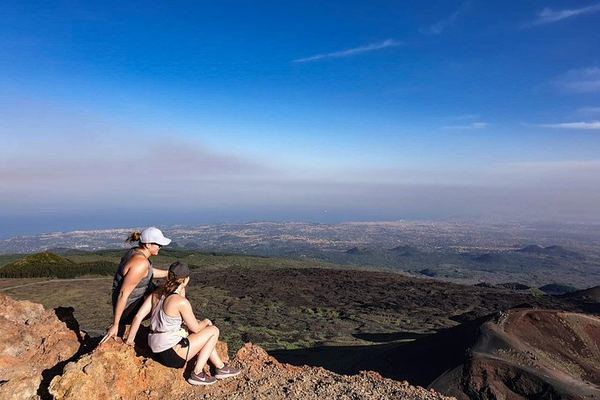
Etna Morning at 2,000 m: Come in Our Vehicle or Follow in Your Own
You can ride with the operator or follow in your own car. Naturalist guides, the 1991-93 flow, and a tasting at a certified farm in Zafferana.
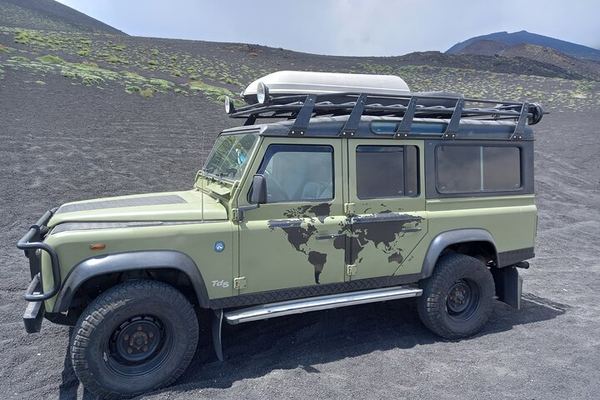
Etna Morning by 4x4: Lava Flows, a Cave and the Side Craters at 2,000 m
Driven in 4x4 to the lava flows that buried the Etna villages, a cave with helmets and torches, and the side craters at 2,000 metres. Look for the Defender.
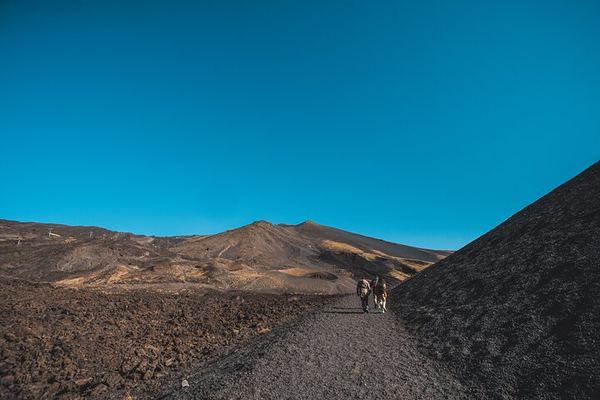
Etna Morning from Catania: Easy Grade, Suitable for Children and Older Walkers
Graded easy from the start, so children and older walkers manage it: Silvestri craters, a cave with helmets, and the flow that stopped at Zafferana.
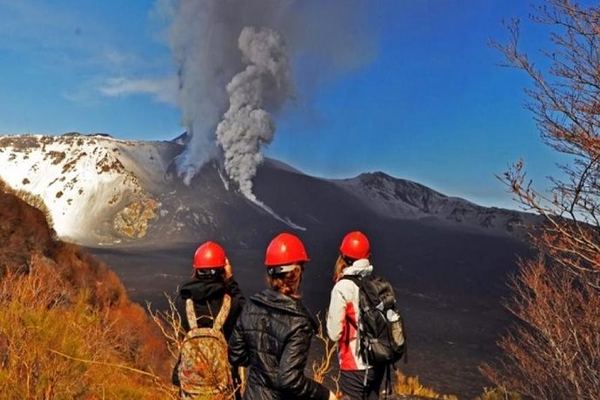
Etna Morning from Catania: Silvestri or Sartorius Craters, Six Hours
Six hours from Via Garibaldi, walking either the Silvestri craters at Rifugio Sapienza or the Sartorius craters at Citelli, with a tasting before the return.
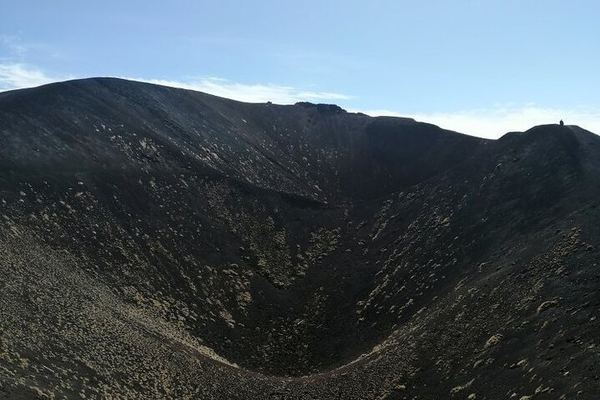
Etna Morning from Your Hotel: 2,000 m, Old Craters and a Lava Cave
Collected from your accommodation rather than a town meeting point, up to 2,000 metres, into old craters and through a lava cave with helmet and torch.
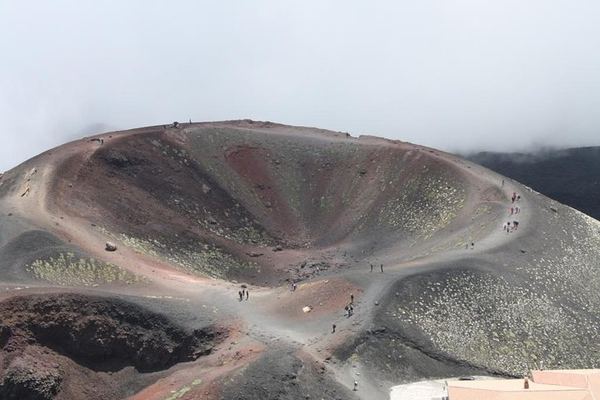
Etna Morning on the South Slope with a Sicilian Street Food Picnic
The walk ends with a picnic of Sicilian street food and red Etna wine on the mountain, or lunch in a chalet in winter. Helmets and torches supplied.
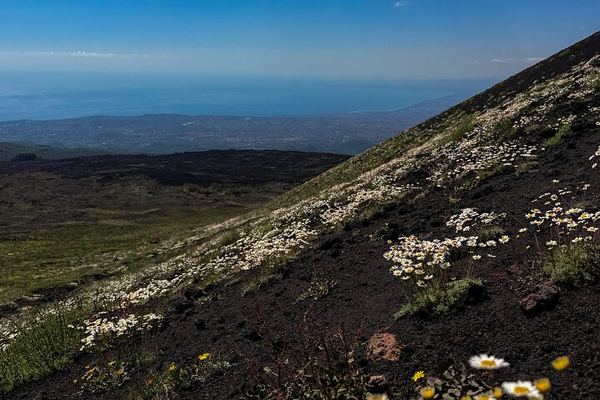
Etna Morning Tour from Catania by Jeep or Van: Hornitos, Lava Caves and the Bove Desert
Air-conditioned jeep or van to 2,000 metres, away from the busiest stops, with helmets and torches for the Hornitos and the caves. Zafferana produce at the end.
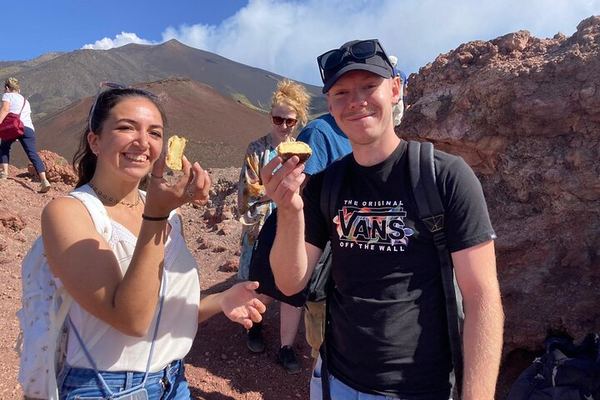
Etna Morning with Etnavic: the 1991-93 Lava Front and a Free Farm Tasting
Three pick-up points around Catania, the lava front that stopped at Zafferana Etnea, and a farm tasting of honey, oil and wine that costs nothing.
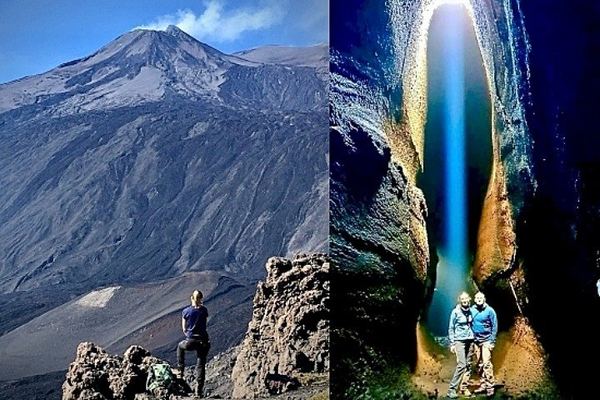
Etna Night Hike to Dawn: Craters and Lava Tunnel at First Light
Walked in the dark for experienced hikers, so that the craters and the lava tunnel appear as the light does. Own car to the start, full tank required.
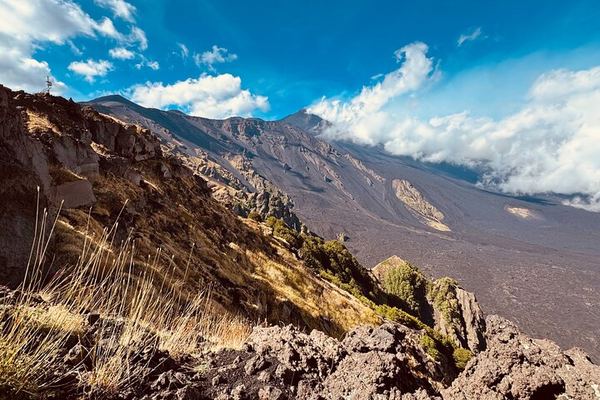
Etna Ring on the Valley Trek: Lava Sand, the Caldera and Two Seas
A welcome coffee, fine lava sand you sink into, and a caldera viewpoint that takes in both the Ionian and the Tyrrhenian on a clear day. Caving helmet supplied.
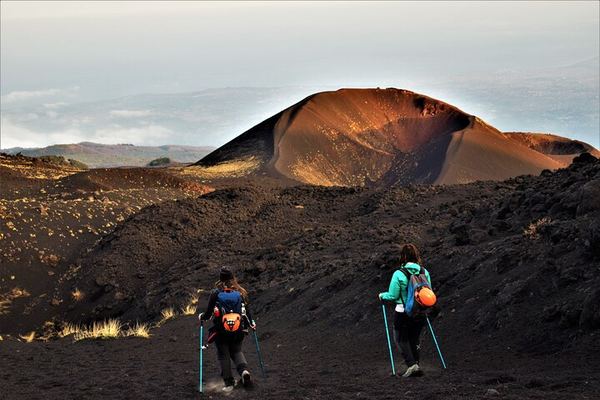
Etna Trek to 2,100 m and the 55-Metre Monpeloso Lava Tunnel
An easy grade with the numbers stated: about 2,100 metres, two hours of walking, 100 metres of ascent, and a 55-metre lava gallery dating from 252 AD.
Ratings collected by Viator and Tripadvisor
The eleven listings, and when they really start
Only one of these publishes a departure in the dark. The rest either state a morning pickup or leave it to the confirmation email, and the ones that do state it give times like 08:30 from Piazza Stesicoro or a pickup window on Via Giuseppe Garibaldi. On a mountain an hour and a quarter from the city, that puts you on the volcano at ten.
Read the second column before the price. Two listings sell themselves as morning or sunset, the same walk offered at either end of the day, which is the clearest evidence that most of this category is about avoiding the middle of the day rather than about the light at dawn.
| Listing | When it starts | What it is | Price |
|---|---|---|---|
| Hiking Etna special dawn | In the dark, walking by starlight | The craters and a lava tunnel at first light, then a descent through black sand. Experienced hikers only | 170 EUR |
| Etna morning trip | Morning | Trekking and a lava cave. 1,363 reviews, the most booked Etna trip on this site | 59 EUR |
| Etna morning tour from Catania | Morning | Easy level, old flows, sold as suitable for every age | 60 EUR |
| Catania morning jeep tour and lava caves | Morning | Jeep or van climbing to about 2,000 metres | 60 EUR |
| Etna morning experience with lunch | Morning | A walk to 2,000 metres on the southern flank, with lunch | 65 EUR |
| Trek and lava tunnel with gear, morning or sunset | Your choice of either | Easy grade, black sand, old craters, equipment supplied | 65 EUR |
| Etna morning from Catania | Morning, pickup on Via Giuseppe Garibaldi | Sapienza or Citelli, Silvestri or Sartorius craters, a lava cave with helmets when possible | 69 EUR |
| Etna 4x4 jeep tour in the morning | Morning | The flows that destroyed villages on the flank | 85 EUR |
| Etna morning tour starting from Catania | Morning | Extinct craters and lava trails, with the local food angle | 85 EUR |
| Etna trekking, ring on the valley | Morning or sunset | A circuit in the ash on the eastern side | 90 EUR |
| Etna morning tour 2000 mt | Morning | The short, complete version of the volcano | 99 EUR |
What time you would actually have to leave
Sicily sits far enough south and far enough east in its time zone that sunrise moves a long way across the year. At Catania it comes at around 05:35 in the middle of June and around 07:10 in January, a swing of roughly an hour and a half. Add the drive from the coast, about an hour and a quarter to the Sapienza side, plus a meeting point and the walk up to a viewpoint, and a genuine dawn on the mountain in July means leaving the city at about three in the morning.
That is why there is only one of these. It is not a marketing failure, it is arithmetic. A three o'clock departure is a different product from a holiday excursion, which is exactly how the operator that sells it describes it: a night walk for experienced hikers, guided by the stars, with the descent through black sand bringing you back into daylight.
| Month | Sunrise, about | Leave the coast at about |
|---|---|---|
| January | 07:10 | 04:40 |
| April | 06:30 | 04:00 |
| June | 05:35 | 03:05 |
| October | 07:15 | 04:45 |

The cold before the light
The coldest moment of any twenty four hours is the half hour before sunrise, and on Etna that lands on top of an altitude penalty of roughly six degrees per thousand metres. A June night that is 20 °C on the Catania seafront is in single figures at 2,000 metres and colder again on an exposed rim, before you count the wind, which on this mountain is rarely absent.
People arrive for morning trips dressed for a Sicilian summer because the taxi to the meeting point was warm. Every operator on this page hires out or lends jackets, and the ones running the night walk supply headtorches as a matter of course. Take a windproof layer and gloves in any month. You can carry them for four hours far more easily than you can borrow them at 2,000 metres in the dark.
The shadow, which is the thing worth being there for
At the moment the sun clears the horizon over the Ionian Sea, Etna throws its own shadow westwards across Sicily. Because the cone is nearly symmetrical and the light is nearly horizontal, the shadow is a clean triangle lying flat over the interior of the island, sharpest in the first ten or fifteen minutes and gone by the time the sun is properly up. From high on the mountain you are standing at the apex of it.
It is the one thing a dawn trip gives you that a morning trip cannot, and it does not survive cloud on the western side. Nobody can promise it. What the night walk operator promises instead is more defensible: the craters and the lava tunnel revealing themselves as the light arrives, and a descent through black sand in the early sun.
The mountain is at its most legible in the first hour of light. Every ridge on it has a shadow, and by eleven in the morning they have all gone flat.
The real reason to go early, and it is not the sunrise
Etna makes its own weather. Warm air rises off the flanks through the morning, condenses at altitude, and by late morning in the summer months there is often a lid of cloud sitting on the mountain from about 2,000 metres upwards. It burns off in the evening or it does not. This is why the same walk, sold identically for ten in the morning and for four in the afternoon, is a different experience: one sees the summit cone and the coast, the other sees the inside of a cloud.
The second reason is heat and there is no elegant way to put it. From the last week of June to early September, the walk from the car park is done on black ground under a Sicilian sun, and black ground reflects. Every degree you avoid is a degree you do not have to carry water for.
The third is traffic on the Sapienza road, which fills from mid morning with coaches. A tour that reaches the mountain at ten has parked. A tour that reaches it at noon is still queuing.

Two things in these listings worth reading twice
The word or. One listing states that it visits Rifugio Sapienza or Rifugio Citelli, and the Silvestri craters or the Sartorius craters. Those are opposite sides of the mountain: Sapienza is the developed southern flank, Citelli and the Sartorius cones sit on the north east above Linguaglossa. The operator is reserving the right to choose on the day, which is reasonable given weather and access, and it also means you cannot know in advance which mountain you are going to see.
A height that is not current. One product description on this page gives Etna's altitude as 3,403 metres. No figure in current use is that high; the number generally quoted is around 3,357, and it moves when the volcano rebuilds its summit. It is a small thing, and it tells you the description was written once and never revisited, which is worth knowing when the same description promises you what you will see.
Seasonally there is nothing here that needs a calendar. These trips run all year because they stay around 2,000 metres, and what changes is the hour you have to get up and how much cloud you have to gamble on. Winter mornings on Etna are frequently the clearest of the year.
Questions about morning and sunrise trips
Which of these actually watches the sun rise?
One. The night walk that sets off in darkness, reaches the craters at first light and descends through the black sand in the early sun. It costs 170 EUR, holds a 5.0 across 197 reviews, and states that it is reserved for experienced hikers. The other ten are morning departures with pickups between roughly 08:00 and 09:00.
Why does nobody else sell a dawn trip?
Because of what time it would have to leave. To stand at 2,000 metres for a 05:35 sunrise in June you leave the coast at about three in the morning, and that is not a product most visitors will book on a holiday. The market answer is the sunset trip, which delivers low light at a civilised hour.
Is the morning better than the afternoon?
Usually, and for a reason that has nothing to do with the light. Etna generates cloud on its own flanks through the morning, and in summer the upper mountain is often capped from late morning onwards. Mornings are also cooler and the road to Rifugio Sapienza is emptier. Two operators sell the identical trek in both slots, so you can compare like with like.
How cold is it before dawn?
Reckon on roughly six degrees lost per thousand metres of altitude, applied to the coldest half hour of the night. A 20 °C night at sea level in June is in single figures at 2,000 metres, and the wind takes more off that. Gloves and a windproof layer are the two things people regret leaving behind.
Can you see the shadow of the volcano?
When the western sky is clear, yes, for about fifteen minutes after sunrise: a triangular shadow thrown flat across the interior of Sicily. It needs a clear horizon on both sides and altitude on your part, and no operator can guarantee it. It is a reason to be up there, not a reason to demand a refund if it does not happen.
Do morning tours reach the summit craters?
No. Almost all of these state or imply about 2,000 metres, which is the Silvestri and Sapienza level on the south or the Citelli level on the north east. Summit trips are sold separately, start later, cost more and take five to seven hours. The one exception on this page is the night walk, which reaches the crater area on foot in the dark.
Is the 59 EUR morning trip any good?
It has 1,363 reviews at 4.7, which makes it the most booked Etna experience in this catalogue by a wide margin and one of the better rated cheap ones. At that volume you are buying a large group and a well practised itinerary rather than anything intimate. If that is the trade you want, it is the safest 59 EUR on the mountain.
Data verified on. Prices, pickup points and inclusions read from the eleven listings on this site on 12 August 2026. Sunrise times are approximate for Catania and shift by a few minutes across each month.