
Volcano Travel · Tour
Premium Jeju South: English-Only Groups of 15, Everything Included
Core Travel does one thing differently from the cheaper Jeju tours, and it says so plainly: this is an English-only departure. English speakers and Chinese speakers are not put on the same bus and given half a commentary each. Groups are capped at 15. Entrance fees, lunch and the return journey from your downtown hotel are all in the price, with no options, no shopping stops and nothing to pay on the day. Hallasan is the centre of the island and of the tour. It has been a national park since 1970, a UNESCO Biosphere Reserve since 2002, World Heritage since 2007 and a Geopark since 2010. The old name, Yeongjusan, means a mountain high enough to pull down the galaxy. The walk is the Eoseungsaengak trail: 1.3 km, about 30 minutes up, and 1,169 m at the top, with Jeju city in front of you and the summit of Hallasan behind. Jusangjeolli is a wall of stone pillars, cubes and hexagons, formed where lava from Hallasan met the sea at Jungmun. The cliff is 20 m and the tide breaks against it. Yakcheonsa is 30 m high and covers 3,305 square metres, which makes it the largest temple in the East. Inside, a 5 m statue of Vairocana on a 4 m pedestal, the tallest of its kind in Korea, and a temple bell of 18 tons. Cheonjiyeon means sky joined to land. The fall is 22 m high, 12 m wide and the pool below is 20 m deep, and the water is designated Natural Monument No. 27. If snow, ice or heavy rain closes the mountain road, the walk becomes Mount Songak or an indoor museum. Cancel at least 24 hours before departure for a full refund.
What's included
- Driver/Professional guide
- Transportation(Minivan or minibus)
- Hotel pick up and drop off(Jeju city downtown area only)
- Entrance tickets
Itinerary
The map could not be loaded. Please try again in a moment.
Hallasan National Park
Eoseungsaengak trail, about 60 minutes of walking. Hallasan stands at the centre of Jeju and is the island's defining landmark. Its other name, Yeongjusan, means a mountain high enough to pull down the galaxy, and geologists have been interested in it for a long time. National park in 1970, UNESCO Biosphere Reserve in 2002, World Heritage in 2007, Geopark in 2010. Eoseungsaengak reaches 1,169 m. The trail is 1.3 km and takes around 30 minutes to the top, with Jeju city ahead and the summit of Hallasan behind. If heavy rain, snow or ice closes the road, the stop becomes Mount Songak or an indoor museum.
Daepo Haean Jusangjeolli Cliff
About 600 m south-west of Daepo-dong, past the pine forest, the ground drops to the Jisatgae coast and its stone pillars. Jusangjeolli formed where lava from Hallasan ran into the sea at Jungmun. The pillars are cubes and hexagons of various sizes, regular enough to look cut by hand, and the site is a designated cultural monument of Jeju. The district named them the Jisatgae Rocks after the old name for the place. The cliff is 20 m, popular at high tide and with sea anglers, and the waves hitting the base are the reason people stay longer than they meant to.
Yakcheonsa Temple
Yakcheonsa is built in the style of early Joseon dynasty temples. It stands 30 m high over 3,305 square metres, the largest temple in the East. Inside, a statue of Vairocana 5 m tall on a 4 m pedestal, the tallest such statue in Korea. The side walls carry large sculpted altar portraits of the Buddha, and a bell weighing 18 tons stands before the Dharma Hall. The complex holds a main temple of 2,652 square metres and a three-storey residence for the monks.
The water at Cheonjiyeon Falls
Cheonjiyeon means sky joined to land, which is what the water looks like it is doing. The wood around it is Natural Monument No. 379 and holds rare plants: wild Dampalsu trees (Natural Monument No. 163), brambles, Songyeopnan, Gusiljappam, Chinese lemon trees and camellias. A kilometre of subtropical path leads to the fall, and you hear it before you see it. It is 22 m high, 12 m wide, and the pool is 20 m deep. The water is Natural Monument No. 27 and the Mutae eels living in it are Natural Monument No. 258.
Jeju Island’s climate
Jeju's climate, soil and altitude suit green tea. Four distinct seasons and volcanic soil full of minerals are what give the tea grown here its particular taste.
Not included
- Gratuities (recommended, not compulsory)
- Drinks
- Personal expenses
- Lunch
Good to know
- Not recommended for travelers with poor cardiovascular health
- Travelers should have at least a moderate level of physical fitness
- Must be booked at least 24 hours in advance of your tour date
- A minimum of 2 adults per booking is required
Show 8 moreShow less
- Infant meals are not included
- Minivan(7seaters) or minibus(15seaters) may be provided up to the size of group
- A maximum of 15 people per booking
- This tour is not a private tour, you will be having a tour with other customers but no more than 15pax.
- Travelers should have a moderate physical fitness level.
- Up to 15 travelers per booking.
- Mobile or paper ticket accepted
- Guiding available in: en.
Reviews
Loading reviews…
Keep exploring
More experiences in Jeju Island
-
 Free cancellation
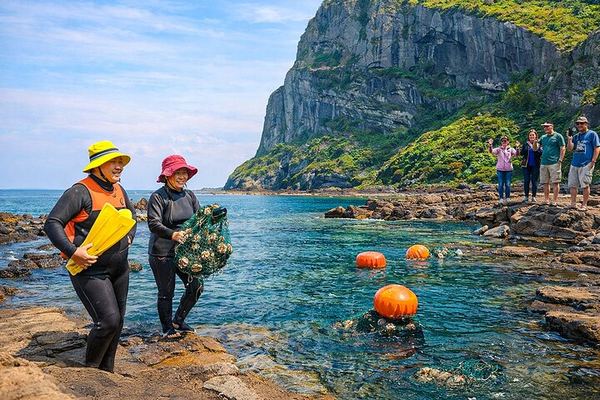
Eastern Jeju: a Live Haenyeo Dive Below Seongsan Ilchulbong and Manjanggul
5.0 (613) 5.0 stars out of 5, 613 reviewsThe haenyeo dive live below Seongsan Ilchulbong, with the museum as the fallback, and the licensed guide works in both English and Chinese.
€ 46.62 -
 Free cancellation
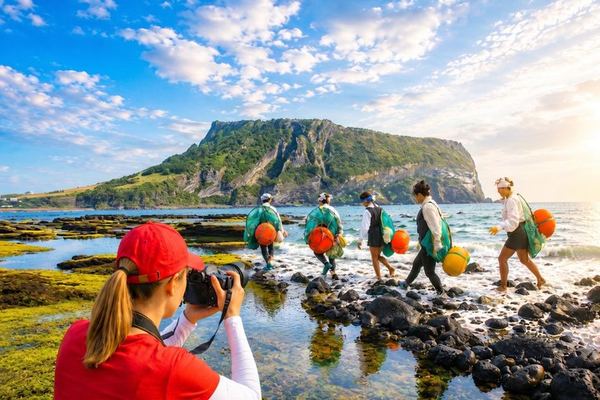
East Jeju: Seongsan in the Sun, Manjanggul's Cold Air to Finish
4.9 (1,590) 4.9 stars out of 5, 1,590 reviewsManjanggul comes last on purpose, so the cave's cold air lands after the sun on Seongsan, and the haenyeo dive without tanks in between.
€ 46.62 -
 Free cancellation
Jeju, East or Southwest: Two Routes, One Booking
4.9 (538) 4.9 stars out of 5, 538 reviewsThe east route puts 50 guaranteed minutes on Seongsan and the haenyeo divers at 14:00; the south and west runs to Hallasan and the O'sulloc tea fields.
€ 48.84
Ratings collected by Viator and Tripadvisor