

Rinjani Senaru Crater Rim Trek, 2 Days and 1 Night
About 2,000 metres of climbing on the first day to a tent at 2,641 m. You see the lake and the summit from above, and you reach neither.
This is the shorter of the two Rinjani treks and the one most people should book. It starts and finishes in Senaru village on the northern side of the mountain, climbs to a camp on the caldera rim at 2,641 metres, and comes back down the same path. One operator states the elevation gain on the first day as 2,000 metres. That figure is the whole trek in a number: no technical ground, no altitude problems, and a great deal of uphill in tropical heat with a pack on.
Everything below assumes you have already chosen this over the three-day summit crossing. What the two days consist of hour by hour, what goes up on a porter's shoulder pole and what stays on yours, what you eat, what the nine listings actually differ on, and the cancellation term that is stricter here than anywhere else on this site.
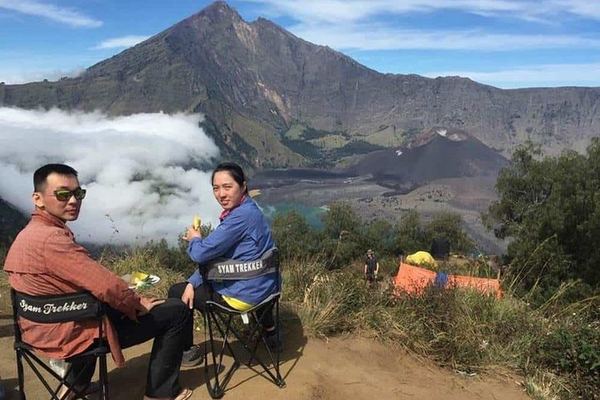
Private Rinjani to Senaru Rim with Syam Trekker: Park Fee In, 7 cm Mattress
Guide and porter to your party alone, the national park fee already in the price, all meals, and a 7 cm mattress instead of the group tour's 5 cm one.
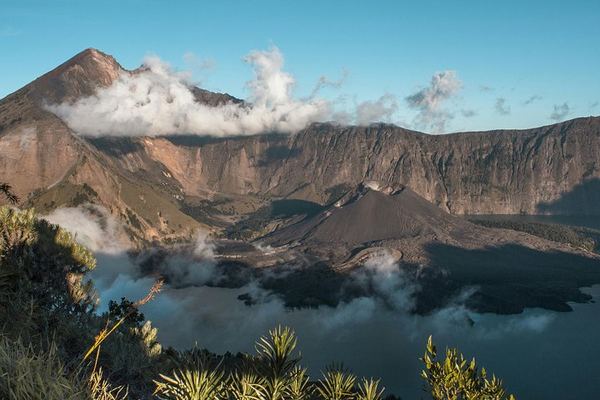
Rinjani 2D1N to the Rim: Segara Anak Lake and the Cone Inside It
Forest, then steep grassland, then the rim at 2,641 metres, with Lake Segara Anak and Gunung Baru below it. Built for short trips and for families with kids.
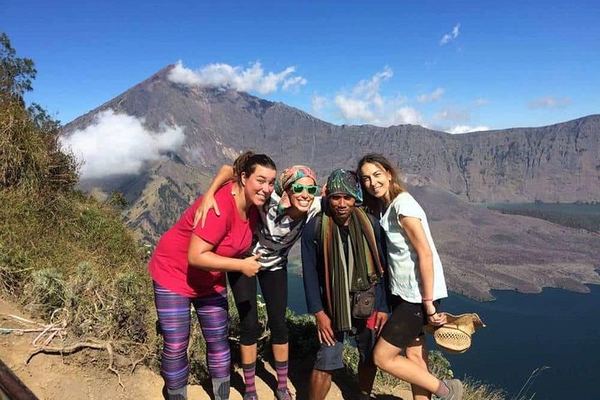
Rinjani Crater Rim with Syam Trekker: Six Max, Toilet Tent, Boat to the Gilis
Groups of six, a toilet tent and 5 cm mattresses in the kit, and a private boat to the Gilis at the end. One of the few here that refunds a cancellation.
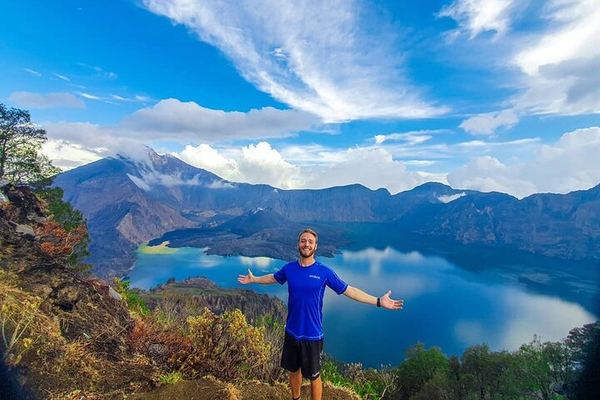
Rinjani for Beginners: Senaru Rim, with Tiu Kelep Falls on the Side
The only Rinjani package this operator recommends to first-timers, with hotel pick-up at 07:00 and two waterfalls nearby worth adding the day you arrive.
Rinjani Senaru Rim: a Hotel Night Before the Climb, Drop-Off Anywhere on Lombok
You sleep at Senaru the night before rather than driving up on the morning of, and get dropped wherever you are headed on Lombok when you come down.
Rinjani Senaru Rim: Coffee Plantations, Mondokan Lokak, Pelawangan 1
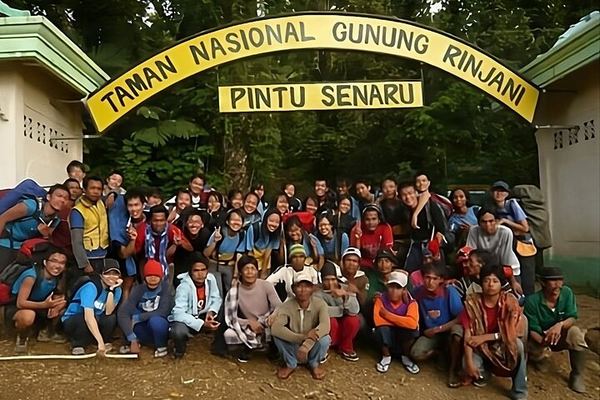
Half an hour of coffee plantations before the forest gate, lunch at Mondokan Lokak, camp at Pelawangan 1. A private car onward when you come back down.
Rinjani Senaru Rim in the Shade: 8 Hours Up Through Rainforest, 5 Back
Most of the climb runs under rainforest canopy rather than open sun, and the waterfall stop the day before means reaching Senaru an hour before sunset.
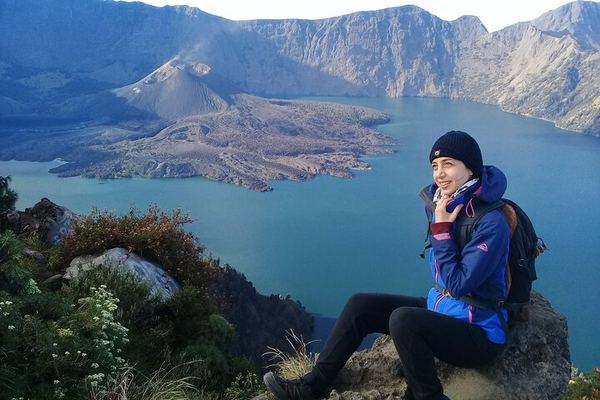
Rinjani to the Senaru Crater Rim: Camp at 2,641 m Above Baru Jari
The crater rim without the summit climb: 2,000 metres of jungle in a day, then camp above the lake with Baru Jari smoking inside it. All sales are final.
Senaru Crater Rim 2D1N: Park Permit Invoiced Separately After Booking
The national park permit is not in the price: it arrives as a separate PayPal invoice after booking. Two thousand metres of climb on day one, rainforest first.
Ratings collected by Viator and Tripadvisor
The two days, hour by hour
You are expected in Senaru the night before. Operators want you at their office in the morning for a briefing, and several of them state plainly that accommodation the previous night is not included, which means the trek quietly begins with booking a room in a village at 601 metres.
Day one is around seven hours of walking and it is all uphill. The path leaves Senaru through farmland, enters rainforest, and climbs through it on a rutted trail of tree roots and clay that holds water for days after rain. There are three rest posts. Between the second and the third the forest thins and the gradient gets worse, and the last stretch to the rim is open, exposed and steep. You arrive at the camp in the afternoon, and the porters who left after you will already be there with the tents up.
Day two is around six hours in reverse. Out of the tent for sunrise over the caldera, breakfast, and then the same path down, which is harder on knees than it was on lungs. Most groups are back in Senaru between midday and early afternoon.

The night on the rim is the product
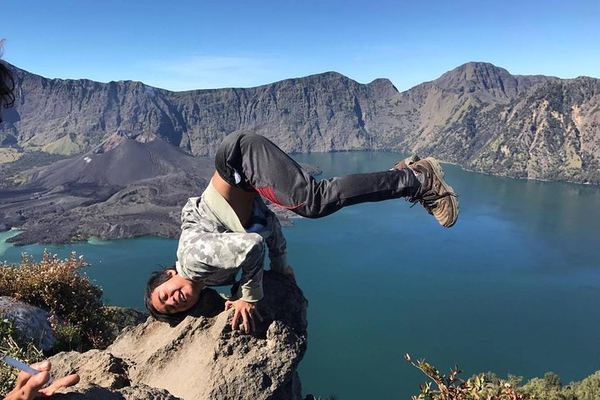
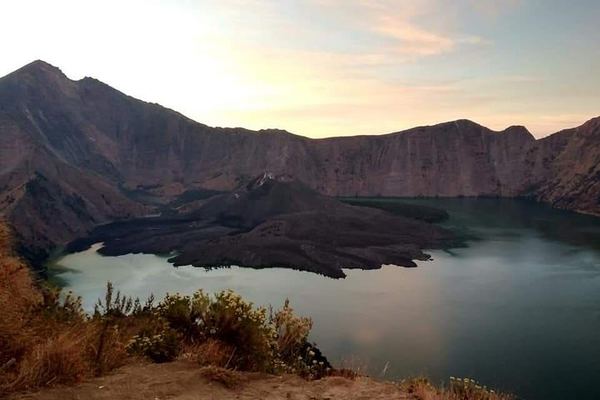
You are camped on a narrow ridge at 2,641 metres with the caldera dropping away on one side. Below is Segara Anak, the crescent lake, with the Barujari cone in the middle of it. Across the gap is the summit you are not climbing. Behind you, on a clear evening, the sun goes down over the Gili islands and Mount Agung on Bali.
It gets cold. Nights on the rim run to single figures and the wind comes across the caldera without anything to stop it. Every operator here supplies a sleeping bag and a mattress; none of them supplies the jacket, the gloves or the head torch, and those three appear in the exclusions of almost every listing.
What the porters carry, and what you carry
The division is consistent across the nine listings and it is worth understanding before you pack, because the thing that ruins this trek for people is carrying too much on day one.
| Carried for you | Carried by you | Not provided at all |
|---|---|---|
| Tent and toilet tent, with paper | Your own clothing and day pack | Trekking boots |
| Sleeping bag, mattress, pillow | Camera, phone, power bank | Waterproof jacket and long trousers |
| Cooking gear and all food | Personal medication | Gloves |
| Drinking water, 3 litres per person per day | Sunscreen and any snacks you want | Head torch or hand torch |
| Camping chairs and a table on some operators | Personal travel insurance |
Two operators here cap the group at six people. Others allow up to fifteen on a single booking, which changes the character of the camp considerably. If you want a small group, the cap is stated in the listing and it is one of the few things in this catalogue that is stated accurately.
If you cannot carry your own bag, an extra porter runs to about 25 US dollars a day and is arranged at the office in Senaru. Nobody thinks less of you for it, and the alternative is 2,000 metres of ascent with a full pack in humidity.
Food, water and the toilet tent
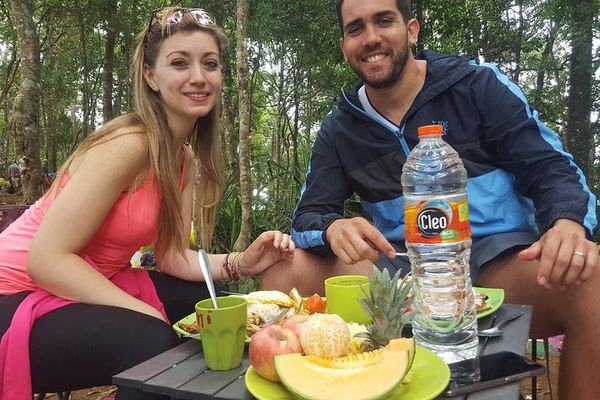
The food is cooked on the mountain and it is better than the price suggests. Breakfast is usually banana pancakes or fried rice, lunch is prepared at a rest post and tends to be nasi goreng or noodles with vegetables and egg, dinner at camp is rice with a couple of dishes and fruit. Tea and coffee come constantly. Vegetarians are catered for without difficulty if you say so at the briefing.
Water is the number that matters: three litres per person per day, carried up for you, and stated as such in the inclusions. It is enough if you are sensible and it is not enough if you start day one badly hydrated. There are no springs on the Senaru route and nothing is sold above the trailhead.
The toilet tent is exactly what it sounds like, pitched away from the camp, with paper supplied. It is one of the more civilised things about this mountain and it is listed as an inclusion by every operator here, which tells you it was once a complaint.

What separates 134 EUR from 246 EUR
Nine listings, all rated between 4.9 and 5.0, on an identical route. Three things move the price and none of them is quality.
Whether the park permit is inside. One of the cheapest listings states in its own opening line that permits and tickets are not included, and that an invoice for the ticket cost will follow by PayPal after booking. At 250,000 rupiah per person per day that is a real sum on a two-day trek, and it is the single reason the bottom of this range looks as low as it does.
Private or shared. The same operator sells the same trek at two prices, one for a group capped at six and one for a private departure, and the gap is under 20 EUR.
Transport. Several listings exclude the transfer to Senaru before the trek and away from it afterwards. Senaru is roughly three hours from the airport and two from Senggigi, so this is not a detail.
The one term that genuinely differs from the rest of this site: most of these treks are sold with no refund for cancellation at all. Where a Bromo day trip gives you 24 hours of free cancellation, several of these state that all sales are final. Read that line before you commit to a date three months out on a mountain that closes for weather.
Who should not book this
Every operator here carries the same list of exclusions and it is not boilerplate. This trek is listed as unsuitable for people with spinal injuries, for pregnant travellers, and for anyone with poor cardiovascular health, and it asks for at least a moderate level of fitness. Two thousand metres of climbing in a day is what a long day in the Alps looks like, done at thirty degrees with humidity.
It is also not the trek for anyone who came for the summit. From the Senaru rim the top of Rinjani is visible across the caldera and completely out of reach: it is on the other side, and getting there means descending into the caldera and climbing out the far wall, which is what the three-day route below exists to do.
The rim is not a consolation prize. The view that sells every Rinjani trek is taken from where this one camps. The summit adds a morning, a night at altitude and a great deal of loose sand.
When it runs
The same calendar as the whole park, so there is no separate season to plan for here: closed 1 January to 31 March, reopened on 1 April in 2026, and best between June and September when the forest section is dry underfoot. The one thing that hits this route harder than the summit crossing is rain on the descent, because the clay in the rainforest section becomes genuinely treacherous and day two is the day you are going down it.
Questions people actually ask
How fit do I need to be?
Fit enough to walk uphill for seven hours carrying a day pack, on rough ground, in heat. The operators ask for a moderate level of fitness and exclude people with spinal injuries, cardiovascular problems or in pregnancy. It is not technical and there is no exposure on the way up. The difficulty is the 2,000 metres of ascent in a single day.
Do I reach the summit or the lake?
Neither. This trek reaches the crater rim above Senaru at 2,641 metres, where you look down on Segara Anak and across at the summit. Getting to the lake means descending about 600 metres into the caldera; getting to the summit means climbing the far wall afterwards. Both are on the three-day route.
Is the park permit included?
Sometimes, and it is the main reason prices differ. One listing states in its opening line that permits are excluded and that an invoice follows by PayPal after booking, quoting 250,000 rupiah per person per day. Since 6 March 2026 there is also compulsory insurance at 290,000 rupiah per person per trek. Check the inclusions rather than the headline price.
What do I need to bring?
Boots, a waterproof jacket, long trousers, gloves and a head torch, none of which any operator here provides. Warm layers for the night on the rim, where it drops to single figures with wind. Everything else, the tent, sleeping bag, mattress, food and three litres of water a day, is carried up for you.
Can I hire a porter for my own bag?
Yes, arranged at the office in Senaru for about 25 US dollars a day. The porters in your package carry the camp and the food, not your luggage. If you have not walked 2,000 metres of ascent with a full pack before, this is the most useful money you will spend on the trek.
What is the food like?
Cooked fresh on the mountain and better than expected: fried rice or pancakes for breakfast, noodles or nasi goreng at a rest post for lunch, rice with two or three dishes and fruit at camp. Tea and coffee throughout. Say at the briefing if you are vegetarian and it is dealt with without fuss.
Can I cancel?
Frequently not. Several of these treks are sold with no refund for cancellation of any kind, which is stricter than anything else sold on this site. Given that the mountain closes for three months a year and can close at short notice for weather or activity, read the cancellation line before you fix a date.
Data verified on. Timings, altitudes, inclusions, exclusions, group caps, permit costs and cancellation terms all read from the nine 2D1N products sold on this site. Closure dates from the Rinjani park authority.