
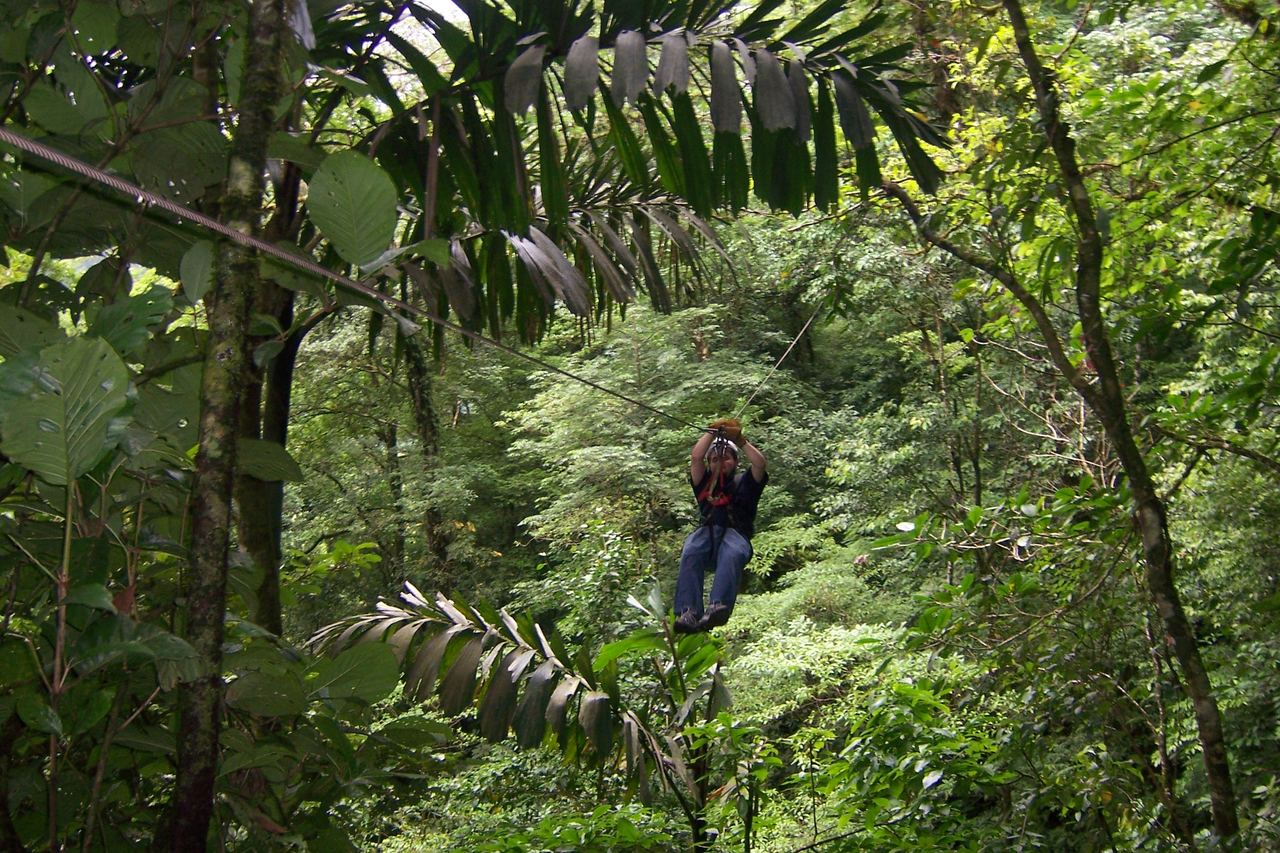
Arenal Zipline and Canopy Tours in La Fortuna
Twelve courses from 34 EUR, between seven and twelve cables, and one of them crosses the canyon above the La Fortuna waterfall.
Costa Rica invented the commercial canopy tour and La Fortuna has about a dozen of them within twenty minutes of the town square. They are more alike than the marketing suggests: a harness, a helmet, a briefing, a practice cable and then between seven and twelve runs through or above the forest, finishing in two to three hours. What separates them is the number of cables, whether one of them crosses a canyon worth crossing, and what else is bolted to the ticket.
What follows is the operational detail: how the courses differ, what the weight range actually does to your ride, what will get you turned away at the platform, and where the price differences are real. The volcano and the town are covered on the Arenal page above.
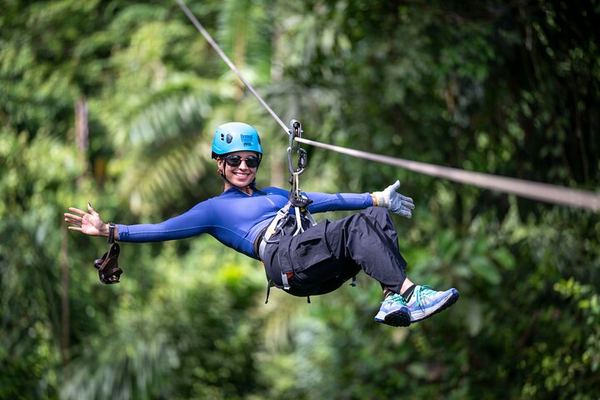
7-Cable Zipline Over the La Fortuna Waterfall, Small Group
The only zipline course that crosses directly above the La Fortuna waterfall, flown in a small group over half a day. Seven cables, canyons and forest.
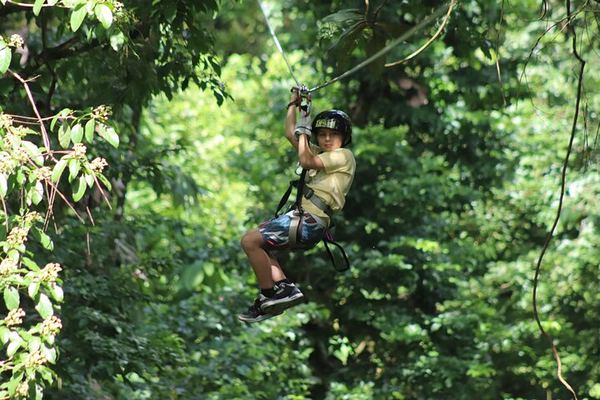
Airtime Zipline: 9 Cables, a Practice Line and No Extreme Heights
A practice cable before the long ones and a 38-metre ceiling, so the course works for children from 4 up. Cables from 80 to 550 metres, ICT permits held.
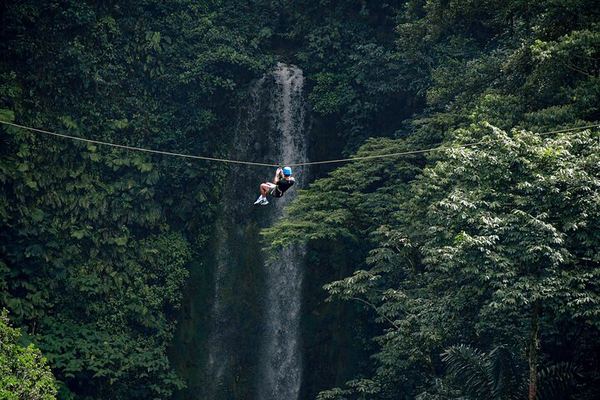
Arenal 12-Cable Zipline Course, Waterfall Crossing Included
The full twelve-cable course, half a day long, including the one line that crosses above the La Fortuna waterfall. Free parking if you drive yourself.
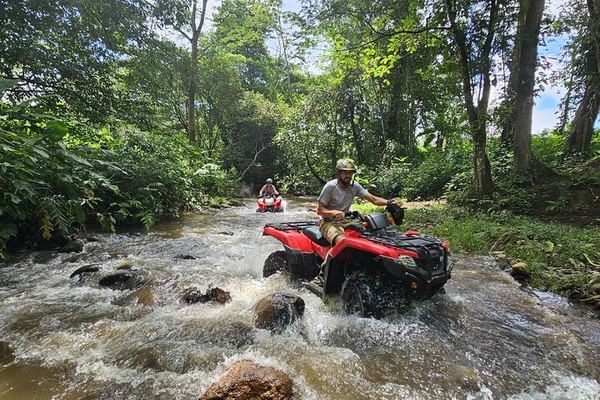
Arenal ATV and Zipline: 28 km on a Private Farm, Then 8 Cables
Twenty-eight kilometres of private farm on a quad, a driving test before you set off, then eight cables reaching 600 metres long and 90 metres up.
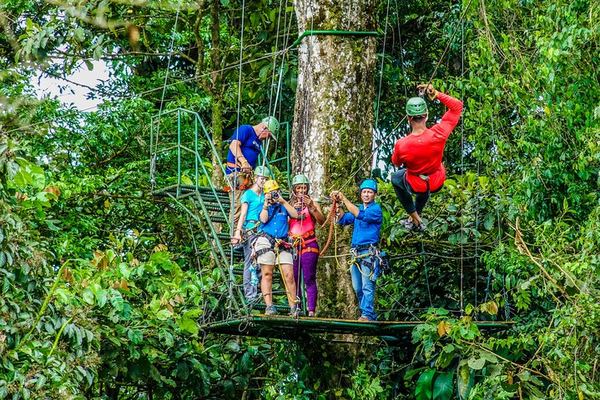
Arenal Canopy and Horseback Riding: Trails on Horseback, Cables Through the Trees
The trails on horseback first, at ground level and at the pace a horse sets, then the zip lines running through the canopy over the same stretch of forest.
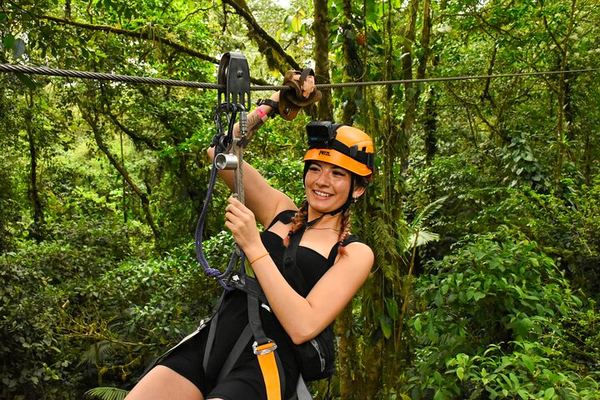
Arenal Canopy and Tarzan Swing: Two Guides on Every Cable
Two guides work every cable, one clipping you on and one braking you in at the platform, and each platform looks over a different stretch of canopy.
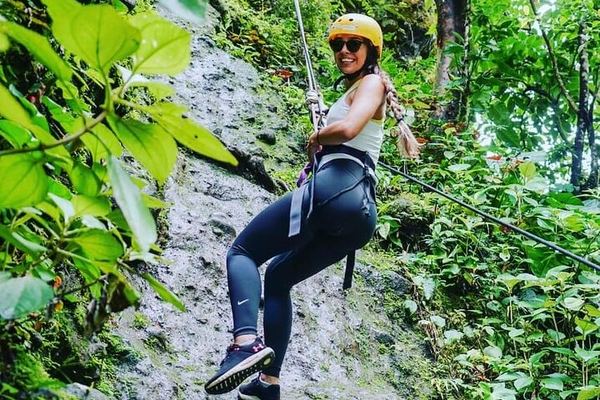
Arenal Zipline with Three Thermal Pools and a Mud Bath After
The flying is followed by the three thermal mineral pools and the volcanic mud baths, included in the price, at a base 8.5 km west of La Fortuna town.
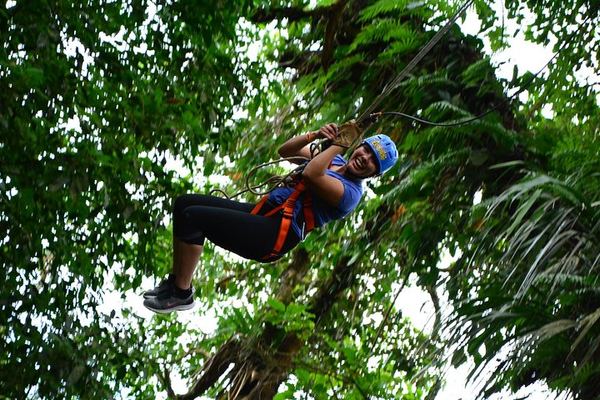
Ecoglide Canopy on the Arenal Slopes: Double Rope System, Ages 3 to 90
The only canopy course on the slopes of Arenal, on a double rope system, with a Tarzan swing. Fully accessible, and it takes riders from age 3 to 90.
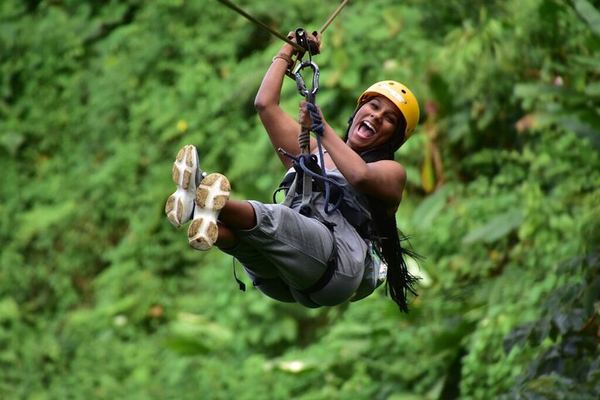
Go Adventure Canopy: 9 Cables, a 50-Metre Rappel and Montaña de Fuego Springs
Thirteen platforms over the Arenal River canyon, nine cables, and a fifty-metre rappel on rope. Hot springs at Montaña de Fuego included afterwards.
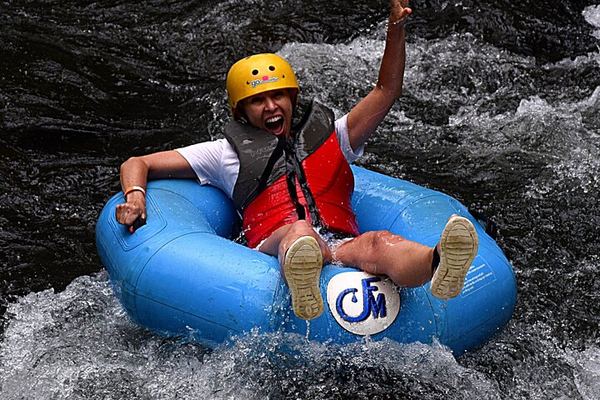
Go Adventure Combo: 7 Zip Lines, Class 2-3 Tubing and Hot Springs
Nine platforms and seven cables over the Arenal River canyon, then class 2 and 3 tubing reached on foot past the Maleku village, and hot springs last.
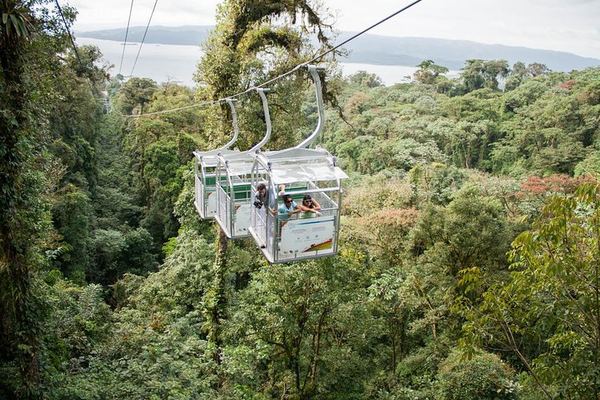
Sky Tram and Sky Trek at Arenal: Cable Car Up, Zip Lines Down
The aerial tram climbs to the highest point of the reserve with the volcano and the lake in view, then the Sky Trek cables bring you back down at speed.
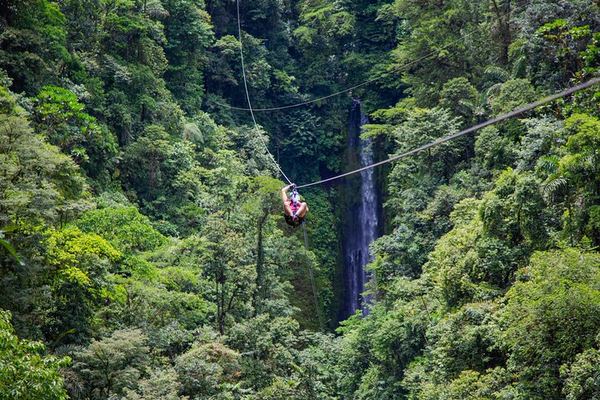
Wave Expeditions: 980-Metre Cable at 70 km/h, Then Class II-III Rafting
Seven extreme cables, the longest 980 metres over the waterfall at up to 70 km/h, then two hours on class II-III water. Transfers and lunch included.
Ratings collected by Viator and Tripadvisor
Cables, and what the number buys you
Twelve cables is not twelve times better than seven. Every course opens with a short practice line, builds through the middle runs and keeps the longest for late, so the difference between a seven and a twelve is mostly the middle: more of the same, at similar heights, for another forty minutes. What genuinely changes the experience is what the cable is strung over. A run across a plantation and a run across a river canyon are the same equipment and not the same ride.
| Course | Cables | Price from | What is different about it |
|---|---|---|---|
| Twelve-cable waterfall course | 12 | 95 EUR | Crosses the canyon above the La Fortuna waterfall |
| Seven-cable waterfall course | 7 | 74 EUR | Same canyon crossing, small groups, shorter |
| Nine-cable course near town | 9 | 49 EUR | Includes a practice line; next to the sloth trail |
| Sky Adventures | Tram plus cables | 98 EUR | Aerial tram up first, so no climbing at all |
| Canopy with Tarzan swing | Varies | 34 EUR | Adds a pendulum swing; the cheapest listing here |
| Canopy on the volcano's own slope | Varies | 75 EUR | Double-rope system, and the park describes itself as fully accessible |
| Canopy with a 50 m rappel | Varies | 78 EUR | Adds an abseil and finishes in hot springs |
The one that crosses the waterfall
Two of the courses here, the seven-cable and the twelve-cable versions run by the same operation, send a line across the canyon that holds the La Fortuna waterfall. That is the only view on offer in this category that you cannot get from another course, and it is the reason those two products carry 454 and 936 reviews at 4.8 and 4.9. If you are choosing between courses on anything other than price, choose on this.
The honest caveat: you are travelling at speed, on a cable, wearing a helmet, and the crossing takes a few seconds. You will see the waterfall the way you see things from a car window. Anyone whose main objective is the waterfall should walk down to it instead, which is a separate ticket and a separate page. The zipline crossing is a good moment inside a good activity, not a substitute for the sight.
Weight, height and the thing nobody tells light riders
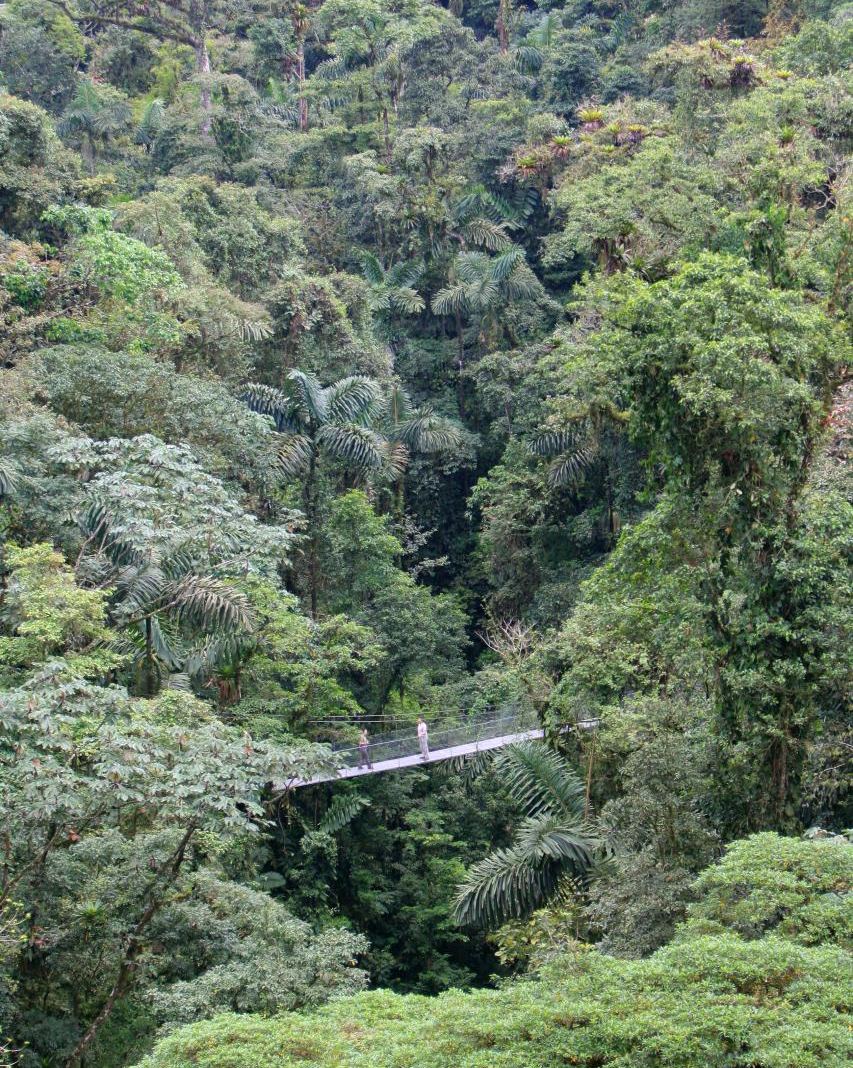
Every course has a weight range and they are not the same range, so ask for the actual numbers rather than assuming: the harness sizing and the braking system set them, and both differ between operators. Minimum ages differ too, and small children are usually taken tandem with a guide rather than solo.
The part that surprises people is what happens at the light end. A light rider carries less momentum and can stop short of the far platform, hanging in the middle of the cable until a guide comes out on a pulley and hauls them in. It is routine, the guides do it several times a day, and nobody is in danger. It is also completely undignified and nobody warns children it might happen, which is why it produces tears. Tell them in advance and it becomes the funniest part of their day.
At the heavy end you arrive fast, which is why most Costa Rican courses use guide-controlled braking at the platform rather than handing you a brake. If a course does give you a leather glove and a hand brake, listen carefully during the briefing, because gripping the cable too early or too hard is the commonest way people hurt a hand here.
Closed shoes, hair tied back, pockets empty, nothing in your hands. Four rules, all of them enforced at the platform, and three of them exist because of the pulley.
What will get you stopped at the platform
Closed shoes are mandatory everywhere and flip-flops will end your morning at the check-in desk, which happens more often than you would think in a town where everyone is dressed for hot springs. Long hair must be tied and tucked, because the pulley runs directly above your head and hair reaching it is the classic canopy injury. Pockets get emptied, since anything in them is gone the moment you lift your feet, and loose sunglasses go the same way.
Handheld filming is generally not allowed, for the same reason. Some courses permit a strapped chest or head mount and most sell photographs taken by their own staff at the platforms. Assume you will not be holding a phone and you will not be disappointed.
Rain does not stop a zipline; lightning does, and so do high winds. Courses run in downpours as a matter of routine, which in a place that rains every month is the only workable policy, so bring a light layer you do not mind soaking rather than a bulky jacket that will flap. If an operator does cancel for weather, it is because of the electrical storm and not the water.
Where the price differences are real
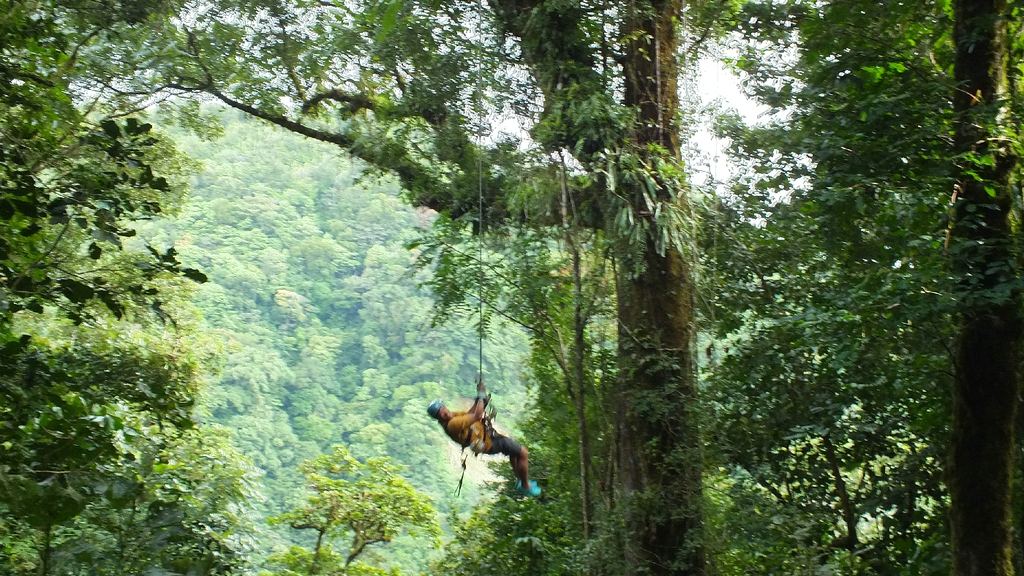
The floor is 34 EUR, and it is a genuine outlier: a canopy and Tarzan swing listed at half of its own 68 EUR reference price. The best value that is not a discount is the nine-cable course at 49 EUR, which carries the highest rating in this category at 5.0 across 326 reviews and sits minutes from the centre of La Fortuna. At 57 EUR there is a course bundled with an indigenous cultural visit and access to thermal pools, which is a lot of afternoon for the money.
The band from 74 to 98 EUR is where the waterfall crossings and the Sky Adventures tram sit, and that is where most people should be looking. Above 130 EUR you are no longer buying a better zipline: you are buying a second activity attached to it, whether that is rafting at 131 EUR, an ATV run at 138, horses at 143 or tubing and hot springs at 155. Those are good days. The cables in them are the same cables.
Questions people actually ask
How long does a zipline tour take?
Two to three hours from pickup to drop-off, of which the briefing and harness fitting take about twenty minutes and the actual cables perhaps forty. The rest is walking or riding between platforms and waiting your turn, which is unavoidable in a group. Courses near La Fortuna are within twenty minutes of the town, so a half-day is genuinely a half-day.
Is there a weight limit?
Yes, and it varies by operator, so ask for the actual figures rather than assuming a standard. The harness sizing and the braking system decide them. The less obvious end is the light one: a rider who is too light can stall part-way along a cable and has to be collected by a guide on a pulley. It is routine and safe, and it is worth warning a small child that it might happen.
Can children do it?
Usually yes, from a minimum age each operator sets, with small children taken tandem strapped to a guide rather than riding alone. One park near the volcano describes itself as fully accessible and uses a double-rope system, which is the one to ask about if you have a specific need. Every course starts with a short practice cable at low height, which is designed to be the moment nervous people decide.
Which zipline in La Fortuna is best?
If you want the view, the seven or twelve-cable course that crosses the canyon above the La Fortuna waterfall, which is the only genuinely distinct scenery in this category. If you want value, the nine-cable course at 49 EUR, rated 5.0 over 326 reviews. If you would rather not climb, Sky Adventures, which takes you up by aerial tram first. The cables themselves are much the same everywhere.
What do I wear?
Closed shoes, without exception, and shorts or trousers rather than a dress or a loose skirt, because the harness goes between your legs. Tie long hair back and tuck it in. Empty your pockets and secure or leave your sunglasses. A light layer for rain, since courses run in it. Everything else, helmet, harness and gloves, is provided.
Do they run in the rain?
Yes. Rain is normal here in every month and the courses operate through it. What stops a zipline is lightning, and sometimes high wind, at which point operators pause or cancel and that is the right call. If you are told a tour is off for weather in La Fortuna, it is almost always an electrical storm rather than the rain itself.
Data verified on. Cable counts, prices, ratings and inclusions read from the twelve canopy products on this site and the operators' own descriptions. Checked August 2026.