
Where You Can See Lava Right Now: Four Volcanoes, and Why Etna Is No Longer One of Them
Three weeks ago Etna belonged on this list. Its own bulletin now records degassing and no lava flow at all. Here are the four volcanoes with incandescent material on readings we could open today, and the three worth planning a trip around.

In August this site published a piece about Mount Etna erupting and the travellers who would fly to Sicily and see no lava. The eruption has since ended.
The document that says so is a thirteen-page PDF on an institute's website. It covers the week of 24 to 30 August 2026, and its opening summary runs to six lines: degassing at a variable rate from the summit craters, occasional ash from the north-east crater, no fracturing earthquakes above magnitude 2.0, thermal output seen from satellite generally low. Nowhere in it is there a lava flow. Europe's most famous erupting volcano is, this week, a mountain with steam coming off it.
Nobody has to tell you that. The tour listings do not change when the volcano does, the photographs in them were taken in a good year, and by the time you are standing at 2,500 metres in the wind the transaction is complete. So this is the list we would want if we were the ones booking: the volcanoes with incandescent material on a reading we could open at source on 8 September 2026, what you would actually be looking at, and from where.
Where can you see lava right now, on readings dated this week
Six places were worth checking. Four came back with something incandescent, one came back empty, and one we could not confirm either way. The last column is the part most lists leave out: not what the volcano is doing, but when somebody last measured it, because those are very different claims.
| Volcano | What is incandescent | Where you watch it from | Ground that is closed | The reading we used |
|---|---|---|---|---|
| Kīlauea, Hawaiʻi | Lava at the north vent in Halemaʻumaʻu. Episode 55 of the fountaining eruption is forecast to begin between 7 and 10 September | Caldera-rim overlooks in the national park that remain open, and three USGS livestreams | The crater floor, and the rim beside Halemaʻumaʻu, closed to the public since late 2007 | US Geological Survey notice, 7 September 2026, 13:00 local |
| Stromboli, Italy | Ordinary Strombolian explosions at both crater areas. Total frequency high, intensity medium | The sea, by boat, after dark; and the island up to the authorised height | Above the authorised height on the ascent. We could not open a primary source giving the current figure | INGV weekly bulletin issued 1 September 2026, covering 24–30 August |
| Fuego, Guatemala | Four to six weak to moderate explosions an hour, with incandescent pulses 150 to 200 metres above the crater | The slope and camps of neighbouring Acatenango, reopened on 7 August 2026 | All tourist activity on Fuego itself. INSIVUMEH also asks walkers not to remain on the meseta | INSIVUMEH, reported 4 September 2026 |
| Mayon, Philippines | Lava in three gullies — Basud 3.8 km, Bonga 3.2 km, Mi-isi 2.7 km — and crater glow described as faint but visible to the naked eye | Legazpi and the roads around the cone, from outside the danger zone | The 6 km Permanent Danger Zone, which is where the lava is | PHIVOLCS, reported 19 August 2026. Their own site returned an error every time we tried it on 8 September |
| Santiaguito, Guatemala | Not confirmed. Explosions and incandescent ballistic material were reported through the spring; we could not open a bulletin dated this week | Not applicable | All tourist activity, under the same July 2026 norm that covers Fuego | Last reading we could open: May 2026, with a 5 km exclusion radius around the domes |
| Etna, Italy | Nothing. Variable degassing from the summit craters and occasional ash from the north-east crater | Not applicable | Zone rules unchanged | INGV weekly bulletin issued 1 September 2026, covering 24–30 August |
Etna stopped, and the market has not noticed
The Etna eruption that ran through the first half of August was a real one. Flows in the Valle del Bove, explosive activity at the Voragine, four town halls signing four different closure orders inside five days. It was the sort of event that fills a booking calendar for a season, and it did.
Then it ended, in the way these things usually end, which is quietly and without a headline. The bulletin for the last week of August records the volcano breathing rather than erupting. Sulphur dioxide output stays high and the tremor sits at a medium level, so the plumbing is far from empty and the mountain may well start again before this article is a month old. But on the readings available today there is no lava on Etna to see, and a trip booked this week to see lava on Etna is a trip booked on last month's news.
This is the failure mode the whole vertical shares, and it is not usually dishonesty. It is latency. A product description is written once; an eruption changes weekly; nothing in between forces the two to meet. We have written before about the reverse case, when Etna was genuinely erupting and visitors still saw nothing, and the lesson is the same in both directions: the word erupting is doing far less work than the person reading it assumes.

The three worth flying for, and what makes them the three
Four volcanoes have lava. That is not the same as four places worth crossing an ocean for, because seeing lava needs three things to line up at once, and this site keeps them deliberately separate: the volcano has to be active, you have to be allowed near it, and you have to be able to see it when you get there. Our page on where you can actually see lava writes that out as a formula. Applied to this week's four, it removes one of them.

The dependable one
Stromboli, because it does this every night
Stromboli is the only name here you could have booked at any point in the last several decades with a reasonable expectation of seeing something. The bulletin for the last week of August puts the combined explosion frequency at both crater areas on a high level, with medium intensity, which is roughly what it has said for years. It is the closest thing the world has to a scheduled eruption.
The catch is access rather than activity. Walking up the island is capped at an authorised height, and the current figure is one we have never been able to confirm against a primary source, because the municipality that sets it does not publish its acts anywhere we can reach. What is not in doubt is the boat: the standard evening trip sits off the Sciara del Fuoco after dark and watches the material come down the slope into the sea, and it does not depend on any of this.
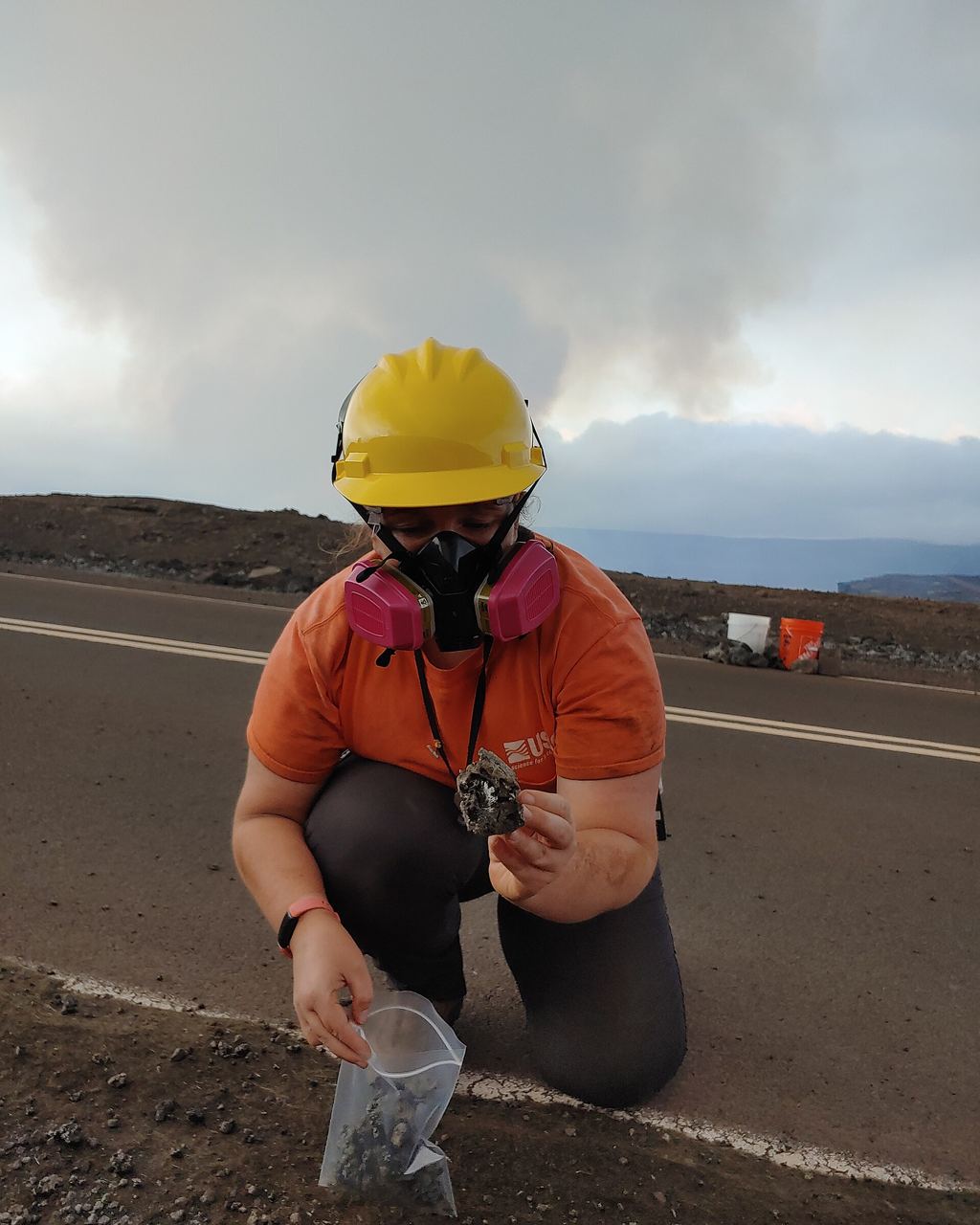
Kīlauea earns its place for a reason almost nothing else in this article can match: somebody publishes a date. The eruption at the summit has been running in episodes since December 2024, with fountaining that generally lasts under twelve hours separated by pauses of two weeks or more. On the afternoon of 7 September 2026 the north vent began a sluggish overflow, the observatory raised the alert level from Advisory to Watch, and it put a window in writing: episode 55 is forecast to start between 7 and 10 September.
Sit with how unusual that is. Everywhere else in this article, the honest answer to when is a shrug. Here a government agency will tell you which four days to be on the island. The precursory phase can run for hours or days before the fountaining starts, so the window is a window and not an appointment, and the crater floor and the rim beside Halemaʻumaʻu have been closed since 2007, which means you are watching from the overlooks that remain open, at a distance, along with everyone else who read the same notice.
The alert change came with an aviation colour code change too, yellow to orange. That code is about ash reaching aircraft, not about risk to people standing on the ground, and the two get quoted interchangeably in coverage until neither means anything. They are separate instruments measuring separate things.
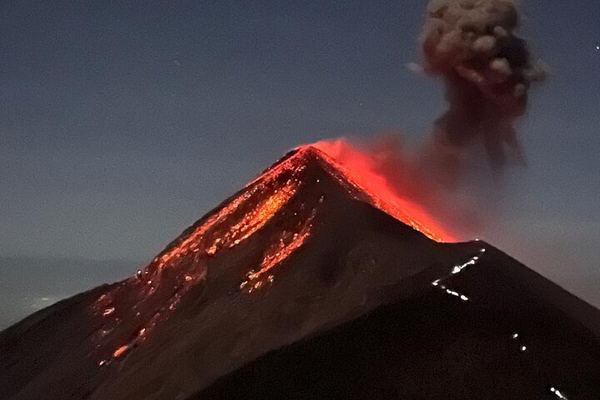
The third is Fuego, and the point is that you do not go to Fuego. On 4 September INSIVUMEH described four to six weak to moderate explosions an hour, incandescent pulses reaching 150 to 200 metres above the crater, and gas and ash columns to 5,000 metres above sea level drifting some 30 kilometres west and north-west. Frequent, loud, visible after dark, and entirely off limits: a norm published in Guatemala's official gazette on 14 July 2026 regulates human activity across the country's volcanoes, and its article 19 prohibits tourist visits to Fuego and Santiaguito outright.
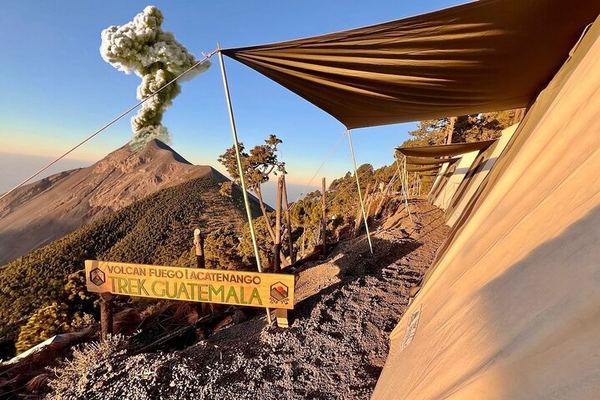
What you buy instead is the mountain next door. The overnight trek up Acatenango camps on a slope facing Fuego across the saddle, and the show happens on the other side of a valley. That arrangement was interrupted this summer: after CONRED declared an orange alert in early August, the tourism institute restricted access to Acatenango on 4 August, and the municipality restored it on 7 August, on authorised routes only and with an explicit warning that any change in Fuego's behaviour would close it again.
One detail from the September bulletin deserves reading twice. INSIVUMEH asked walkers not to remain on la meseta, the plateau, because of falling ballistic material. The meseta is where the Acatenango camps are. That is not a reason to cancel; it is a reason to ask a specific question of whoever is selling you the trek, and to accept that the honest answer involves the word depends.
A volcano that is erupting and a volcano you can watch are two different lists. This week, three names appear on both.
What nobody should be selling you as lava this month
Mayon is the fourth with lava, and it is the one the formula removes. Flows were running down three gullies and the crater glow was faint but visible to the naked eye on the most recent account we could open, dated 19 August. All of it sits inside a 6 km Permanent Danger Zone that is closed and has been for years. You can see the cone beautifully from Legazpi. What you cannot do is get near the incandescent part, so the honest description of a Mayon trip is a trip to look at a famously symmetrical mountain, which is a fine thing to do and is not the thing this article is about.
Mayon also comes with a warning about sources that we are going to state rather than paper over. The national hazard portal lists it at Alert Level 3, set on 6 January 2026. A newspaper account of a PHIVOLCS briefing published on 19 August reports it at Alert Level 2 since 5 August 2026, along with sulphur dioxide output averaging 2,532 tonnes a day and a spike to 8,393 tonnes on 17 August. Those cannot both be current. The observatory's own site returned a server error on every attempt we made on 8 September, so we could not settle it, and we would rather print the contradiction than pick the version that reads better.
Three other names come up in searches for lava this month and should not:
- Iceland. There is no eruption under way, and there has not been for over a year. The Met Office's most recent note, on 18 August, describes magma continuing to accumulate beneath Svartsengi at a steady rate. An eruption is expected eventually, with very little warning when it comes, and expected is not the same as happening. Everything on sale there today is a cooled lava field, a lava cave or a lava show, all of which are worth doing and none of which is molten rock in the wild.
- Piton de la Fournaise. It had a genuinely remarkable eruption between 13 February and 12 April 2026, with flows crossing the coast road and reaching the ocean for the first time since 2007. It is now back in a vigilance phase, with summit inflation halted.
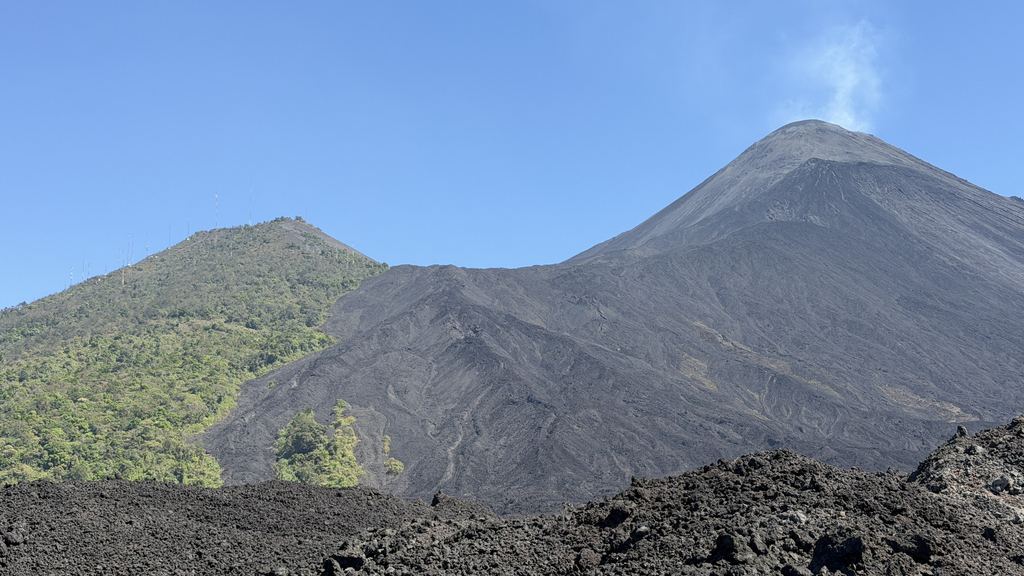
- Pacaya. The easy half-day hike from Antigua, sold across the internet with photographs of running lava. Warnings this year have concerned unstable fractures and constant gas on the western flank rather than incandescence, and our own page on the hike says plainly that flowing lava is not part of what you are buying.
Eight weeks that rewrote this list
Every entry below is a dated decision or reading. Together they explain why a list of erupting volcanoes written in July would be wrong by September.
The growth
14 July 2026
Guatemala closes two volcanoes to tourism
A norm regulating activity across the country's volcanoes is published in the official gazette. Article 19 prohibits tourist visits to Fuego and Santiaguito.
16 July 2026
Mayon's gas output starts falling
Sulphur dioxide emissions begin a decline that runs for a month, on the account later given by PHIVOLCS.
4 August 2026
Acatenango is restricted
After an orange alert on Fuego, Guatemala's tourism institute restricts access to the neighbouring mountain that people climb to watch it.
Today
7 August 2026
And reopened three days later
The municipality restores access on authorised routes only, warning that any change in Fuego's behaviour will close it again.
17 August 2026
Mayon spikes to 8,393 tonnes a day
The highest sulphur dioxide reading since the July decline began, which PHIVOLCS says can forewarn a return to eruptive activity.
24–30 August 2026
Etna goes quiet
The week covered by the INGV bulletin issued on 1 September: variable degassing, occasional ash from the north-east crater, satellite thermal output generally low, no lava flow.
7 September 2026
Kīlauea starts its 55th episode
A sluggish overflow from the north vent at 12:45 local time. The observatory raises the alert level to Watch and forecasts fountaining between 7 and 10 September.
How to do this yourself in about five minutes
Nothing above required expertise. It required opening the pages of the agencies that measure these volcanoes and reading the dates on them, which is a skill worth having before any booking, because this article will be out of date and the agencies will not be.
Two habits do most of the work. The first is to look for the date before the finding. A page that opens is not a page that is current, and this field is full of the difference: one national safety page served the sentence there is no eruption in progress for eleven months, and one observatory has been publishing bulletins from 2015 at the address labelled daily reports ever since. Both look completely normal.
The second is to know which scale you are reading. Alert levels do not translate between countries. Indonesia uses four, Japan five, the Philippines and New Zealand six, the United States four named states, and none of them is the aviation colour code, which describes ash for aircraft and says nothing about whether you may walk anywhere. A volcano at Advisory can be erupting. A volcano at Level 1 can be silent. Our guide to checking whether a volcano is erupting works through the scales one country at a time.
The three pages behind this article
Each is maintained on its own schedule, and none of them claims to know what a volcano is doing today.
Where you can actually see lava
The three factors that have to line up at once, written as a formula, with what each one is worth on a given destination.
The volcanoes that never stop
The handful with persistent activity measured in decades rather than weeks. Stromboli's entry explains why it is the safest bet in this article.
How to check whether a volcano is erupting
Which observatory to open for which country, and how to avoid reading an aviation code as a safety rating.
Check the volcano before you check the price
Activity, access and visibility are three separate questions, and the first one is free to answer. This is how to answer it for any volcano in the catalogue.
Watching Fuego from Acatenango
The overnight trek up the neighbouring mountain, which is the only legal way to be near this eruption. Prices and durations come from the operators' feeds.
Acatenango by the Private Miratenango Route: 80 Minutes Shorter, Camp Ixcanul
The private path from Miratenango saves an hour and twenty minutes on the climb, and camp Ixcanul faces Fuego, with the bonfire at 6:30 and dinner at 7:30.
Acatenango Glamping: Safari Tents at 3,750 m, Four Ecosystems on the Way Up
Cots and mattresses in safari tents at camp, four ecosystems crossed on the way up, and a summit hour with the highlands running as far as Mexico.
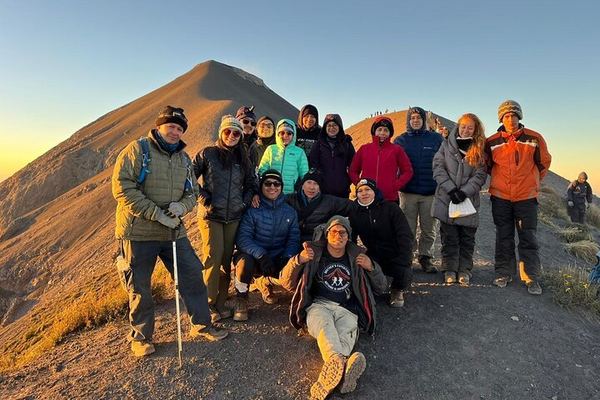
Acatenango Overnight with Brothers Expeditions: Camping on the Slope
The camp is pitched on the slope for a night under the stars, and the booking is final: this operator does not refund cancellations at any notice.
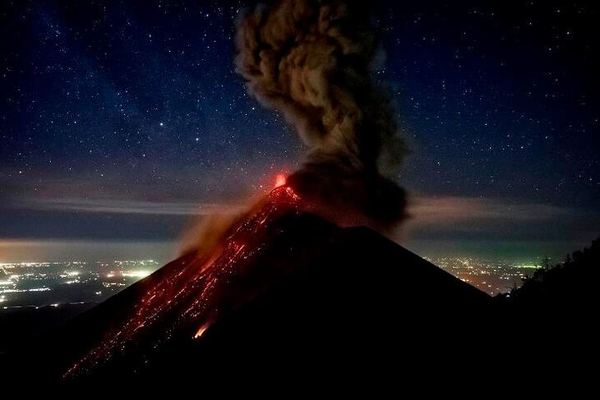
Acatenango Overnight with OX: Pre-Trip Briefing the Day Before, Summit at Dawn
The briefing is at 5PM the day before, breakfast is included at the start, and camp is reached by 2PM with the active Fuego cone in front of it.
Ratings collected by Viator and Tripadvisor
The questions people actually type
Where can I see lava right now?
On readings dated within the last three weeks and checked on 8 September 2026: Kīlauea in Hawaiʻi, Stromboli in Italy, Fuego in Guatemala and Mayon in the Philippines. Of those, three can be watched from ground that is open. Kīlauea from the national park overlooks that remain unclosed, Stromboli from a boat at night, and Fuego from neighbouring Acatenango. Mayon's lava is inside a 6 km permanent exclusion zone.
Can you see lava on Mount Etna at the moment?
No. The INGV weekly bulletin covering 24 to 30 August 2026 records variable degassing from the summit craters and occasional ash from the north-east crater, with no lava flow and generally low thermal output from satellite. The eruption that ran through early August has ended. Sulphur dioxide output remains high, so it may resume, but a trip booked today to see lava on Etna is booked on last month's conditions.
Can you see lava in Iceland right now?
No. There has been no eruption for more than a year. The Icelandic Met Office reported on 18 August 2026 that magma continues to accumulate beneath Svartsengi at a steady rate and that the likeliest scenario is a further intrusion and possibly an eruption in due course, with very little warning once it begins. Iceland's lava caves, cooled lava fields and the Lava Show are open and are a different product.
Can you climb Fuego to see the lava?
No. A norm published in Guatemala's official gazette on 14 July 2026 prohibits tourist visits to Fuego and Santiaguito. People watch Fuego from the slopes of Acatenango, the neighbouring volcano, which the municipality reopened on 7 August 2026 on authorised routes only. INSIVUMEH has separately asked walkers not to remain on the plateau because of falling ballistic material.
Which volcano is most likely to be erupting when I arrive?
Stromboli, on frequency, because its ordinary explosive activity has continued for decades and the most recent bulletin puts it at a high rate. Kīlauea is the only one where an observatory publishes a forecast with dates in it, which makes it the only volcano you can genuinely plan around, though its episodes are separated by pauses of two weeks or more.
Is the aviation colour code the same as the alert level?
No, and the two are quoted interchangeably all the time. The aviation colour code describes ash in the atmosphere and exists for aircraft. The alert level describes hazards on the ground for people. They can move in opposite directions on the same volcano on the same day. When Kīlauea's alert level went from Advisory to Watch on 7 September 2026, its aviation code went from yellow to orange, but the two changes were reporting different things.
How current is this article?
It was compiled on 8 September 2026 from the observatory readings named in the table, the oldest of which was three weeks old at the time of writing. It will go out of date, and the specific way it goes out of date is that a volcano listed here stops or one not listed here starts. The agencies linked throughout are maintained continuously; this page is not.
Data verified on. USGS Hawaiian Volcano Observatory, INGV weekly bulletins for Etna and Stromboli, INSIVUMEH via Guatemalan press, PHIVOLCS reporting, Guatemala's July 2026 volcano norm and the Icelandic Met Office. Editorial Policy

