Costa Rica's Dry Season Is Only Dry in Half the Country
December to March is dry on Costa Rica's Pacific side and not at Arenal, on the wetter northern slope. Which volcano suits which month, what park opening hours do in each season, and what we could not confirm.
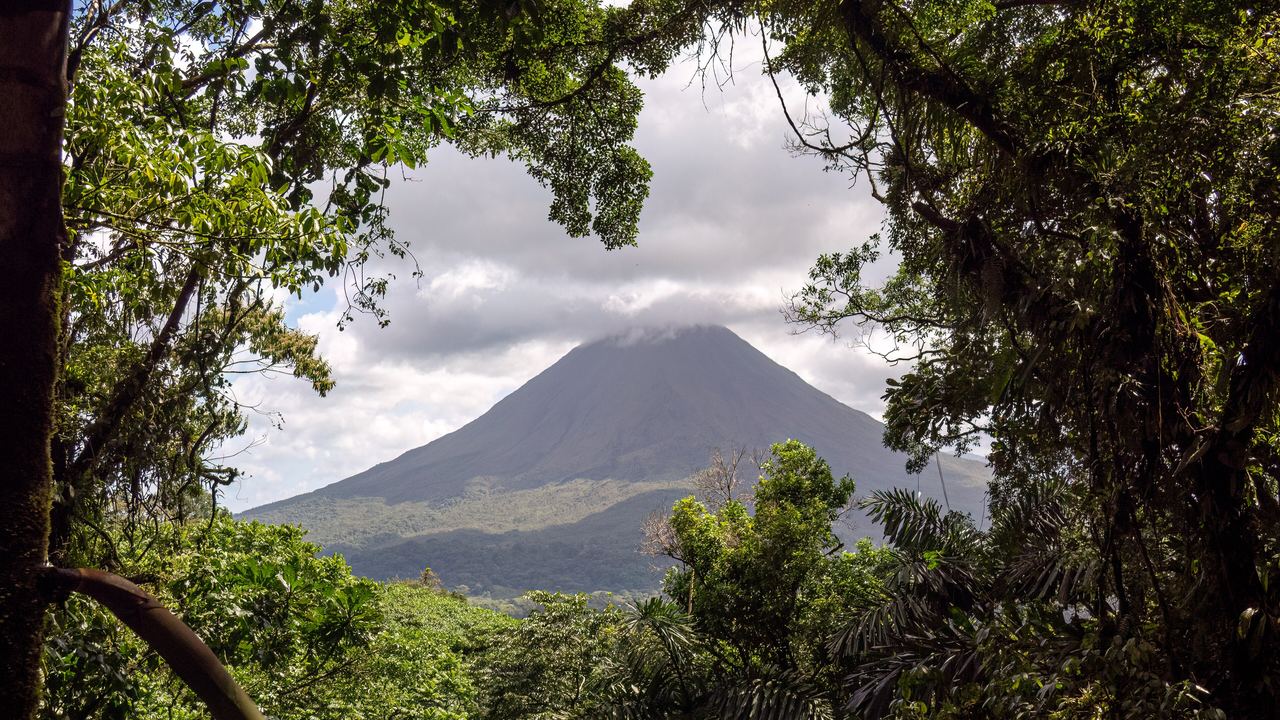
The Costa Rica dry season is real, and it covers about half the country. In our climate grid, Guanacaste records no rain days at all in January. One day trip away, La Fortuna, the base for the Arenal volcano, has no dry season worth the name. Both places sit on the same itinerary, and both are sold with the same line: come between December and April, when it is dry.
That line is a Pacific-side rule. Applied to Arenal, the part of Costa Rica with the deepest set of listings in our catalogue, it sends people to the wrong month with the wrong expectation. This piece sorts the country by slope, matches each volcano area to the months that suit it, and covers a variable that catches more visitors than rain: park opening hours, which change with the season and, in one case, with the day of the week.
It is November, which is late for anyone leaving this month and early for anyone planning the March window. The facts below were read on 10 November 2026, and where a source would not open, we say so.
Why the Costa Rica dry season stops at the mountains
A chain of mountains runs down the country, and the two sides get their weather from different directions. The Pacific side has what travellers call a dry season. According to the climate page on Costa Rica's official tourism site, which follows the national weather institute's regions, it runs from December to March, with April as a transition month. March is the driest and hottest month. The rains return around May and are heaviest in September and October, with a short break in July and August that Costa Ricans call the veranillo, the little summer.
The Caribbean side has no such pattern. The same page says its climate "does not have a well-defined dry season" and that rain stays "between 100 and 200 mm in the driest months". It names two relatively drier spells, February to March and September to October, and puts the rainiest month in December. Weather aggregators we checked disagree on whether Limón's driest month is March or April, though both put it above 140 mm. Those are unofficial compilations, so read the figure as a scale and not as a normal. We could not read the weather institute's own regional documents, which its site links as PDFs.
Three volcano areas, three calendars
Peak months are when weather and access both work. This is a typical year built from climate normals, not a forecast.
| Month | 1 | 2 | 3 | 4 | 5 | 6 | 7 | 8 | 9 | 10 | 11 | 12 |
|---|---|---|---|---|---|---|---|---|---|---|---|---|
| Rincón de la Vieja and Tenorio (Guanacaste) The Pacific rule applies in full: the sharpest dry season in Costa Rica, with no rain days at all in January | 1 | 2 | 3 | 4 | 5 | 6 | 7 | 8 | 9 | 10 | 11 | 12 |
| Poás and Irazú (Central Valley) San José goes from 6 mm of rain in January to 355 mm in September, and the summits are usually in cloud | 1 | 2 | 3 | 4 | 5 | 6 | 7 | 8 | 9 | 10 | 11 | 12 |
| Arenal (La Fortuna) The Pacific rule does not apply: Arenal is on the northern, Caribbean-facing side. February to April are drier, never dry | 1 | 2 | 3 | 4 | 5 | 6 | 7 | 8 | 9 | 10 | 11 | 12 |
From our when-to-go grid, built on national climate normals and checked on 15 August 2026.
Arenal: a volcano with no dry season and no eruption
For Arenal the useful question is not whether it will rain, but what you are buying when it does. Almost nothing on offer around La Fortuna depends on dry weather. Hanging bridges, hot springs, waterfalls and night walks all run in the wet, and rafting is the one activity that our category page says gets better in the rain. February to April are the better months in our grid because the cone is more often visible and the trails are firmer, not because the rain stops.
The second correction concerns the volcano itself. Arenal's last eruption ended in 2010, and the cone has been quiet since. Costa Rica's environment ministry has warned that climbing the cone is illegal, so no listing should sell a summit. Be careful with the words "red lava" as well. A few titles in any catalogue, ours included, use them for the trails across the lava rock left by the 1968 eruption. What those trails cross is cooled rock, fifty-eight years old.
Anyone who wants an erupting volcano in Central America should look at Guatemala instead and read the observatory's bulletin before booking. Costa Rica's remaining draws are crater lakes, fumaroles and mud, and that is plenty if it is what you came for.
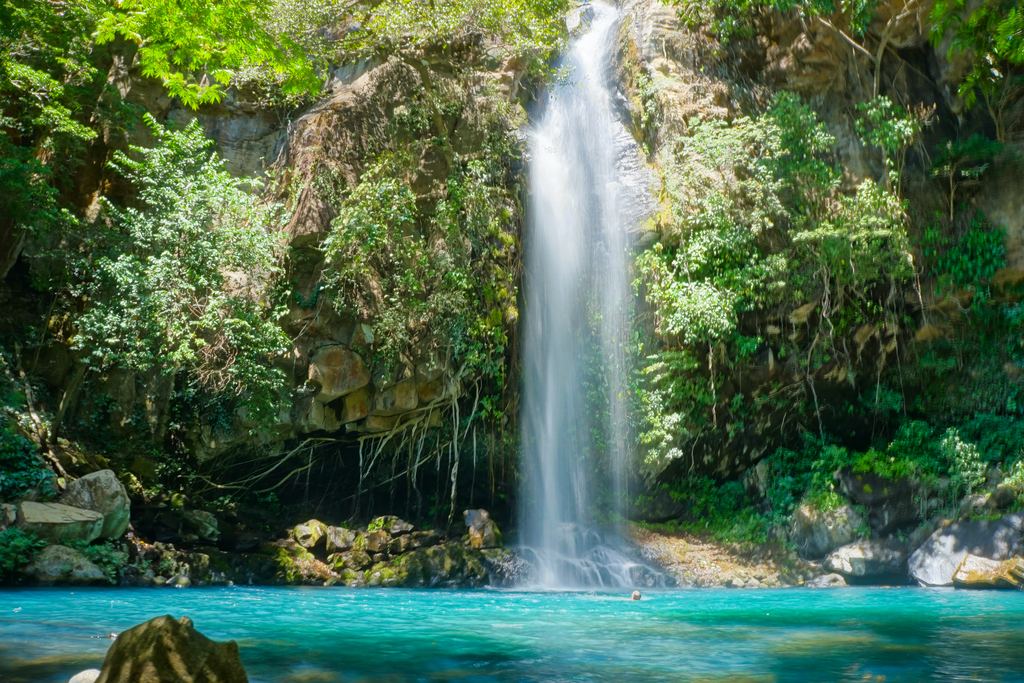
Guanacaste
Rincón de la Vieja: the Pacific rule at full strength
Rincón de la Vieja is on the Pacific slope, so the December-to-March rule holds. The Las Pailas loop is 3.5 km through dry tropical forest and takes about two hours, past fumaroles and mud pits at a slow boil, according to the listings in our catalogue.
Costa Rican press reports give the Pailas sector's hours as 08:00 to 15:00, Tuesday to Sunday, closed on Monday, and the Santa María sector's as Thursday to Monday, 08:00 to 15:30. Tickets have been sold electronically since 1 August 2023. The reports are not recent, so confirm the sector and the day before you drive.
Poás and Irazú: the dry season helps, the morning decides
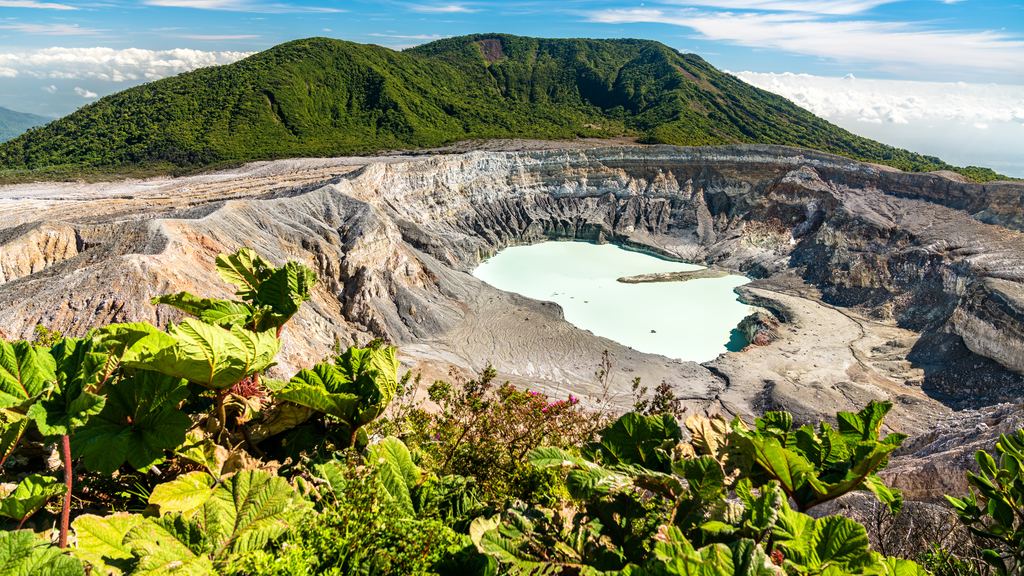
San José is on the Pacific side of the divide, so its January is dry and its September is not. At 2,708 m, the Poás crater and its acid lake sit above the cloud base for only part of the day, and the summits are usually in cloud by afternoon. That is why the Poás and Irazú listings start early, and why the dry months matter less here than getting to the crater before the cloud arrives.
The harder constraint is access. Press reports say tickets for Poás are sold online only, through the national parks system, for a chosen date and time slot. They describe entries every 20 minutes, one of them putting the day at 08:00 to 14:00 with 19 groups. A separate report from a period of restrictions speaks of 56 people per shift and 20 minutes at the viewpoint. They describe different moments and we could not date either, so we do not print a rule.
Poás has also closed more than once for volcanic activity since 2025, and headlines run into 2026. We have not printed a current status, because it is the most perishable fact on this page. Read it on the day at the park system and the national observatory, and see how to check whether a volcano is erupting. Our page on what happens to a trip if the volcano erupts covers the booking side.
Opening hours change with the season, and with the day
Rain is the variable everyone checks. Hours are the one that ends a day. Three of the four volcano areas below run on fixed slots or fixed days, and the park authority's own site returned a server error when we tried it, so everything in this table comes from Costa Rican press and guides. Treat it as a map of where to look, not as the schedule.
| Place | Access | Hours as reported | How current |
|---|---|---|---|
| Turrialba | Guided visit only, booked through ICETUR, outside the national parks ticket system | Dry season: first group 05:00, then hourly to 10:00. Rainy season: 08:00 to 12:00. A 2025 guide says 06:00 to 10:00 | 2020 reopening reports and a 2025 guide, which disagree |
| Poás | Online ticket only, with a date and a time slot | Slots every 20 minutes, one report says 08:00 to 14:00. Closures for volcanic activity override everything | Undated; closures and reopenings reported through 2026 |
| Rincón de la Vieja, Pailas | Electronic ticket, sector entrance | Tuesday to Sunday, 08:00 to 15:00. Closed on Monday | Press, several years old |
| Rincón de la Vieja, Santa María | Electronic ticket, sector entrance | Thursday to Monday, 08:00 to 15:30 | Press, several years old |
| Arenal | Park trails and private reserves | The cone is closed to climbing. Trails and bridges set their own hours | Ministry warning, reported by the press |
Two lessons come out of it. First, a Monday in Guanacaste is a different day from a Tuesday: the Pailas sector, the one in most day-trip listings, was reported shut on Mondays, so a Monday departure needs an operator who can name the sector it uses. Second, a first group at 05:00 and a last at 10:00 means that a late start at Turrialba loses the volcano, not an hour of it. Weather closures exist too. Costa Rican outlets reported in November 2024 that the parks system temporarily closed several protected areas for rain, among them both Rincón sectors.
The Costa Rican year, slope by slope
Read left to right for the Pacific side, with the Caribbean note on each line. The numbers on the left only keep the order.
The origins
-
December to March
Pacific dry season
The sharpest of the year, with March the driest and hottest month. On the Caribbean side December is the rainiest month, and February to March is a relatively drier spell.
-
April
Transition
The Pacific side is drifting out of the dry season. Our grid keeps April as a worth-going month for Guanacaste and the Central Valley, and as a peak month for Arenal.
The growth
-
May to June
Rains return on the Pacific
The Caribbean side has by now been wet for months. Rainfall stays between 100 and 200 mm even in its driest months.
-
July and August
The veranillo
A short break in the Pacific rains. The Caribbean side reaches its mid-year rain peak in July.
Today
-
September to October
Wettest on the Pacific
The heaviest rain in San José and Guanacaste. The Caribbean side has its second relatively drier spell.
-
November
Transition, then the Caribbean rains
The Pacific side is easing toward the dry season. The strongest Caribbean rainy period starts, lasting into January.
Which month for which volcano
If one trip has to include all three areas, February and March are the overlap. In our grid every area is at its best in at least one of the two, and the Pacific is still dry. That is also the answer for anyone reading this in November and planning ahead, which is the right time to book the Turrialba and Poás slots described above.
For a trip that leaves this month or next, the picture is more mixed. December is a worth-going month for Poás, Irazú and Rincón in our grid, but it is the rainiest month on the Caribbean side, so an Arenal-only trip in December is a wet one. Plan for rain, pick the activities that do not mind it, and keep the mornings for any volcano that needs a clear sky.
The wider picture, with 35 destinations and the physical reason behind each month, is on our when-to-go page. For the permit side of the same trips, see where you need a guide, a permit or both. The country's volcano areas are below, each with its own listings and its own calendar.
Costa Rica's volcano areas
Arenal, Poás and Irazú, and Rincón de la Vieja, each with its own calendar.
-
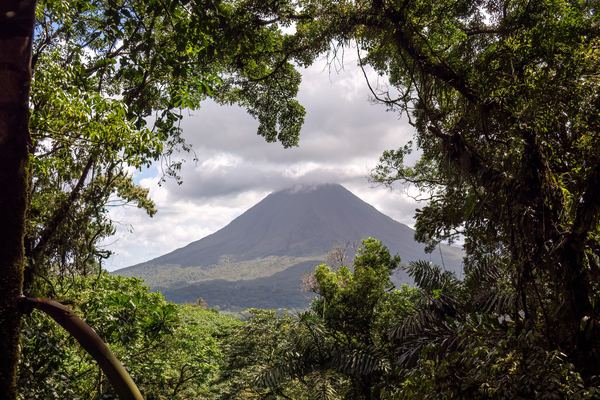
Arenal Volcano
Arenal Volcano tours from La Fortuna: hanging bridges, hot springs, waterfalls, rafting and rainforest hikes. The cone has been dormant since October 2010.
64 experiences in 6 destinations -
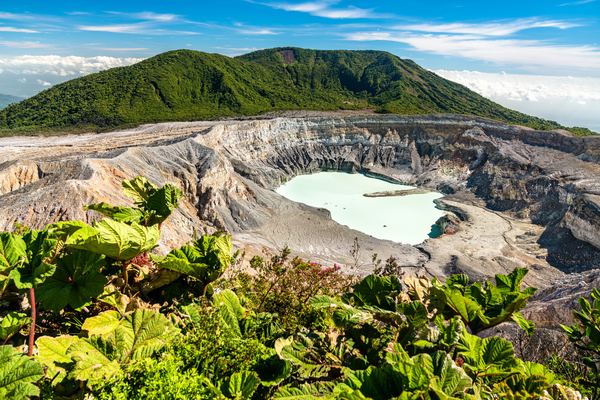
Poás & Irazú Volcanoes
Volcano tours from San José: the Poás acid crater lake, Irazú's drive-up summit at 3,432 m and Turrialba. Which to choose, and why the morning cloud decides it.
28 experiences in 3 destinations -
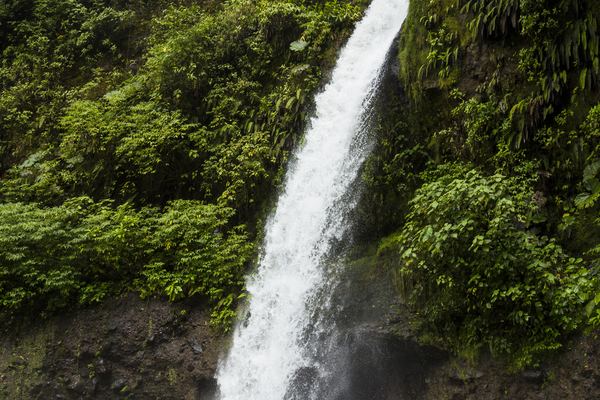
Rincón de la Vieja
Guanacaste's volcanoes: Rincón de la Vieja's boiling mud, the Río Celeste inside Tenorio, and the Miravalles geothermal field.
20 experiences in 3 destinations


Questions about the Costa Rica dry season
When is the dry season in Costa Rica?
On the Pacific side it runs from December to March, with April as a transition month, according to the country's official tourism site. March is the driest and hottest month. The Caribbean side has no well-defined dry season, so the answer depends on which slope your volcano is on.
Does Arenal have a dry season?
No. Arenal is on the northern, Caribbean-facing side, where rain stays between 100 and 200 mm even in the driest months. In our grid February to April are the better months, but they are drier, not dry, so pack for rain whenever you go.
What is the best month to see Arenal?
February, March and April, in our grid, with January and May as acceptable. Keep in mind that the cone has not erupted since 2010. What the area offers in any month is bridges, hot springs, waterfalls and rafting, and none of them needs a clear sky.
Can you climb the Arenal volcano?
No. Costa Rica's environment ministry has warned that climbing the cone is illegal. Walks go around the base and across the lava rock left by the 1968 eruption, and some of them are sold with hot springs afterwards.
Is Rincón de la Vieja closed on Mondays?
The Pailas sector was reported closed on Mondays and open Tuesday to Sunday, 08:00 to 15:00. The Santa María sector was reported open Thursday to Monday. The reports are several years old, so confirm the sector and the day when you book.
Is Poás open right now?
We do not print a current status, because the park has closed and reopened more than once for volcanic activity since 2025. Check the national parks system and the observatory on the day you travel. Tickets are sold online for a fixed date and time slot.
What time does Turrialba open?
Reports from the 2020 reopening give a first group at 05:00 and hourly entries to 10:00 in the dry season, and 08:00 to 12:00 in the rainy season. A 2025 guide gives 06:00 to 10:00. Visits are guided only, booked through ICETUR, so ask the operator for the current slots.
Four trips matched to the season
The most reviewed trips in the three areas, chosen because they do not promise a summit or an eruption. Check the park's status on the day for Poás.
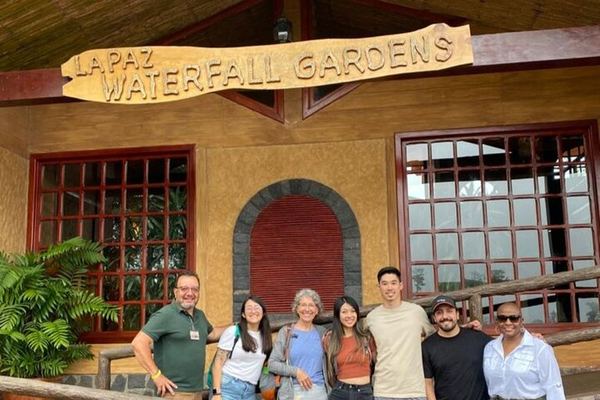
Poás and the Botos Lagoon, Familia Vargas Coffee, and the Five La Paz Falls
The walk here goes past the crater to the Botos Lagoon, and the day ends with 100 rescued species, a 35-option buffet and the five La Paz falls.
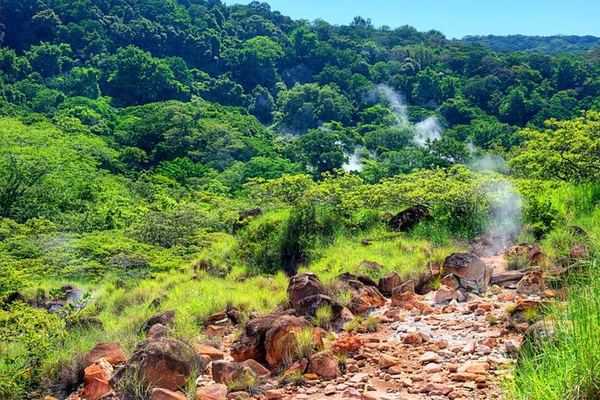
Rincón de la Vieja: Las Pailas, Oropéndola and Ten Hot Pools
The Río Negro springs have ten pools heated by the volcano, and the Las Pailas circuit runs 3.5 km past fumaroles and a mini crater. Some pick-ups cost extra.
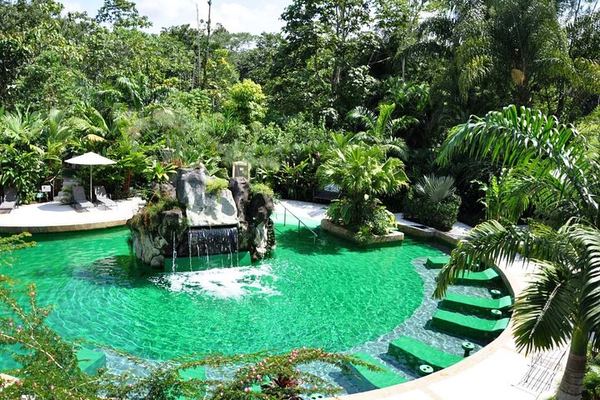
Arenal Volcano, La Fortuna Waterfall, Hot Springs Combo Tour with Lunch & Dinner
A day from Jaco with lunch and dinner both included: the waterfall for a swim, the 1968 lava trails at Arenal, and the Paradise Hot Springs at the end.
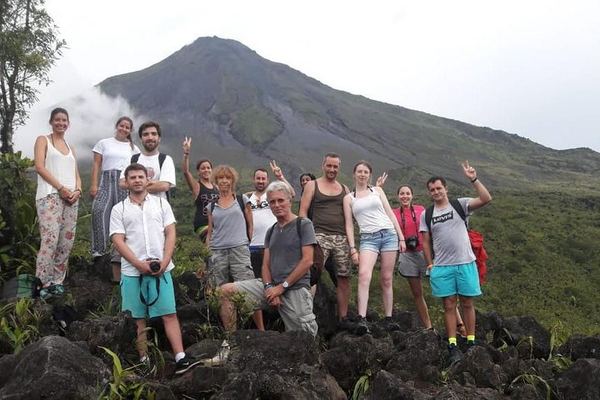
La Fortuna Waterfall, Arenal Ecological Park and a Hot River, at an Easy Pace
Short, gentle walks rather than a demanding hike: La Fortuna waterfall, the Arenal ecological park, and a natural hot river that is warm enough to sit in.
Ratings collected by Viator and Tripadvisor
Data verified on . visitcostarica.com climate page, Costa Rican press and guides for park hours, our own climate grid. The parks system site returned an error; the weather institute's regional PDFs were not read. Editorial Policy