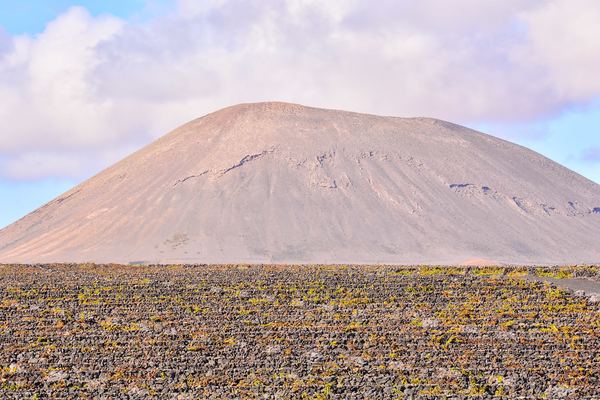
Your Flight Was Cancelled by Volcanic Ash. Here Is What You Are Owed
Volcanic ash cancelled 388 departures at Catania in under a week. Passengers are owed less than they hope and more than airlines admit: the cash compensation disappears, the duty of care does not, and the tour you already paid for follows different rules again.

Volcanic ash cancelled roughly 388 departures at Catania-Fontanarossa between the start of Etna's August eruption and 11 August 2026, counted on the airport's own tracking system. The next day another 55 went, and the airport closed arrivals and departures until six in the evening. The Volcanic Ash Advisory Centre in Toulouse had put the thickest ash over Sicily the evening before, with thinner stuff reaching from eastern Malta to northern Libya. Italy's civil protection minister, Nello Musumeci, gave the week its best line: "it is not the volcano that is in the wrong place, but the airport."
Most of the people stuck in that terminal believed one of two things, and both were wrong. Some thought a volcano meant 600 euros a head. Others thought a volcano meant nothing at all, because what can anyone do about a mountain. European law says neither, and the difference between the two wrong answers is worth real money.
This piece is about the money. Not the geology, which our guide to what happens if the volcano erupts already covers, but the narrow question of who owes you what when ash grounds an aircraft or shuts a mountain. It is not legal advice. It is the text of the rules and the terms, with the dates we read them on.
What you are owed when ash cancels the flight, and the half that disappears
Regulation 261/2004 does two separate jobs, and nearly every argument at a service desk comes from treating them as one.
The first is compensation: a fixed cash sum for the nuisance of having your plans wrecked. The EU's own passenger rights pages set it at 250 euros for flights of 1,500 km or less, 400 euros for flights over 1,500 km inside the EU and for other flights between 1,500 and 3,500 km, and 600 euros above 3,500 km. If you accept re-routing and arrive late but not catastrophically so, those can be halved to 125, 200 and 300.
The second is assistance, which the regulation calls the right to care, plus the right to get where you were going or get your money back. In practice: food and drink while you wait, a hotel if you are rebooked onto the next day, transport to that hotel and back, and two phone calls or emails. Separately, a one-off choice between a refund of the ticket and re-routing to your destination at the earliest opportunity, or on a later date you pick.
Here is the part that matters. An eruption that closes airspace is an extraordinary circumstance. The EU's guidance lists air traffic management decisions and adverse weather among its examples, and an ash cloud is both. So the first entitlement, the cash, is gone.
The second one is not. It does not shrink, it does not pause, and the volcano is not a defence against it. Airlines have argued otherwise, in court, and lost.
| The situation | What you are owed | Who decides |
|---|---|---|
| Your flight is cancelled because ash closed the airspace | A choice of refund or re-routing. Meals and drinks while you wait. A hotel and the transport to it if you are rebooked onto the following day. Two calls or emails. | The airline. This part is not suspended by the eruption. |
| The same cancellation, but you want the 250 to 600 euros | Nothing. An eruption closing airspace is an extraordinary circumstance and the cash compensation does not apply. | The airline refuses; a national enforcement body or a court settles it if you push. |
| Nobody offered you anything, so you bought your own dinner and hotel | Reimbursement of what was necessary, appropriate and reasonable. Keep every receipt, including the taxi. | A national court, on the facts of your particular night. |
| The airline told you more than fourteen days before departure | Refund or re-routing, as above. No cash compensation, whatever caused it. | The airline, on the date it notified you. |
| Your summit excursion is called off on the day for volcanic reasons | Whatever the operator's conditions say. On the four Etna summit tours we read for this article, they say nothing specific about it at all. | The guide, on the mountain, at their own discretion. |
| You paid to see a crater and the cloud never lifted | Nothing, almost everywhere that sells a view. | Nobody. Cloud is not a cancellation, and no refund clause is triggered. |
A court has already settled this, and the volcano was Icelandic
In April 2010 the Eyjafjallajokull eruption closed much of European airspace for days. Denise McDonagh's flight from Faro to Dublin was cancelled, Ryanair declined to give her the care the regulation requires, and she sued. The case reached the Court of Justice of the European Union as C-12/11, and the judgment came on 31 January 2013.
The airline's argument was ambitious and, read generously, not absurd: an ash cloud grounding a continent is so far beyond ordinary disruption that it must sit in a category of its own, one where an airline cannot reasonably be expected to keep buying hotel rooms for an open-ended number of nights. Call it super-extraordinary, and the duty of care switches off.
The Court declined. Yes, the closure of part of European airspace caused by the eruption counts as an extraordinary circumstance. No, that does not release the carrier from the obligation to provide care. There is no separate tier above extraordinary where the obligation stops.
The closure of part of European airspace by the eruption is an extraordinary circumstance, and carriers remain bound to provide care all the same. What a passenger can recover is what was necessary, appropriate and reasonable in the circumstances, which is for the national court to assess.
Two practical things follow, and they are the reason this ruling is worth knowing by name.
The first is that the obligation has no published ceiling in euros and no published cut-off in days. It runs while you are waiting. In 2010 that meant, for some people, the better part of a week.
The second is the catch. The recoverable amount is what was necessary, appropriate and reasonable, judged afterwards and case by case. That is not a blank cheque, and the suite at the airport hotel is unlikely to survive the test. It also means the practical route to being made whole is unglamorous: ask the airline for care at the desk, in writing if you can, and when it is not forthcoming, buy modestly and keep the paper. A receipt for a 40-euro room is a document. A memory of a bad night is not.

Catania, August 2026
The airport is eleven kilometres from the mountain
Catania-Fontanarossa sits on the coastal plain below Etna, and the prevailing wind decides whether that is a problem. Ash does not need to fall in any quantity to stop aircraft: it melts in a jet engine and sets on the turbine blades, so the threshold for closing a runway is low and the decision belongs to the aviation authorities rather than the airline.
Which is exactly why the cash compensation vanishes. The airline did not cancel your flight. A regulator shut the sky, and the carrier had no lawful way to fly you through it.
Now the tour you already paid for, which follows none of those rules
The flight is the part with a regulation behind it. The excursion is not, and this is where our own catalogue turns out to be the most useful document available.
We read the booking conditions attached to the four most-reviewed Etna summit crater tours on this site, the same four listed at the foot of this article, carrying between them more than 1,400 reviews. All four are sold with free cancellation. The wording differs slightly between operators and the substance does not:
- "Full refund when the booking is cancelled at least 24 hours before departure."
- "The full amount is refunded on a cancellation made at least 24 hours before departure."
- "The whole amount is refunded when the cancellation reaches the operator 24 hours before departure."
- "Cancellations at least 24 hours ahead of the scheduled departure are refunded in full."
Read those again and notice who is doing the cancelling. Every one of them describes you pulling out. That is what free cancellation means on a volcano, and it is a genuinely good term: twenty-four hours is enough notice to react to a bulletin.
Now read what the same four operators say about themselves. One states that every excursion runs in accordance with the current volcanic risk levels. Another says the itinerary can change according to what the volcano is doing or what the weather allows. A third warns that the guide, having assessed the weather and the state of the volcano, may at their sole discretion cut the time at altitude short and bring the group down. The fourth is the most explicit of the set:
Because of the continuous and unpredictable evolution of the volcanic activity, the excursions could undergo variations, or, in extreme cases, be cancelled, at the discretion of the guide for safety reasons.
The same operator adds that excursions run within the limits of whatever ordinance is in force, and that the guides have to stop wherever it is still safe to stop.
None of that is sharp practice. It is the only honest way to sell a walk on an active volcano, and an operator who promised the summit in all conditions would be the one to avoid. But line the two halves up and the asymmetry is plain. Your right to cancel is written down with a number attached. Their right to cancel is written down with no number attached at all. Not one of the four says what happens to your 55, 65, 70 or 115 euros when the guide turns the group around at 2,800 metres, or when the ordinance moves the ceiling below the crater you booked to stand on.
In practice the money usually comes back, because the booking platforms have their own policies sitting above the operator's and because an operator who kept the fare would not hold 4.9 stars for long. The point is that it is a practice rather than a term. And a shortened day is the harder case: you went up, you walked, you saw less than the listing showed. There is no clause for that anywhere, and asking afterwards is a negotiation, not a claim.
The separate costs are the ones that catch people out. On these four tours the cable car and jeep tickets are frequently excluded from the fare and paid in cash on the spot, at 45, 50 or 65 euros a head depending on the operator, and one of them charges 70 euros instead of 50 to anyone who decides mid-excursion to come back down by bus. Those are transactions with the lift company, not with the tour operator, and they sit outside whatever refund the operator offers. Our guide to choosing a volcano tour goes through the rest of what the headline price tends to leave out.
Cloud is not a cancellation, and nobody refunds it
The most common ruined volcano day involves no eruption, no ash and no closure. You get up at three in the morning, you pay, you arrive, and the thing you came for is inside a cloud.
Haleakala, on Maui, sells a sunrise reservation for one dollar per vehicle, on top of the park entry fee, and it is the clearest published example of how this works because the park says the quiet part out loud. Its official FAQ answers the question "Can I get a refund or exchange for a different day?" with a flat "No, your sunrise reservation is good for one day only." The reservation can only be used on the date printed on it. And on the matter of whether you will see anything, the park is disarmingly frank: "we can't predict whether a sunrise is going to be clear or cloudy."
So the National Park Service sells you a timed slot for a natural phenomenon it openly says it cannot forecast, and tells you in advance that the dollar is gone either way. That is not a scandal. At a dollar it is barely a transaction, and the reservation exists to ration a small car park rather than to sell a sunrise. But it is the honest shape of the deal, and almost nothing else in this industry states it as plainly.
The same logic, with more money attached, runs through every crater viewpoint, every summit lift and every sunrise trek on the market. What you are buying is access at a time, not a view. Weather is not a failure of the service.

What travel insurance does, and the two clauses to find before you need them
Almost every page on the internet about volcanoes and insurance is written by somebody selling a policy. We did not read any policy wording at source for this article, so what follows is structural: the two clauses to go and find in your own schedule.
The first is the known event rule. Cover generally has to be bought before a peril becomes foreseeable, and once an eruption is under way and in the news, a policy taken out afterwards will usually not respond to disruption from it. The awkward part is specific to volcanoes: one can stay in the news for months, and insurers do not agree with each other about when a long-running eruption stops being new and becomes known. If the mountain you are booking is currently doing something, put that question to the insurer in writing before you pay.
The second is altitude. Standard policies cover trekking only up to a stated height, and the ceiling is frequently lower than what people book: several of the summit itineraries on this site finish above 3,300 metres, and a policy that stops at 3,000 does not quietly stretch. The point at which you discover that is the point at which you need a helicopter. The number sits in the schedule under hazardous activities and takes a minute to find.
Six questions to ask before you pay
Each has a definite answer, and each is easier to get before the transaction than after it. The Etna answers come from booking conditions read on 13 October 2026.
Who gets to call the day off?
On all four Etna summit tours we read, the guide, at their sole discretion, on the mountain. That is the right answer for safety. Ask the follow-up: what happens to the fare when they use it.
What does free cancellation actually cover?
Almost always you cancelling, at least 24 hours ahead. It is not a promise about them cancelling, and the two are written in completely different language.
Is the lift or the 4x4 in the price?
On Etna, frequently not: 45 to 65 euros per person, paid in cash at the meeting point. That money goes to the lift company and is outside the tour operator's refund.
What counts as a shortened day?
A guide who stops 300 metres below the crater has delivered the excursion, not cancelled it. No terms we read provide for a partial refund, so this is the gap to ask about.
When does your insurance stop helping?
Once the eruption is a known event, and above the altitude ceiling in your schedule. Check both before booking, because neither can be fixed afterwards.
Who do you claim care from?
The operating airline, at the desk, while you are waiting. Not the travel agent, not the insurer first, and not by email after you have gone home and binned the receipts.
Check the mountain before you check the policy
Every national observatory publishes the current state of its volcanoes, free and several times a day, and it is the one source in this business with no product to sell you.
What we could not verify
Four gaps, stated rather than papered over, because how we work depends on saying so.
The regulation in its own words. Every attempt to open the consolidated text of Regulation 261/2004 on the EU's legal database on 13 October 2026 came back empty behind an automated-traffic challenge, and the Court's judgment viewer needs a browser session we do not have. The figures above therefore come from the European Commission's public passenger rights pages, which are official but are a summary, and the holding in McDonagh from the EU Fundamental Rights Agency's case-law database rather than the judgment text. Anyone arguing a real claim should read the articles themselves.
Poas. Costa Rica's crater was going to be the second example of the no-refund-for-cloud rule, which is widely reported for that park. The Costa Rican parks authority returned a 503 on 13 October 2026, and the accounts we found in its place disagree with each other while the most detailed is years old. So it is not here, and Haleakala is, because its park service publishes the rule itself.
Insurance wordings. Not read at source. No figure or percentage is attached to either clause above, because the numbers in circulation come from brokers and comparison sites.
Etna's state as you read this. The most recent INGV weekly bulletin when this was written was dated 6 October 2026, and we have not opened it, so nothing here says what the volcano is doing today. That is deliberate: a blog post is the wrong place for a live alert level, and checking it yourself takes two minutes. For what you would actually see if you went, our piece on where lava is visible now explains why the honest list is shorter than the market suggests.
One caution that is not a gap: operator conditions change without notice, and the four sets quoted here were read on a single day. The asymmetry will outlast the wording.
The questions people actually type
Do I get compensation if a volcano cancels my flight?
Almost certainly not the cash compensation. An eruption that closes airspace is treated as an extraordinary circumstance, and the fixed sums of 250 to 600 euros do not apply when the cancellation was caused by something the airline could not have avoided. What does still apply is everything else: a choice between a refund and re-routing, meals and drinks while you wait, a hotel and transport to it if you are rebooked onto the next day, and two calls or emails. Those are separate entitlements and the volcano does not switch them off.
What is the difference between compensation and assistance under EU261?
Compensation is a fixed cash payment for the disruption itself, set by distance: 250 euros up to 1,500 km, 400 euros for longer flights within the EU and other flights between 1,500 and 3,500 km, and 600 euros beyond 3,500 km. Assistance, which the regulation calls the right to care, is the practical stuff the airline has to provide while you are stranded, plus the refund or re-routing. Extraordinary circumstances remove the first and leave the second intact. Confusing the two is why so many passengers come away believing they were owed nothing.
Does the airline have to pay for my hotel during an ash cloud closure?
Yes, if you are rebooked onto a flight the following day. The Court of Justice decided this directly in McDonagh v Ryanair on 31 January 2013, a case arising from the 2010 Eyjafjallajokull closure. It held that the airspace closure was an extraordinary circumstance but that this did not release the carrier from its duty to provide care, and it rejected the argument that an event of that scale sits in a category where the duty stops. If the airline does not offer anything, pay for what is necessary and reasonable yourself and keep the receipts: what you can recover is judged on the facts by a national court.
Will I get my money back if my volcano tour is cancelled by the eruption?
Probably, but as a practice rather than a written right. On the four most-reviewed Etna summit tours on this site, the free cancellation clause describes the customer cancelling at least 24 hours ahead and says nothing about what the customer receives when the operator or the guide calls it off for volcanic reasons. All four reserve that right explicitly. Platform-level policies usually refund in that situation, which is why it rarely becomes a dispute, but the fare itself is not protected by the clause people think protects it.
Do I get a refund if clouds block the crater?
No, essentially nowhere. You are buying access at a stated time, not a view, and weather is not treated as a failure of the service. Haleakala National Park states the position as clearly as anyone: its sunrise reservation is good for one day only, there is no refund or exchange for another date, and the park says plainly that it cannot predict whether a given sunrise will be clear or cloudy. Separately paid lift tickets and park entry are usually non-refundable on the same reasoning.
Does travel insurance cover volcanic eruptions?
It depends almost entirely on two clauses in your own schedule. The first is the known-event rule: cover generally has to be bought before the eruption becomes foreseeable, so a policy taken out after an eruption is in the news will usually not respond to disruption from it, and insurers differ on when a long-running eruption crosses that line. The second is the altitude ceiling on hiking and trekking, which is often lower than the summit itineraries people book. Both are findable in the policy document in a couple of minutes, and neither can be fixed once you are travelling.
How much notice removes my right to compensation?
More than fourteen days. If the airline tells you more than two weeks before departure, no cash compensation is due whatever the cause. Between fourteen and seven days, and again under seven days, it can also fall away if the re-routing offered keeps you within defined windows either side of your original times. The right to a refund or to re-routing is unaffected by notice.
Who do I complain to if the airline refuses?
Start with the airline in writing, because a national enforcement body will ask whether you did. Each EU country designates a body for air passenger rights complaints about flights leaving its airports; for a disputed sum the alternative is a court, which is where the reasonableness of what you spent gets assessed. On an ash closure, be clear which entitlement you are claiming. A demand for 600 euros will be refused, and refused correctly. An itemised claim for the hotel and meals you had to buy stands on much stronger ground.
The four Etna summit tours whose conditions we read
The most-reviewed summit itineraries on the site, and the four whose booking terms are quoted above. Each reserves the guide's right to shorten or call off the day.
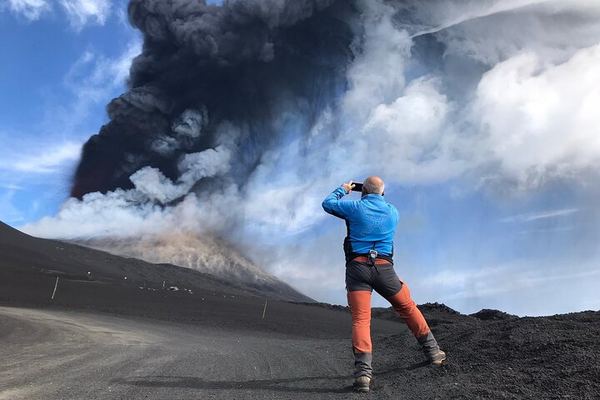
Etna 3,000 m with Alpine Guides: Barbagallo, Torre del Filosofo, 3 Hours on Foot
The cable car and jeep ticket is paid in cash on site, not included. Four hours of walking to Barbagallo, the 2002 vent and Torre del Filosofo.
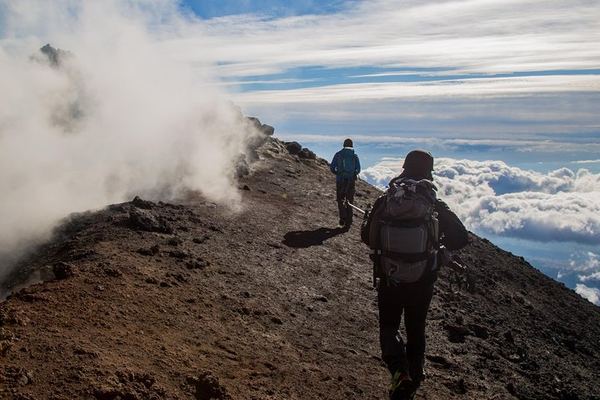
Etna South Summit Hike with Ashàra: Three Craters in a Row at 3,340 m
Run against the current volcanic risk level, with cable car and 4x4 to 2,800 m and two hours on foot to the Central, North-East and South-East craters.
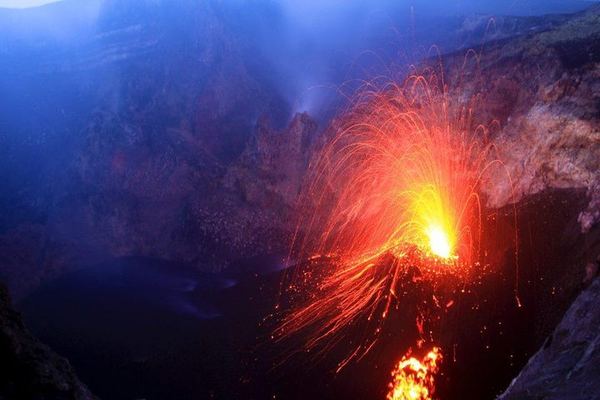
Etna Summit Craters: Bocca Nuova, the Voragine and the True Peak at 3,329 m
The North-East Crater at 3,329 m is the actual top of Etna, reached in 90 minutes from Torre del Filosofo. Descent through the 8 km Valle del Bove.
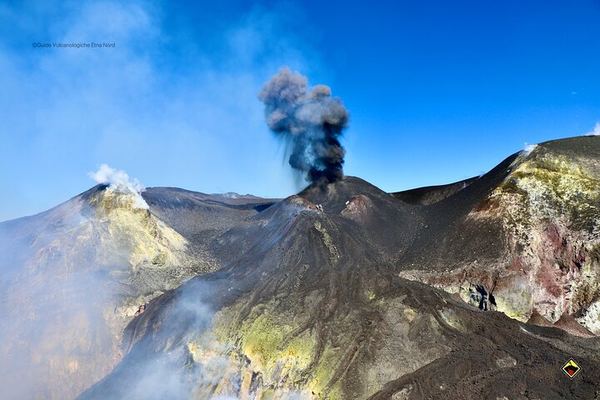
Etna North Summit on Foot Both Ways: 1,580 m of Descent, Experts Only
The climb is 500 metres, the walk down is 1,580 over 7 km, and the operator warns it is the harder half. The bus back from 2,850 m costs extra.
Ratings collected by Viator and Tripadvisor
Data verified on. European Commission passenger rights pages; CJEU C-12/11 via the EU Fundamental Rights Agency; NPS Haleakala sunrise FAQ; Euronews 12 Aug 2026; four operators' booking terms. Editorial Policy