Volcanoes Without Walking: How High a Vehicle Takes You, and What It Costs
The Teide cable car reaches 3,555 metres and will not carry anyone with a physical disability, on evacuation grounds. Mount Rainier's paved trails are not accessible, and the park says so itself. Nine operators, what each costs, and who gets turned away.
Looking for a volcano without hiking is an entirely reasonable thing to want, and the answer is better than the forums suggest. A cable car, a rack railway, a coach or your own car will put you somewhere between 1,465 and 3,555 metres on a good number of the volcanoes in this catalogue. What nobody assembles in one place is the part that decides whether the day works: how high the vehicle actually stops, what it costs, and who the operator will refuse to carry.
That last column is the one we went looking for, and it turned out to be the story. Reading nine operators and park authorities in a single morning, the pattern is not that some volcanoes are accessible and others are not. It is that four words the whole industry treats as synonyms mean four different things: reachable by vehicle, paved, accessible, and permitted.
The sharpest example sits at the top of the altitude table. The cable car that climbs higher than any other on this list is also the only one that puts a prohibition in writing.
| Volcano | What carries you | How high it takes you | Adult return | What the operator publishes about disabled access |
|---|---|---|---|---|
| Teide, Tenerife | Cable car | 2,356 m to 3,555 m | 42.00 euros | Not permitted. People with "diverse physical or motor functionality" are barred, on evacuation grounds, as are cardiovascular conditions, pregnancy and under-3s |
| Etna, Sicily | Cable car | 1,923 m to 2,500 m | 54.00 euros | "Designed for every age and ability". Heart, respiratory and blood-pressure conditions and pregnancy are listed as not recommended |
| Etna, Sicily | Cable car, then 4x4 bus or snowcat, then a guide | 1,923 m to about 2,800 m by vehicle, then 3,000 m on foot | 82.00 euros | The vehicle leg is advertised as "Ideal also for families, seniors, and people with disabilities" |
| Puy de Dome, Auvergne | Electric rack railway | 900 m to 1,465 m, in 15 minutes | 17.20 euros in winter, 18.60 in summer | Three wheelchair spaces per trainset, wheelchairs lent, a reduced fare for wheelchair users, and the one unadapted corner of the summit named |
| Timanfaya, Lanzarote | Coach, the Ruta de los Volcanes | The crater road, from the visitor centre | 30.00 euros | A disability discount, available only at the ticket desk on presentation of documents. Nothing at all about carrying a wheelchair |
| Haleakala, Maui | Your own car, to the summit | Sea level to 3,055 m | Park entrance fee, plus 1 US dollar per vehicle for a sunrise slot | "Park trails are currently unpaved and not suitable for wheelchair use" |
| Mount Rainier, Washington | Your own car, to Paradise | 573 m to 1,950 m on the park road | Park entrance fee | "There are no accessible trails" at Paradise, although they are mostly paved. Manual wheelchairs lent at the visitor centre |
| Hawai'i Volcanoes, Big Island | Your own car, Crater Rim Drive and Chain of Craters Road | The Kilauea caldera rim, and down to the sea | Park entrance fee | Wheelchairs on request, first come first served, and four short routes named one by one |
| Craters of the Moon, Idaho | Your own car, the loop road | The spatter cones and lava flows | Park entrance fee | Two trails labelled "Fully Accessible", with minimum tread widths in inches and the share of trail steeper than 8 per cent published |
A volcano without hiking: four words that are not synonyms
Here is the distinction, because once you have it the table above reads very differently.
Reachable by vehicle means a machine covers the altitude. That is the easy part, and it is what every tour description sells.
Paved is a surface. It says nothing about gradient, and Mount Rainier is about to demonstrate that a path can be tarmac from end to end and still be unusable.
Accessible is a judgement somebody has made, with or without measuring anything. Four of the authorities we read use the word; only one of them publishes the numbers behind it.
Permitted is whether they will let you on. It is the only one of the four that is binary, it can end your day at the turnstile, and it is almost never in the product description you booked from.
A volcano can be all four. It can also be the first three and not the fourth, which is the Teide case, and that combination is the one that catches people out.
The highest volcano cable car here will not carry you if you cannot walk
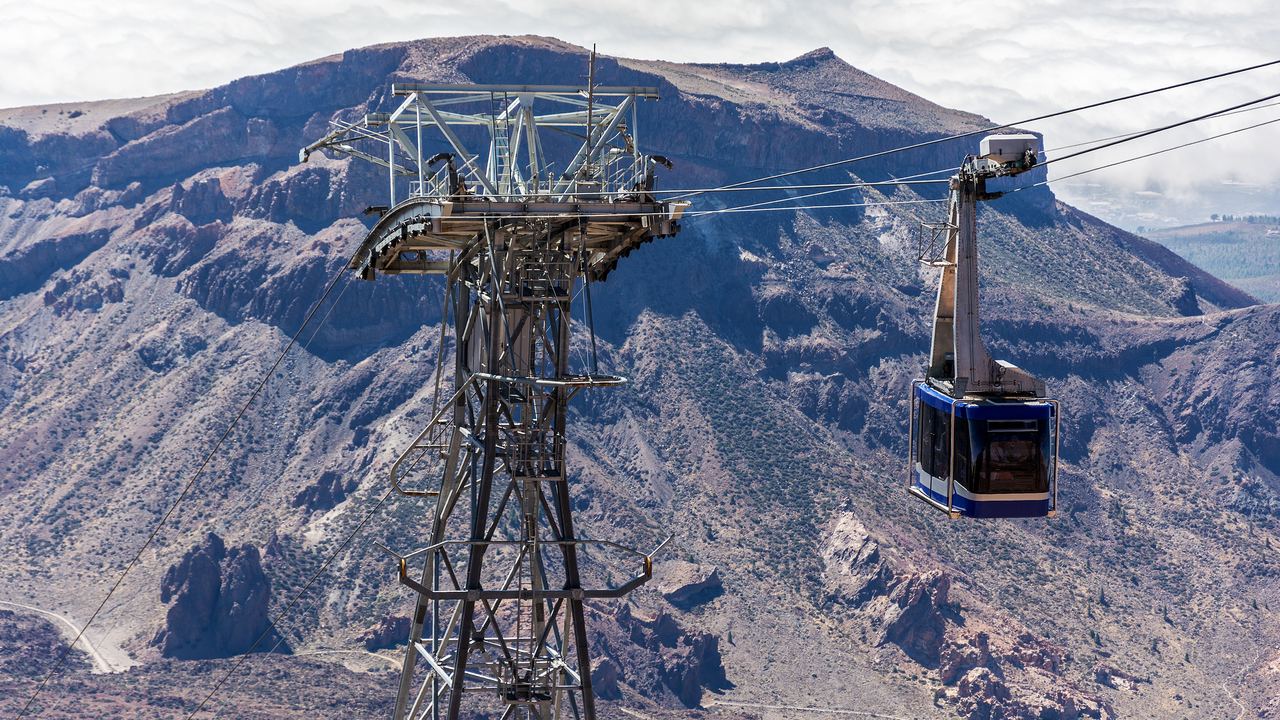
The Teide cable car runs from 2,356 metres to an upper station at 3,555 metres, which makes it the highest mechanical lift on this list. The ride is eight minutes. The ticket for a non-resident adult is 42.00 euros return, against 10.50 euros for a resident of the Canary Islands, and until 31 December the car runs 09:00 to 17:00 with the last ascent at 16:00 and the last descent at 16:50. Miss the latter and you are walking down from three and a half thousand metres in the dark.
Now the rules page, which is where the day is actually decided. The operator states that people with cardiovascular conditions, pregnant women and children under the age of 3 are not allowed on the cable car, because of what it calls the risks posed to their health by the altitude. That much is unusual only in being strict. The next clause is the one worth reading twice.
People with diverse physical or motor functionality are not permitted to make the ascent by cable car. Due to the technical conditions that exist in the National Park, it cannot be guaranteed that they can be safely evacuated in the time allowed by the regulations.
Read it closely and it is not a statement about the machine. The cabin is a box that holds dozens of people and does not care who is standing in it. The stated reason is evacuation: if the cable stops between towers, everybody aboard comes down on a rope, and the operator will not undertake to do that within the time the regulations allow for someone who cannot assist in their own rescue. Whether you find that honest or a failure of engineering is a matter of opinion. What it is not is ambiguous.
There is also a footwear rule, and it is enforced at the gate. Closed mountain or sports shoes with high-grip, non-slip soles are compulsory, and the operator expressly prohibits boarding in heels, wedge heels, platforms, beach or water shoes, flat-soled shoes, or anything open. People are turned away for sandals. It is the single most common way to lose a 42-euro ticket on Tenerife.
One more thing the fare does not buy. The cable car stops at 3,555 metres and the actual summit is 3,718 metres, and the last stretch up the Telesforo Bravo path needs a national park permit that the ticket does not include. The national parks booking office no longer issues it directly: it now points applicants at the Tenerife ON platform. In our Teide cable car and summit listings the products that carry the permit say so and the ones that stop at the viewpoint say that too, which is a distinction worth 163 vertical metres. Read the description, not the title.
Etna sells the same altitude to the opposite customer
In Sicily, a near-identical machine takes the opposite position in public.
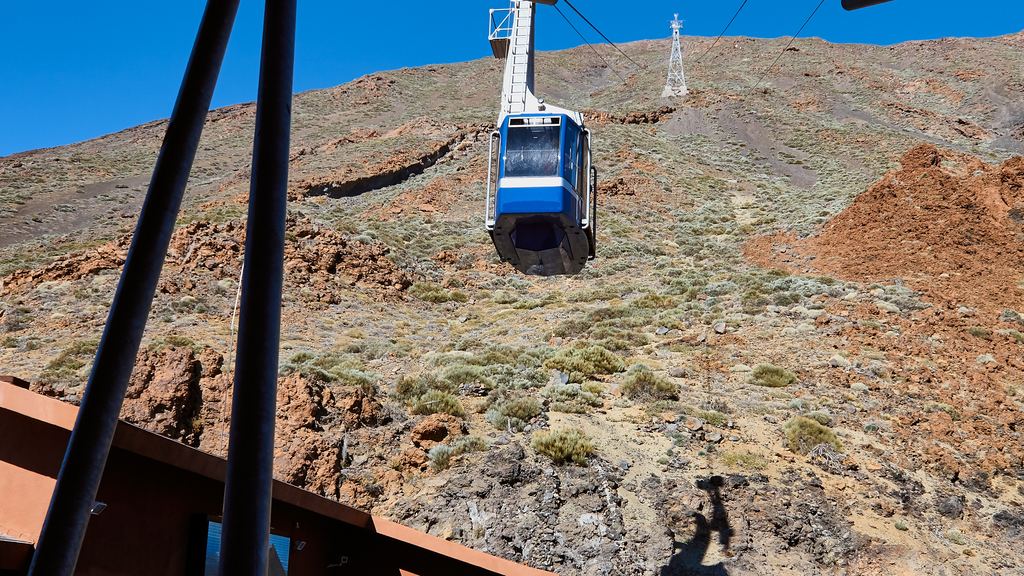
The Etna cable car climbs from 1,923 metres to 2,500 metres for 54.00 euros return, running 08:30 to 16:45 with the last descent at 17:15. Add the 4x4 bus, replaced by a snowcat in winter, and an alpine and volcanological guide, and the operator's Tour 3000 costs 82.00 euros, lasts about two and a half hours, and is graded Easy. The vehicle takes the only road on that side of the mountain, which the company owns and reserves to its own vehicles, as far as what it calls the maximum altitude allowed by the authorities. Its own ticket page puts that leg at 2,500 to 2,800 metres, and the last 200 metres to 3,000 are on foot behind a guide.
The headline on that ticket page is "Designed for every age and ability". The 4x4 section is described as "Ideal also for families, seniors, and people with disabilities". The medical notes name heart and respiratory conditions, high blood pressure and pregnancy, and they say not recommended rather than not allowed.
Two cable cars in the same 2,500-metre band, both carrying tourists up an active volcano, taking opposite legal postures: one advises and leaves the decision to you, the other decides for you. We are not in a position to say which is right, and we would be suspicious of anyone who claimed to be. Both have real evacuation problems. Only one of them has written down what it will not do.
What we can say is that an advertisement welcoming "people with disabilities" is a sentence in a marketing page, not a specification. It does not tell you the step height of the 4x4, whether a chair can be secured, or what happens at 2,800 metres if the weather turns. Get that in writing from the operator, because a product description is not a contract with the mountain.
The lowest volcano on this list is the only one that counts the spaces
Of the 80 volcanoes in the UNESCO-listed Chaine des Puys, the operator of the Puy de Dome rack railway says only one is accessible to every public, and it means its own. On the evidence of what the operators on this list publish, the claim stands up.
The train is electric, climbs 5.6 kilometres from 900 metres to 1,465 metres in fifteen minutes, and has carried up to 400 passengers a trip since it opened in May 2012. It exists because in 2008 the department decided to stop some 50,000 cars a year grinding up the volcano and replace them with one train, which is the rare case of a mobility decision that improved both the mountain and the access to it. Tickets are valid for a year with no fixed time or date, and a winter adult return is 17.20 euros against 18.60 in summer.
Then the accessibility page, which does something none of the others manage. It states three wheelchair spaces per trainset. It says the carriages load level with the platform, that the stations have escalators and lifts, that there is a disabled parking bay at the site entrance, priority at the ticket desk and on the platform, adapted toilets, and that the operator lends wheelchairs. There is a reduced fare class naming wheelchair users and people with reduced mobility explicitly, at 15.40 euros in winter, an easy-read booklet, guide dogs admitted, and a regional telepresence robot so that children who cannot travel can be walked round the summit remotely.
And then the sentence that makes the rest of it credible: the access to the remains of the temple of Mercury is not adapted, because of the steps. One disclosed exception. That is what a complete declaration looks like, and it took a 1,465-metre volcano to produce it.
Four authorities, four ways of answering the same question
None of these is wrong. They are simply not comparable, which is why a single list of accessible volcanoes is always misleading.
Measure it
Craters of the Moon publishes minimum tread widths of 60 and 71 inches, says what percentage of each trail exceeds an 8 per cent gradient, and notes that seams in the concrete appear along one path.
Lend the chair
Hawai'i Volcanoes offers wheelchairs on request at the Welcome Center, first come first served, and names the four short routes they work on, one of which needs assistance.
Say no
Haleakala states plainly that its trails are unpaved and not suitable for wheelchair use, and that the summit building is reachable only with help, up a steep ramp.
Say nothing
Timanfaya, widely called the most accessible volcanic experience in Europe, publishes a disability discount and not one word about whether its coach can carry a wheelchair.
Paved is not an accessible volcano, and an American park says so out loud
Mount Rainier is the one we expected to be the easy answer, and it is the one that corrected us.
The park road climbs from 573 metres to 1,950 metres, which is a greater gain than the Etna cable car and all of it from a driver's seat. Paradise, at the top of it, is heavily built up for high ground on a volcano: a visitor centre, a historic inn, four car parks with nineteen van-accessible bays between them, and accessible toilets in every building. The park lends manual wheelchairs from the Jackson Visitor Center information desk against a photo ID. By the standards of the table above, this is a model.
And then its own accessibility page says, of the trails: "There are no accessible trails." In the same breath it explains why. "Paradise area trails are mostly paved and steep." The Nisqually Vista loop is 1.9 kilometres, gains 200 feet, begins with stairs and has a long steep section near the start. The route to Myrtle Falls is a mile return with the same gain, and seeing the whole waterfall means stairs and a steep dirt path. Even inside the buildings the park is specific rather than reassuring: the inn's upper floor is not accessible, the front desk is too tall for a wheelchair user, and some aisles in the gift shop are 29 inches wide.
This is the finding that changed the piece. We came expecting to report Rainier as the North American volcano you can see most easily without walking, which is what the vehicle access suggests. On the park's own account that is true of the view and false of the trails. Its general accessibility page adds the caution that ought to sit under this whole article: facilities described as accessible do not necessarily comply fully with federal standards.
Lassen Volcanic, two states south, reads the same way. The paths at Manzanita Lake are dirt and the park states that none are designated as accessible. At Sulphur Works a paved pavement runs from the car park to the fumaroles, and the park notes that it requires assisted mobility. Our difficulty index exists for the same reason: a surface and a distance tell you almost nothing without a gradient.
Paradise, Mount Rainier
The view costs nothing. The path is the problem
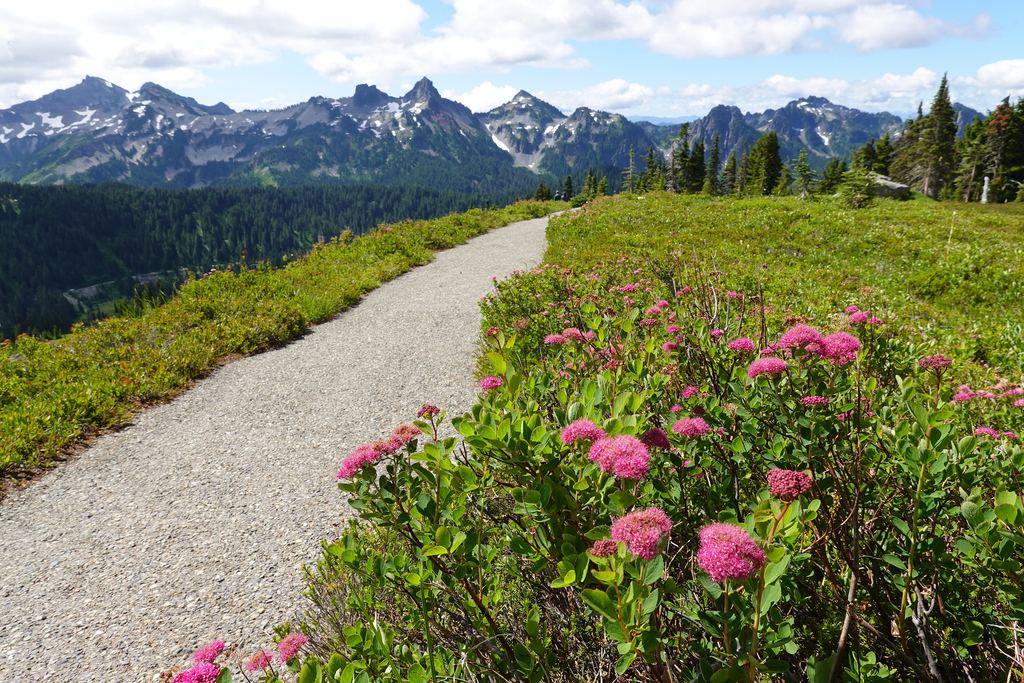
The drive to Paradise ends at 1,950 metres with the glaciers of Rainier directly overhead and meadows in every direction, and for anyone who cannot walk far that view is the whole argument for the vehicle. Nineteen van-accessible bays put you in front of it.
What the park will not pretend is that you can then go for a walk. The trails out of those car parks are tarmac and steep, which is the combination nobody warns about, and the park says in writing that none of them is accessible.
Timanfaya is called Europe's most accessible volcano by everyone except Timanfaya
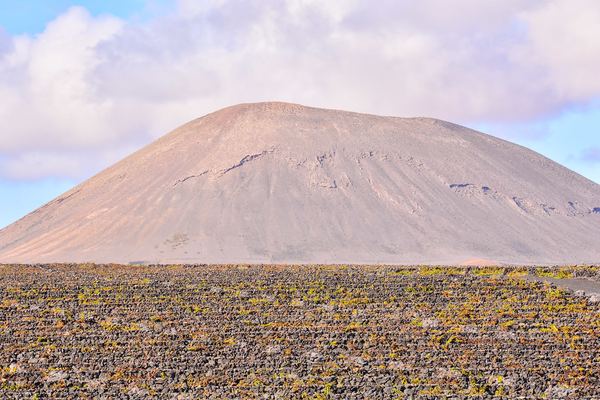
The claim is repeated across the travel web, and the logic behind it is sound. You enter the Montanas del Fuego by coach, you stay in your seat for the crater road, and you get out at a visitor centre on level ground. No gradient, no scramble. On paper it is the one volcanic landscape in Europe that asks nothing of your legs.
Entry is 30.00 euros, the site opens 09:00 to 15:45 every day, the visit runs about 90 minutes, and children under 7 are free. All of that is on the operator's pages, and all of it we could confirm on 27 October 2026.
What we could not confirm is the accessibility. The official pages say nothing about wheelchairs on the coach. The frequently-asked-questions page mentions a reduced rate for people with disabilities, available only at the ticket offices on presentation of physical documentation and not combinable with other rates, and that is the whole of it. Third-party accounts conflict: some describe newer coaches fitted with electric wheelchair lifts, one commercial listing states flatly that the buses are not wheelchair accessible, and the dates on all of them are either old or absent.
So we are going to do the thing this site does instead of guessing. Whether you can board the Ruta de los Volcanes coach in a wheelchair is not publicly documented by the body that runs it, and anyone who needs that answer has to telephone Lanzarote. We would rather print that sentence than repeat a superlative we cannot source. Readers planning around it may find the Lanzarote lava caves and vineyards easier to pin down, since those are indoor and ticketed sites with published layouts.

Driving up a volcano does not exempt you from the altitude
One consequence of the table at the top is worth stating on its own, because the vehicle hides it. A cable car puts you at 3,555 metres in eight minutes. A car puts you at 3,055 metres on Haleakala in a couple of hours from the coast. Your body gets no say in the schedule, and this is precisely why Teide bars cardiac patients and Etna lists blood pressure: the risk of a fast mechanical ascent is the speed, not the effort.
Haleakala adds an administrative hurdle on top of the physiological one. To be at the summit for sunrise, between 03:00 and 07:00, you need a reservation at 1 US dollar per vehicle, bought through the federal recreation portal, separate from the park entrance fee. It is released 60 days ahead at 07:00 Hawaii time and routinely sells out within about fifteen minutes, and the person named on it has to present a paper copy and photo ID at the gate. Anyone booking a guided sunrise trip should check whether the operator holds that reservation on your behalf, because for a 3 a.m. start in the cold it is most of what you are paying for. Our Haleakala listings are where to compare the sunrise trips against the sunset and stargazing ones, which need no slot at all.
Anyone driving straight up a volcano should read what altitude does on a tropical summit before dawn first. The short version: the dry season is the cold season up high, and a coast in the twenties can put you close to freezing where the road ends. Families working out whether the vehicle solves their problem will find the age limits by destination more useful than any of the altitudes above, not least because Teide's under-3 ban is absolute and nobody mentions it until the gate.
What we could not verify
Four gaps, named rather than papered over.
Whether the Timanfaya coach can carry a wheelchair. Covered above. Not published by the operator, and the third-party accounts contradict each other.
The Pico del Teide permit fee. The national parks booking office confirms the permit exists and has moved to the Tenerife ON platform, and the cable car operator confirms the ticket does not include it. Neither states a price, and the platform blocks automated access, so we have not printed one.
Irazu, in Costa Rica. It belongs in the table on the merits, since the road reaches close to the crater. The national park authority's site did not open for us today, third-party figures for the entrance fee disagree, and sources differ on whether a timed ticket is now required at all. A volcano we cannot price is a volcano we leave out.
How old some of these pages are. The Haleakala accessibility page carries a last-updated date of 27 July 2020. Everything we quote from it was on the page today, and a six-year-old accessibility statement is exactly the kind of document that stops being true without anybody editing it. Ring ahead.
One caution that is not a gap. Every figure in this piece is what an operator published on 27 October 2026, and prices on this kind of infrastructure move without announcement. The Teide winter timetable we quote expires on 31 December. The Vesuvius case we wrote up last week is a reminder of how far a park's own pages can drift from each other: there, the same official site listed the crater ticket at two different prices, and said nothing whatsoever about accessibility.
The questions people actually type
Which volcano can you visit without hiking?
Several, by four different kinds of vehicle. A cable car takes you to 3,555 metres on Teide and 2,500 metres on Etna, where a 4x4 bus continues to about 2,800. An electric rack railway reaches the summit of the Puy de Dome at 1,465 metres in fifteen minutes. A coach carries you through the crater road at Timanfaya without getting out. And you can drive to 3,055 metres on Haleakala and to 1,950 metres at Paradise on Mount Rainier. The one to check before booking is not the altitude but the boarding rules: the Teide cable car does not permit passengers with physical or motor disabilities, pregnant women, people with cardiovascular conditions or children under 3.
How high does the Teide cable car go, and how much is it?
From a lower station at 2,356 metres to an upper station at 3,555 metres. A non-resident adult return is 42.00 euros and a child aged 3 to 13 is 21.00 euros; residents of the Canary Islands pay 10.50 and 5.25. Until 31 December 2026 the service runs 09:00 to 17:00, with the last ascent at 16:00 and the last descent at 16:50. The summit itself is 3,718 metres and the final path needs a national park permit which the cable car ticket does not include, now handled through the Tenerife ON platform.
Is the Teide cable car wheelchair accessible?
No, and the operator says so in writing. Its rules of access state that people with diverse physical or motor functionality are not permitted to make the ascent by cable car, because due to the technical conditions in the national park it cannot be guaranteed that they could be safely evacuated within the time the regulations allow. The same page bars people with cardiovascular conditions, pregnant women and children under the age of 3 on altitude grounds, and prohibits boarding in heels, platforms, beach shoes, flat-soled shoes or open shoes. This is a prohibition rather than a warning, applied at the gate.
How much does the Etna cable car cost and how high does it go?
The cable car alone is 54.00 euros return and runs from 1,923 metres to 2,500 metres, with the service operating 08:30 to 16:45 and the last descent at 17:15. The combined ticket, called Tour 3000, is 82.00 euros and adds a 4x4 bus, or a snowcat in winter, plus an alpine and volcanological guide. The vehicle leg climbs to roughly 2,800 metres along a private road reserved to the operator's own vehicles, as far as the maximum altitude the authorities permit, and the last stretch to 3,000 metres is walked with the guide. The operator grades the whole thing Easy and allows about two and a half hours.
Is paved the same as wheelchair accessible?
No, and conflating the two is the most common mistake in this subject. A paved surface says nothing about gradient. Mount Rainier's Paradise trails are mostly paved and the park states there are no accessible trails, because they are steep and some begin with stairs. The clearest counter-example is Craters of the Moon in Idaho, which labels two trails fully accessible and then publishes the numbers behind the label: concrete throughout, minimum tread widths of 60 and 71 inches, and a note that 13 per cent of one trail exceeds an 8 per cent gradient. Numbers like that are what the word ought to mean.
Do you need a reservation to drive up Haleakala for sunrise?
Yes, for the hours between 03:00 and 07:00. The reservation costs 1 US dollar per vehicle and is separate from the park entrance fee, bought only through the federal recreation portal. It is released 60 days in advance at 07:00 Hawaii time and commonly sells out within about fifteen minutes, and the person named on the booking has to show a paper copy and photo identification at the entrance station. Outside those hours no sunrise reservation is needed, which is one reason the sunset and stargazing trips are easier to arrange.
Four Tenerife options where the vehicle does the climbing
The most reviewed trips that put you on Teide without a hike, including two that state the cable car's boarding restrictions in their own descriptions. We have left out the summit-permit products, which involve walking above 3,555 metres.
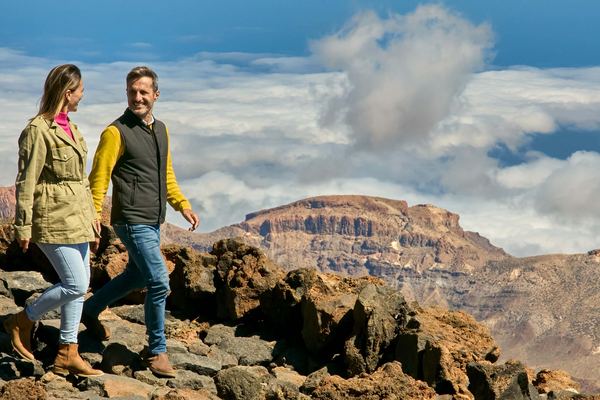
Teide Cable Car and Roques de García from the North
The cable car is closed to anyone with heart problems, to pregnant women and to limited mobility, and footwear rules apply. An hour at the top, seven in all.
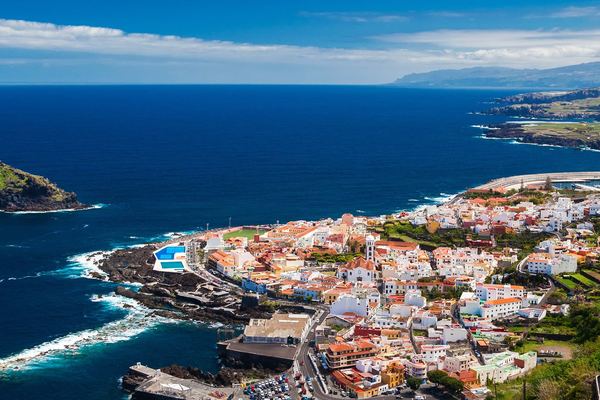
Teide, the Pirate Valley at Masca and Ycoden Daute Isora
The circuit runs in the other direction from Puerto de la Cruz: Teide first, then Masca and its pirate legend, and free time for lunch in Ycoden Daute Isora.
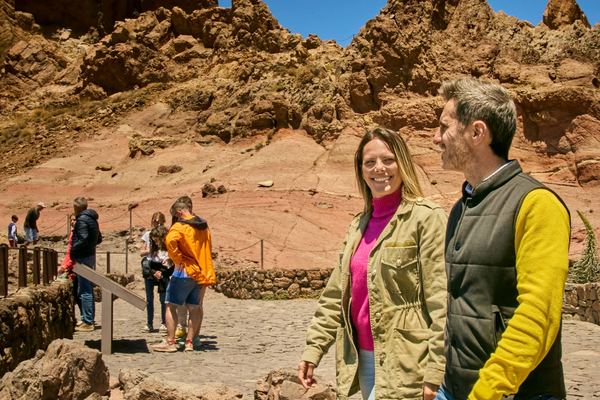
Teide Cable Car to 3,555 m, One Hour at the Top
The cable car reaches 3,555 metres and you get exactly one hour up there, lunch not provided, before the bus takes the group down to the Roques de García.
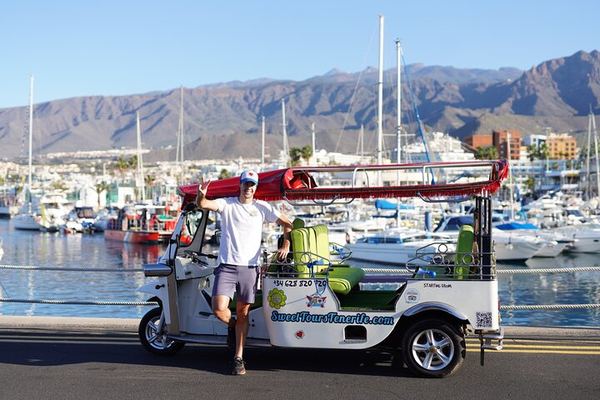
An Hour by Tuk-Tuk to the Caldera del Rey, Costa Adeje
An hour up to the Caldera del Rey, a Natural Monument that was once a volcano, with the banana plantations below and the guanche caves explained on the way.
Ratings collected by Civitatis, Viator and Tripadvisor
Data verified on . Operator pages for the Teide, Etna and Puy de Dome lifts and for CACT Lanzarote; NPS accessibility pages for Rainier, Haleakala, Hawai'i Volcanoes, Craters of the Moon and Lassen. Editorial Policy