

Acatenango Overnight Trek from Antigua
1,576 metres of ascent, a night between zero and minus five, and the only legal way to watch the Fuego erupt after dark.
You climb this mountain because you are not allowed to climb the other one. The Fuego, joined to the Acatenango across a saddle, erupts several times an hour, and access to it through the park is prohibited. So the trek that everybody sells goes up its neighbour instead, to a camp near 3,750 metres facing the thing you came to see, and back down the following afternoon. Between the trailhead and the camp there is roughly 1,576 metres of ascent. That number is the whole story of this page, and it is why six operators all describe the same requirement in the same words.
What follows is the operational detail: what the camps are actually like, what is lent to you and what you have to carry, what the porter and the Fuego extra cost, and how the six listings differ on the four things that matter. The geology of the massif and the choice between this and the Pacaya are one level up. This page assumes you have already decided.
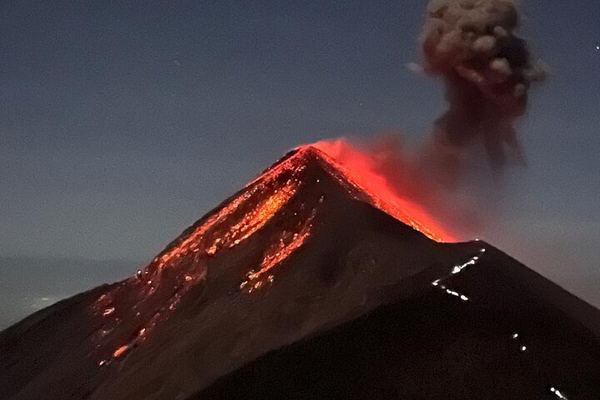
Acatenango by the Private Miratenango Route: 80 Minutes Shorter, Camp Ixcanul
The private path from Miratenango saves an hour and twenty minutes on the climb, and camp Ixcanul faces Fuego, with the bonfire at 6:30 and dinner at 7:30.
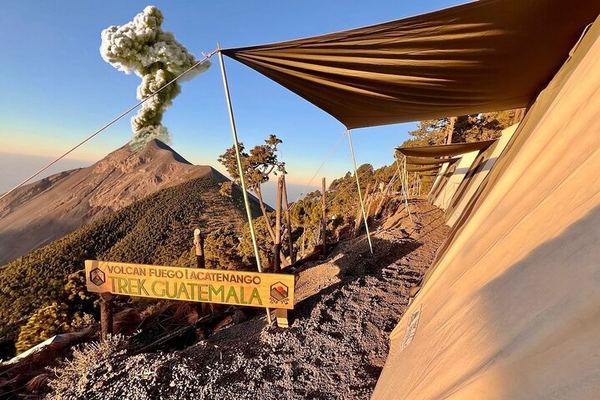
Acatenango Glamping: Safari Tents at 3,750 m, Four Ecosystems on the Way Up
Cots and mattresses in safari tents at camp, four ecosystems crossed on the way up, and a summit hour with the highlands running as far as Mexico.
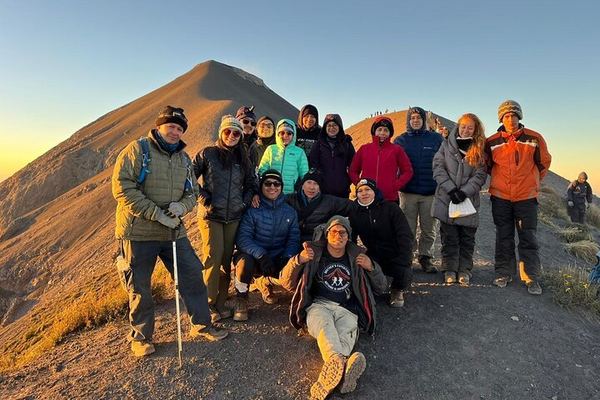
Acatenango Overnight with Brothers Expeditions: Camping on the Slope
The camp is pitched on the slope for a night under the stars, and the booking is final: this operator does not refund cancellations at any notice.
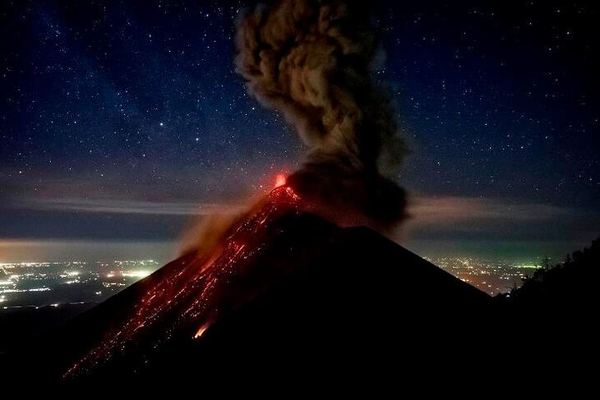
Acatenango Overnight with OX: Pre-Trip Briefing the Day Before, Summit at Dawn
The briefing is at 5PM the day before, breakfast is included at the start, and camp is reached by 2PM with the active Fuego cone in front of it.
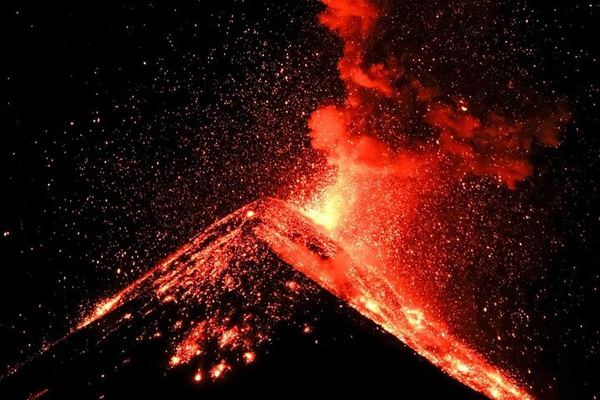
Acatenango with CA Travelers: Cabins for Four, -6°C Bags, Guides from San José Calderas
Cabins sleep four with -6 °C bags and a 12 cm mattress, and the guides are a cooperative from San José Calderas. Sales are final, with no refunds.
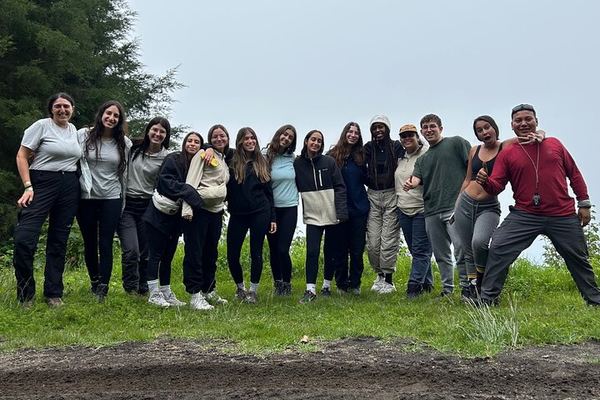
Acatenango with Pachamama: the Short Route, Glass-Fronted Cabins, Fuego at 200 Metres
The shorter path skips the hardest section, the cabins have glass doors facing the volcano, and the summit only happens if half the group wants it.
Ratings collected by Viator and Tripadvisor
The numbers that decide whether you can do this
Every one of the six operators listed here fills in the same field on the booking system: travellers should have a high level of physical fitness. Across eighteen Guatemalan products it is the only place that wording appears, and it is worth taking at face value rather than as a disclaimer.
The reason is the profile. You start at around 2,400 metres and the camp sits between 3,750 and 3,756 depending on which one you have booked, so you gain something close to 1,576 metres in a single afternoon, carrying your own sleeping bag, water and warm clothes unless you have paid somebody to carry them. Then you sleep badly, because it is cold and you are at an altitude your body reached four hours ago, and then you get up at four in the morning and climb another four hundred metres in the dark. The summit at 3,976 metres is roughly the height of a small alpine peak, reached by people who flew in from sea level two days earlier.
Altitude sickness is the ordinary reason people turn back, and it does not care about fitness. The single most effective thing you can do about it is spend a night in Antigua at 1,545 metres first, and ideally do the Pacaya the day before, which puts a few hours at 2,300 into your legs and your lungs before this.
| When | What happens | How long |
|---|---|---|
| The afternoon before | Compulsory briefing at most operators, 3 or 5 pm. Rented gear is issued and checked | About an hour |
| 07:30 to 09:30 | Meet at the office, breakfast at some, kit issued, minibus to the trailhead village | 45 to 60 min drive |
| 10:00 to 10:30 | Start walking. Farmland, then cloud forest, then high alpine forest | 2 hours to the lunch stop |
| 13:00 to 13:30 | Lunch on the trail, 45 minutes | 45 min |
| 14:00 to 16:00 | The steep section, then the last stretch to camp on open volcanic ground | 2 to 3 hours |
| 16:00 | Arrive at camp. Hot chocolate. Some operators run the Fuego ridge extra from here | 3.5 hours if you take it |
| 18:30 to 19:30 | Bonfire, marshmallows, dinner. Then the Fuego, in the dark, for as long as you can stay awake | The reason you came |
| 04:00 | Optional summit push to 3,976 m for sunrise, then back down for breakfast | 1 to 2 hours up, 45 min at the top |
| 08:00 to 11:00 | Pack, descend to the trailhead | 2.5 to 3 hours |
| 12:00 to 13:15 | Back in Antigua, gear returned | The day is gone |
The Fuego extra is a ridge, not a summit
Most camps sell an afternoon walk towards the Fuego as a paid add-on, and the commercial names for it are ambiguous in a way that matters. It is a walk from the camp out along the connecting ridge, roughly two kilometres, to a viewpoint markedly closer to the vent. One operator here prices it at 200 quetzales, another at 300 per person and 700 for a solo traveller; elsewhere it is sold at around 40 US dollars. It takes about three and a half hours return, leaves at four in the afternoon, and is described by the people selling it as difficult.
It is not the summit of the Fuego, and there is no version of this trip that is. On 4 August 2026 INGUAT stated that access to the Acatenango was restricted and that the prohibition on entering the Fuego was being maintained; on 10 August it confirmed that access to the Fuego through the park remains prohibited, with only observation points authorised. Any operator implying otherwise is describing something that is not permitted. One camp adds a rule of its own worth repeating: travellers are not allowed to approach the Fuego alone, and doing so ends the trip for the group.

What they lend you, and what you carry
This is where the six listings diverge most, and where the cheapest one costs the most in discomfort. At the top end, gear is issued at the briefing the day before: warm jacket, hat, gloves, head torch, sleeping bag liner, walking stick, and in one case a three litre water bladder, a raincoat and a whistle. At the bottom end, one operator provides mats, gloves, sweaters and sleeping bags but states that backpacks, walking sticks and torches are not included, and that breakfast on the first day is not either.
Sleeping arrangements run from a shared tent to a four person cabin with a twelve centimetre mattress and a sleeping bag rated to minus six, to a safari tent with a cot and a wifi network. That last one is not a joke and it is not cheap.
Two things you carry regardless: water and warmth. Camps ask each group to hand over a litre of water on arrival so the guides can make hot drinks, which is worth knowing before you ration yours on the way up. And bring one more warm layer than you think, because the night at camp runs from around zero down to about minus five, and you will be sitting still outside in it, watching a mountain, for several hours.
If the pack is the problem rather than the walking, porters are available at several camps at around 200 quetzales per leg. It is the least discussed and most effective upgrade on this trek.
Six camps, compared on what actually differs
Every listing sells the same mountain, the same view and roughly the same timetable. What separates them is where you sleep, whether the gate fee is inside the price, what the Fuego add-on costs, and whether you get your money back if you cancel. That last column is the one nobody checks and it is where two of these six are unusually strict.
| What it is | Price | You sleep in | Park fee | Fuego extra | Free cancellation |
|---|---|---|---|---|---|
| Cheapest shared camp | 78 EUR | Tent, with mat and sleeping bag provided | Not included | Not offered | No, all sales final |
| Shared camp, all gear lent | 105 EUR | Camp, with warm clothes and head torch lent | Q100 or about USD 14, extra | Sold separately | Yes, 24 hours |
| Camp on a shorter private route | 106 EUR | Camp, gear and 2 litres of water provided | Included | Not offered | Yes, 24 hours |
| Four person cabins | 114 EUR | Cabin, -6 °C bag, 12 cm mattress | Included | Q200 | No, all sales final |
| Six person cabins, shorter private route | 115 EUR | Cabin with glass doors facing the Fuego | Not included | Q300, or Q700 alone | Yes, 24 hours |
| Safari tent glamping with wifi | 334 EUR | Safari tent with cots, camp at 3,750 m | Included | Not offered | No, 3 days before |

Two clauses worth reading before you pay
The summit is not guaranteed, and on one camp it is put to a vote. One operator states that because the tour is collective, at least half the group has to agree to do the pre-dawn summit push for it to happen at all, and that they will not change this for an individual guest. If you want to go up regardless of what the group decides, a private guide is 700 quetzales. Nobody expects to find that clause after booking.
The language of your guide is disclosed and almost never read. One camp here states that its guides speak basic English and that a bilingual guide costs extra. Another lists guiding in Spanish only. On a mountain where the safety briefing matters and the weather changes what you are allowed to do, it is worth checking which language yours is delivered in.
And the shorter routes are real, not marketing. Two operators use private land to bypass the hardest section, and one of them puts a number on it: an hour and twenty minutes saved compared with the usual trail. If you are borderline on fitness, that is the single most useful thing you can buy.
What the Fuego has been doing this year
The honest answer to whether the Fuego erupts every night is a series rather than a sentence, and the Guatemalan monitoring institute publishes it. Explosion counts through 2026 have run between four and twelve an hour, which means that on an ordinary night at camp you will see activity repeatedly. It also means the rate moves, and August was a reminder of the upper end.
| Bulletin | Explosions per hour |
|---|---|
| 22 May 2026 | Up to 6 |
| 25 June 2026 | 6 to 11 |
| 23 July 2026 | 5 to 9 |
| Late July 2026 | 7 to 12 |
| 5 August 2026 | 4 to 6 |
Between 3 and 5 August 2026 the Fuego ran a paroxysmal episode: ash columns between 5,000 and 7,000 metres above sea level, pyroclastic density currents down five separate ravines and lahars reaching seven kilometres. CONRED held a national orange alert with red in three departments, around 29,000 people were affected by ashfall and 1,699 were evacuated into five shelters. The paroxysm was declared over on 5 August in bulletin BEFGO-066-2026, at ten to two in the afternoon.
The trek stopped, and then it started again. The Acatenango reopened on 7 August 2026, announced by the Municipalidad de Acatenango with technical sign-off from INGUAT and INSIVUMEH, which is the detail worth carrying: the decision to open or close this mountain is made by the municipality on technical advice, not by the tour operator you booked with. If you are on the mountain and something goes wrong, the tourist assistance number in Guatemala is 1500.
If the weather is closed
This is the risk nobody prices in. The entire product is a view of another mountain, and from May to October the camp spends a large share of its nights inside cloud. You will still have done the climb, eaten the dinner and slept at 3,750 metres. You will have seen a grey wall. Operators do not refund for weather, and there is no reasonable way they could.
Two things reduce the exposure. Book in the dry months, roughly November to April and ideally December to March. And book early in your trip rather than on the last night, so that a washed-out attempt can be repeated. Several camps will re-run a trek at a reduced rate for guests who got nothing, but that is a conversation with the operator, not a right, and it needs spare days to be worth having.
The summit push has its own version of the same problem: it goes ahead only if conditions allow, and on a bad morning you get breakfast instead of a sunrise.
Questions people ask before booking the Acatenango
How hard is the Acatenango trek, really?
Hard. Around 1,576 metres of ascent from a trailhead near 2,400 to a camp between 3,750 and 3,756, over four to six hours, carrying your own gear unless you hire a porter. Then a 4 a.m. push of another four hundred metres to 3,976 for sunrise, and two and a half to three hours of descent. Ten to fifteen hours on foot across two days. All six operators state you need a high level of physical fitness, and people do turn back.
How cold does it get at the camp?
Around zero to minus five overnight. Camps lend warm jackets, hats and gloves and most provide a sleeping bag, one of them rated to minus six with a twelve centimetre mattress under it. Bring an extra layer anyway: you will be sitting outside and still for several hours after dark, which is a different problem from walking in the cold.
Can you hike the Fuego from the Acatenango camp?
You can walk the connecting ridge to an authorised observation point, about two kilometres from camp, sold as a paid extra at 200 to 300 quetzales or around 40 US dollars. You cannot climb the Fuego. INGUAT confirmed on 10 August 2026 that access to the volcano through the park remains prohibited and only observation points are permitted. The commercial name for the add-on makes it sound like a summit; it is not one.
Is the park entrance included?
It depends on the listing, and it is 100 quetzales, about 14 US dollars. Three of the six here include it, at least one states plainly that it is not included, and one collects it at booths on the way up. Carry the cash regardless, in quetzales.
What if I cannot carry my own pack?
Hire a porter. Several camps offer them at around 200 quetzales per leg, and it converts the hardest part of the day into an ordinary long walk. Two operators also run shorter private routes across their own land that bypass the steepest section, one of them saving an hour and twenty minutes. Between the two, most people who would otherwise not manage this trek can.
Will I definitely see the Fuego erupt?
If the sky is clear, almost certainly: the monitoring bulletins through 2026 have recorded between four and twelve explosions an hour. If the sky is not clear, you will see nothing, and there is no refund for that. It is a weather bet, not an eruption bet, which is why the dry months from December to March are worth planning around.
Do I get my money back if I cancel?
Check before you book, because two of these six sell on final-sale terms with no refund at all, and the most expensive one closes refunds three full days out. The other three offer free cancellation up to 24 hours before departure. On a trek that can be closed by the volcano itself, that column is worth more than it looks.
How soon after arriving in Guatemala can I do it?
Not the same day, and preferably not the next. Most operators hold a compulsory briefing the afternoon before, where gear is issued. Beyond the logistics, going from sea level to a night at 3,750 metres inside forty-eight hours is how altitude sickness happens. A night in Antigua at 1,545 metres and a day on the Pacaya first is the standard sequence, and it works.
Data verified on. Prices, inclusions, extras and cancellation terms quoted from the 6 Acatenango listings here. Access rules from INGUAT, activity and explosion counts from INSIVUMEH bulletins.