
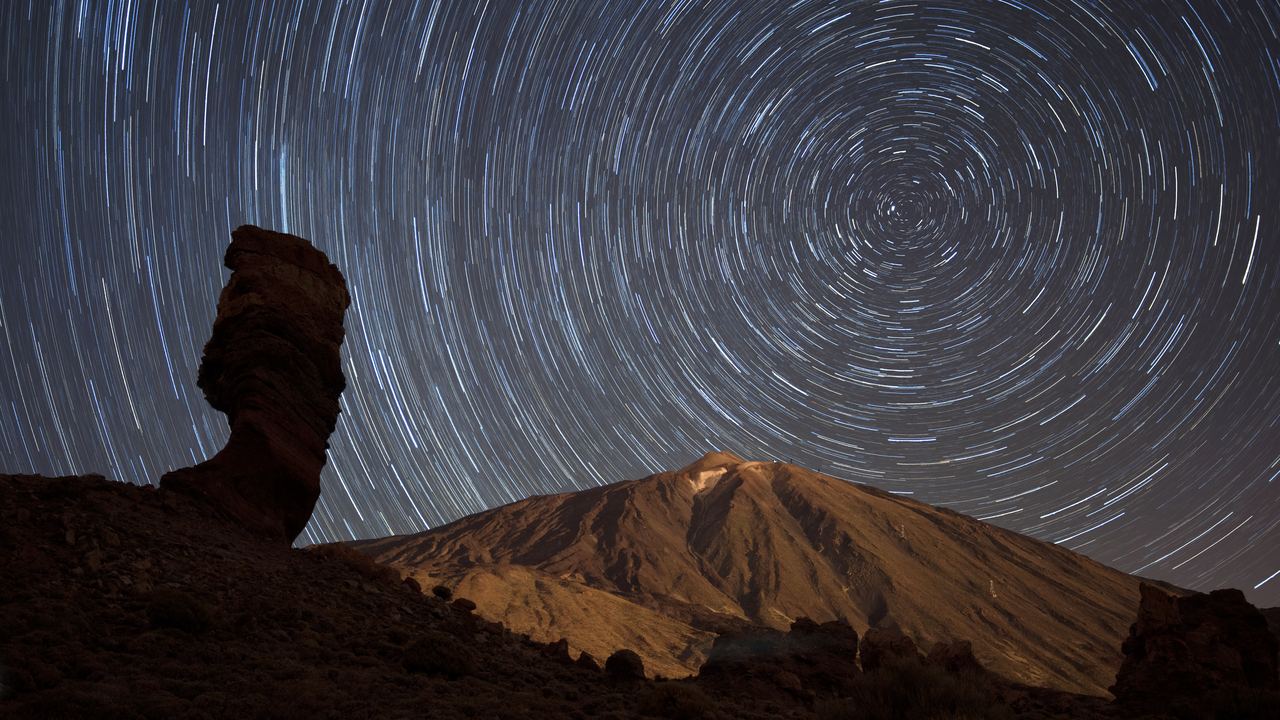
Stargazing on Teide: the Sky, the Observatory and What You Pay For
11 night tours from 35 to 200 EUR under a sky protected by its own Spanish law since 1988. The price buys transport and dinner, not a darker sky.
Spain passed a law in 1988 to protect the darkness above these islands. It restricts outdoor lighting, radio emissions and even flight paths in the airspace over the observatories, and it exists because the Instituto de Astrofísica de Canarias needed the sky to stay useful. Thirty-eight years later that law is why eleven companies can park a telescope at 2,200 metres on a volcano and sell you the result. It is also the reason the most reviewed volcano product on the whole island is not the mountain. It is the sky above it.
This page is about the night only. The mountain, the cable car and the summit permit are on the Tenerife and Teide pages above, and the stargazing products deliberately avoid all three: they operate below 2,300 metres, after the cable car has stopped, at car parks and restaurants on the caldera floor. What follows is what the eleven listings differ on, what you will actually see through the eyepiece, and the confusion about the observatory that half the market repeats.
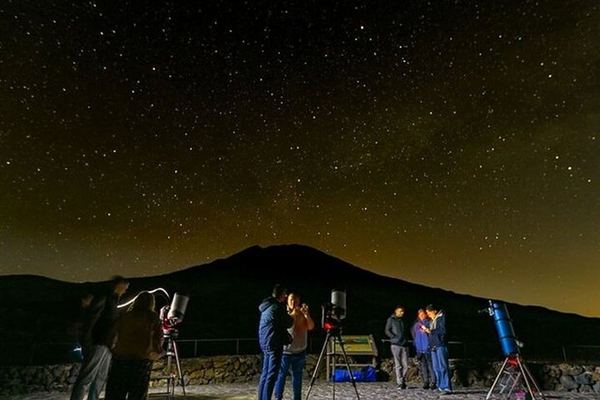
Drive Yourself to 7 Cañadas for the Sunset and the Telescopes
You drive to the 7 Cañadas restaurant at La Orotava for 7.45 pm, ask for Kieran, and get cava at sunset and Starlight-certified guides after dark. No dinner.
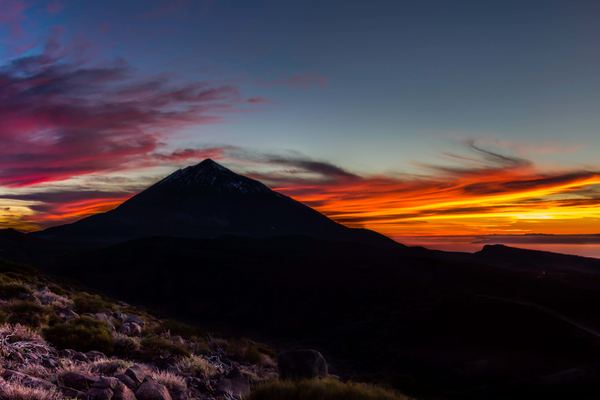
Inside the Teide Observatory, and the Sun Through Its Telescope
A guided visit inside the observatory, open since 1964, with the sun seen through a solar telescope, then an hour and a quarter of stars after the picnic.
Self-Drive: a Canarian Dinner at 7 Cañadas, Then the Stars
Three Canarian courses at 2,130 metres from 6.45 pm, first drink included, then cava at sunset and the telescopes. You drive yourself: transport is not included.
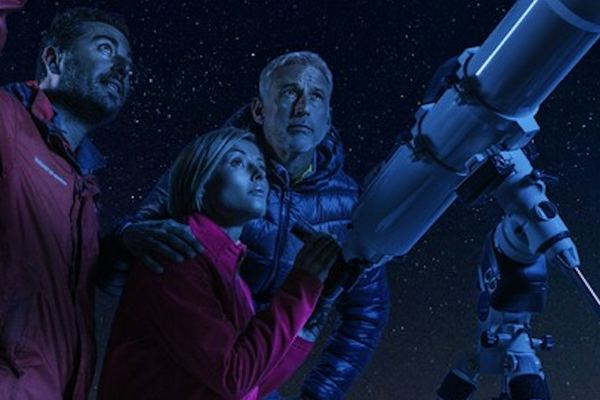
Stargazing on Teide: the Telescope Is Yours to Point
Modern telescopes in Teide National Park, used by you rather than queued for, with planets, galaxies and clusters according to the night and the season.
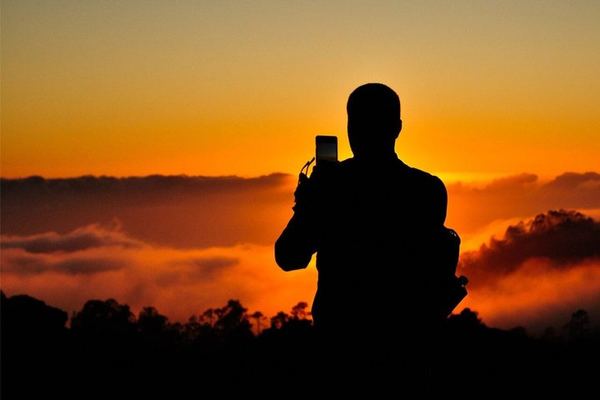
Star Safari by Coach: Sunset Cava at 7 Cañadas, Then Telescopes
Coach pick-up from South Tenerife to the 7 Cañadas restaurant at 2,130 metres, cava at sunset and Starlight-certified guides with telescopes after dark.
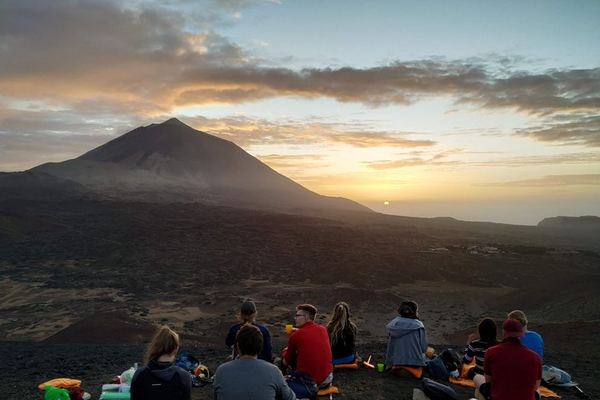
Teide at Dusk, Private: a Trail, the Sunset, then the Stars
A private dusk booking with an accredited guide: the trail first, then the sunset, then the stars under one of the best skies in Europe. No coach timetable.
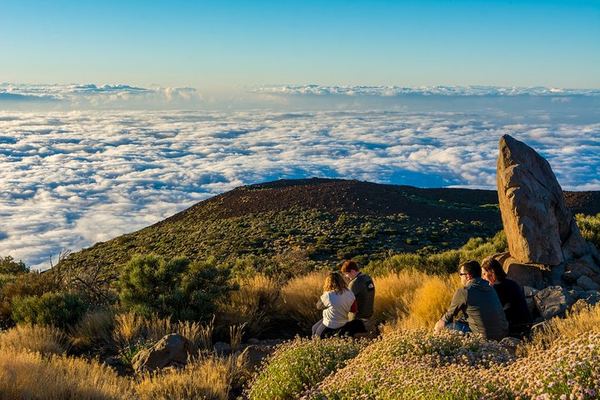
Teide by Night, One Language per Coach, from the North or the South
One language per coach instead of repeated translations, a choice of north or south departure, and dinner in the highest restaurant in the national park.
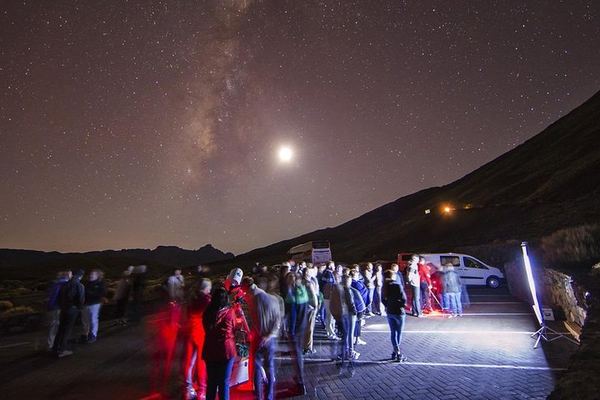
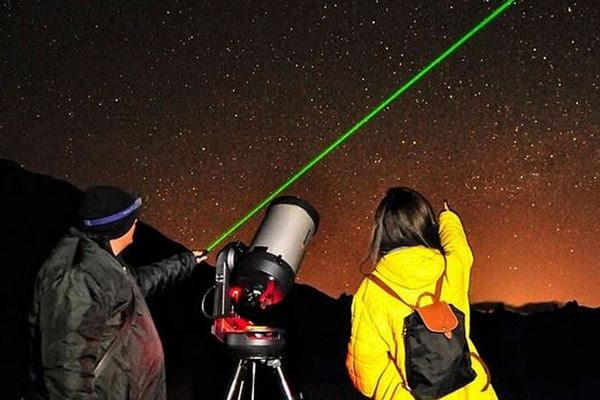
Teide Stargazing with Dinner, and a Laser Tour of the Sky
Dinner up the mountain, sunset above the clouds, then planets and deep-sky objects through the telescope. Leave a phone number for the meeting instructions.
Teide Star Safari: Sunset, Stars and an Optional Dinner at 2,130 m
Sunset above the sea of clouds with a glass of cava, telescopes at 2,130 metres, and an optional Canarian dinner at Restaurante 7 Cañadas beforehand.
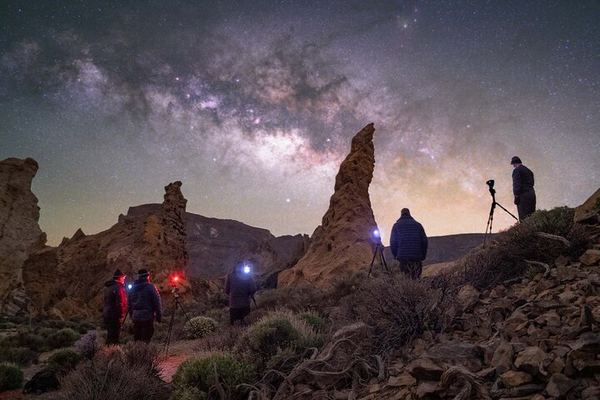
Teide Sunset and Stargazing at 2,000 m, with Smartphone Astrophotography
Telescopes at around 2,000 metres, a laser pointer for the constellations, and the guide helps you photograph the sky through the eyepiece with your phone.
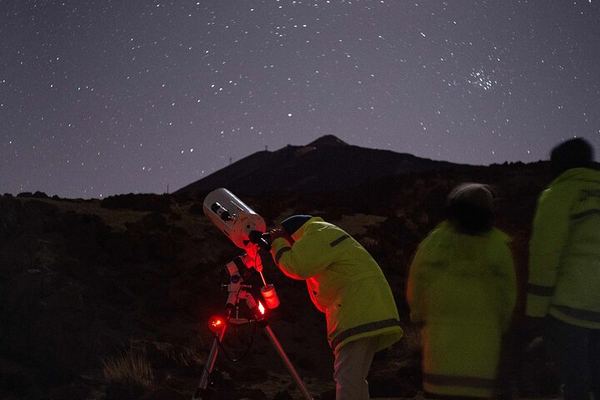
Two Telescopes at Minas de San José: Watching and Photographing
One telescope to look through and a second shooting astrophotography that is emailed to you, in a small group at Minas de San José, above 2,000 metres.
Ratings collected by Viator, Tripadvisor, Civitatis and Tiqets
The observatory is a daytime visit, and you look at the Sun
This is the misunderstanding that runs through the whole category, and it is easy to fix once you have seen it.
The Teide Observatory sits at Izaña, 2,390 metres, on the eastern rim of the caldera. It has been operating since 1964, it belongs to the Instituto de Astrofísica de Canarias, and its speciality is the Sun: it holds the largest collection of solar telescopes anywhere and produces something close to one scientific paper a day. You cannot go there at night. Public access is a booked, guided daytime visit, and what you look through are solar telescopes, pointed at the only star anybody can observe in daylight.
Commercial stargazing is a different activity in a different place. The operators set up their own instruments at viewpoints on the caldera floor, most often the Minas de San José car park at around 2,200 metres or the terrace of a restaurant at 2,130. Their telescopes are good amateur and semi-professional equipment, their guides are certified by the Starlight Foundation, and none of it happens inside the research site.
One product on this page does both, and it is the only one that does: an eight-hour Civitatis day at 109 EUR that starts with entry to the observatory in daylight, watches the sunset, feeds you a picnic at the cable car base station and then gives you an hour and a quarter with long-range telescopes after dark. If the science is what interests you, that is the one. If you simply want to see Saturn, you are paying 74 EUR more than you need to.
What the price ladder actually buys
Line the eleven listings up by price and the pattern is obvious. The sky does not improve as you go up the column. Transport appears, then dinner, then a smaller group, then a private guide. The telescopes are broadly comparable throughout, and the two cheapest products carry the two highest ratings in the category.
| Price | You get there | Food | Length | Rating |
|---|---|---|---|---|
| 35 EUR | Drive yourself to Minas de San José | None | 80 minutes | 4.9 from 121 |
| 40 EUR | Pickup from Costa Adeje | None | Evening | 4.6 from 1,211 |
| 42 EUR | Meet at the site | None | Evening | 4.8 from 5 |
| 47 EUR | Drive yourself | Dinner included | Evening | 4.7 from 34 |
| 55 EUR | Drive yourself | None | Evening | 4.8 from 158 |
| 55 EUR | Coach from the south | Three courses and a drink | 8 hours | 4.8 from 2,870 |
| 65 EUR | Coach from the south | None | Evening | 4.7 from 30 |
| 89 EUR | Coach, one language only | Included | Evening | 4.7 from 1,588 |
| 95 EUR | Transport included | Dinner included | Evening | 4.7 from 166 |
| 109 EUR | Minibus from the north | Picnic | 8 hours | 4.5 from 164 |
| 200 EUR | Private, with a walk first | None | Evening | 5.0 from 38 |
Two practical readings of that table. If you have a hire car, the 35 EUR small-group session at Minas de San José is the best value in the Spanish catalogue: eighty minutes, a hard cap on group size, live astrophotography emailed to you afterwards, and 4.9 from 121 people. If you do not have a car, the 55 EUR coach with dinner at 2,130 metres is the one 2,870 reviewers keep recommending, and the dinner is the reason the evening runs eight hours rather than two.
One caveat on the coach products that is stated in the listings and read by nobody. The 55 EUR coach picks up in the south only, and the commentary on board is in English alone. A different 89 EUR operator runs one language per coach, which is a better answer to the same problem and part of what the extra money buys.
What you actually see
The honest list is shorter and better than the marketing suggests. Through the eyepiece: Saturn with the rings resolved, Jupiter with four moons in a line, the Orion nebula in winter, the Andromeda galaxy as a smudge that is more moving than it sounds, the Pleiades, a double star or two, and the Moon in ferocious detail when it is up. With the naked eye and a laser pointer: constellations, the ecliptic, and between roughly April and September the core of the Milky Way rising out of the south.
What you will not see is the colour in the photographs. Human eyes take light in monochrome at these levels, so the Orion nebula is grey and the galaxies are pale. This disappoints a small number of people every night and it is worth knowing in advance. It is also why almost every operator now runs a second telescope purely for astrophotography and emails you the images afterwards, which several include free and which is genuinely the best souvenir on the island.
The claim you will meet everywhere, in two of these listings word for word, is that Teide is one of the three best places on Earth for observing the night sky. The usual trio is Hawai'i, northern Chile and the Canaries, and the claim is not absurd. Treat it as an operator's shorthand for high altitude, dry air and a legal framework that keeps the lights down, rather than as a ranking anybody publishes.
The moon matters more than the month
Every month works. What ruins a night is a full moon, which washes out everything faint and turns a galaxy hunt into a lunar viewing, and calima, the Saharan dust that reaches the islands mainly in winter and again in high summer and can sit over them for days. Neither is forecastable far enough ahead to plan around, but the moon is at least a calendar, and booking within about five days either side of a new moon is the single most effective thing you can do for the night you get.
The seasonal difference is real but smaller. Summer nights give you the bright centre of the Milky Way and warm air at 2,200 metres. Winter nights are longer, start earlier and give you Orion, the Pleiades and the winter clusters, at the cost of genuinely cold air and the chance that snow closes the upper roads.
| 1 | 2 | 3 | 4 | 5 | 6 | 7 | 8 | 9 | 10 | 11 | 12 |
Things the listings bury
The cold. A summer evening at Los Cristianos is 24 degrees; the same evening at 2,200 metres, after dark, with wind, is close to single figures. Several operators lend warm coats and say so in the inclusions. The ones that do not expect you to have read the altitude in the itinerary.
Diving. One operator asks that participants have not been scuba diving in the previous 24 hours. That is a real medical precaution rather than a formality: going to 2,200 metres soon after a dive raises the risk of decompression illness, and Tenerife is an island where people dive in the morning and book a sunset tour the same afternoon.
Altitude, gently. These sites are high enough that operators warn people with cardiovascular conditions, and high enough that a headache is common. It is not the summit and nobody is exerting themselves, but standing still in thin cold air for two hours affects people more than they expect.
Where the tour actually stops. Self-drive products meet at a car park in the middle of the national park, in the dark, on a road with no lighting. The Minas de San José listing explains which side of the road the car park is on depending on your direction of travel, which is the kind of detail that tells you the operator has been asked before.
The sky above Teide is the same sky for everyone on the mountain that night. What the extra sixty euros buys is a coach, a dinner and a chair.
Questions people actually ask
Can you visit the Teide Observatory at night?
No. The Izaña site is a working research observatory and public access is a booked guided visit in daylight, where you look at the Sun through solar telescopes. Commercial stargazing happens elsewhere in the park, after dark, with the operators' own instruments. One 109 EUR product on this page combines the daytime observatory visit with an evening stargazing session, and it is the only one that does.
Which stargazing tour is the best value?
If you have a car, the 35 EUR small-group session with astrophotography, which meets at a car park inside the park, runs eighty minutes and holds the highest rating in the category. If you do not, the 55 EUR coach with the three-course dinner at 2,130 metres, which has nearly 2,900 reviews at 4.8. Paying more than that buys a smaller group, a second language on the coach or a private guide, not a better view.
What will I see through the telescope?
Depending on the season: Saturn's rings, Jupiter and its four largest moons, the Orion nebula in winter, the Andromeda galaxy, the Pleiades, star clusters and the Moon in close detail when it is above the horizon. Faint objects appear grey rather than coloured, because human night vision does not see colour at these light levels. The colour images you have seen come from long camera exposures, which is why most operators now run a separate astrophotography telescope and send you the results.
Do I need to avoid the full moon?
If deep-sky objects are what you came for, yes. A full moon at 2,200 metres is bright enough to cast shadows and it drowns out galaxies and nebulae entirely. Booking within about five days of a new moon makes more difference than any other choice you can make. If you would rather look at the Moon itself, the opposite applies, and a first-quarter moon along the terminator is one of the better sights in an amateur telescope.
Is it cold?
Yes, and much colder than the coast you left. Reckon on a drop of about six degrees for every thousand metres of height, then subtract the wind and the fact that you are standing still after sunset. A summer night at the viewing sites can be in single figures. Several operators lend coats, and the ones that do list it in the inclusions, which is a useful thing to check before you book in July wearing what you wore at the beach.
Is it suitable for children?
Generally yes, and the guides are practised at it. The evening involves no walking to speak of, most operators allow prams and small children, and pointing a laser at a constellation works on all ages. The two limits are the cold and the hour: the sessions start after dark, which in summer means late, and a tired child at 2,200 metres in the wind is not having a good time. The shorter eighty-minute products suit families better than the eight-hour coach days.
Data verified on. Prices, inclusions and ratings read from the 11 stargazing products on this page on 12 August 2026. Observatory details from the Instituto de Astrofísica de Canarias.