
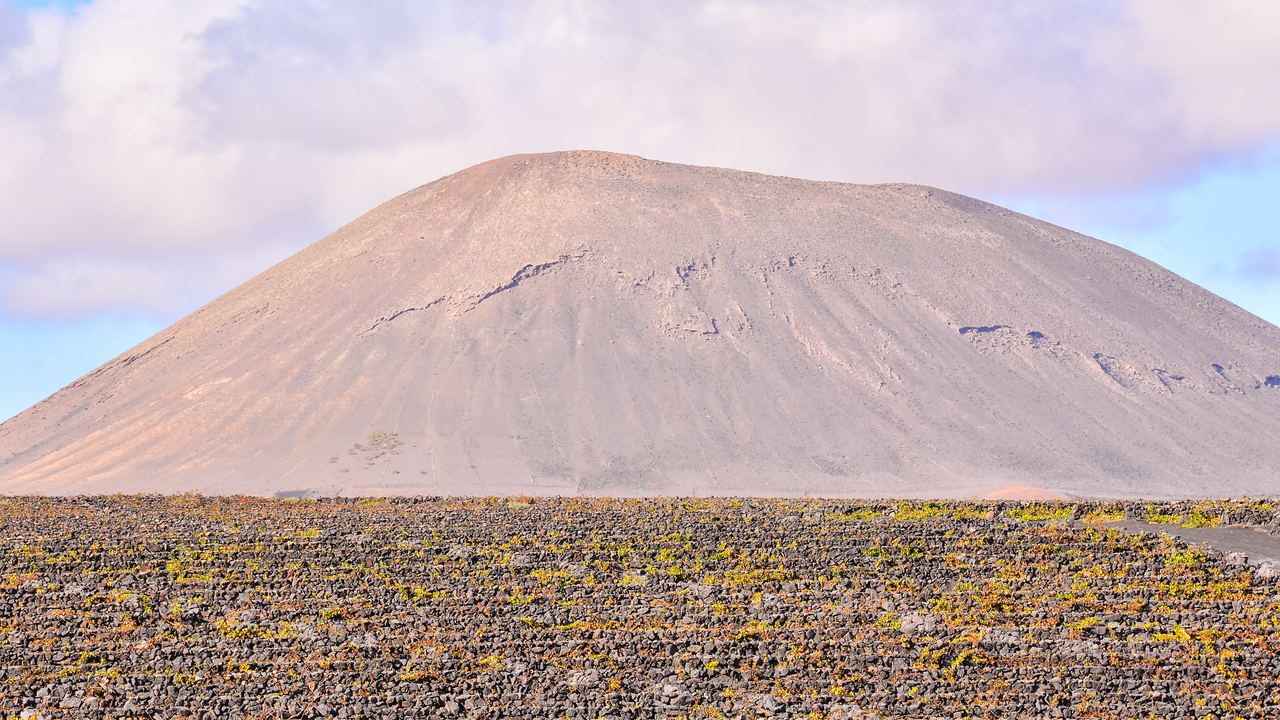
La Geria Wine Tours: Lanzarote's Vineyards in Volcanic Ash
One vine per pit, each behind a crescent of dry stone. Five tours here, 47 to 129 EUR, and vines that were never grafted.
La Geria does not look like a vineyard. Drive the LZ-30 south from San Bartolomé and what you see is a black slope pitted with thousands of shallow craters, each one with a low crescent of stacked stone on its northern side, each one holding a single vine sitting at the bottom of its own hole. There are no rows, no wires, no tractors and no irrigation. Every one of those pits was dug by hand through the ash that fell here in the 1730s, and every one is still worked by hand, because nothing with wheels can get into them.
This page is about the wine country and the five ways it is sold. The eruptions that supplied the ash, the national park built on top of them and the caves in the north are covered elsewhere on this site. What is decided here is which of the five listings actually gets you into a vineyard rather than past one, what the difference is between a walk and a cellar visit, and why a wine made in a desert on a treeless island tastes of anything at all.
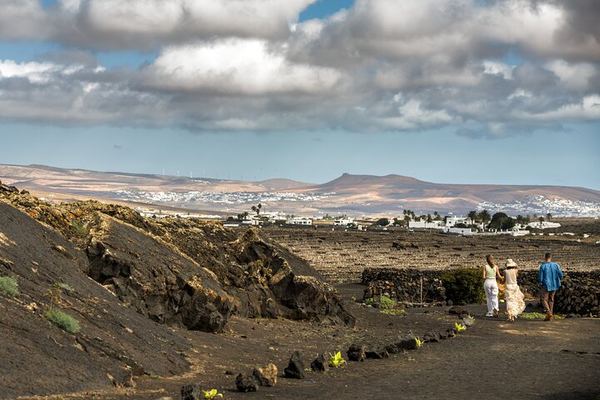
El Grifo: the 1775 Founding Stone and the Century-Old Chabocos
The 1775 founding stone is still in the old winery, now the Wine Museum, and the library was inaugurated by José Hierro. Twelve people per visit, no more.
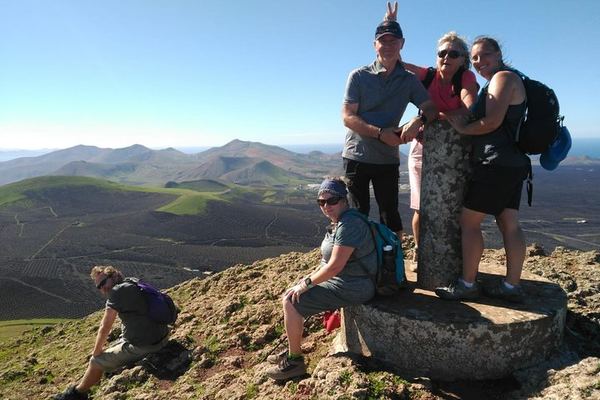
La Geria on Foot, with Volcanic Malvasía at Bodega Rubicón
An 8.9 km walk through the vineyards of La Geria, with a tasting of Volcanic Malvasía at Bodega Rubicón and wine and cheese on a terrace at the end of it.
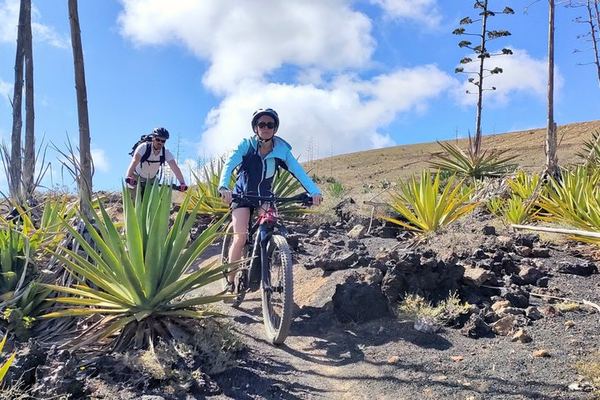
Lanzarote E-Bike Ride Through Timanfaya and La Geria, Photos Included
An electric bike across the volcanic ground of Timanfaya and the vines of La Geria, with a photo and video package taken along the way and kept after.
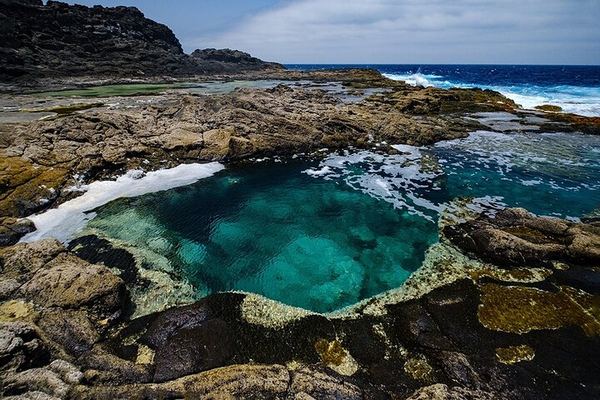
Lanzarote South in a Group of Eight: Janubio Salt, Olivine, La Geria
A maximum of eight people, a Canarian brunch and volcano wines, with the largest salt flats in the Canaries and the olivine in the black rock at Janubio.
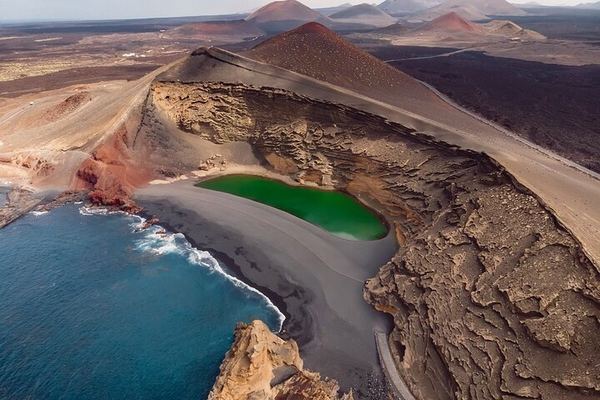
South Lanzarote in 6 to 7 Hours: El Golfo, Timanfaya, La Geria
Six to seven hours on Tuesdays, Wednesdays and Saturdays, with El Golfo, the volcano route and La Geria. Lunch at Yaiza is not included, camels are optional.
Ratings collected by Viator and Tripadvisor
A field of holes, and the reason for every one of them
The eruptions of 1730 to 1736 dropped metres of lapilli, the coarse black grit the islanders call rofe or picón, across farmland that had been growing grain. It should have been the end of agriculture here. Instead somebody worked out that the grit was worth more than the soil it had buried.
Lapilli behaves like a mulch that never rots. It is porous, so the heavy night dew and the moisture the trade wind carries condense inside it and drain down to the buried soil. It is loose and pale on the inside, so it shades what lies beneath and stops the water evaporating back out. On an island that gets very little rain and has no rivers, that is an irrigation system made of gravel.
So the method is: dig down through the ash until you reach the old soil, plant one vine at the bottom, and leave the pit open so the dew keeps collecting. Then build a zoco, a low semicircular wall of dry-stacked lava blocks, on the windward side, because the same trade wind that brings the moisture will shred the leaves if nothing stops it. Thousands of pits, thousands of crescents, one vine each. It is the most labour-intensive way of growing grapes anyone has ever kept doing, and it is done this way because no other way works.
Vines that were never grafted
There is a second thing about La Geria that most visitors never hear, and it is the part wine people travel for. In the late nineteenth century phylloxera, an aphid that eats grape roots, destroyed most of the vineyards of Europe. The fix, still in use everywhere, was to graft European vines onto resistant American roots. Nearly every glass of wine you have ever drunk came from a grafted vine.
Phylloxera never reached the Canary Islands, and the insect does not travel well through loose volcanic grit in any case. The vines in these pits are therefore pie franco, growing on their own roots, in an unbroken line from the stock that was here before the plague. That is not a marketing line, it is a plant-health fact with a date attached, and it makes this one of a very small number of places in Europe where the vine is what it was.
The grape to ask for is Malvasía volcánica, which is the island's own variety and the one every winery here leads with. It makes a dry white with a salty edge that people either take to immediately or do not. The sweet versions are the historic style, the ones that were shipped to England for centuries, and they are the ones worth tasting even if you drink dry at home.
One vine, one pit, one wall. Multiply by a valley. Nothing here is mechanised because nothing here can be.
The five listings, and which one to take
| Listing | Price | Time | Rating |
|---|---|---|---|
| Guided walk through the vineyards, 8.9 km, wine and cheese at the end | 47 EUR | 4.5 to 5 hours | 4.9 from 70 |
| Cellar visit at the oldest winery, wine museum, twelve people maximum | 50 EUR | 2 hours | 4.9 from 83 |
| Coach circuit: Timanfaya, El Golfo and La Geria, camels extra | 65 EUR | 6 to 7 hours | 4.7 from 77 |
| E-bike through the lava fields and the vineyards | 126 EUR | Half day | 4.9 from 29 |
| Small-group south route with natural pools, salt pans and a Canarian brunch | 129 EUR | Half day | 4.9 from 58 |
The two cheap ones are the two good ones, and they answer different questions. The 47 euro walk is the only listing here that puts you inside the vineyard for hours rather than minutes: 8.9 kilometres, easy to moderate, four and a half to five hours including transfers, small groups, ending on a terrace with a glass and local cheese. It starts at a winery on the Teguise to Yaiza road, and it is the one to book if you want to understand the place rather than photograph it.
The 50 euro cellar visit is the other end of the same subject. Two hours, twelve people at a time, at the winery whose founding stone is dated 1775, which makes it the oldest on the island and one of the oldest in Spain. You walk through century-old pits, see the original press in what is now a wine museum, and taste. It is in English only, and it does not include transport, so it needs a car or a taxi.
The 65 euro coach passes through La Geria on its way between Timanfaya and El Golfo, and passing through is the honest description. The two trips above a hundred euros are good days out with wine attached, an e-bike circuit and a small-group south route with a brunch, but the wine is a component rather than the subject. If the vineyards are the reason you are going, spending 129 euros instead of 47 buys you less time among the vines, not more.
The practical part
La Geria sits between San Bartolomé and Yaiza on the LZ-30, twenty minutes from Arrecife and about half an hour from the southern resorts. Most of the wineries are strung directly along that road with their own car parks and their own tasting rooms, so a self-drive morning is entirely possible and costs nothing beyond what you drink. The obvious problem is that you are driving, which is the single best argument for the guided walk: somebody else takes the wheel and the tasting is at the end rather than in the middle.
Two smaller points. Tastings are cheap here by mainland standards, and buying a bottle at the cellar is usually cheaper than the same bottle in a supermarket in Puerto del Carmen. And nobody under eighteen is served, which the operators state plainly; children are welcome on the walk and in the cellars, they just get the tour without the glass.
There is no season worth planning around, which is unusual for wine country. The pits, the walls and the black ground look the same in February as in October, and Lanzarote's temperature barely moves. The one date that changes what you see is the harvest, which here begins in July and is among the earliest in the northern hemisphere, so late July and August are the weeks when there are people and baskets among the vines rather than just vines.
Questions people actually ask
Why is each vine planted in a hole?
To reach the buried soil and to trap water. The 1730s eruptions covered the farmland in metres of lapilli, and that grit turned out to condense the night dew and stop it evaporating. Digging down to the old soil and leaving the pit open gives the vine both moisture and shelter on an island with almost no rain and no rivers.
What is the semicircular wall for?
Wind. The zoco is a dry-stacked crescent of lava blocks built on the windward side of each pit, because the trade wind that brings the moisture would otherwise tear the leaves and dry the plant out. It is unmortared, so it breathes, and it is rebuilt by hand when it falls.
Are Lanzarote's vines really ungrafted?
Yes. Phylloxera, which forced almost all of Europe to graft its vines onto American roots after the 1860s, never reached the Canary Islands. The vines here grow on their own roots, which is why the island interests wine specialists far more than its size would suggest.
Which wine should I try?
Malvasía volcánica, the island's own grape. The dry whites have a distinct saline edge and are the everyday style; the sweet Malvasías are the historic export that made the island's reputation, and they are the ones worth tasting even if you normally drink dry.
Can I visit La Geria on my own?
Easily. The wineries line the LZ-30 between San Bartolomé and Yaiza with their own car parks, and most run tastings without booking. The catch is the obvious one: somebody has to drive. The guided walk exists largely to solve that, and it is the cheapest listing here anyway.
When is the harvest?
It starts in July, which is very early by northern hemisphere standards, and runs into August. That is the only time of year the vineyard looks different, with pickers and baskets working pit by pit. The rest of the year the landscape is the same, and so is the weather.
Data verified on. Prices, durations, group sizes, meeting points and ratings read from the five La Geria products on this site. Cultivation and grape detail from the wineries' own published material.