

Herculaneum Tours with Vesuvius and Pompeii
Buried under about twenty metres of pyroclastic flow, which is why the beams, the doors and the bread are still there. Four of the five tours here are private.
Herculaneum was a small seaside town, wealthier than Pompeii and roughly a tenth of its size, and on the day of the eruption it died in a completely different way. Pompeii was rained on for hours by pumice, which caved roofs in and gave people time to run. Herculaneum was hit by pyroclastic surges: fast, dense and hot enough to carbonise wood rather than burn it away. The town ended up under about twenty metres of material that set hard around it. That is why upper floors are still standing here, why there are wooden beams, a door, a bed frame and a garden screen still in place, and why the loaves in the bakery are still recognisably loaves.
The volcano and what it has done are on the Mount Vesuvius page, and the combined Pompeii day has a page of its own. This one makes a case that runs against the market: Herculaneum is the better site and the harder thing to buy, because the trade has decided it is a supporting act. What follows is what is actually there, how long it really takes, and what these five listings are selling underneath their titles.
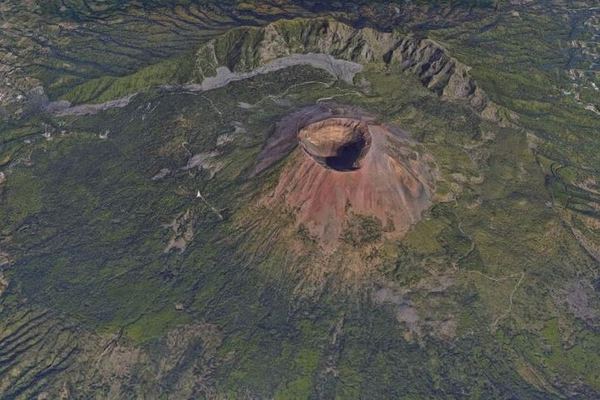
Herculaneum's Boat, Pompeii and Trail No. 5 up Vesuvius
A private day with a driver and licensed guides at both gates, the restored boat at Herculaneum, and trail no. 5 up Vesuvius from the Piazzale at 1,000 m.
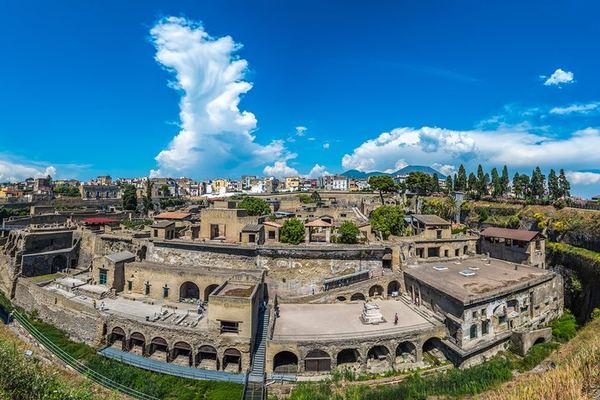
Pompeii and Herculaneum with an Archaeologist, and Lacryma Christi
An archaeologist with 31 years of guiding, both sites at your own pace, and a family winery on Vesuvius in between. Lunch there is at your own expense.
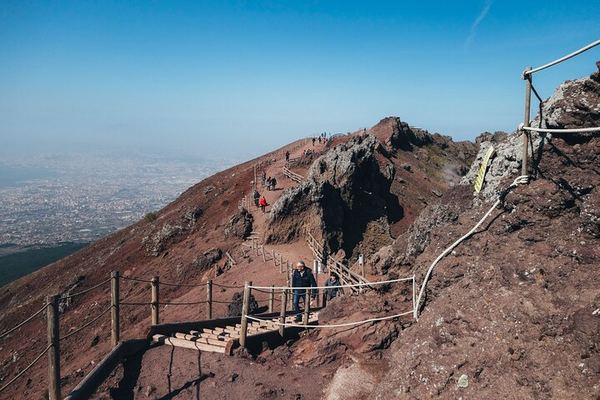
Pompeii, Herculaneum and Vesuvius Day Trip from Naples with Hotel or Cruise Pick-Up
Di Sarno collects from a Naples hotel or the cruise terminal and waits 15 minutes, with commentary at all three sites and free time at each of them.

Pompeii, Herculaneum and Vesuvius Private, Guide Optional
Book it with a driver and the tickets, or with a private guide as well. Herculaneum still has its wooden doors and upper floors; Pompeii has the scale.
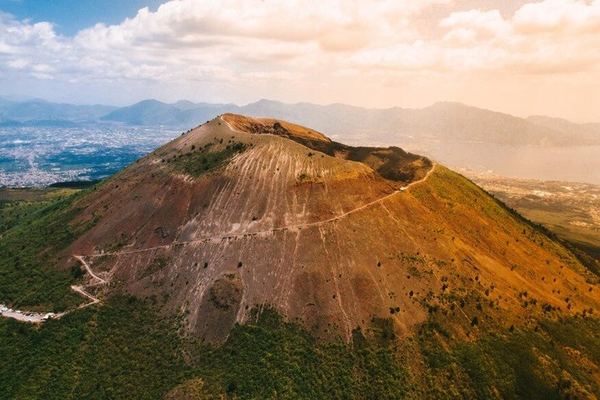
Private Car Tour from Naples: Herculaneum, Vesuvius Crater and Pompeii in One Day
A private car with an English-speaking driver from Di Sarno, so the three sites run at your pace and the Vesuvius climb sits in the middle of the day.
Ratings collected by Viator and Tripadvisor
Why the preservation here is different, not simply better
The distinction is worth getting right, because it explains everything you will look at. Pompeii spent most of that day under a fall of pumice, roughly three metres of it, which accumulated slowly enough that people had hours to decide whether to leave. Roofs collapsed under the weight. Air got in afterwards, and organic material rotted or burned in the normal way.
Herculaneum, upwind of the column, got almost no fallout. What reached it were the surges: clouds of gas and ash moving downhill fast, at several hundred degrees, with no free oxygen in them. Wood in that environment does not combust, it carbonises. So the town kept its roof beams, its staircases, a wooden partition screen with its bronze fittings, a bed, a cradle, rope, cloth and food. Then twenty metres of material piled on top and set like rock.
That last part is why the excavation has never finished. Herculaneum is not cleared, it is cut, which is slow and expensive. And the modern town of Ercolano sits directly on the lid: the site today is a rectangular pit with apartment blocks around the rim, looking down into a Roman street. The dig stops where the twentieth century begins, and it is not going to move.
| Herculaneum | Pompeii | |
|---|---|---|
| What buried it | Pyroclastic surges, about 20 m | Pumice fall of about 3 m, then surges at the end |
| What that preserved | Upper floors, beams, doors, furniture, food, papyrus | Street plan, frescoes, the voids left by bodies |
| Ground to cover | Roughly a tenth of Pompeii | Sixty-six hectares, about two thirds excavated |
| Time on site | 90 minutes to 2 hours | Three hours minimum, a full day to do it properly |
| Shade | Roofed rooms and covered streets | Almost none between eleven and four |
| Crowding | Thin, even in August | Capped at 20,000 a day, and the cap is reached |
| Listings on this site | 5, four of them private | 12, all combined with Vesuvius |
The three hundred on the beach
For two centuries the accepted story was that Herculaneum had emptied in time. Hardly any bodies were being found in the houses, and the obvious reading was that a small town with the sea at the end of the street had got its people onto boats.
Then, from 1980, archaeologists dug out the ancient shoreline. It is now several hundred metres inland, because the eruption pushed the coast out into the bay, and along it ran a row of twelve vaulted chambers open to the sea, used as stores and boat sheds. In nine of the twelve they found around three hundred skeletons, packed together, all dead at the same instant.
They had not escaped. They were waiting on the beach for boats that never came, and the first surge reached them there. As a group they are one of the most valuable skeletal samples anywhere in the ancient world, precisely because they are not a cemetery: a cemetery accumulates over generations, whereas this is a cross-section of one community at one moment, men, women, children, slaves and householders in the same rooms.
You can see the vaults from the terrace above the site, and walk down to the level of the old shoreline. It is the quietest part of a quiet site, and it is the part people remember.
Until 1980 the standard view was that most of Herculaneum's people had got away. Then the ancient shoreline was excavated, and about three hundred of them were found sheltering in nine of the twelve vaults facing the sea.
The Villa of the Papyri, and the only ancient library that survived as a library
North-west of the excavated town, still mostly under the modern one, is a very large seafront villa that Bourbon engineers reached in the 1750s by sinking shafts and driving tunnels through the hardened tuff. They worked by lamplight in the dark, hauling out bronzes and marbles that now fill rooms of the archaeological museum in Naples, and about eighteen hundred carbonised scrolls that nobody could open without destroying them.
That is the part that matters. Everything else we have from classical literature reached us as copies of copies, made by people who chose what was worth recopying. The Herculaneum scrolls are a working library, carbonised on its shelves, exactly as somebody left it. The villa is generally thought to have belonged to Julius Caesar's father-in-law, and most of it is still down there, below the modern streets and below the water table.
Do not expect to walk through it. A small part is accessible and the rest is a hole in the ground with a pump in it. What you can do is stand at the western end of the site and understand that the interesting thing about Herculaneum is not what has been dug up, it is the proportion that has not.
What the five listings are actually selling
Here is the uncomfortable fact about this page. Not one of the five listings sells Herculaneum on its own. Every single one attaches it to Pompeii, to the volcano, or to both, and that tells you how the trade values it.
The one shared product, at 120 EUR, does Herculaneum, Vesuvius and Pompeii in a single day. Three sites, one day, and it is not hard to work out which of the three gets compressed. If Herculaneum is the reason you are here, that is the wrong product to buy, however good the price looks against the alternatives.
The other four run from 265 to 890 EUR and are private. What that money buys is not access, since the ticket is the same ticket, but time and the ability to stop. At the top of the range one operator sells a full private day with a named archaeologist, and the reviews on it are as good as reviews get. Whether a day out is worth 890 EUR is your call, but the reason those listings exist is that the site rewards somebody who can explain a carbonised roof beam for five minutes.
There is a third option nobody sells you: go by yourself. The Circumvesuviana runs from Naples to Ercolano Scavi and the entrance is about five hundred metres downhill from the station. The park's own site gives a working day from 8.30 to 17.00, with last admission earlier, as everywhere. It is one of the easiest major sites in Italy to reach without a car.
Ninety minutes, done properly
The approach is the best thing about arriving. You come in from the Corso Resina and walk down a long ramp along the edge of the pit, with the whole excavation open below you and the modern town at your shoulder. A rushed tour covers that ramp in ninety seconds. Take five.
Then the Decumanus Maximus, and the buildings that make the case for this place: the House of the Wooden Partition, where the screen that divided the atrium is still standing on its hinges; the House of Neptune and Amphitrite, with a mosaic in colours that have no business being that bright; the Central Baths, where you can see the suspended floor of the heating system in section; the College of the Augustales with its paintings; and finally the ramp down to the vaults on the old beach.
Ninety minutes at a walking pace, two hours if you keep stopping. And unlike Pompeii, a decent share of it is under a roof, which is why Herculaneum in August is a civilised experience and Pompeii in August is an endurance event.
Questions people actually ask
Is Herculaneum better than Pompeii?
It is better preserved and much easier to take in; Pompeii is bigger and more famous. If you have one full day, do Pompeii, because a whole Roman city is a different order of experience. If you have a morning, or if it is August, or if you have already done Pompeii once, go to Herculaneum. It is the site that surprises people.
How long do you need at Herculaneum?
Ninety minutes covers the main streets and the important houses at a decent pace. Two hours lets you stop properly, including at the vaults on the ancient shoreline. It is about half of what Pompeii asks and roughly a tenth of the ground.
Can you visit Herculaneum on its own?
Independently, yes, and easily: the train from Naples drops you five hundred metres uphill from the gate. Through the tours on this page, no. All five bundle it with Pompeii or Vesuvius or both, which is the market's judgement rather than a rule of the site.
Why is Herculaneum so much better preserved?
Because it was buried by pyroclastic surges rather than by falling pumice. The surges carried no free oxygen, so wood carbonised instead of burning, and the twenty metres of material that piled on top set hard and sealed the upper floors. Pompeii's three metres of pumice crushed roofs and let air back in.
What happened to the people of Herculaneum?
About three hundred of them died on the beach, in nine of the twelve vaults facing the sea, and were found there from 1980 onwards. Before that excavation it was thought most of the town had escaped by boat. They had gone down to the shore to wait, and the first surge arrived before the boats did.
How much does a Herculaneum tour cost?
From 120 EUR for the shared day that also takes in Pompeii and Vesuvius, to 890 EUR for a full private day with an archaeologist. The median across the five listings here is 360 EUR, because four of them are private. Buying the entrance yourself and going by train is far cheaper, and the site is straightforward to do without a guide if you read a little first.
Is Herculaneum good in the heat?
Better than anywhere else in the area. A good proportion of the streets and rooms are roofed, the site is compact enough that you are never far from shade, and it does not carry Pompeii's crowds. In July and August it is the sensible half of the Vesuvian archaeology.
Data verified on. Prices, ratings and counts read from the 5 Herculaneum listings on this site. The vaults, the skeleton count and the opening times from the Parco Archeologico di Ercolano.