
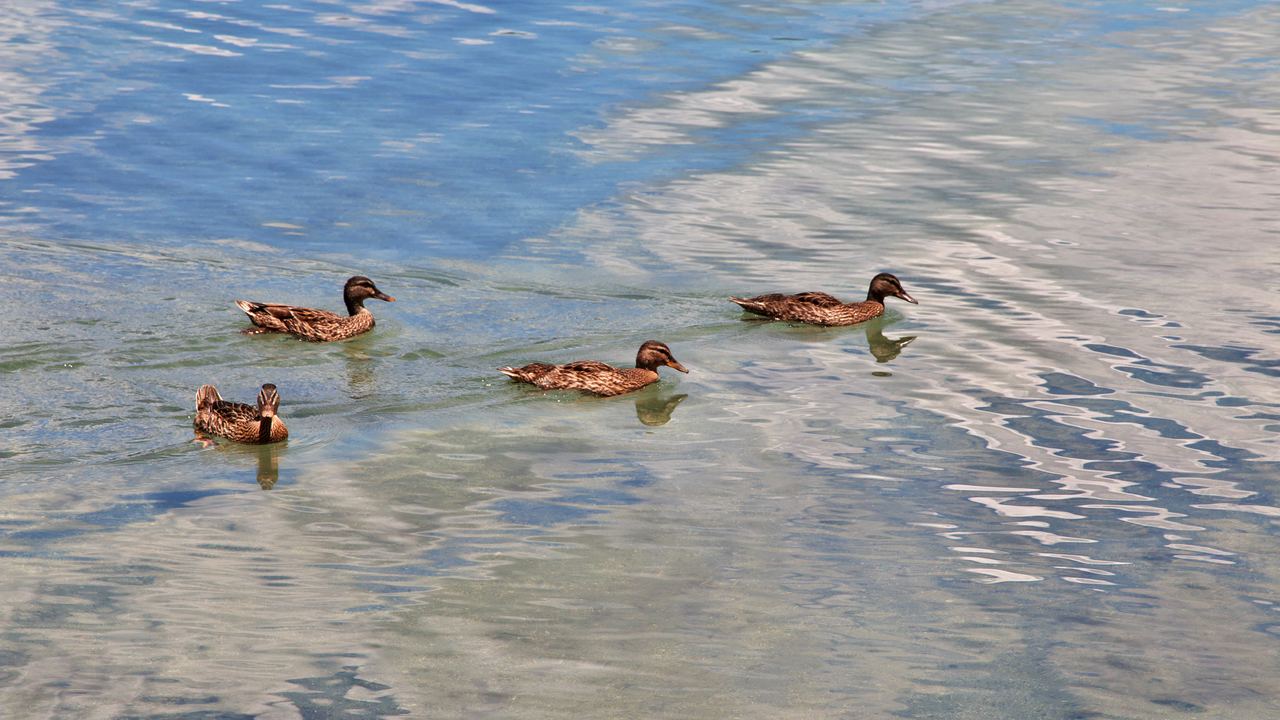
Mount Tarawera Tours: The Rift That Buried the Pink Terraces
On 10 June 1886 the mountain split along 17 kilometres and about 120 people died. It is private Māori land today, which is why only four experiences are sold on it.
At about half past one in the morning on 10 June 1886, Mount Tarawera split. The rift ran roughly 17 kilometres across the mountain and on into the valley beyond it, the villages of Te Wairoa and Te Ariki were buried under mud and ash, and around 120 people died. The Pink and White Terraces on the shore of Lake Rotomahana, the silica staircases that had made this the most famous sight in the southern hemisphere and the reason organised tourism existed in New Zealand at all, went with them. Everything sold on this page is a way of looking at what that night left behind.
The eruption belongs on this page rather than on the Rotorua one above, because it is the reason this destination exists and the reason the geothermal fields to the west look the way they do. What follows is that night, why access is restricted to so few operators, and how the four products differ in what they actually put you next to.
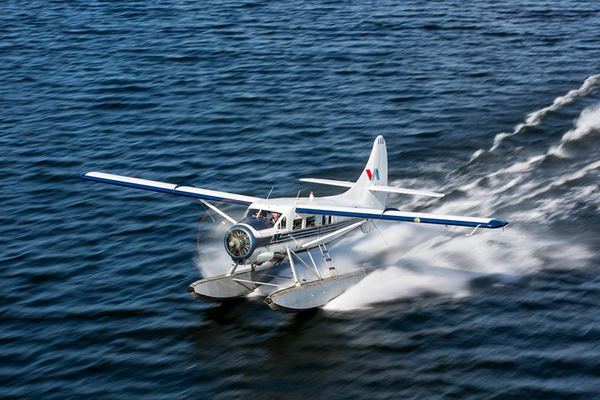
30 Minutes by Floatplane over Tarawera, Waimangu and Whakarewarewa
The seaplane lifts off the lake in front of town and covers in half an hour the crater lakes, Tarawera, Waimangu and Whakarewarewa, with flight times to suit.
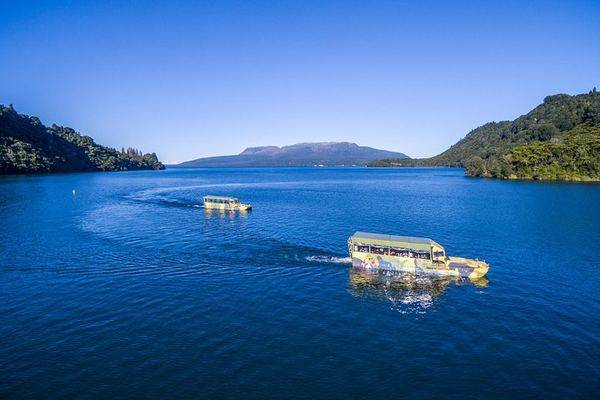
Four Rotorua Lakes in a WWII Amphibious Duck: Three of Them Entered by Water
The vehicle drives into three of the four lakes rather than stopping at them, and the Tarawera commentary is given from the water at the mountain's foot.
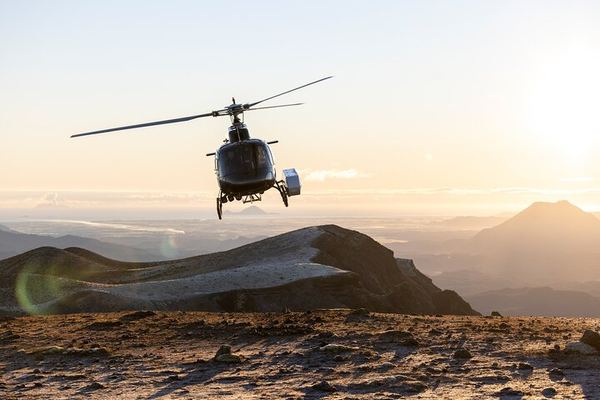
Landing on Mount Tarawera by Helicopter, with 20 Minutes on the Volcano
The pilot doubles as the guide, and the flight ends with a landing on the volcano and twenty minutes of walking up there rather than a pass overhead.
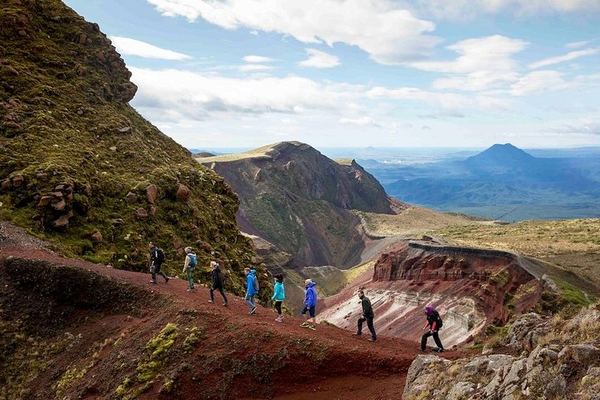
Walking the Rim of Mount Tarawera: the Crater That Erupted in 1886
The only Rotorua trip that walks onto the mountain instead of viewing it from the lake, with 4WD access from central hotels to the crater rim trail.
Ratings collected by Viator and Tripadvisor
The night of 10 June 1886
The warning was argued about afterwards rather than acted on at the time. Eleven days earlier, two boatloads of tourists crossing Lake Tarawera reported a war canoe coming towards them through the mist that nobody could subsequently account for; the tohunga Tuhoto Ariki read it as an omen and was ignored. What is not in dispute is what happened next. The mountain opened along its length, throwing ash and scoria for hours, and the fissure kept running southwest under Lake Rotomahana, which flashed to steam and blew a crater where the lake had been.
Ash fell as far as Tauranga. Te Wairoa, the village that had housed the guides and the boats for the Terraces trade, was buried deep enough that digging it out took decades, and it is now an excavated site you can walk through. The Terraces were assumed to have been destroyed outright; surveys of the lake floor from 2011 onward located parts of the structures under sediment, which is a different kind of loss rather than a recovery.
The same night created something. Waimangu, the valley immediately southwest of the mountain, is the youngest geothermal system on earth for the simple reason that it was made that night and had not existed the day before.
Tarawera, before and after
The eruption that ended New Zealand's first tourism industry, and what it left in place of it.
The origins
about 1314
The Kaharoa eruption
The last major eruption of Tarawera before 1886 spreads ash across the central North Island. After it the mountain is quiet for more than five centuries.
1850s-1880s
The Pink and White Terraces
The silica terraces on Lake Rotomahana become the most famous natural sight in the southern hemisphere. Te Wairoa grows into a village of guides and boatmen serving the trade.
The growth
31 May 1886
The canoe on the lake
Two boatloads of visitors report a war canoe crossing Lake Tarawera that nobody can account for. The tohunga Tuhoto Ariki reads it as a warning. Nothing is done.
10 June 1886
The mountain splits
A rift about 17 kilometres long tears open shortly after 1:30 in the morning. Te Wairoa and Te Ariki are buried, the Terraces are destroyed, and around 120 people die.
1886 onwards
Waimangu is born
The southwestern end of the rift becomes a new geothermal valley. It is the youngest system of its kind on earth, and it did not exist the previous day.
1900-1904
The largest geyser ever recorded
The Waimangu geyser erupts in the new valley for four years, throwing water higher than any geyser recorded before or since. It stops in 1904 and has never returned.
Today
2011 onwards
Parts of the Terraces are located
Sonar and submersible surveys of the floor of Lake Rotomahana find remnants of the terrace structures under sediment. They are not recoverable and not visitable.
Today
Four ways onto the mountain
The maunga is privately owned Māori land. Access is by arrangement, one operator may take vehicles to the summit, and the whole commercial offer is four products.
Why there are only four things to book
Tarawera is not a national park and it is not Crown land. The mountain and the ground around it are privately owned Māori land, access is by arrangement rather than by right, and the number of operators permitted to bring people onto it is small and deliberately kept that way. One company holds the authorisation to take vehicles to the summit. Everyone else works from the lakes, from the air, or from the buried village below.
That is the whole explanation for the shape of this page. Compare it with Te Puia forty minutes away, where ten listings compete over the same geyser: here there are four, none of them undercuts another, and there is no budget version. If you have been wondering why a mountain twenty minutes from a tourist town has no cheap tours on it, the answer is that the landowners decided how many people should be up there, and the answer was not many.
The operator's own prices confirm the position. Half a day on the mountain is NZD 209, a full day NZD 274, and the extended combinations reach NZD 488. Minimum age is 7, and 13 for the longer combined trips.
| What you book | Price | How long | Gets you | Rating |
|---|---|---|---|---|
| Guided eco boat across Lake Tarawera and Lake Rotorua | 60 EUR | 2 hours | The mountain in front of you, with the landowners' account of 1886 | 4.8 over 203 |
| Guided crater experience, 4WD to the mountain | 102 EUR | 4.5 hours | The rim of the 1886 rift, and a scree descent into the crater | 4.9 over 332 |
| Scenic floatplane over the volcano and the lakes | 206 EUR | 30 minutes | The rift from above. No landing | 4.8 over 46 |
| Helicopter with a landing on the summit | 352 EUR | 40 minutes, 20 of them on the ground | The summit itself, which almost nobody reaches | 4.9 over 43 |
The walk, and the scree run
The guided crater experience is the one to book if you can only do one. It runs four and a half hours, collects you from central Rotorua, takes a 4WD up the mountain so you are not spending the morning on a forestry road, and walks the rim of the crater the 1886 rift tore open. It is 102 EUR, groups cap at 15, lunch is not included, and the meeting point is on Hemo Road in Whakarewarewa.
The part everybody remembers is the descent. Instead of walking back the way you came you go down into the crater itself, on loose red and black scoria, in long sliding strides. It is quick, undignified and the single best piece of physical fun in the Rotorua district. It also explains the fitness note in the listing, because getting back out is a climb on the same surface.
At 4.9 across 332 reviews it is the highest rated Tarawera product and one of the highest rated things in this whole New Zealand section. Boots rather than trainers, and long socks, because the scoria gets into everything and stays there.
From the air, and whether it earns the money
Two aerial products, and they are not close in value.
The helicopter is 352 EUR for forty minutes, of which twenty are a walking tour after it has landed. That landing is the entire proposition: it puts you on a summit almost nobody reaches, and the flight over the crater lakes and the thermal reserve on the way is worth the window seat. Nine seats, a 135 kilogram limit per passenger, departing from the Rotorua lakefront.
The floatplane is 206 EUR for a thirty-minute flight over Tarawera, the Blue and Green Lakes and the Whakarewarewa reserve, and it does not land. That is nearly 60 percent of the helicopter price for none of the helicopter's point. It is a good scenic flight and it rates 4.8. But if the reason you are considering an aircraft is Tarawera specifically, the difference between the two products is a landing, and the difference in price is smaller than the difference in what you get.
The cheapest option is the best value here and the least known. A guided two-hour eco boat across Lake Tarawera and Lake Rotorua costs 60 EUR, covers the eruption, the buried village and the landowners' account of what happened, and rates 4.8 over 203 reviews. It does not put you on the mountain. It puts the mountain in front of you with somebody explaining it, which for a lot of people is what they actually wanted.
Eleven days before the eruption, two boatloads of tourists on Lake Tarawera reported a war canoe crossing the water towards them. No such canoe existed on the lake. The tohunga Tuhoto Ariki said it was an omen, and was dismissed as a superstitious old man.
Practical
There is no season on this page and no seasonal chart, because the mountain works all year and the constraint is weather on the day rather than the month. Flights cancel for cloud and wind, and both aerial operators reschedule rather than refund, so do not book either on your last morning in Rotorua. The walk goes in most conditions; it is the visibility from the rim that varies.
Take the minimum ages seriously, because they are not liability boilerplate. Seven on the mountain and thirteen on the longer combinations reflect a 4WD track, a scree slope and four and a half hours without a shortcut back. Lunch is not included on the trek and there is nothing to buy up there.
One thing worth doing before or after any of these: Te Wairoa, the buried village at the foot of the mountain, is excavated and open, and it is the only place in the district where the 1886 eruption is something you look at rather than something you are told about. It is not in this catalogue and it does not need to be booked.
Questions people actually ask
Can you climb Mount Tarawera on your own?
No. The mountain is privately owned Māori land and access is by arrangement with the landowners, not by right. There is no public track and no legal way to walk up it independently. The guided trips on this page exist because their operators hold permission, and only one of them may take vehicles to the summit.
Is Mount Tarawera still active?
It is a dormant volcano rather than an extinct one, and it is monitored like every other centre in the zone. It has not erupted since 1886 and there is no current unrest. The activity you can see in the area today is geothermal, in the Waimangu valley that the 1886 eruption created, rather than eruptive.
Can you see the Pink and White Terraces?
No. They were destroyed on 10 June 1886 when the eruption blew out Lake Rotomahana. Surveys of the lake floor since 2011 have located parts of the terrace structures under sediment, but nothing is visible, accessible or on sale. Any tour implying otherwise is describing a lake with history under it.
Walk, boat, plane or helicopter?
The walk if you are fit and want to stand on it: 102 EUR, four and a half hours, the best rated of the four. The boat if you want the story rather than the summit: 60 EUR, two hours, the best value here. The helicopter if the summit matters and the walk does not appeal, at 352 EUR for a landing nobody else offers. The floatplane is the one to think hardest about, because it costs most of what the helicopter costs and does not land.
How hard is the trek?
Moderate rather than difficult. A 4WD does the climbing, so the walking is on the rim and then down into the crater and back out on loose scoria, which is tiring in the way soft sand is tiring rather than technical. Minimum age is 7. If you can walk for three hours on uneven ground you can do it; if loose footing bothers your knees, the descent is the part to consider.
Why is Tarawera more expensive than everything else in Rotorua?
Because access is restricted rather than because the product is inflated. The land is privately owned, the number of permitted operators is small, and only one may drive to the top, so there is no competitive pressure and no cheap alternative. That restriction is a decision by the landowners about how many people should be on the maunga, and it is the reason this page has four listings rather than forty.
Data verified on. Prices, durations, group sizes and ratings from the Tarawera products on this site. Eruption dates and consequences from the published volcanological and historical record.