
Iceland Lava Cave & Lava Tunnel Tours
Nine tours into Iceland's lava tubes, from 52.70 EUR. Five of them are the same hour inside Raufarhólshellir, at prices that differ by 73 EUR for the transport alone.
A lava tube is the empty space a river of lava leaves behind. The surface of a slow basaltic flow cools and crusts over while the molten interior keeps running underneath it, and when the eruption stops the interior drains away downhill and leaves a roofed corridor in the rock. Iceland has hundreds of them. Three are open commercially, and one of those three carries almost the whole market because it is thirty minutes from Reykjavík.
Worth clearing up the vocabulary before anything else, because it costs people search results and sometimes bookings. The operators here almost all say lava tunnel. Geologists say lava tube. Most visitors type lava cave. All three name the same thing, and a listing that says tunnel is not offering something different from one that says cave. Where the words do diverge is in what happens inside: a boardwalk with lighting and a helmet, or three hours of scrambling over collapsed roof in the dark. Both are sold under the same nouns.
Raufarhólshellir in an Hour, Self-Drive Only
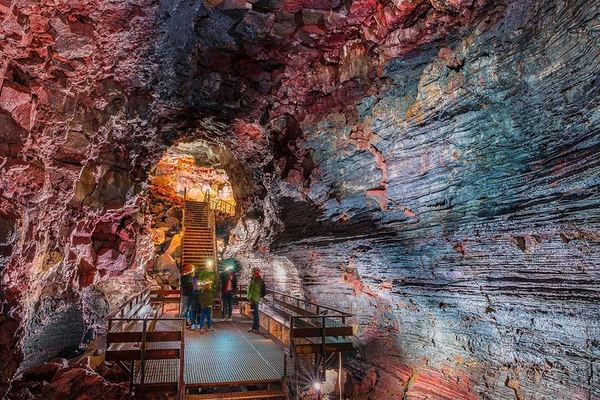
An hour underground in the channel the Leitahraun eruption left about 5,200 years ago, on platforms with lighting. No pick-up: this one is for self-drivers.
Raufarhólshellir Lava Tunnel and Silfra Snorkelling, Self-Drive from 9:30
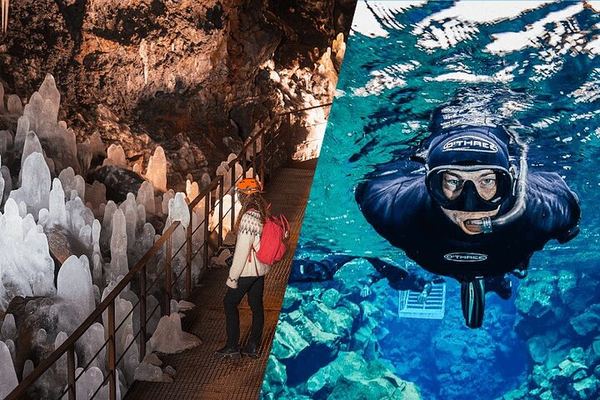
The self-drive pairing: the 9:30 tunnel tour at Raufarhólshellir, then Silfra in Þingvellir, where the snorkelling route runs between two continental plates.
Raufarhólshellir Lava Tunnel with the Bus from BSÍ
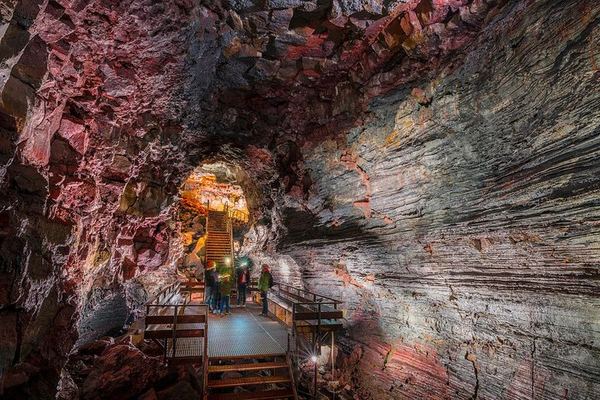
The bus goes from BSÍ two or three times a day, 30 to 40 minutes each way, and helmets and headlamps are handed out at one of Iceland's longest lava tunnels.
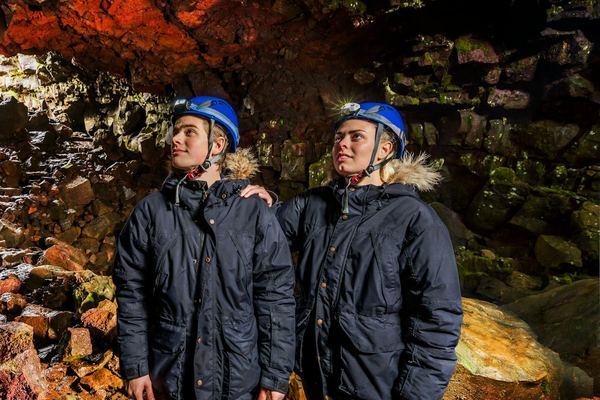
Raufarhólshellir Standard Tour, and the Ice at the Entrance
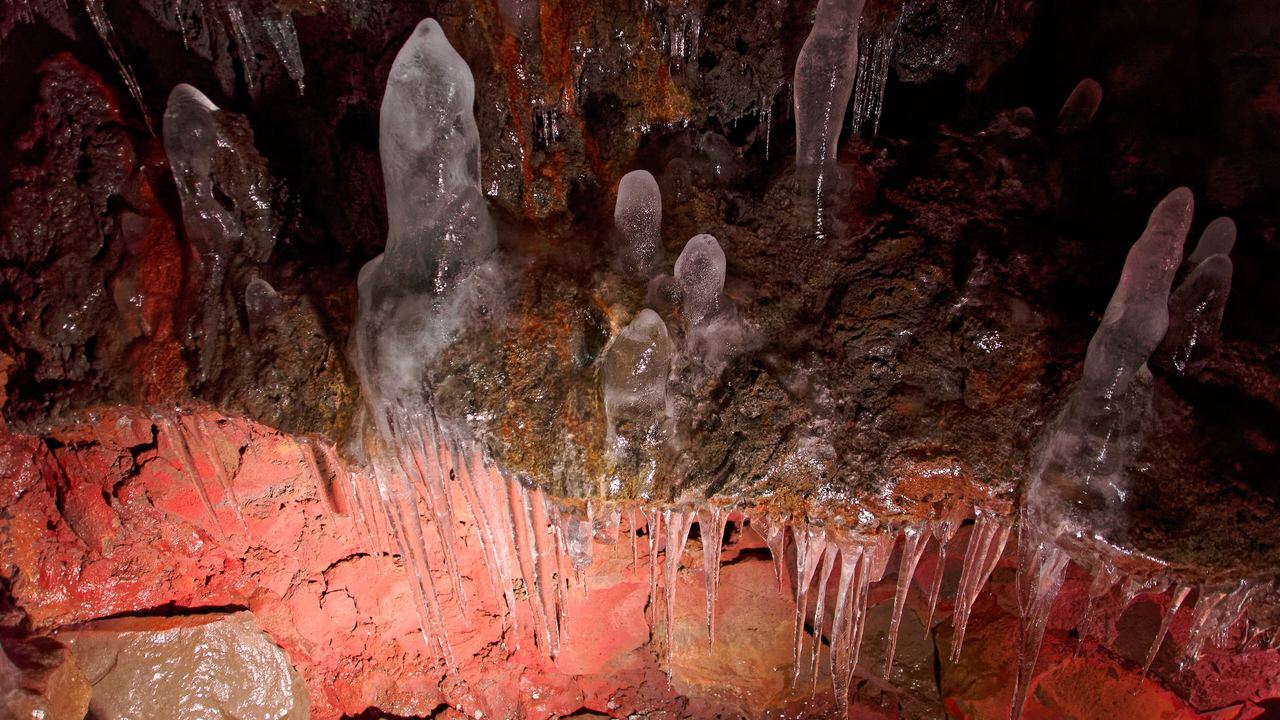
Ice sculptures form inside the entrance before the lava formations begin, in one of the longest tubes in Iceland. Transport is not part of this ticket.
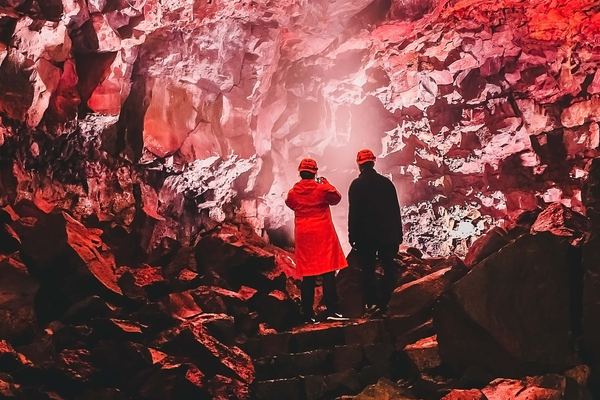
Raufarhólshellir, the Fourth-Longest Lava Tube in Iceland
One hour underground on wooden walkways, 350 metres into a tube that runs 1,360, and a section used as a location in the film Noah. Three hours in total.
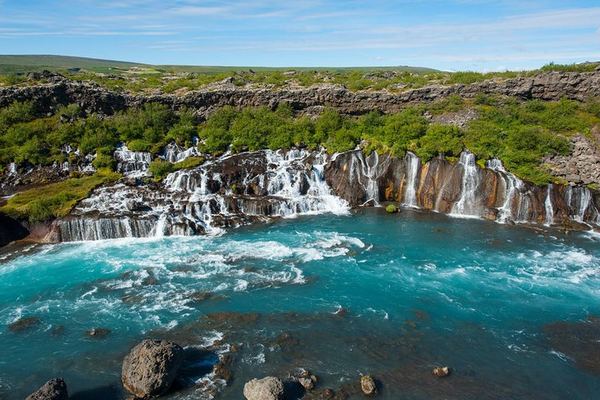
Silver Circle: 180 Litres a Second at Deildartunguhver and 1,600 m of Lava Cave
180 litres a second at 100 degrees, waterfalls that come out of a lava field, and 1,600 metres of cave to walk into. Every admission is in the price.
The Lava Tunnel with Transport from Reykjavík, 1,400 m
One thousand four hundred metres of tunnel cut by molten rock 5,200 years ago, walked from the inside, with transport from Reykjavík included both ways.
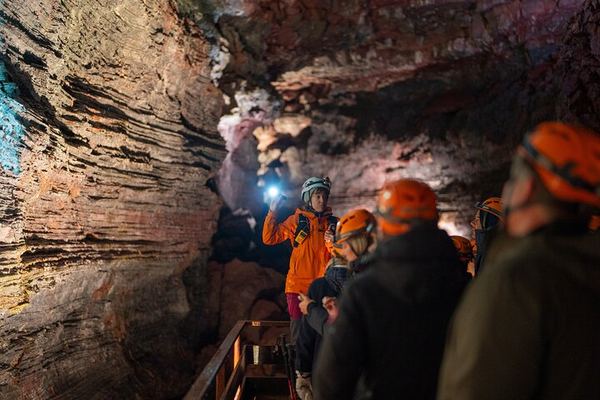
The Raufarhólshellir Lava Tube by Night, then the Aurora
An hour inside Iceland's fourth-longest lava tube, 900 metres in, then a minibus into the dark to look for the aurora. The guide takes your photo with it.
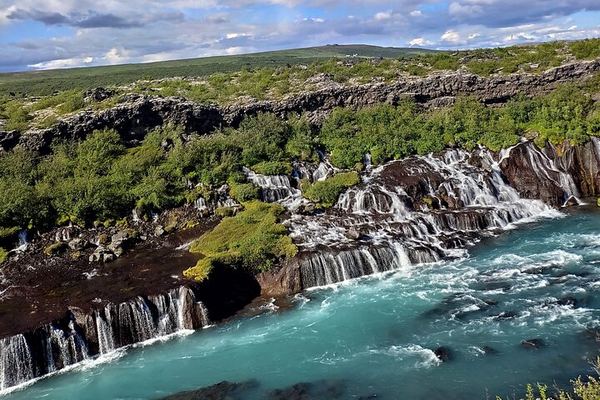
Two Days in West Iceland: Snaefellsnes, the Lifting Stones and Vidgelmir
The four lifting stones the fishermen used are still on the black sand at Djupalonssandur. Seals, the black church, Kirkjufell, and Vidgelmir on day two.
Ratings collected by Viator, Tripadvisor, Tiqets and Civitatis
Why the inside looks the way it does
Everything you notice underground follows from the draining. The horizontal lines running along the walls at shoulder height are lava marks, the level the flow held before it dropped, exactly like a tide line. The ceiling in places is hung with short stubby stalactites, which are not mineral deposits but rock that melted and re-froze from the roof while the tube was still hot. The floor is often ropy and folded because the last of the lava congealed as it moved.
The colours come from oxidation and from the minerals in the rock. Raufarhólshellir runs red, purple and yellow in the sections where iron has weathered, and green where a thin skin of moss has crept in near the collapsed openings. Those collapses matter: a lava tube is lit only where the roof has fallen in, and every commercial cave in Iceland uses one of those holes as its entrance. In winter the light coming down through them lands on ice sculptures a few metres inside, formed by meltwater freezing as it drips, which is the one genuinely seasonal thing about these tours.
Raufarhólshellir, and five prices for the same hour
Raufarhólshellir is 1,360 metres long, up to about 10 metres high and 30 metres wide in the larger chambers, and it drained roughly 5,200 years ago out of the Leitahraun flow that came from east of the Bláfjöll mountains. It is a thirty-minute drive from Reykjavík on Route 39, it is open every day of the year, and there is a footbridge and a lighting scheme through the first section. Five listings on this page take you into it, and the hour you spend inside is the same hour in all five.
| Listing | Price | Transport | Rating |
|---|---|---|---|
| Standard tour, meet at the cave | 52.70 EUR | You get yourself there | 4.8 (2,601) |
| Standard tour, second seller | 62.68 EUR | You get yourself there | 4.6 (143) |
| Tour with transfer from Reykjavík | 103.00 EUR | Minibus, hotel-area pickup | 4.6 (476) |
| Roundtrip from Reykjavík | 112.67 EUR | Minibus, return included | 4.5 (16) |
| Lava tunnel tour from BSÍ terminal | 126.04 EUR | Coach from the bus terminal | 4.2 (40) |
Two things fall out of that table and neither is flattering to the top of it. The 73 EUR spread buys nothing but a seat in a vehicle, and the cheapest option is also the highest rated, on more reviews than the other four combined. And the most expensive option is the lowest rated on the entire page at 4.2, which for a product whose only added value is transport is a fairly direct verdict.
If you have a rental car, drive. The cave has a car park, the tours run at fixed times through the day, and 52.70 EUR is the honest price of this experience. If you do not have a car, the 103.00 EUR option is the one to take: it is the cheapest of the transported versions and the only one with enough reviews to trust.
The standard tour is a boardwalk. The adventure tour is not.
This is the single most common misunderstanding on this page, and it is nobody's fault: the photographs used to sell the standard tour are usually taken on the adventure one.
The standard tour is about an hour, follows a constructed walkway with permanent lighting through the first third of the cave, and is suitable for anyone who can manage stairs and uneven ground. You are handed a helmet and a head torch, you walk, you stop, the guide talks, you come out. It is a good hour and it is not caving.
The adventure tour runs three to four hours, leaves the walkway behind and continues to the far end of the tube where the Lava Falls are, over collapsed roof blocks, under low sections, in the dark except for what you are carrying. It costs more, runs less often, and is the version in which the cave stops being a museum. If the phrase in a listing is explore the full length or reach the Lava Falls, that is the one you are buying.
Booking the standard tour and expecting the adventure one is the commonest disappointment here. Booking the adventure tour in trainers is the commonest way to be turned around at the entrance.
Víðgelmir, the bigger cave nobody day-trips to
Víðgelmir is the largest lava cave in Iceland: 1,585 metres long with passages reaching about 15.8 metres high and 16.5 metres wide, which is a different order of space from Raufarhólshellir. It sits in the Hallmundarhraun lava field in Borgarfjörður, in the west, in a flow that erupted around 900 AD. That date is not incidental: Iceland was being settled at the time, and archaeologists have found evidence of Viking Age occupation inside the cave. An iron gate was fitted in 1991 to stop the remaining mineral formations being broken off, which tells you what the previous decades had been like.
The problem is distance. Víðgelmir is roughly two hours from Reykjavík in the wrong direction for everything else, so it only appears here inside longer trips. The 201.92 EUR Silver Circle day pairs it with the Hraunfossar and Barnafoss waterfalls, the Deildartunguhver hot spring, which operators describe as the most powerful in Europe, and a horse farm at Sturlureykir. The 475.26 EUR listing is two days and adds the Snæfellsnes peninsula. Both are rated 4.9, and both are really touring days that happen to include the best lava cave in the country.
The third cave that gets named in this market is Leiðarendi, near Bláfjöll, which is smaller, unlit and sold as a caving trip rather than a walk. It does not currently appear in the listings here. If you find it elsewhere, treat it as the adventure tier by default.
What is provided and what to wear
Every listing on this page includes a helmet and a head torch, and none of them includes clothing. The temperature inside a lava tube stays close to the annual average outside, which in Iceland means cold and, more importantly, unchanging: the cave is the same in July as in February, so a summer visitor in a T-shirt is the one who suffers. A fleece and a waterproof shell are enough for the standard tour.
Footwear is the thing that actually matters. The floor is broken basalt with a texture somewhere between gravel and broken glass, it is wet in most seasons, and ankles turn on it. Hiking boots for the standard tour, boots with a proper sole for the adventure one. Gloves are worth having on the adventure tour because you will use your hands, and the rock is abrasive enough to take skin off a palm.
Two last practical notes. There is no phone signal underground, so anything you need has to be downloaded before you go in. And the standard cave lighting is deliberately dim, so a phone camera will struggle; the good photographs from these tours are almost all taken by guides with proper lamps, which several operators do and include.
Season: there is not one
These tours run twelve months a year and the cave does not care what the weather is doing. Raufarhólshellir is open every day, the drive is on a main road that stays ploughed, and the interior temperature barely moves between January and July. This is the standard wet-weather answer in southern Iceland, and one listing leans into it directly by pairing an evening cave visit with a northern lights hunt afterwards at 181.00 EUR, which only works between about September and March.
The one genuine seasonal difference is the ice. Meltwater dripping through the collapsed entrances freezes into columns and sheets a few metres inside during winter, and those are gone by late spring. If ice formations are what you saw in the photographs, go between December and March.
Questions people actually ask
What is the difference between a lava tunnel, a lava cave and a lava tube?
Nothing. Tunnel is what Icelandic operators call them, tube is the geological term, and cave is what most visitors search for. All three describe the same feature: the drained corridor left when a lava flow crusted over and the molten interior ran out from underneath. A listing that says tunnel is not selling something different from one that says cave.
Which lava cave should I visit?
Raufarhólshellir if you are based in Reykjavík, because it is thirty minutes away, open every day and costs 52.70 EUR at the door. Víðgelmir if you are already going west: it is bigger, with passages up to 16 metres wide, but it is two hours from the capital and only sold inside longer trips at 201.92 EUR and up.
Why does the same cave cost between 52.70 and 126.04 EUR?
Transport, and only transport. The 52.70 EUR ticket is the standard tour if you arrive at the cave under your own steam; everything above it is a vehicle from Reykjavík. Worth noting that the cheapest option is the highest rated on this page at 4.8 across 2,601 reviews, and the most expensive is the lowest rated at 4.2.
Is it difficult?
The standard tour is not. It is about an hour on a constructed walkway with lighting, on uneven but managed ground, and most people who can handle a flight of stairs will be fine. The adventure tour is a different proposition: three to four hours, no walkway, scrambling over collapsed roof blocks in the dark, and proper boots are a condition of entry rather than a suggestion.
How cold is it inside?
Cold and, more usefully, constant. A lava tube sits near the local annual average temperature all year, so it feels mild in January and genuinely chilly in July. A fleece and a waterproof are enough. The mistake is summer visitors going in dressed for the weather at the surface.
Is a lava cave worth doing if I have already booked the Golden Circle?
Yes, and arguably more so. The Golden Circle gives you one volcanic stop out of four. An hour inside Raufarhólshellir is the only thing near Reykjavík that puts you inside the rock rather than beside it, it takes half a day, and at 52.70 EUR it is the cheapest real volcanic experience in the country.
Are the caves open in winter?
Yes, all year and every day. Winter is arguably the better season: the drive is short and on a maintained road, the temperature underground is the same as in summer, and ice columns form inside the collapsed entrances between about December and March. Those are gone by late spring.
Data verified on. Prices, durations and ratings read from the nine lava cave products on this site, 12 August 2026. Cave lengths, lava ages and access detail as published by the cave operators.