

Vesuvius Wine Tours and Lacryma Christi Tastings
Six wineries on volcanic sand, where the phylloxera louse never took hold and some of the vines are still growing on their own roots.
Vesuvius grows wine because the eruptions that buried the towns below left a deep, loose, mineral-heavy sand on the slopes above them. Six listings here take you into it, from 49 to 130 EUR, and what they sell is not a cellar tour in the Burgundian sense. It is a table on the side of a volcano with the Bay of Naples underneath and three or four glasses in front of you, and the food is doing at least half the work. Two of the six are, strictly speaking, horse-riding days with a tasting bolted onto the end, which is worth knowing before you book one by accident.
The crater, the park ticket and the eruption history belong to the pages above this one. This page is the vineyards: why the ground matters more here than the winemaking does, what is actually in the glass, which of the six is a lunch and which is a ride, and what changes if you come in September rather than February.
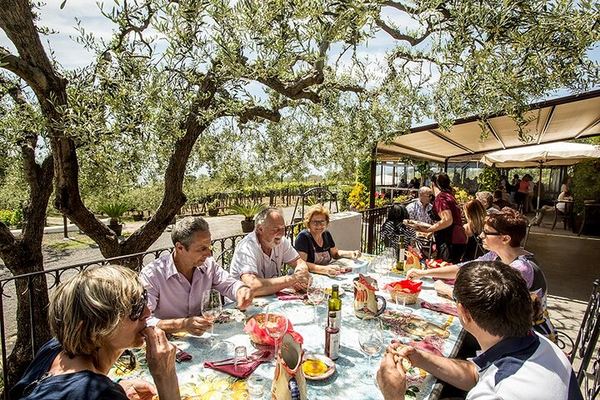
Lacryma Christi on the Slopes of Vesuvius, Four Hours
A walk through the vineyards on the slopes of Vesuvius, then a Mediterranean lunch with Falanghina, Lacryma Christi and Aglianico. Four hours, pick-up at 11.
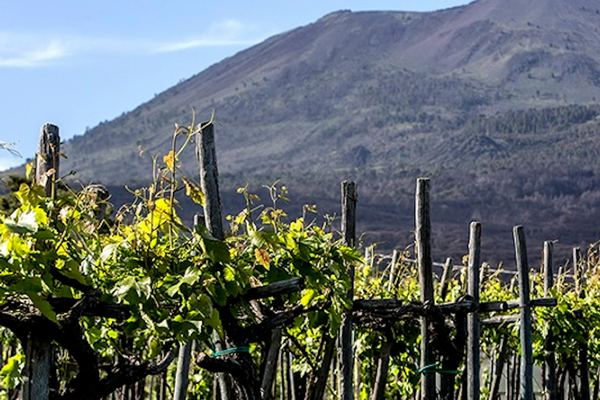
Lacryma Christi, with Salami, Cheese and Ricotta Dessert
Lacryma Christi with a full sit-down lunch behind it: local salami and cheeses, organic tomato pasta, and sweetened ricotta for dessert. Vineyard walk first.
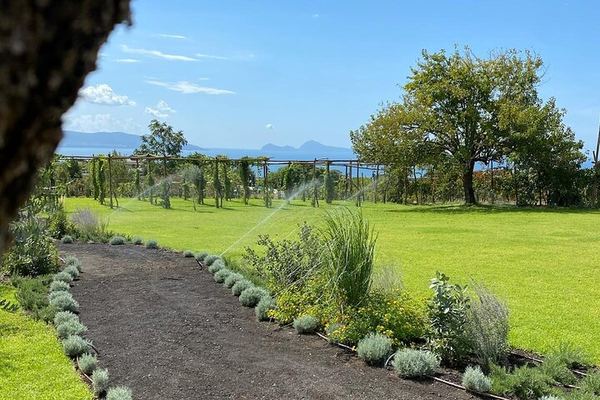
Lunch at an Organic Farm on Vesuvius, Shuttle from Pompeii
An organic farm inside the national park, with cheeses, cured meats and local wines, and a free return shuttle from Pompeii. Capri is on the horizon.
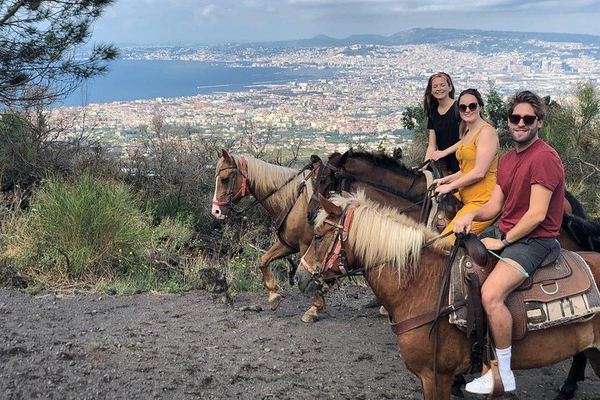
Riding Inside the Vesuvius Park, with the Family's Own Wine
Permission to ride inside the national park rather than take the bus, an hour and a half to two hours in the saddle, and the family's own wine afterwards.
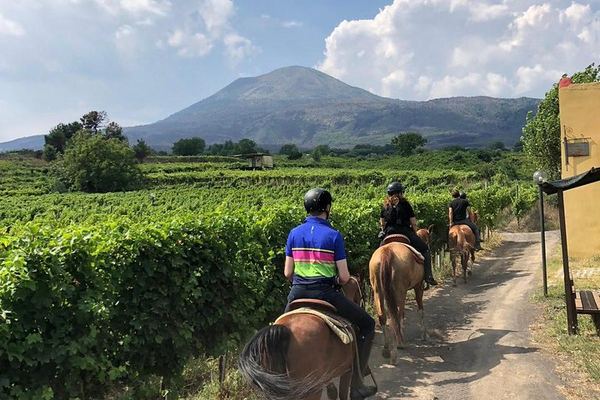
Vesuvius on Horseback at Walking Pace, with a Winery Lunch
Trails across the volcanic ground with the Bay of Sorrento below, then lunch at a family winery. The riding is slow and does not suit anyone wanting to gallop.
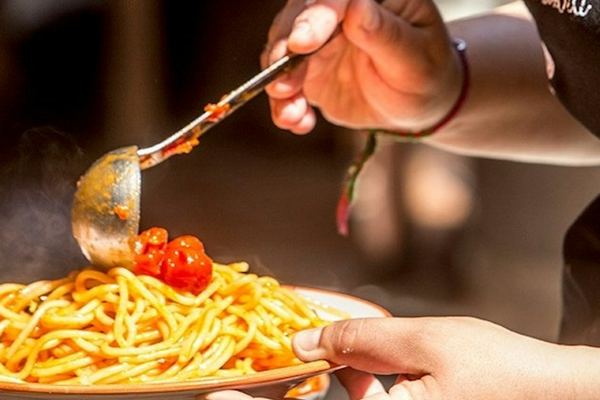
Vino, Cucina e Territorio: Lacryma Christi Under Vesuvius
Lacryma Christi is the wine, the walk goes through the vines with the Gulf of Naples, Sorrento and Capri below, and the tasting comes with local food and lunch.
Ratings collected by Viator, Tripadvisor and Tiqets
Volcanic sand, and the insect that never arrived
Phylloxera reached Europe from North America in the 1860s and destroyed most of the continent's vineyards inside thirty years. The remedy, then and still, is to graft European vines onto American roots the aphid cannot kill. Almost every glass of wine you have ever drunk came off a graft.
Not all of them here. The insect has to move through soil to reach roots, and it does not manage it in deep, loose volcanic sand, because the grains collapse into its tunnels. So parts of the Vesuvian slopes, like parts of Etna and a few pockets elsewhere in the south, still carry vines on their own roots. The Italian term is piede franco, ungrafted, and it is genuinely rare. Whether it makes better wine is argued about endlessly and nobody has settled it; what is certain is that a grower who has some will tell you inside four minutes.
The ground does other things too. It drains hard and holds the day's heat into the night, the vines are stressed, the yields are small, and the interest in a bottle from here is not in its volume.
What is actually in the glass
Lacryma Christi del Vesuvio is a DOC, and the name is the best part of it. The story is that Christ wept over the corner of paradise that had fallen into the bay, and where the tears landed the vine grew. It comes in white, red and rosé, which catches out people expecting a single wine.
The white is mostly Coda di Volpe, sometimes with Falanghina, Verdeca or Greco, and it tends to be saline with a slightly bitter finish rather than fruity. The red is Piedirosso, known locally as Per' e Palummo, pigeon's foot, after the colour the stalk turns, usually with some Aglianico behind it for structure. One listing here names its pours outright, Falanghina, Lacryma Christi and Aglianico, which is a fair sample of what any of them will set down.
Do not expect a vertical tasting or a hall full of barrels. Three or four wines with food is the format, and on this mountain the food is not filler. The tomatoes grown on the same slopes, the Pomodorino del Piennolo del Vesuvio, carry their own DOP and are usually on the table, hung in bunches the way they have always been stored.
| What it is | Price | Rating | Worth knowing before you book |
|---|---|---|---|
| Farm lunch and tasting inside the national park | 58 EUR | 5.0 (234) | The volume leader here: an organic farm looking out over the Gulf of Sorrento |
| Vineyard walk and Mediterranean lunch from Naples | 90 EUR | 4.7 (187) | Names its wines in the description, which almost none of them do |
| Tasting ticket on the slopes | 55 EUR | 4.5 (31) | Entry only. No transport from the city, so you need your own way there |
| Vineyard tour, tasting and lunch | 49 EUR | 5.0 (1) | The cheapest here, and one review is an anecdote rather than a rating |
| Horse ride on the lava tracks, then a glass | 89 EUR | 4.7 (156) | A riding day. The wine is the last twenty minutes of it |
| Horse ride, tasting and full lunch | 130 EUR | 5.0 (25) | The long version of the same idea, and the most expensive on the page |
Two of these six are riding days with a glass at the end
Neither is misdescribed and both are well rated, but a category called wine tours puts them alongside a farm lunch and the titles do not make the difference loud. If what you want is a winery, the 58 and 90 EUR trips and the two entry tickets are the wineries.
If what you want is a morning on a horse on old lava tracks through broom and pine, with a glass waiting at the end, the 89 and 130 EUR listings do that properly. Riding is a real Vesuvian speciality, born of a lower mountain laced with cart tracks too rough to drive, and it is the one thing this volcano offers that Etna does not. Just know which of the two days you are buying.
Almost every vine in Europe grows on American roots, because an aphid arrived in the 1860s and killed everything that did not. On loose volcanic sand it never got through, which is why a few of these rows have never been grafted onto anything.
What the ratings here are worth
Six products, 634 reviews, a weighted 4.81. That is the best average of any Vesuvius category on this site, and the reason is not mysterious: lunch with a view is a far easier promise to keep than a crater. Nobody comes back from a terrace above the Bay of Naples complaining that the volcano did not erupt.
Read the counts as well as the scores, though. The 49 EUR listing shows five stars from one review, which is not information. The 130 EUR ride has twenty-five. The two carrying real statistical weight are the 58 EUR farm at 234 reviews and the 90 EUR trip from Naples at 187, and both of those are, on the evidence, very good indeed.
When to come, and what the harvest changes
There is no season for a tasting and all six of these run through the year. There is very much a season for the vineyard.
Harvest on these slopes runs from late August for the whites into October for the reds. Come then and there is fruit on the vine, crates moving in the yard and a grower with about ninety seconds to spare for you. September is the compromise most people want: the fruit is still hanging, the crush has usually not swallowed everybody yet, and the terrace is still warm at eight in the evening. From December to March you are looking at bare wood and eating indoors, which makes a perfectly good lunch and is not the same day out.
Questions people actually ask
What is Lacryma Christi del Vesuvio?
The appellation for wine grown on the slopes of Vesuvius, made in white, red and rosé. The white is largely Coda di Volpe, often with Falanghina or Greco; the red is Piedirosso with some Aglianico. The name comes from the story that Christ wept over the Bay of Naples and the vine grew where the tears fell.
How much does a Vesuvius wine tour cost?
From 49 to 130 EUR, with a median of 74 across the six listings here. What moves the price is transport, whether a full lunch is included, and whether there is a horse involved. The two cheapest are entry-only tasting tickets and do not include a ride out from the city.
Are the vines really ungrafted?
Some of them, yes. Phylloxera cannot tunnel through loose volcanic sand, so pockets of the Vesuvian slopes still grow on their own roots rather than on American rootstock. Not every producer here has ungrafted parcels, and the ones that do will mention it before you have finished the first glass. It is a fair question to ask on arrival.
Can I combine a winery with the crater or with Pompeii?
Not through this page, but yes through the ones above it. One of the combined Pompeii days includes a winery lunch with the wine in the price, and the horse-riding listings here already sit on the volcano's lower slopes. The wineries and the crater are on the same mountain, roughly half an hour apart by road.
Is food included?
In four of the six, and it is a proper meal rather than a plate of crackers. Expect the local tomatoes, which have a DOP of their own, along with cheese, cured meat and usually something baked. The two entry-only tickets are tastings with a lighter accompaniment.
When is the best time of year to visit a Vesuvian winery?
September. The harvest is under way, the vines still have fruit and leaves, and the evenings are long and warm enough to eat outside. August works but is hot and busy, October is quieter with the reds still coming in, and the winter months give you the same wine in front of a wall instead of a vineyard.
Data verified on. Prices, ratings and review counts read from the 6 winery listings on this site. Grape varieties and styles from the Lacryma Christi del Vesuvio DOC rules.