
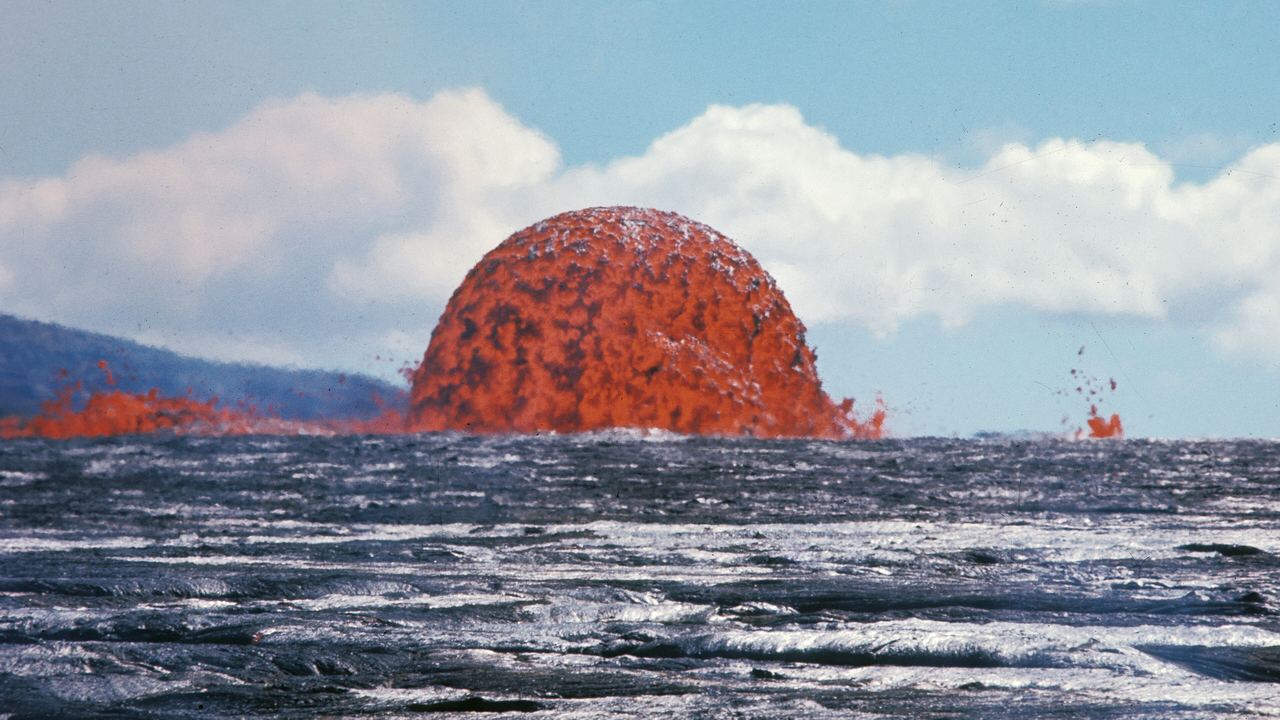
Lava Show Reykjavík: Molten Lava Indoors
Real basalt heated to about 1,100 °C and poured out a few metres from the front row. From 46.41 EUR, and the only lava in Iceland that is guaranteed every day.
A furnace in a room off Fiskislóð heats real Icelandic basalt until it runs, and then somebody tips it down a steel chute into a viewing room with an audience in it. That is the whole idea. There is a talk before it and questions after, the front rows feel the heat on their faces, and it is the only place in the country where you can be certain of seeing molten rock on the day you booked.
This page is the Reykjavík venue and the three listings that sell it. The Vík room, which opened first and is the smaller of the two, appears on the south coast page instead, and the two are close enough in price and content that the only real question is which town you happen to be in. Everything below applies to both.
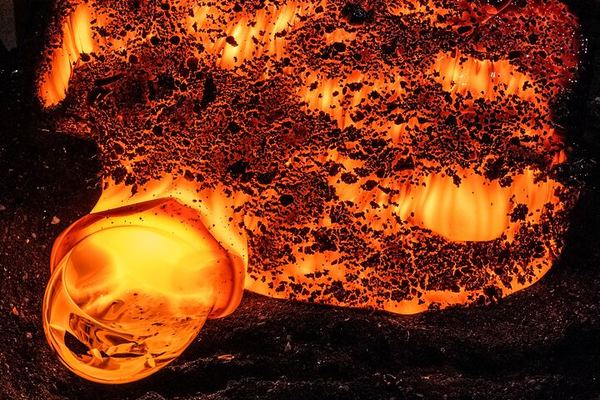
Lava Show Reykjavik: Real Molten Lava Poured into the Room
Real lava is superheated and poured into the room while you sit in it, close enough to feel the heat. Classic and Premium tickets, the latter from age 13.
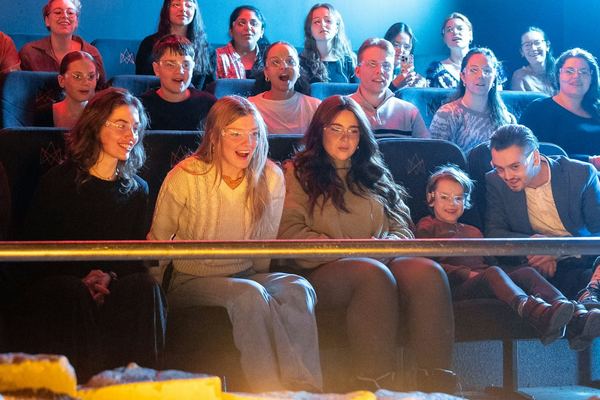
The Lava Show in Reykjavík: Real Lava Meets Ice Indoors
Molten rock at 1,100 °C is run over ice a few metres from the seats, with the heat arriving before the lava does. Reykjavík venue; there is another at Vík.
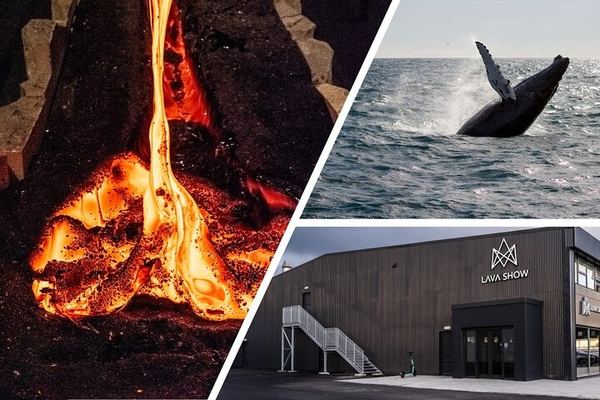
Whale Watching and Lava Show: Real Lava from the 1918 Katla Eruption
The lava poured in front of you came out of Katla in 1918. Pair it with a morning or afternoon whale watching sail, and see the city skyline from the water.
Ratings collected by Viator, Tripadvisor and Tiqets
What actually happens in the room
You sit in a small tiered room facing a steel channel. A presenter spends the first stretch on Icelandic volcanology, which sounds like padding and is not, because the point of the talk is to make you understand what you are about to look at rather than simply photograph it. Then the furnace opens.
The material is real basalt, not a substitute and not a coloured wax, heated until it flows like thick honey and glows orange-white. It comes down the chute in front of you and spreads across the floor of the viewing area, and the first thing everyone notices is not the colour but the heat: a wall of it, arriving suddenly and from several metres away, which is the part that no photograph or documentary has ever conveyed. Goggles are handed out. The room gets hot enough that the bar at the back is a genuine amenity rather than an upsell.
The demonstrations that follow are the educational half of the hour, and they are the reason people leave talking about it: what happens when lava meets ice, how a crust forms and how quickly, why the underside stays liquid long after the top is black and solid. That last one is the mechanism behind every lava tube in Iceland, and watching it happen at arm's length explains a cave better than an hour inside one does.
Why it exists, and why that is not cynical
Iceland has a marketing problem that nobody in Icelandic tourism enjoys discussing. Between March 2021 and August 2025 the Reykjanes peninsula erupted twelve times, the images went everywhere, and a large number of people booked a trip on the strength of them. Nothing has erupted in Iceland since the first week of August 2025. The ground on Reykjanes is cold. It is still remarkable, and it is not orange.
The Lava Show is the honest answer to that gap, and it was built years before the gap opened. It does not pretend to be a volcano. It sells one hour of the thing everyone came for, at a fixed time, on a day you choose, and it delivers it every single time. In a country where the headline product is currently a cooled lava field and the weather cancels half the outdoor calendar, that reliability is worth what it costs.
The operator's own claim is that it is the world's only live lava show. That appears to be true, which is less a boast than an odd fact: melting basalt to order is difficult, expensive and, apparently, something only one company has decided is worth doing.
Reykjavík or Vík, and the five ways it is sold
There are two rooms. Vík came first, on Víkurbraut in the middle of a village of about three hundred people, sitting directly beneath the ice cap that covers Katla. Reykjavík followed, at Fiskislóð 73 down in the old harbour area, and it is the larger of the two with more sessions a day.
The show is the same. What differs is atmosphere and logistics. Vík is smaller, quieter and has the better story attached, since the volcano being discussed is the one over your head. Reykjavík has more slots, which matters in July, and is a fifteen-minute walk from most of the city centre.
| Listing | Venue | Price | Rating |
|---|---|---|---|
| Admission ticket, optional premium upgrade | Reykjavík | 47.08 EUR | 4.9 (3,700) |
| Entry ticket, second seller | Reykjavík | 46.41 EUR | 4.6 (59) |
| Whale watching and Lava Show | Reykjavík | 127.85 EUR | 4.3 (7) |
| Admission ticket | Vík | 47.08 EUR | 4.9 (1,242) |
| Entry ticket, second seller | Vík | 46.41 EUR | 4.8 (25) |
Two readings of that table. The 67 cent difference between the two admission tickets is not worth thinking about, so book whichever seller you already have an account with. And the two venues are rated identically at 4.9 on very large numbers, which is unusual and suggests the operator has genuinely standardised the thing rather than letting the second room drift.
The 127.85 EUR combination, and why to skip it
One listing pairs the show with a whale watching trip from the old harbour: boat at 09:00 and lava at 14:00, or boat at 13:00 and lava at 18:00. It costs 127.85 EUR, which is roughly 80 EUR more than the show on its own.
It is rated 4.3 across seven reviews, the lowest score and the thinnest evidence base of anything on this page, and the structural problem is visible in the timings: there is a gap of several hours in the middle during which you are on your own in a harbour district. Buying the two separately costs about the same, and lets you move the boat if the sea forecast turns, which on a whale watching trip out of Reykjavík it frequently does. Bundles here save time rather than money, and this one saves neither.
Heat, seats and small children
Practical points, in rough order of how often they catch people out.
Dress lighter than you would for anything else in Iceland. This is the one attraction in the country where you will be too warm. The room is heated by design and then a great deal of molten rock arrives in it. Leave the parka at the cloakroom.
The premium tier is a seat rather than a different show: closer to the channel, which means more heat and a better view of the flow, and the difference is real if you care about photographs. The standard seats see everything.
The room is small and the sessions are timed, so this is one of the few things in Reykjavík that genuinely sells out, particularly the evening slots between June and August. Book a day or two ahead rather than walking up.
On children: it is loud, hot and dark at the edges, and the age guidance is set by the operator rather than by any general rule, so check the listing you are buying. Older children tend to rate it as the best hour of the trip. Very young ones sometimes find the heat alarming, which is a reasonable response to a wall of 1,100 °C rock.
There is no season to plan around. It is indoors, it runs every day of the year, and it is the standard answer in both towns for the afternoon when the wind has closed the beach, the glacier or the boats.
Questions people actually ask
Is the lava real?
Yes. It is genuine Icelandic basalt melted in a furnace until it flows, at around 1,100 °C, and poured out in front of the audience. It is not coloured wax, not a projection and not a simulation. The heat you feel from several metres away is the most convincing proof of that, and it is the detail nobody expects.
How much does the Lava Show cost?
46.41 or 47.08 EUR for admission, depending on the seller, at either venue. A premium upgrade buys a closer seat. The only other option is a 127.85 EUR bundle with whale watching, which is worth avoiding: it is rated 4.3 on seven reviews and leaves a multi-hour gap in the middle of your day.
How long does it last?
About an hour for the session, which includes a talk before the pour and time for questions afterwards. The lava itself is a shorter part of that hour than people expect, and the talk is the reason the show rates as highly as it does rather than filler in front of it.
Reykjavík or Vík?
Whichever town you are in. The show is the same and both venues are rated 4.9 on large numbers of reviews. Vík is the original, smaller and quieter, and sits directly under the ice cap covering Katla, which gives the talk a certain immediacy. Reykjavík is larger with more sessions a day, which matters in high summer.
Is it worth it when I could see a real volcano?
At the moment there is no erupting volcano in Iceland to see. The last eruption ended in the first week of August 2025, so the alternative is cooled lava fields, which are excellent and are not orange. If seeing molten rock is on your list, this is the only way to guarantee it, and at 46 to 47 EUR it costs less than most half-day tours.
Do I need to book ahead?
Yes, especially for evening sessions between June and August. The rooms are small, the sessions are timed and this is one of the few attractions in Reykjavík that reliably sells out. A day or two of notice is usually enough outside peak weeks.
Is it suitable for children?
Mostly, with a caveat. It is hot, loud and dark around the edges, and minimum ages are set by the operator, so check the listing. Older children generally rate it as a highlight of the trip. For toddlers, the wall of heat that arrives with the pour can be genuinely frightening.
Data verified on. Prices and ratings read from the Lava Show products on this site, 12 August 2026. Melt temperature and venue addresses as published by the operator.