
Mauna Kea Summit and Stargazing Tours
Sunset at 4,207 m, then back down. The summit closes half an hour after dark, which is why nobody stargazes from the top.
Seven tours go up Mauna Kea, and almost every one of them is sold as a summit and stars trip. That wording hides the structure of the evening. You go to the summit for sunset, you come back down before dark, and the telescopes come out somewhere between 2,000 and 2,800 metres. This is not an operator cutting corners. Access to the summit ends thirty minutes after sunset, the research observatories are working instruments rather than an attraction, and the sky is no worse a thousand metres lower.
Two things to be clear about before booking. Mauna Kea is not inside Hawaiʻi Volcanoes National Park, it is a separate mountain in the middle of the island, and it is dormant: nothing has erupted here for roughly 4,500 years. Nobody comes for lava. They come because this is the highest point in the Pacific and one of the best places on the planet to look at a sky.
Big Island Twilight: Kona Coffee, Black Sand, the Thurston Tube and Stars
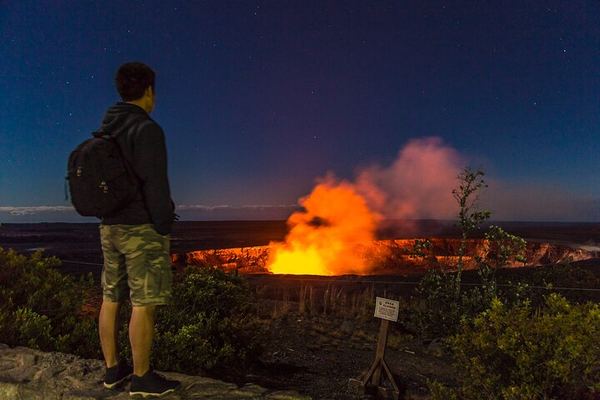
Lunch and dinner are both included, from a picnic above Kealakekua Bay to a dark stop on Saddle Road, with malasadas and green sea turtles along the way.
Mauna Kea Small Group: Hawaiian Star Navigation and Two Telescopes
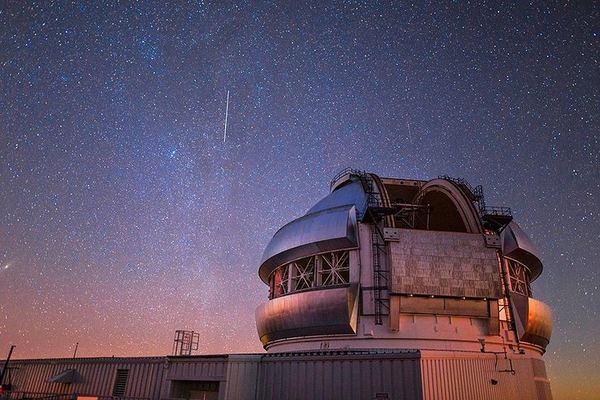
A warm picnic dinner, Hawaiian star navigation explained before the summit, and both an 11-inch Celestron and a Stellina that captures images you keep.
Mauna Kea Stargazing with a Free-If-Cloudy Guarantee and Milky Way Portraits
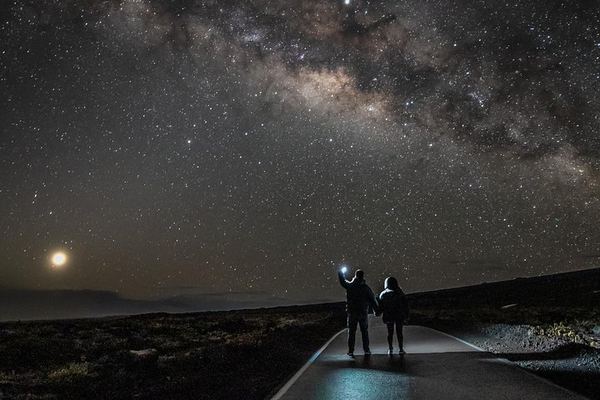
An astronomer and an astro-photographer, reclining chairs and a screen-based telescope with no eyepiece. If the stars stay hidden, the session costs nothing.
Mauna Kea Summit and Sunset with Arnott's: Laser-Guided Stars, No Telescopes
Local guides on the sacred side of the mountain, an acclimatisation stop at 9,000 feet, and stargazing by laser pointer rather than telescope. Minimum two guests.
Mauna Kea Summit, Sunset and Stars: Two of the Black Hole Telescopes
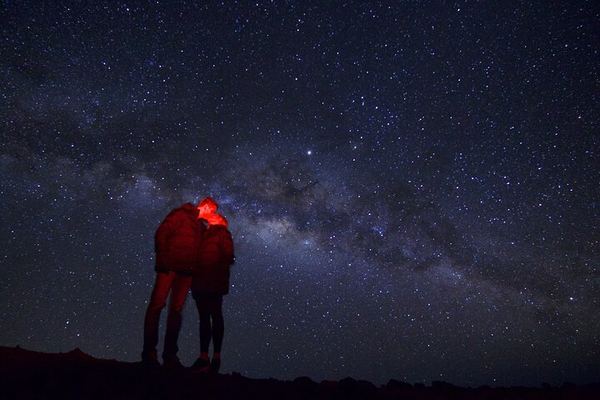
Two of the eight telescopes that imaged a black hole stand on this summit. Jackets, a hot drink, a Celestron on the planets, and your photo sent afterwards.
Mauna Kea Sunset and Stars, Run Since 1989: Parkas and Snacks Included
The same local operator since 1989, fully permitted, with heavy-duty parkas, snacks and hot chocolate included, and the stargazing stop below the summit.
Mauna Kea Sunset with Free Star Photos on Your Phone Before You Get Home
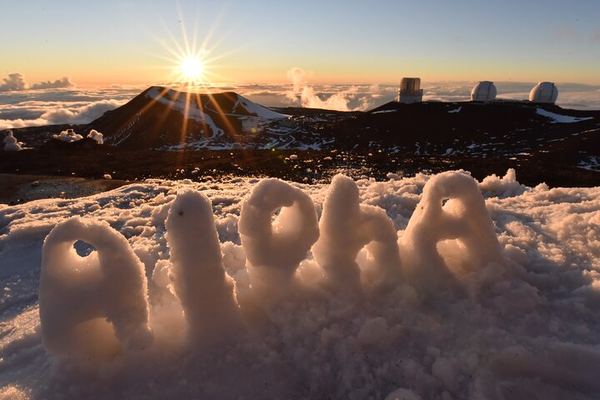
The guides shoot you against the sunset and the stars with their DSLR, and the pictures reach your phone before the van drops you off. Three Kona-side pick-ups.
Ratings collected by Viator and Tripadvisor
Why you cannot drive yourself
The Mauna Kea Access Road leaves the Saddle Road and climbs to the Visitor Information Station at 2,804 metres, where the tarmac effectively ends for most people. Above that the road turns to graded gravel and gains another 1,400 metres, and the great majority of rental agreements on the Big Island forbid taking their vehicle beyond the visitor station. Breaking that clause voids your cover on a road with no barrier and a long drop.
That single contractual line is why a mountain with a public road up it is sold as a guided product at 225 EUR and up. Seven companies hold the authorisation to run commercial tours to the summit, and all seven of the listings here come from that group. What you are paying for is a four-wheel-drive van, a driver who has done the descent in the dark several hundred times, and jackets and gloves, which every operator provides because nobody packs for freezing weather on a Hawaiian holiday.
| Tour | Price | Rating | What is different about it |
|---|---|---|---|
| Arnott's Adventures summit tour | 225 EUR | 4.8 (156) | The cheapest way up, smaller operation |
| Summit, sunset and stars | 255 EUR | 4.8 (1,848) | Seven hours, 4x4 van, hot drink and astrophotography of you |
| Summit tour with free night star photo | 256 EUR | 4.8 (1,740) | States plainly that stargazing happens after the summit, not on it |
| Stargazing experience with photos | 264 EUR | 4.8 (273) | No summit at all: an astronomer and a photographer at a dark-sky site, all ages |
| Twilight volcano and stargazing | 272 EUR | 4.9 (1,727) | Hawaiʻi Volcanoes National Park by day, then stars near Mauna Kea |
| Summit sunset and stargazing | 282 EUR | 5.0 (28) | Small group, professional telescope |
| Summit and stars, small group | 291 EUR | 4.9 (1,617) | The dearest, and the second most reviewed |
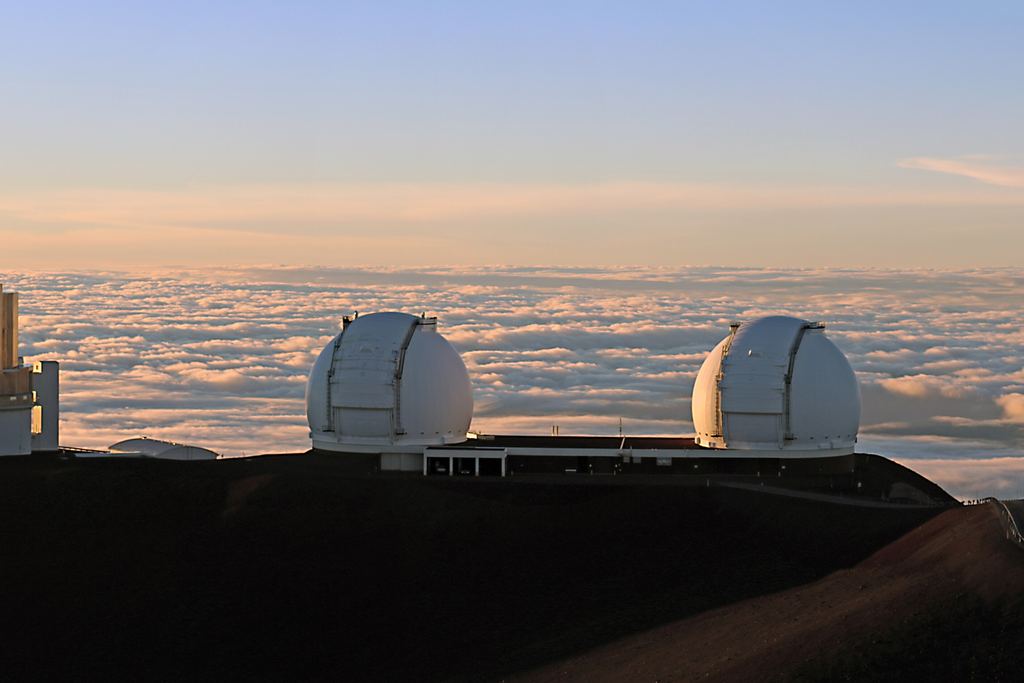
The observatories are not a visit
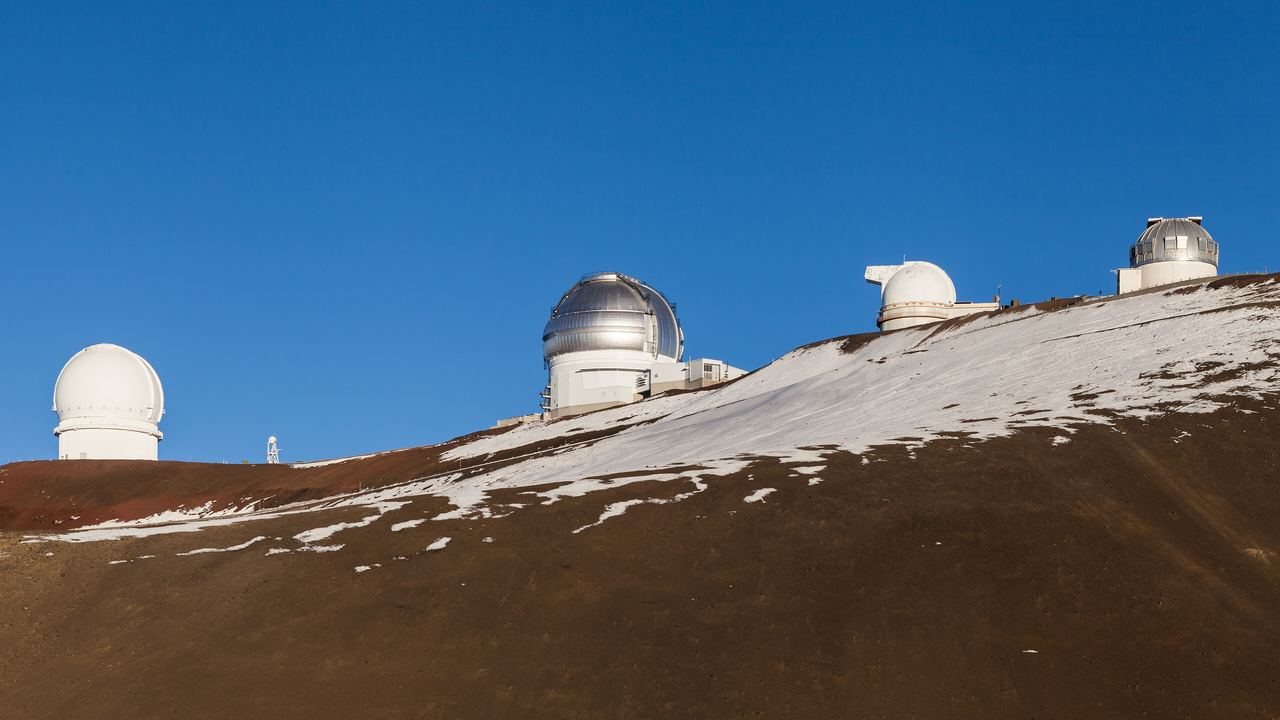
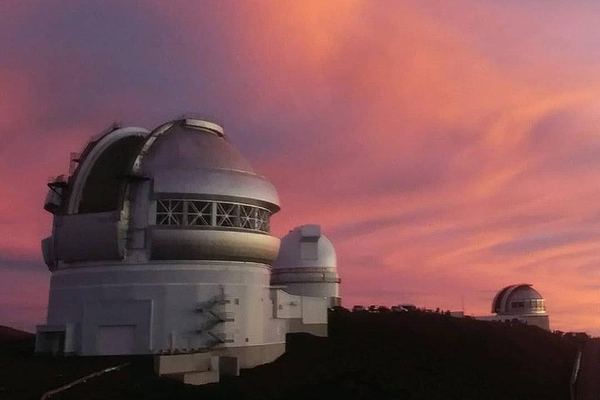
Thirteen international observatories stand on the summit, including the twin Keck domes and Subaru in this photograph. Two of the instruments here contributed to the first image of a black hole. None of them is open to the public at night, and there is no tour of the inside.
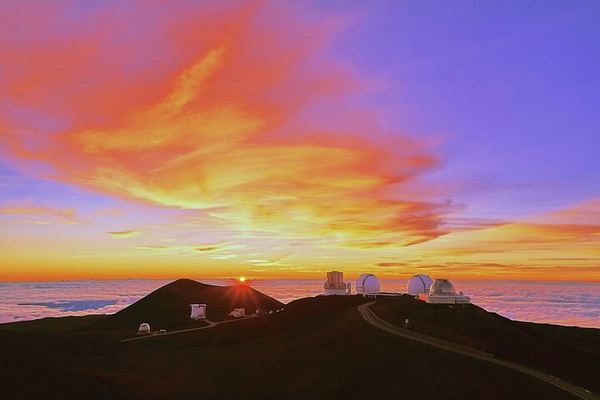
What you get is the outside of them, in the last light, on ground the colour of rust, above a cloud layer that usually sits below you. It is genuinely one of the strangest half hours in American travel. Then everybody drives down, because the summit closes to visitors thirty minutes after sunset and the telescopes need the dark they are standing in. The stargazing that follows uses a portable telescope at a lower site, run by your guide, and on most tours it is the better half of the evening.
The altitude is the real constraint
You go from sea level to 4,207 metres in about two hours. That is a faster ascent than almost any trekking itinerary in the world would allow, and it is the reason for every rule on this page.
Every tour stops at the Visitor Information Station at 2,804 metres for at least half an hour before continuing. That stop is not a photo break, it is acclimatisation, and it is the difference between a good evening and a headache with nausea at the top. The station itself is open from 09:00 to 21:00 and is where a great deal of the practical information about the mountain lives.
The restrictions follow from the same arithmetic. Most operators set a minimum age of 13 for the summit, and exclude pregnant travellers and anyone with heart or lung conditions. Scuba divers are asked to leave a day between their last dive and the drive up. If any of that rules out someone in your group, the stargazing-only product at 264 EUR takes all ages and never leaves the lower ground, which is a sensible substitute rather than a consolation.
Weather, and the tour that does not run
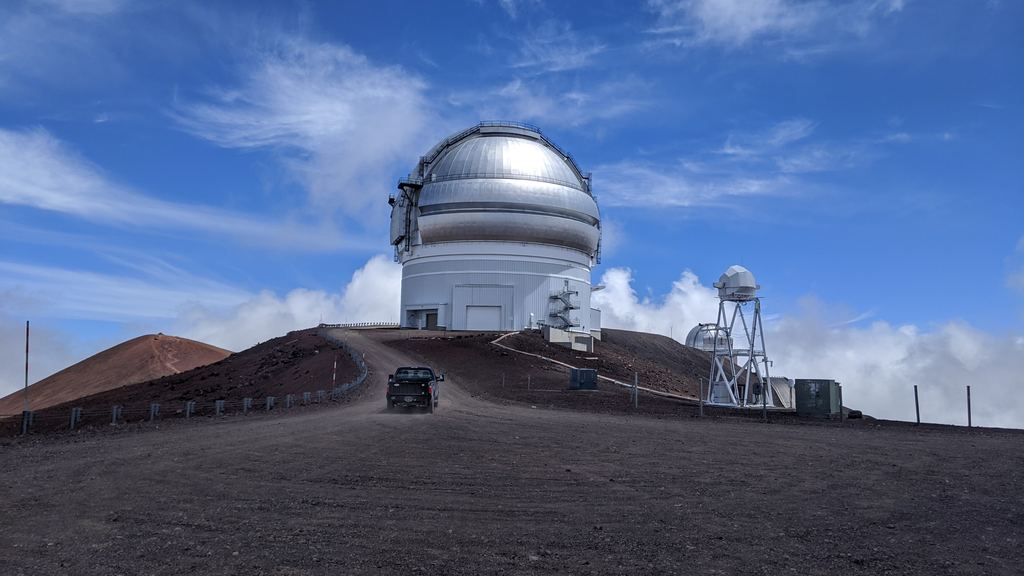
One operator lists it without decoration in its own small print: snow, fog and winds over 120 miles an hour are possible on this mountain in any month of the year, and the access road closes for ice, snow, poor visibility or wind. It is 4,200 metres in the middle of an ocean, and the fact that you drove up from a beach does not change what the summit is.
In practice this means two things. Nights below freezing are normal at the top even in August, which is why the jackets and gloves are supplied rather than suggested. And a proportion of departures do not reach the summit at all, turning back at the visitor station or stopping lower for the stars. Read the cancellation terms before you book: most of these listings offer a full refund up to 24 hours before departure, which is worth having when your one clear evening is also the one the mountain decides to close.
There is no seasonal table on this page for a reason. The variable here is the individual night, not the month. A December evening can be clear and calm and a July one can be shut for ice.
Mauna Kea is a sacred mountain, and that is not a footnote
In Hawaiian tradition Mauna Kea is the dwelling place of the goddess Poliʻahu and is associated with the deities Lilinoe and Waiau. The summit was the realm of the gods and was kapu, forbidden, to all but the highest chiefs and priests. Queen Emma made the journey in 1881, a six hour climb, and it was remarkable enough to be recorded.
The mountain remains sacred to Native Hawaiians today, and the presence of the observatories on it, and the proposal to build the Thirty Meter Telescope, have been the subject of sustained protest and litigation. The disagreement is real and it is not ours to adjudicate. What it means for a visitor is simple and specific: this is a place where people are asked to behave as they would in a church. Stay on the road and the marked areas, take nothing from the ground, build nothing, and leave nothing behind. Every one of the seven authorised operators will tell you the same, and the good guides will tell you why.
The Visitor Information Station hosts community speakers on the fourth Saturday of each month who talk about Mauna a Wākea from a cultural perspective. It is free, and it is the part of the mountain no tour itinerary covers.
The mountain's other claim
Mauna Kea is 4,207 metres above sea level, which makes it the highest point in the Pacific and, by a margin of about 35 metres, taller than its neighbour Mauna Loa. Measured from its base on the ocean floor, which is the only honest way to measure something that built itself out of the seabed, it stands over ten kilometres, more than Everest measured from sea level.
It is a shield volcano and it is not extinct. The USGS records its last eruption at roughly 4,500 years ago and rates its threat potential as moderate, which in the agency's language means a volcano expected to erupt again with no sign of doing so now. In practical terms: nothing on this mountain is going to do anything while you are on it, and that is the difference between this tour and the ones on Kīlauea.
Questions people actually ask
Can I drive to the Mauna Kea summit myself?
Legally the road is public, but almost every rental agreement on the Big Island prohibits taking their vehicle above the Visitor Information Station at 2,804 metres, and doing it anyway voids your insurance on a graded gravel road with a long drop and no barrier. You also need genuine four-wheel drive with low range for the descent. That is why every commercial trip up is a guided one and why only seven companies hold the authorisation to run them.
Do you stargaze from the summit?
No, and any listing implying otherwise is being loose with the word. Visitors must leave the summit within thirty minutes of sunset, both because the drive down is unlit gravel and because the observatories need the dark. Stargazing happens at a lower site with your guide's telescope, typically between 2,000 and 2,800 metres. One operator says so in plain words in its own description. The sky at that height is still exceptional.
Can children go?
To the summit, generally not: most operators set a minimum age of 13 and the mountain's own visitor guidance advises against taking younger children above the visitor station, because of the altitude rather than the terrain. The stargazing-only tour at 264 EUR takes all ages and stays low. If you have small children and want the mountain, that is the product.
Who should not go up?
Pregnant travellers, anyone with a heart or lung condition, and anyone who has been scuba diving in the previous 24 hours. Operators state these as booking conditions rather than suggestions. Beyond that, you should be reasonably fit and willing to sit through the compulsory half hour acclimatisation stop, which people are always tempted to hurry and never should.
What is the weather like at the top?
Cold, often windy, and unrelated to the beach you left. Below freezing is normal at the summit even in summer, and operators supply jackets and gloves because they have learned that nobody brings them. Snow, fog and winds over 120 mph are possible in any month, and the access road closes when they arrive. Wear long trousers and closed shoes, and bring more layers than you think you need.
Which Mauna Kea tour should I book?
If you want the summit and the sunset, the 255 to 291 EUR small-group trips are all doing the same evening well, and the review counts on the two biggest, over 1,600 each, are the most reliable signal on this page. If you mainly want the sky, the 264 EUR astronomer-led session skips the summit, takes all ages and runs shorter. If you want the volcano too, the 272 EUR twilight tour puts Hawaiʻi Volcanoes National Park in the same day, which is a long day but a good one.
Is Mauna Kea an active volcano?
Dormant rather than extinct. The USGS puts the last eruption at about 4,500 years ago and rates its threat potential as moderate, meaning it is expected to erupt again at some point with nothing happening now. There is no lava, no crater viewing and no gas. If seeing volcanic activity is the point of your trip, that is Kīlauea, on the other side of the same island.
Data verified on. Prices, ratings and booking conditions read from the seven Mauna Kea products on this site. Elevation, eruption history and threat ranking from the USGS.