
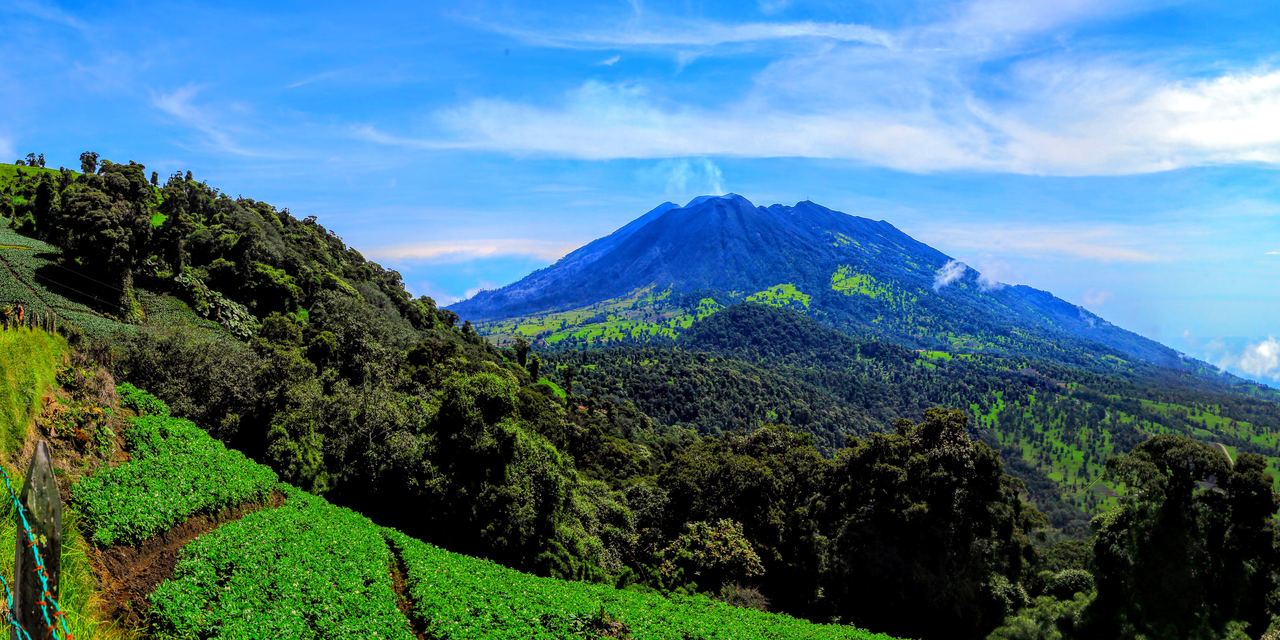
Turrialba Volcano: What Is Actually Open, and What Is Not
The most restless volcano in the valley, and the hardest to get a straight answer about. On 12 August 2026 it was still not on the national booking system.
Turrialba is the Central Valley volcano that has spent the last fifteen years making itself unvisitable. It stands at 3,340 metres on the eastern edge of the valley, it has erupted repeatedly since 2010, and on three separate occasions its ash has closed the international airport that serves San José. Its national park has been shut more often than open in that period. Trying to find out whether you can go today is genuinely difficult, and the reason is that almost everything published about it has no date attached.
This page does two things the rest of the internet is not doing for this mountain. It puts a date next to every claim about access, and it is honest that three of the four trips sold here under the word Turrialba are about a town, a river and a rainforest that happen to share the volcano's name.
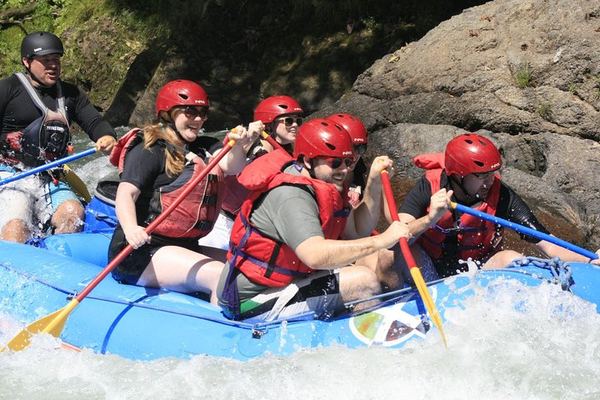
Class III and IV on the Pacuare: Eighteen Miles from Tres Equis
The run starts near Tres Equis, an hour east of Turrialba, and covers eighteen miles of class III and IV water with the guides and the food included.
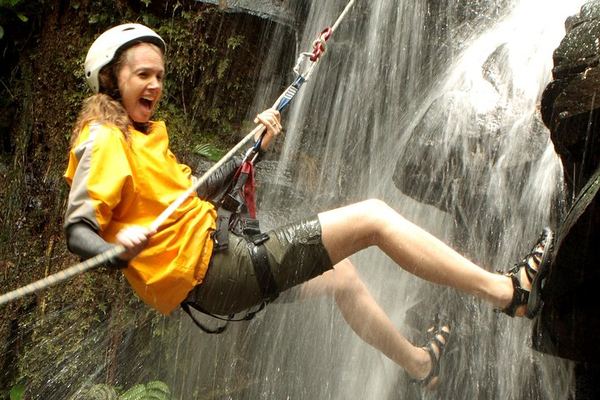
Four Waterfall Rappels, Five Zip Lines and a 132-Foot Bridge at Turrialba
Four rappels down waterfalls, five zip lines and a hanging bridge of 132 feet, with the gear, the guides and lunch provided at the Calle Chirraca site.
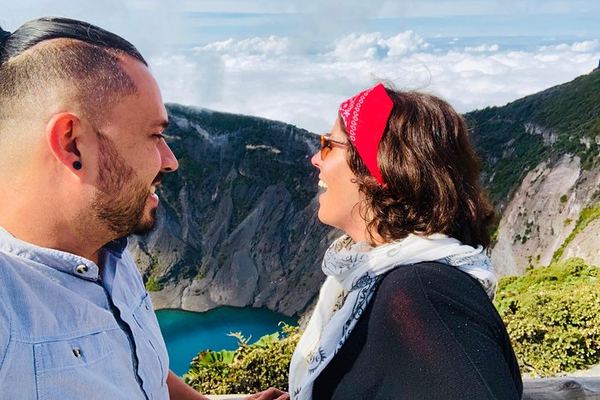
Irazú and Turrialba's 2014 Blast Zone, with the Durán Sanatorium and Cartago
The walk at Turrialba goes into the ground the 2014 and 2016 eruptions wrecked, and the road passes a tuberculosis sanatorium abandoned since the 1960s.
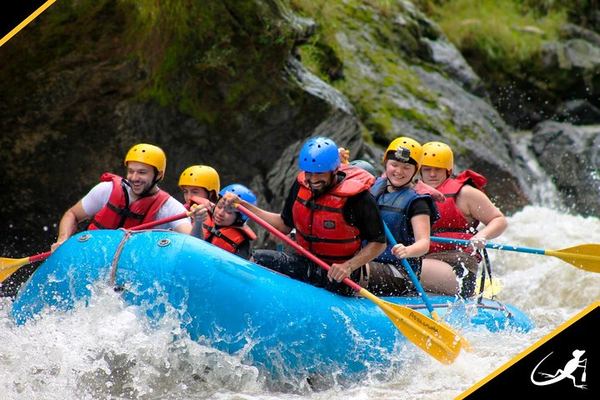
Rafting 29 km of the Pacuare from Turrialba, with Lunch at the Take-Out
Twenty-nine kilometres on a river rated fourth in the world, through primary rainforest and past waterfalls with no path to them, then a Costa Rican lunch.
Ratings collected by Viator and Tripadvisor
Why nothing you read about Turrialba agrees
Search whether Turrialba national park is open and you will be handed four confident answers that contradict each other. The official tourism body states that it is closed to the public because of eruptions, and gives no date for that statement. Wikipedia records a reopening on 4 December 2020. A third site says it is closed following eruptions on 12 March, without saying which year. A fourth, published in 2023, carries an announcement of a reopening expected in November 2020.
None of these is lying. They were all written at some point during fifteen years in which the park opened, closed, reopened and closed again, and none of them was dated or revisited. This is what a broken search result looks like, and it is why people arrive in Cartago with no idea whether the drive is worth making.
The one piece of evidence anyone can check
There is a way through this, and it does not involve trusting anybody's article, including this one. Since August 2023, tickets for Costa Rican national parks are not sold at the gate. Every entry goes through the national reservation system. Which means the list of parks that system will sell you a ticket for is, in practice, the list of parks you can enter.
Checked on 12 August 2026, Turrialba was not on that list. Poás was. Both Irazú sectors were. So were Tenorio, Rincón de la Vieja, Braulio Carrillo, Tapantí, Chirripó, Tortuguero, Carara, Manuel Antonio and Isla San Lucas. Turrialba was absent.
That is an indication rather than an official declaration, and it should be read as one: a park can be missing from a booking system for administrative reasons that have nothing to do with a volcano. But it is a checkable, dated fact about the exact mechanism by which entry now happens, and it is more than any other page on this subject is offering. If you want to know the position on the day you travel, look at the reservation system rather than at an article, and look for the park by name.
A park you cannot buy a ticket for is a park you cannot walk into. Since August 2023 that has been the whole of the law here, and it is a better test than any notice board.
What is still sold, and what it actually is
One of the four listings here goes to the mountain. It is a small-group day, capped at four travellers, that pairs Turrialba with Irazú and takes in Cartago on the way back. It does not put you in a crater. What it does is drive you onto the flank and walk you across the zone the 2014 and 2016 eruptions destroyed, where the vegetation died, the farms were abandoned and the ash is still visible in the soil profile. Read the itinerary and it is explicit about this: the volcano is observed, with its gas and ash, from outside. Both park entries are quoted at 35 US dollars per person and are included in the price.
The other three have nothing to do with volcanology. They belong to the town of Turrialba, forty minutes down the eastern side of the valley, which is a rafting and adventure centre in its own right and one of the wettest, greenest corners of the country. The Pacuare river runs through it with class III and IV water over about eighteen miles, and it is the reason most visitors to this valley come at all.
| What you book | Price | Rated | Does it involve the volcano? |
|---|---|---|---|
| Irazú and Turrialba with a local guide, small group | 158 EUR | 4.9 from 30 | Yes, from the flank and the 2014-16 impact zone |
| Pacuare river rafting, one day | 87 EUR | 4.9 from 378 | No, this is the river below the town |
| Pacuare river rafting from Turrialba | 106 EUR | 5.0 from 194 | No |
| Canyoning and canopy near Turrialba | 101 EUR | 5.0 from 64 | No |
Note where the reviews are. The rafting listings carry 378 and 194 ratings; the volcano day carries 30. That gap is the destination telling you what it is currently good at. If you have come to this page because you want to see Turrialba erupt, the honest answer is that you cannot, and that the valley below it is worth the drive anyway.
The volcano that closed an international airport
Turrialba's recent record explains both the closures and the reputation. It woke properly in January 2010 with a steam-driven eruption that opened a new vent and pushed the crater temperature from around 200 to 600 °C. From there it escalated. In October 2014 an explosion threw material as far as 40 kilometres. In 2015 and 2016 the ash reached the capital repeatedly, and in May 2016 more than 500 people were treated for the effects of it.
The part that made the news abroad was the aviation. Juan Santamaría, the international airport that serves San José, closed three times because of this volcano.
| Date | What happened |
|---|---|
| 12 March 2015 | Airport closed with visibility below 100 metres |
| May 2016 | Flights cancelled; more than 500 people treated for ash effects |
| September 2016 | Airport closed; ash across the metropolitan area |
The park was shut from 2009 to 2011, and shut again through the worst of the 2014 to 2017 sequence. It reopened on 4 December 2020. The most recent eruption on record is from 2022. What that history means for a visitor is simple enough: this is not a mountain to plan a trip around. It is a mountain to check on, and to enjoy from a distance when the answer is favourable.
The other Turrialba
The town shares the name and almost nothing else. It sits on the Caribbean slope at around 600 metres, it rains there far more than it does in San José, and the surrounding country is dense wet forest cut by rivers. That combination made it Costa Rica's original adventure destination long before the word was used for anything.
The Pacuare is the reason. It is regularly listed among the best whitewater rivers in the world, it runs class III and IV through a gorge with waterfalls dropping directly into it, and a day on it costs less here than a guided volcano visit. The rafting listings on this page carry the highest ratings and by far the largest number of them, which is what happens when a destination has quietly changed what it is famous for while the search results carry on describing the volcano.
Questions people actually ask
Is Turrialba Volcano National Park open?
Assume not, and check before you drive. On 12 August 2026 Turrialba was not among the parks bookable through the national reservation system, while eleven others were. Since August 2023 Costa Rican parks do not sell tickets at the gate, so a park missing from that system is a park you cannot enter. This is an indication rather than an official statement, but it is dated and anyone can repeat the check.
Can you see Turrialba at all?
Yes, from outside. One listing here drives onto the flank and walks the ground the 2014 and 2016 eruptions killed, with the cone and its gas plume in view. That is a genuinely interesting couple of hours and it is not the same as standing on a crater rim. Anyone offering you the summit should be asked which reservation they hold for it.
When did Turrialba last erupt?
The most recent eruption on record is from 2022. The serious sequence ran from January 2010 to 2017, with the worst of it in 2015 and 2016, when ash reached San José repeatedly and closed the international airport three times. It is monitored continuously and it is quieter now than it was, which is not the same as finished.
Is Turrialba dangerous to be near?
The hazard that reaches people is ash and gas rather than lava, which is why the response has been closures and air quality warnings rather than evacuations of whole towns. More than 500 people were treated after the May 2016 eruption, mostly for respiratory effects. The towns on the flanks are inhabited and farmed. The restrictions exist and are worth respecting.
Is the rafting worth it if I came for a volcano?
Probably, and the numbers make the case better than any description. The Pacuare day trips here carry 378 and 194 ratings at 4.9 and 5.0, against 30 for the volcano day. The river runs class III and IV through a forested gorge, a full day costs from 87 EUR, and it is the thing the town of Turrialba is actually known for now.
How do I get there from San José?
The volcano side is reached from Cartago, about two hours in total, and every practical version of that trip is combined with Irazú because the two sit on the same road system. The town of Turrialba is a separate journey down the eastern side of the valley, roughly ninety minutes, and the rafting operators run their own transfers from San José as part of the day.
Data verified on. Prices and ratings from the four Turrialba products on this site. Park booking status checked on the SINAC reservation system on 12 August 2026; eruption and airport dates from the published record.