
Climbing Teide: the Summit Permit, the Trails and the Refuge
Six ways up on this site, from an 89 EUR walk to a 229 EUR night ascent. Only two of them include the permit for the last 163 metres.
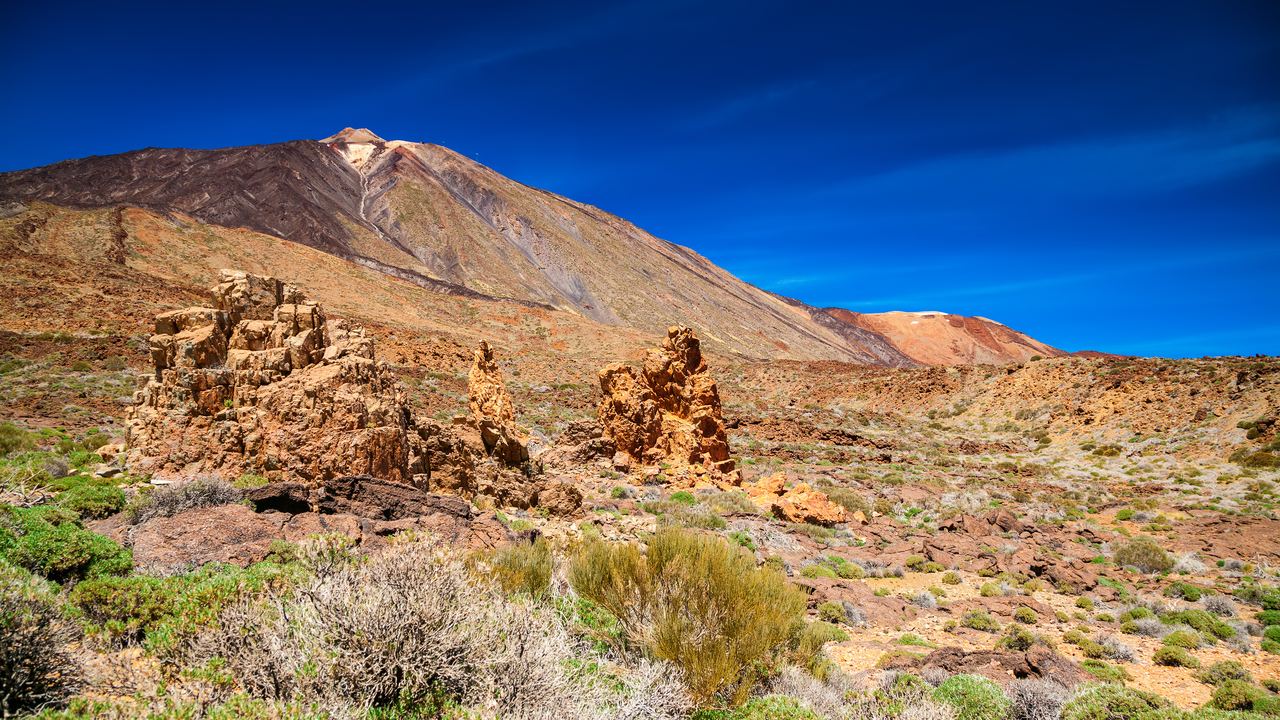
The walk from the top cable car station to the crater rim of Teide is 650 metres long and about forty minutes of your life. It gains 163 metres of height on loose pumice, it smells faintly of sulphur near the top, and it is the most heavily rationed forty minutes in Spanish tourism. Three hundred people a day, fifty per time slot, one nominative permit each, checked against your passport at a barrier staffed by a warden who has heard every argument. This page is about how to get one, what to do when you cannot, and which of the six products sold here actually takes you past the barrier.
The mountain itself, its history and the rest of the island are on the Tenerife page above. What is here is procedural: the trail numbers, the fees, the time slots, the routes that need no permit at all, and the overnight option almost nobody writes about, which is the only legal way to be standing on the crater at sunrise.
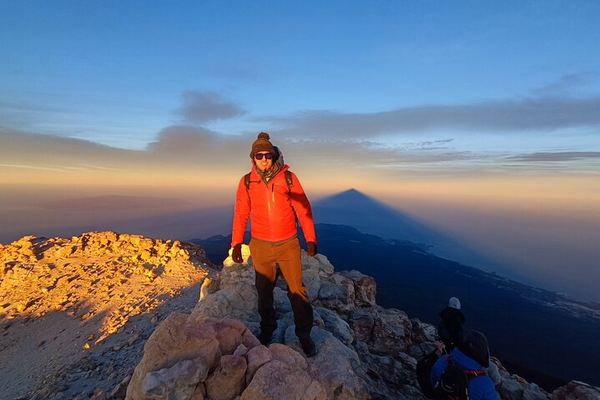
Night Hike to the Summit of Teide, 3,718 m, Sunrise from 3,200 m
The climb to 3,718 metres is done in the dark, and the sunrise is watched from 3,200. The meeting point is the free car park by the Parador de las Cañadas.
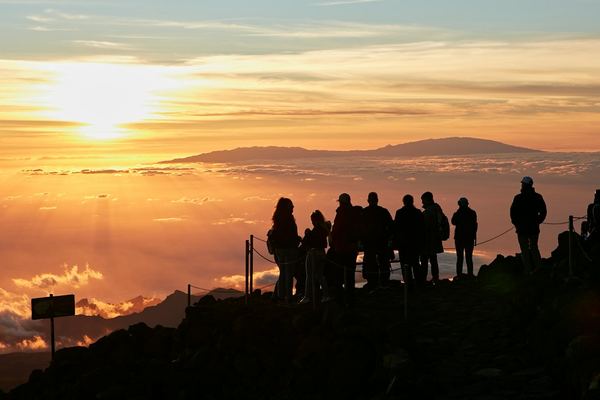
Teide at Sunset: the Shadow That Reaches Gran Canaria
The sunset shadow off Teide reaches as far as Gran Canaria, and the walk to Pico Viejo is timed for it. Telescopes after dark; the picnic is an add-on.
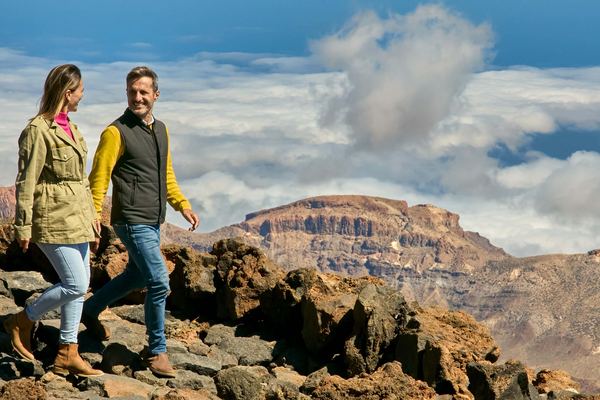
Teide Cable Car and Roques de García from the North
The cable car is closed to anyone with heart problems, to pregnant women and to limited mobility, and footwear rules apply. An hour at the top, seven in all.
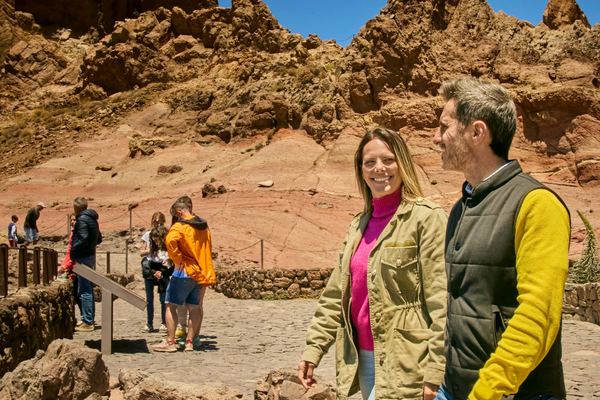
Teide Cable Car to 3,555 m, One Hour at the Top
The cable car reaches 3,555 metres and you get exactly one hour up there, lunch not provided, before the bus takes the group down to the Roques de García.
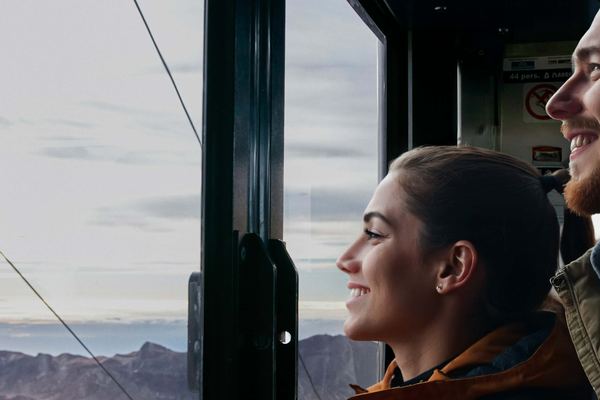
Teide Summit at 3,718 m by the Telesforo Bravo Permit Path
The Telesforo Bravo path to 3,718 metres needs a park permit, which the operator applies for, so the booking is not confirmed at once. Non-refundable.
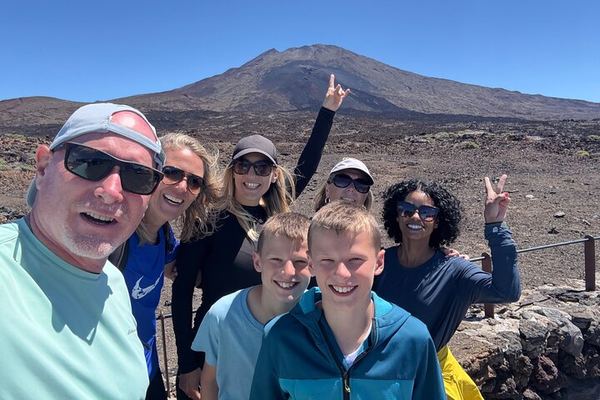
The Baby Volcano and a Lava Cave in Teide Park, Pick-Up Included
An easy walk to the Baby Volcano with 360-degree views, a lava cave and old flows on the way, free minibus pick-up and 20 to 30 photographs afterwards.
Ratings collected by Viator, Tripadvisor, Tiqets and Civitatis
The permit, step by step
The trail to the crater is numbered PNT 10 and named after Telesforo Bravo, the geologist who spent his career on these islands. It is the only route to the top and it has been controlled for years. What changed on 19 January 2026 is that the control now has a price attached, and the change has not propagated: the official Tenerife tourism site and a large majority of English-language guides still describe the permit as free.
The mechanics are simple and unforgiving. You book a named person into a named time slot, in advance, through the national park's own reservation system. You carry the same identity document you booked with, because it is checked. You arrive inside your slot. If the wind has closed the cable car, or the park has closed the trail, your money comes back; if you miss your slot for any other reason, it does not, because paid reservations cannot be cancelled or modified.
| Detail | |
|---|---|
| Trail | PNT 10 Telesforo Bravo, La Rambleta to the crater rim |
| Height gained | 163 m, from 3,555 to 3,715 |
| Time on foot | About 40 minutes up, a little less down |
| Fee, non-residents | 15 EUR in the 09:00 to 17:00 band |
| Fee, other Canary Islands | 6 EUR |
| Fee, Tenerife residents and under-14s | Free |
| Daily quota | 300 people, maximum 50 per time slot |
| Changes and refunds | None, except when the park closes the trail |
| What you carry | The permit and the identity document you booked with |
| Cable car | Separate ticket, separate company, 42 EUR return |
One number puts the scale of this in perspective. In the first fortnight after the charge came in, the island council collected 34,090 EUR across 3,101 bookings, and 94 per cent of those bookings were made by non-residents. That is a mountain being used almost entirely by visitors, which is both why the quota exists and why it is so hard to get one in August.
Four routes, and only one of them needs the permit
People talk about climbing Teide as though it were one thing. On the ground there are four distinct routes with four different requirements, and two of them are free walks that most visitors never hear about because no operator makes money selling them.
| Route | From and to | Effort | Permit |
|---|---|---|---|
| PNT 10 Telesforo Bravo | La Rambleta 3,555 m to the crater 3,715 m | 40 minutes, loose pumice | Yes, 15 EUR, quota of 300 |
| PNT 11 Pico Viejo viewpoint | La Rambleta, out and back | About 30 minutes, easy | No |
| PNT 12 La Fortaleza viewpoint | La Rambleta, out and back | About 30 minutes, easy | No |
| PNT 7 Montaña Blanca | 2,348 m to La Rambleta on foot | About 9 km, 6 to 7 hours up | Booked in advance |
The two viewpoint trails deserve better publicity than they get. Half an hour from the top station, no paperwork, and you get the caldera from above, the western flank falling away towards Pico Viejo, and on a clear day La Gomera, El Hierro, La Palma and Gran Canaria on the horizon. If your permit application failed, this is not a consolation prize so much as the view most people came for.
Montaña Blanca is the serious one. Nine kilometres on foot from around 2,348 metres up to the cable car station, six to seven hours of climbing on volcanic gravel with the last third at altitude, and no shade of any kind. People do it to arrive at the top under their own power rather than in a cabin. It is a proper mountain day and it is not a substitute for the permit: it delivers you to La Rambleta, where the barrier is.
The refuge is the way round the queue
This is the part that is missing from almost every English-language account of the mountain, and it is the most useful thing on this page.
The Altavista refuge sits at 3,260 metres on the northern side of the cone. It closed for years and reopened in July 2026 with 49 places at 71 EUR a night. Guests are issued a permit for the summit valid between 06:00 and 09:00 the following morning, outside the paid daytime band entirely. That is the legal route to standing on the crater rim at sunrise, and it exists in parallel to the 300-a-day quota rather than inside it.
The catch is what a night at 3,260 metres actually involves. You walk up from Montaña Blanca in the afternoon, you sleep badly because most people do at that height, you get up in the dark and finish the climb with a head torch, and you come down to catch the first cable car or walk the whole way. It is a hard, cold, genuinely rewarding twenty-four hours and it is not a soft alternative to booking early. The one commercial night ascent on this page, at 229 EUR, is built on the same logic: it starts in the dark from the Parador car park, includes the permits and the head torches, and asks for a high level of fitness in its own conditions.
Sunrise from the crater of Teide is not something you can buy on the day, and it is not something the cable car can sell you. It comes with a bed at 3,260 metres and a 06:00 start, or it does not come at all.
What the six products here actually do
They range from 89 to 229 EUR and only two of them cross the barrier. The table sorts them by what you end up standing on.
| Price | Highest point reached | Permit included | Time | Rating |
|---|---|---|---|---|
| 89 EUR | Caldera floor, a small cone and a lava cave | Not applicable | 5 hours | 4.9 from 15 |
| 92 EUR | La Rambleta, 3,555 m, from the north | No | 7 hours | 4.2 from 1,365 |
| 92 EUR | La Rambleta, 3,555 m, from the south | No | 7 hours | 4.2 from 541 |
| 178 EUR | The crater rim, 3,715 m | Yes | 6 hours | 4.4 from 248 |
| 182 EUR | La Rambleta at sunset, with a picnic | No | Evening | 5.0 from 4 |
| 229 EUR | The crater rim overnight, sunrise from 3,200 m | Yes | 10 hours | 5.0 from 30 |
Two things stand out from that table. The first is the 86 EUR gap between the 92 EUR cable car day and the 178 EUR one, which buys you 163 metres of height and a piece of paper. Whether that is good value is a real question and the answer is not obviously yes: the view from La Rambleta and the view from the crater are not that different, and what changes is what you did rather than what you saw.
The second is the ratings. The two 92 EUR products carry more than 1,900 reviews between them at 4.2, which is the lowest score in the whole Tenerife catalogue. Read their descriptions and the reason is visible: one of them calls La Rambleta the summit, never uses the word permit, and puts the cable car's base station altitude where the top station's should be. People book it believing they are going to the top of Spain, and a proportion of them write a review saying so.
What it costs on the day, and what to wear
Three costs sit outside the headline price on most of these products. The cable car is a separate ticket from a separate company: 42 EUR return for adults, 21 for children, and 23 for a descent-only ride, which is what walkers coming up Montaña Blanca buy. The permit is 15 EUR and only the two products above arrange it. Transfers are often extra: the night ascent states 50 EUR for pickup and drop-off from the south, and its meeting point is a free car park near the Parador, which means a hire car or a taxi at an antisocial hour.
On clothing, the mountain is blunter than the listings. Boots that cover the ankle, because pumice fills anything lower within a few steps. A windproof layer whatever the beach forecast says: the drop is around six degrees per thousand metres, so a 24 degree morning at Los Cristianos is close to freezing at the crater with wind on it. Sun protection, because the ground is dark, the air is thin and there is no shade above 2,000 metres. Water, which one operator explicitly excludes. Gloves in winter are not excessive. The better operators lend jackets and poles at the meeting point, which tells you how often people turn up without either.
Questions people actually ask
How hard is the walk to the summit of Teide?
The permit section itself is short: 650 metres of trail and 163 metres of height, about forty minutes at a slow pace. What makes it feel hard is the altitude, because 3,700 metres is high enough to leave most people breathing twice as fast as usual, and the surface, which is loose pumice on a slope. Nobody needs technical skill or equipment beyond boots. Coming from sea level the same morning makes it noticeably harder, which is worth knowing if your hotel is on the beach.
Can I get a permit at the cable car station?
No, and this is worth being firm about. The cable car is a separate company and has never issued permits. The reservation is made in advance through the national park, it names a person and a time slot, and it is checked against identity documents at the start of the trail. There is no standby list at 3,555 metres and no arrangement to be made with the warden.
What if the permit is sold out?
Three options, in order of usefulness. Take the two free trails from the top station, PNT 11 and PNT 12, which need no permit and give you the best of the view in about half an hour each. Book a night at the Altavista refuge, which comes with a summit permit for 06:00 to 09:00 the next morning and is a better experience anyway. Or check for cancellations, which are rarer than they used to be now that paid bookings cannot be cancelled at all.
Is the Montaña Blanca route worth doing?
If you like long mountain days, yes. Nine kilometres and six to seven hours from 2,348 metres up to the cable car station, on volcanic gravel, with no shade and thinning air. It is a genuine achievement and the transition from pine forest to bare pumice is the best geology lesson on the island. Understand what it does and does not do: it brings you to La Rambleta, not to the crater. The permit rules are the same for people who walked up as for people who rode.
Do I need a guide?
No. The trails are marked and the summit route is a well-worn path with a warden at the bottom of it. What a guide buys you is the paperwork being handled, which on this mountain is not a small service, plus transport, poles, spare jackets and someone who knows what the wind is doing. The two products here that include the permit are worth their premium mostly for that first reason.
Can children climb Teide?
Under-14s pay nothing for the permit, so the park clearly expects them. Whether they should is a different question: 3,715 metres is high for small children, the walk is on loose ground, and the cold at the top is real. The cable car itself has restrictions, and people with cardiovascular conditions, pregnant travellers and passengers with limited mobility cannot ride it. The caldera floor and the Roques de García circuit are the better family day.
Data verified on. Trail numbers, permit fees, quotas and refuge terms from the Cabildo de Tenerife and Teide National Park. Prices and inclusions read from the six products on this page on 12 August 2026.