
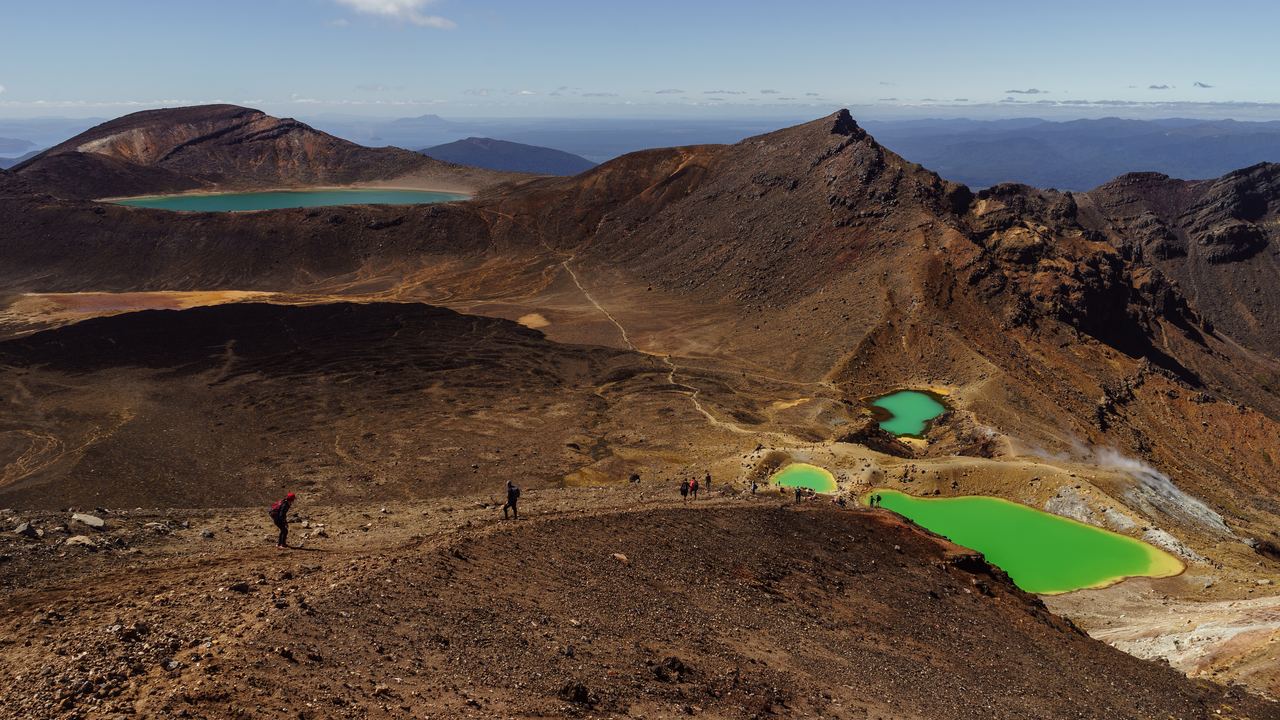
Guided Tongariro Crossing Walks: What Is In the Price
235 EUR guided, 704 EUR private, 31 EUR for the shuttle alone. The guided price includes crampons and ice axes when needed, and a NZD 60 allowance if your boots are wrong.
A guide on the Tongariro Alpine Crossing is not there to show you the way. The track is marked, busy and hard to lose in good weather, and thousands of people walk it every summer with nothing but a packed lunch. What a guide changes is what happens when the day goes wrong: someone who has read the 6:00 forecast, carries the crampons you do not own, decides on the Red Crater ridge whether the wind is survivable, and has a vehicle waiting at both ends. From May to late October, when the Department of Conservation reclassifies the route and states that alpine skills are essential, that stops being a comfort and becomes the reason people come back down.
Everything here is the product rather than the route: what is in the price, what you have to carry, how the transport is arranged, and what happens to your money when the mountain closes. The walk itself, the segment timings, the weather thresholds and the sacred sites are on the Tongariro page above.
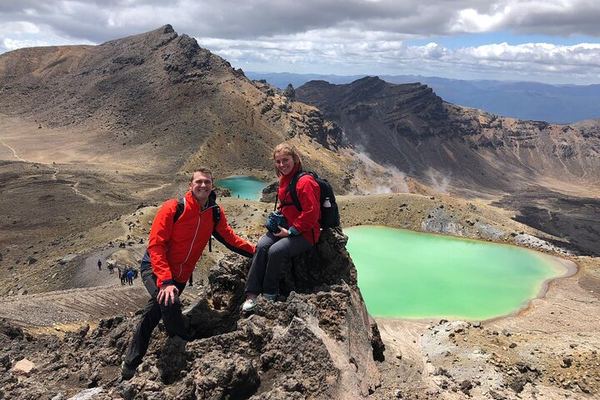
Guided Tongariro Crossing: 19 km, 8 Hours, Past the Mountain That Played Mount Doom
The guide reads the weather and track conditions as the day goes and times the pick-up to when the group actually gets down, not to a fixed schedule.
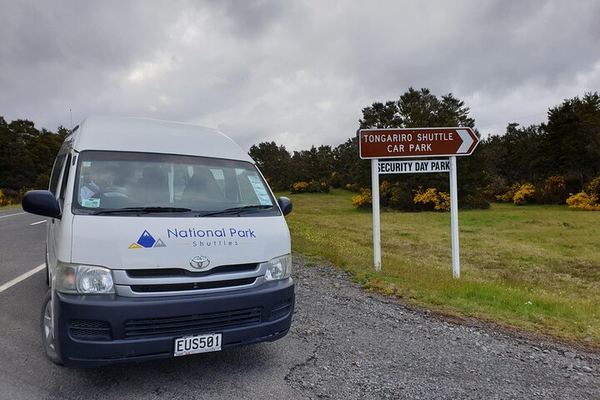
Park at the Finish: Ketetahi Carpark and a One-Way Lift to the Tongariro Start
You leave the car at the finish and get driven round to Mangatepopo, so there is no shuttle to catch at the end whether you walk it fast or slowly.
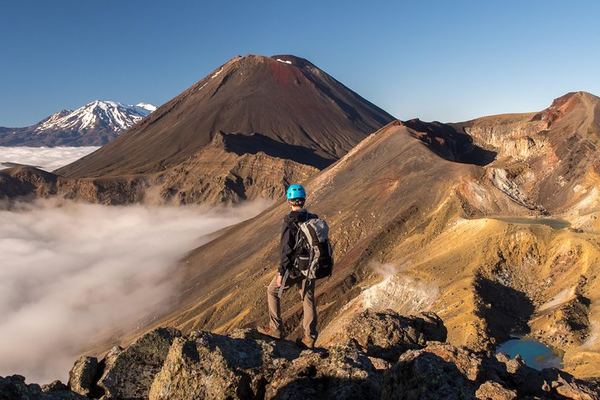
Private Tongariro Crossing with Adrift: Crampons and Ice Axes Supplied in Winter
Adrift supplies crampons and ice axes for the winter route and teaches their use on the day, and lunch and NZ$40 of gear hire come with the private guide.
Ratings collected by Viator and Tripadvisor
What is actually in the price
The guided group walk runs from a base at National Park Village, and its inclusions are more specific than most operators bother to publish. Everyone meets at the base in the morning, where guides check people in, go over the conditions for the day, and hand out whatever equipment and clothing the day and the person require.
| Detail | |
|---|---|
| Guides | Professional and qualified, assessing weather and track conditions through the day |
| Winter equipment | All of it. Crampons and ice axes supplied when conditions require them |
| Clothing and footwear | Supplemented up to a NZD 60 free allowance if what you brought is not adequate |
| Transport | Between the base at National Park Village and both ends of the track |
| Not included | Beverages, bottled water and snacks. Nothing is sold on the mountain |
| Optional extra | Transfers from Taupō, Tūrangi and Whakapapa, on request, minimum two people |
| Minimum age | 12 |
| Group size | Up to 15 |
| Minimum to run | 2 bookings |
| Duration | 8 hours |
Two of those deserve attention. The NZD 60 clothing allowance is unusual and it exists because people keep turning up in the wrong shoes; it means you can arrive with a rain jacket that is not quite a rain jacket and be re-equipped without an argument at a counter. And the winter equipment being included is the whole reason the winter price is what it is: crampons, an ice axe and a helmet cost more to hire separately than the gap between the summer and winter rates, and a guide who supplies them has also taken responsibility for whether you can use them.
What is not included is worth reading twice. No water, no snacks, no lunch. On a mountain with no drinking water, no shop and no bins, that means everything you eat and drink across eight hours comes out of your own bag and the wrappers come back down with you.
What you carry
The operator publishes two gear lists and they differ by more than a jumper.
In summer: one and a half to two litres of water, lunch, personal medication including inhalers and blister protection, sun hat, sunscreen, sunglasses, a backpack each, hiking boots or shoes, walking trousers, one light top and two warm layers in wool, merino, thermal, fleece or softshell, and a waterproof coat.
In winter: one to one and a half litres of water, lunch, medication, sunscreen, sunglasses, a backpack, hiking boots, thermal longs or walking trousers plus overtrousers, three warm top layers, a waterproof coat, and a warm hat and gloves.
The water goes down and the clothing goes up, which is the difference between the two days in a single line. Sunglasses and sunscreen stay on both lists, and people are surprised by that every winter: snow at 1,886 metres reflects more than the ground does in February.
Cotton is the omission worth naming. Neither list mentions it and neither should. Wet cotton at the Red Crater in a 50 km/h wind is how people get into trouble on this mountain, and a cotton t-shirt under two fleeces is still a cotton t-shirt.
How the transport works
Guided walks include transport between the base at National Park Village and both ends of the track, which removes the shuttle problem entirely. Pickups from Taupō, Tūrangi and Whakapapa are available on request for a surcharge and need a minimum of two people, so a solo traveller staying in Taupō should ask before assuming.
The shuttle-only listing on this page solves the same problem differently and is the cheapest thing here at 31 EUR. It is run by the Manawhenua operator based in Waimarino, from a private secure car park on State Highway 46 at the Ketetahi end with staff on site all day. You leave the car where you will finish, they drive you 35 minutes to the start at Mangatepopo, and you spend the day walking towards your own vehicle rather than towards a bus. No waiting at the end if you are fast, no running for a departure if you are slow. The price includes a safety briefing and a cultural introduction on arrival.
The detail in their own description that nobody else repeats: you come off the track at the public four-hour Ketetahi car park and then walk a further 900 metres to reach the private one. Worth knowing before hour nine. Ages 8 and up, ten people per booking, free cancellation up to 24 hours before departure.
What happens when they close it
This is the part that costs people money and it is buried in the terms.
The guided operator requires you to check trip status through their website after 9:30 am on the day before your walk. Not the morning of. The day before. That is when the decision is made, and looking is your responsibility rather than theirs.
Then the asymmetry. If the operator cancels for weather, you are offered an alternative date or a full refund. If you cancel, the listing terms say all sales are final and no refund is available, and within 24 hours the penalty is the entire price. So the operator carries the weather risk and you carry everything else: illness, a delayed flight, a change of mind, a companion who pulls out. That is a defensible position for a business that has already rostered guides and drawn equipment, and it is not what most people assume when booking a walk in a country where free cancellation is close to standard. Compare it with the shuttle on the same page, which refunds in full up to 24 hours before.
One more clause with teeth: the guided group walk needs a minimum of two bookings to run. A solo walker can be cancelled on, with a refund or an alternative date, and the operator's own advice is to book anyway because the trip usually makes its numbers in good weather. If you are travelling alone and this walk is the reason you came to the North Island, do not put it on your last available day.
Customers must check trip status updates after 9:30 am the day before their tour.
Guided or independent
The honest answer changes with the calendar, and it is not close in either direction.
From November to April, most fit walkers should do it independently. The track is marked, hundreds of people are on it, the shuttle costs 31 to 42 EUR against 235 for the guided version, and the free DOC track booking takes two minutes or is done for you by the shuttle company. A guide in February buys you commentary and somebody else's judgement about turning back, both of which have value and neither of which is worth two hundred euros to a competent walker in settled weather.
From May to late October, take the guide. DOC reclassifies the route, the descent from the Red Crater ices over, and the required kit is crampons, ice axe, helmet, transceiver, probe and shovel. Buying all of that for one day is absurd and using it untrained is worse. At that point the guided price stops being a premium on a walk you could do yourself and becomes the cost of the only sensible version of it.
The private option at 704 EUR is a different purchase again. It is roughly three times the group price and what it buys is pace: no waiting for the slowest person, no fixed departure, and a guide who will shape the day around you. Its 4.5 rating across 30 reviews is the lowest of the three listings here, which for a premium product usually says more about expectations than execution, but it is worth knowing that the cheapest listing on this page and the most expensive one are rated 4.7 and 4.5 respectively.
| What you book | Price | Includes transport | Rating |
|---|---|---|---|
| One-way shuttle from a private secure car park at Ketetahi | 31 EUR | Transfer only, 35 minutes | 4.7 over 71 |
| Guided group walk, 8 hours, all winter equipment | 235 EUR | Both ends, from National Park Village | 4.7 over 270 |
| Private guided walk | 704 EUR | Both ends, from National Park Village | 4.5 over 30 |
When to book it
There is no separate seasonal chart on this page because the season is the one on the Tongariro page above and it does not change for the guided product. What changes is which side of that line makes a guide worth paying for, and the answer is the winter half.
Two scheduling rules, both learned the expensive way. Book it for your first full day in the area rather than your last, because a cancellation for weather gives you an alternative date only if you still have a date available. And if you are travelling alone in shoulder season, ask the operator about numbers before you commit to accommodation around it, because a two-person minimum in April is a real possibility rather than a formality.
Questions people actually ask
Is a guide required on the Tongariro Alpine Crossing?
Not legally, at any time of year. In summer the majority of walkers do it independently with a shuttle. From May to late October DOC classifies it as a route rather than a track and says alpine skills are essential, and at that point a guide is the practical answer for almost everyone, because the required equipment is crampons, ice axe, helmet, transceiver, probe and shovel.
What does the guided walk include that the shuttle does not?
Guides, all winter equipment including crampons and ice axes when conditions need them, a NZD 60 allowance towards boots and clothing if yours are inadequate, and transport between the base and both ends of the track. It does not include water, snacks or lunch. The shuttle at 31 EUR includes the transfer, a safety briefing, a secure car park with staff on site, and nothing else.
Do I need to make a DOC booking as well?
The booking is required if you use a shuttle or a guide, and it is free. In practice the operator makes it for you as part of your booking, so you do not need to do it twice. It is not a permit and there is no quota, whatever other pages tell you.
What happens if the weather closes the track?
The operator decides and publishes a trip status from about 9:30 am the day before, and checking it is your responsibility. If they cancel, you get an alternative date or a full refund. If you cancel, the guided listing states that all sales are final and no refund is available, with a full penalty inside 24 hours. The shuttle listing, by contrast, refunds in full up to 24 hours before departure.
Can I do it alone?
You can walk it alone in summer without difficulty. Booking the guided walk alone is possible but the trip needs two people to run, so you can be cancelled on with a refund or an alternative date. The operator advises solo travellers to book anyway, since the trip usually makes its numbers in decent weather. Do not schedule it for your last day if you are on your own.
What is the minimum age?
Twelve on the guided group walk and eight on the shuttle. Those are not liability boilerplate: it is eight hours, nineteen and a half kilometres, 765 metres of climbing and an exposed ridge at 1,886 metres, and the operator wants people who can keep going when the last six kilometres turn out to be longer than expected.
Are boots really necessary?
Yes, and this is the item the operator supplies most often. The descent from the Red Crater is loose volcanic scoria that fills anything low-cut within a few steps, and the last six kilometres are on uneven ground when your legs are already tired. Ankle support is the difference between a long day and a rescue. If yours are not up to it, the NZD 60 allowance exists for exactly that.
Data verified on. Inclusions, gear lists, age limits, group sizes and cancellation terms from the operators' own listings on this site. Track classification and winter equipment from the Department of Conservation.