
Volcano Travel · Tour
Four Absheron Treasures: the Fire Worshippers' Cells and Today's Pilgrims
A private day, starting at 9:30 with pick-up anywhere in Baku and ending with drop-off at Fountain Square. The interactive museum at Gobustan uses touchscreens and 3D panoramas to set out how people lived here 5,000 to 20,000 years ago, with exhibits dating from roughly the fourth to the second millennium BC. Then the open-air reserve: more than 6,000 rock drawings and the caves, petroglyphs from several different eras, found by scientists in the 1930s. What they record is what those people believed and how they lived. The mud volcanoes come with the guide on what the mud is actually good for. Ateshgah, the fire temple, was used by Hindus and Zoroastrians, according to the Persian and Indian inscriptions on it; the first written mention of it is from the 7th century AD. The cells where the fire worshippers lived are open, and they hold what the excavations turned up: cookware, stone slabs with inscriptions, pieces of clothing. Yanar Dag is a natural gas flame that has burned on the hillside since ancient times. Pilgrims from Iran and India still come to it. The guides are accredited. Cancel at least 24 hours before departure for a full refund.
What's included
- Accredited tour guide
- Air-conditioned vehicle
Itinerary
The map could not be loaded. Please try again in a moment.
Gobustan Rock Art
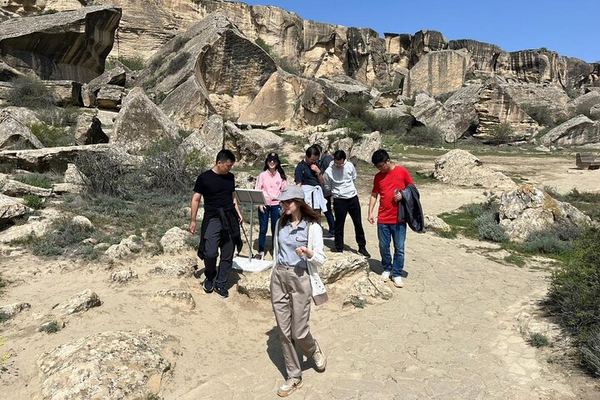
The day starts at 9:30 with pick-up in Baku. The interactive museum covers the petroglyphs, the country around Gobustan, its people and the archaeological work done here, with touchscreens and 3D panoramas on how people lived 5,000 to 20,000 years ago and exhibits from roughly the fourth to the second millennium BC. Then the open-air reserve: more than 6,000 rock drawings and the caves, from several eras, found in the 1930s.
Costo extra
Mud Volcanoes
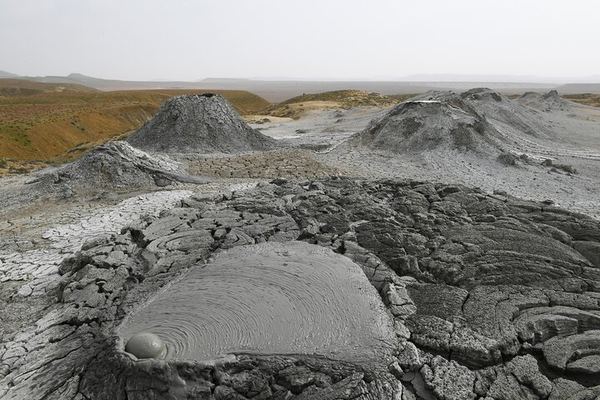
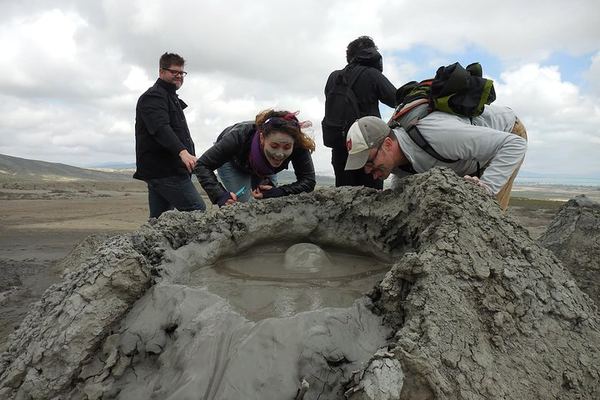
The mud volcanoes, and what the mud is actually useful for, explained by the guide.
Costo extra
Ateshgah - Fire Temple
The fire temple, used by Hindus and Zoroastrians according to the Persian and Indian inscriptions on it, first mentioned in the 7th century AD. The cells of the fire worshippers are open, holding what the excavations produced: cookware, stone slabs with inscriptions, pieces of clothing.
Costo extra
Yanar Dag
Yanardag State Historical, Cultural and Natural Reserve: a natural gas flame burning on the hillside since ancient times. The name means burning mountain, and pilgrims from Iran and India still come here. The tour ends with drop-off at Fountain Square.
Costo extra
Not included
- Lunch
- Ticket fees (USD 23)
- Gobustan Rock Art
- Ateshgah and Yanardag combo ticket
Show 1 moreShow less
- Mud volcanoes Museum
Good to know
- Suitable for all physical fitness levels
- Up to 15 travelers per booking.
- Mobile or paper ticket accepted
- Guiding available in: ru, en.
Reviews
Loading reviews…
Keep exploring
More experiences in Gobustan Mud Volcanoes
-
 Free cancellation
300 of the World's 700 Mud Volcanoes, an Ezraider Ride and Yanardag's Café
4.8 (325) 4.8 stars out of 5, 325 reviewsRoughly 300 of the world's 700 mud volcanoes sit here, the off-road stretch is ridden on an Ezraider, and the entrance tickets are already paid for.
€ 26.23 -
 Free cancellation
Baku's Two Sides in Eight Hours: Gobustan West, the Fires East
4.6 (436) 4.6 stars out of 5, 436 reviewsThe sites sit on opposite sides of Baku and the buses do not reach them all, so the day is built round the driving. The Aliyev Center is a photo stop only.
€ 12.66 -
 Free cancellation
Fires Attila and Marco Polo Wrote Down, Dated 4,000 to 5,000 Years Old
4.7 (342) 4.7 stars out of 5, 342 reviewsAttila's annals and Marco Polo both record these flames, and science dates the hearth at four to five thousand years. Two museums at Gobustan first.
€ 37.99
Ratings collected by Viator and Tripadvisor